Greatest Swordsmen and Samurai in History
The sword has always meant more than just a weapon. In Japan, it carried the soul of the warrior.
In Europe, it represented honor, nobility, and the skill to defend both. Throughout history, certain individuals rose above the rest—fighters whose names became legend, whose techniques founded schools that lasted centuries, and whose stories still captivate anyone drawn to the way of the blade.
Some of these warriors left behind detailed writings. Others exist mostly in folklore, their real accomplishments blurred by time and exaggeration.
But whether fully documented or partly mythologized, these swordsmen shaped how combat was understood and practiced for generations.
Miyamoto Musashi
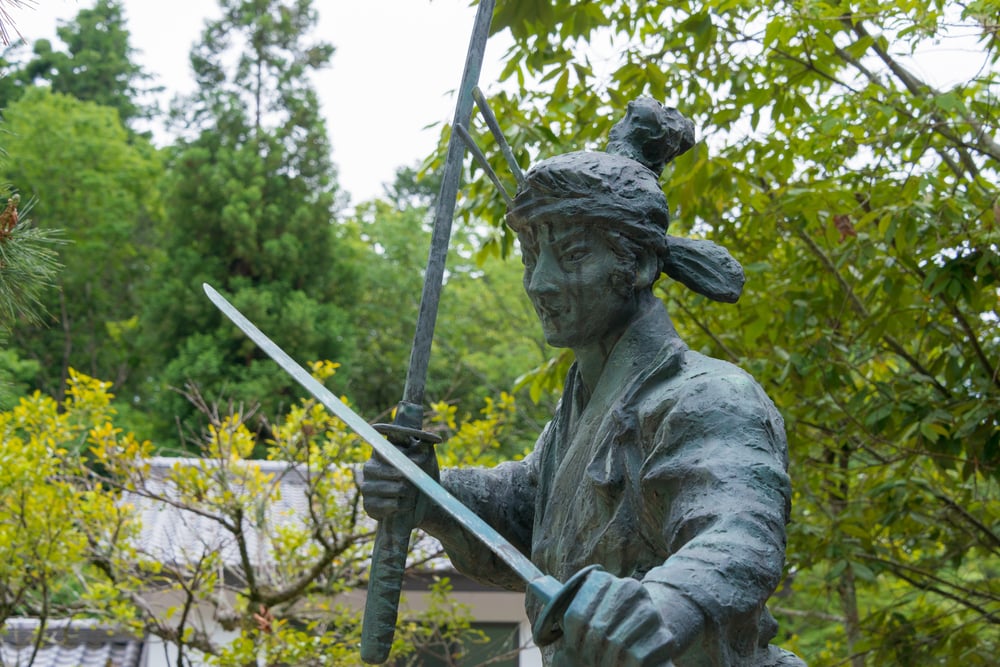
No list of great swordsmen can begin anywhere else. Musashi remains the most famous samurai who ever lived, a ronin who reportedly never lost a duel in over sixty encounters.
He fought his first duel at thirteen and killed a trained adult warrior. By his thirties, he had defeated some of the most respected sword schools in Japan.
His most celebrated fight came against Sasaki Kojiro on Ganryu Island in 1612. Musashi arrived late, having carved a wooden sword from a spare oar during the boat ride.
He killed Kojiro with a single blow. The psychological warfare—the deliberate lateness, the unconventional weapon—became as legendary as the victory itself.
Musashi later wrote “The Book of Five Rings,” a treatise on strategy and combat that transcends sword fighting. Business executives still study it today.
He spent his final years as a painter, calligrapher, and philosopher. The warrior who killed dozens died peacefully in a cave, brush in hand.
Sasaki Kojiro
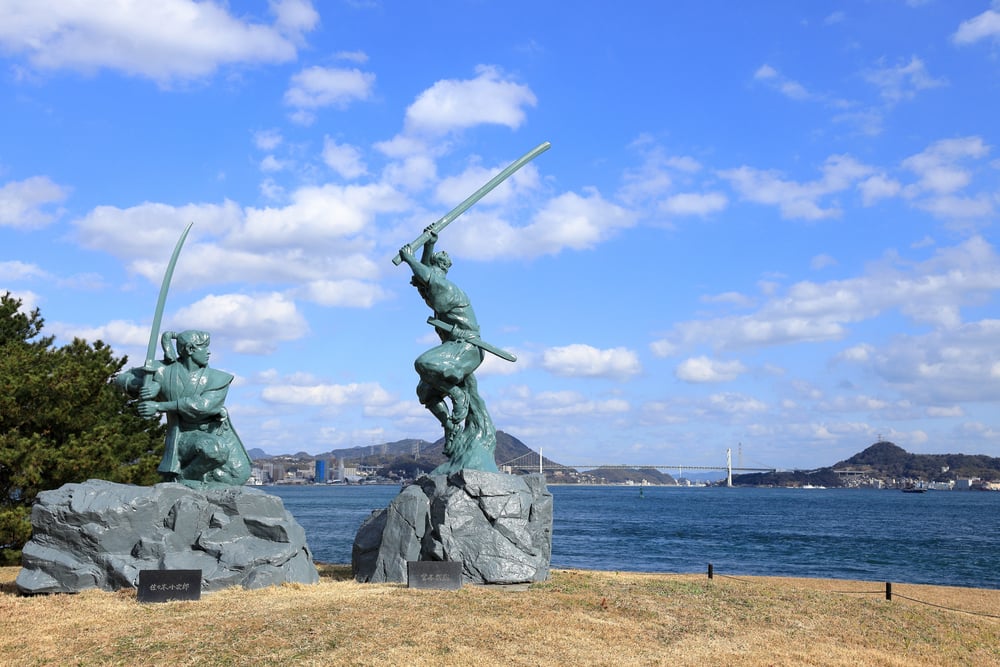
Though he died at Musashi’s hands, Kojiro earned his place among the greats. He developed the Ganryu style and mastered a technique called the “swallow cut”—a strike that mimicked the motion of a swallow’s tail in flight.
His weapon of choice was an unusually long nodachi sword that gave him reach advantages most opponents couldn’t overcome.
Kojiro trained under several masters and refined his approach over years of dedicated practice. Contemporary accounts describe him as technically superior to many of his peers.
His loss to Musashi came partly from being outmaneuvered psychologically, not outclassed in pure swordsmanship.
Tsukahara Bokuden

Born in 1489, Bokuden lived during one of Japan’s most violent periods. He fought in nineteen duels and thirty-seven battles, reportedly killing over 200 men throughout his lifetime.
Unlike many samurai who relied on brute aggression, Bokuden emphasized strategy and avoiding unnecessary conflict.
One famous story describes him on a ferry with a young warrior eager to test his skills. Rather than fight, Bokuden suggested they go to a nearby island to avoid harming other passengers.
When the young man jumped ashore, Bokuden pushed the boat away with his oar and left him stranded. He won without drawing his sword.
This approach defined his later teaching. Bokuden founded the Kashima Shinto-ryu school and trained students to understand that the highest victory required no violence at all.
Kamiizumi Nobutsuna

The founder of Shinkage-ryu, Nobutsuna, changed how sword fighting was taught in Japan. He introduced the concept of using bamboo practice swords, allowing students to train at full speed without killing each other.
This sounds obvious now, but before Nobutsuna, realistic training often meant serious injury or death.
He served several lords during his career and earned respect on actual battlefields. But his lasting contribution was pedagogical.
The Shinkage-ryu school influenced countless other styles, and his innovations in training methods spread throughout Japanese martial culture.
Yagyu Munenori

A student of Nobutsuna’s successor, Munenori became the official sword instructor to the Tokugawa shoguns. He taught three successive rulers and wrote “The Life-Giving Sword,” which combined martial technique with Zen philosophy.
Where other texts focused on killing, Munenori explored how swordsmanship could cultivate wisdom and restraint.
His political influence matched his martial skill. Munenori served as a spy and advisor, using the access his teaching position provided.
He navigated court intrigue for decades while maintaining his reputation as one of Japan’s finest swordsmen.
Ito Ittosai Kagehisa

The founder of Itto-ryu, Ittosai developed a style built around a single decisive cut. His philosophy rejected elaborate combinations in favor of one perfect strike.
Train that one technique until it becomes unstoppable, and you need nothing else.
Details of his life remain murky—he was born around 1560 and reportedly lived into his nineties. Legend says he drifted to a coastal village on debris as a young man and earned the villagers’ trust by driving off bandits.
He later fought 33 duels without a single loss. What survives clearly is his technical legacy—Itto-ryu influenced numerous later schools and remains practiced today, forming a foundation for modern kendo.
Fiore dei Liberi

Moving to medieval Europe, Fiore stands as one of the most important Western sword masters. An Italian knight who lived in the late 1300s and early 1400s, he wrote “Flower of Battle,” a comprehensive manual covering longsword, dagger, wrestling, armored combat, and mounted fighting.
Fiore trained knights and nobles across northern Italy and prepared students for judicial duels throughout his career. He compiled decades of experience into his manual, completed around 1409.
Modern practitioners of Historical European Martial Arts treat his work as foundational—a window into how medieval warriors actually fought, rather than the clumsy brawling often depicted in movies.
Johannes Liechtenauer

A German master from the 14th century, Liechtenauer created a system that dominated Central European swordsmanship for centuries. His teachings were originally recorded in cryptic verses meant to hide their meaning from outsiders.
Later students wrote commentaries explaining the techniques.
Liechtenauer emphasized principles over memorized sequences. Control the center line.
Strike in tempo with your opponent’s movements. Use your opponent’s force against them.
These concepts formed the backbone of German longsword fighting and spread throughout the Holy Roman Empire.
Jubei Mitsuyoshi Yagyu

The son of Yagyu Munenori, Jubei became a folk hero whose real life and legendary exploits blur together. Legend claims he lost an eye in training and wore an eye patch, though portraits from his era show him with both eyes intact.
Stories say he worked as a secret agent for the shogunate, though historical evidence remains thin.
What seems certain is his genuine skill. Jubei trained under his father from childhood and inherited leadership of the Yagyu Shinkage-ryu school.
Whether the wilder tales hold truth or not, his reputation as a master swordsman was earned through demonstrated ability.
Saito Hajime

A captain in the Shinsengumi during Japan’s turbulent Bakumatsu period, Saito earned a fearsome reputation in actual combat. The Shinsengumi served as a special police force in Kyoto, and Saito participated in numerous skirmishes and assassinations during the 1860s.
He survived the fall of the shogunate and lived into the Meiji era, eventually working as a police officer and later a museum guard.
Unlike many swordsmen known only through legend, Saito’s existence is thoroughly documented. He represents the practical reality of sword combat in its final era before firearms made such skills obsolete.
Tomoe Gozen

Among the few women warriors whose names survived in historical records, Tomoe appears in “The Tale of the Heike” as a fighter during the Genpei War of 1180-1185. The epic describes her as a match for any man, skilled with sword and bow, capable of riding unbroken horses down steep slopes.
Her commander Minamoto no Yoshinaka considered her his first captain. She reportedly decapitated enemy warriors in battle and fought in the front lines rather than from protected positions.
Scholars debate how much of her story is history versus literary embellishment, but most believe someone named Tomoe existed and played some martial role.
Whether every detail holds up or not, she represents the women throughout history whose combat skills rivaled their male counterparts.
Takeda Sokaku

Living from 1859 to 1943, Sokaku bridged the samurai era and modern Japan. He studied at numerous traditional schools and developed Daito-ryu Aiki-jujutsu, which later influenced the creation of Aikido.
His sword work remained grounded in older traditions even as Japan modernized around him.
Sokaku traveled constantly, teaching seminars and challenging other martial artists. He kept a detailed record book listing everyone he taught, which documented over 30,000 students during his lifetime.
His methods were effective enough that students included police officers, military personnel, and other martial arts masters seeking to expand their knowledge.
The Weight of Legacy

These swordsmen came from different centuries, different cultures, and different circumstances. Some fought in wars.
Others dueled for honor or survival. A few built schools that outlasted empires.
What connects them is a dedication to their craft that went beyond mere fighting ability.
The greatest among them understood something deeper than technique. They grasped timing, psychology, and the strange calm required when your life depends on a single movement executed perfectly.
Most died long ago, but their influence remains. Every martial artist who picks up a sword today inherits something from these masters—a tradition of discipline, refinement, and the endless pursuit of an art that can never truly be perfected.
More from Go2Tutors!

- The Romanov Crown Jewels and Their Tragic Fate
- 13 Historical Mysteries That Science Still Can’t Solve
- Famous Hoaxes That Fooled the World for Years
- 15 Child Stars with Tragic Adult Lives
- 16 Famous Jewelry Pieces in History
Like Go2Tutors’s content? Follow us on MSN.



