Happy Accidents That Created Your Favorite Foods
The best things happen when nobody’s trying to make them happen. A chef burns something and discovers caramelization.
A baker forgets about dough and invents sourdough. Someone drops chocolate into cookie batter by mistake and changes breakfast forever.
Food history is littered with these beautiful mistakes — moments when distraction, clumsiness, or sheer dumb luck stumbled into something better than anyone was aiming for. The foods you reach for when you’re stressed, celebrating, or just hungry often started as someone else’s kitchen disaster.
These accidents didn’t just create recipes. They created comfort, tradition, and billion-dollar industries built on what was never supposed to exist in the first place.
Chocolate Chip Cookies

Ruth Wakefield had a plan and it wasn’t working. She was making Butter Drop Do cookies at her Toll House Inn in 1938, expecting the chopped Nestlé chocolate to melt evenly throughout the dough — which is exactly what any reasonable person would expect chocolate to do in a 375-degree oven.
But the chunks stayed chunky. Stubborn little pockets of sweetness that refused to disappear.
Most people would have called it a failure and started over. Wakefield served them anyway.
Guests couldn’t stop talking about them. Nestlé noticed their chocolate sales spiking in the Boston area, tracked it back to Wakefield’s inn, and eventually bought her recipe for a lifetime supply of chocolate.
The chocolate chip cookie became America’s default comfort food because someone refused to throw away what looked like a mistake.
Ice Cream Cones
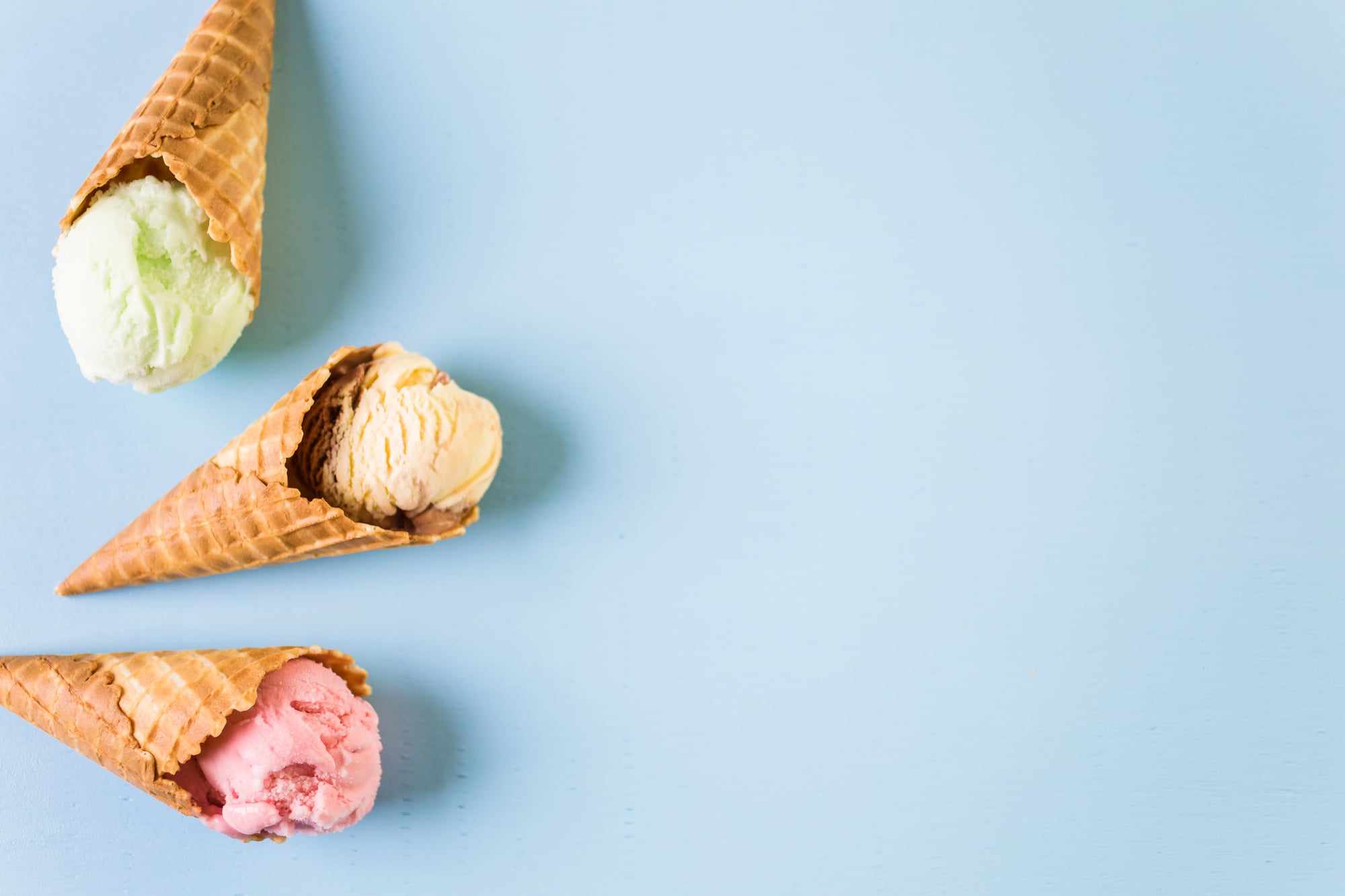
The 1904 World’s Fair in St. Louis was sweltering, and Ernest Hamwi was watching his neighbor’s ice cream business boom while his own zalabiya — thin Persian waffles — sat ignored. People wanted cold, not more heat.
Fair economics at work.
When the ice cream vendor ran out of bowls, Hamwi saw an opportunity where others saw a problem. He rolled his warm waffles into cones and offered them as edible containers.
The combination was immediate and obvious once someone thought to try it. Ice cream suddenly became portable.
Street food. Something you could eat while walking, which changed how people moved through the world with dessert in hand.
Potato Chips

George Crum was tired of hearing complaints, and on this particular day in 1853 at Moon’s Lake House in Saratoga Springs, he decided to make a point instead of making peace with a difficult customer who kept sending back his french fries (too thick, not crispy enough, the usual restaurant grievances that follow people who’ve decided to be unsatisfied before the food arrives).
So Crum sliced the potatoes as thin as he could manage, fried them until they were more crisp than any reasonable person would want, and salted them beyond what anyone could consider edible.
The customer loved them. And so did everyone else who tried what came to be called “Saratoga Chips.”
Crum’s moment of kitchen spite became the foundation of a snack industry that now generates billions in revenue annually, proving that sometimes the best way to deal with criticism is to take it so literally that it becomes something else entirely.
Popsicles

Eleven-year-old Frank Epperson mixed soda powder with water, left it on the porch overnight with the stirring stick still in it, and woke up to find his drink frozen solid. This was 1905, before home freezers, when frozen treats required either winter or serious money.
The accident stayed with him. Eighteen years later, he started selling “Epsicles” at a fireman’s orb.
His own kids called them “Pop’s sicles,” which became the name that stuck. A childhood mistake turned into the defining summer treat — something that promised relief from heat in two minutes flat and taught generations of kids that good things come to those who wait, at least until the ice melts.
Champagne

Dom Pérignon wasn’t trying to make wine bubble when he was perfecting his craft in the Champagne region of France during the late 1600s. But the region’s cold winters had a habit of interrupting fermentation, putting the yeast to sleep before it could finish converting all the sugar to alcohol.
When spring arrived and temperatures rose, the yeast would wake up and get back to work — inside bottles that were already sealed.
The pressure from renewed fermentation created bubbles that most winemakers considered a flaw. Bottles would explode.
Customers complained. But some people started requesting the “flawed” wine specifically.
The effervescence was lively in a way that still wine wasn’t. Dom Pérignon and others learned to control the secondary fermentation, turning an accident of climate into a deliberate technique.
Celebration found its signature drink because French winters couldn’t stick to a schedule.
Cornflakes

Will Kellogg left cooked wheat sitting out too long at the Battle Creek Sanitarium, where he worked with his brother developing health foods for their patients. When he came back, the wheat had gone stale — the kind of kitchen mistake that usually meant starting over from scratch, especially when you’re trying to create something people will want to eat for breakfast.
But Kellogg was curious about what would happen if he rolled the stale wheat anyway. Instead of forming a solid sheet, it broke into individual flakes.
Toasted, they became crispy and light. Patients loved them.
Kellogg eventually switched from wheat to corn and created the cereal that launched a thousand imitations. Breakfast stopped being eggs and meat for everyone who wanted something simpler to pour from a box.
Tarte Tatin

The Tatin sisters were running their hotel in Lamotte-Beuvron, France, in the 1880s when Stéphanie Tatin dropped an apple candy she was making. The apples scattered.
The pastry broke. A dining room full of guests was expecting dessert, and starting over wasn’t an option when you’re already behind schedule and working with what’s left in the kitchen.
So she improvised: arranged the fallen apples in the pan, covered them with the broken pastry pieces, and baked it all upside-down. When she flipped it onto a plate, the apples had caramelized into something that looked intentional.
Rustic, but elegant. The “mistake” became the restaurant’s signature dessert, and upside-down tarts became a standard technique.
Sometimes the best way to fix something is to stop trying to fix it and see where it goes instead.
Nachos

Ignacio “Nacho” Anaya was closing his restaurant in Piedras Negras, Mexico, when a group of American women arrived after a shopping trip to Eagle Pass, Texas, in 1943. They were hungry, he was out of most ingredients, and going to another restaurant meant driving back across the border.
Sometimes hospitality means making something work with whatever’s left in the kitchen.
Anaya found tortilla chips, cheese, and jalapeños. He melted the cheese over the chips, added the peppers, and served it as an appetizer.
Simple because it had to be, satisfying because the combination just worked. The dish spread through Texas and beyond, becoming stadium food, party food, and the foundation of Tex-Mex cuisine.
A late-night kitchen scramble created one of America’s most popular bar snacks.
Worcestershire Sauce

Lea and Perrins were trying to recreate a sauce recipe that Lord Sandys had brought back from India in the 1830s. Their first attempt was so terrible — harsh, unpalatable, completely wrong — that they stored the barrels in their basement and forgot about them for two years.
Nobody wants to think about failed experiments when there’s actual business to run.
When they rediscovered the barrels and tasted the aged sauce, fermentation had transformed it into something complex and savory. The harsh edges had mellowed into depth.
They bottled it and created a condiment that would become essential to Caesar salads, Bloody Marys, and countless marinades. The sauce they were too embarrassed to serve fresh became their signature product once time had a chance to fix what they couldn’t.
Sandwich

The Earl of Sandwich wanted to keep gambling. This was 1762, he was deep in a card game that had been going on for hours, and stopping to eat with proper utensils meant stepping away from the table — which meant other people making decisions about money while he was gone, never a comfortable position when you’re betting amounts that matter.
So he had his servants bring him roast beef between two slices of bread. He could eat with one hand and keep playing with the other.
Other gamblers started ordering “the same as Sandwich,” and the name stuck. Portable meals became possible because someone prioritized cards over cutlery.
Lunch counters, brown bag meals, and fast food all trace back to a nobleman who couldn’t be bothered to put down his hand.
Slurpee

Omar Knedlik’s soda fountain at the Dairy Queen in Coffeyville, Kansas, kept breaking down in the late 1950s. When the machine couldn’t keep sodas cold, they turned slushy — part liquid, part ice, not quite either one.
Customers started requesting the broken machine’s accidents on purpose, which is the kind of problem most business owners would happily accept.
Knedlik realized he was onto something and started experimenting with intentionally creating slushy drinks. He developed a machine that could control the consistency, licensing it to 7-Eleven, which turned the Slurpee into a convenience store staple.
A malfunctioning soda fountain became a billion-dollar industry because someone paid attention to what customers actually wanted instead of what the machine was supposed to deliver.
Fudge

A candy maker in Baltimore was trying to make caramels sometime in the 1880s when the batch crystallized wrong, turning grainy instead of smooth. The texture was completely different from what caramels were supposed to be — denser, more concentrated, with a different kind of sweetness that stuck to your teeth in a way that wasn’t entirely unpleasant.
Instead of throwing it away, the candy maker sold it anyway, calling the failed caramels “fudge” — slang for something botched or patched together.
The dense, rich confection found its audience. Fudge became vacation candy, gift shop candy, the kind of treat that promised indulgence in a way that regular chocolate couldn’t match.
A ruined batch of caramels created an entire category of confection that’s now essential to boardwalks and tourist towns everywhere.
Brandy

Someone was transporting wine and discovered that distilling it made shipping easier. Concentrated alcohol took up less space, weighed less, and didn’t spoil as quickly on long journeys — practical advantages that made economic sense when you’re moving liquid across continents in ships that couldn’t guarantee stable temperatures or smooth passage.
The plan was to add water back to the concentrated wine at the destination, returning it to something like its original state. But people started tasting the concentrated version and preferring it.
The intensity was different. More complex. The aging process in wooden barrels added flavors that regular wine couldn’t develop.
What started as a shipping solution became its own category of alcohol, turning a transportation problem into luxury spirits that now sell for hundreds of dollars per bottle.
Cheese

Cheese exists because someone stored milk in a pouch made from a calf’s stomach and went on a long journey. The combination of movement, body heat, and natural enzymes from the stomach lining transformed liquid milk into curds and whey — a process that would have seemed like spoilage to anyone who didn’t taste the results first.
But the curds were concentrated protein that kept longer than milk and tasted better than most preserved foods available thousands of years ago. Different regions developed different techniques, creating varieties that reflected local climates, available animals, and cultural preferences.
An accidental preservation method became the foundation of cuisines around the world. Pizza, grilled cheese, and wine pairings all exist because ancient travelers didn’t pack their milk carefully enough.
The Sweet Accidents That Shaped How We Eat

These kitchen mistakes didn’t just create recipes — they created industries, traditions, and the foods that define comfort across cultures. Every accidental discovery represents a moment when someone chose curiosity over caution, tasting what looked wrong and finding something unexpectedly right.
The best accidents happen when people are paying attention to failure instead of dismissing it. When the Earl of Sandwich prioritized convenience over etiquette.
When Dom Pérignon investigated bubbles instead of eliminating them. When Ruth Wakefield served cookies that didn’t behave the way cookies were supposed to behave.
These moments remind us that innovation often looks like incompetence until someone decides to take it seriously.
More from Go2Tutors!

- The Romanov Crown Jewels and Their Tragic Fate
- 13 Historical Mysteries That Science Still Can’t Solve
- Famous Hoaxes That Fooled the World for Years
- 15 Child Stars with Tragic Adult Lives
- 16 Famous Jewelry Pieces in History
Like Go2Tutors’s content? Follow us on MSN.