Hidden Stories Behind Ancient Monuments
Every stone structure that survives from antiquity carries more than just architectural significance. The tourists who visit these places today see walls and columns, but they miss the human dramas that unfolded in these spaces.
The real stories—the ones about power struggles, family betrayals, and everyday people caught in extraordinary circumstances—rarely make it into the guidebooks.
The Grudge That Built the Colosseum
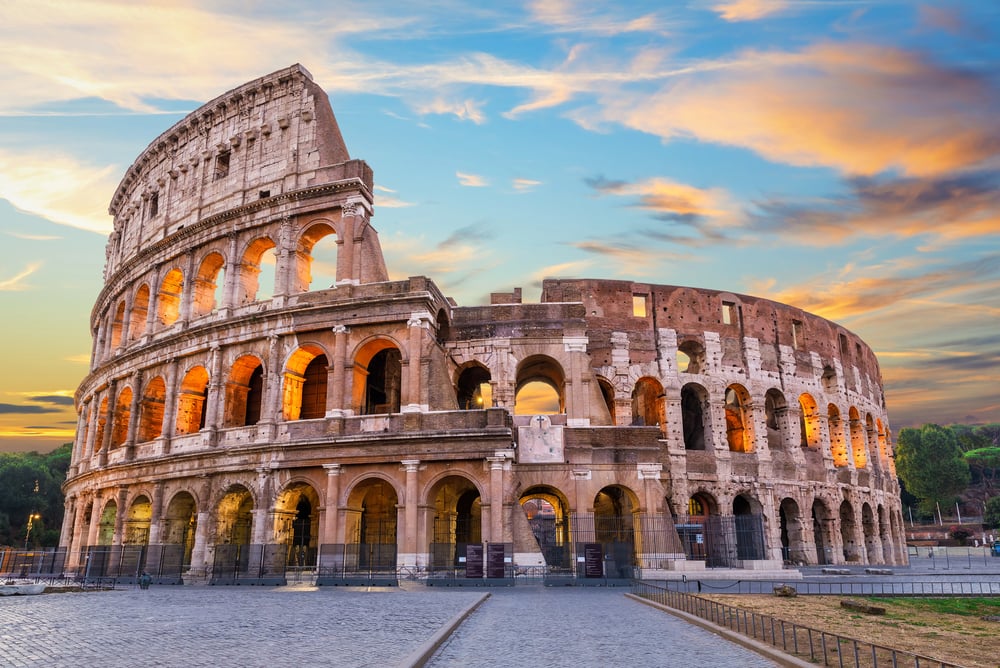
The Colosseum stands as a symbol of Roman engineering, but it started as an act of spite. Emperor Vespasian built it on the grounds of Nero’s private palace, deliberately drowning out the memory of his predecessor.
Nero had claimed that land for himself after the Great Fire of Rome, building an enormous estate while citizens lived in ruins. Vespasian wanted Romans to know that this new emperor returned public space to the public.
The arena hosted gladiator fights, sure. But its location made a political statement that resonated louder than any combat ever could.
What Stonehenge’s Missing Stones Reveal

You look at Stonehenge and see a circle of massive rocks. What you don’t see are the dozens of stones that used to stand there but vanished over the centuries.
People hauled them away to build churches, homes, and farm walls. In the 1600s, local residents treated the monument like a quarry, viewing those ancient rocks as free building materials.
The theft continued until the site gained legal protection. Each missing stone represents not just architectural loss but a community’s shifting values about preservation versus practicality.
The Taj Mahal’s Forbidden Twin

Shah Jahan planned to build a second Taj Mahal across the Yamuna River. This one would be made of black marble and serve as his own tomb, mirroring the white marble monument he built for his wife.
He wanted the two structures to face each other, connected by a bridge. His son had other ideas.
Aurangzeb overthrew his father, imprisoned him in the Agra Fort, and scrapped the entire project. Shah Jahan spent his final years staring at his wife’s tomb from a window, his own grand mausoleum reduced to fantasy.
The foundation stones for the black Taj Mahal were actually laid. Archaeological surveys found them beneath the gardens across the river.
But Aurangzeb saw his father’s spending as excessive and politically dangerous. He redirected resources toward military campaigns instead.
The black marble that Shah Jahan had already purchased disappeared into other construction projects.
Angkor Wat’s Water Problem

Engineers built Angkor Wat to function as a working city, not just a temple complex. The entire structure relied on an intricate water management system that channeled monsoon rains through canals, reservoirs, and moats.
This system provided drinking water, supported agriculture, and even regulated temperature inside the temple structures. But climate records show that the region experienced severe droughts in the 14th and 15th centuries, alternating with devastating floods.
The water system that made Angkor Wat possible ultimately contributed to its abandonment. The droughts depleted the reservoirs.
The floods destroyed the canals. The population couldn’t maintain the infrastructure anymore and gradually moved away.
When European explorers “discovered” the site in the 1800s, they marveled at the architecture but completely missed the hydraulic engineering that had sustained thousands of people for centuries.
The Easter Island Statues Nobody Sees

The famous moai statues on Easter Island have bodies buried underground. Most photos show just the heads, but excavations revealed that many statues extend 20 feet or more below the surface.
The buried sections contain petroglyphs and details that artists carved knowing they’d never be visible once the statue was erected. Why add decoration that nobody would see?
The islanders believed the statues contained the mana, or spiritual power, of their ancestors. Those hidden carvings served a spiritual purpose, not an aesthetic one.
The island’s population once reached 15,000 people. They organized into clans that competed to build increasingly massive statues.
This competition depleted the island’s resources. The forests disappeared, cut down to move the statues.
The soil eroded. Food became scarce.
By the time Europeans arrived, only a few thousand people remained. The statues stood as monuments to both spiritual devotion and resource mismanagement.
What Machu Picchu’s Mirrors Tell Us

Archaeologists found small, precisely polished metal mirrors throughout Machu Picchu. These weren’t for vanity.
The Inca used them to communicate between different parts of the city by reflecting sunlight. The steep terrain made shouting ineffective, and the dense fog that frequently covered the site made visual signals unreliable.
But mirrors could cut through the mist, sending coded flashes of light across distances. The placement of these mirrors reveals how the Inca thought about urban design.
They built with communication in mind from the beginning, integrating signaling systems into the architecture itself. Modern engineers study these mirror positions to understand how information flowed through ancient cities.
The mirrors also suggest that Machu Picchu hosted more coordinated activities than researchers previously thought.
The Parthenon’s Original Colors

The stark white marble of the Parthenon appeals to modern aesthetic sensibilities. But the ancient Greeks painted it in bright reds, blues, and golds.
Chemical analysis of the stone surface reveals traces of pigments that once covered every visible surface. The statues featured realistic skin tones.
The columns bore intricate patterns. The building looked less like a pristine temple and more like an explosion of color.
This discovery challenges centuries of Western art history. Renaissance artists and Neoclassical architects modeled their work on what they thought ancient Greek buildings looked like.
They created an entire tradition based on a misunderstanding—that the Greeks valued bare white marble. The Greeks actually loved color.
They just didn’t have paint formulas durable enough to survive millennia of weathering.
Why Petra Has So Few Inscriptions

The Nabataeans carved the elaborate facades of Petra but left almost no written records inside. Other ancient civilizations covered their monuments with texts, but Petra’s structures remain strangely silent.
Scholars initially thought this indicated low literacy rates. But business contracts on papyrus and pottery fragments show that the Nabataeans kept extensive written records.
They just didn’t carve them into their buildings. The answer lies in the Nabataean relationship with their trading partners.
As middlemen in the spice trade, they dealt with Greeks, Romans, Arabs, and Persians. Carved inscriptions in any one language would alienate the others.
By keeping their monuments text-free, they maintained commercial neutrality. The architecture spoke a universal language of wealth and capability without favoring any particular cultural tradition.
The Great Wall’s Sticky Rice Secret

Chinese engineers mixed sticky rice into the mortar that holds the Great Wall together. This sounds like folklore, but chemical analysis confirms it.
The rice created a compound more durable than either ingredient alone. Walls built with this mortar have survived earthquakes that destroyed structures made with conventional materials.
Some sections of the wall remain standing today specifically because of this rice-based mortar. This technique wasn’t unique to the Great Wall.
Chinese builders used sticky rice mortar in pagodas, tombs, and city walls across the country. But the Great Wall represents the largest application of this technology.
Modern engineers study the compound to develop more sustainable building materials. The ancient formula outperforms many modern adhesives in durability tests.
What Pompeii’s Graffiti Actually Says

The volcanic ash that preserved Pompeii also preserved hundreds of written messages scratched into walls. Most tourists expect profound statements about life and death.
Instead, they find shopping lists, insults, bar reviews, and romantic complaints. One wall features a complaint about the quality of local bread.
Another contains elaborate insults directed at a rival business owner. A third advertises a house for rent with remarkably detailed terms.
These mundane messages tell you more about daily life than any formal historical record. The people of Pompeii worried about the same things modern people do—money, relationships, reputation.
The graffiti shows that they used walls like modern people use social media, broadcasting opinions and grievances to anyone who passed by. The most interesting inscriptions aren’t the artistic ones but the throwaway comments that nobody expected would survive 2,000 years.
The Sphinx’s Forgotten Dream
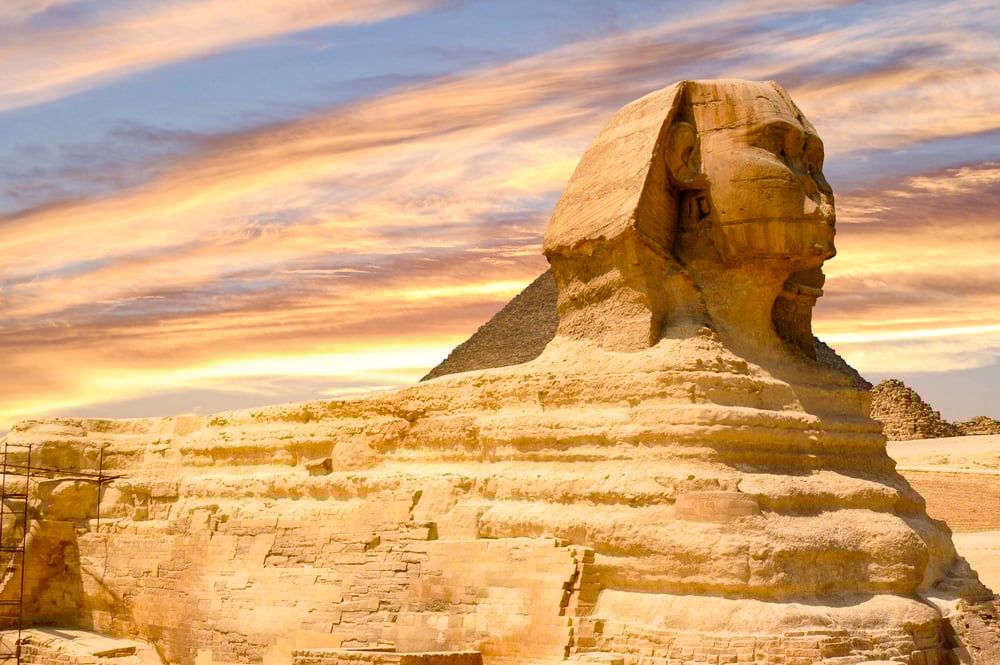
The Great Sphinx spent most of its existence buried in sand up to its shoulders. Only the head remained visible for thousands of years.
Thutmose IV commissioned the first major excavation around 1400 BCE, and his workers carved the Dream Stele between the Sphinx’s paws. The text describes how Thutmose fell asleep in the Sphinx’s shadow during a hunting trip.
The Sphinx appeared to him in a dream, promising to make him pharaoh if he cleared away the sand. This wasn’t just ancient propaganda.
The Dream Stele tells you how Egyptians viewed their monuments—as living entities that could form relationships with humans. The sand that buried the Sphinx wasn’t seen as neglect but as a natural part of the monument’s life cycle.
Excavating it represented an act of spiritual renewal, not just historical preservation. Modern conservation efforts miss this dimension entirely.
Why the Pyramids Face Exactly North

The Great Pyramid of Giza aligns with true north to within 1/15th of a degree. This precision seems impossible given the tools available to ancient Egyptians.
No one knows exactly how they achieved it, but the most likely method involves tracking stars. Specifically, they tracked the circumpolar stars that never set below the horizon.
By marking the rising and setting positions of these stars and bisecting the angle between them, they could determine true north. This technique requires patience and careful observation over multiple nights.
It also reveals something about how Egyptians understood cosmic order. They didn’t just want their pyramids to look impressive.
They wanted them to participate in the eternal patterns of the universe. The alignment connects the physical structure to the movement of the heavens, anchoring the pharaoh’s tomb in cosmic permanence.
How Tourists Changed the Monuments Themselves
The ancient monuments you visit today aren’t the same ones people saw 100 years ago. Tourism has physically altered these structures.
At the Colosseum, millions of footsteps have worn grooves into stone floors. At Stonehenge, human oils from decades of touching the stones changed their chemical composition.
At Angkor Wat, visitor traffic compressed the ground around the temples, shifting foundations and creating cracks. Some changes are obvious.
Others remain invisible but significant. The carbon dioxide that crowds breathe out accelerates limestone decay inside enclosed tombs.
The heat from camera flashes fades ancient pigments. The vibrations from nearby traffic weaken structural supports.
These monuments survived centuries of weathering and warfare, only to face new threats from the people who came to appreciate them.
Where Time Leaves Its Mark

History keeps moving, even inside old stone. Each person leaves something behind – slow changes piling up like dust on a windowsill.
A name carved by a traveler long ago sticks to the rock. Fixing things sometimes means guessing, getting it wrong, still leaving a trace.
A space now empty, once filled by a rock taken for someone’s yard border. Every structure holds every phase together – built long ago, used across ages, left behind, then cared for again much later.
Nowhere visible remains of the first structure – it vanished long ago. What you face today grew like a stack of rewritten pages, one era atop another, none wiping clean the marks below.
Those buried tales? Not concealed at all. Just spoken in cracked rock, absent fragments, traces of hands that shaped them – speech few have bothered to understand.
Stone markers say plenty if you listen right. It takes the right curiosity to hear them.
More from Go2Tutors!

- The Romanov Crown Jewels and Their Tragic Fate
- 13 Historical Mysteries That Science Still Can’t Solve
- Famous Hoaxes That Fooled the World for Years
- 15 Child Stars with Tragic Adult Lives
- 16 Famous Jewelry Pieces in History
Like Go2Tutors’s content? Follow us on MSN.



