Highest Freefalls That Didn’t End in Disaster
Human beings aren’t meant to fall from great heights. When gravity takes over and we plummet toward Earth, the odds of survival typically vanish with each passing second. Yet somehow, against all statistical probability, some people have experienced mind-boggling freefalls and lived to tell their tales—walking away with injuries ranging from surprisingly minor to severe but survivable.
Here is a list of 15 of history’s most incredible freefall survival stories that defy both gravity and expectations.
Vesna Vulović
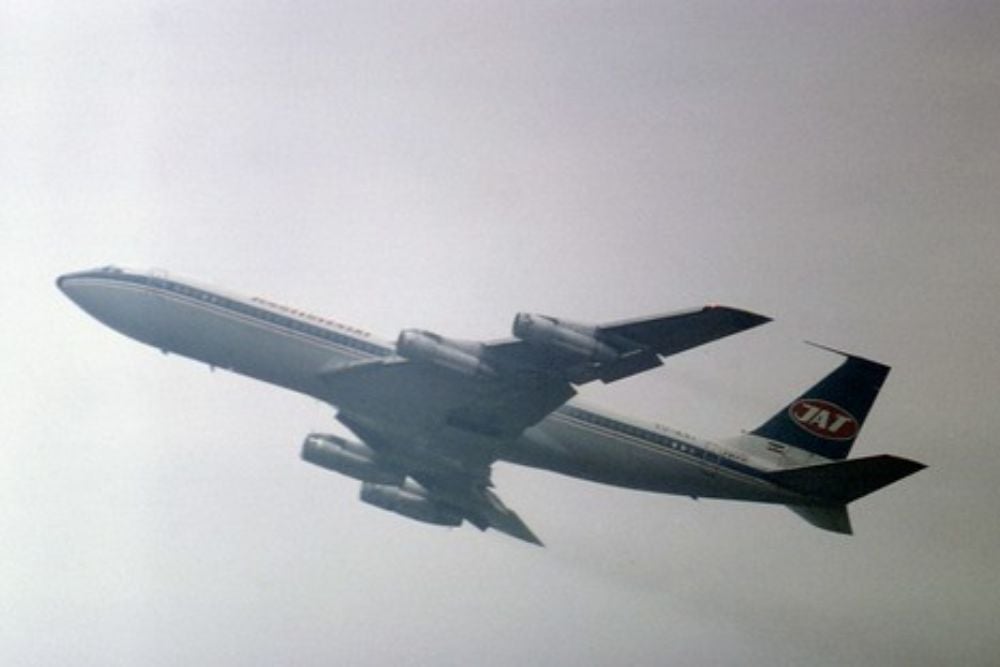
Flight attendant Vesna Vulović wasn’t supposed to be working on January 26, 1972, when she boarded JAT Flight 367. A last-minute scheduling mix-up put her on the ill-fated flight that would explode mid-air over Czechoslovakia at 33,000 feet.
The explosion tore the DC-9 aircraft apart, sending Vulović plummeting to Earth while still strapped to a section of the cabin. She landed on a snow-covered slope, which likely cushioned her fall just enough.
The 22-year-old Yugoslav flight attendant suffered a fractured skull, broken vertebrae, and was in a coma for days, but ultimately survived the highest fall ever recorded without a parachute. Her 33,000-foot drop earned her a place in the Guinness Book of World Records—a distinction most people wouldn’t want to compete for.
Alan Magee

World War II presented numerous ways to die, but American airman Alan Magee found one of the most improbable ways to survive. During a bombing mission over France in 1943, Magee’s B-17 bomber was hit by anti-aircraft fire.
The explosion blew him out of the aircraft without a parachute, sending him into a 22,000-foot freefall. Incredibly, Magee crashed through the glass roof of the St. Nazaire train station before landing on the floor inside.
The glass roof slowed his descent just enough to prevent certain death. Magee suffered numerous injuries, including multiple fractures and severe damage to his lung and kidney, but German troops captured him and provided medical treatment.
He survived not only the fall but also captivity as a prisoner of war, returning home with a remarkable story of survival against impossible odds.
Like Go2Tutors’s content? Follow us on MSN.
Ivan Chisov

Soviet Air Force Lieutenant Ivan Chisov had a plan when his plane was shot down in 1942—to delay opening his parachute until he was clear of enemy aircraft to avoid being shot while descending slowly. Unfortunately, the bitter cold at high altitude caused him to lose consciousness during freefall, preventing him from deploying his chute.
Chisov fell approximately 22,000 feet before hitting the edge of a snow-covered ravine, which created a fortunate sloping effect that distributed the impact energy. The snow-covered slope essentially acted like a natural slide, dispersing the force of his landing across a greater distance rather than in one catastrophic impact.
He suffered severe injuries, including a broken pelvis and spinal damage, but was back flying missions within months—a testament to both remarkable luck and Soviet determination.
Nicholas Alkemade

RAF tail gunner Nicholas Alkemade faced a terrible choice in 1944 when his Lancaster bomber caught fire at 18,000 feet during a mission over Germany. With his parachute already engulfed in flames, Alkemade decided that a quick death from impact was preferable to burning alive.
He jumped from the aircraft without a parachute, plummeting through the night sky. In an almost miraculous turn of events, Alkemade crashed through pine trees and into a deep snowdrift, which cushioned his landing enough to save his life.
When German troops found him, they were so skeptical of his story that they initially accused him of being a spy who had parachuted in. His lack of injuries—just minor scratches and bruises—made his account seem even more implausible, but the wreckage of his aircraft eventually confirmed his extraordinary tale.
Juliane Koepcke

Seventeen-year-old Juliane Koepcke was flying with her mother on Christmas Eve 1971 when their LANSA Flight 508 was struck by lightning over the Peruvian rainforest. The airplane disintegrated mid-air, sending Koepcke, strapped to her seat row, into a 10,000-foot freefall.
She crashed through the dense jungle canopy, which progressively slowed her descent before her final impact on the forest floor. Despite suffering a broken collarbone, a deep gash in her arm, and an eye injury, Koepcke regained consciousness the next day.
Remarkably, she’d spent her childhood in the same rainforest where her parents ran a research station, giving her unique survival knowledge. She followed a small stream for 11 days, wading through water and fighting infection from maggot-infested wounds before finally being rescued by loggers—the sole survivor of 92 passengers.
Like Go2Tutors’s content? Follow us on MSN.
Joe Jones
During a skydiving exhibition in 1963, experienced parachutist Joe Jones faced every jumper’s nightmare when both his main and reserve parachutes failed. Jones fell approximately 10,000 feet after his primary chute tangled and his backup deployed too late to fully inflate.
He crashed through a grape arbor in a backyard in Cottonwood, California, which broke his fall just enough to save his life. The flexible vines distributed the energy of impact in a way rigid structures couldn’t have.
Jones suffered multiple serious injuries, including broken bones and internal damage, requiring months of hospitalization and recovery. After his incredible survival, Jones did what few in his position would consider—he eventually returned to skydiving, though with considerably more attention to his equipment checks.
Christine McKenzie
Skydiving instructor Christine McKenzie had completed thousands of jumps before her near-fatal accident in 2004. While performing a routine jump in Australia, both her main and reserve parachutes malfunctioned, sending her plummeting 11,000 feet.
McKenzie’s landing spot proved crucial to her survival—she crashed onto a row of blackberry bushes, which distributed the impact across countless flexible branches and thorns. The springy vegetation created a natural braking mechanism that slowed her fall just enough to prevent certain death.
She suffered a broken pelvis, ribs, and punctured lungs but recovered fully within months. McKenzie later described the sensation of falling as ‘peaceful acceptance’ once she realized her fate was sealed—until the miracle of the blackberry bushes intervened.
Cliff Judkins
Marine Corps pilot Cliff Judkins faced disaster during a routine mid-air refueling operation in 1963 when his F-8 Crusader fighter jet caught fire. With flames spreading through the cockpit and his ejection seat failing, Judkins manually bailed out at 15,000 feet—without a working parachute. He fell for nearly two minutes, reaching terminal velocity before hitting the Pacific Ocean.
Water is generally as lethal as concrete from such heights, but Judkins’ precise entry angle and remarkable luck allowed him to survive the impact. He suffered 23 fractures, including to his back, pelvis, and ribs, along with collapsed lungs and other internal injuries.
After floating for an hour with a life vest, he was rescued by a nearby ship. Despite his catastrophic injuries, Judkins eventually recovered and even returned to flying status—a testament to both extraordinary fortune and personal resilience.
Like Go2Tutors’s content? Follow us on MSN.
James Boole

Professional cameraman and skydiver James Boole was filming another jumper in Russia in 2009 when a communication error led to disaster. Boole was supposed to open his parachute when his jump partner signaled, but miscommunication meant Boole received no signal.
He plummeted 6,000 feet, realizing his mistake just seconds before impact—far too late for his parachute to fully deploy. Boole slammed into a snow-covered field at an estimated 90 mph but landed in a relatively flat position that distributed the force across his body.
The deep snow further cushioned his landing, creating a ‘survivable deceleration zone’ where the snow compressed rather than presenting a solid impact surface. He suffered a broken back and ribs but survived what should have been certain death, returning to skydiving just fourteen months after his accident.
Michael Holmes
Veteran skydiver Michael Holmes had completed over 7,000 successful jumps before his near-fatal accident in 2006. While jumping in New Zealand, Holmes’ main parachute tangled, and his reserve deployed too late to fully inflate.
His 12,000-foot fall was captured on his helmet camera, including his calm analysis of his situation and goodbye messages to loved ones. Holmes crashed through a blackberry bush before hitting the ground, with the bush dissipating just enough energy to keep him alive.
The flexible, dense vegetation created a natural crumple zone that extended his deceleration time just enough to prevent instant death. He suffered a punctured lung and broken ankle but was able to move and speak almost immediately after impact.
Holmes’ survival was so improbable that his first words after the fall were reportedly, ‘I should be dead.’
Joshua Hanson

In 2007, 29-year-old Joshua Hanson made a terrible decision during a night of drinking with friends. After checking into the Quality Inn in Mankato, Minnesota, Hanson ran down a hotel corridor and crashed through a window, falling 70 feet to the parking lot below.
The building’s fourth-floor window was only waist-high, and Hanson’s momentum carried him straight through it. What makes his survival remarkable isn’t the height itself—though 70 feet is typically deadly—but the fact that he landed on his feet and walked away with only minor injuries.
His intoxicated state may have actually helped him survive, as his relaxed muscles absorbed the impact differently than a tense, sober person’s would have. Hanson suffered a broken leg and wrist but avoided the head and spinal injuries that typically prove fatal in similar falls.
Like Go2Tutors’s content? Follow us on MSN.
Luke Aikins
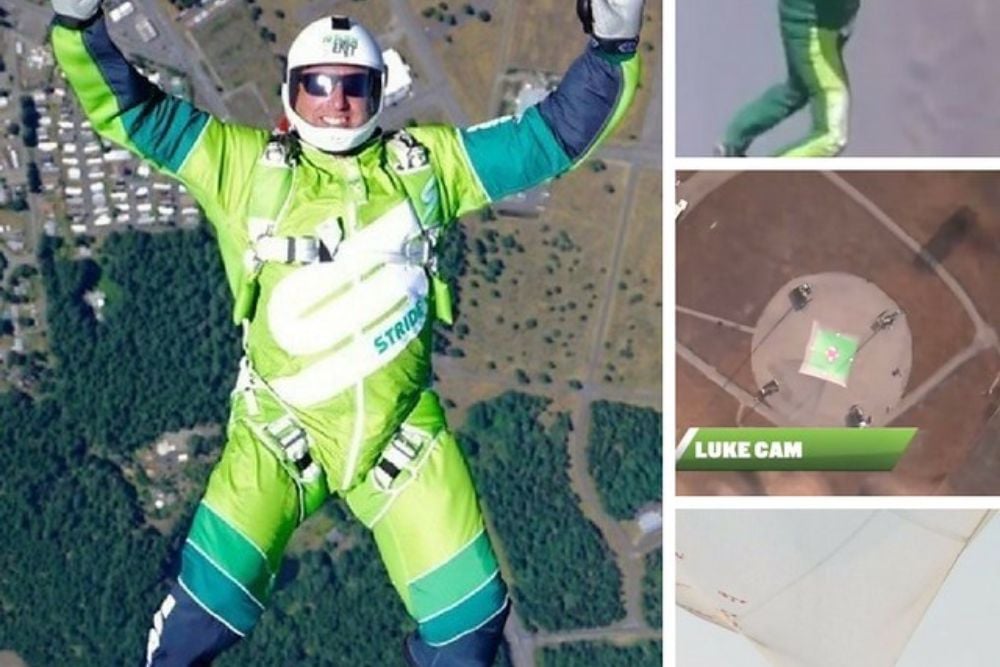
Unlike others on this list, professional skydiver Luke Aikins intentionally jumped from 25,000 feet without a parachute in 2016—the first person ever to deliberately attempt such a feat. His survival wasn’t luck but meticulous planning, as Aikins aimed for a specially designed 100-by-100-foot net suspended 20 feet above ground in the California desert.
The net, made with Spectra fiber (a material stronger than steel), was designed to gradually decelerate Aikins from his 120 mph terminal velocity. After falling for about two minutes, Aikins successfully hit the target net, which caught him safely before he rolled over to signal he was uninjured.
While technically a controlled stunt rather than an accident, Aikins’ jump represents the first human to intentionally freefall from such height without any personal deceleration device and walk away completely unharmed.
Kevin Hines

When 19-year-old Kevin Hines jumped from San Francisco’s Golden Gate Bridge in 2000, he didn’t intend to survive. The 220-foot fall from the bridge takes just four seconds and hits the water at 75 mph, creating an impact that has proven fatal for approximately 98% of jumpers.
Hines experienced immediate regret mid-fall and managed to adjust his position from headfirst to feet-first, which proved crucial to his survival. Upon hitting the water, Hines’ legs shattered, but he remained conscious and managed to surface despite a severely injured back.
A sea lion reportedly kept him afloat until Coast Guard rescuers arrived, though Hines later acknowledged this could have been a hallucination. His survival transformed his life, and he became a prominent mental health advocate, sharing his story to prevent others from following his initial path.
Shayna Richardson
First-time skydiver Shayna Richardson experienced a nightmare scenario during her 2005 jump when both her main and reserve parachutes malfunctioned. Richardson, who was unknowingly two weeks pregnant at the time, fell 10,000 feet before crashing face-first into a parking lot in Siloam Springs, Arkansas.
Her partial parachute deployment created just enough drag to reduce her speed from terminal velocity but not enough to prevent catastrophic injury. She suffered a broken pelvis, a broken leg, and needed extensive facial reconstruction after the impact.
What makes her survival even more remarkable is that her unborn child also survived the ordeal, protected somehow within her body despite the tremendous forces involved. Richardson later gave birth to a healthy baby boy, making this perhaps the only case of a dual survival from such an extreme freefall.
Like Go2Tutors’s content? Follow us on MSN.
British Paratrooper

During a training jump in the 1990s, a British paratrooper (whose name remains confidential for military reasons) experienced a rare and terrifying scenario—both his main and reserve parachutes failed completely. The soldier fell approximately 800 feet, a height that should guarantee fatal injuries.
His extraordinary luck came in his landing spot—he crashed directly through the glass roof of a greenhouse. The progressive breaking of the glass panels slowed his descent incrementally, and the aluminum frame structures collapsed in sequence, each absorbing a portion of his energy.
Finally, the plants, soil, and wooden plant tables inside the greenhouse provided the final deceleration zone. The paratrooper suffered broken bones and internal injuries but made a full recovery.
Military investigators later calculated that any other landing spot within hundreds of yards would have resulted in certain death.
The Power of Chance

The stories of these remarkable survivors remind us of the intricate dance between physics, circumstance, and sheer luck that determines human survival. What connects these incredible cases isn’t just the heights from which these individuals fell, but the precise combination of factors that saved them—snow, vegetation, water entry angles, landing surfaces, and even body positioning during impact. Their experiences have provided valuable data for survival research, aviation safety, and medical trauma studies.
While modern science can explain the biomechanics of why some falls prove survivable against all odds, there remains something profoundly awe-inspiring about these cases. They stand as extraordinary reminders of human resilience and the sometimes razor-thin margin between life and death that we all navigate, usually without ever knowing just how close we come to the edge.
More from Go2Tutors!

- 18 Unexpectedly Valuable Collectibles You Might Have Lying Around
- 15 Things Every Teenager in the ’70s Did That Teens Today Wouldn’t Understand
- 15 Strange Things People Have Tried to Ban (And Failed)
- 15 Inventions That Were Immediately Banned After Being Created
- 20 Actors Who Were Almost Cast in Iconic Roles
Like Go2Tutors’s content? Follow us on MSN.