Historic Alliances That Changed the World
Nations rarely stand alone when survival depends on strength. Throughout history, countries formed partnerships that reshaped borders, toppled empires, and determined which civilizations would thrive.
These alliances weren’t just diplomatic niceties—they were agreements that sent millions to war, redirected global trade, and decided who ruled what. Some lasted centuries.
Others fell apart within years. But each one altered the course of human events in ways that still echo today.
The Delian League Created an Athenian Empire

After Persian invasions threatened Greek city-states in 478 BCE, Athens organized neighboring cities into a defensive alliance. Members contributed ships or money to a shared treasury kept on the island of Delos.
The arrangement made sense—Athens had the largest navy and the most experience fighting Persians. Within decades, Athens transformed the voluntary alliance into an empire.
Cities that tried to leave got attacked. The treasury moved from Delos to Athens, where the money funded Athenian building projects instead of defense.
The Parthenon and other monuments that tourists photograph today were built using alliance funds that member cities had no choice but to pay. The partnership that started as mutual protection became domination that sparked the Peloponnesian War.
The Auld Alliance Bound Scotland and France for Three Centuries
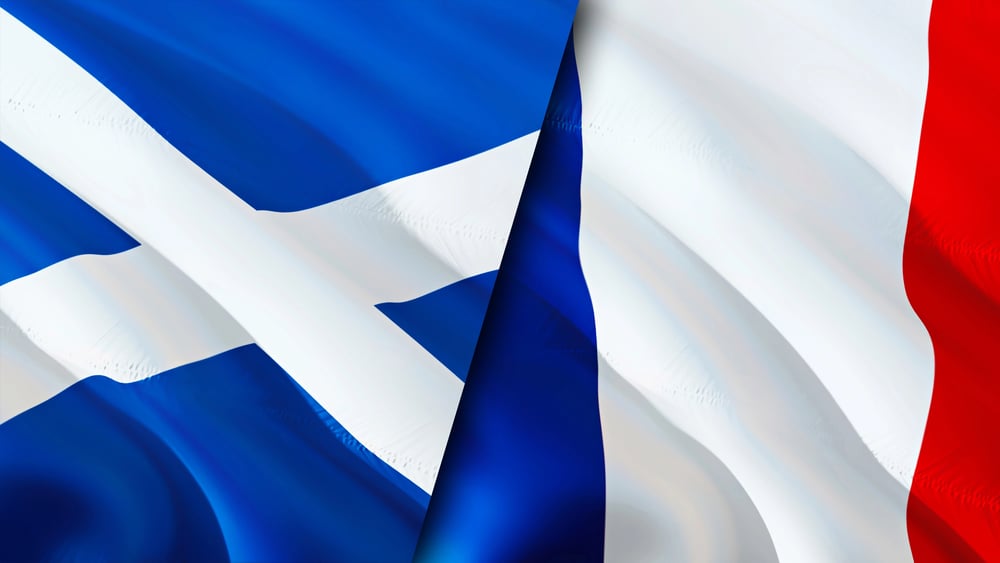
Scotland and France signed a treaty in 1295 to counter English expansion. The alliance lasted until 1560, making it one of the longest military partnerships in European history.
Whenever England invaded Scotland, France opened a second front. When England threatened France, Scottish soldiers crossed the channel to fight.
Thousands of Scots died on French battlefields during the Hundred Years’ War. French military aid helped Scotland maintain independence when English armies would have otherwise conquered it.
The cultural exchange went beyond military cooperation—Scottish guards protected French kings, French wine flowed into Edinburgh, and French words entered the Scots language. The alliance shaped both nations’ identities as much as any internal development.
The Triple Entente Pulled Europe Into Total War

Britain, France, and Russia formed this alliance before World War I to counter the growing power of Germany and Austria-Hungary. The three countries didn’t particularly like each other—Britain and Russia competed for influence in Asia, while Britain and France had been enemies for centuries.
But they feared German expansion more than they distrusted each other. When Austria-Hungary declared war on Serbia in 1914, the alliance system was activated like dominoes falling.
Russia mobilized to defend Serbia. Germany declared war on Russia. France honored its alliance with Russia.
Germany invaded Belgium to attack France, bringing Britain into the conflict. A regional dispute in the Balkans became a continental war because alliances left no room for neutrality.
The partnership that aimed to prevent war instead guaranteed that any conflict would spread uncontrollably.
The Axis Powers Bet on Rapid Conquest

Germany, Italy, and Japan formed this alliance in the late 1930s based on shared opposition to communism and democracy. Each nation pursued imperial expansion and believed military force could achieve quick victories before opponents mobilized.
The alliance functioned poorly in practice. Germany and Japan barely coordinated strategy despite fighting the same enemies. Italy proved militarily weak, requiring German troops to bail out failed campaigns in North Africa and Greece.
Japan’s attack on Pearl Harbor brought the United States into the war without consulting Germany. The three powers fought separate conflicts that happened to occur simultaneously.
Their lack of coordination contributed to their eventual defeat. The alliance showed that shared enemies don’t create effective partnerships without genuine cooperation.
The Allied Powers Coordinated on an Unprecedented Scale

Britain, the Soviet Union, and the United States formed an alliance despite massive ideological differences. Capitalist democracies partnered with a communist dictatorship because defeating Nazi Germany required a combined effort.
The partnership involved constant tension—Stalin demanded a second front in Europe years before D-Day, while Churchill worried about Soviet expansion after the war. Despite friction, the Allies coordinated military operations, shared intelligence, and divided production responsibilities.
American factories built equipment while Soviet soldiers absorbed German attacks and British intelligence cracked codes. The combined effort defeated an enemy that might have won facing each nation separately.
The alliance dissolved into the Cold War almost immediately after victory, proving it was always a marriage of convenience rather than genuine friendship.
The Franco-American Alliance Secured Independence

France supported American colonists fighting Britain starting in 1778. French motivations had nothing to do with democracy or freedom—they wanted to weaken Britain after losing the Seven Years’ War.
The alliance provided Americans with naval support, military training, money, and weapons. French ships blocked British reinforcements at Yorktown, enabling the decisive American victory.
Without French involvement, the Revolution probably would have failed. France bankrupted itself supporting the Americans, contributing to the financial crisis that sparked the French Revolution a decade later.
The alliance succeeded in weakening Britain but destroyed French finances in the process. America gained independence while France collapsed into chaos.
The Anglo-Portuguese Alliance Outlasted Everything

Portugal and England signed the Treaty of Windsor in 1386, creating the world’s oldest active alliance. The partnership survived changes in government, wars across continents, and shifts in global power.
When Napoleon invaded Portugal in 1807, Britain evacuated the Portuguese royal family to Brazil. During World War I, Portugal joined the Allies because of the treaty.
In World War II, both countries stayed officially neutral but cooperated on intelligence and Atlantic bases. The alliance persisted because it served both nations’ interests consistently.
Portugal gained protection from larger European powers. Britain secured ports and trade routes. Neither nation had reason to break an arrangement that worked.
The partnership demonstrates that successful alliances require mutual benefit rather than dramatic gestures or ideological unity.
The Warsaw Pact Enforced Soviet Dominance

The Soviet Union created this alliance in 1955 with Eastern European nations as a counter to NATO. On paper, the partnership involved mutual defense and cooperation.
In reality, it formalized Soviet control over countries occupied after World War II. When Hungary tried to leave in 1956, Soviet tanks crushed the uprising.
Czechoslovakia’s attempt at reform in 1968 met the same fate. The alliance gave legal cover to Soviet military intervention in member states.
Poland managed to maintain some autonomy only by carefully avoiding actions that might trigger invasion. The pact dissolved in 1991 when the Soviet Union collapsed, revealing that the alliance had always been an occupation disguised as a partnership.
The Hanseatic League Controlled Northern Trade

German merchant cities formed this alliance in the 13th century to protect trade routes and negotiate better terms with foreign powers. The league wasn’t a nation but a commercial partnership that operated like one.
Member cities maintained their own governments while coordinating on trade policy, defense, and diplomacy. At its peak, the Hanseatic League controlled commerce from London to Novgorod.
The cities built trading posts across Northern Europe, established their own legal system for disputes, and fielded navies to fight pirates and rival nations. The league declined when nation-states grew powerful enough to control trade within their borders.
But for three centuries, it proved that economic cooperation could create power rivaling traditional kingdoms.
NATO Became the Foundation of Western Defense

Twelve nations formed the North Atlantic Treaty Organization in 1949 to counter Soviet expansion in Europe. The alliance commitment was simple—an attack on one member counts as an attack on all.
American nuclear weapons extended protection to European allies who couldn’t match Soviet conventional forces. The alliance was invoked only once—after the September 11 attacks, when European nations joined American operations in Afghanistan.
NATO expanded after the Cold War ended, absorbing former Warsaw Pact members and extending to Russia’s borders. The alliance that formed to contain the Soviet Union now serves as the primary security structure for Europe and North America.
It persisted beyond its original purpose by adapting to new threats.
The Sino-Soviet Alliance Started and Ended With Stalin

China and the Soviet Union signed a treaty in 1950, creating what appeared to be an unstoppable communist bloc. The Soviet Union provided industrial aid, technical expertise, and military support.
China gained a powerful ally during its vulnerable early years. The alliance fractured within a decade. Ideological disputes about the proper path to communism created bitter rivalry.
Border clashes erupted in 1969, bringing the two countries to the brink of war. The split between communist giants gave Western nations diplomatic opportunities they exploited throughout the 1970s.
Nixon’s visit to China in 1972 succeeded precisely because Sino-Soviet rivalry made Beijing receptive to American overtures. The alliance collapsed because shared ideology couldn’t overcome national interests and personality conflicts between leaders.
The Arab League Struggled With Unity

Seven Arab nations formed this alliance in 1945 to coordinate policy and present a unified front on regional issues. The league expanded to 22 members and established institutions for cultural, economic, and military cooperation.
On paper, it represents over 400 million people across two continents. In practice, the league struggles to achieve consensus.
Member states have fought each other, supported opposite sides in regional conflicts, and maintained vastly different foreign policies. The organization expelled Egypt for making peace with Israel, then readmitted it years later.
Syria’s membership got suspended during its civil war while other members armed different factions. The league shows that cultural and linguistic similarity don’t automatically create political unity.
Shared identity means little when national interests diverge.
ASEAN Brought Stability Through Economics

A group of ten countries in Southeast Asia came together to create an organization aimed at boosting economies and keeping peace across the region. Instead of focusing on defense, this body put effort into commerce and shared investments, because cooperation mattered more than confrontation.
Some members had fought wars before, held opposing beliefs about governance, while also arguing over borders they both claimed. Working quietly, the group stayed clear of heated topics on purpose.
Because decisions need everyone’s agreement, just one country can stop a move. That limit stops bold moves, yet keeps the group intact when tensions rise.
Gains through business ties offered real rewards without stirring political fights. Without strict rules, countries traded well even when they did not agree on everything else.
Lasting longer than rigid defense pacts, this setup lets differences exist alongside shared profit.
Partnerships That Redrew Maps

Together, countries found the strength they lacked alone. When powers teamed up, balance shifted without fanfare.
One by one, empires weakened under shared pressure. Lines on maps emerged from these ties, not ideals.
Speech patterns followed where alliances held sway. Rule structures took shape based on who stood together.
Survival often came down to coordination, never destiny. Out of old pacts came new shapes, even when they broke apart.
What happened then still shows up now – lines on maps, governments standing, wars kept alive – all rooted in choices made long before our time, when countries picked sides without knowing how deep it would go.
More from Go2Tutors!

- The Romanov Crown Jewels and Their Tragic Fate
- 13 Historical Mysteries That Science Still Can’t Solve
- Famous Hoaxes That Fooled the World for Years
- 15 Child Stars with Tragic Adult Lives
- 16 Famous Jewelry Pieces in History
Like Go2Tutors’s content? Follow us on MSN.



