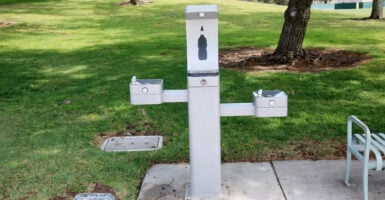
Historic Photos of Public Drinking Fountains
A free drink of water on a city corner looks like the most ordinary thing in the world. It took reformers, donors, health officials and photographers decades to make it ordinary, and the old pictures show how much argument once sat behind a single spout.
Look closely at an archive of fountains and the same questions keep surfacing. Who pays for the water, who is allowed to drink it, and what are they supposed to drink instead? The answers were rarely simple.
Portland’s Bronze Bubblers Built to Rival the Saloon
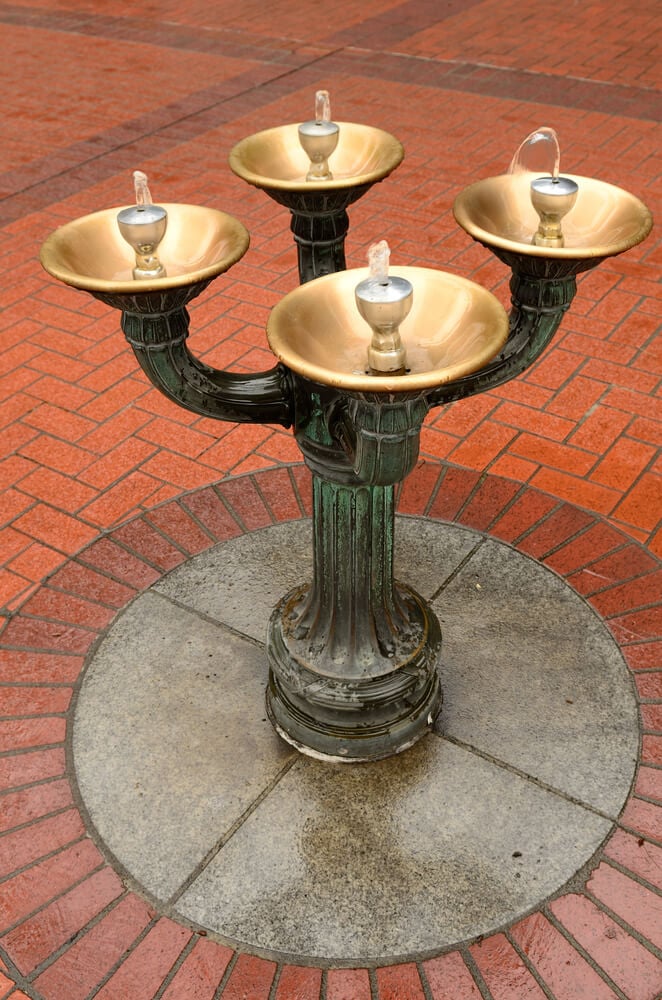
In 1912, Portland lumber baron Simon Benson paid for 20 bronze drinking fountains for downtown streets. The common explanation is that he wanted workers to have a fresh water source close at hand as an alternative to the saloon.
The fountains were set to run continuously, sending up a small arc of water, and they became known as Benson Bubblers. The city now maintains well over 100 of them, which makes a single donor’s idea one of Portland’s most recognizable pieces of street furniture.
The Fountain That Stood for Total Abstinence in Philadelphia
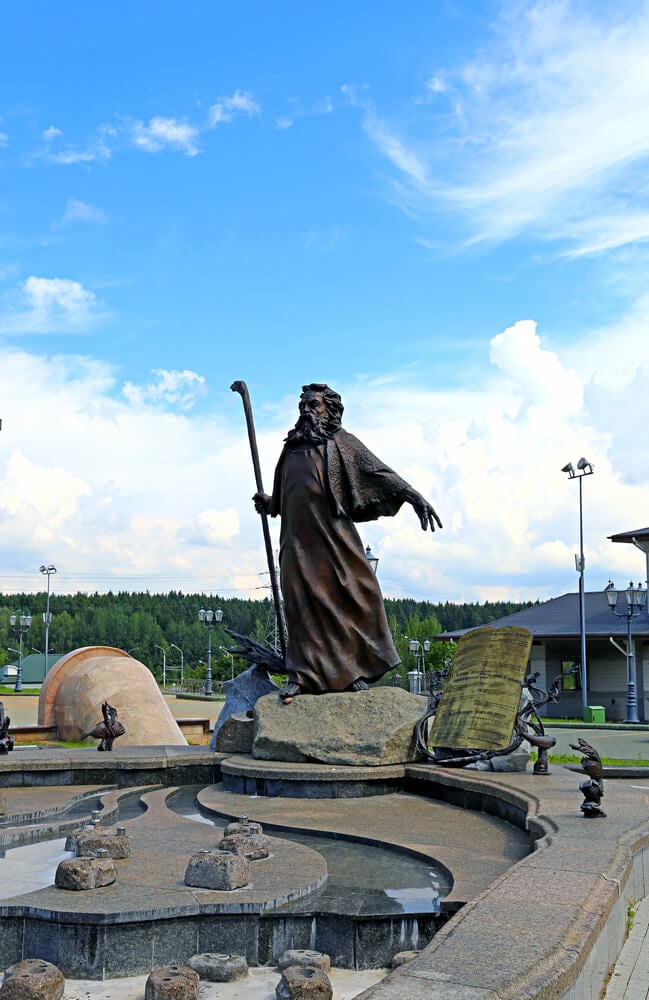
The Catholic Total Abstinence Union of America unveiled its fountain at the 1876 Centennial Exhibition in Philadelphia. A statue of Moses striking the rock crowns the monument, and the base honors Catholic figures, including the Irish temperance crusader Father Theobald Mathew.
After the fair, the fountain was moved to Fairmount Park, where it still stands. Few drinking fountains began life as the centerpiece of a world’s fair.
Washington’s Temperance Fountain and the Dentist Behind It
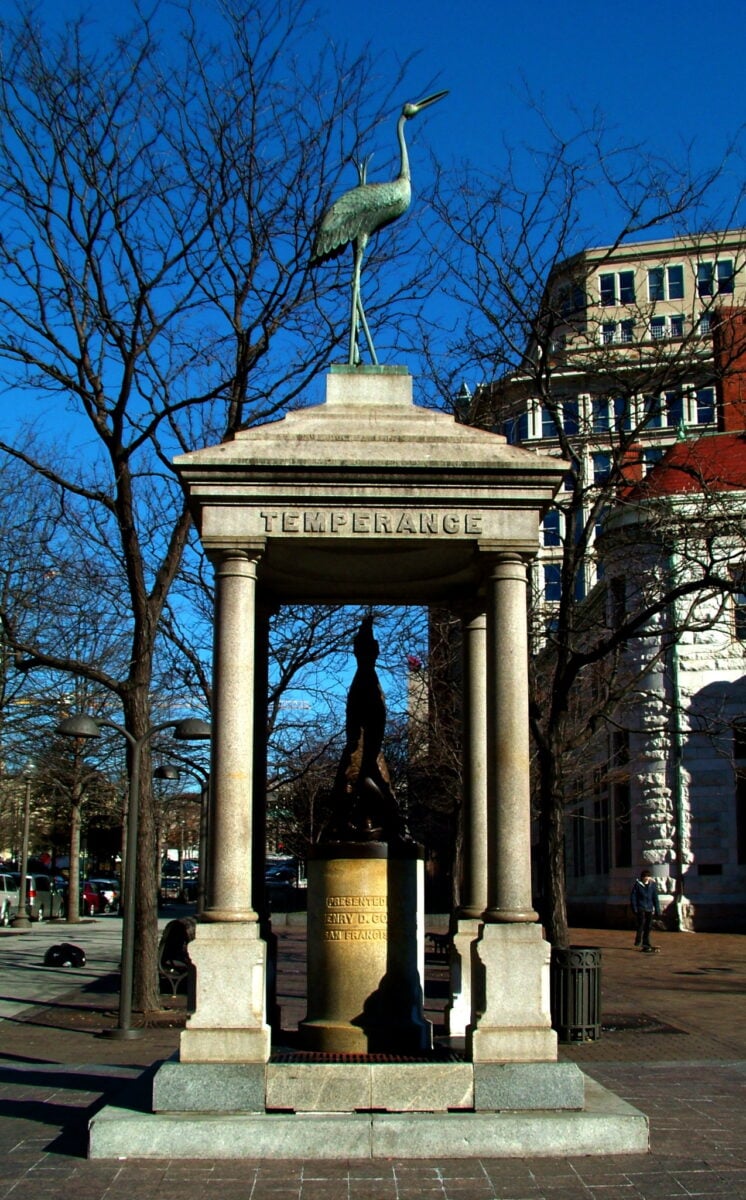
Henry D. Cogswell, a San Francisco dentist, gave Washington a temperance fountain in 1884, placed at Pennsylvania Avenue and Seventh Street. He believed that free public water would draw people away from drink and had similar fountains made for other cities, including one in New York’s Tompkins Square Park.
Critics have mocked the Washington monument almost since the day it appeared, yet it has outlasted nearly every opinion about it. Cogswell never lost his conviction that a granite fountain could reform a city.
London’s First Fountain and the Association Behind It
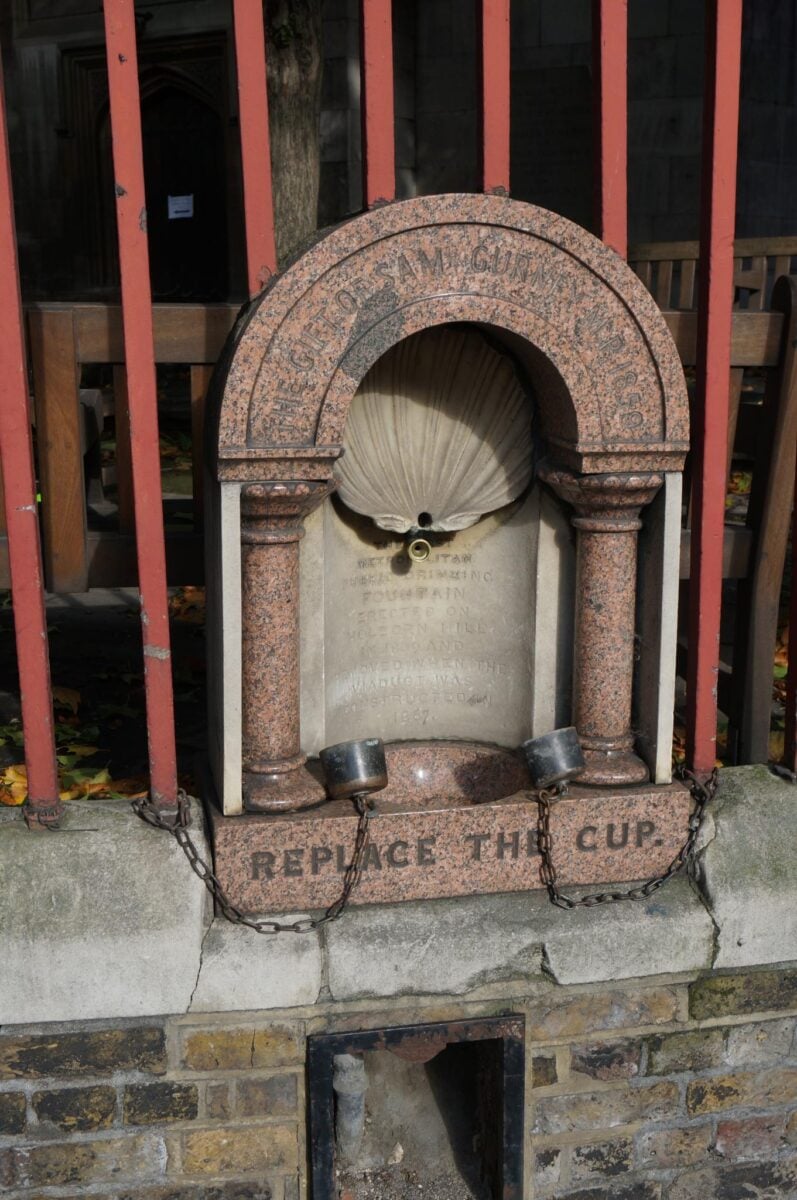
The Metropolitan Drinking Fountain and Cattle Trough Association was founded in London in 1859. Its first public fountain opened that same year at Holborn, funded by the banker and Member of Parliament Samuel Gurney.
The name tells the entire mission, since the group served thirsty people and thirsty livestock with the same enthusiasm. Its fountains and troughs spread across Britain and inspired similar societies elsewhere, including in the United States.
Elliott Erwitt’s Two Fountains in North Carolina
In 1950, photographer Elliott Erwitt photographed a pair of drinking fountains in North Carolina, one labeled “White” and one labeled “Colored.” Titled simply “North Carolina, 1950,” the image became one of the best-known photographic records of Jim Crow in daily life.
It is distributed through Magnum Photos, and prints have been sold through galleries and auction houses. The photograph needs no staging to make its point, because the signs state the rule themselves.
Russell Lee and the “Colored” Water Cooler in Oklahoma City
In 1939, Farm Security Administration photographer Russell Lee photographed a man drinking from a water cooler marked “Colored” in a streetcar terminal in Oklahoma City, Oklahoma. The Library of Congress holds the image under the title “Negro drinking at ‘Colored’ water cooler in streetcar terminal, Oklahoma City, Oklahoma.”
It belongs to a large federal photographic project that documented American life during the Depression. The title preserves the language of the period, which is part of the evidence.
Gordon Parks Photographs Fountains in Mobile, Alabama
In 1956, Gordon Parks, the first Black staff photographer at Life magazine, traveled through Alabama to document segregation for a Life photo essay. One image from that work is titled “Drinking Fountains, Mobile, Alabama,” and it is held in the collection of the Museum of Contemporary Photography.
Parks had joined the magazine in 1948, and the assignment drew on his own experience of racism. The work later became known as “Segregation Story” and has been exhibited around the country.
The Kansas Official Who Went to War Against the Common Cup
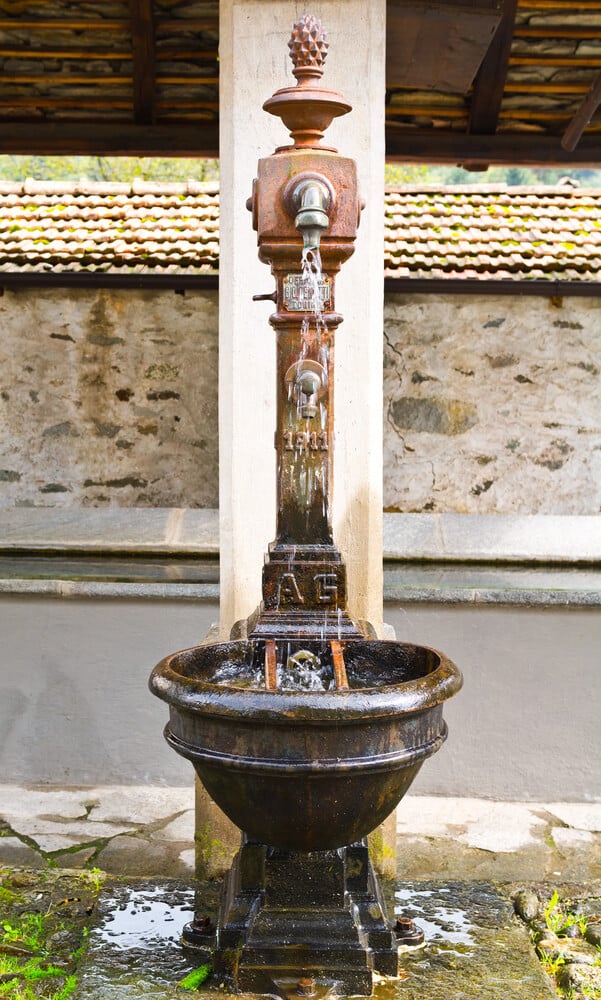
In 1909, Kansas banned the shared drinking cup in public places, a campaign driven by Dr. Samuel J. Crumbine of the state board of health. Tin cups chained to fountains and water coolers were a fixture of schools, depots and trains, and critics saw them as a way to pass along disease.
Crumbine was also known for slogans such as “Swat the fly” and “Don’t spit on the sidewalk.” His cup campaign pushed communities to look for sanitary alternatives.
Henry Bergh’s ASPCA Put Water Where Horses Worked
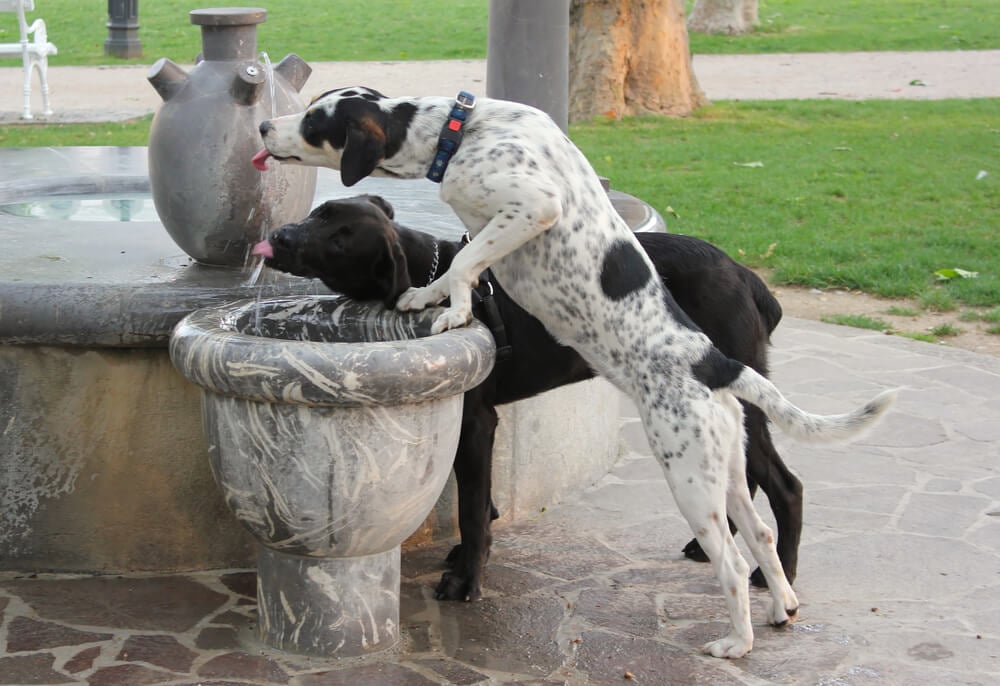
The American Society for the Prevention of Cruelty to Animals, founded in New York in 1866 by Henry Bergh, did more than rescue mistreated horses. It also erected drinking fountains and troughs across the city, and a surviving ledger titled “Record of Drinking Fountains Erected by ASPCA” is held in a North Carolina State University collection.
One ASPCA horse trough remains in Central Park. In a city that depended on horses, public water for animals counted as public health.
The National Humane Alliance Fountains and Their Granite Basins
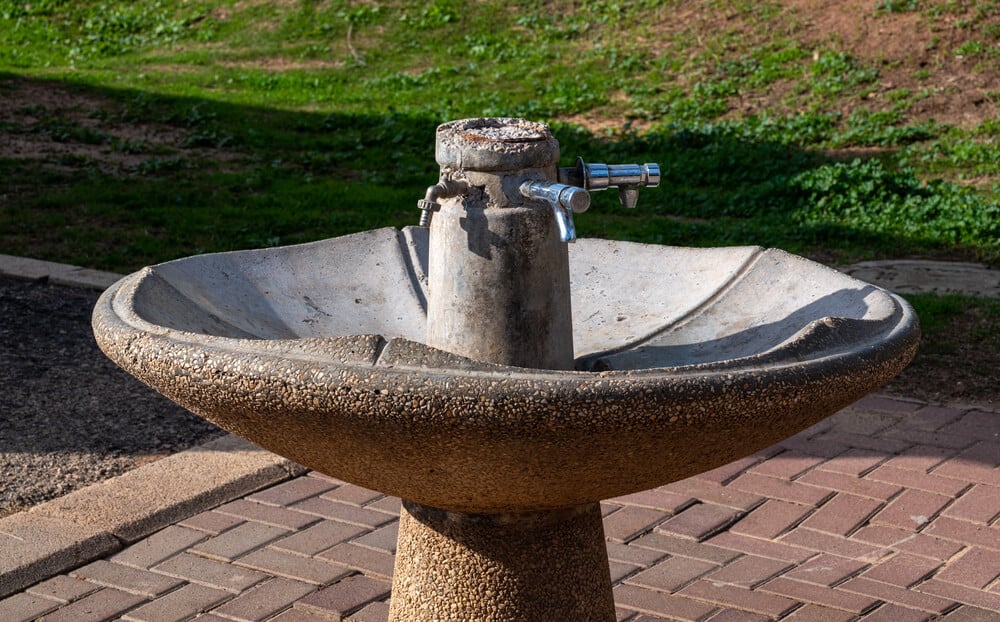
Hermon Lee Ensign founded the National Humane Alliance, which funded granite fountains for towns and cities across the United States. The fountains were built with separate basins so that horses, dogs and people could each drink without crowding one another.
Examples survive in places as far apart as Sioux Falls, South Dakota, and Denver, Colorado, where one stands near Colfax, Tremont and 13th Street. Several have been restored by local groups that decided a century-old trough was worth saving.
The Hamilton Fountain at Riverside Park
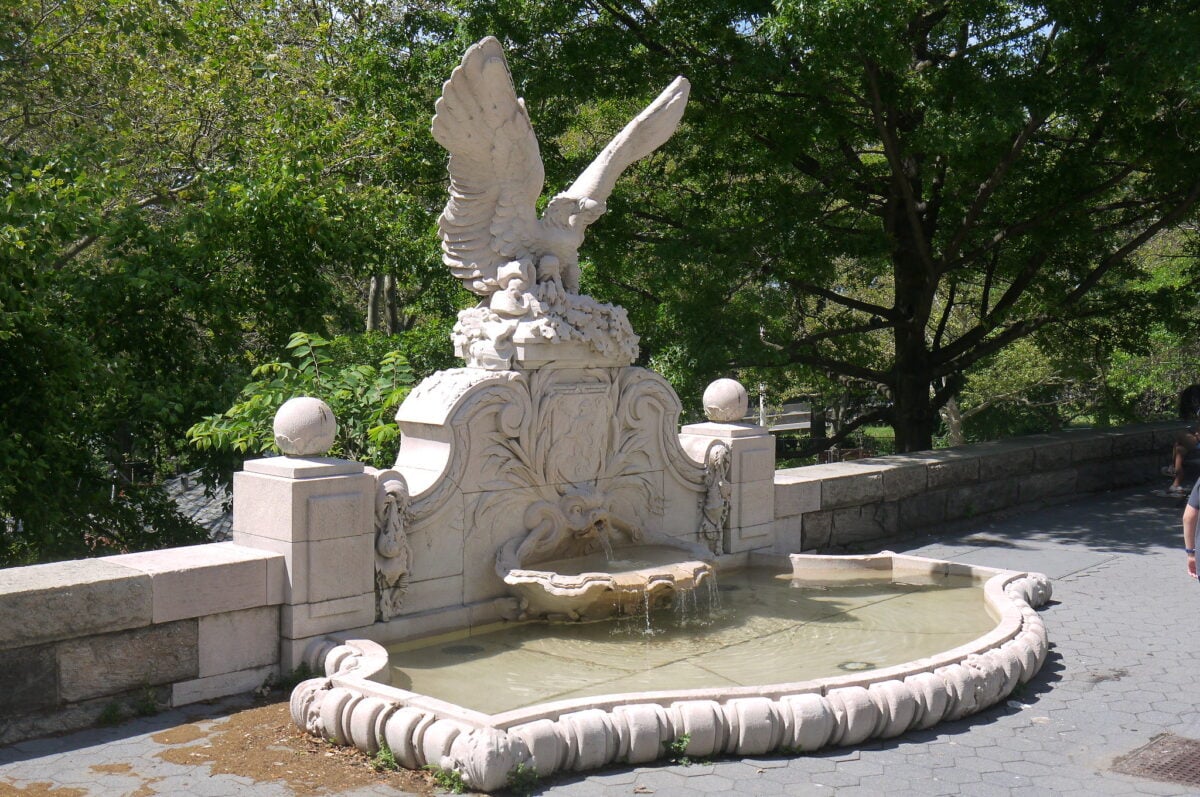
On Manhattan’s Upper West Side, the Hamilton Fountain stands in Riverside Park at 76th Street, carved from Tennessee marble and rising roughly eleven feet. It was built to serve people, horses and dogs at once, a design common in an era of heavy street traffic by animal and cart.
Photographs of fountains like it often show a basin low to the ground and another higher up, which is the clearest sign of who was expected to drink where. The marble is far older than the automobile traffic that now passes it.
How the Dixie Cup Replaced the Tin Dipper
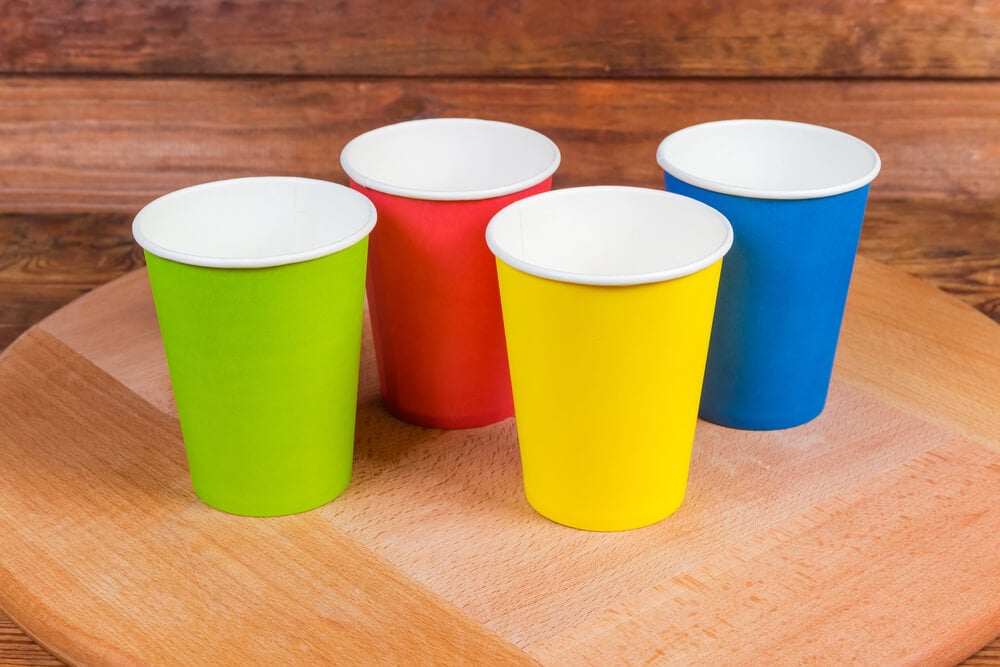
In 1908, Lawrence Luellen and Hugh Moore began selling a paper “Health Kup,” paired with a penny vending machine for water. The idea was to give each drinker a clean cup and make the shared tin dipper unnecessary.
The product was renamed Dixie in 1919. The 1918 flu pandemic helped drive sales, and the cup soon became a standard item in offices, schools and railway stations.
Bubblers, Spouts and the Wisconsin Word for a Drinking Fountain
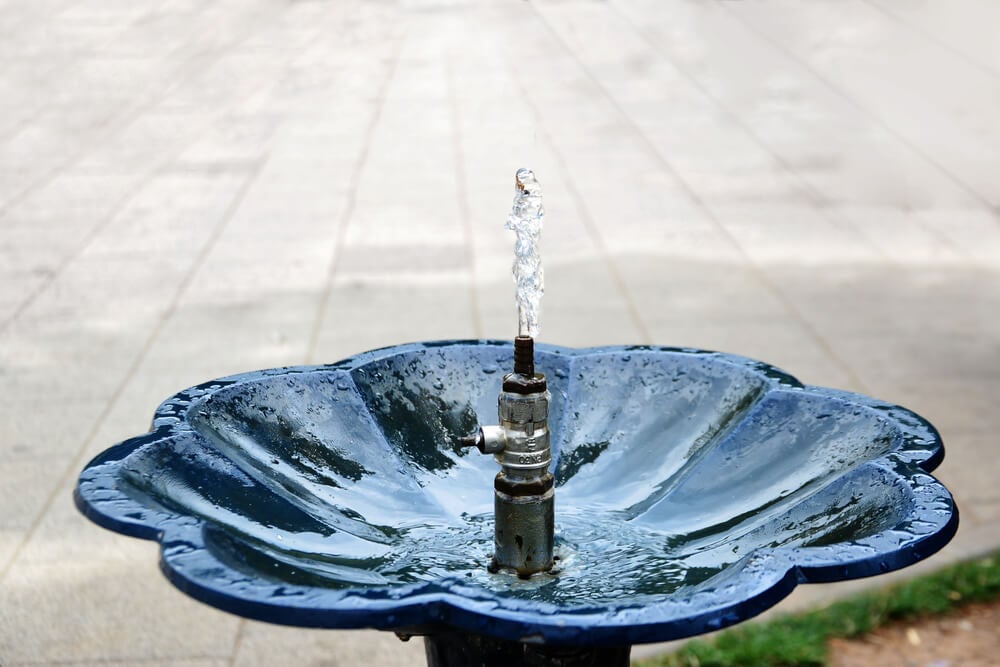
In Wisconsin and Rhode Island, a drinking fountain is commonly called a bubbler, and the word has no real rival in either state. The design behind the name sends water upward in a gentle stream so that a drinker’s mouth never has to touch the spout.
That feature answered the same worry that sent reformers after the common cup. Few pieces of public plumbing have given a region its own vocabulary.
The Long Argument Over a Cool Drink
Read together, the old photographs and records show that a fountain was never just a source of water. It could be a temperance statement, a gift from a donor, a health measure, a kindness to a horse or a sign of who belonged.
The same spout could serve a city or divide it, depending on who put up the sign beside it. That is why the fountains still draw attention long after the horses and the tin cups are gone.
They record what each generation believed the public owed one another, and what it was willing to deny. A basin of water turns out to be a surprisingly honest historical document.
More from Go2Tutors!

- 27 Silver Dollars and Half Dollars Worth Keeping
- 28 Restaurant Menu Items Nobody Orders Anymore
- 17 Places Built in Seemingly Impossible Spots
- 27 Vintage Rings Worth More Than They Look
- 25 Restricted Sites Tourists Can’t Enter
Like Go2Tutors’s content? Follow us on MSN.