Historic Theaters With Untold Stories
When you think about historic theaters, you might picture grand openings and celebrity premieres. But the real magic lies in what happened behind the velvet curtains and after the final credits rolled.
These architectural marvels have witnessed everything from tragic coincidences to bizarre transformations, and their stories reveal a side of American entertainment history that most people never knew existed. Here is a list of historic theaters whose fascinating stories deserve to be told.
Michigan Theatre
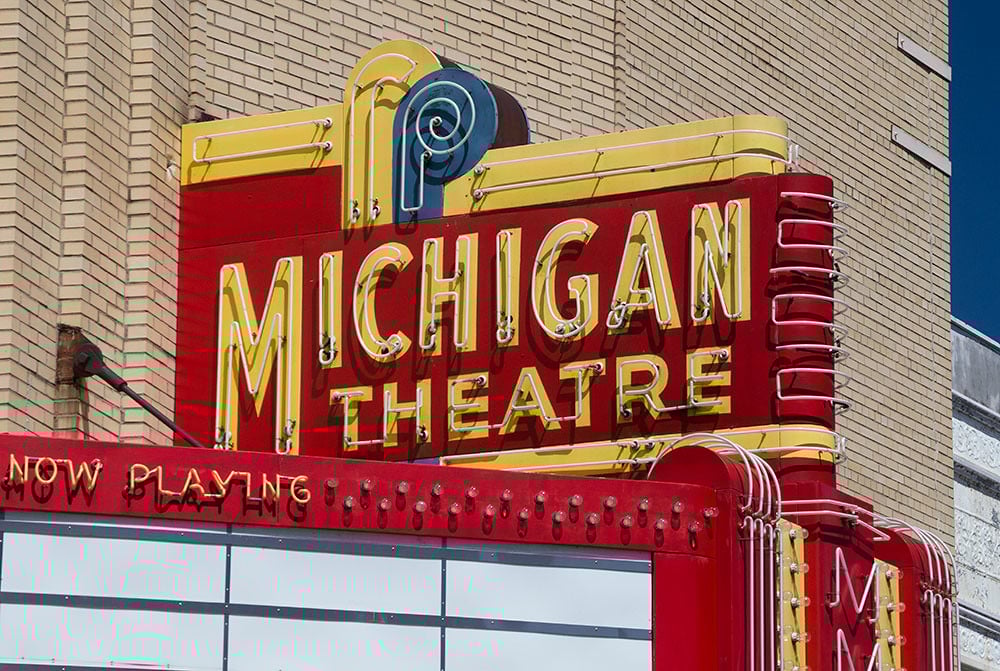
Detroit’s Michigan Theatre was built in 1926 on the site of the small garage where Henry Ford constructed his first automobile. When the theater closed in 1976, it couldn’t be completely demolished because it was integral to the structure of the adjacent 13-story office building.
The solution was as strange as it was practical: convert it into a parking garage while keeping the ornate plaster ceiling and grand lobby intact. Today, cars park beneath baroque architectural details that once hosted audiences watching silent films, creating what many call the most beautiful parking lot in the world.
Orpheum Theatre
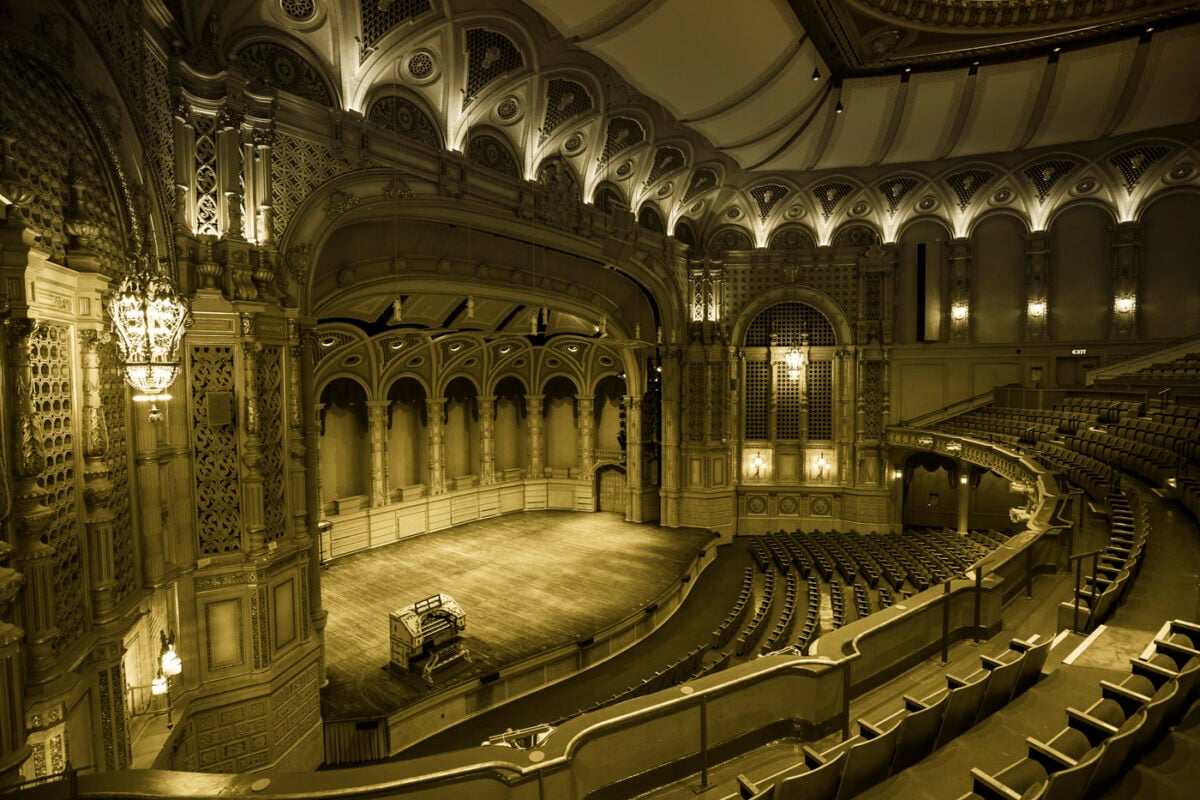
The Orpheum Theatre in New Bedford, Massachusetts opened on April 15, 1912, the same day the Titanic sank. While locals gathered for the grand opening to watch the Five Musical Durands perform, the famed steamship was meeting its tragic end in the Atlantic Ocean.
The theater operated for 46 years before closing in 1958, and the building also housed a shooting range where French Sharpshooters trained recruits for both World Wars. The building has sat mostly abandoned since being sold in 1962, waiting for someone to restore its faded grandeur.
Warner Pacific Theatre
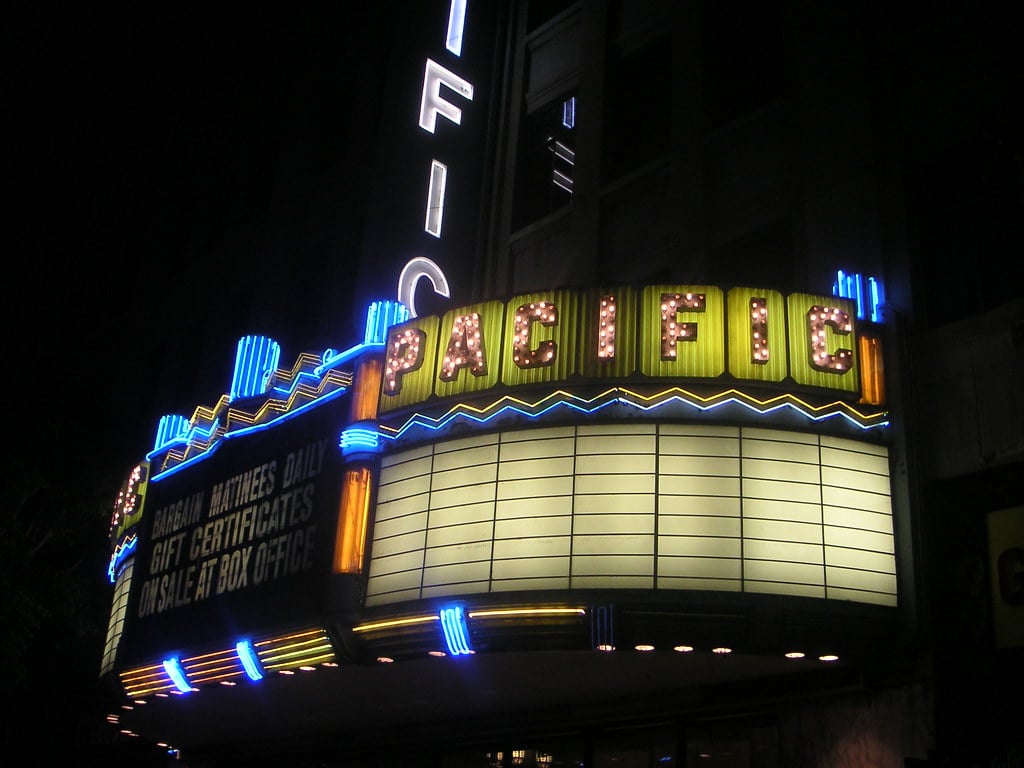
Sam Warner convinced his brothers to spend $1.25 million in 1925 to build a theater showcasing their new Vitaphone sound technology. He died from a brain hemorrhage on October 5, 1927, just 24 hours before the premiere of ‘The Jazz Singer’ and six months before the theater’s completion.
Security guards and theater employees have repeatedly reported seeing a shadowy figure wandering the halls and playing with control buttons, leading many to believe Sam Warner still haunts the building he never got to see finished. The theater closed in 1994 after earthquake damage and remains boarded up today.
Uptown Theatre

Chicago’s Uptown Theatre opened in 1925 as the largest freestanding theater in North America, with over 4,400 seats spread across 46,000 square feet. Rapp and Rapp designed it to imitate the palaces of Versailles or St. Petersburg, complete with floating clouds, twinkling ceiling lights, and a perfuming system built under the seats.
The theater has sat vacant for 44 of its 100 years, despite hosting legendary acts like Bruce Springsteen, Bob Marley, and Prince during its concert venue years from 1975 to 1981. Multiple restoration efforts have been announced over the decades, but the massive venue remains closed and waiting.
Kings Theatre
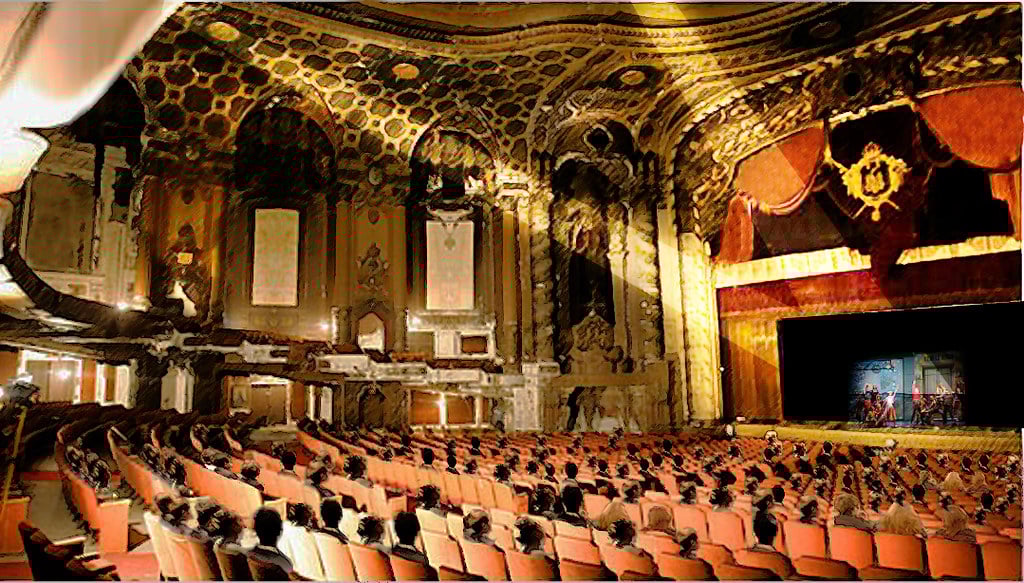
Brooklyn’s Kings Theatre, one of five Loew’s ‘wonder’ theaters opened in New York and New Jersey just before the Great Depression, was abandoned from 1977 until it was restored and reopened in 2015. The 38-year abandonment left the ornate interior in ruins, but a massive restoration effort brought the theater back to life.
It now serves as a performing arts center, proving that even the most neglected buildings can find new purpose when communities refuse to let their architectural heritage disappear.
United Artists Theatre

Detroit’s United Artists Theatre Building, an 18-story brick high-rise built in 1928 as a first-run movie theater and office building, fell into ruin with light pouring through pits in the roof highlighting its Spanish-Gothic décor. The vertical theater design placed the auditorium on upper floors, making it unique among movie palaces.
Though photographers have documented its haunting beauty, the building remains vacant and its future uncertain, standing as a monument to Detroit’s lost golden age.
Plains Theatre

The Plains Theatre in Roswell, New Mexico opened in 1946, just a year before the infamous 1947 UFO incident. In 1991, self-proclaimed Roswell Incident witness Glenn Dennis took over the building and converted it into the International UFO Museum and Research Center.
The transformation from movie house to UFO museum seems fitting for Roswell, where the line between entertainment and extraterrestrial mythology has always been blurred. The streamline moderne marquee still draws visitors, though now they come seeking aliens instead of cinema.
Webb Theatre

The 826-seat Webb Theatre in Gastonia, North Carolina showcased films until 1951, when the city purchased it for retail and storage. In 2015, restaurateur Jim Morasso transformed it into Webb Custom Kitchen, a high-end restaurant where plates of aged cowboy ribeyes go hand-in-hand with movie magic.
Morasso personally restored the proscenium and a small molded Sphinx head that overlooks it, both of which had been painted over. Diners now eat beneath the same embossed plasterwork and balcony that once hosted moviegoers during Hollywood’s Golden Age.
Loma Theatre

San Diego’s Loma Theatre, designed by prominent West Coast architect S. Charles Lee, opened in 1945 as a Streamline Moderne single-screen theater with 1,188 seats. When Barnes & Noble subsidiary Bookstar stepped in to save it from demolition in 1989, they transformed it into a bookstore.
The theater’s former screen is said to be intact behind the bookshelves, and the one-time snack bar now serves as the checkout counter. Customers browse books in the same space where audiences once watched post-war Hollywood films.
Rivoli Theatre

Berkeley’s 1,402-seat Rivoli Theatre opened in 1926 with an ornately painted ceiling and molded wall pillars that gave it an exotic feel. After decades of showing films, the building fell into disuse and needed a new purpose.
A craft brewery eventually took over the space, maintaining many of the original architectural features while installing brewing equipment. The transformation shows how adaptive reuse can honor a building’s past while serving modern needs.
Smyrna Theatre

Delaware’s Smyrna Theatre operated for nearly 30 years before new owners converted it into a plumbing and heating supply shop, removing the projector and murals. When Mike Rasmuseen and Ron Gomes Jr. took over the property in the mid-2010s for Painted Stave Distilling, they preserved what remained, including the original stage where they now keep their bottling line.
The painted fresco ceiling still overlooks visitors who come for public tours, offering a taste of both spirits and history.
Mark Hellinger Theatre

The Mark Hellinger Theatre brought the world the original productions of ‘Jesus Christ Superstar’ and ‘My Fair Lady’ before the Nederlanders sold it after a string of flops. Since 1989, it has operated as the Times Square Church, which has kept the landmarked house in impeccable condition.
The three-story lobby remains as luminous as ever, burnished in shades of gold and rose. While it could theoretically become a Broadway house again someday, for now congregants worship in a space once reserved for theatrical magic.
Loew’s Poli Theatre

The Loew’s Poli Theatre in Bridgeport, Connecticut was designed by prolific theater architect Thomas W. Lamb and opened in 1922. The city of Bridgeport hopes to eventually restore it, but years of vacancy have taken their toll.
Lamb designed hundreds of theaters across America, and his signature style is evident in the Poli’s grand architecture. The theater represents an era when communities invested in entertainment palaces that served as gathering places for all social classes.
Newark’s Paramount Theatre

Newark’s Paramount Theatre originally opened for vaudeville acts in 1886 and was expanded with Thomas W. Lamb’s help in the 20th century. After World War II, more affluent residents left the city center aided by newly built highways that encouraged commuting, causing Newark’s entertainment district to decline.
The theater’s fate mirrored that of many urban venues as Americans moved to suburbs and abandoned downtown cultural institutions.
Franklin Park Theatre

The Franklin Park Theatre in Dorchester, Massachusetts was designed by the Funk and Wilcox architecture firm and opened in 1914. Like many neighborhood theaters, it served its community for decades before television and suburban multiplexes made single-screen urban theaters economically unviable.
The building stands as a reminder of when every neighborhood had its own movie palace, and going to the pictures meant walking down the street rather than driving to a shopping center.
Embassy Theatre
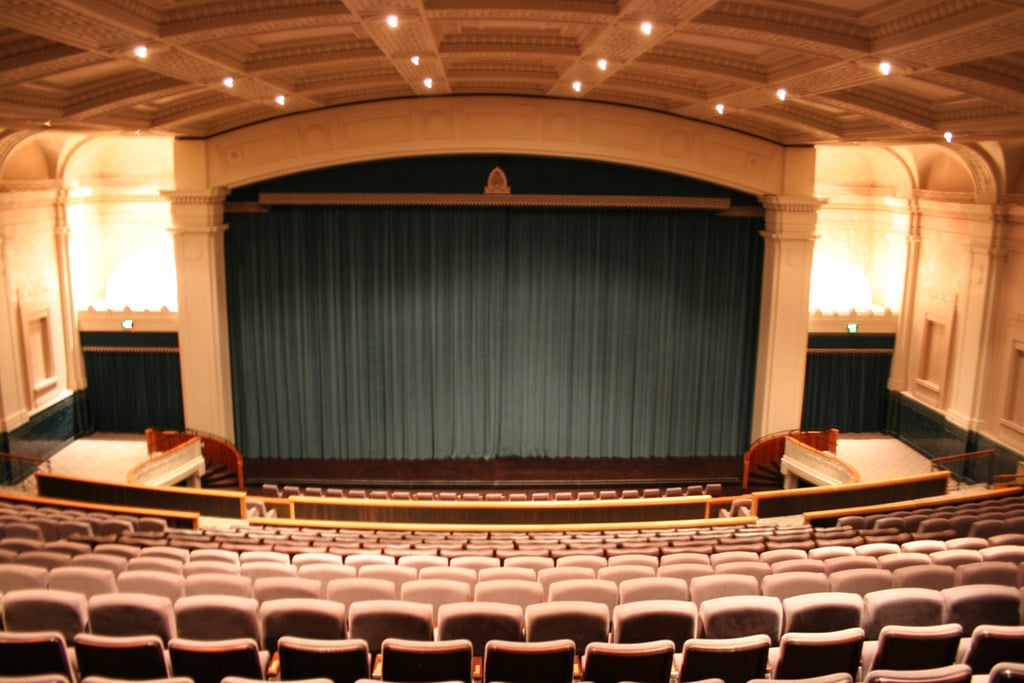
The Embassy Theatre in Port Chester, New York dates back to 1926. Its story reflects the typical trajectory of 1920s movie palaces: grand opening, decades of service, eventual decline, and uncertain future.
These theaters were built during an era of optimism and expansion, when entertainment entrepreneurs believed their ornate palaces would last forever. Many didn’t survive changing tastes and economic realities.
Variety Theatre

The Variety Theatre in Cleveland, Ohio originally opened on November 24, 1927 before being sold to Warner Brothers in 1929. It was last used as a wrestling gym called the Cleveland Wrestleplex before closing for good in the late 1980s.
The transformation from movie palace to wrestling venue might seem undignified, but it shows how these buildings served their communities in whatever capacity was needed, even if it meant abandoning their original glamorous purpose.
From Palace to Present

These theaters tell a larger story about American cities, changing entertainment habits, and what we choose to preserve. Some found new life through creative reuse, others remained frozen in time waiting for restoration, and a few were lost to demolition or decay.
Each theater represents countless memories for the people who passed through its doors, whether to escape into a movie, attend a concert, or simply marvel at the architecture. The next time you pass an old theater building, look closely at what it has become and imagine what it once was.
More from Go2Tutors!

- The Romanov Crown Jewels and Their Tragic Fate
- 13 Historical Mysteries That Science Still Can’t Solve
- Famous Hoaxes That Fooled the World for Years
- 15 Child Stars with Tragic Adult Lives
- 16 Famous Jewelry Pieces in History
Like Go2Tutors’s content? Follow us on MSN.



