Best Holiday Movies of All Time
You know that feeling when December rolls around and you start craving those movies that just feel like the holidays? The ones where you can predict every line but still laugh or cry at the same moments?
Some movies become part of the season itself, as essential as lights on a tree or cookies in the oven. They work their way into traditions and become the backdrop for wrapping presents or falling asleep on the couch after dinner.
It’s a Wonderful Life (1946)

George Bailey’s bad day turns into the worst night of his life, and somehow that makes for the most hopeful holiday movie ever made. The film catches you off guard if you haven’t seen it in a while. It’s darker than memory suggests—really dark, actually.
A man contemplating ending his life on Christmas Eve doesn’t exactly scream festive cheer. But that’s what makes it work.
The movie earns its hopeful ending by not skipping over the despair. When Clarence shows George what Bedford Falls would look like without him, the stakes feel real.
The town becomes Pottersville, a grim place full of bars and pawn shops, and the people George loved most never got the chances he gave them. The ending hits harder because of everything that came before.
When the whole town shows up to help George, when Harry raises a glass to “the richest man in town,” you feel it. The bell rings, and you believe.
Home Alone (1990)
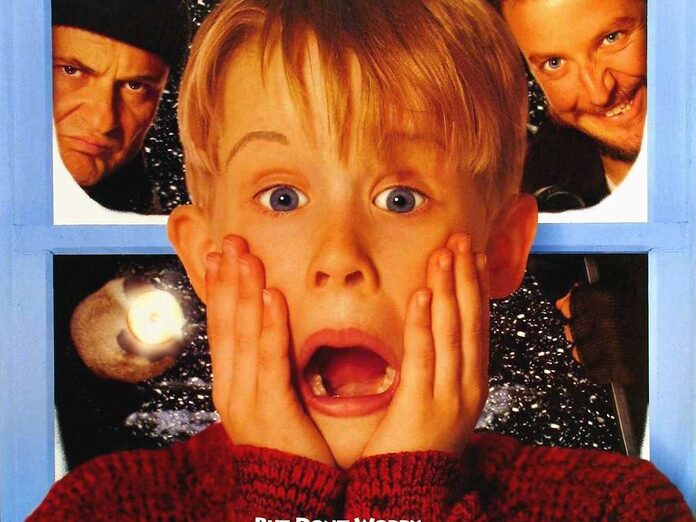
Kevin McCallister turned getting left behind into an art form. The movie starts with a simple premise—family forgets kid, kid has house to himself—and stretches it into something that became a cultural touchstone.
What makes it work isn’t just the elaborate traps or Joe Pesci stepping on ornaments. It’s Kevin’s arc from bratty kid to someone who genuinely misses his family.
That moment when he’s in church listening to the choir, realizing he actually wants them back? That’s the heart of the movie hiding under all the paint cans and tarantulas.
The relationship with Old Man Marley adds unexpected weight. This scary neighbor turns out to be a lonely grandfather estranged from his own family.
Their conversation in the church connects the comedy to something real. Kevin learns that houses feel empty without the people who make them home, even when those people drive you crazy.
A Christmas Story (1983)
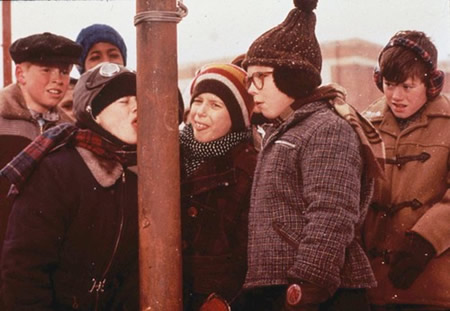
Ralphie Parker wants a Red Ryder BB gun, and that’s basically the entire plot. But the movie captures childhood Christmas obsession in a way that transcends the specific decade.
The leg lamp, the frozen tongue, the bunny suit, the bully in the coonskin cap—these moments layer into a perfectly recalled version of kid logic and holiday anticipation. The narration, from an adult Ralphie looking back, gives the movie its warmth.
You’re watching through the double lens of childhood wonder and adult nostalgia. Every kid becomes an expert at wanting things, at building up the one gift that will supposedly change everything.
The ending delivers without overdoing it. Ralphie gets his gun, nearly shoots his eye out exactly like everyone warned, breaks his glasses, and lies about it.
His mom knows but doesn’t say anything. It’s a small, perfect moment of parental wisdom—let the kid have his win.
That night, he falls asleep with the BB gun, having learned nothing except that sometimes you get exactly what you want, and it’s exactly as great as you hoped.
Elf (2003)

Buddy the Elf approaches New York City with the enthusiasm of a golden retriever in a new park, and somehow Will Ferrell makes that work for two hours without it getting old. The fish-out-of-water setup could have been one joke repeated, but Buddy’s genuine kindness keeps the movie from tipping into mean-spirited comedy.
The movie works because everyone around Buddy reacts the way real New Yorkers would to a six-foot-three man in an elf costume proclaiming his love for smiling. James Caan as Walter Hobbs plays the straight man perfectly—a publishing executive too busy for his own son, slowly cracked open by Buddy’s relentless optimism.
That scene in the mailroom, when Buddy organizes all the mail with superhuman efficiency, or when he decorates the department store overnight into a winter wonderland—these moments show someone who’s good at what he does, even if what he does is being an elf. The movie respects Buddy instead of mocking him, and that makes all the difference.
The Muppet Christmas Carol (1992)

Michael Caine acts his heart out opposite felt puppets, and it somehow becomes one of the best adaptations of Dickens ever made. The Muppets could have played this for pure comedy, but they didn’t.
Caine plays Scrooge completely straight, treating Kermit and Miss Piggy as his equals in the scene. That commitment elevates everything. The musical numbers add another layer.
“When Love Is Gone,” which got cut from some versions, might be the emotional center of the film. It shows young Ebenezer losing Belle, watching her walk away because his obsession with money has killed their relationship. For a Muppet movie, that’s brutal.
Gonzo as Dickens narrating alongside Rizzo the Rat gives the film a playful energy that never undercuts the serious moments. When Tiny Tim’s empty chair sits by the fire, or when Scrooge begs for another chance at his own grave, the movie trusts the material.
The Muppets don’t need to wink at the camera. They inhabit Dickens’ London as they’ve always lived there.
Love Actually (2003)

This movie splits people cleanly into two camps—those who rewatch it every year and those who can’t stand it. The interweaving storylines span from genuinely moving to deeply questionable, sometimes within the same subplot.
The Andrew Lincoln character holding up cue cards for Keira Knightley hasn’t aged particularly well. But the story of Emma Thompson discovering her husband’s affair through a Joni Mitchell CD? That’s devastating.
Her face when she realizes what’s happening, then composing herself to keep Christmas going for her children—that’s acting that anchors the more lightweight moments. Colin Firth learning Portuguese to propose to his housekeeper, the prime minister dancing through 10 Downing Street, Laura Linney sacrificing her chance at love to care for her brother—the movie throws everything at the wall.
Some of it sticks, some of it doesn’t, but there’s usually at least one storyline that gets you. The airport reunion montage at the end became so iconic that it influenced how we think about airport greetings.
The Nightmare Before Christmas (1993)

Jack Skellington decides Halloween needs a change, and his midlife crisis leads to the kidnapping of Santa Claus. The movie lives in that rare space between Halloween and Christmas, claiming both holidays as its own.
The stop-motion animation took three years to complete, and you can feel the craft in every frame. Jack’s lanky movements, the way his suit twists and bends, the expressiveness in a face that’s just hollows and lines—the animators created a character who shouldn’t work but absolutely does.
Danny Elfman’s songs drive the story in ways that dialogue couldn’t. “What’s This?” captures childlike wonder at discovering something completely new.
“Jack’s Lament” expresses existential boredom in a way that resonates beyond the gothic trappings. The movie asks what happens when you’re great at something but you’re tired of doing it, when you want to try something new even though you’ll probably mess it up.
Jack nearly ruins Christmas, but his enthusiasm and eventual understanding make him someone you root for anyway.
Miracle on 34th Street (1947)

Kris Kringle gets hired as Macy’s Santa Claus, claims to be the real Santa, and ends up in court proving his identity. The movie takes its premise seriously in a way that could have felt heavy but instead feels magical.
The relationship between Kris and Natalie Wood’s Susan gives the film its emotional core. She’s a little girl who’s been taught not to believe in anything she can’t see or prove.
Her mother, played by Maureen O’Hara, has raised her to be practical, to avoid disappointment. Kris doesn’t argue with them.
He just keeps being kind, keeps being himself, and slowly they open up to the idea that maybe some things don’t need to be proven to be real. The courtroom scenes could have turned gimmicky, but they maintain a gentle tone.
The judge has to decide what counts as reality, what deserves belief. That final shot of the cane leaning against the wall in the house—it’s a perfect ending that suggests rather than explains.
National Lampoon’s Christmas Vacation (1989)
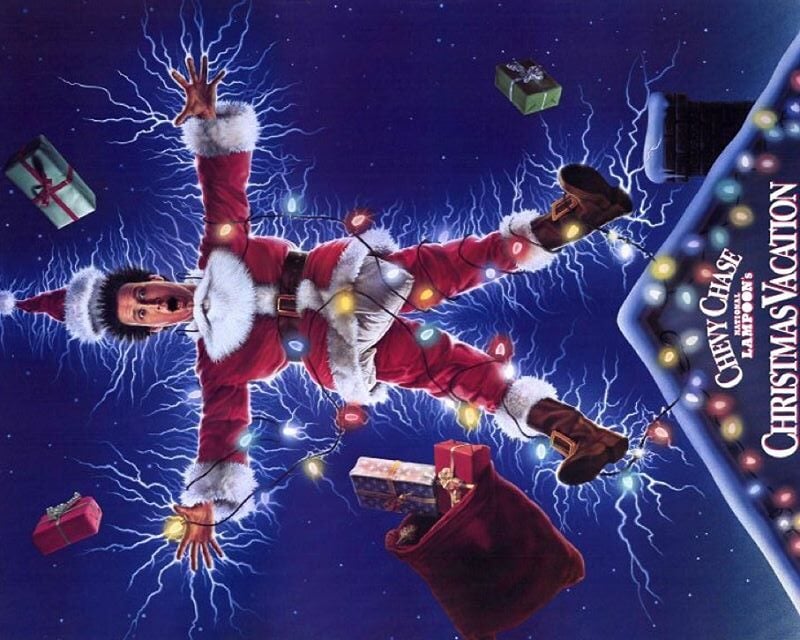
Clark Griswold just wants a perfect family Christmas, and everything that can go wrong does, usually in spectacular fashion. The movie takes the holiday stress everyone feels and amplifies it until it becomes cathartic.
Chevy Chase makes Clark’s determination almost noble. He’s not trying to be difficult.
He genuinely believes that if he can just get everything right—the lights, the dinner, the bonus check, the relatives—it will all be worth it. The explosion of lights on the house, timed perfectly to “Hallelujah,” represents everything Clark wants Christmas to be: bright, impressive, proof that he can make magic happen for his family.
Cousin Eddie adds chaos in ways Clark can’t control. The RV in the driveway, the Christmas tree being murdered by a chainsaw, the turkey so dry it shatters, the cat getting fried by the lights—the disasters pile up in ways that feel both over-the-top and oddly familiar.
Anyone who’s hosted a family holiday has felt some version of Clark’s desperation. The payoff comes when Clark finally breaks, and even then, his family sticks by him because they know he means well.
Die Hard (1988)

The “Is it a Christmas movie?” debate has become its own tradition, almost more famous than the movie itself. But here’s the thing—it’s set at a Christmas party, it uses Christmas music ironically throughout, and John McClane writes “Ho Ho Ho” on a dead terrorist.
The movie knows exactly what it’s doing with the holiday setting. Bruce Willis created an action hero who gets hurt, who’s scared, who makes mistakes.
John McClane isn’t a superhero. He’s a cop in the wrong place at the wrong time, trying to survive and save his estranged wife.
The broken glass cutting his feet, the desperation in his voice when he talks to Powell over the radio—this is someone barely holding it together. Alan Rickman’s Hans Gruber makes the movie work as well as it does.
He’s smart, cultured, and completely ruthless. The reveal that he’s not a terrorist but a thief using terrorism as cover adds a layer to what could have been straightforward action.
That final confrontation, with Holly’s watch and Gruber’s fall, brings John’s arc full circle. He came to LA to try to fix his marriage, and by the end, covered in blood and soot, he’s done exactly that.
The Polar Express (2004)

The animation hasn’t aged perfectly—that uncanny valley effect is real—but the movie’s dreamlike quality works in its favor. Everything feels slightly off, slightly unreal, which matches a child’s memory of Christmas Eve anticipation.
Tom Hanks plays multiple characters, including the conductor who guides this train full of children to the North Pole. The train ride takes them through impossible landscapes, over frozen lakes, and down roller-coaster tracks on mountains.
It’s not meant to be realistic. It’s meant to feel like that half-awake state when you’re a kid on Christmas Eve, not quite sure what’s real and what you’re dreaming.
The bell that only rings for those who believe provides the emotional center. The boy who narrates loses his bell, gets it back, but his parents can’t hear it ring.
Years later, as an old man, he can still hear it when his own children and grandchildren can’t. The movie makes belief itself the gift, the thing worth holding onto even when the physical proof fades.
White Christmas (1954)

Bing Crosby and Danny Kaye play army buddies turned performers who travel to Vermont with Rosemary Clooney and Vera-Ellen to help save their former general’s struggling inn. The plot exists mainly to string together musical numbers, but the numbers are good enough that the thin story doesn’t matter much.
The title song had already been famous for over a decade when they made this movie, but seeing it performed in context gives it new weight. The snow arrives on Christmas Eve, just in time to save the inn and fill the general’s hotel.
That final shot of all the performers and guests singing together while snow falls outside—it’s pure, uncomplicated sentiment, and it works because nobody’s trying to be clever about it. The movie represents a specific kind of post-war optimism that can feel foreign now.
These are men who saw combat, who are trying to build something in peacetime. The respect they show their former general, the way they come together to help him—it’s about loyalty and friendship wrapped in Technicolor and show tunes.
Scrooge (1988)

Bill Murray takes A Christmas Carol and makes it sharp and mean and surprisingly effective. Frank Cross runs a television network with the warmth of a loan shark, and the three ghosts have their work cut out for them trying to crack through his cynicism.
The modern setting lets the movie skewer corporate culture and television in ways that Dickens couldn’t. Frank fires a subordinate on Christmas Eve, punches out a waiter, physically attacks an executive who questions his judgment—he’s a genuine monster, not just a grump.
That makes his transformation matter more. The movie earns its sentiment by starting in such a dark place.
Carol Kane’s Ghost of Christmas Present going physically violent on Frank, Bob Goldthwait’s Eliot pulling a gun during the live broadcast, the homeless man freezing to death in the elevator—this version doesn’t soften the edges. When Frank breaks through to humanity in the final act, crashing the live broadcast to deliver a rambling speech about loneliness and connection, Murray makes you believe the change happened.
It’s messy and desperate and real in a way that polite adaptation couldn’t be.
Klaus (2019)

The movie’s hand-drawn animation style stands out in an era dominated by CGI, giving it a storybook quality that fits the tone perfectly. This origin story of Santa Claus takes a lazy postman and a reclusive woodworker and builds the mythology around their unlikely friendship.
Jesper starts as the worst postal student in the academy, gets sent to the bleakest town in the north as punishment, and only stumbles into doing good because he wants to get out of there. That selfish motivation makes his eventual growth satisfying.
He’s not a hero. He’s just someone who figures out that doing nice things makes his life better too.
Klaus himself could have been a jolly cliché, but the movie gives him depth. He’s a toymaker grieving his lost family, who finds a new purpose helping children.
The toys aren’t magic—they’re crafted with care by someone who needs a reason to keep creating. The mythology builds naturally: stockings hung to dry, reindeer attracted by carrots, the naughty and nice list.
Each tradition starts as a practical solution to a problem, and together they become something bigger.
When Comfort Becomes Tradition

These films aren’t alike, yet that’s fine. One might tickle your funny bone, another could pull at your heartstrings, and a few manage both before the clock hits ten.
Their staying power? Simple – they hit on stuff we always care about: giving without expecting much back, sticking close to kin, or how everything feels different when midnight strikes.
You slip into one of these flicks, yet suddenly you’re not just sitting there staring at scenes. Instead, you’re stepping into a circle – others have stood here too, making it theirs during chilly December’s past.
Through years and varied paths, this common thread sticks, giving the stories more heft than fancy scripts or big budgets ever could. These movies act like old boxes tucked away in attics, still opening right each winter, since what they stir inside us never fades.
Truth is, top seasonal films get it: holidays aren’t flawless shows – they’re about being present for loved ones, especially when life feels messy and cracked.
More from Go2Tutors!

- The Romanov Crown Jewels and Their Tragic Fate
- 13 Historical Mysteries That Science Still Can’t Solve
- Famous Hoaxes That Fooled the World for Years
- 15 Child Stars with Tragic Adult Lives
- 16 Famous Jewelry Pieces in History
Like Go2Tutors’s content? Follow us on MSN.