Historical ‘Facts’ That Were Just Rumors
History has a peculiar way of bending the truth.
Somewhere between actual events and the stories we tell about them, facts get twisted, embellished, or entirely fabricated.
The result is a collection of widely believed myths that have somehow earned themselves a permanent spot in our collective memory.
These aren’t just harmless misconceptions either.
They shape how we understand the past, influence what we teach in schools, and even affect how we view historical figures today.
The strangest part is how confidently we repeat these tales, never questioning whether they actually happened.
Here’s a closer look at some of history’s most persistent rumors that somehow became accepted as fact.
Napoleon Was Unusually Short

The idea that Napoleon Bonaparte was a tiny man with a massive complex has been a running joke for centuries.
It’s become so ingrained in popular culture that ‘Napoleon complex’ is now shorthand for anyone with a chip on their shoulder about their height.
The only problem is that Napoleon wasn’t actually short at all.
At five feet seven inches, Napoleon stood right around average height for French men of his era.
In fact, he was slightly taller than most of his countrymen, whose average height hovered around five feet four inches.
The confusion likely stemmed from British propaganda during the Napoleonic Wars, which intentionally portrayed him as diminutive to mock his ambitions.
The French measurement system at the time also differed from the British one, leading to misinterpretation of his recorded height.
His nickname among troops, ‘le petit caporal’ or ‘the little corporal,’ didn’t help matters, though it was meant as a term of endearment rather than a comment on his actual stature.
Einstein Failed Mathematics

This myth is oddly comforting.
The notion that even Albert Einstein, one of history’s greatest scientific minds, struggled with math makes the rest of us feel better about our own academic shortcomings.
It’s a great story, but it’s completely untrue.
Einstein excelled in mathematics from an early age.
By fifteen, he had already mastered differential and integral calculus.
When confronted with the rumor in a 1935 edition of Ripley’s Believe It or Not, Einstein himself responded with bemusement, flatly denying he ever failed the subject.
The confusion may have originated from a misunderstanding about his school’s grading system, or from the fact that he did fail his first entrance exam to the Zurich Polytechnic Institute at age sixteen.
That failure, however, had nothing to do with math.
He aced the mathematics portion but struggled with the language, botany, and zoology sections, primarily because the exam was administered in French, a language he hadn’t yet mastered.
George Washington Had Wooden Teeth

American folklore has long held that the nation’s first president sported a set of wooden dentures.
It’s a charming detail that makes Washington seem more relatable and human.
The truth, however, is significantly darker and more disturbing than the myth.
Washington’s dentures were crafted from various materials throughout his life, including ivory, metal, teeth from horses and cows, and most disturbingly, human teeth purchased from enslaved people.
By the time he took the oath of office, Washington had only one original tooth left in his mouth.
The wooden teeth myth likely arose because the ivory dentures would stain over time, taking on a wood-like appearance.
Even so, the reality of his dental situation reflects a far more troubling aspect of the era than a simple tale about wooden teeth ever could.
Marie Antoinette Said ‘Let Them Eat Cake’

Few historical quotes are as infamous as Marie Antoinette’s alleged response to hearing that French peasants had no bread.
The phrase supposedly demonstrated her complete detachment from the suffering of ordinary people.
The problem is that she never said it.
The quote first appeared in Jean-Jacques Rousseau’s ‘Confessions,’ written when Marie Antoinette was only nine years old.
Rousseau attributed it to ‘a great princess,’ but provided no name.
Historians generally agree that while Marie Antoinette was certainly out of touch with the struggles of common people, there’s no evidence she made such a callous statement.
The quote stuck to her anyway, becoming one of the most enduring examples of how easily misinformation can define a historical figure’s entire legacy.
That said, it served a purpose for revolutionary propagandists who needed a villain to rally against.
Vikings Wore Horned Helmets

The image of a Viking warrior charging into battle with horns protruding from his helmet is iconic.
It’s appeared in countless films, television shows, and illustrations.
It’s also completely fabricated.
There’s zero archaeological evidence that Vikings ever wore horned helmets in combat.
Real Viking helmets were practical, smooth, and designed purely for protection.
The horned helmet imagery actually originated in nineteenth-century opera costumes, particularly those designed for Wagner’s ‘Der Ring des Nibelungen.’
Costume designers added horns to evoke Norse mythology and create a more dramatic visual effect.
The look caught on in popular imagination and somehow became permanently associated with Vikings, despite being entirely at odds with historical reality.
Still, it makes for better theater than historically accurate headgear.
Paul Revere Shouted ‘The British Are Coming’
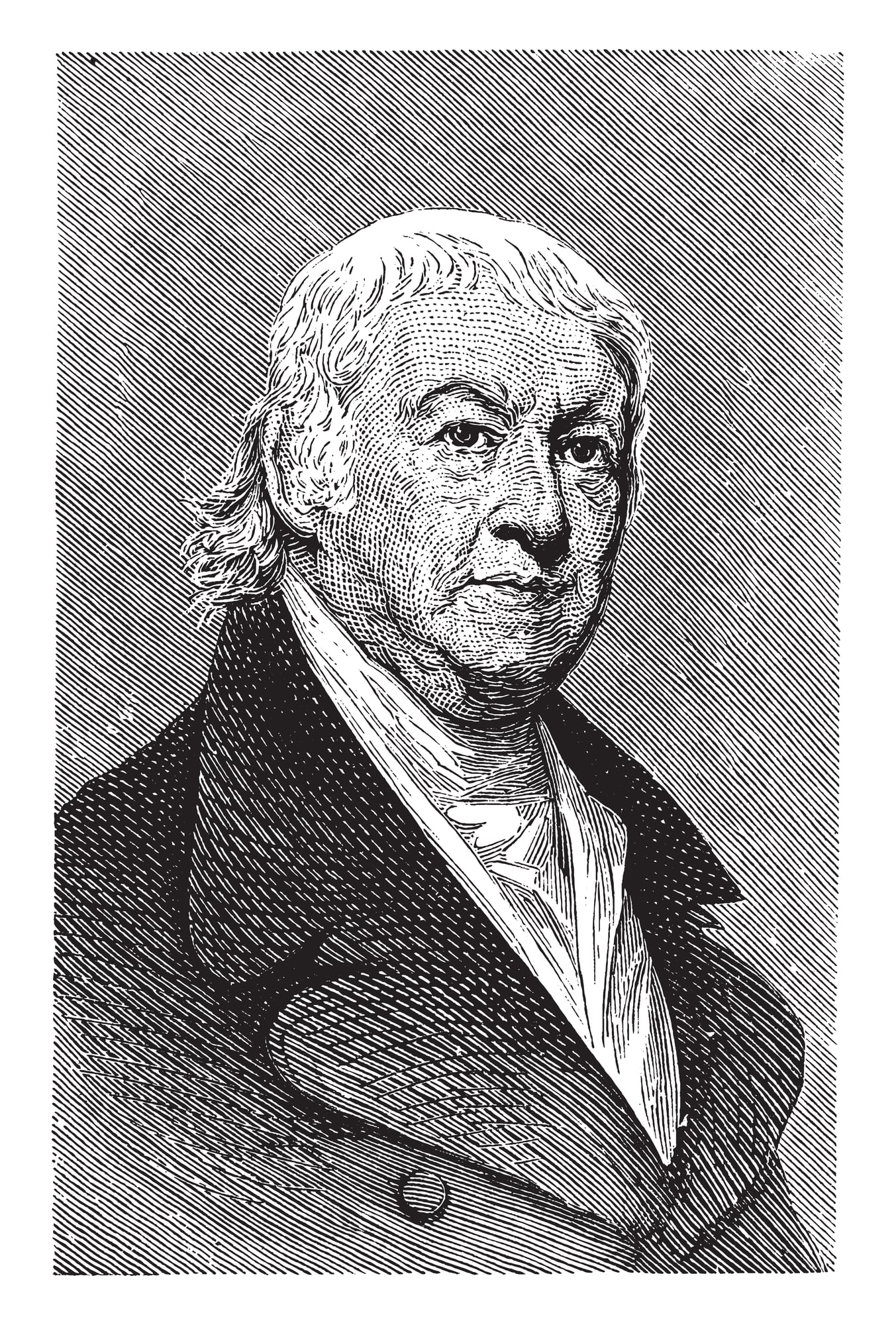
The midnight ride of Paul Revere has been immortalized in American history as a lone patriot galloping through the countryside, warning colonists that the British were coming.
Henry Wadsworth Longfellow’s 1861 poem cemented this version of events in popular imagination.
The actual events of that April night in 1775 were considerably different.
Revere didn’t shout about the British coming for the simple reason that the colonists still considered themselves British.
He would have warned that ‘the regulars are coming out,’ referring to British regular troops.
He also didn’t ride alone.
Several other riders carried the warning that night, and Revere himself never made it to Concord.
He was captured by British officers shortly after leaving Lexington, questioned, and released on foot.
The officers kept his borrowed horse, which disappeared into history.
On the other hand, Revere did set up the famous lantern signal in Old North Church as a backup communication method, though he was the one sending it rather than receiving it.
Columbus Discovered America
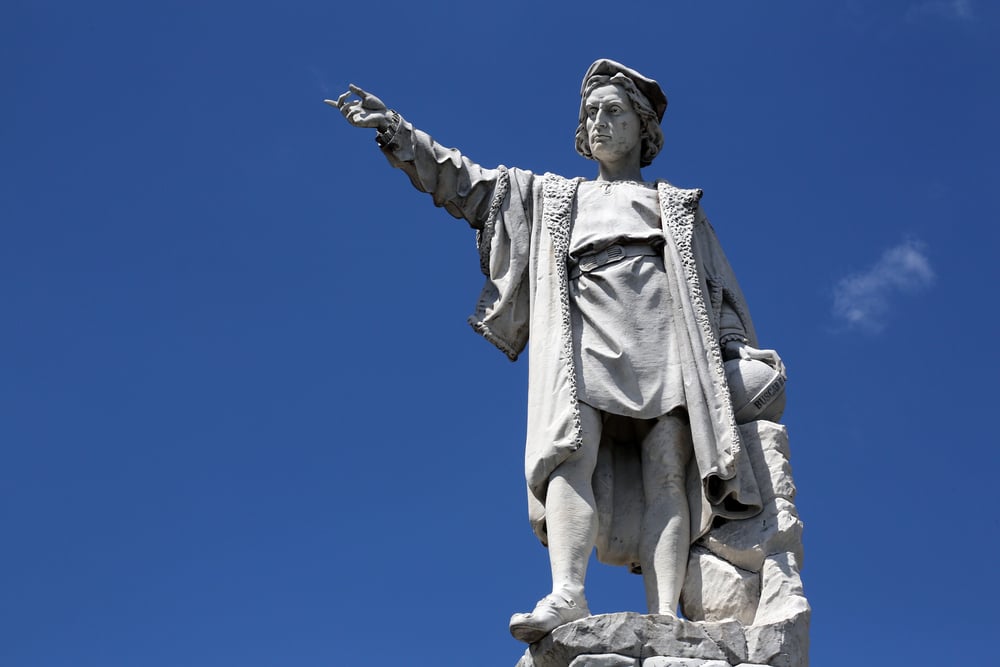
Christopher Columbus gets credit for discovering America in virtually every elementary school history lesson.
It’s a narrative that ignores both the indigenous peoples who had lived on the continent for thousands of years and the other European explorers who arrived before him.
Columbus never actually set foot in North America.
His voyages took him to the Caribbean and parts of Central and South America, but not the land that would become the United States.
More significantly, he was beaten to North America by nearly five hundred years.
Leif Erikson, a Norse explorer, landed in what he called Vinland around 1000 AD.
Modern historians have identified this location as Newfoundland, Canada.
Archaeological evidence at L’Anse aux Meadows confirms Norse settlement in North America centuries before Columbus set sail.
Even so, Columbus’s voyages did have massive historical consequences, reshaping the world in ways that still reverberate today.
Medieval People Thought the Earth Was Flat

The idea that medieval Europeans believed in a flat Earth is remarkably persistent.
It’s often used to illustrate how ignorant people were during the Middle Ages, but it’s entirely inaccurate.
Educated Europeans knew the Earth was spherical as far back as ancient Greece.
Medieval scholars studied and accepted this knowledge.
The flat Earth myth was largely popularized in the nineteenth century as part of a broader effort to portray medieval people as backwards and superstitious.
When Columbus sought funding for his voyage, opposition had nothing to do with fears of sailing off the edge of the world.
Critics correctly worried that he had drastically underestimated the Earth’s circumference and would run out of supplies long before reaching Asia.
They were right, incidentally.
Columbus only survived because there happened to be an entire continent in the way that he didn’t know existed.
Nero Fiddled While Rome Burned
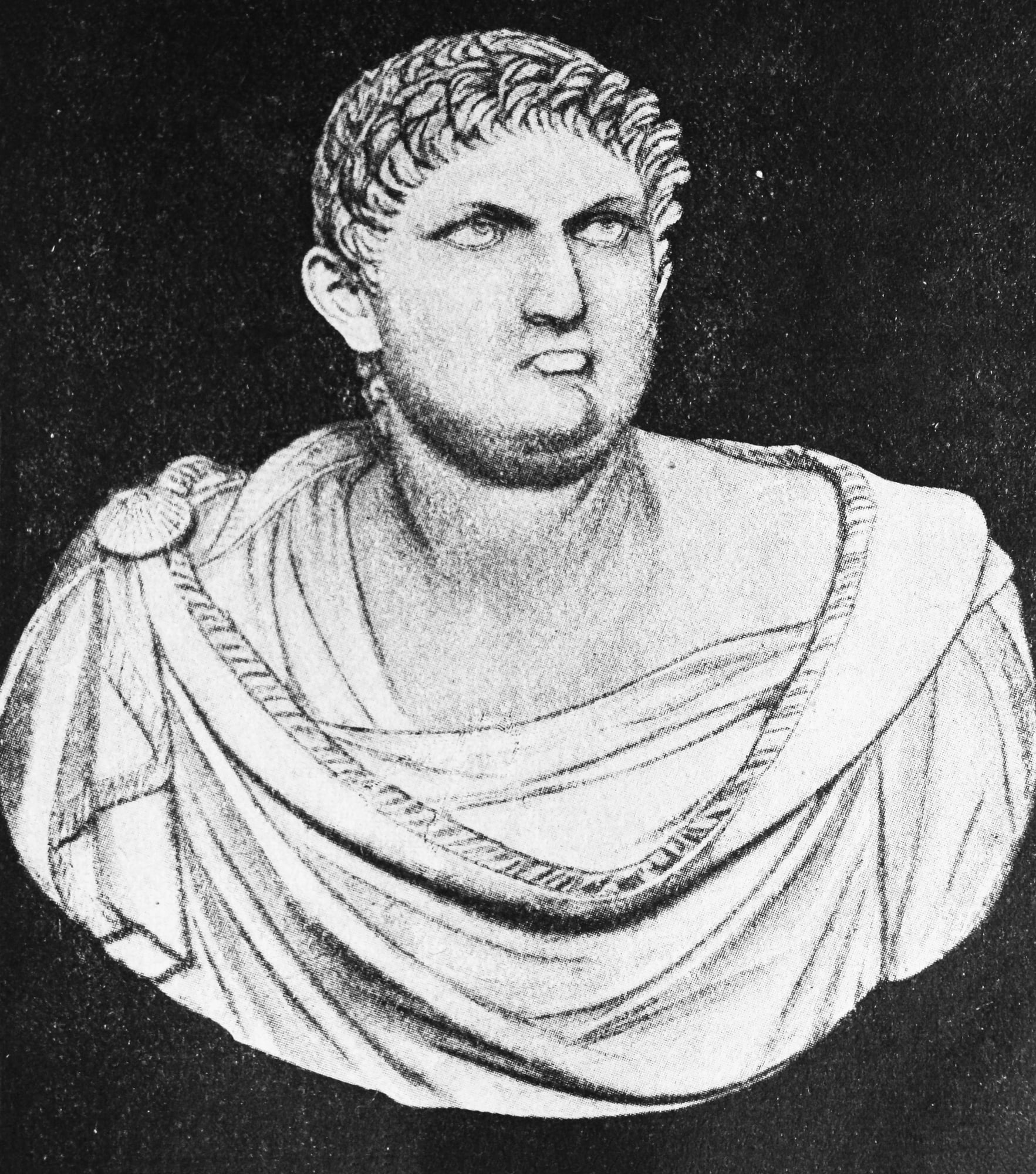
The image of Emperor Nero playing music while Rome went up in flames has become shorthand for callous indifference in the face of disaster.
Ancient sources tell varying versions of this story, but the most damning detail is impossible.
The fiddle wouldn’t be invented for another thousand years after the Great Fire of Rome in 64 AD.
The historian Tacitus mentions rumors that Nero sang about the fall of Troy during the fire, but explicitly notes these were just rumors with no confirmed truth.
Another historian, Suetonius, does claim Nero performed during the fire, but historians consider this account unreliable.
The actual evidence suggests Nero was outside Rome when the fire started and rushed back to coordinate relief efforts.
That said, he did use the destroyed area to build a lavish palace complex, which hardly helped his reputation.
The way these myths persist reveals something fundamental about how we process history

We prefer stories that fit neat narratives over complicated truths.
A short Napoleon struggling with insecurity makes for better storytelling than an average-height military genius.
Einstein failing math is more comforting than Einstein being brilliant at everything.
These myths endure not because they’re true, but because they’re useful, giving us simple explanations for complex historical figures and events.
The real challenge is recognizing when our favorite historical ‘facts’ are actually just really good stories.
More from Go2Tutors!

- The Romanov Crown Jewels and Their Tragic Fate
- 13 Historical Mysteries That Science Still Can’t Solve
- Famous Hoaxes That Fooled the World for Years
- 15 Child Stars with Tragic Adult Lives
- 16 Famous Jewelry Pieces in History
Like Go2Tutors’s content? Follow us on MSN.



