Hotels People Plan to Open in Space
Space tourism sounded far-fetched just a few years ago. Now multiple companies are racing to build the first hotels beyond Earth’s atmosphere.
These aren’t distant dreams anymore. Some of these projects have construction timelines measured in months, not decades.
The question has shifted from “if” to “when” you’ll be able to book a room with a view of Earth from orbit.
The Lunar Hotel Accepting Million-Dollar Deposits
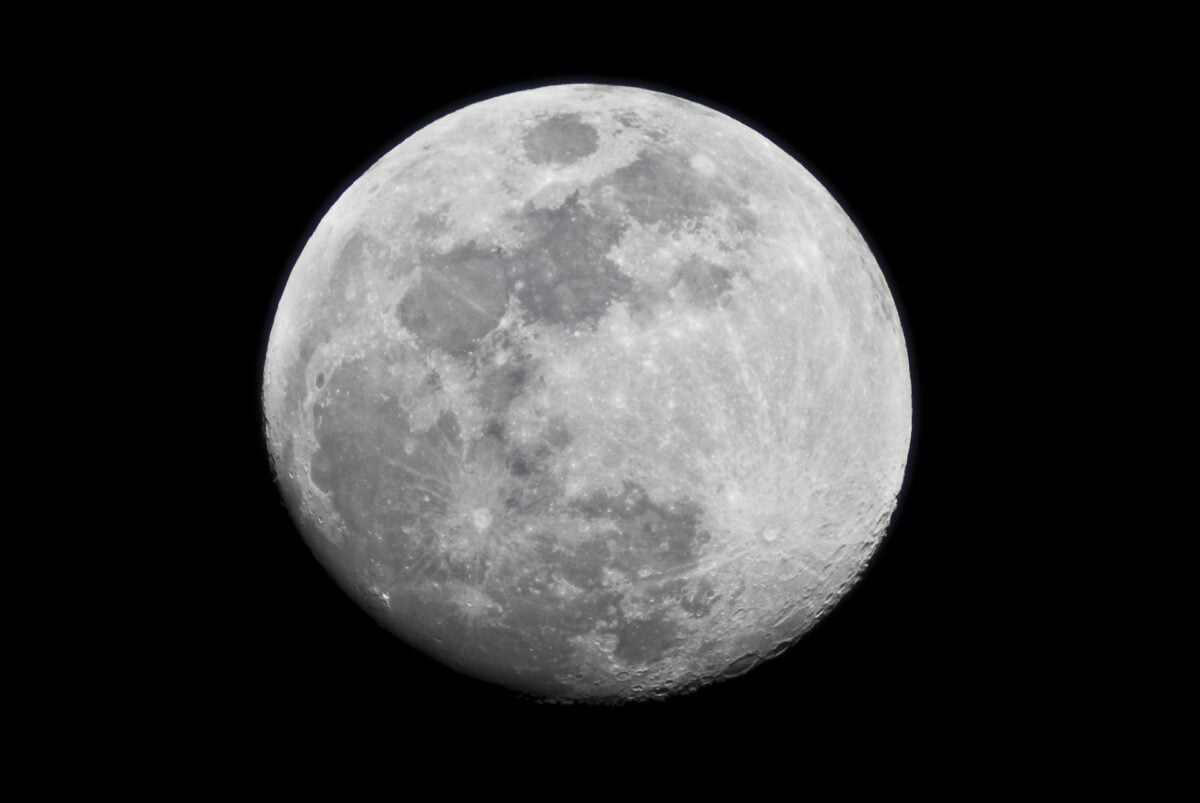
GRU Space wants guests on the Moon by 2032. The California startup, founded by a recent college graduate, is already accepting applications.
You’ll need to put down a $1 million deposit just to secure your spot. That deposit goes toward the final price, which the company estimates will exceed $10 million per person for a five-night stay.
The hotel starts as an inflatable structure manufactured entirely on Earth. It launches aboard a heavy-lift lunar lander and sets up on the Moon’s surface.
The first version accommodates four guests at a time. Later missions will surround the inflatable with bricks made from lunar soil, providing extra protection from micrometeorites and radiation.
This approach means less material needs to be shipped from Earth. Activities include moonwalks, driving lunar rovers, and low-gravity activities.
The company even mentions the possibility of playing a round of golf on the Moon.
A Rotating Wheel in the Sky

Orbital Assembly Corporation announced plans for Voyager Station back in 2021. The design looks like something from a science fiction movie.
A massive rotating wheel orbits Earth, creating artificial gravity as it spins. The station can accommodate 400 guests and 112 crew members.
The original timeline targeted 2027 for opening. That date has shifted as the project evolved.
The station features restaurants, bars, a concert hall, a gym, and a cinema. Guests move between areas using pressurized transfer shafts.
The artificial gravity starts at about one-sixth of Earth’s gravity, similar to the Moon. Eventually, the plan is to increase rotation speed to match Mars gravity, and possibly even Earth gravity.
The company describes it as making space travel normal. You won’t be an astronaut.
You’ll be a tourist who happens to be 250 miles above Earth.
Philippe Starck Designs Rooms in Orbit

Axiom Space takes a different approach. Instead of building from scratch, they’re attaching modules to the International Space Station first. The Houston-based company won a NASA contract in 2020 to do exactly that.
Their first module was originally scheduled to launch in 2024, but timelines have adjusted. French designer Philippe Starck handled the interiors.
The cabins feature padded walls, color-changing LED lights, and large windows for viewing Earth. The design prioritizes comfort in a way the ISS never did.
Think plush rather than purely functional. When the ISS retires around 2030, Axiom’s modules will detach and become a free-flying commercial space station called Axiom Station.
The company is currently targeting the late 2020s to early 2030s for completion. Their strategy is to build while attached to the ISS, then go independent when the ISS decommissions.
The First Standalone Commercial Station Launching in 2026

Vast is moving faster than most competitors. Their Haven-1 space station could launch as early as May 2026.
That would make it the first commercial space station ever to orbit Earth independently. No attachment to the ISS.
No government agency running operations. Haven-1 is small.
The interior volume equals about the size of a small tour bus. Four crew members can visit for up to 30 days at a time.
The station includes a large domed window for viewing Earth, inflatable sleeping systems that create a sensation of simulated gravity, and upgraded food compared to typical astronaut meals. Vast hired a former food developer from Campbell’s to rethink the menu.
The station will operate for three years with just four missions planned during that time. It’s designed as a proof of concept.
Show that a private company can safely operate a space station. Then scale up to Haven-2, which would be modular and much larger.
Blue Origin’s Mixed-Use Business Park

Jeff Bezos’ Blue Origin partnered with Sierra Space to develop Orbital Reef. NASA awarded them $130 million in 2021 to design what they call a “mixed-use business park” in space.
The station aims to support 10 people in 830 cubic meters of volume. The design is modular, allowing customization for different tenants.
Research labs, manufacturing facilities, tourism modules. You can mix and match.
The station is designed to accept docking from nearly every operational spacecraft, including SpaceX Dragon, Boeing Starliner, and Sierra’s Dream Chaser spaceplane. The original timeline targeted 2027 for operations.
Development has faced some challenges. The partnership between Blue Origin and Sierra Space hit rocky ground in 2023, with both companies prioritizing other projects.
NASA has only paid out $24 million of the total contract so far for completion of specific milestones. The project continues, but at a slower pace than originally announced.
Testing Technology Before Guests Arrive

GRU Space isn’t jumping straight to building a hotel on the Moon. They’re testing first.
In 2029, they plan to send a small payload to the lunar surface using NASA’s Commercial Lunar Payload Services. The payload tests two things: the inflatable material that will form the hotel, and a process for turning lunar soil into construction bricks.
The 2031 mission sends a larger payload. This time, the inflatable structure is set up inside a lunar pit.
These collapsed depressions on the Moon might offer warmer temperatures than the surface. The company wants to know if these locations work better for long-term habitation.
If both test missions succeed, the 2032 mission deploys the actual hotel. This progression shows a measured approach.
Test the technology small. Then scale up.
Then go live with actual guests.
What a Night in Orbit Actually Costs

Virgin Galactic charges $250,000 per person for a brief trip to the edge of space. You don’t even reach orbit.
You get a few minutes of weightlessness and views of Earth’s curvature, then you come back down. That’s the baseline cost for space tourism today.
Axiom Space quoted $55 million per seat in 2018 for 10-day stays at their planned station. Prices have likely increased since then. The Voyager Station team says they eventually want to make space stays comparable to buying a cruise ticket.
That goal sits somewhere in the distant future. For the lunar hotel, you’re looking at over $10 million total, with a $1 million deposit.
Some reports suggest nightly rates around $410,000 once operational. These prices target the ultra-wealthy, former commercial spaceflight participants, and adventurous travelers willing to make a massive financial commitment.
Training Requirements Before Liftoff

You can’t just show up at a spaceport with your luggage. Space tourism requires extensive preparation.
Axiom Space mentions 15 weeks of training for a 10-day mission. You learn how to operate in microgravity, use the life support systems, handle emergency procedures, and conduct basic tasks like eating and using the bathroom in zero gravity.
Physical requirements vary by mission. You’ll need medical clearance.
The forces during launch and landing put stress on your body. Time in microgravity affects your bones and muscles.
Some missions might accept older travelers or people with certain health conditions that would normally disqualify someone from astronaut programs, but you still need to pass basic health standards. The Moon adds extra complexity. Lower gravity than Earth, but not weightlessness.
Radiation exposure. The need for spacesuits during surface activities.
Training expands to include operating in one-sixth gravity and managing longer-duration stays.
The International Space Station’s Retirement Plan

NASA plans to retire the ISS around 2030. The station has been operational since 2000. It’s aging.
Maintaining it gets expensive. The agency wants to shift resources toward the Moon and Mars.
This retirement creates urgency for commercial space stations. NASA needs somewhere to conduct research in low Earth orbit.
They don’t want to own and operate the next station. They want to be a customer renting space from private companies.
This shift transforms the economics of space stations from government projects to commercial ventures. Multiple companies are competing to replace the ISS.
The winner gets ongoing NASA contracts plus the ability to sell time to other customers. Space agencies from emerging nations, private research institutions, universities, manufacturers interested in microgravity production, and tourists all represent potential revenue streams.
Life Support Systems That Keep You Breathing

Space stations need to manage air, water, and temperature. The ISS uses a closed-loop system. It recycles almost everything.
Water from humidity, sweat, even urine gets purified and reused. Carbon dioxide gets scrubbed from the air.
The system has to work perfectly because you can’t open a window. Haven-1 uses a simpler open-loop system similar to what the Space Shuttle used.
It relies on the SpaceX Dragon spacecraft for long-term life support during crewed missions. This reduces complexity but limits mission duration.
The station can only support guests for about 30 days before needing resupply. Orbital Reef completed testing on four critical life support milestones.
They tested materials to remove harmful impurities from air, technologies to clean and reclaim water, and systems to store water safely. These tests happened at NASA facilities, showing how private companies still rely on government expertise and infrastructure for complex technical challenges.
Windows With Million-Dollar Views

Every space hotel design emphasizes windows. Vast’s Haven-1 features a 1.2-meter domed window.
Axiom’s modules include panoramic views. Voyager Station plans observation decks.
Windows add significant engineering challenges. They need to hold pressure, resist impacts from tiny debris, and handle extreme temperature changes.
The ISS has a module called the Cupola with seven windows. Astronauts describe it as the best spot on the station.
You can watch the Earth spin beneath you. Cities light up at night.
Storms swirl across oceans. Sunrises and sunsets happen every 90 minutes as you orbit.
Space hotels are betting that view sells itself. You’re not just buying a room.
You’re buying an experience that fewer than 700 people in human history have ever had. The companies are counting on the view being worth the price.
Manufacturing in Microgravity

Tourism is just one market. Several space station designs include manufacturing facilities.
Microgravity enables production techniques impossible on Earth. Fiber optic cables can be made with fewer impurities.
Protein crystals grow larger and more uniform, which helps with drug development. Some materials can be mixed that would separate under gravity.
Axiom Station includes a research and manufacturing module. Haven-1 contains a microgravity lab.
These facilities let companies test products and processes. The market is still developing.
No one has proven you can manufacture products in space more cheaply than on Earth when you factor in launch costs. The hope is that certain high-value items justify the expense.
Space manufacturing shifts these stations from pure tourism plays to platforms with multiple revenue streams. Government research, commercial manufacturing, pharmaceutical development, and tourism all share the same infrastructure.
This diversification might make the economics work where a tourism-only model would struggle.
The Architecture of Inflatable Habitats

Several designs use inflatable modules. These pack smaller for launch, then expand once in space.
Bigelow Aerospace pioneered this approach years ago. The technology works.
The ISS tested a Bigelow module that stayed attached for years. GRU Space’s lunar hotel uses an inflatable structure.
It arrives folded, deploys on the Moon’s surface, and provides living space. The material includes multiple layers: an airtight bladder, structural fabric, micrometeoroid shielding, and thermal protection.
All of this fits in a package much smaller than a rigid metal structure of the same interior volume. Sierra Space is developing the LIFE module (Large Integrated Flexible Environment) for Orbital Reef.
They’ve conducted burst tests to verify the structure can handle pressure. The advantage is you can launch more interior volume for the same rocket capacity.
The disadvantage is you’re trusting fabric instead of metal to keep you alive in the vacuum of space.
Where We Go After the Hotels

These projects position themselves as stepping stones. GRU Space talks about using their hotel to enable lunar colonization.
Vast sees Haven-1 as a testbed for Haven-2, which could replace the ISS. Axiom envisions their station as the foundation for expanding human civilization in orbit.
The Moon becomes a proving ground for Mars. If you can build structures on the lunar surface, manage radiation exposure, produce materials from local resources, and keep people alive in a harsh environment, then Mars becomes feasible.
The hotels are expensive experiments that happen to accommodate paying guests. This framing helps justify the costs and risks.
You’re not just building a luxury hotel. You’re building infrastructure for humanity’s expansion beyond Earth.
The tourists help fund the technology development. Their experiences provide data on how people adapt to extended time in space or on other worlds.
Dreams Taking Shape in Metal and Fabric

Around October 2025, workers finished the last major weld on Haven-1’s frame – construction really is underway. After welding came painting; now teams shift toward fitting parts inside.
Modules for Axiom take shape at a facility in Italy run by Thales Alenia Space, though interior sections come together far away in Houston. Meanwhile, back at GRU Space, engineers sort equipment destined for a trial launch set for 2029.
Drawings are out. Actual parts now exist.
Cash already went into it. Firms shifted from saying they would start to showing they’re starting.
Months – not years – stand between today and the opening of the first business-run station in orbit. Success isn’t guaranteed for any of these ventures.
Getting things done in orbit takes extreme effort. Schedules often stretch further than planned. Money does not always follow through.
Engineers must fix issues as they arise. Big dreams have collapsed before, even when backed by strong belief.
What’s different today? Private investors are stepping in, rivals are pushing faster progress, real machines roll out of factories.
Living above Earth begins now – regardless of individual outcomes.
More from Go2Tutors!

- 16 Historical Figures Who Were Nothing Like You Think
- 12 Things Sold in the 80s That Are Now Illegal
- 15 VHS Tapes That Could Be Worth Thousands
- 17 Historical “What Ifs” That Would Have Changed Everything
- 18 TV Shows That Vanished Without a Finale
Like Go2Tutors’s content? Follow us on MSN.