How One Mistranslation Nearly Started an International Incident
Language is a fragile thing to hand a diplomat. One wrong word — not even a wrong word, sometimes just the wrong register, the wrong nuance, the wrong cultural weight attached to a perfectly common phrase — and suddenly two countries that were talking about grain tariffs are arguing about national honor.
It happens more than governments like to admit. The history of international diplomacy is littered with moments where a translator’s choice of phrasing sent a room into chaos, where a press release read one way in its original language and something genuinely alarming in another, where the word selected to soften a message sharpened it instead.
Some of these near-disasters are funny in hindsight. Some of them are less funny the longer you look at them.
And a few of them changed history in ways nobody planned for.
The Khrushchev “We Will Bury You” Affair
Four words. That’s all it took.
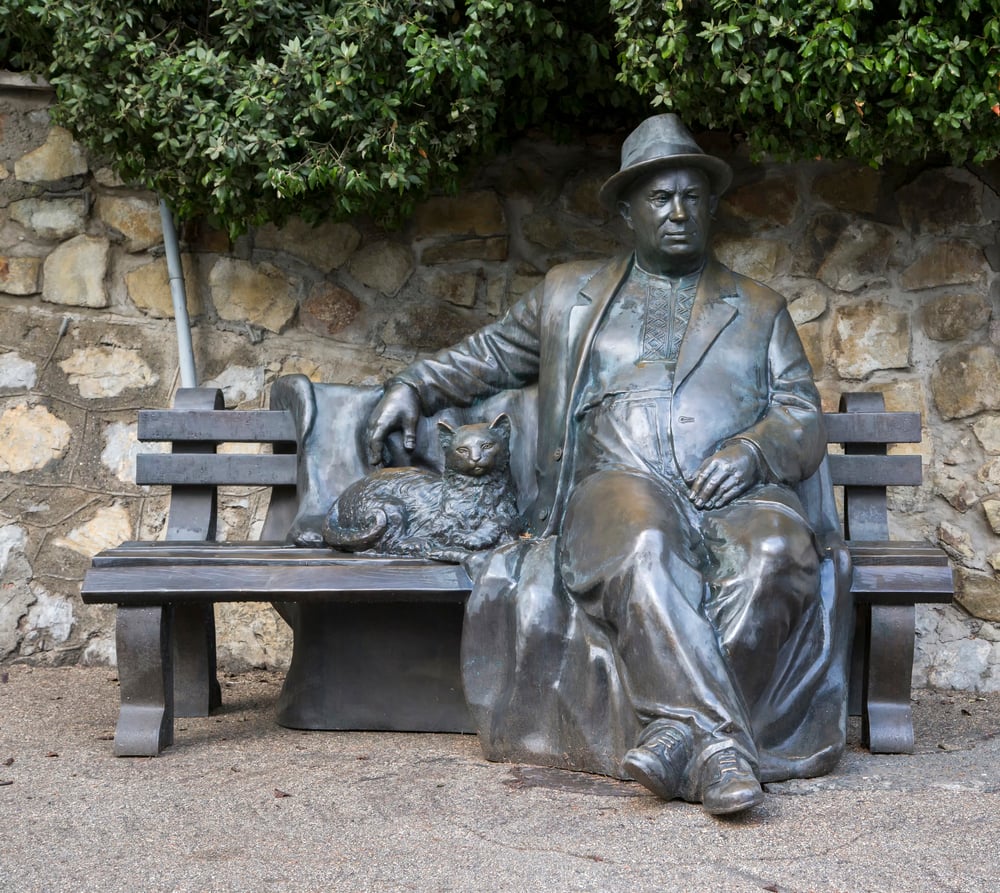
When Soviet Premier Nikita Khrushchev spoke at a reception at the Polish embassy in Moscow in 1956, the phrase that made it into English — “We will bury you” — landed on American ears like a direct military threat, and the Cold War temperature spiked accordingly. The original Russian, “my vas pokhoronim,” carries a more idiomatic weight: closer to “we will outlast you” or “we will be present at your funeral” — a boast about historical survival, not a promise of military annihilation.
To be fair, Khrushchev was never exactly a soothing presence, and the phrase didn’t help; but the version the West received was sharper, colder, and considerably more alarming than what he likely intended.
Japan’s “Mokusatsu” Moment

This one carries real historical gravity. In July 1945, the Allied powers issued the Potsdam Declaration, demanding Japan’s surrender, and the Japanese government’s official response used the word “mokusatsu” — a term that has two viable translations: “to withhold comment pending further consideration” or “to treat with silent contempt.”
The international press, and crucially American policymakers, ran with the second interpretation. Some historians argue this communication failure contributed to the decision to proceed with the atomic bombings of Hiroshima and Nagasaki, though the reality was far more complicated than a single mistranslation — but the gap between those two readings of one word is genuinely staggering to sit with.
Jimmy Carter’s Intimate Poland Speech
There’s a particular kind of horror that belongs to official state visits — the kind where everything goes wrong in front of cameras and diplomats in very expensive suits. When President Jimmy Carter arrived in Poland in 1977, his interpreter, a State Department contractor named Steven Seymour, rendered Carter’s phrase “I have come to learn your opinions and understand your desires” as something closer to “I desire the Poles carnally” — or, depending on the account, “I lust after the Polish people.”
Seymour also reportedly translated “left the United States” as “abandoned the United States,” suggesting Carter had defected. The Polish press was barely containing itself.
Pepsi’s Accidental Declaration of War
Pepsi’s slogan “Come alive with the Pepsi Generation” was a genuine piece of mid-century American optimism — breezy, harmless, the kind of phrase that sells soda. In certain Chinese markets, the translation that found its way onto promotional materials read roughly as “Pepsi brings your ancestors back from the dead.”
That’s not a soft sell for a carbonated beverage. And yet, the uncomfortable part isn’t that the error happened — translation under commercial pressure, rushed to market, multiple hands on the final copy — it’s that it apparently ran for a while before anyone caught it.
The Gotcha at the UN Over “Nabídnout” and Intent
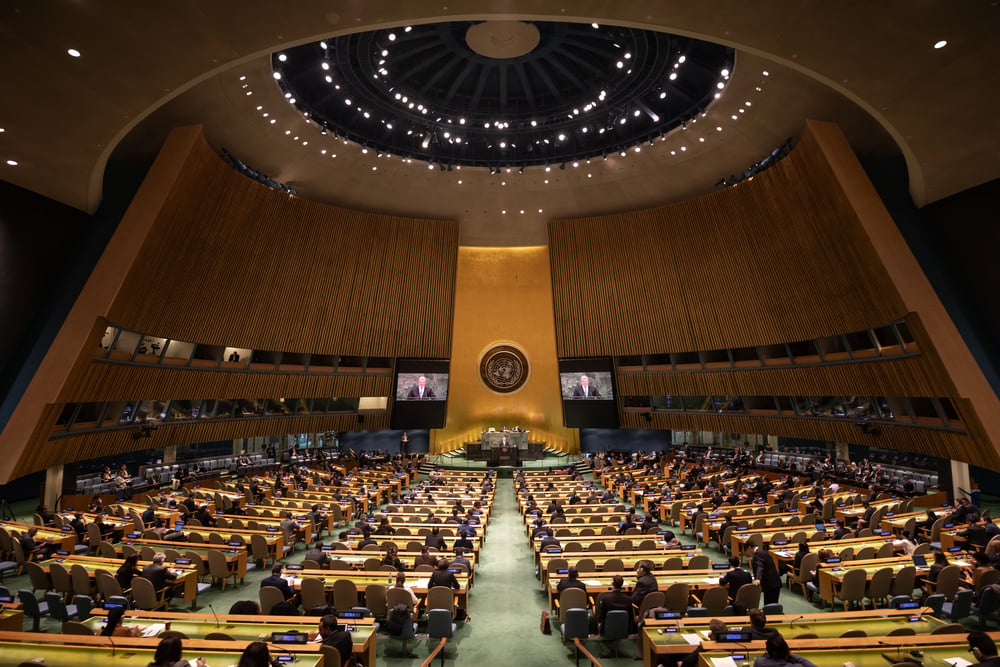
Diplomatic language at the United Nations is calibrated to within an inch of its life, which is exactly why small errors inside that system feel like earthquakes. During Cold War-era negotiations, translation errors in Eastern Bloc speeches repeatedly created situations where the English rendering of a position sounded far more aggressive than the original Slavic-language text — not through malice, necessarily, but because the simultaneous interpretation booth was working fast, the vocabulary was technical, and the stakes were existential.
Delegates would later review transcripts and find the English record of what they said bore only a passing resemblance to what they meant. Turns out “nuance” doesn’t survive 30-second simultaneous interpretation without sustaining some damage.
The Italian Election Pamphlet
In the 1948 Italian general elections — one of the most consequential votes in postwar Europe — American-backed anti-communist efforts produced campaign materials in Italian that were, charitably, imprecise. Phrases meant to warn voters about Soviet influence occasionally landed with grammatical constructions that read as condescending to native speakers, or used regional idioms in the wrong region, or deployed formal registers where informal ones were expected.
Political messaging already walks a tightrope; mistranslated political messaging walks it blindfolded. The effect was sometimes the opposite of persuasion.
The Israeli-Arab Ceasefire That Almost Wasn’t

After the 1973 Yom Kippur War, ceasefire negotiations moved fast — which meant translations moved fast too, and fast translation is where precision goes to die. At least one critical exchange between parties involved a phrase that the mediating team understood as a conditional acceptance, while the originating party believed they had issued an unconditional one.
The gap between “we accept if” and “we accept” is not a grammatical technicality when artillery is still in the field. The crisis was eventually resolved, but for a stretch of hours that nobody in those rooms enjoyed, it wasn’t clear that it would be.
The Electrolux Vacuum Situation

Not every mistranslation threatens a war, but some do a quietly spectacular job of threatening a brand. When the Swedish appliance company Electrolux entered the American market in the 1960s, their tagline — “Nothing sucks like an Electrolux” — was a perfectly good Swedish boast about suction power, translated with total fidelity into English and then printed on billboards across the United States.
The Swedish phrasing carried no secondary meaning. American English, of course, begged to differ.
The campaign ran. People noticed.
The company did not rush to pull it.
The Coors Beer “Turn It Loose” Problem

Coors launched “Turn It Loose” as an American campaign slogan with confidence — it’s casual, energetic, sounds like freedom in a can. The Spanish translation that appeared in certain Latin American markets came out closer to “Suffer from diarrhea,” which is, to put it plainly, not the brand positioning Coors had in mind.
The mechanics of how this happened aren’t mysterious — idiomatic phrases are notoriously resistant to direct translation, and “turn it loose” has a biological reading in Spanish that the English-speaking marketing team simply never considered. Go figure.
The HSBC “Assume Nothing” Fiasco
HSBC ran a private banking campaign for years built around the tagline “Assume Nothing” — clean, confident, the kind of banking message that sounds like it belongs in a glass tower. In several countries, the translation rendered it as “Do Nothing,” which has a different energy entirely for a financial institution.
HSBC eventually retired the campaign and spent somewhere in the vicinity of $10 million rebranding around “The world’s local bank” — a safer, if blander, choice. The original error was honest; the replacement was just expensive.
The Ford “It Won’t Leave You Stranded” Belgian Problem
Ford launched a car in Belgium with the slogan “Every car has a high-quality body” — reasonable enough for an automotive ad, comfortable territory for the industry. The Flemish translation wound up reading as “Every car has a high-quality corpse.”
Which is a different pitch. The car in question was not a hearse.
Belgian drivers, presented with this option, were presumably left to make their own decisions about what Ford was trying to tell them.
The Braniff Airlines Leather Seat Incident
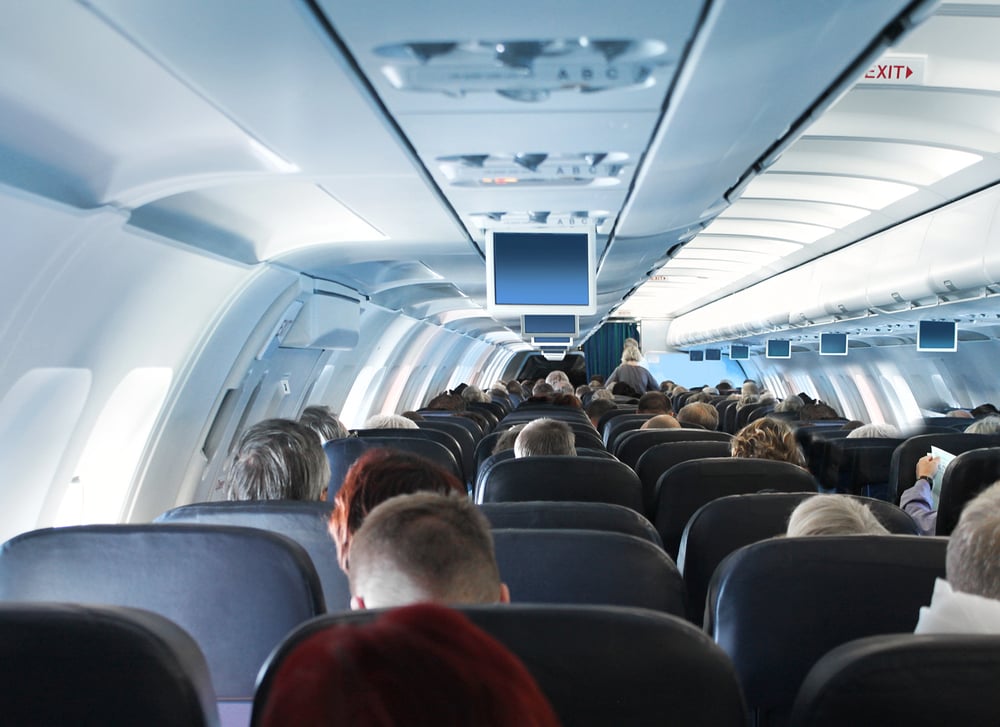
Braniff Airlines once ran a campaign promoting their new leather seats with the English tagline “Fly in leather.” Translated into Spanish for Latin American markets, the phrase came out as “Fly unclothed” — which, as airline promotions go, raised questions that the in-flight safety card was not equipped to answer.
The translation wasn’t reckless exactly: the Spanish word “cuero” does mean leather, but in several Latin American dialects it also serves as slang for something considerably less upholstered. The boarding process must have been interesting that week.
The Nuclear Summit Interpreter Dispute
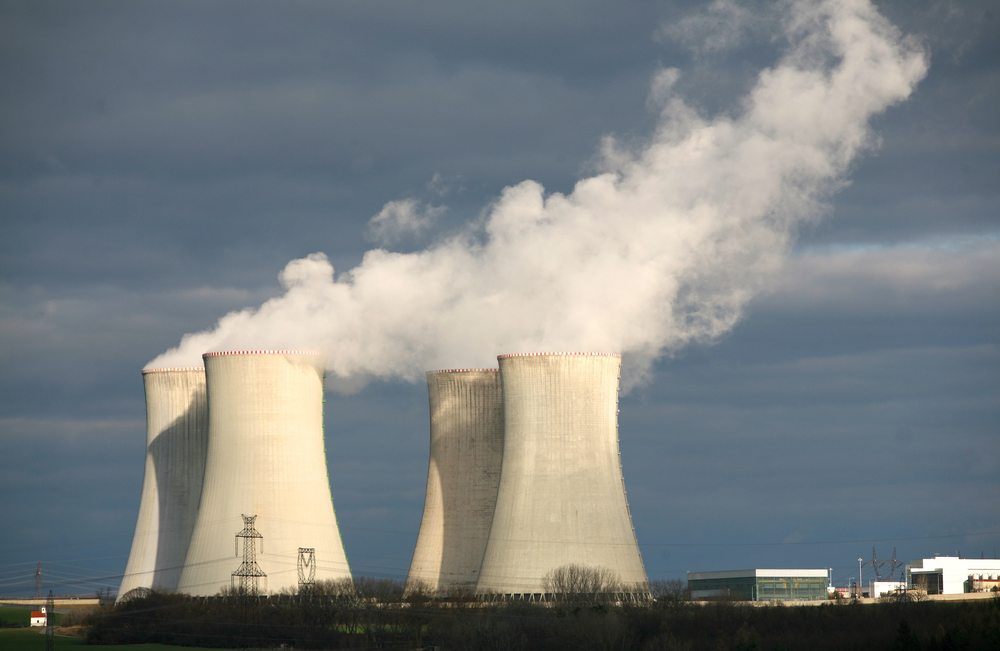
During arms reduction talks in the early 1980s, a Soviet interpreter’s rendering of an American negotiator’s off-the-cuff remark created a ninety-minute standoff. The remark was colloquial — something along the lines of “let’s not get ahead of ourselves” — which the interpreter translated with a phrase that implied the American side was accusing Soviet negotiators of bad faith.
The Soviet delegation went cold and formal, the American side had no idea why, and it took the better part of two hours of parallel side conversations to establish that nobody had actually accused anyone of anything. The talks resumed.
But ninety minutes in arms reduction negotiations is not a small loss.
Where the Risk Lives Now

The instinct is to assume this is a solved problem — that machine translation and real-time interpretation technology have closed the gap where diplomatic disasters breed. They haven’t.
What technology has done is accelerate the speed at which an error can travel. A mistranslated tweet from a foreign ministry, misread and screenshot-shared before anyone catches it, now reaches millions in the time it used to take a telegram to cross an ocean.
The words are faster. The correction is still slow.
And somewhere right now, in a room full of people who all believe they understood what was said, someone is reading the minutes and frowning at a phrase that doesn’t quite mean what anyone intended.
The Language That Holds Everything Together

Language between nations is less like a bridge and more like a rope bridge — functional when maintained carefully, and startling when a plank comes loose mid-crossing. The examples above didn’t all end in catastrophe.
Most of them resolved. A few left permanent marks.
But what’s consistent across all of them is a shared human fragility: the assumption, made by almost everyone almost every time, that the person on the other side of the table heard what you meant, not just what you said. That gap — small, stubborn, almost invisible most of the time — is where history gets made by accident, where wars almost start over idioms, and where a beverage company’s upbeat slogan becomes a theological event.
The lesson isn’t to distrust language. It’s to respect how much weight it carries, and how quietly it can buckle.
More from Go2Tutors!

- The Romanov Crown Jewels and Their Tragic Fate
- 13 Historical Mysteries That Science Still Can’t Solve
- Famous Hoaxes That Fooled the World for Years
- 15 Child Stars with Tragic Adult Lives
- 16 Famous Jewelry Pieces in History
Like Go2Tutors’s content? Follow us on MSN.