How to Spot a Valuable Antique in a Box of Junk at a Yard Sale
here’s a particular kind of thrill that comes from crouching over a cardboard box at 8 a.m. on a Saturday, surrounded by someone else’s discarded life. Most of what you’ll find is genuinely worthless — chipped mugs, tangled extension cords, paperback novels with the covers bent back.
But every so often, something sits quietly at the bottom of that box, indifferent to the chaos around it, worth far more than the two-dollar sticker on its side. The people who find those things aren’t lucky. They’re prepared.
Know What Era You’re Looking At
Old things look old in specific ways. A piece of furniture from the 1800s will show wear on the edges and feet — the places actually touched by human hands for a century — not uniformly across the surface the way artificially distressed reproductions do.
When something looks worn in all the right places, that’s not a coincidence.
Check for Maker’s Marks
Turn it over. Flip it upside down.
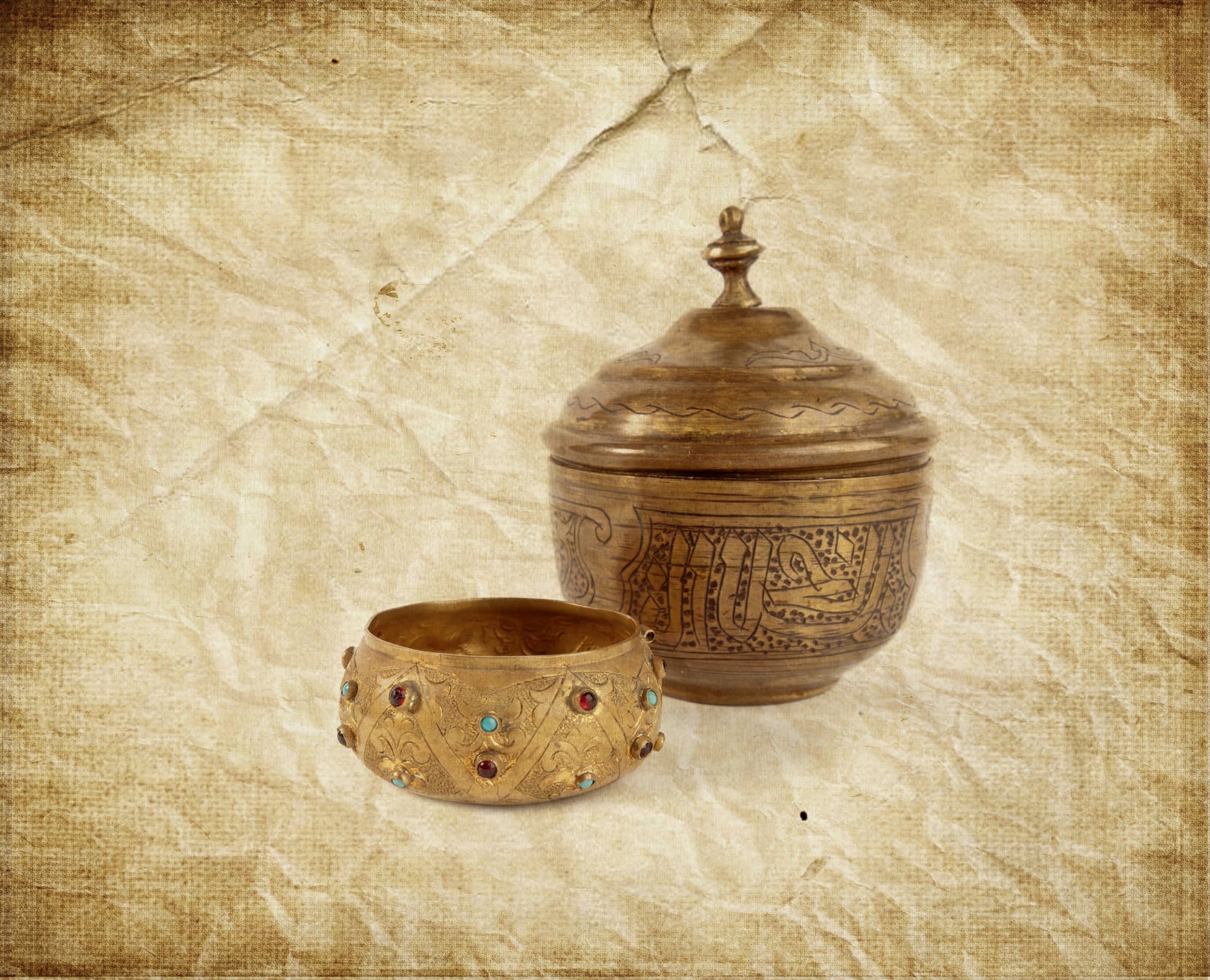
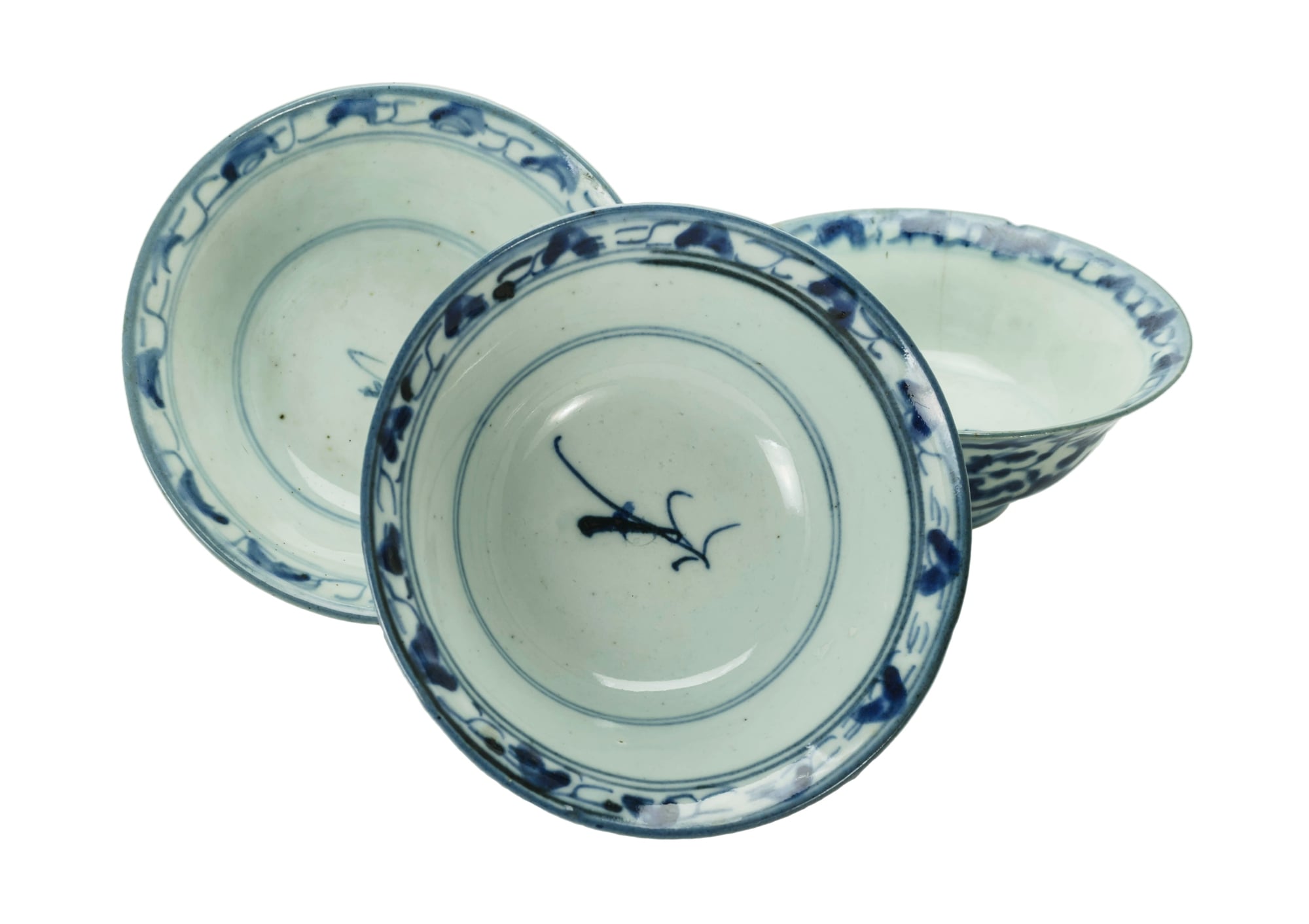
Look at the bottom of every ceramic, glass, or porcelain piece you pick up, because that’s where the story lives — a small stamped mark, a painted signature, a country of origin pressed into the clay before it fired. Pieces marked “Made in Occupied Japan” date specifically to 1945–1952, which is saying something when most people just assume old ceramics are interchangeable.
Feel the Weight of Metal Pieces
Silver plate and solid sterling silver feel almost identical to the eye — but your hand knows the difference. Solid sterling is heavier, colder to the touch, and marked with “925” or the word “Sterling” stamped somewhere on the piece.
Plate wears through at the edges over time, revealing the copper or brass underneath, and that wear is actually your best friend at a yard sale.
Understand That Patina Is Not the Same as Dirt
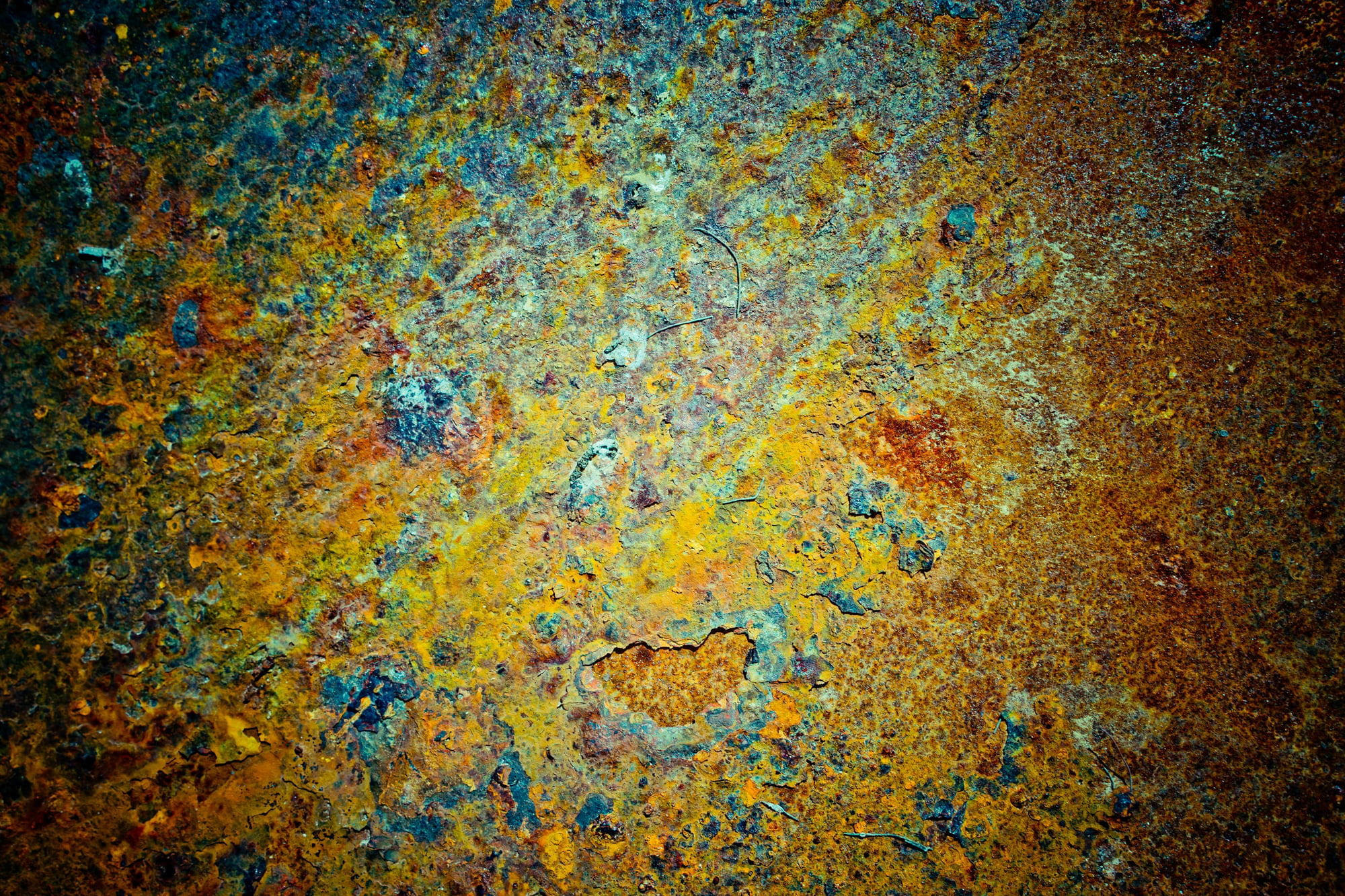
Patina on brass, bronze, or copper is the slow oxidation of decades — it has depth, variation, and a kind of gravity to it that no one can fake convincingly in a factory. Dirt, by contrast, sits on top of a surface and wipes away; patina lives inside the metal itself, darkening the recesses while the high points stay warm and bright.
So when you see something that looks neglected, look closer before you assume it’s just grimy.
Learn the Feel of Hand-Cut Dovetail Joints
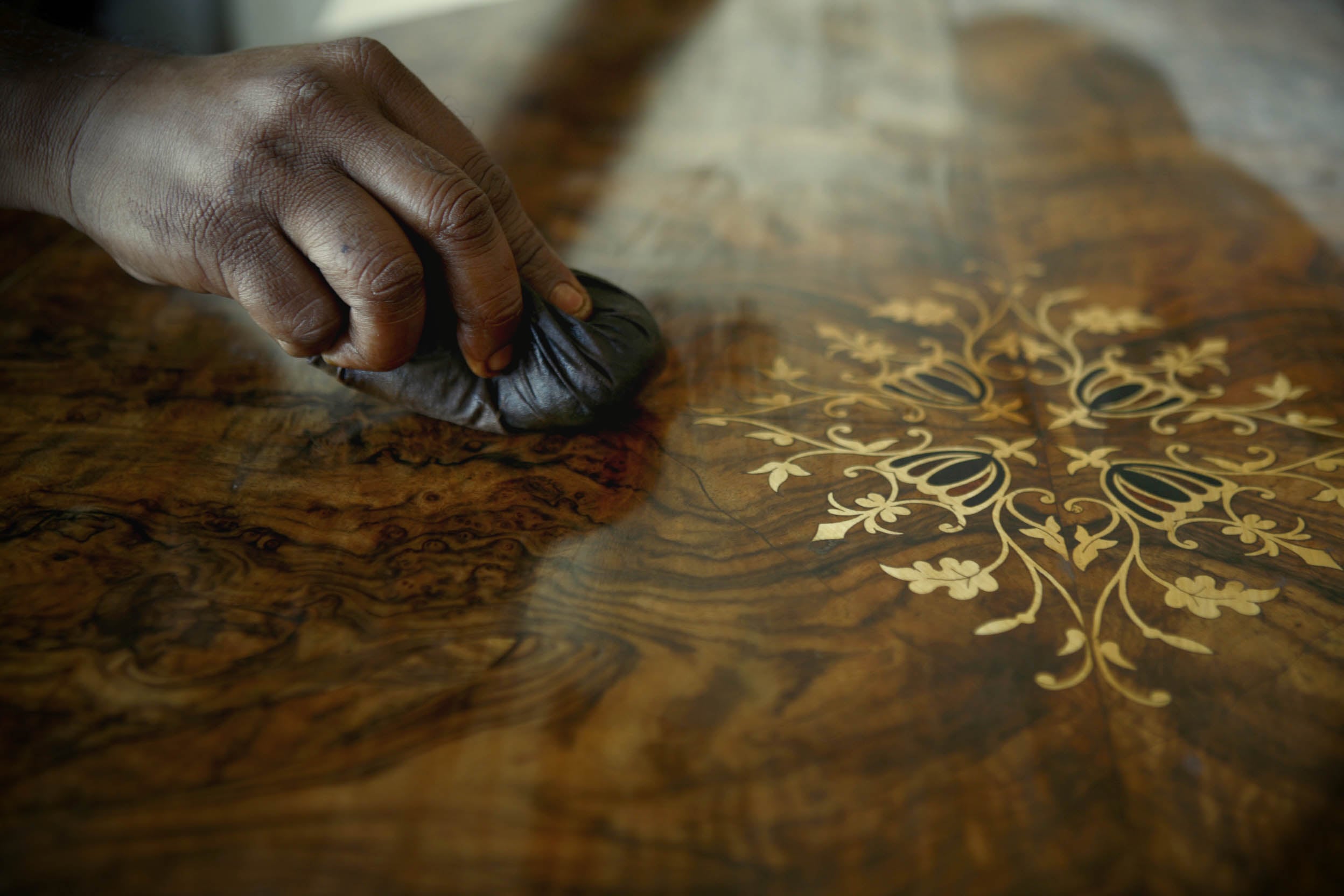
Mass production changed woodworking permanently, and the line between before and after is visible if you know where to look. Hand-cut dovetail joints — the interlocking wedge-shaped cuts at the corners of drawers — are slightly irregular, with small variations in spacing that a machine would never allow.
Pull out a drawer at a yard sale and look at the joints: uniform and perfect means machine-made and modern; uneven and slightly imperfect means someone made it by hand, which generally means it’s older and worth more.
Watch for Original Hardware
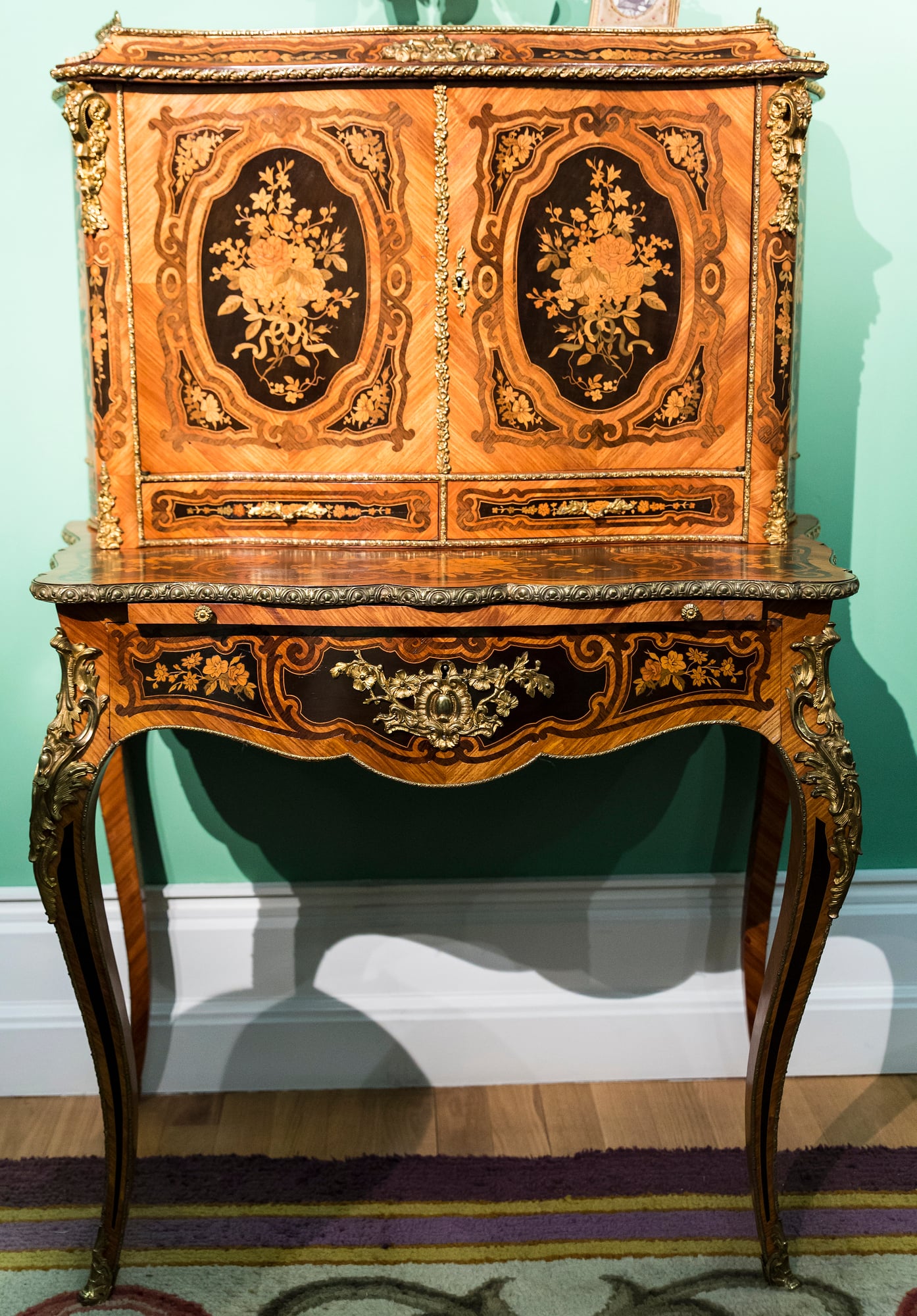
Replacement hardware is the quiet confession of a piece that’s been messed with. Original brass pulls on a Victorian dresser will have a slightly different color from one another, tarnished at different rates depending on how often each drawer was used — and the screws behind them will be hand-cut, with off-center slots and irregular threading that a modern screw would never have.
A piece that still has all its original hardware is a piece that hasn’t been “restored” into mediocrity.
Recognize Desirable Pottery Marks

American art pottery from the early twentieth century — Rookwood, Roseville, Weller, McCoy — still surfaces at yard sales with startling regularity, usually because the seller has no idea what they have. Rookwood pieces carry a reverse RP mark with a flame added for each year after 1886, making the date readable if you know the system.
Roseville often appears with a simple raised or impressed mark on the base, sometimes just the word “Roseville” in script, and even a mid-sized Roseville vase in good condition can fetch several hundred dollars at auction.
Spot the Difference Between Pressed and Cut Glass
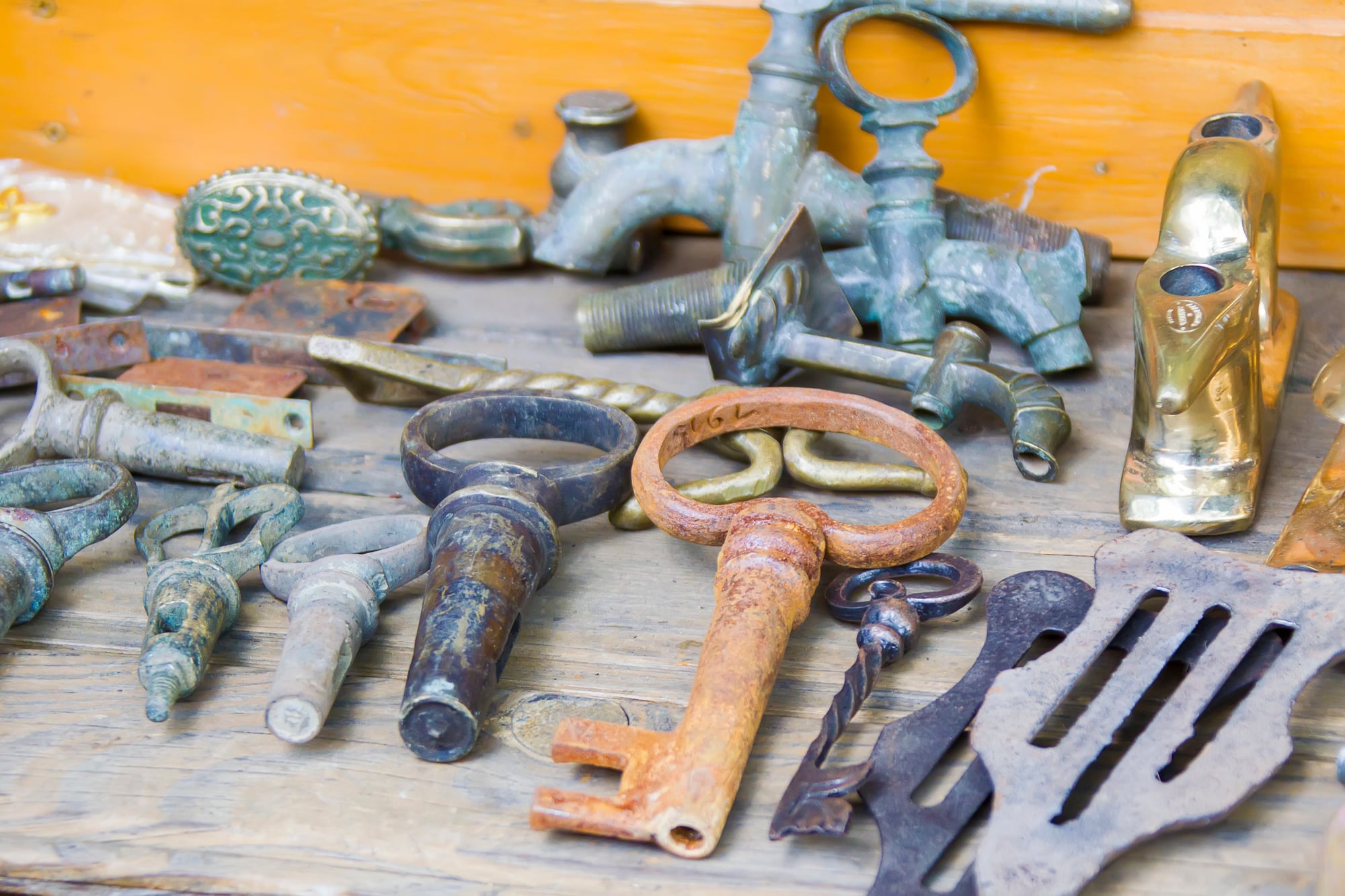
Pressed glass and cut glass look similar from across a table, but they’re not the same thing at all. Cut glass — the genuinely valuable kind, especially American Brilliant Period pieces from roughly 1876 to 1917 — has edges so sharp they’ll catch your fingernail and hold it; pressed glass, which was molded rather than cut, has edges that are slightly soft and rounded.
Hold a piece up to light and rotate it: cut glass throws prismatic rainbows with a brightness that pressed glass, for all its charm, simply cannot match.
Understand What “Primitive” Means in Antique Terms

Primitive antiques — hand-forged tools, early American woodenware, painted furniture from rural Pennsylvania or New England — have a specific roughness that comes from being made without templates or machines. A hand-hewn wooden bowl will show tool marks inside, slight asymmetry, and wood grain that follows the natural shape of the piece rather than being cut against it.
That asymmetry isn’t a flaw; it’s the entire point, and collectors will pay for it accordingly.
Look at the Back of Paintings and Prints
The front of a painting tells you almost nothing about its age. The back tells you everything — old canvas darkens and becomes brittle, wooden stretcher bars develop a deep amber color, and the hardware used to hang it follows fashions that changed by decade.
A wire hung on two screw eyes suggests post-1880s; a single ring-and-nail setup suggests earlier; and a frame with a paper label from a specific gallery on the back is practically a gift, because it gives you a provenance trail to follow.
Know Your Costume Jewelry Hallmarks
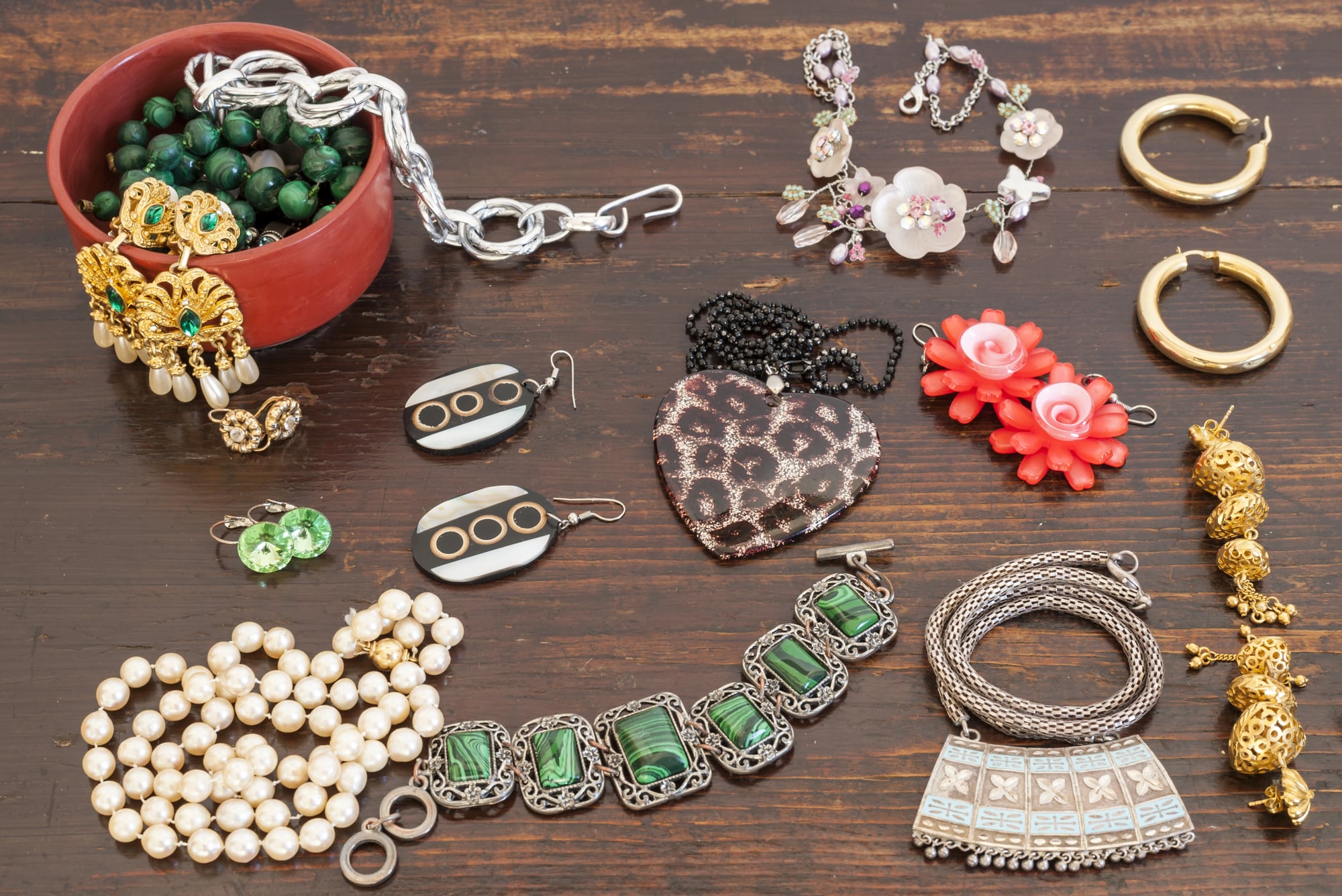
Not all costume jewelry is worthless, and not all of it is what it appears to be. Pieces marked “Trifari,” “Miriam Haskell,” “Schiaparelli,” or “Eisenberg” are collected seriously and sell for real money — a signed Miriam Haskell brooch at a yard sale for fifty cents is the kind of discovery that makes the hobby worth pursuing.
The marks are usually small and on the back of a clasp or pin, so you need to look, and you need to know the names before you get there.
Trust Asymmetry in Handmade Ceramics
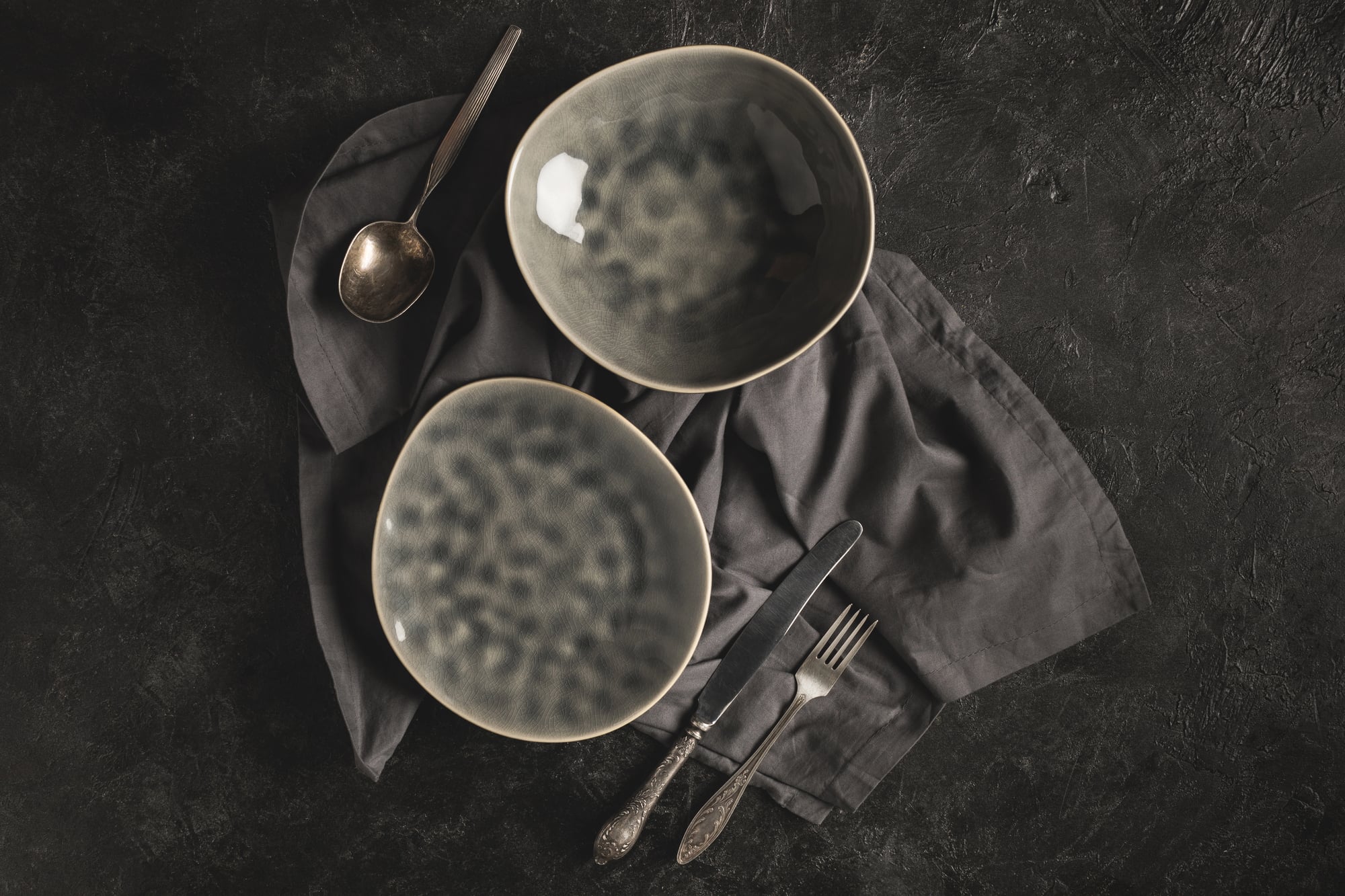
Machine-made ceramics are perfect. They have even walls, consistent glazing, identical dimensions from piece to piece.
Handmade ceramics are not perfect — the walls vary in thickness, the foot ring at the base shows tool marks from the potter’s hand, and the glaze pools slightly differently in different areas because it was applied by a person, not a machine. That imperfection is the signature of something made rather than manufactured, and in ceramics, made almost always means more valuable.
Identify Furniture Construction Methods by Period
American furniture from before roughly 1860 was made entirely by hand — mortise and tenon joints held together with wooden pegs, boards that are wider than modern lumber allows because old-growth trees haven’t existed commercially for over a century. When you find a piece with wide, single-plank boards on the back or sides (sometimes 18 to 24 inches across), you’re looking at old-growth lumber, which is a dating clue in itself.
The boards will also have slight undulations from hand planing, visible in raking light if you crouch down and look along the surface.
Read the Glaze on Old Ceramics
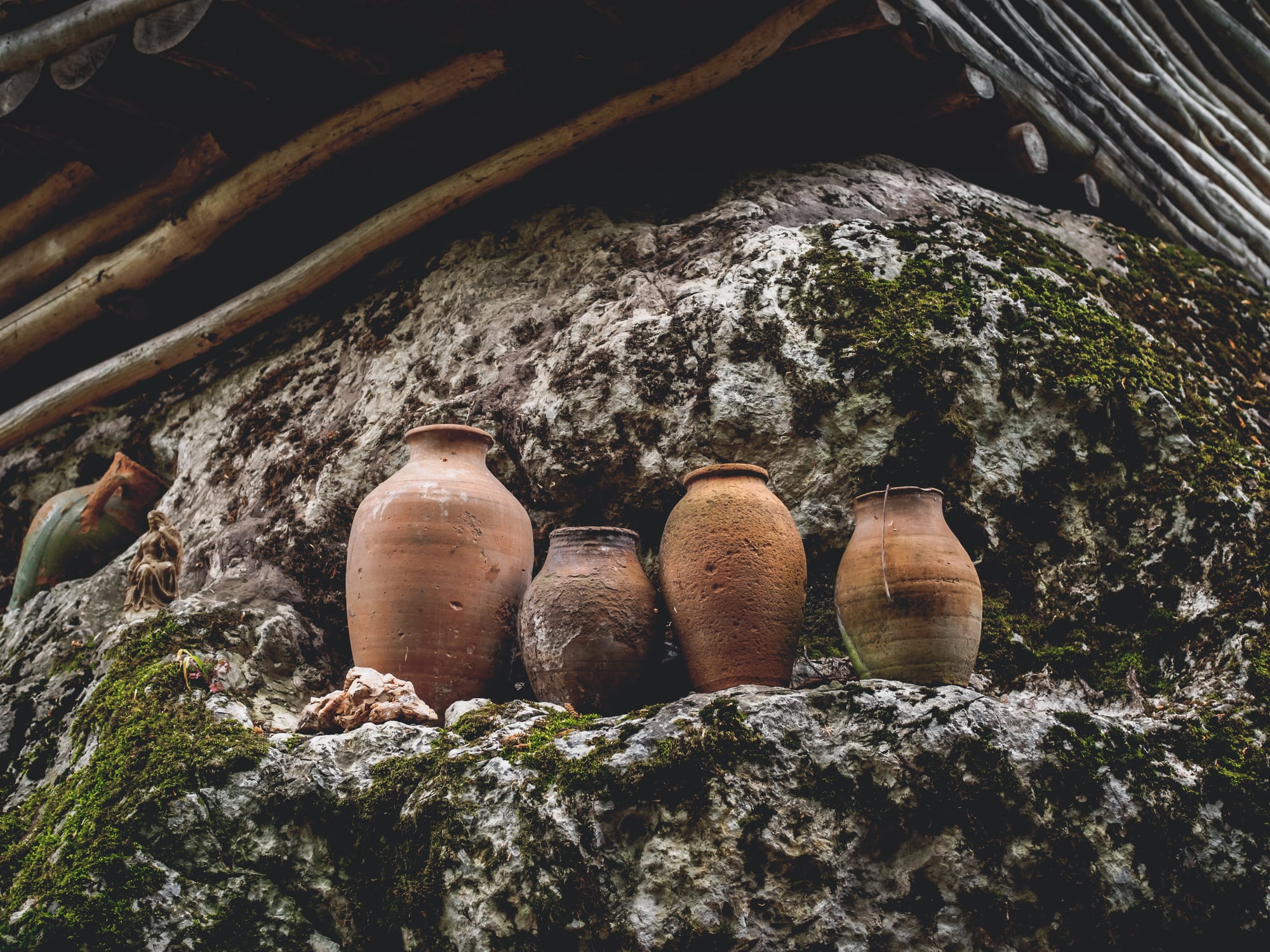
Crazing — the fine network of cracks in old ceramic glaze — is not damage. It’s age, and it’s honest: glaze and clay expand and contract at different rates over decades, and that tension eventually shows in the surface.
Artificially crazed reproductions exist, but the crazing pattern on genuinely old pieces tends to be finer, more consistent, and stained slightly darker in the cracks from years of handling. Fresh crazing on a reproduction looks uniform in a way that natural aging simply doesn’t.
Understand Why Condition Matters More Than Age
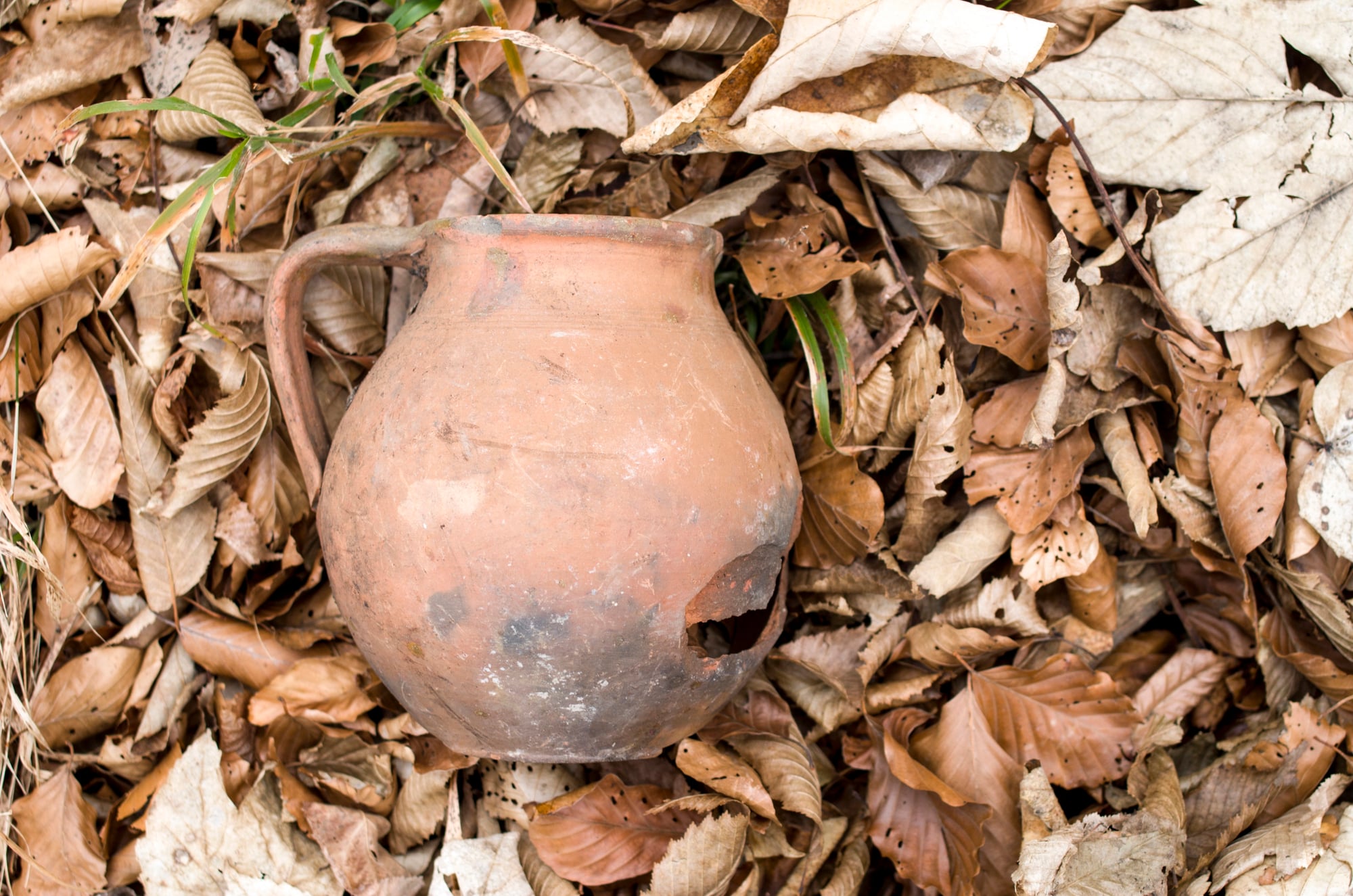
Age alone does not make something valuable. A two-hundred-year-old piece of furniture that has been stripped, refinished, and fitted with reproduction hardware is worth a fraction of a comparable piece in original, unaltered condition — even if the refinished one looks better to the untrained eye.
The antique market rewards originality above almost everything else, which means the dusty, untouched, slightly ugly piece in the back of a box often has more potential than the polished one sitting front and center.
The Box at the Bottom of Everything
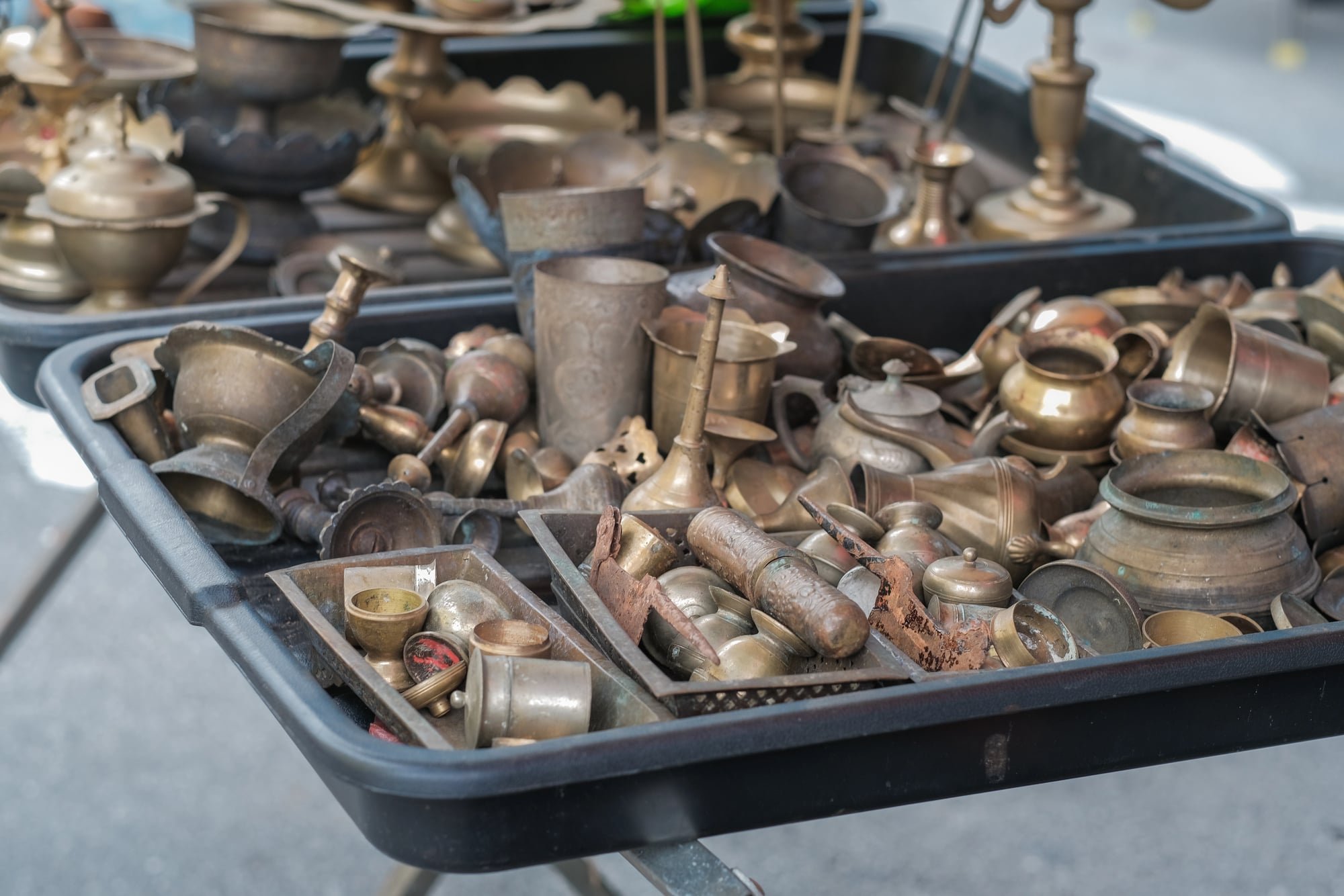
There’s something almost stubborn about a valuable antique at a yard sale — it doesn’t announce itself, it doesn’t ask to be noticed, it just sits there being exactly what it is, waiting for the right person to recognize it. The knowledge you bring to that moment is everything.
A pressed-glass candy dish and a piece of American Brilliant cut glass look nearly identical to someone who’s never thought about it before, and they are separated by hundreds of dollars and several decades of difference. So the next time you’re standing at a folding table at seven in the morning, coffee going cold in your hand — go slow, turn things over, and look at the backs.
More from Go2Tutors!

- The Romanov Crown Jewels and Their Tragic Fate
- 13 Historical Mysteries That Science Still Can’t Solve
- Famous Hoaxes That Fooled the World for Years
- 15 Child Stars with Tragic Adult Lives
- 16 Famous Jewelry Pieces in History
Like Go2Tutors’s content? Follow us on MSN.