Iconic Watches That Defined Modern Luxury
Watches stopped being just timekeeping tools decades ago. Your phone tells time more accurately than any mechanical watch ever will.
But people still spend thousands, sometimes millions, on timepieces that require winding and gain or lose seconds every day. The watches that became icons did something beyond keeping time.
They represented moments in history, defined aesthetics that lasted generations, or simply became so associated with success that wearing one sent a message. These are the pieces that shaped what luxury means on your wrist.
Rolex Submariner: The Dive Watch That Never Gets Wet

Rolex designed the Submariner in 1953 for professional divers. It could handle depths of 100 meters and keep working.
Most Submariners today never touch ocean water. They sit in boardrooms and restaurants, signaling that the wearer has arrived.
James Bond wore a Submariner in the early films, which helped cement its status. The watch became shorthand for sophistication and capability.
You could dive with it if you wanted, but the real point was showing you could afford not to.
The design barely changed over seventy years. The same clean dial, the rotating bezel, the chunky case—they all stayed recognizable across generations.
When people picture a luxury watch, they’re often picturing a Submariner whether they know it or not.
Patek Philippe Nautilus: Luxury Goes Casual

Patek Philippe built its reputation on formal dress watches that cost more than cars. Then in 1976, they released the Nautilus with an integrated steel bracelet and a porthole-shaped case.
It was supposed to be their sports watch. The design came from Gérald Genta, who sketched it on a napkin during dinner.
The octagonal bezel, the horizontal embossed dial, the slim profile—everything about it broke from traditional luxury watch design. It looked modern when it launched and still looks modern now.
Steel Nautilus watches now sell for several hundred thousand dollars on the secondary market. People wait years on lists just for the chance to buy one at retail price.
What started as Patek’s casual option became one of the most exclusive watches you can own.
Audemars Piguet Royal Oak: Steel That Costs Like Gold

Audemars Piguet faced financial trouble in the early 1970s. Quartz watches were destroying the Swiss watch industry, and traditional luxury watches seemed doomed.
They needed something radical. Gérald Genta designed the Royal Oak in a single night—another napkin sketch that changed watchmaking.
The octagonal bezel with exposed screws, the integrated bracelet, the tapisserie dial pattern—it looked like nothing else in luxury watches. They made it in steel and charged gold prices.
People hated it at first. The design seemed too industrial, too different from what luxury watches should look like.
But slowly, the Royal Oak found its audience. Now it’s one of the most recognizable watch designs in existence, and the waiting lists rival the Nautilus.
Omega Speedmaster: The Moon Watch

NASA needed a watch for space missions in the 1960s. They tested multiple brands under extreme conditions—temperature swings, vibration, vacuum, acceleration.
The Omega Speedmaster passed every test. Buzz Aldrin wore a Speedmaster on the moon in 1969.
That single moment gave Omega a marketing angle that would never expire. Every Speedmaster since carries the “moon watch” designation somewhere in its marketing.
The watch itself is straightforward—a chronograph with a tachymeter bezel, manual winding movement, and a design that hasn’t changed significantly since the 1960s. You can buy one for a few thousand dollars, making it accessible compared to most watches on this list.
But you’re not just buying a watch. You’re buying the one that went to the moon.
Cartier Tank: Geometry and Elegance
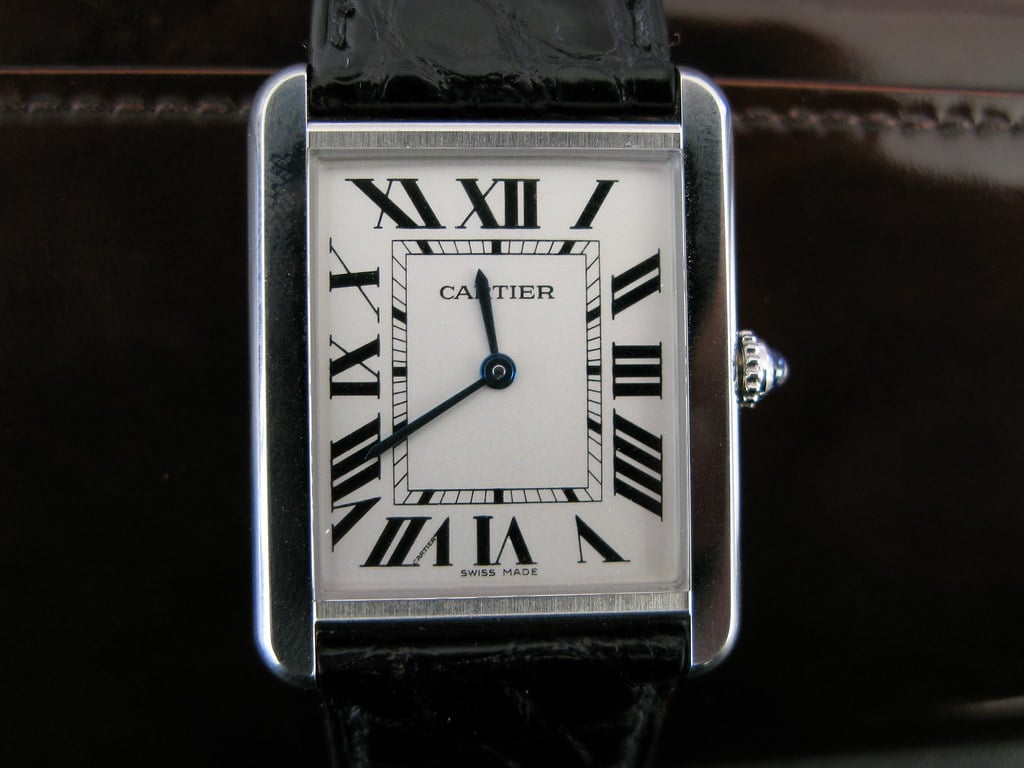
Louis Cartier designed the Tank in 1917, inspired by the aerial view of military tanks on the Western Front. The rectangular case, the parallel sides, the Roman numerals—the design was radical at the time and remains distinctive today.
The Tank became the dress watch for people who wanted something different from round watches. Artists, writers, and creative professionals gravitated toward it.
Andy Warhol wore one. So did Jackie Kennedy and Princess Diana. Cartier made countless variations over the decades, but the core design stayed consistent.
The Tank proves that watch design doesn’t need to be circular to become timeless.
Rolex Daytona: Racing Watch for People Who Don’t Race

Rolex created the Daytona in 1963 for professional race car drivers. It had a chronograph for timing laps and a tachymeter bezel for calculating speed.
Racing drivers mostly ignored it. Paul Newman wore a Daytona, and everything changed.
His particular model, with an exotic dial design, became one of the most valuable vintage watches in existence. One sold at auction for over seventeen million dollars.
Modern Daytonas have waiting lists measured in years. Getting one requires either spending hundreds of thousands of dollars with a Rolex dealer on other watches first, or paying massive premiums on the secondary market.
The racing connection is almost irrelevant now. People want Daytonas because other people want Daytonas.
Jaeger-LeCoultre Reverso: The Watch That Flips
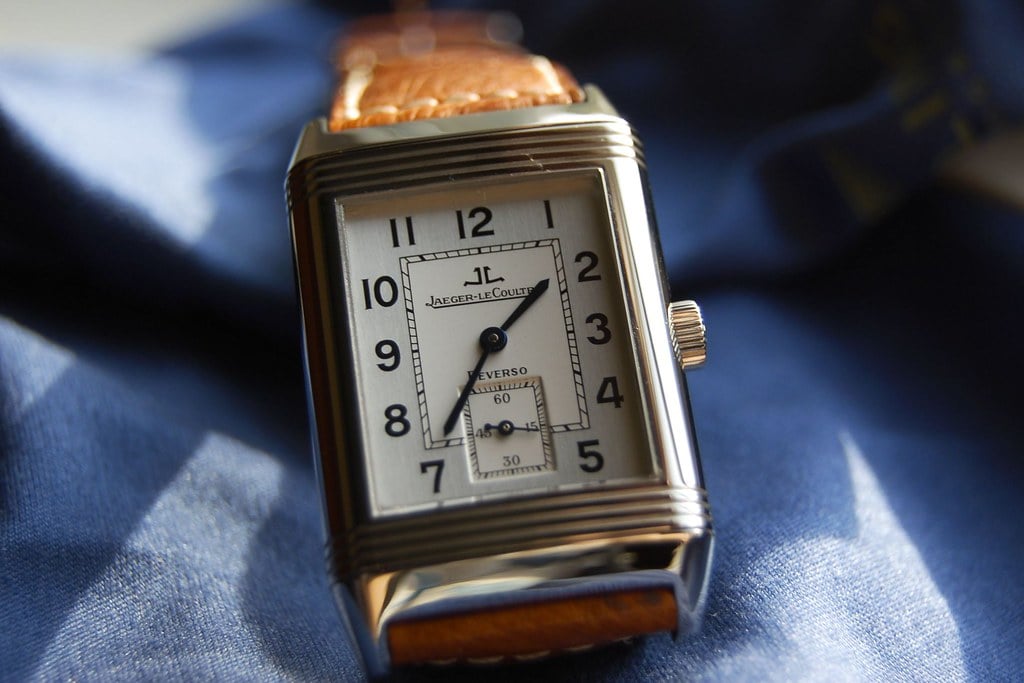
British officers in India during the 1930s wanted a watch that could survive polo matches. Jaeger-LeCoultre created a watch with a case that flipped over to protect the crystal during play.
The rectangular case slides in its frame and reverses, showing either the dial or a solid metal back. Some versions have a second dial on the reverse side.
The Art Deco styling and mechanical ingenuity made it stand out immediately. The Reverso outlived polo’s golden age and became an icon of design rather than function.
You probably won’t flip it during sports, but you’ll appreciate that you could if you wanted to.
IWC Big Pilot: Oversized Before Oversized Was Cool
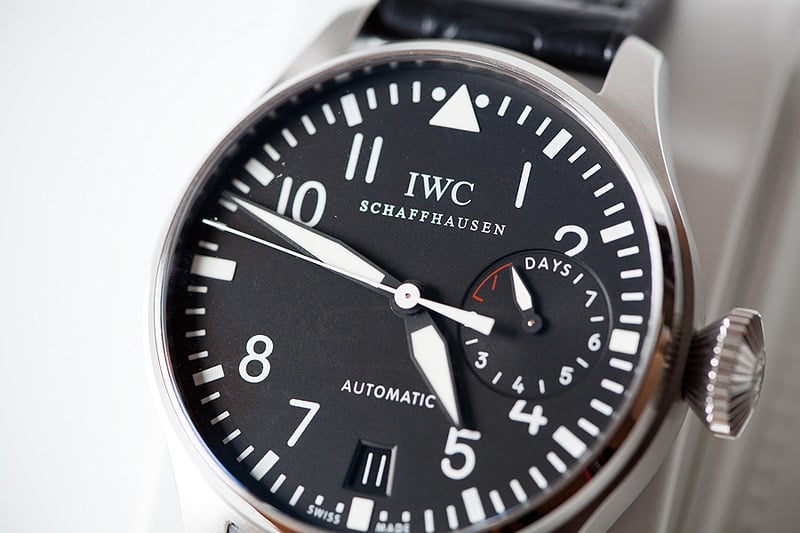
IWC made pilot watches for the German air force during World War II. After the war, they continued making large, easy-to-read watches for aviators.
The Big Pilot references those military designs but scaled up to modern proportions. The watch measures 46mm across, which seems normal now but was massive when the modern version launched in 2002.
The conical crown, the simple dial, the large Arabic numerals—everything prioritizes legibility over decoration. The Big Pilot helped establish the trend toward larger watches that dominated the 2000s and 2010s.
What started as a functional design for pilots became a statement piece for people who never fly planes.
Breitling Navitimer: The Slide Rule on Your Wrist

Pilots in the 1950s needed to make calculations during flight. Breitling added a circular slide rule to the Navitimer’s bezel, allowing pilots to compute fuel consumption, climb rates, and distance conversions.
The watch looks complicated because it is complicated. The circular slide rule surrounds the chronograph dial, creating a busy design packed with information.
Modern pilots use computers for these calculations, but the Navitimer’s aesthetic became iconic anyway. Aviation enthusiasts still buy Navitimers even though they’ll never use the slide rule function.
The watch represents a specific moment when pilots needed this complexity on their wrists.
Panerai Luminor: Italian Military Meets Fashion

Panerai made watches for Italian navy commandos during World War II. The watches were huge, luminous, and built to survive underwater sabotage missions.
After the war, the company faded into obscurity. Sylvester Stallone discovered Panerai in the 1990s and started wearing the watches publicly.
The brand relaunched, and suddenly everyone wanted oversized Italian military watches. The cushion-shaped case and distinctive crown guard became instantly recognizable.
Panerai proved that military watches could be luxury items. The Luminor’s simple design and massive proportions influenced countless other brands to go bigger and bolder.
Vacheron Constantin Overseas: The Other Integrated Bracelet Watch
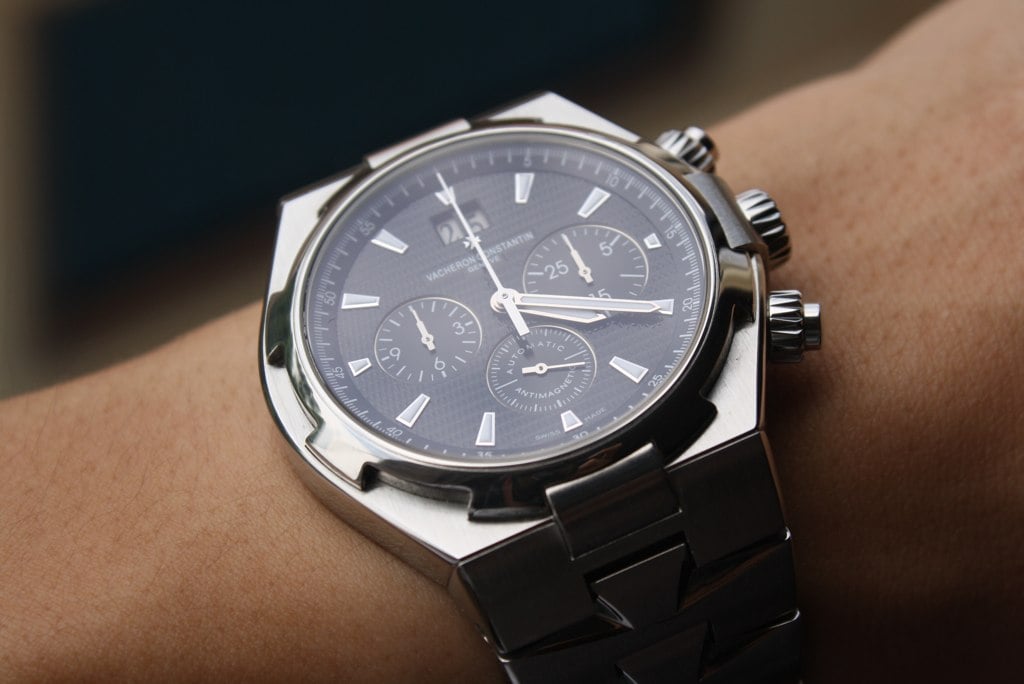
Vacheron Constantin is one of the oldest watch manufacturers in existence. Their Overseas line, launched in 1996, was their answer to the Nautilus and Royal Oak—a luxury sports watch with an integrated bracelet.
The watch features a Maltese cross-shaped bezel, inspired by Vacheron Constantin’s logo. The design is more subtle than its competitors, which appeals to people who want luxury without obvious branding.
The Overseas comes with multiple easily swappable straps, letting you change from bracelet to leather to rubber in seconds. This practical feature differentiates it from watches that require tools and expertise to change straps.
TAG Heuer Monaco: The Square Chronograph
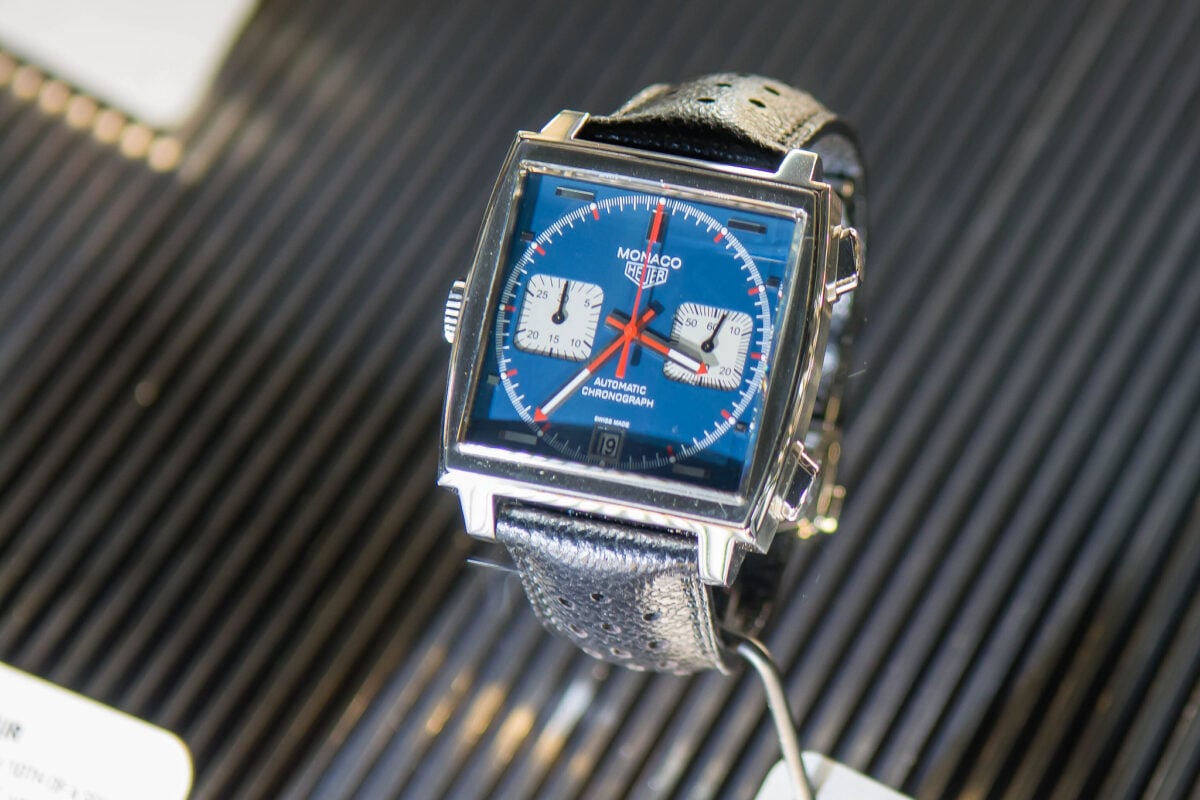
Most chronographs are round. The TAG Heuer Monaco is square.
When it launched in 1969, that alone made it notable. Then Steve McQueen wore one in the film “Le Mans,” and Monaco became legendary.
The square case, the crown on the left side, the bright blue dial—nothing about Monaco follows conventional watch design. It’s aggressive and distinctive in ways that turn some people off and make others obsessed.
TAG Heuer has released countless Monaco variations over the decades, but the basic design remains polarizing. You either love it or wonder why anyone would want a square watch.
Seiko 5: Affordable Doesn’t Mean Forgettable

Most watches on this list cost thousands or tens of thousands of dollars. The Seiko 5 costs a couple hundred.
It’s not trying to compete with Rolex or Patek Philippe. It’s just a well-made automatic watch that anyone can afford.
The Seiko 5 line includes hundreds of variations, but they all share core features—automatic movement, day-date display, water resistance, and solid build quality. They’re not luxury watches, but they’ve influenced how people think about affordable timepieces.
Seiko proved that mechanical watches don’t need to be expensive to be good. The Seiko 5 became an entry point for people who later spend thousands on watches, but it also became an endpoint for people who realize they don’t need anything more.
Grand Seiko Snowflake: Japanese Precision Meets Art
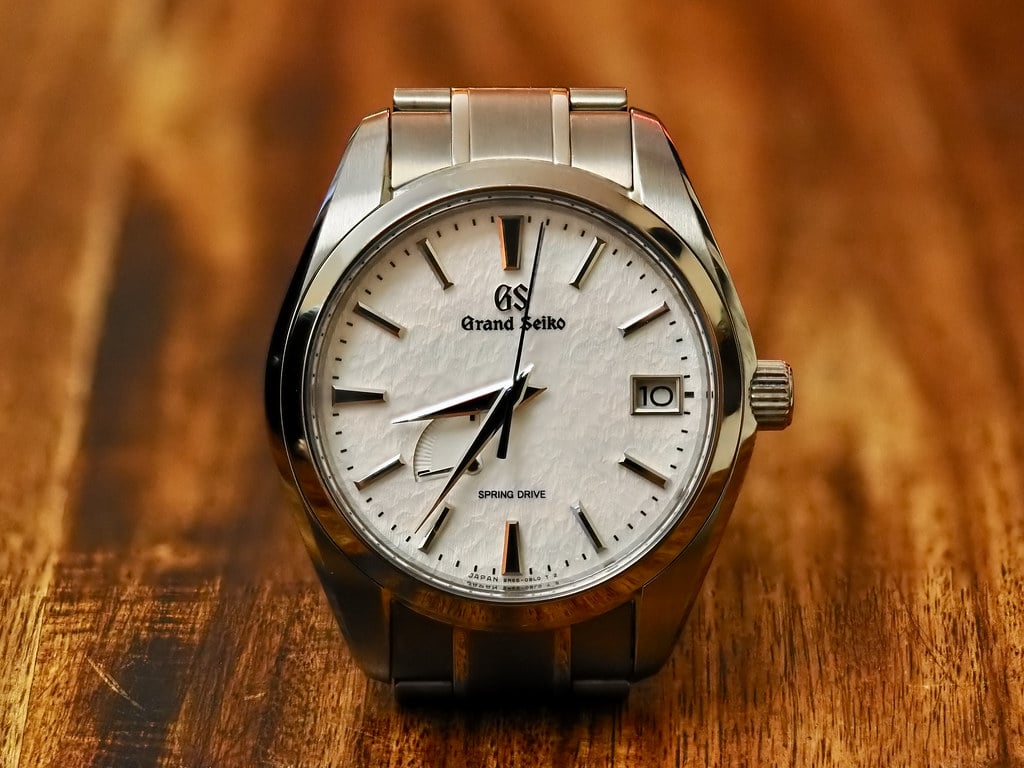
Grand Seiko operated in Rolex and Omega’s shadow for decades. Japanese watches were considered practical and affordable, not luxurious.
The Snowflake changed some minds. The textured white dial mimics snow on the mountains near Grand Seiko’s studio.
The finishing on the case and hands rivals Swiss watches costing twice as much. The movement is more accurate than most mechanical watches by a significant margin.
Grand Seiko’s Spring Drive technology combines mechanical watchmaking with quartz precision. The second hand sweeps smoothly instead of ticking, creating a visual effect that’s mesmerizing if you stare at it long enough.
The Snowflake proved Japanese watchmaking deserves respect at the highest levels.
What Makes Metal and Mechanics Matter

These watches all tell time. So does your phone, more accurately and for free.
But accuracy isn’t the point anymore and hasn’t been for a long time. Luxury watches exist at the intersection of engineering, design, history, and status signaling.
They’re mechanical objects in a digital world, expensive solutions to a solved problem, and tiny pieces of wearable history. They matter because people decided they matter, and that collective decision created an entire culture around mechanical timekeeping that refuses to disappear even when it no longer makes practical sense.
You don’t need any of these watches. But wanting them anyway is part of what makes them iconic.
More from Go2Tutors!

- The Romanov Crown Jewels and Their Tragic Fate
- 13 Historical Mysteries That Science Still Can’t Solve
- Famous Hoaxes That Fooled the World for Years
- 15 Child Stars with Tragic Adult Lives
- 16 Famous Jewelry Pieces in History
Like Go2Tutors’s content? Follow us on MSN.