Lake Natron: The Deadly African Lake That Mummifies Animals
In the remote stretches of northern Tanzania lies one of Earth’s most extreme environments. Lake Natron has gained worldwide attention for its eerie ability to preserve dead animals in calcified, stone-like forms that wash up along its crimson shores.
This alkaline wonder is both a graveyard and a sanctuary, depending on which creature approaches its caustic waters. The lake isn’t quite as deadly as sensational headlines suggest, but it’s certainly not a place for a casual swim.
Here’s a closer look at the fascinating and often misunderstood features of this extraordinary body of water.
A Shallow Red Basin in the Rift Valley
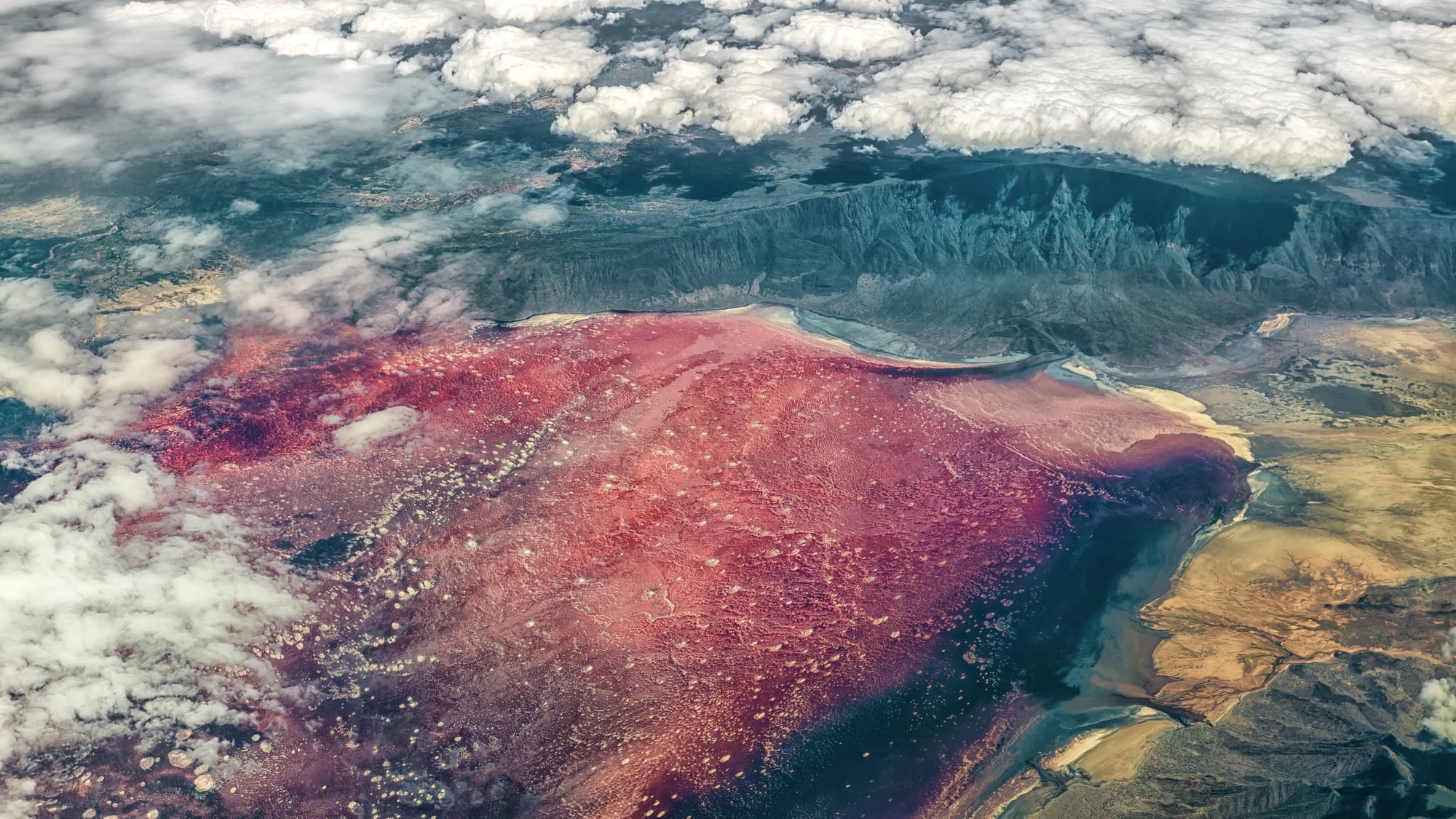
Lake Natron sits in northern Tanzania’s Arusha Region, nestled in the Gregory Rift of the East African Rift Valley. The lake stretches roughly 35 miles long and 14 miles wide, though its size fluctuates dramatically with seasonal rainfall.
At its deepest, the lake barely reaches 10 feet, making it one of the shallowest major lakes in the region.
The Chemistry Behind the Calcification
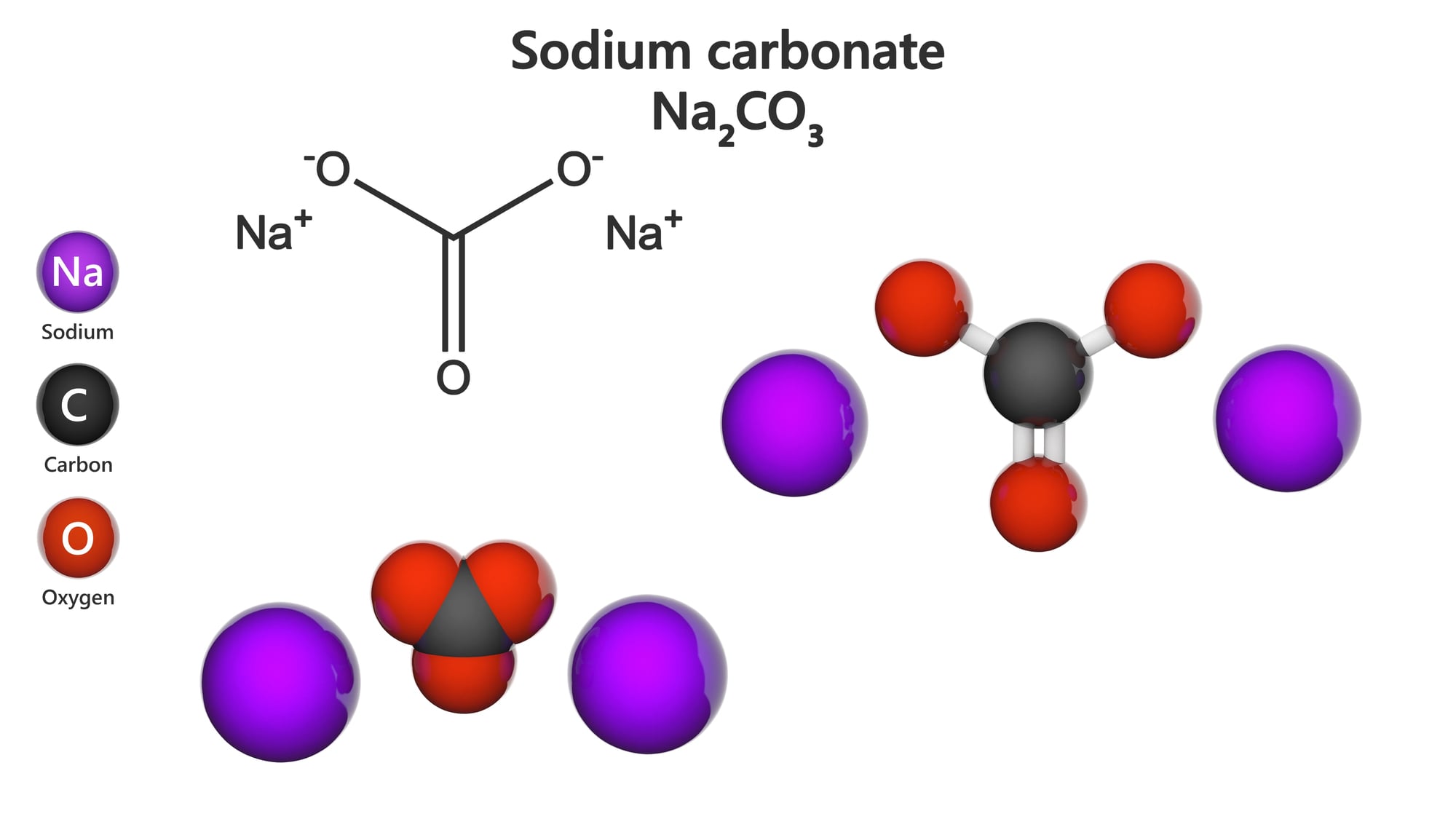
The lake’s notorious preservation effect comes from its extreme chemical composition. Water flowing in from the Southern Ewaso Ng’iro River and mineral-rich hot springs carries massive amounts of sodium carbonate and sodium bicarbonate into the basin.
With no outlet except evaporation, these minerals concentrate over time, creating a caustic brine with pH levels that can exceed 12. This is the same compound ancient Egyptians used for mummification, which explains why dead animals don’t decompose here the way they would anywhere else.
Temperatures That Rival Hot Tubs
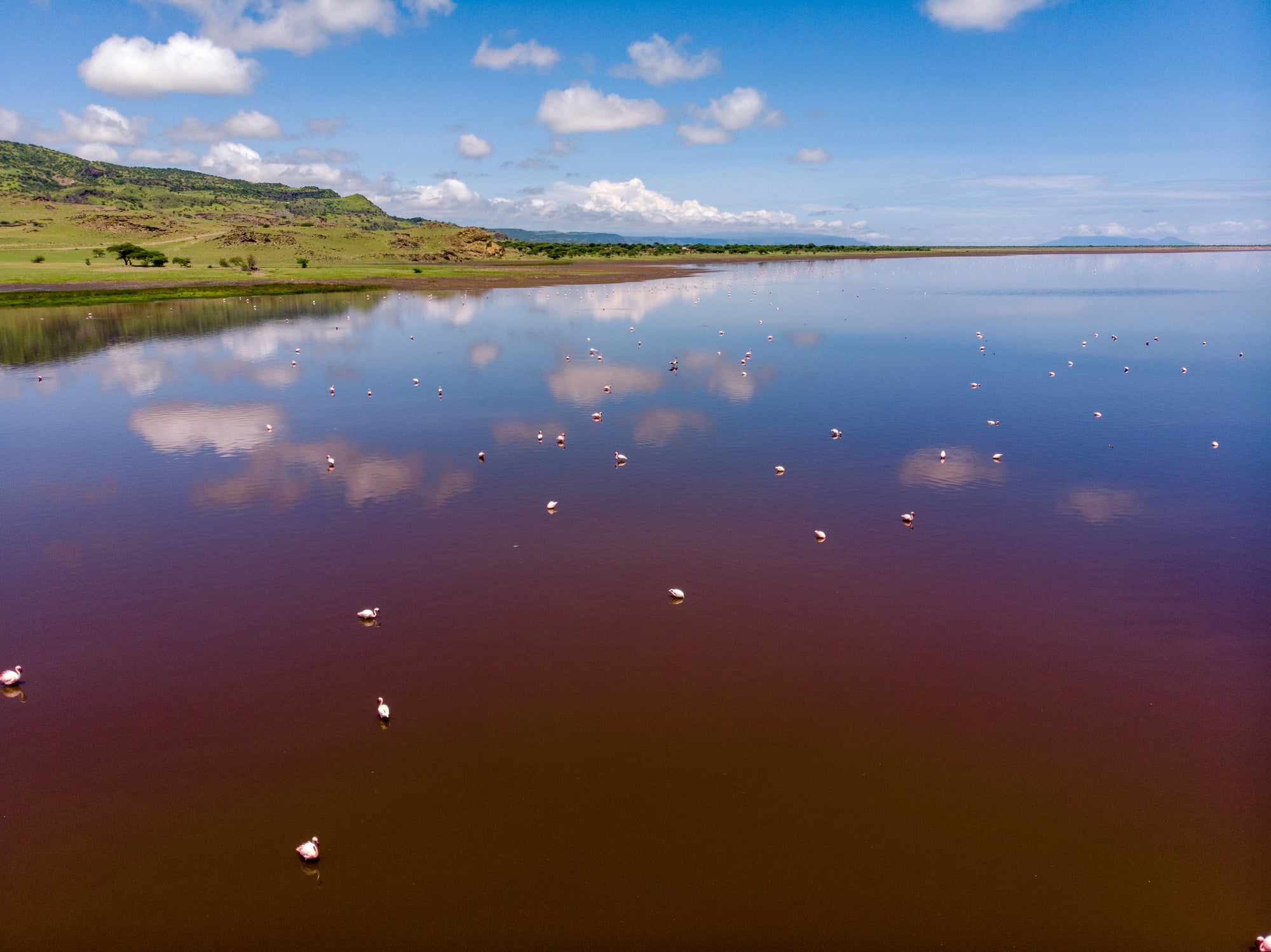
The shallow depth of Lake Natron means the sun turns it into a giant heated pan. During the hottest periods, water temperatures can climb to a blistering 140 degrees Fahrenheit.
Combined with the caustic chemistry, these conditions would cause severe burns to any creature not specifically adapted to handle them.
The Blood-Red Waters
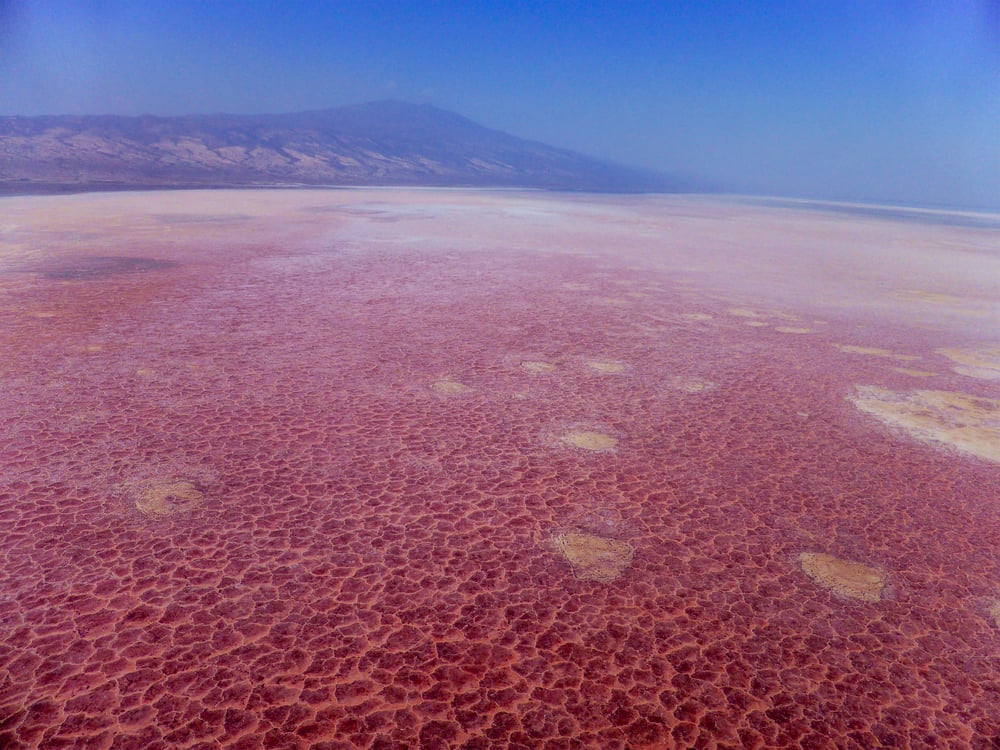
Lake Natron often appears in shades of deep red, orange, and pink, giving it an otherworldly appearance. The vivid coloration comes from salt-loving microorganisms called halophilic bacteria and cyanobacteria that thrive in the extreme alkalinity.
As water evaporates during dry seasons and salinity spikes even higher, these microbes multiply rapidly, intensifying the lake’s crimson hue.
The Mirror That Kills
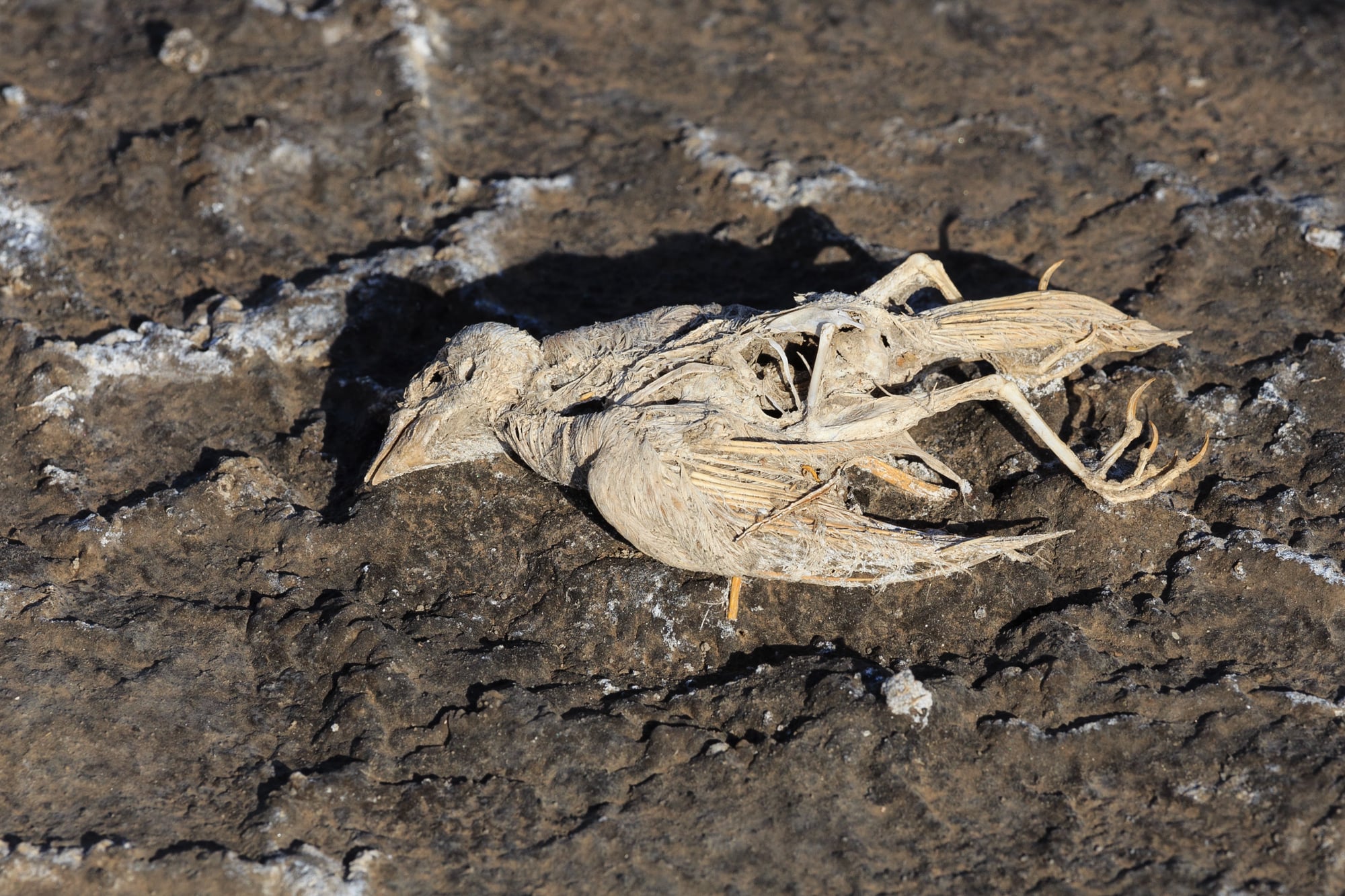
One of the most tragic aspects of Lake Natron is how birds die there in the first place. The lake’s surface is so reflective and chemically dense that migrating birds mistake it for open sky.
They crash into the water at full speed, much like birds flying into glass windows. Once injured or dead in the water, the sodium carbonate begins its preservation work almost immediately.
Nick Brandt’s Haunting Photography
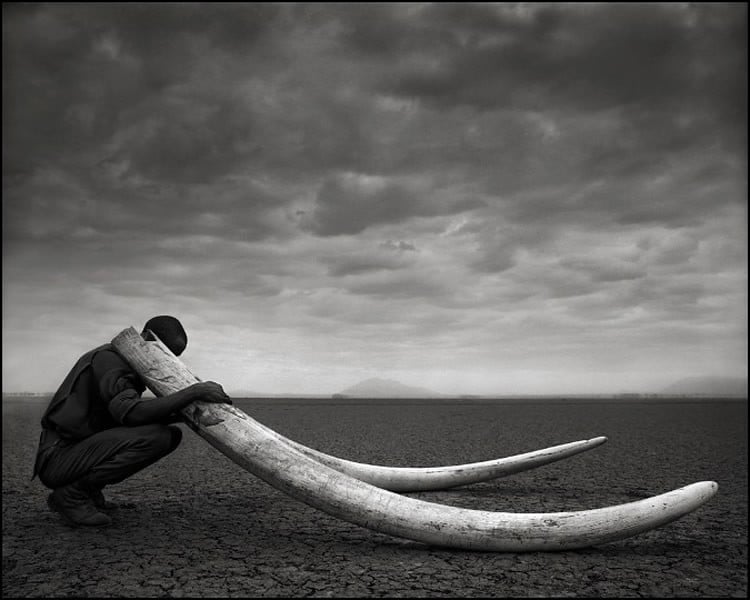
Lake Natron gained international fame in 2013 when photographer Nick Brandt published a book called ‘Across the Ravaged Land’ featuring calcified animal corpses. Brandt collected the mummified remains of birds and bats from the shoreline during low water periods and posed them in lifelike positions on branches.
The resulting images looked like creatures frozen mid-flight by some ancient curse, though Brandt was careful to note he only repositioned bodies that were already perfectly preserved by the lake’s chemistry.
A Flamingo Paradise
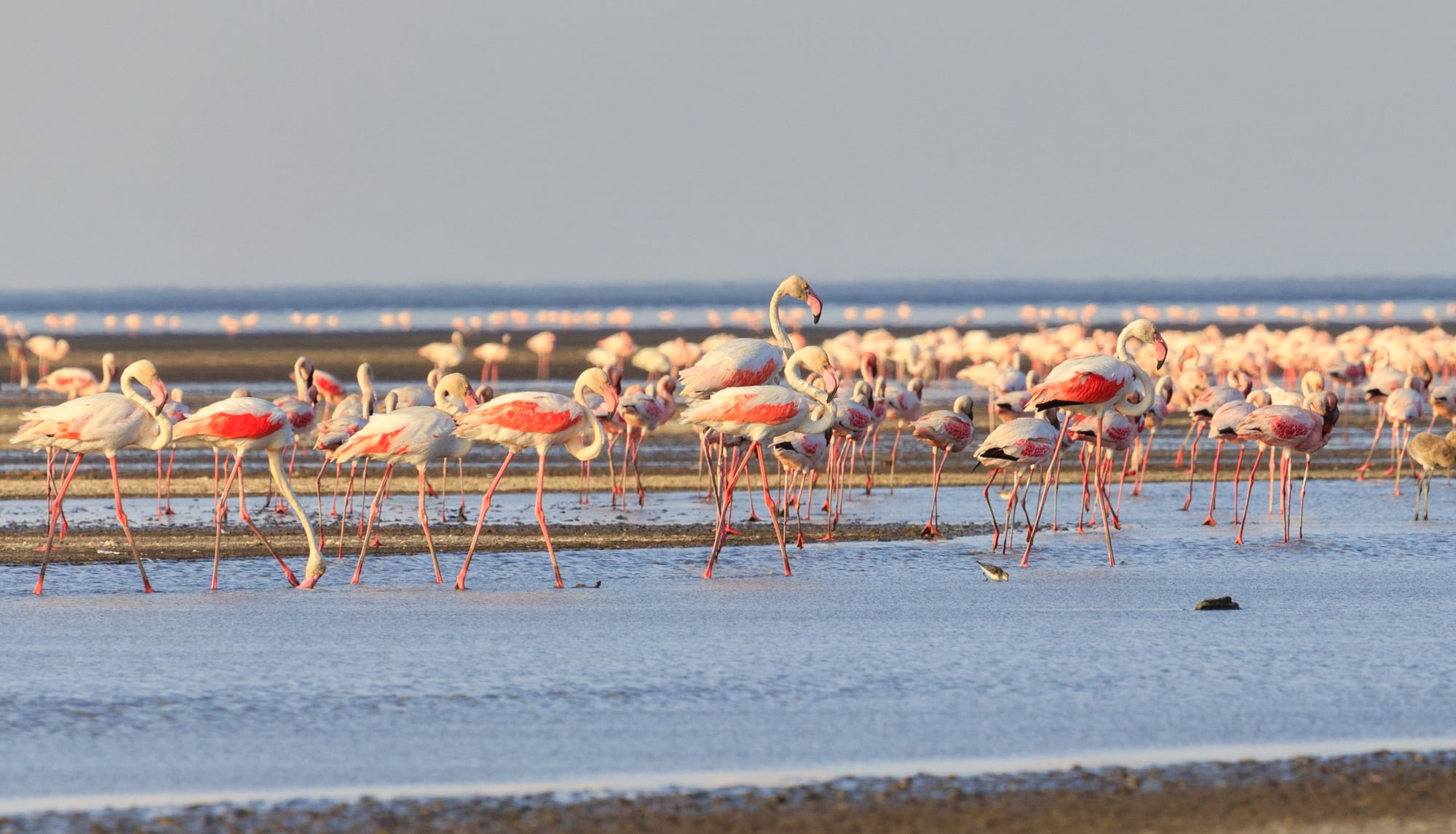
Despite its deadly reputation, Lake Natron is the most important breeding ground for lesser flamingos in the entire world. Roughly 75 percent of the global population of lesser flamingos—somewhere between 1.5 and 2.5 million birds—are born here.
The flamingos thrive because their legs have tough, scaly skin that protects them from the caustic water, and they’ve evolved special glands that filter out excess salt.
Why Flamingos Choose This Death Trap
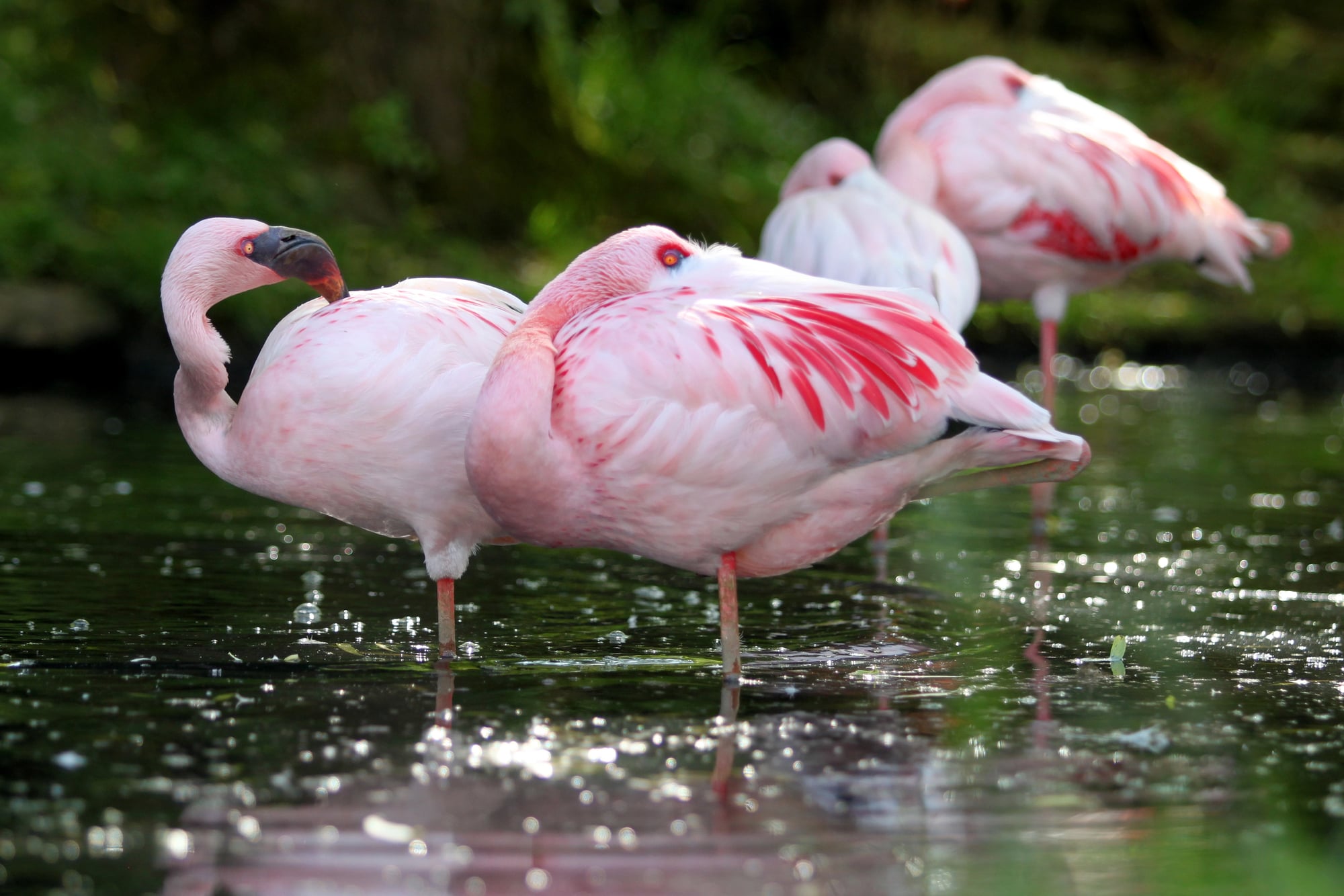
The very conditions that make Lake Natron deadly to most creatures make it perfect for flamingo breeding. Predators can’t reach the flamingo nests built on small islands that form during dry season because the water burns and repels them.
The birds feed on cyanobacteria that flourish in the alkaline environment, particularly spirulina algae that gives them their distinctive pink coloring.
The Only Fish Tough Enough
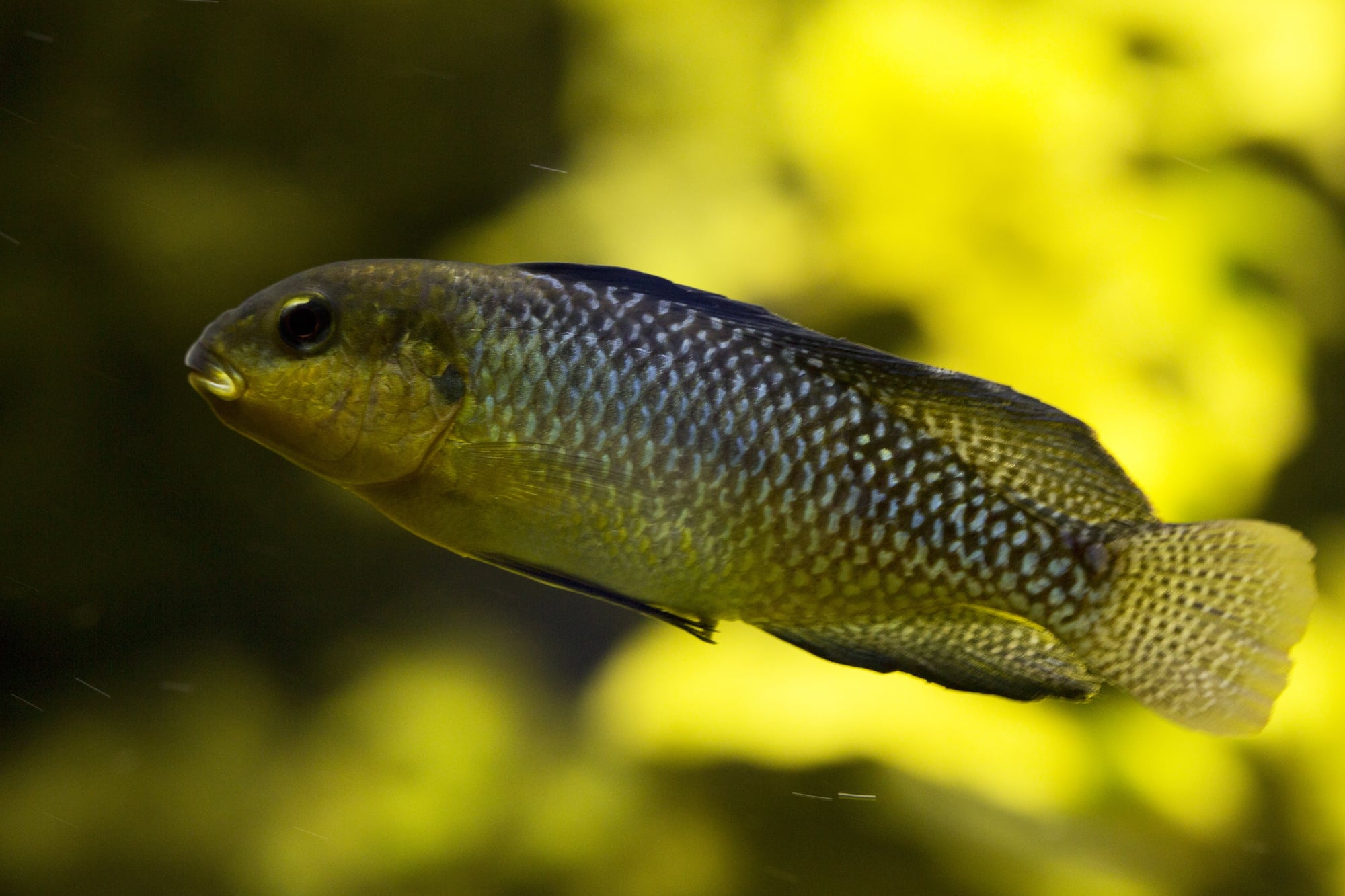
Two species of fish have evolved to survive in Lake Natron’s harsh conditions. The alkaline tilapias Alcolapia latilabris and Alcolapia ndalalani live in slightly less concentrated waters near the hot spring inlets.
These remarkable fish excrete their waste as urea instead of ammonia, which would be impossible to process in such high pH water.
The Volcano That Feeds the Lake
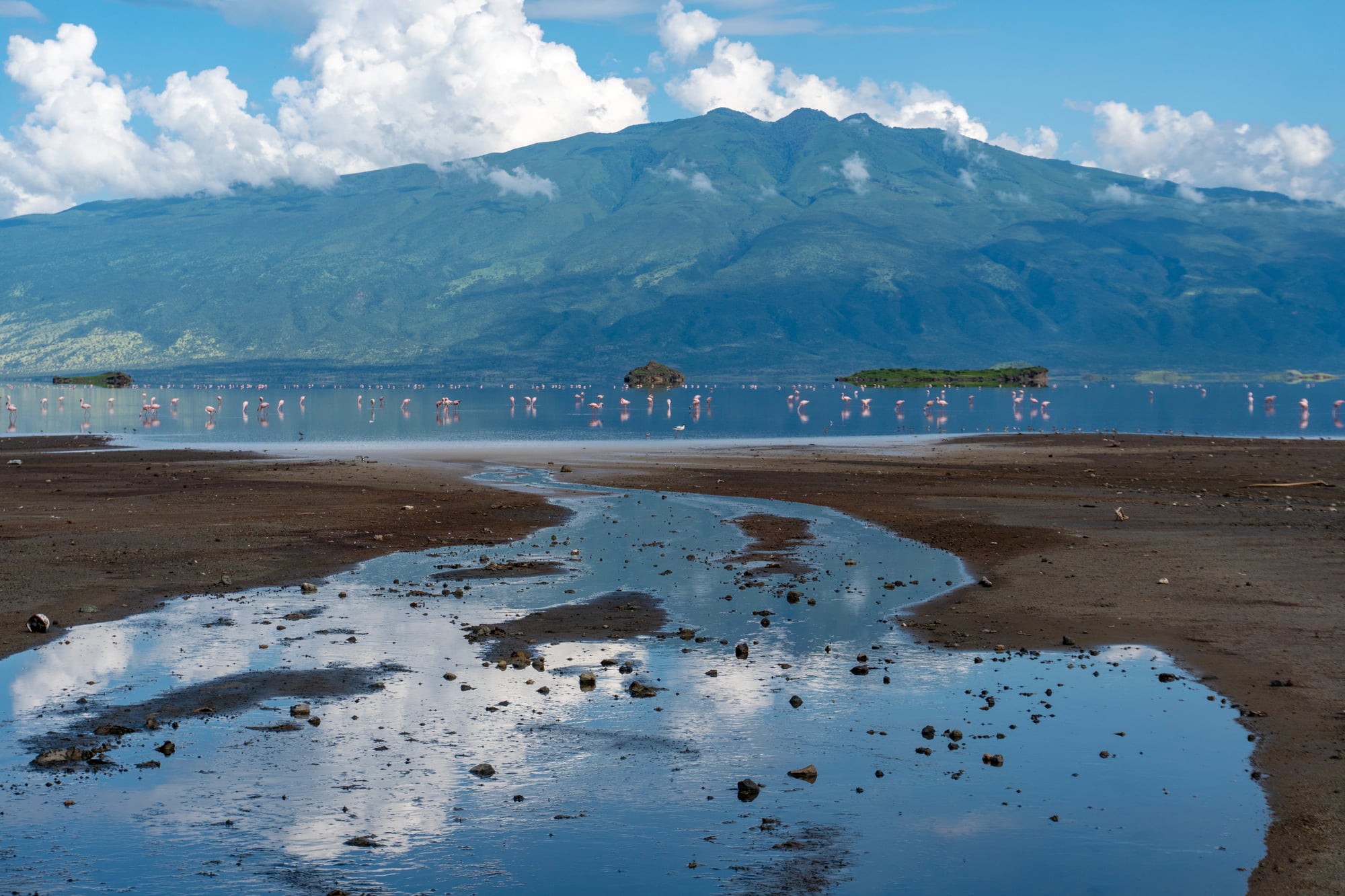
Just south of Lake Natron rises Ol Doinyo Lengai, an active volcano with a unique claim to fame. It’s the only volcano on Earth that erupts natrocarbonatite lava, a dark, runny lava rich in sodium carbonate but extremely low in calcium and magnesium.
This volcanic activity is what gives Lake Natron its distinctive chemistry, as rainwater washes the mineral-rich ash into the lake basin.
Not Instant Death by Touch
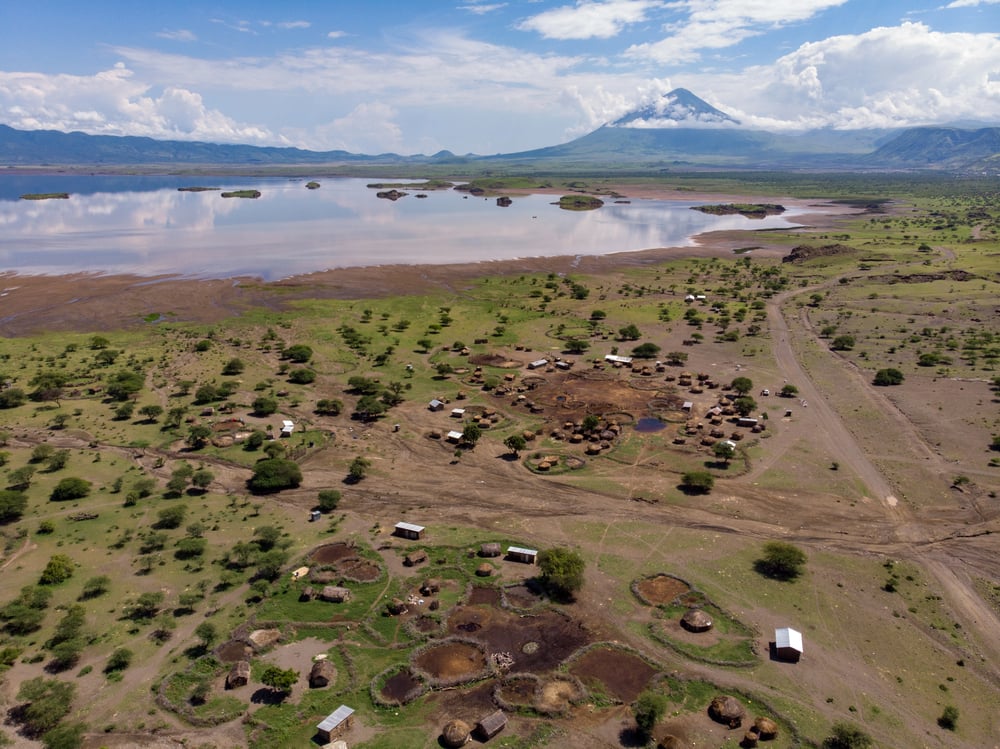
Contrary to popular belief, Lake Natron doesn’t instantly kill everything that touches it. The calcification process happens to animals that die in or near the water, and their bodies are then preserved as the water evaporates and sodium carbonate encrusts them.
A person could technically wade in briefly and survive, though they’d suffer painful burns on any skin exposed to the water, especially if they had cuts or scrapes.
The Helicopter That Crashed

The lake’s mirror-like surface has fooled more than just birds. In 2007, a helicopter carrying wildlife photographers crashed into Lake Natron when the pilot flew too close to the reflective surface.
Nine people were aboard, and while they survived thanks to rescue by local Maasai people, several suffered broken bones. One photographer reported that the caustic water immediately burned his eyes and blurred his vision.
A Ramsar Wetland Under Threat
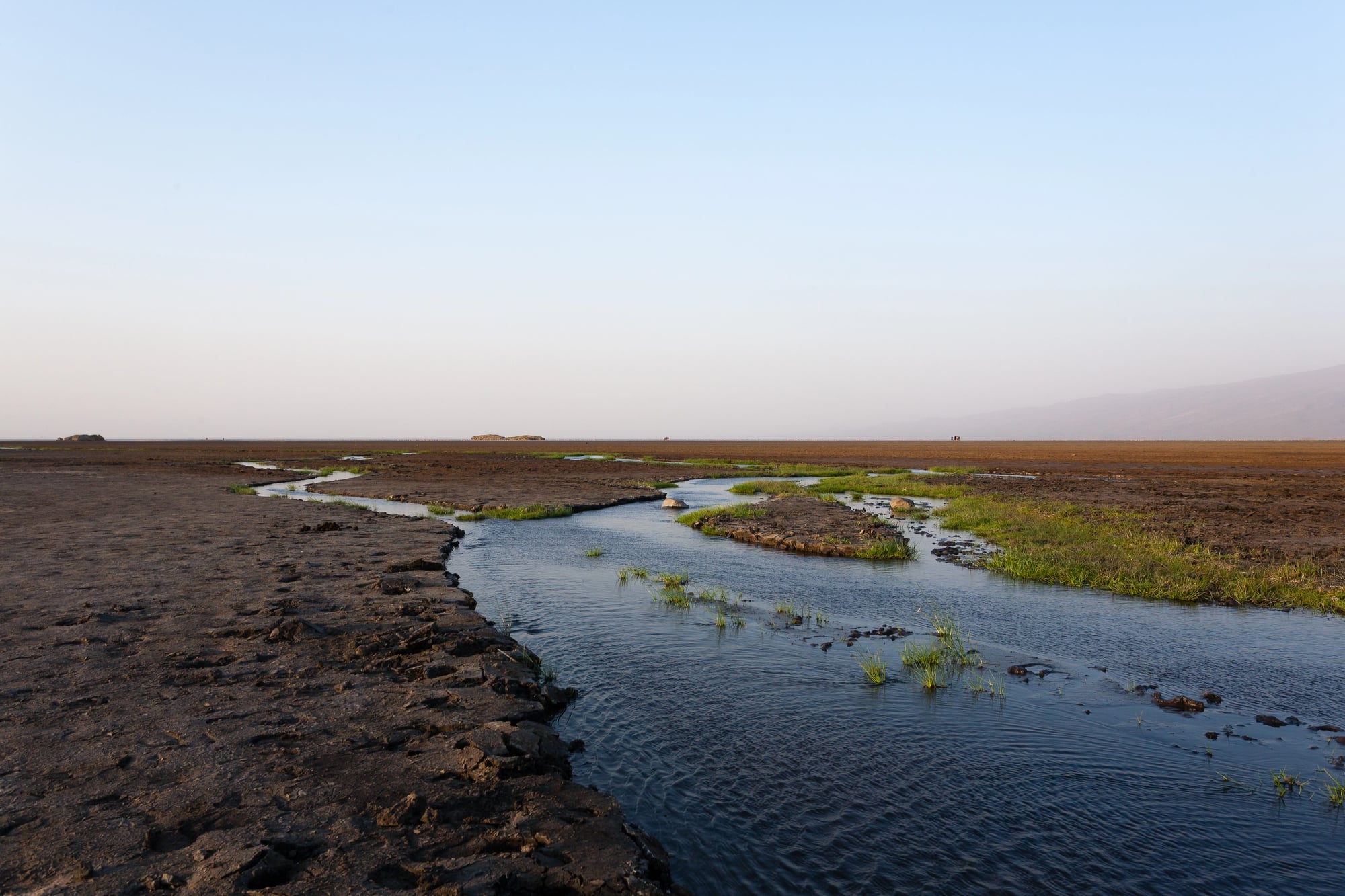
Despite its importance to lesser flamingo populations, Lake Natron has faced industrial threats. In the mid-2000s, plans for a soda ash mining operation threatened to destroy the breeding grounds, prompting an international conservation campaign.
The lake was designated a Ramsar Wetland of International Importance in 2001, offering some protection, though proposed hydroelectric projects and mining interests continue to loom over its future.
The Great Salt Lake Connection
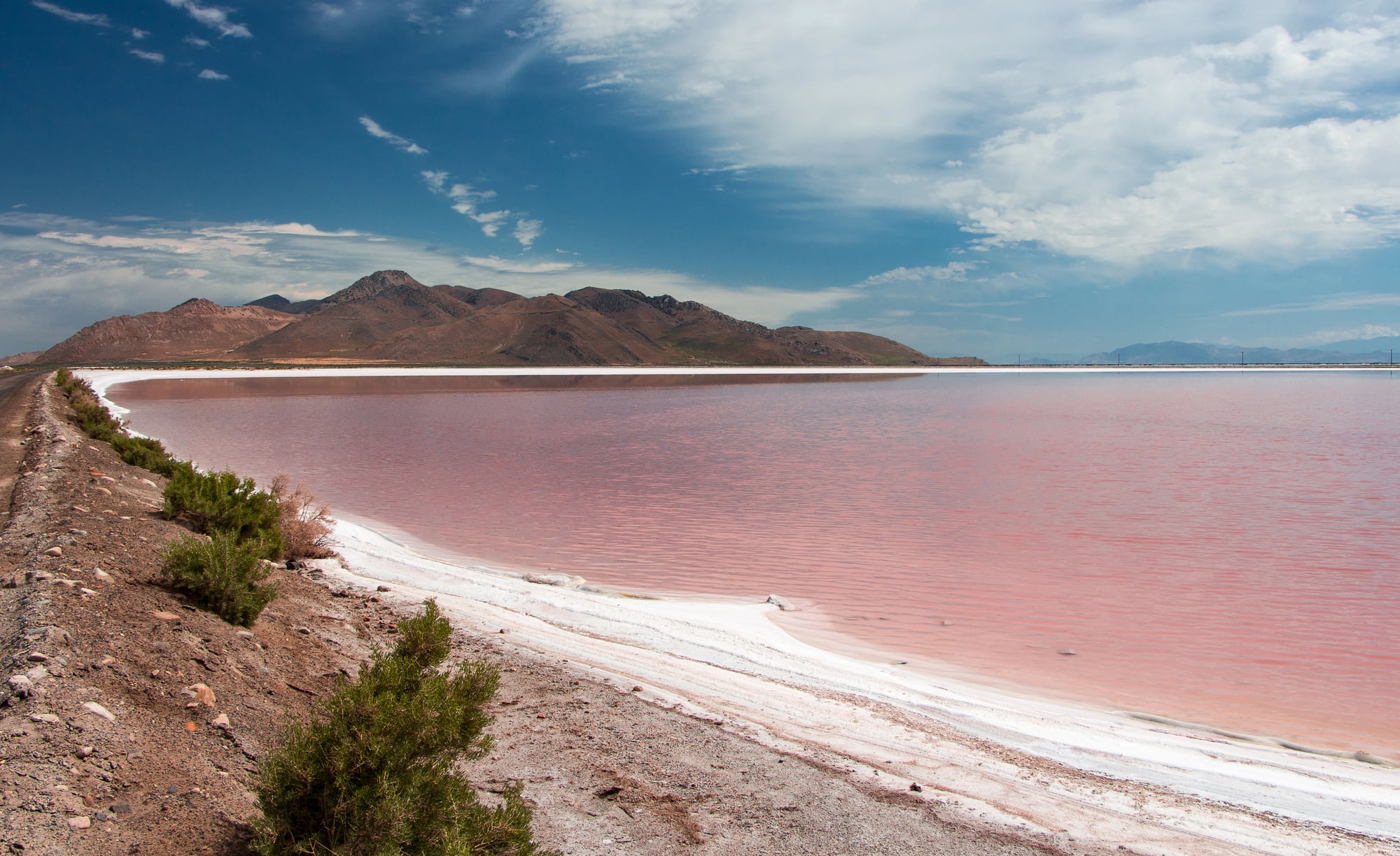
Lake Natron isn’t entirely unique in its preservation effects. The Great Salt Lake in Utah and other hypersaline bodies of water also create salt-encrusted remains of dead birds along their shores.
However, none match the dramatic calcification and preservation quality of Lake Natron, largely because they lack the specific combination of extreme pH, sodium carbonate concentration, and consistent high temperatures.
When Water Levels Drop
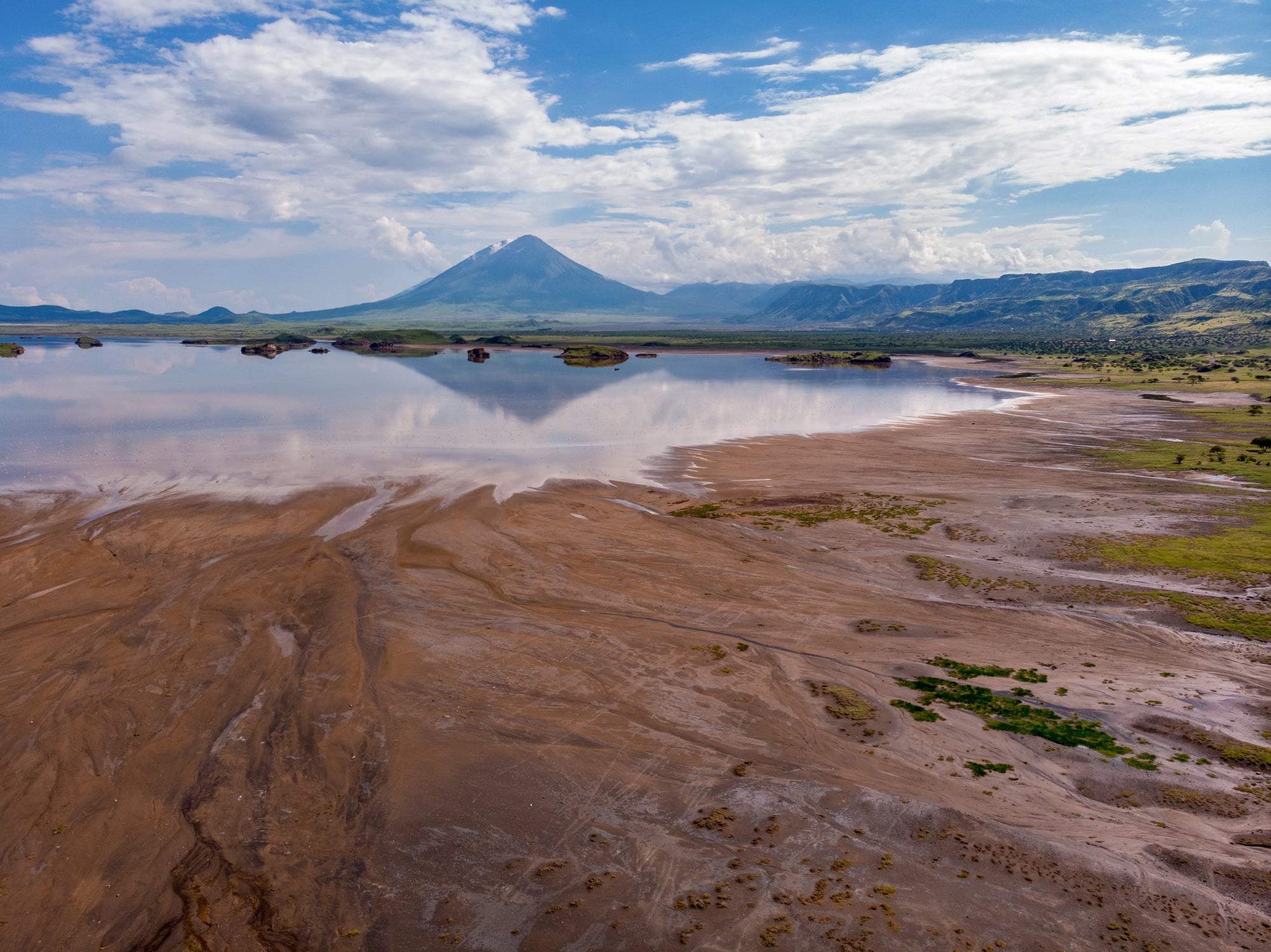
During the dry season, Lake Natron shrinks considerably as evaporation outpaces inflow. This is when the calcified animal remains become most visible, washing up along the exposed shoreline.
The receding waters reveal hundreds of preserved corpses, from tiny finches to large fish eagles, each one a testament to the lake’s peculiar chemistry.
Where Death Sustains Life
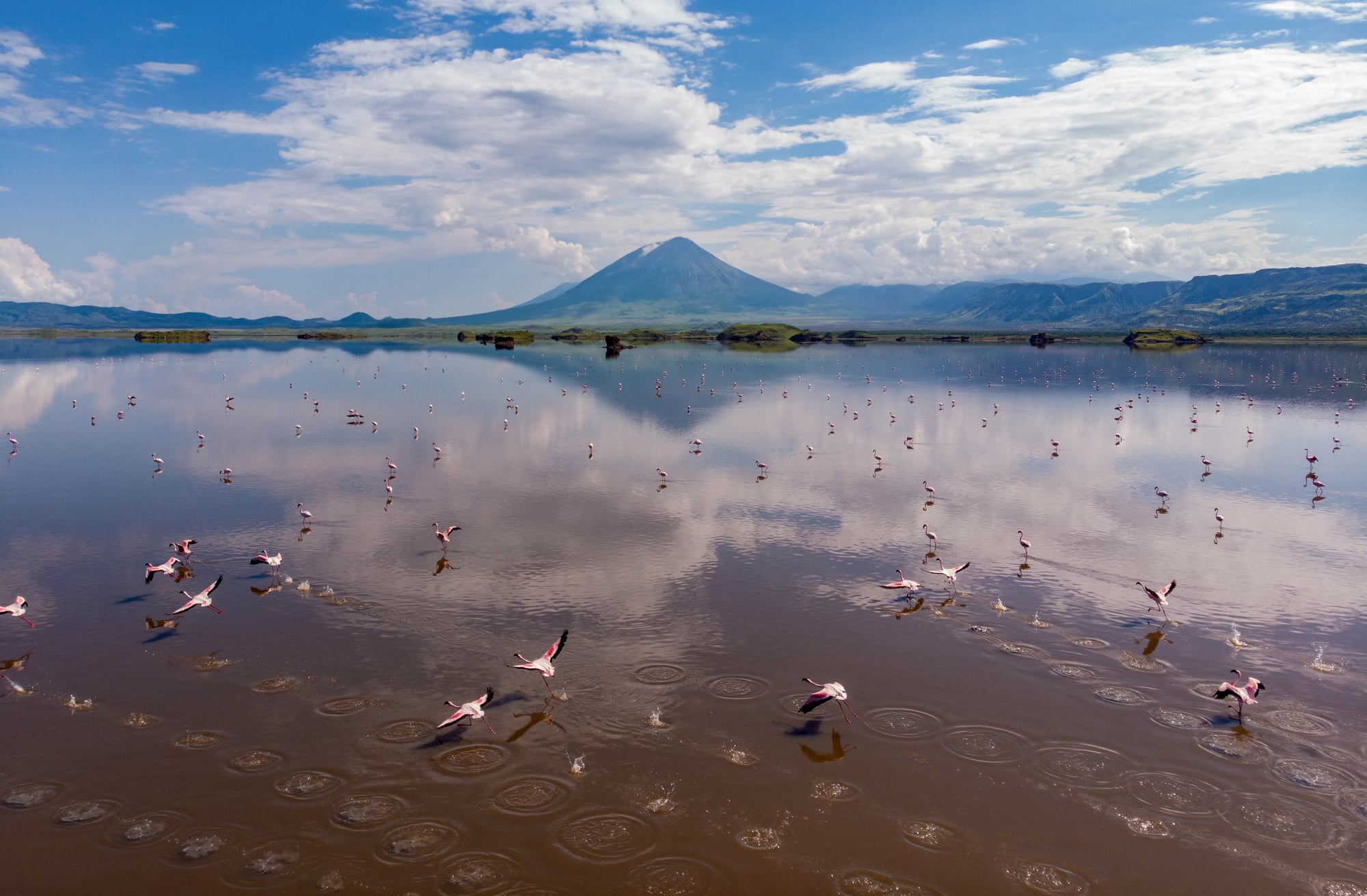
Lake Natron represents one of nature’s most striking paradoxes. The same caustic waters that mummify crashed birds provide the perfect nursery for millions of flamingos, whose populations would likely collapse without this protected breeding ground.
What appears as a scene from a horror story is actually one of Africa’s most crucial wetland ecosystems, proving that even the harshest environments can be sanctuaries for life that’s adapted to embrace them.
More from Go2Tutors!

- The Romanov Crown Jewels and Their Tragic Fate
- 13 Historical Mysteries That Science Still Can’t Solve
- Famous Hoaxes That Fooled the World for Years
- 15 Child Stars with Tragic Adult Lives
- 16 Famous Jewelry Pieces in History
Like Go2Tutors’s content? Follow us on MSN.



