Largest Fortunes Made from Small Ideas
Some of the world’s biggest businesses started with ideas so simple that most people overlooked them. A twist on an existing product, a solution to an everyday annoyance, or just noticing what others missed turned ordinary people into billionaires.
These weren’t complicated inventions or high-tech breakthroughs. They were small sparks that grew into empires.
The stories behind these fortunes prove that success doesn’t always need a grand vision. Let’s look at how these tiny ideas turned into serious money.
The Pet Rock

Gary Dahl was sitting in a bar in 1975 listening to his friends complain about their dogs and cats. He made a joke that rocks would be better pets since they never made a mess or needed walks.
Most people would’ve laughed and moved on, but Dahl actually did it. He grabbed smooth stones from a beach in Mexico, put them in cardboard boxes with breathing pits, and wrote a care manual that explained how to teach your rock to ‘stay’ and ‘roll over.’
The whole thing was absurd, and that’s exactly why it worked. People paid $3.95 for a rock, and Dahl made over a million dollars in just a few months.
Crocs

Three guys went boating in 2002 and wore these foam clogs that spa workers used. The shoes looked weird but felt great, especially on a wet boat deck.
Instead of just enjoying their comfortable feet, they decided to buy the design rights and sell them to other people who spent time on the water. Nobody expected much, but then something strange happened.
People started wearing them everywhere, not just on boats. Nurses loved them for long shifts, gardeners wore them in the yard, and kids thought they were fun.
Now Crocs makes billions every year even though fashion experts still call them the ugliest shoes on earth.
Spanx

Sara Blakely was getting ready for a party in 1998 when she realized her underwear lines were visible through her white pants. She grabbed a pair of pantyhose and cut the feet off, and suddenly everything looked smooth.
Instead of thinking ‘problem solved’ and going to the party, she wondered why nobody sold this product already. Blakely had $5,000 in savings and zero experience in fashion, but she taught herself how to file a patent and convinced stores to try her product by showing them in bathroom stalls how well it worked.
She built Spanx into a billion-dollar company and became the youngest self-made female billionaire in the country, all because she refused to deal with panty lines.
The Snuggie

Somebody looked at a bathrobe, turned it around backwards, and decided it was a blanket with sleeves. That’s the entire origin story of the Snuggie.
The infomercials were cheesy, the product looked ridiculous, and comedians made fun of it constantly. But here’s the thing: people actually wanted to stay warm on the couch while holding a book or using the remote.
Regular blankets kept slipping off when you moved your arms. The Snuggie solved this incredibly minor inconvenience and made hundreds of millions of dollars doing it.
Over 30 million people bought one, even though they got roasted by their friends for owning it.
Beanie Babies
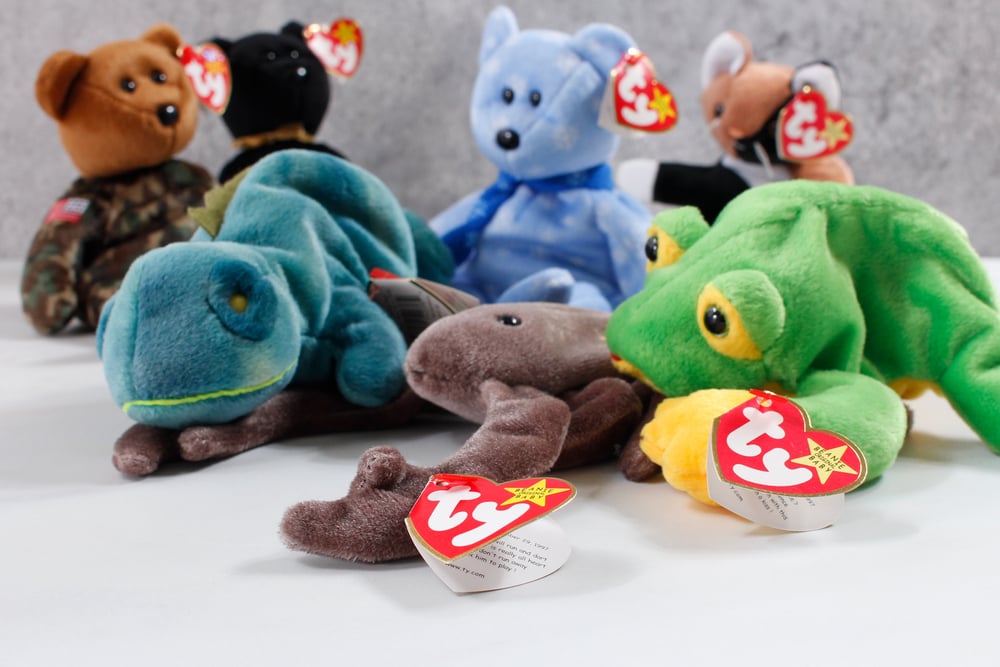
Ty Warner made stuffed animals in 1993, but instead of filling them with regular stuffing, he used plastic pellets. This made them floppy and fun to pose, kind of like real animals.
He kept the price around $5 so kids could actually afford them with allowance money. Then Warner did something clever: he’d stop making certain animals and announce they were ‘retired.’
Suddenly people weren’t just buying toys for their kids, they were collecting them like investments. At the peak of the craze, some Beanie Babies sold for thousands of dollars at auctions.
Warner became a billionaire by creating artificial scarcity for bean-filled toys.
Post-it Notes

Spencer Silver was trying to invent super-strong glue at 3M in 1968, but he messed up and made weak glue instead. It stuck to things but came off easily without tearing paper or leaving residue.
For years, nobody at the company could figure out what to use it for. Then another scientist named Art Fry got annoyed because his bookmarks kept falling out of his church hymnal.
He smeared some of Silver’s failed glue on paper scraps, and suddenly he had bookmarks that stayed put but didn’t damage the pages. It took 3M another few years to realize they had a hit product.
Post-it Notes launched in 1980 and became one of the most used office supplies in the world, all because someone failed at making glue.
Airbnb

Brian Chesky and Joe Gebbia were broke in San Francisco in 2007 and couldn’t pay their rent. A design conference was coming to town and hotels were all booked up, so they inflated three air mattresses in their apartment and rented them out for $80 a night.
They threw in breakfast and built a basic website. That desperate rent solution turned into a company now worth over $70 billion.
The idea sounds insane when you think about it: letting complete strangers sleep in your house. But it worked because travelers wanted cheaper options and authentic experiences, while homeowners wanted extra income.
Nobody believed strangers would actually do this until millions of people proved otherwise.
Starbucks

Howard Schultz didn’t invent coffee. He just noticed that Americans were drinking awful coffee in the 1980s and didn’t seem to realize it could be better.
He visited Italy and saw people sitting in cafes for hours, drinking espresso and talking with friends. Coffee shops were community spaces, not just places to grab caffeine and run.
Schultz bought a small Seattle company called Starbucks that was selling coffee beans and turned it into the coffeehouse concept Americans didn’t know they wanted. The real genius was convincing people to pay $4 for a drink they used to make at home for practically nothing.
Starbucks proved that people would pay extra for consistency, atmosphere, and the feeling of treating themselves.
The Slinky

Richard James was messing around with tension springs at work in 1943 when one fell off his desk. Instead of hitting the floor and stopping, it kept moving in this weird walking motion.
Most people would’ve picked it up and gone back to work, but James watched it and thought kids might like a toy that did that. He spent two years getting the design right, then sold the first batch at a Philadelphia department store.
All 400 units sold out in 90 minutes at $1 each. The Slinky has now sold over 300 million units.
A clumsy moment with a spring turned into one of the most recognizable toys in history.
Hotmail

Sabeer Bhatia and Jack Smith created free email you could check from any computer in 1996. Back then, most people used programs like Outlook or paid monthly fees for email through their internet provider.
Hotmail was free and worked from anywhere, which seemed too good to be true. The brilliant part was the signature they automatically added to every email: ‘Get your free email at Hotmail.’
Every message sent was an advertisement, and users did all the marketing without realizing it. The service hit 12 million users in 18 months, and Microsoft bought it for $400 million.
Two guys got rich by making email free and letting it promote itself.
Velcro

George de Mestral went hunting in Switzerland in 1941 and came back covered in burrs. They were stuck to his jacket and tangled in his dog’s fur, and he got annoyed trying to pull them all off.
Instead of just complaining about it, he looked at one under a microscope and saw tiny hooks grabbing onto fabric loops. De Mestral spent years trying to recreate this with synthetic materials and finally patented Velcro in 1955.
NASA started using it on spacesuits, and then it showed up everywhere: shoes, jackets, bags, medical equipment. An annoying walk in the woods created a fastening system worth billions.
Scrub Daddy
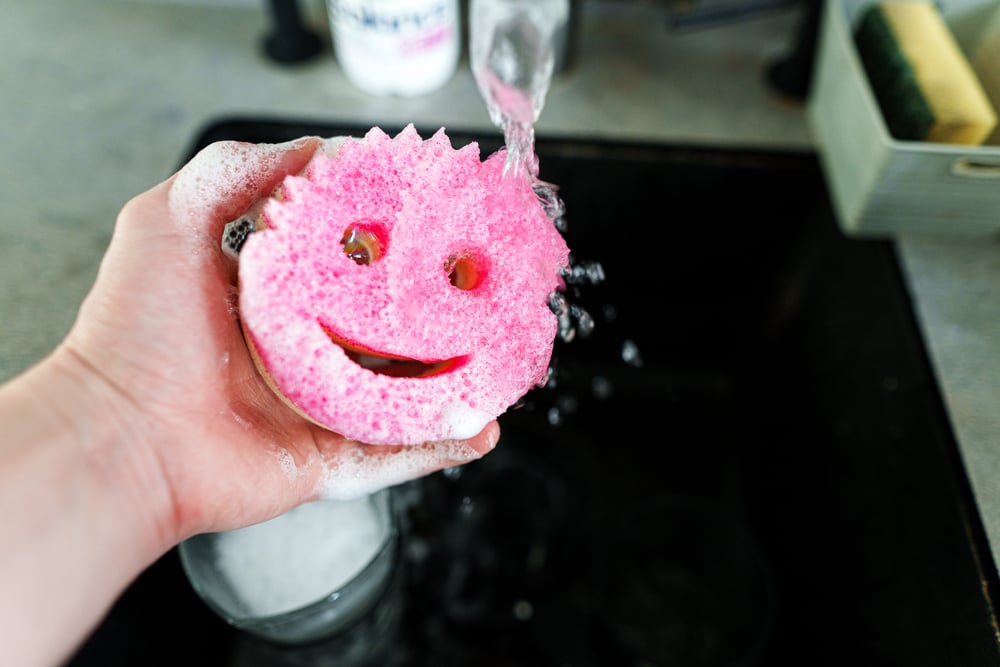
Aaron Krause made a sponge shaped like a smiley face in 2012, but the design wasn’t just cute. The sponge changed texture based on water temperature: firm in cold water for scrubbing stuck-on food, soft in warm water for gentle cleaning.
Krause went on ‘Shark Tank’ and Lori Grenier invested in it, probably because the product actually worked better than regular sponges. Scrub Daddy became the biggest success in the show’s history, selling over $800 million worth of sponges.
People bought it because the temperature trick was genuinely useful and the smiley face made scrubbing dishes slightly less awful.
Jack Dorsey wanted to make a platform in 2006 where people could post short status updates, kind of like text messages but public. The 140-character limit existed because text messages maxed out at 160 characters, and Twitter needed to fit inside that with some room for usernames.
The whole concept was basically Facebook status updates with everything else stripped away. It seemed too simple to work, but that simplicity made it easy to use and easy to spread.
Twitter eventually sold to Elon Musk for $44 billion. Dorsey made a fortune by asking what would happen if social media was just the status updates and nothing else.
Lululemon

Chip Wilson took yoga classes in Vancouver in the late 1990s and noticed everyone wore cotton clothes that got heavy and uncomfortable when soaked with sweat. He started making yoga pants and tops from technical athletic fabrics, the kind runners and cyclists used.
Lululemon charged over $100 for pants, which seemed crazy at the time, but people paid because the quality was that much better. The company grew into a multibillion-dollar business by focusing on what actually worked for yoga instead of just what looked good.
Wilson became a billionaire by paying attention during downward dog.
Red Bull
Dietrich Mateschitz was on a business trip in Thailand in 1984 when he tried a local energy drink called Krating Daeng. It tasted terrible but helped with his jet lag.
Instead of just being grateful for the energy boost and moving on, he tracked down the creator and proposed bringing it to Europe. They modified the formula, renamed it Red Bull, and launched in Austria in 1987.
The drink was more expensive than soda, came in a tiny can, and tasted like medicine, but it worked. Mateschitz didn’t invent anything new; he just took someone else’s idea to a different market and marketed it through extreme sports.
He became one of the richest people in Austria by importing an energy drink and branding it correctly.

Jan Koum and Brian Acton built a messaging app in 2009 that just sent messages instantly without charging SMS fees. That’s all it did.
No ads, no games, no news feed, just reliable messaging. They charged $1 per year after the first year free, which was nothing compared to phone company text message rates.
WhatsApp grew to over 450 million users by staying simple and respecting privacy. Facebook bought it for $19 billion in 2014, making Koum and Acton billionaires.
Two guys who used to work at Yahoo got incredibly rich by making texting work better and leaving out all the extra junk.
Uber

Travis Kalanick and Garrett Camp couldn’t catch a cab in Paris in 2008 and got frustrated standing in the cold. They thought it’d be easier to just push a button on a phone and have a car show up.
Uber launched in San Francisco in 2010 with that exact concept: tap your phone, get a ride. The company didn’t buy any cars or hire drivers as employees, which let them expand fast without massive overhead.
Uber caused all kinds of controversy with taxi companies and regulators, but the convenience won. The company is now worth over $140 billion because two guys couldn’t find a cab and decided to fix it.
What It All Means

These fortunes happened because someone paid attention when everyone else zoned out. They saw everyday annoyances and actually did something instead of just complaining.
None of them started with billion-dollar business plans or investor pitch decks. They just had small ideas that solved real problems, and they took the first step without knowing where it would lead.
The biggest lesson isn’t that anyone can get rich from a simple idea, though that’s technically true. It’s that simple ideas are everywhere, waiting for someone to notice them and care enough to act.
More from Go2Tutors!

- The Romanov Crown Jewels and Their Tragic Fate
- 13 Historical Mysteries That Science Still Can’t Solve
- Famous Hoaxes That Fooled the World for Years
- 15 Child Stars with Tragic Adult Lives
- 16 Famous Jewelry Pieces in History
Like Go2Tutors’s content? Follow us on MSN.