Math Puzzles That Stump Most Adults
Something strange happens when you put most adults in front of a simple math puzzle. The confident calculation skills from school years seem to vanish.
Problems that elementary students handle with ease suddenly feel impossible. It’s not about intelligence—these puzzles just hit differently when you’re out of practice.
The Monty Hall Problem

You’re on a game show. Three doors sit in front of you. Behind one door: a car. Behind the other two: goats.
You pick door number one. The host, who knows what’s behind each door, opens door number three to reveal a goat.
Now he asks if you want to switch your choice to door number two. Most people stick with their original choice.
They figure it’s 50-50 at this point. But switching actually doubles your chances of winning the car. When you first picked, you had a one-in-three shot.
The host’s action didn’t change that. Door number two now carries a two-in-three probability.
Your brain screams that this makes no sense, which is exactly why this puzzle stumps so many people.
The Birthday Paradox

How many people do you need in a room before two of them share a birthday? Most adults guess somewhere around 180, figuring you need about half the days in a year represented.
The actual answer: just 23 people gives you better than 50-50 odds. The math works because you’re not matching birthdays to one specific date.
You’re checking every possible pair of people against each other. With 23 people, you get 253 different pairs to compare.
The probability stacks up fast.
The Missing Dollar Problem

Three friends split a hotel room that costs $30, so they each pay $10. Later, the manager realizes the room only costs $25 and gives the bellhop five dollars to return.
The bellhop keeps two dollars and gives each friend one dollar back. So each friend paid $9, totaling $27, and the bellhop kept $2.
That’s $29. Where’s the missing dollar?
This puzzle tricks people because it mixes two different accounting methods. The friends paid $27 total, which includes the bellhop’s $2.
The room cost $25. There’s no missing dollar—just a misleading addition that makes your brain short-circuit.
The Two Trains Problem

Two trains are 100 miles apart, heading toward each other on the same track. One travels at 40 miles per hour, the other at 60 miles per hour.
A fly starts at one train and flies to the other at 90 miles per hour, then back and forth until the trains meet. How far does the fly travel?
You can calculate each individual trip the fly makes, adding them all up in an infinite series. Or you can realize the trains meet in one hour (they’re closing the gap at 100 miles per hour combined).
The fly flies for one hour at 90 miles per hour. It travels 90 miles.
Adults often overcomplicate this one spectacularly.
The Rope Around the Earth

Imagine a rope wrapped tightly around Earth’s equator. Now you add 10 feet to that rope.
If you lift the rope evenly all around, creating equal space between the rope and the ground, how much clearance do you get? Most people guess something tiny, like a fraction of an inch.
The answer: about 19 inches. The math doesn’t care about Earth’s massive size.
The formula for circumference is 2πr. Adding 10 feet to the circumference means adding 10/(2π) to the radius.
That’s about 1.6 feet, or 19 inches, no matter how big the circle starts.
The Two Children Problem

A woman has two children. One of them is a boy.
What’s the probability that both children are boys? Your gut says 50 percent. You’re wrong.
The answer is one in three. Here’s why: there are four equally possible combinations—boy-boy, boy-girl, girl-boy, and girl-girl.
Knowing one child is a boy eliminates girl-girl, leaving three options. Only one of those three has two boys.
The puzzle gets weirder if you change the information. If you know the older child is a boy, then it’s back to 50 percent.
The way you learn information changes the probability. This messes with people’s heads.
The Handshake Problem

Ten people attend a meeting. Everyone shakes hands with everyone else exactly once.
How many handshakes happen? Most adults start trying to track individual handshakes and lose count.
The answer is 45. Each person shakes hands with nine others.
That’s 90 total, but you’ve counted each handshake twice. Divide by two: 45.
The formula is n(n-1)/2, where n is the number of people. But even knowing the formula doesn’t make it feel intuitive.
The Lily Pad Problem

A lily pad doubles in size every day. On the 48th day, it covers the entire pond.
On which day did it cover half the pond? Almost everyone’s first instinct is day 24—half the time, half the pond. Wrong.
The answer is day 47. If the pad doubles in size every day, and it’s full on day 48, then it must have been half-size the day before.
Exponential growth doesn’t work the way our linear-thinking brains expect.
The Ages Puzzle

A father is 40 years old and his son is 10. How many years ago was the father three times older than his son?
Many people try different combinations of ages, working backward year by year. But you can solve it algebraically.
Set up the equation: 40 – x = 3(10 – x), where x is years ago. Solve it: 40 – x = 30 – 3x, so 2x = -10, which gives you… wait, that can’t be right.
The answer is actually 5 years ago, when the father was 35 and the son was 5. Setting up the wrong equation is where adults trip.
Actually, let me recalculate that properly. When the father was 40 – x years old, the son was 10 – x years old.
We want: 40 – x = 3(10 – x). So 40 – x = 30 – 3x. Then 40 – 30 = -3x + x, giving us 10 = -2x… that’s still wrong.
Let me think about this differently. The father is 30 years older than his son.
When was he three times older? If the son was 15, the father would be 45, which is three times 15.
So in 5 years. But that’s the future, not the past.
Going back: when the son was 5, the father was 35. That’s seven times older, not three times.
At age 15, the son would be 15 and the father 45—three times older. So the answer is “never in the past, but in 5 years.”
This puzzle stumps people because they assume it happened in the past.
The 100 Prisoners Problem

A hundred prisoners each have a number from 1 to 100. In a room are 100 boxes, each containing one random number.
Each prisoner can open 50 boxes looking for their number. If all prisoners find their number, everyone goes free.
If even one fails, everyone stays imprisoned. They can plan a strategy beforehand but can’t communicate once it starts.
Random guessing gives them basically zero chance—0.5 to the power of 100. But there’s a strategy that works over 30 percent of the time.
Each prisoner starts by opening the box matching their number. Then they open the box matching whatever number they found.
They keep following this chain. The math behind why this works involves permutation cycles and probability theory that makes most people’s eyes glaze over.
But the counterintuitive result stuns people: cooperation and strategy matter even when you can’t communicate.
The Cheryl’s Birthday Problem

This problem went viral a few years back. Albert and Bernard just met Cheryl.
Cheryl gives them a list of ten possible dates for her birthday:
- May 15, May 16, May 19
- June 17, June 18
- July 14, July 16
- August 14, August 15, August 17
Cheryl tells Albert only the month and Bernard only the day. Then this conversation happens:
Albert: “I don’t know when Cheryl’s birthday is, but I know Bernard doesn’t know either.” Bernard: “I didn’t know originally, but now I do.” Albert: “Now I know too.”
When is Cheryl’s birthday? Adults hate this puzzle.
You need to track what each person knows, what they know about what the other knows, and how each statement changes the possible answers. The answer is July 16, but getting there requires the kind of logical layering that most people’s brains resist after a few minutes.
The Blue Eyes Problem

A hundred people live on an island with perfect logic. They all have blue eyes, but there are no mirrors or reflective surfaces, and they never discuss eye color.
An outsider visits and announces, “At least one of you has blue eyes.” What happens? Nothing happens for 99 days.
On the 100th day, all 100 people leave the island. The reasoning involves recursive knowledge—each person thinking about what every other person is thinking, and what they’re thinking about what others are thinking, up to 99 levels deep.
The solution is mathematically sound but feels impossible to grasp.
The Envelope Paradox

Two envelopes sit in front of you. One contains twice as much money as the other.
You pick one and open it to find $10. Should you switch?
Here’s the logic: the other envelope either has $5 or $20, with equal probability. Expected value of switching: (5 + 20)/2 = $12.50.
That’s better than the $10 you have. But wait—this logic works no matter which envelope you opened. How can switching always be better?
The paradox breaks down because the probabilities aren’t actually equal once you see the amount. But figuring out exactly where the reasoning fails takes real mental work.
The Ant on a Rubber Rope
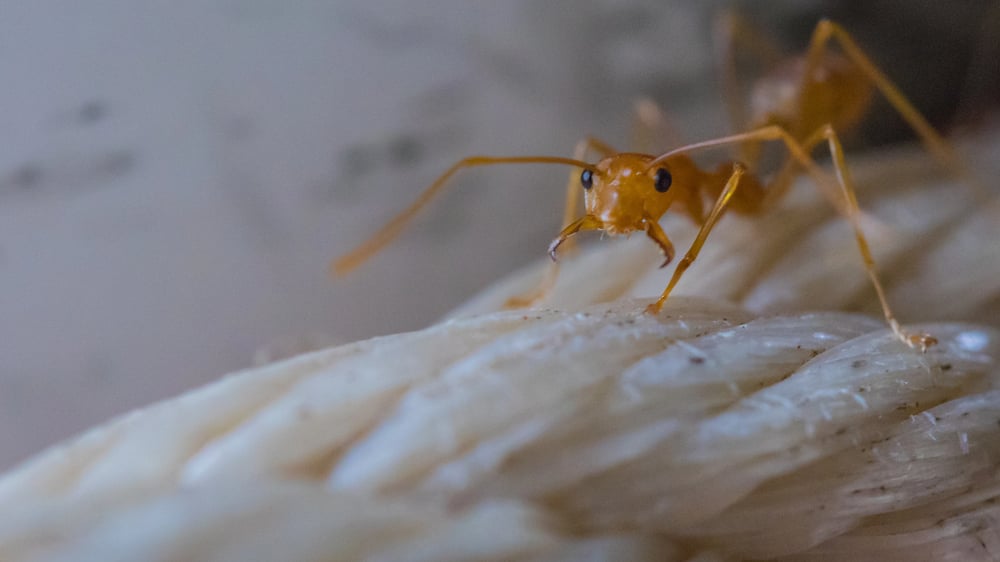
A tiny creature begins moving across a stretchy band one kilometer long, crawling just one centimeter each second. Even so, the band itself grows longer – by an entire kilometer every single second.
As time passes, the path ahead pulls away faster than it seems possible to cover. Yet something odd happens as minutes turn to hours, then years.
Distance expands, true, but progress still accumulates in small unseen ways. Eventually, after immense spans of time, that little traveler does make it – all because stretching affects even the space already crossed.
Reaching the far edge becomes real, though barely imaginable. Though logic insists it cannot happen, the ant inches forward while the rope pulls apart quicker every moment.
Yet equations show otherwise. Each second, progress comes as a slice of distance sealed, tiny but real – despite space growing beneath its feet.
Over immense durations, those slivers stack. After roughly 10^43,427 seconds – a span dwarfing cosmic history – the creature might arrive. What feels impossible slips into being through sheer persistence of numbers.
Numbers and Humility Together
Puzzles like these trip up grown-ups not due to weak number skills. What trips us is how they target the quick-thinking habits we rely on daily.
The mind craves shortcuts, loves spotting familiar shapes in chaos, rushes toward what feels right. That urge? It backfires every time here.
Numbers won’t rush along with your gut feelings. Because math asks you to pause, rethink what seems obvious.
Wrong answers? They happen. Not because minds fail, but because people do.
What feels right might not hold up when tested. Yet in those moments – when confusion shows up – that’s where learning begins.
Being off track isn’t failure. It’s part of trying. Even mistakes carry weight, if you let them teach.
More from Go2Tutors!

- 16 Historical Figures Who Were Nothing Like You Think
- 12 Things Sold in the 80s That Are Now Illegal
- 15 VHS Tapes That Could Be Worth Thousands
- 17 Historical “What Ifs” That Would Have Changed Everything
- 18 TV Shows That Vanished Without a Finale
Like Go2Tutors’s content? Follow us on MSN.



