Military Vehicles That Shaped Warfare
Before the engine, armies moved at the speed of a horse or a marching boot. After it, everything changed — not just how fast forces moved but how they fought, how they supplied themselves, how they thought about terrain, and ultimately how wars were won and lost.
The vehicles on this list didn’t just participate in history. They redirected it, each one arriving at a moment when the old ways of fighting had reached their limits and something new was needed to break the deadlock.
The British Mark I Tank

When the Mark I appeared on the Somme in September 1916, nobody on the German side knew what to make of it. The machine was enormous, slow, prone to breaking down, and terrifying to look at — a rhomboid steel box crawling across no-man’s-land, crossing trenches that had stopped infantry cold for two years.
The initial deployment was too small and too rushed to be decisive, but the principle it demonstrated was unmistakable. Armour and mobility together could crack open static defensive lines.
The tactical lessons took another war to fully develop, but the Mark I established the concept that every subsequent tank was built on.
The German U-Boat

Germany’s submarine campaign in both World Wars very nearly achieved something that no land army managed: cutting Britain off from the supplies, keeping it in the fight. The U-boat’s power came from invisibility.
A surface fleet could be tracked, engaged, and defeated. A submarine operating beneath the waves could appear without warning, strike, and disappear, and the only defence against it was constant escort, detection technology, and the willingness to accept enormous losses.
At the peak of the Battle of the Atlantic in 1942 and 1943, Allied shipping losses reached a rate that genuinely threatened the outcome of the war. The eventual answer — improved sonar, convoy tactics, long-range patrol aircraft — reshaped naval thinking permanently.
The Jeep

No vehicle of the Second World War covered more varied ground or served more different purposes than the Willys MB, known universally as the Jeep. It carried officers, towed guns, ferried ammunition, served as a mobile command post, mounted machine guns, and went places that no previous military vehicle had managed.
The design brief was demanding: under 600 kilograms, capable of carrying a quarter-ton load, able to ford shallow water, small enough to drop by parachute. What came back was a vehicle that defined utility.
The Jeep influenced every light military vehicle designed for the next eighty years, and the basic concept — go anywhere, carry something, keep going — still drives military transport thinking today.
The T-34

When Germany invaded the Soviet Union in 1941, its tank crews encountered something unexpected: a Soviet vehicle that their standard anti-tank guns couldn’t penetrate from the front. The T-34 combined sloped armour — angled so that shells deflected rather than punched through — with a powerful gun and a diesel engine that reduced fire risk.
It wasn’t perfect. Early versions had serious mechanical problems, cramped crew conditions, and poor communication equipment.
But it was producible in enormous numbers and it outclassed the German tanks then in service. The T-34 forced Germany into a design race that produced increasingly heavy and sophisticated armour on both sides, reshaping the entire trajectory of armoured warfare.
The Aircraft Carrier
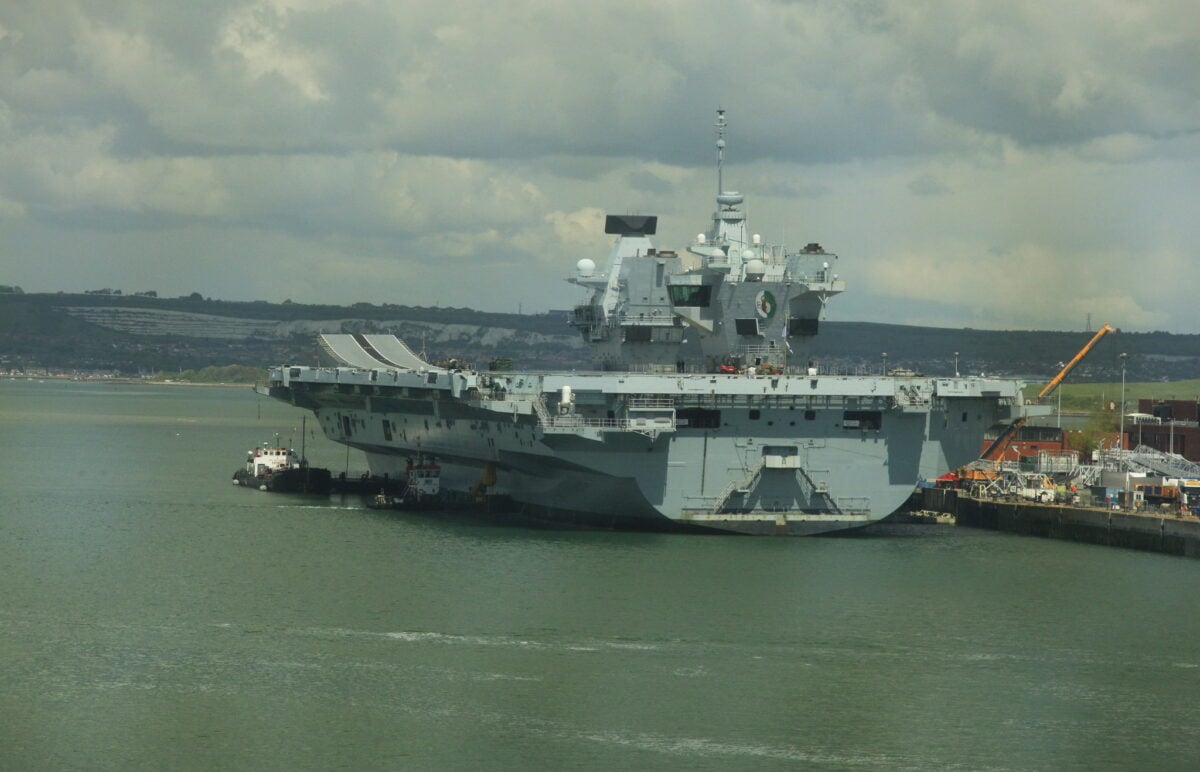
Pearl Harbour destroyed a significant portion of the US Pacific Fleet’s battleships — and in doing so, accidentally demonstrated that the battleship era was ending. The carriers that survived Pearl Harbour because they were at sea became the decisive weapons of the Pacific War.
At Midway in 1942, four Japanese carriers were sunk without the opposing fleets ever coming within sight of each other. All the killing was done by aircraft launched from ships over the horizon.
The carrier moved the decisive range of naval battle from a few kilometres to several hundred kilometres overnight, and naval doctrine never returned to its previous assumptions about what a fleet engagement looked like.
The B-17 Flying Fortress

The B-17 wasn’t the most advanced bomber of the Second World War, and it wasn’t the most accurate. What it was, was survivable enough to keep going back.
The design bristled with gun positions providing overlapping fields of fire in almost every direction, and the airframe absorbed punishment that would have destroyed less robust aircraft. The doctrine built around it — massed daylight precision bombing of industrial and military targets — didn’t fully deliver on its promises, and the losses were catastrophic until long-range fighter escort arrived.
But the B-17 campaign established the principle that strategic bombing could reach into an enemy’s production capacity, not just its frontline forces, and that principle shaped air power doctrine for generations.
The DUKW Amphibious Truck

The DUKW — universally called the Duck — was one of those solutions that seems obvious in retrospect and wasn’t obvious to anyone until it existed. The problem: getting supplies from ship to shore during an amphibious landing was slow, dangerous, and dependent on conditions.
Landing craft could be destroyed by surf, stranded by tide, or unable to penetrate further inland. The Duck combined a truck’s drivetrain with a watertight hull and a propeller, letting it travel from a supply ship, through the surf zone, and directly inland without any transfer of cargo.
It was used extensively from Sicily to Normandy to the Pacific islands, and the concept of the amphibious logistics vehicle remains a staple of modern military planning.
The Huey Helicopter

The Bell UH-1 Iroquois arrived in Vietnam and changed every assumption about how infantry moved, how the wounded were evacuated, and how commanders maintained contact with forces spread across impossible terrain. The helicopter as a military tool existed before Vietnam, but the Huey made it central.
Air assault — landing troops directly at an objective by helicopter — compressed timelines that previously depended on road networks and march rates. Medical evacuation by helicopter dramatically reduced the time between injury and surgery, cutting mortality rates for wounded soldiers.
The Huey also became the defining image of that particular war: the distinctive rotor sound, the open doors, the door gunners watching the tree line. It made the helicopter indispensable to modern armies worldwide.
The M4 Sherman Tank

The Sherman was not the best tank of the Second World War by most technical measurements. The German Tiger outgunned it and outarmoured it. The Panther matched or exceeded it in several respects.
But the Sherman could be manufactured in extraordinary numbers — over 49,000 were built — and that production capacity proved more decisive than mechanical superiority. When Shermans were destroyed, more Shermans arrived.
The logistics, maintenance, and crew training systems built around the Sherman were efficient and well-established. The American approach to the tank war was less about building the perfect vehicle and more about building enough good vehicles and keeping them in the fight.
That philosophy influenced how Western military planners thought about procurement for decades afterward.
The Submarine-Launched Ballistic Missile Boat

Out there beneath the waves, a single sub carrying nukes might be the most powerful machine ever made. Not due to battles fought, but because just having it shifts how wars can unfold.
Hidden deep in open water, these vessels slip detection easily, surviving long enough to fire if attacked. Even after missiles wipe out bases and towns, one of these boats ensures retaliation remains possible.
That lingering threat – the certainty of a return blow – shapes decisions in ways talks or treaties rarely match. Since no attacker can erase that risk completely, hesitation grows where bold moves once thrived.
So silence becomes protection; absence of strikes owes much to what stays unseen below. The war was never won by the submarine.
Because of it, some conflicts became too risky to even begin.
The Humvee

The High Mobility Multipurpose Wheeled Vehicle replaced the Jeep in US military service and became the defining image of late twentieth-century American military operations. Built for speed, versatility, and the ability to carry a range of weapon systems, the Humvee performed well in the terrain it was designed for.
Its vulnerabilities only became apparent in Iraq and Afghanistan, where roadside bombs exposed the limits of a vehicle built for mobility rather than protection. The Humvee’s story includes its failures as much as its successes — the urgent rush to add armour plating that hadn’t been part of the original design, the procurement of more heavily protected vehicles — and the lessons learned from its combat experience drove a complete rethinking of how light military vehicles should balance protection against mobility.
The Spitfire
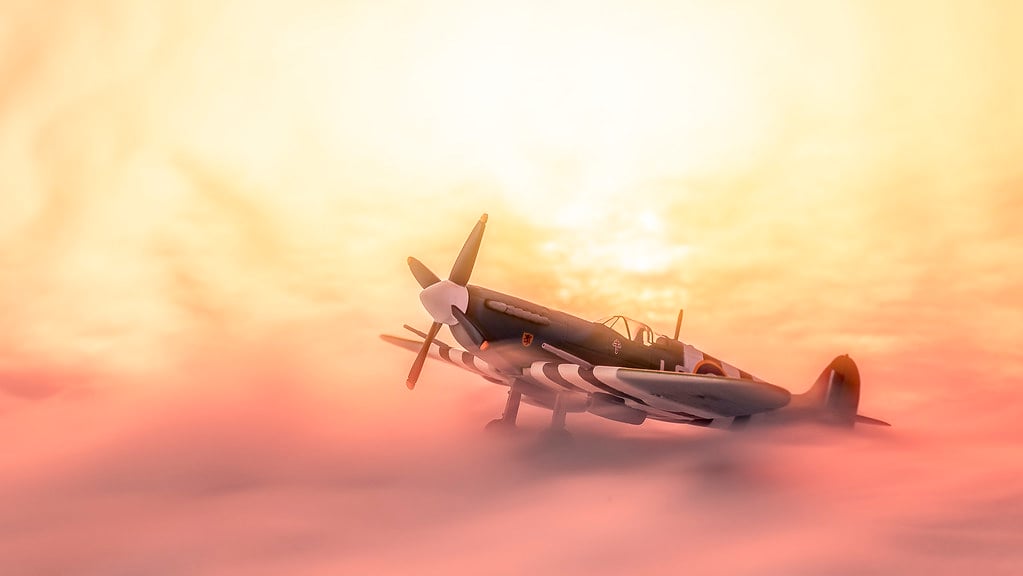
The Spitfire is probably the most emotionally significant military aircraft ever built, at least in the British imagination, and it earned that status. During the Battle of Britain in 1940, the combination of Spitfires, Hurricanes, radar, and a functioning ground control system stopped the Luftwaffe from achieving the air superiority that would have been needed to support an invasion.
The Spitfire’s contribution was its high-altitude performance and its ability to engage German fighter escorts directly, freeing the Hurricanes to attack the bombers. But the Spitfire also mattered as a symbol, in a period when Britain was fighting alone and needed tangible evidence that the fight was not already lost.
Few weapons have managed to function simultaneously as tools of war and objects of national belief.
The AC-130 Gunship
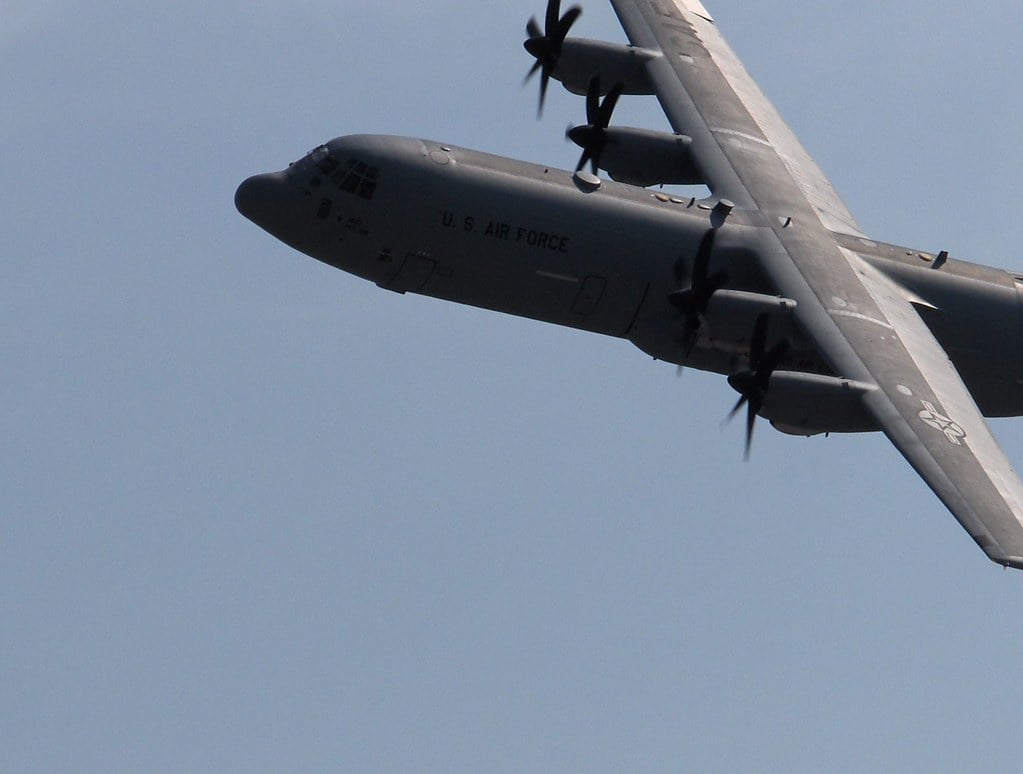
The AC-130 is a transport aircraft converted into a flying artillery platform — a transformation that sounds improbable until you see what it can do. Carrying 105mm howitzers, 40mm cannons, and 25mm guns, the AC-130 orbits a target in a tight circle, pouring continuous fire downward with a precision that fixed-wing aircraft flying straight attack runs cannot match.
It became the weapon of choice for close air support in complex situations where ground troops needed sustained, accurate fire that could be adjusted in real time. The platform required air superiority to operate — an AC-130 is slow and not designed to survive in contested airspace — but in the environments where it operated, it proved to be among the most effective ground-support aircraft ever deployed.
The Mine-Resistant Ambush Protected Vehicle

The MRAP wasn’t born from a long development programme or a forward-looking procurement decision. It was born from urgency.
As roadside bombs in Iraq and Afghanistan killed and maimed soldiers in vehicles that offered inadequate protection, pressure mounted for something specifically designed to survive blast events rather than simply absorb them. The MRAP’s V-shaped hull deflects explosive force outward and away from the crew compartment rather than channeling it upward.
The vehicles were heavy, fuel-hungry, and difficult to manoeuvre in confined spaces, but they saved a measurable number of lives. The MRAP programme demonstrated how quickly military procurement can move when commanders in the field are generating urgent operational requirements and the political pressure behind them is significant enough.
What Each Vehicle Left Behind

One machine at a time broke problems apart while everyone else just stared. From behind dirt walls soldiers couldn’t move – till something loud crawled over them anyway.
Fighting on water changed when planes started launching from decks instead of coastlines. Once explosives under roads made transport deadly, thick-skinned vehicles showed up to soak the blast and let crews survive.
But each solution poured fuel on new troubles – bulkier shapes, longer supply lines, larger silhouettes inviting sharper threats. Forward motion always shakes up what comes next.
One fix arrives, yet a new riddle shows up just behind it. Movement in warfare gear shifts step by step, constantly adjusting.
Answers bounce onward, only to meet more questions waiting ahead. That conversation runs on, never really finishing.
More from Go2Tutors!

- The Romanov Crown Jewels and Their Tragic Fate
- 13 Historical Mysteries That Science Still Can’t Solve
- Famous Hoaxes That Fooled the World for Years
- 15 Child Stars with Tragic Adult Lives
- 16 Famous Jewelry Pieces in History
Like Go2Tutors’s content? Follow us on MSN.



