Most Decisive Naval Battles in Recorded History
Throughout history, control of the seas has often meant control of empires. Naval battles have decided the fates of civilizations, redirected the course of wars, and reshaped the political map of entire continents.
Some engagements were won through sheer numbers, others through tactical brilliance, and a few changed warfare itself. From ancient trireme clashes to modern carrier warfare, certain naval battles stand apart not just for their scale, but for their lasting impact on world history.
Here is a list of 15 of the most decisive naval battles ever fought.
Salamis

The Battle of Salamis in 480 BC remains one of the most significant naval engagements in human history, as it effectively saved Western civilization from Persian conquest. Greek forces commanded by the Athenian strategist Themistocles faced a massive Persian fleet of 600 to 900 ships with only 371 vessels of their own.
Themistocles chose a narrow, shallow bay where the Persians couldn’t deploy their full force, and Greek triremes with their sharp ramming beaks tore through the bulkier Persian ships. The victory halted Xerxes’ invasion of Europe and allowed Greek culture to flourish, ultimately shaping the foundations of Western thought and democracy.
Red Cliffs

The Battle of Red Cliffs in the winter of 208-209 AD saw southern Chinese warlords Sun Quan and Liu Bei defeat the numerically superior northern warlord Cao Cao, who commanded at least 220,000 troops against their combined force of just 50,000. The southern generals kept their northern rival at bay through superior naval expertise.
This confrontation helped form the two southern dynasties and began the Three Kingdoms period in Chinese history. The battle demonstrated how naval mastery could overcome overwhelming odds and fundamentally altered the political landscape of ancient China.
Like Go2Tutors’s content? Follow us on MSN.
Actium

The Battle of Actium on September 2, 31 BC, was fought between Octavian’s fleet under Marcus Agrippa and the combined forces of Mark Antony and Cleopatra in the Ionian Sea near Greece. Antony commanded 500 ships while Octavian arrived with 400, but Octavian’s forces had already cut Antony’s communications with Egypt and portions of Antony’s army had begun deserting.
When the battle turned against them, Cleopatra’s fleet retreated, and Antony followed, leaving his remaining forces to face defeat. Octavian’s victory enabled him to consolidate power over Rome, adopt the title of Augustus, and become the first Roman Emperor, effectively ending the Roman Republic and beginning the Roman Empire.
Lepanto

The Battle of Lepanto in 1571 stands as the largest clash of galleys in history, with almost 500 galleys and over 60,000 people participating in this massive engagement. The battle was part of the War of Cyprus and pitted Ottoman naval forces against the combined Christian fleets of Spain, the Republic of Venice, Italian city-states, and the Vatican.
The Christian Holy League achieved a stunning victory that broke Ottoman naval dominance in the Mediterranean. This battle marked the end of Ottoman expansion westward and preserved Christian Europe from further Turkish advances, though the Ottomans would rebuild their fleet in the following years.
Spanish Armada

In 1588, King Philip II of Spain assembled a massive invasion fleet to conquer England and restore Catholic rule, but the attempt ended in disaster. The Spanish Armada consisted of 130 ships carrying about 8,000 seamen and nearly 20,000 soldiers when it sailed from Lisbon in May 1588.
English ships under Lord Charles Howard and Sir Francis Drake used superior maneuverability and long-range guns to devastating effect, forcing the Spanish to fight at a distance rather than boarding, which had been their planned tactic. At the Battle of Gravelines on August 8, the English attacked with fire ships at midnight, breaking the Spanish formation, and the subsequent battle forced the Armada to retreat into the North Sea.
Forced to sail home around Scotland and Ireland, the fleet was battered by storms, and by October, half the original Armada was lost with some 15,000 men perished.
Like Go2Tutors’s content? Follow us on MSN.
Battle of the Nile

The Battle of the Nile, fought from August 1-3, 1798, saw British Rear-Admiral Horatio Nelson decisively defeat a French fleet under Vice-Admiral François-Paul Brueys d’Aigalliers in Aboukir Bay, Egypt. Nelson had been hunting Napoleon’s massive fleet that was ferrying a 38,000-man army to Egypt as part of Napoleon’s campaign against British India.
Despite only a few hours remaining until nightfall and the French ships being in a strong defensive position in a sandy bay, Nelson ordered an immediate attack, with several British warships maneuvering around the head of the French line to get inside their position. The climax came around 10:00 PM when Brueys’s 120-gun flagship L’Orient exploded with most of the ship’s company, including the admiral himself.
The battle destroyed French naval power in the Mediterranean, isolated Napoleon’s army in Egypt, and helped spark the War of the Second Coalition against France.
Trafalgar

The Battle of Trafalgar on October 21, 1805, established the British Navy as the preeminent naval force in the world. Napoleon’s combined French and Spanish fleet sailed from Cadiz in southern Spain to support his attempts to expand eastward, but British Admiral Horatio Nelson attacked them to prevent any future attempts on Britain.
Though the British were outnumbered and outgunned, they split into two columns and attacked the front and back of the enemy formation. Nelson sent out the famous signal ‘England expects that every man will do his duty’ before overseeing a monumental victory in which not a single British ship was lost.
Nelson himself was killed in the fighting, but the British victory thwarted Napoleon’s plans to invade Britain and secured British naval supremacy for over a century.
Tsushima

The Battle of Tsushima, fought on May 27-28, 1905, in the Tsushima Strait, was the final naval battle of the Russo-Japanese War and a devastating defeat for Imperial Russia. The battle was the only decisive engagement ever fought between modern steel battleship fleets and the first in which wireless telegraphy played a critically important role.
The battle involved the Japanese Combined Fleet under Admiral Tōgō Heihachirō and the Russian Second Pacific Squadron under Admiral Zinovy Rozhestvensky, which had sailed over seven months and 18,000 nautical miles from the Baltic Sea. The battle left wreckage from the Russian Baltic Fleet littering the Yellow Sea floor, demonstrating the power of modern naval gunnery.
British First Sea Lord Admiral Jackie Fisher reasoned that the Japanese victory confirmed the importance of large guns and speed for modern battleships, leading Britain to start construction of HMS Dreadnought in October 1905.
Like Go2Tutors’s content? Follow us on MSN.
Jutland

The Battle of Jutland, fought on May 31 to June 1, 1916, saw the Imperial German Navy’s High Seas Fleet under Vice-Admiral Reinhard Scheer engage the British Grand Fleet under Admiral Sir John Jellicoe near Jutland, Denmark. In terms of total displacement of ships involved, it was the largest surface battle in history.
The German fleet consisted of 16 dreadnought and six pre-dreadnought battleships, five battle cruisers, 11 light cruisers, and 61 fleet torpedo boats, while the British fleet comprised 28 battleships, nine battle cruisers, eight armored cruisers, 26 light cruisers, and 78 destroyers. Britain suffered more casualties and lost more ships than Germany, but the outcome was a strategic success for the British since it resulted in the successful containment of the German fleet for the remainder of the war.
Germany avoided all fleet-to-fleet contact thereafter, and Jutland was the last major naval battle fought primarily by battleships.
Coral Sea

The Battle of the Coral Sea, fought from May 4-8, 1942, was the first time since the Japanese attack on Pearl Harbor that the enemy’s advance into the Pacific was checked. It was also the first naval engagement in history in which the participating ships never sighted or fired directly at each other, with all combat conducted by carrier-based aircraft.
The U.S. fleet turned back a Japanese invasion force heading for Port Moresby in New Guinea. Japanese aircraft sank the U.S.
carrier Lexington and damaged the carrier Yorktown, while U.S. planes crippled the large Japanese carrier Shokaku, forcing it to retire from action.
So many Japanese planes were lost that the Port Moresby invasion force, without adequate air cover, turned back to Rabaul. The battle marked the division between the first phase of the Pacific War, which had seen nothing but Japanese triumphs, and a new phase that would be much more bitterly fought.
Midway

The Battle of Midway, which took place from June 4-7, 1942, is widely considered the most important naval battle of World War II. The United States stopped a Japanese attack on Midway Atoll, and though the Americans lost one aircraft carrier and a destroyer, they managed to sink four Japanese aircraft carriers.
This permanently disabled the Imperial Japanese Navy, and the Americans won a decisive victory that Japan struggled to recover from. Military historian John Keegan described it as ‘the most stunning and decisive blow in the history of naval warfare.’ The battle turned the tide in the Pacific, shifting the initiative from Japan to the United States and setting the stage for the island-hopping campaign that would eventually lead to Japan’s defeat.
Like Go2Tutors’s content? Follow us on MSN.
Philippine Sea

The Battle of the Philippine Sea on June 19-20, 1944, eliminated the Imperial Japanese Navy’s ability to conduct large-scale carrier actions. The battle was the largest carrier-to-carrier engagement in history, involving 24 aircraft carriers deploying roughly 1,350 carrier-based aircraft.
The aerial part of the battle was nicknamed the Great Marianas Turkey Shoot by American aviators for the severely disproportional loss ratio inflicted upon Japanese aircraft. The four Japanese air strikes involved 373 carrier aircraft, of which 243 were lost, and after the second day, losses totaled three carriers, more than 350 carrier aircraft, and around 200 land-based aircraft.
The aircraft and trained pilots lost at Philippine Sea were an irreplaceable blow to the already outnumbered Japanese fleet air arm, destroying 90 percent of it in two days. The battle paved the way for American forces to capture the Mariana Islands and brought U.S.
bombers within range of the Japanese home islands.
Leyte Gulf
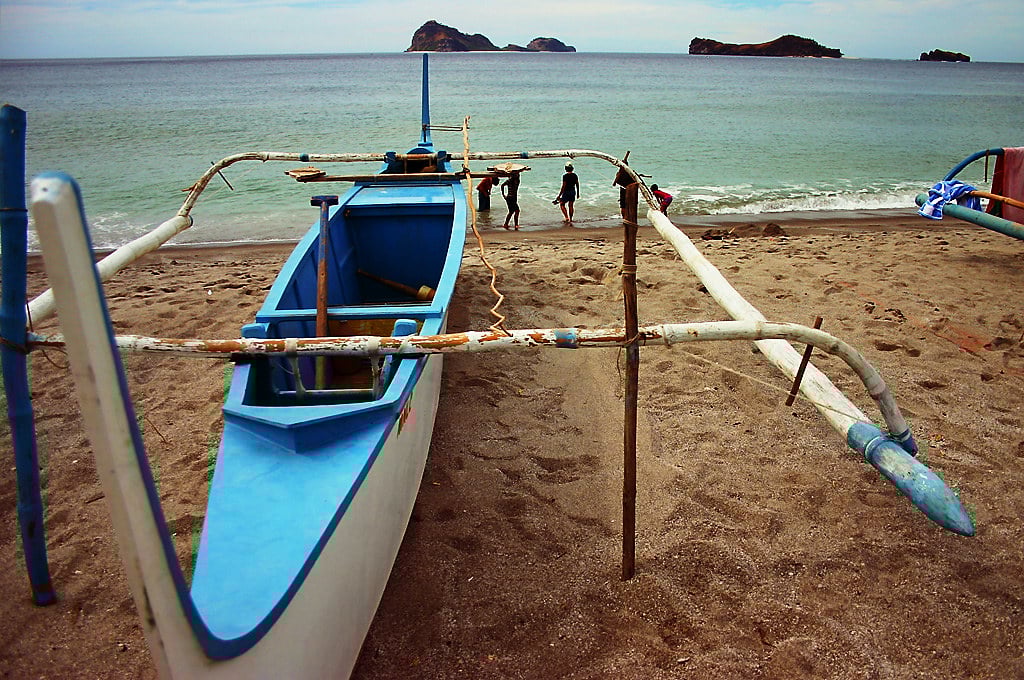
The Battle of Leyte Gulf, fought from October 23-26, 1944, is remembered as the biggest naval battle ever fought, spanning more than 100,000 square miles of sea. The Imperial Japanese Navy mobilized nearly all of its remaining major naval vessels in an attempt to repel the Allied invasion of the Philippines.
The battle consisted of four main separate engagements: the Battle of the Sibuyan Sea, the Battle of Surigao Strait, the Battle off Cape Engaño, and the Battle off Samar. The United States Third and Seventh Fleets comprised eight large aircraft carriers, eight light carriers, 18 escort carriers, 12 battleships, 24 cruisers, and 141 destroyers, along with about 1,500 aircraft.
It was the first battle in which Japanese aircraft carried out organized kamikaze attacks, and it was the last naval battle between battleships in history. The Japanese navy suffered crippling losses and most of its vessels were stranded in port for lack of fuel for the remainder of the war.
Yamen

The Battle of Yamen on March 19, 1279, completed the Mongol-led Yuan dynasty’s conquest of the Southern Song Dynasty. More than 1,000 Song dynasty ships were destroyed by the Yuan dynasty fleet near Yamen, Guangdong, China.
The battle marked the final end of the Song Dynasty and established Mongol rule over all of China for the first time in history. This naval engagement was particularly significant because it extinguished one of China’s most culturally and economically prosperous dynasties, ushering in a period of Mongol dominance that would reshape East Asian politics for generations.
Like Go2Tutors’s content? Follow us on MSN.
Lake Poyang

The Battle of Lake Poyang, fought from August 30 to October 4, 1363, is claimed to be the largest naval battle in terms of personnel, with a reported 850,000 sailors and soldiers involved. This massive engagement took place during the final years of the Mongol Yuan dynasty in China, as rebel forces fought for control of the country.
The battle was fought on China’s largest freshwater lake between two rival rebel leaders vying to overthrow the Yuan and establish a new dynasty. The victor, Zhu Yuanzhang, went on to found the Ming Dynasty, which would rule China for nearly three centuries.
While the exact numbers are disputed by historians, the scale of the engagement was unprecedented and demonstrated the importance of controlling China’s vast inland waterways.
Where Power Shifted

These 15 battles represent turning points where naval supremacy changed hands, empires rose or fell, and the course of history pivoted on the waves. From ancient Greece fending off Persian invasion to the carrier battles that decided the Pacific War, control of the seas has repeatedly proven decisive in determining which nations would shape the future.
Each engagement demonstrated that superior strategy, leadership, and adaptability often matter more than sheer numbers, and that a single day at sea can echo through centuries of history.
More from Go2Tutors!

- 16 Historical Figures Who Were Nothing Like You Think
- 12 Things Sold in the 80s That Are Now Illegal
- 15 VHS Tapes That Could Be Worth Thousands
- 17 Historical “What Ifs” That Would Have Changed Everything
- 18 TV Shows That Vanished Without a Finale
Like Go2Tutors’s content? Follow us on MSN.