Unique Street Foods You Can Only Find in Asia
Some of the best food in the world never makes it onto a restaurant menu. It’s handed to you through a window, wrapped in newspaper, skewered on a stick, or scooped into a plastic bag while you stand on a busy pavement with nowhere to sit.
Asia has built an entire food culture around this idea, and the results are unlike anything you’ll find anywhere else on the planet. These aren’t dishes that travelled and got popular globally.
They stayed home — shaped by local ingredients, history, and habits that took centuries to develop. If you want to eat them properly, you have to go find them.
Takoyaki (Japan)
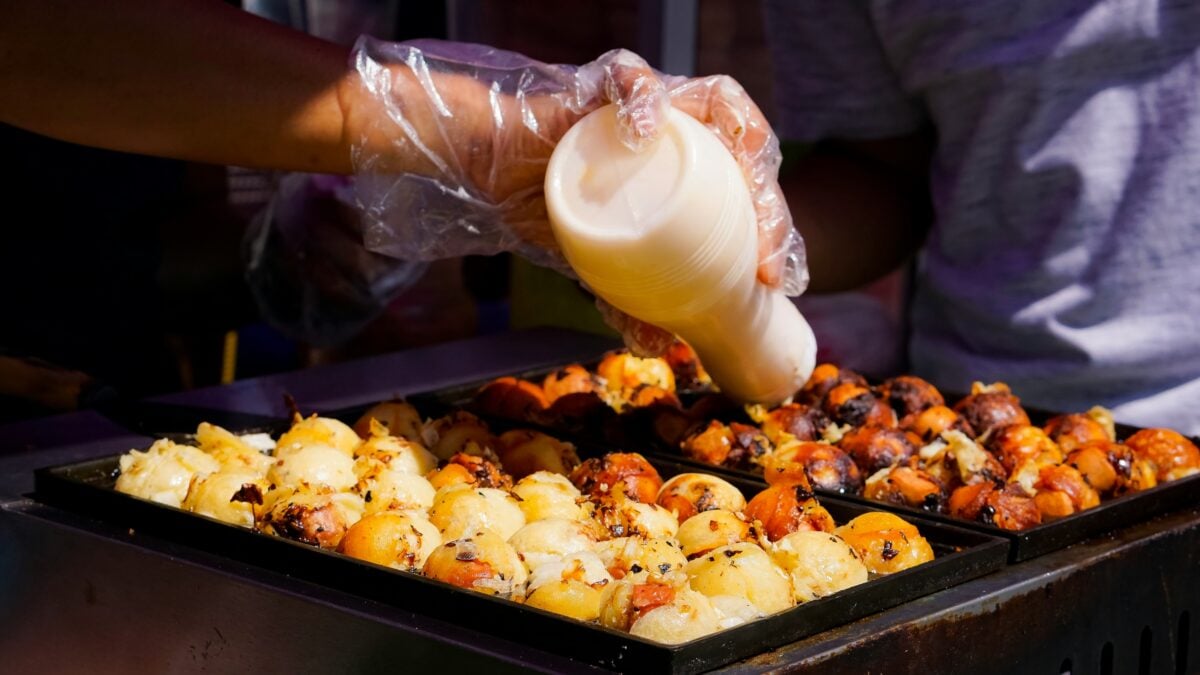
Walk through any festival or busy street in Osaka and you’ll smell these before you see the stall. Takoyaki are round, golf-sized dough pockets filled with octopus, green onion, and pickled ginger, cooked in a cast-iron mould with dozens of circular wells.
The vendor flips each one with a pick, rotating them until they develop a crispy shell and a molten, almost custard-like centre. They come out topped with a dark, tangy sauce, mayonnaise, and a shower of bonito flakes that wave in the heat like they’re alive.
The trick is patience — bite in too soon and you’ll burn your mouth badly. Most people do it anyway.
Stinky Tofu (Taiwan)
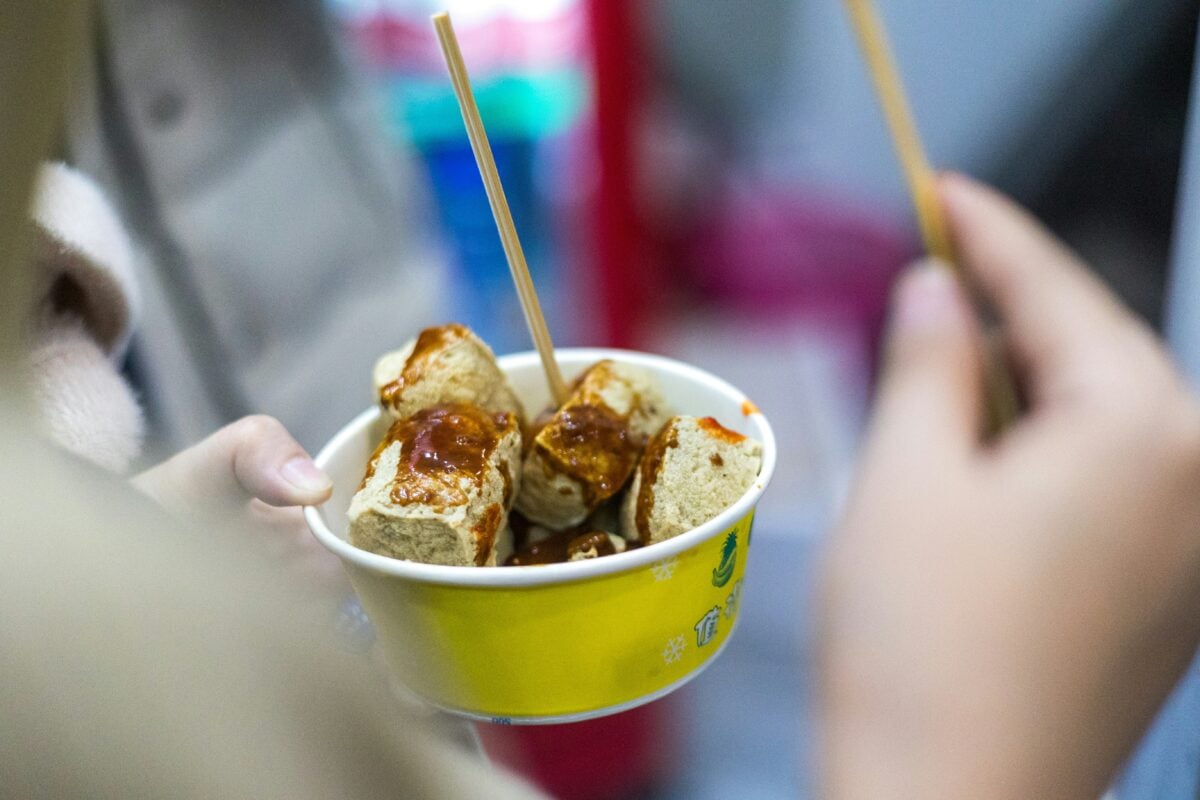
The name doesn’t oversell it. Stinky tofu — chou doufu — is fermented bean curd that produces a smell powerful enough to make you stop walking.
Night markets across Taiwan sell it fried, with pickled cabbage and chilli sauce on top. The fermentation process can last anywhere from a few days to several months, and the longer it goes, the more intense the result.
The strange part is that once you get past the smell, the flavour is surprisingly mild. The outside crisps up like regular fried tofu, and the inside stays soft.
Locals eat it without a second thought. First-timers usually need a push.
Balut (Philippines)
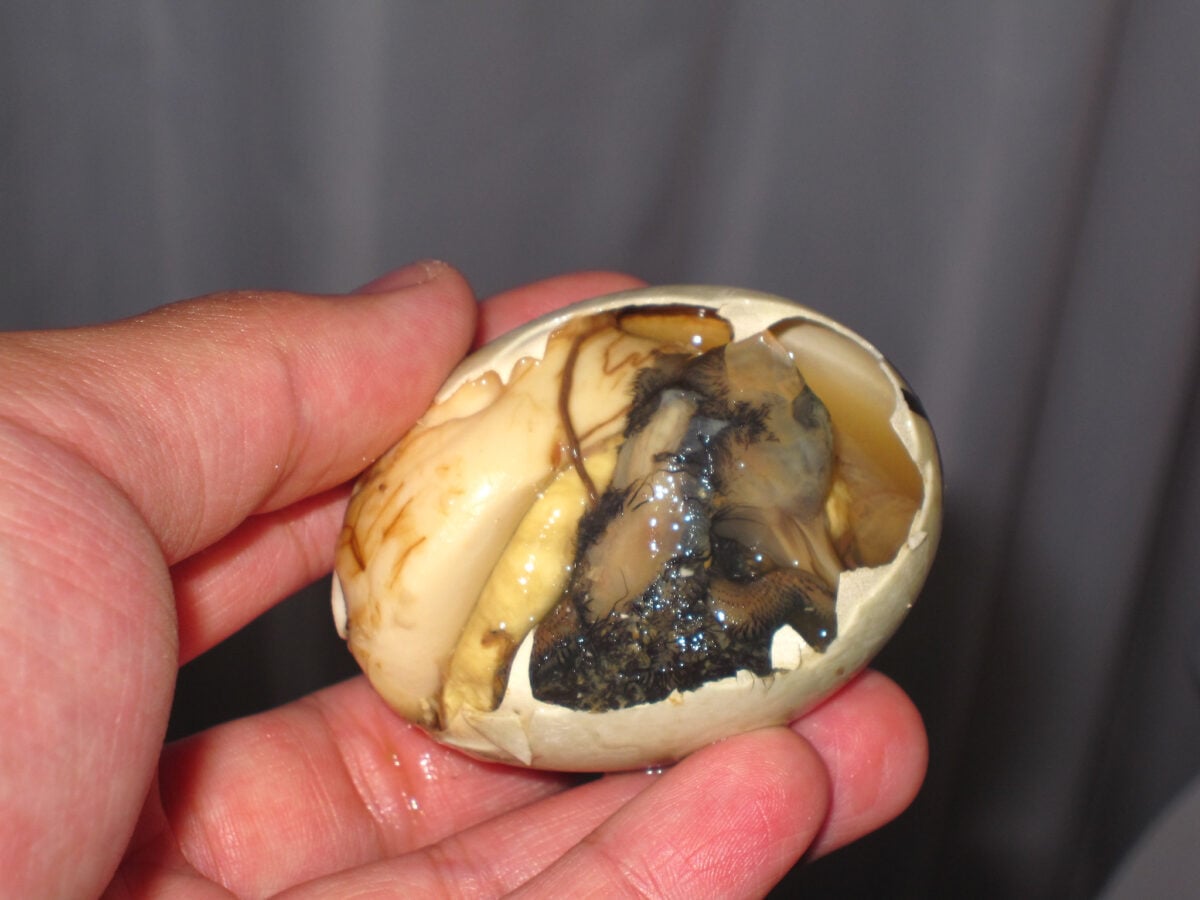
This one requires a brief description before anything else: balut is a fertilised duck egg, boiled and eaten in the shell. It’s been incubated for around 17 days, so when you crack it open, you’ll find a developing embryo along with the yolk and egg white.
Street vendors sell it warm, often at night, seasoned with salt or vinegar. It’s a common late-night snack in Manila and a staple at roadside stalls across the country.
The flavour is rich and eggy, and the texture is nothing like a regular boiled egg. For Filipinos, it’s ordinary.
For most visitors, it’s a story to tell later.
Roti Canai (Malaysia)
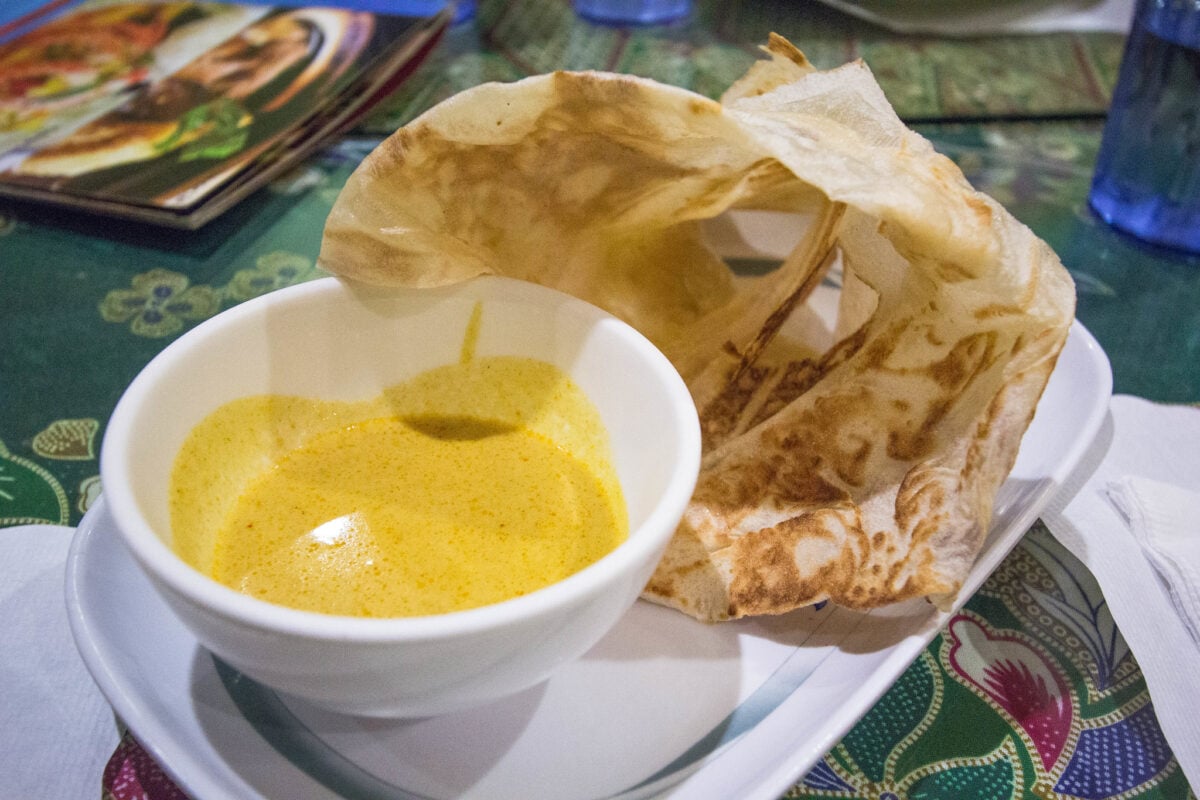
Roti canai is a flatbread that looks simple and tastes like someone put a great deal of thought into it. The dough is stretched, folded, and flipped on a hot griddle until it’s laminated into thin, flaky layers — crispy on the outside, soft and chewy in the middle.
It comes with a small bowl of dal or curry sauce for dipping. Mamak stalls across Malaysia serve it around the clock, and regulars order it for breakfast, as a late-night snack, or any time in between.
The process of making it is almost hypnotic to watch — vendors spin and toss the dough with a confidence that only comes from doing it thousands of times.
Jianbing (China)
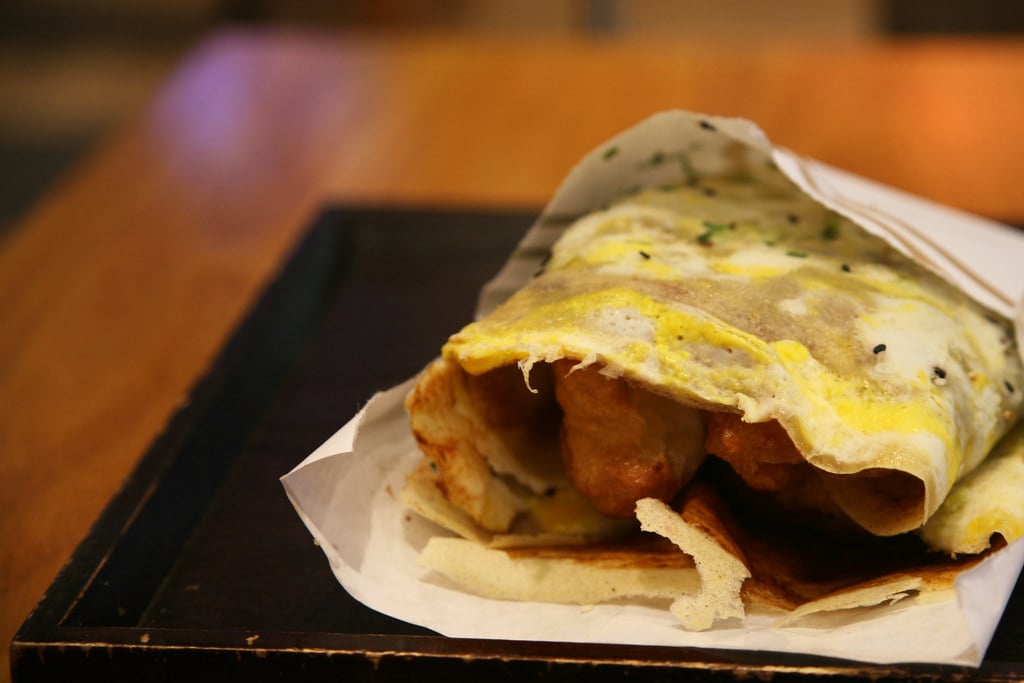
Jianbing is a Chinese street crepe that doubles as a complete meal. A thin batter gets spread on a circular griddle, then an egg is cracked on top and spread around.
Scallions and coriander go on next, followed by hoisin and chilli sauce, then a crispy cracker is pressed in before the whole thing gets folded up and handed to you in a paper bag. It’s fast, filling, and eaten on the go.
In cities like Beijing and Tianjin, breakfast crowds form around these carts every morning. The whole process takes about two minutes per order.
Odeng / Eomuk (South Korea)
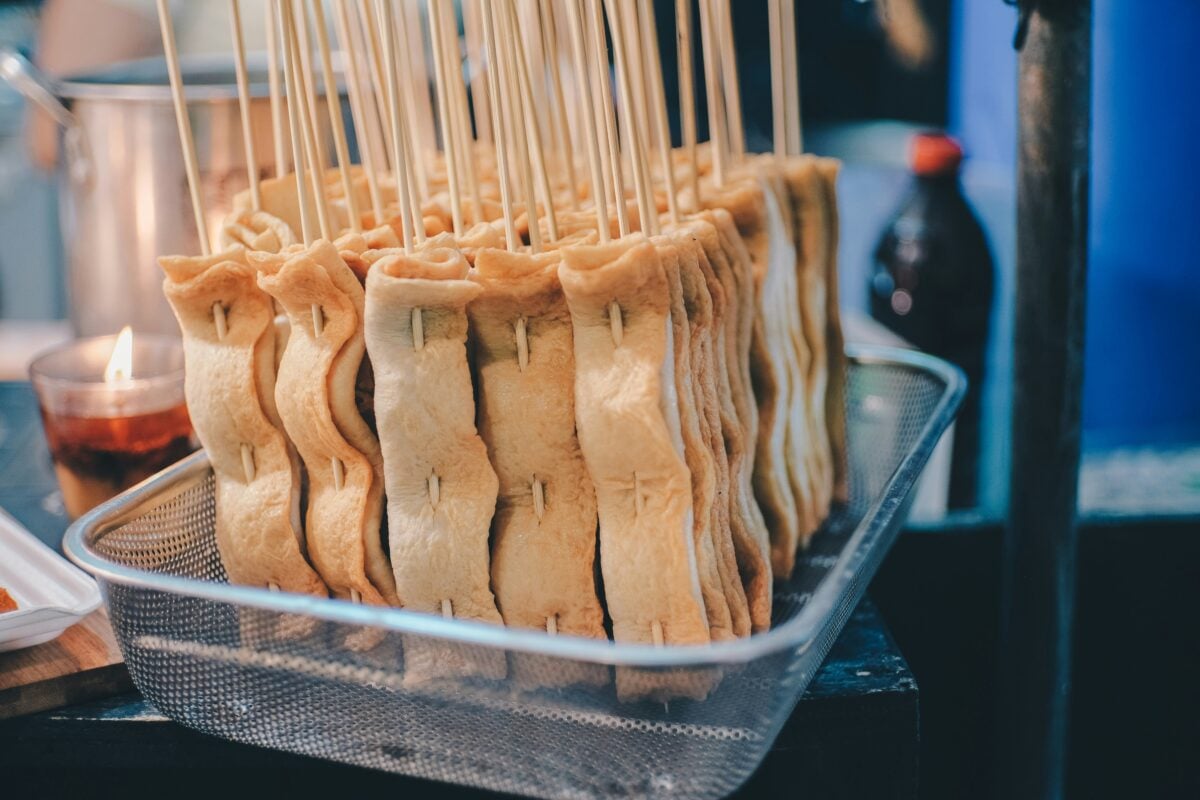
Korean fish cake skewers — called odeng in everyday speech — are a fixture at pojangmacha, the tented street food stalls that line Korean streets, especially in winter.
Flat, soft fish cakes are threaded onto long wooden skewers and simmered in a light, savoury broth. The broth itself is part of the experience.
You drink it from a paper cup while you eat, and it’s mild enough to warm you up without filling you. The stalls often stay open late into the night, and in cold weather, the steam rising off the pot is half the appeal.
Mango Sticky Rice (Thailand)
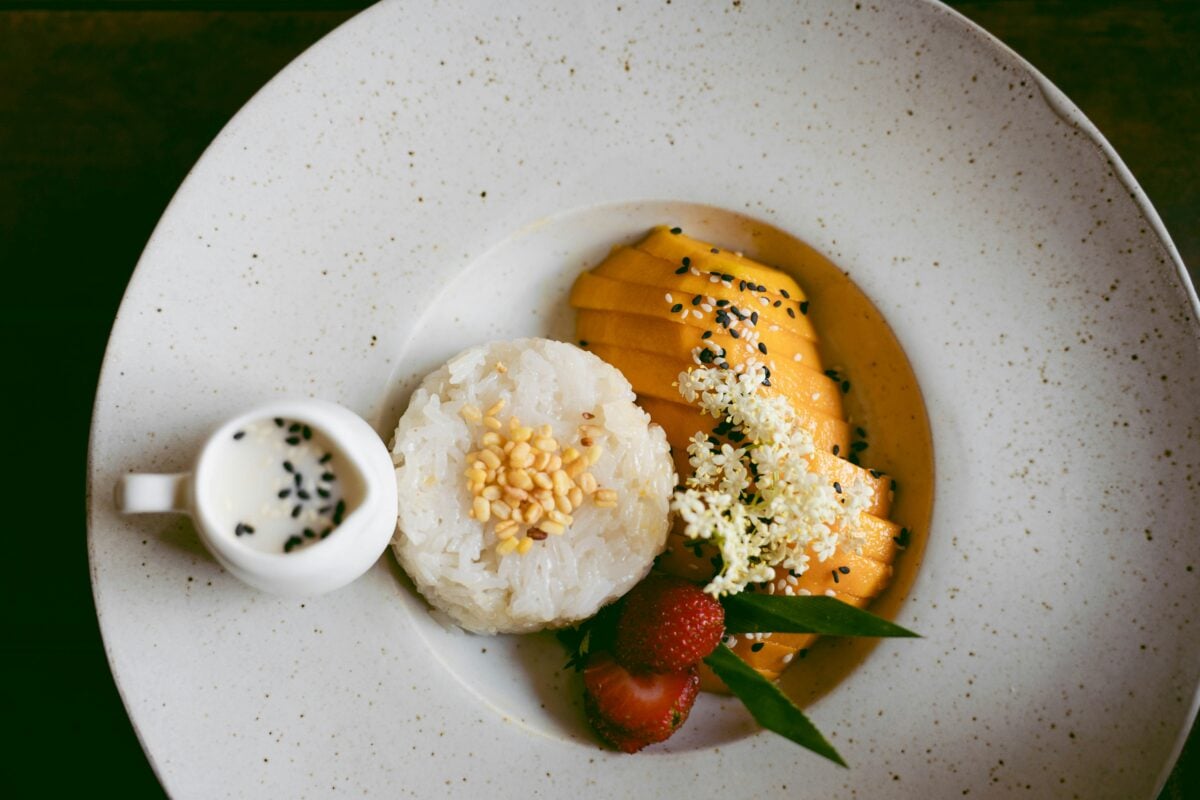
Most desserts in Thailand travel easily — but mango sticky rice, eaten fresh from a street cart at the peak of mango season, is something different. Glutinous rice is cooked in coconut milk and sugar until it absorbs the liquid and turns slightly sweet and faintly salty.
It’s served at room temperature with thick slices of ripe mango, then drizzled with more coconut cream. The quality depends almost entirely on the mango.
Thai mangoes — particularly the Nam Dok Mai variety — are sweeter and more fragrant than most exported versions. The dish exists outside Thailand, but it rarely tastes the same.
Waffle Skewers (Vietnam)
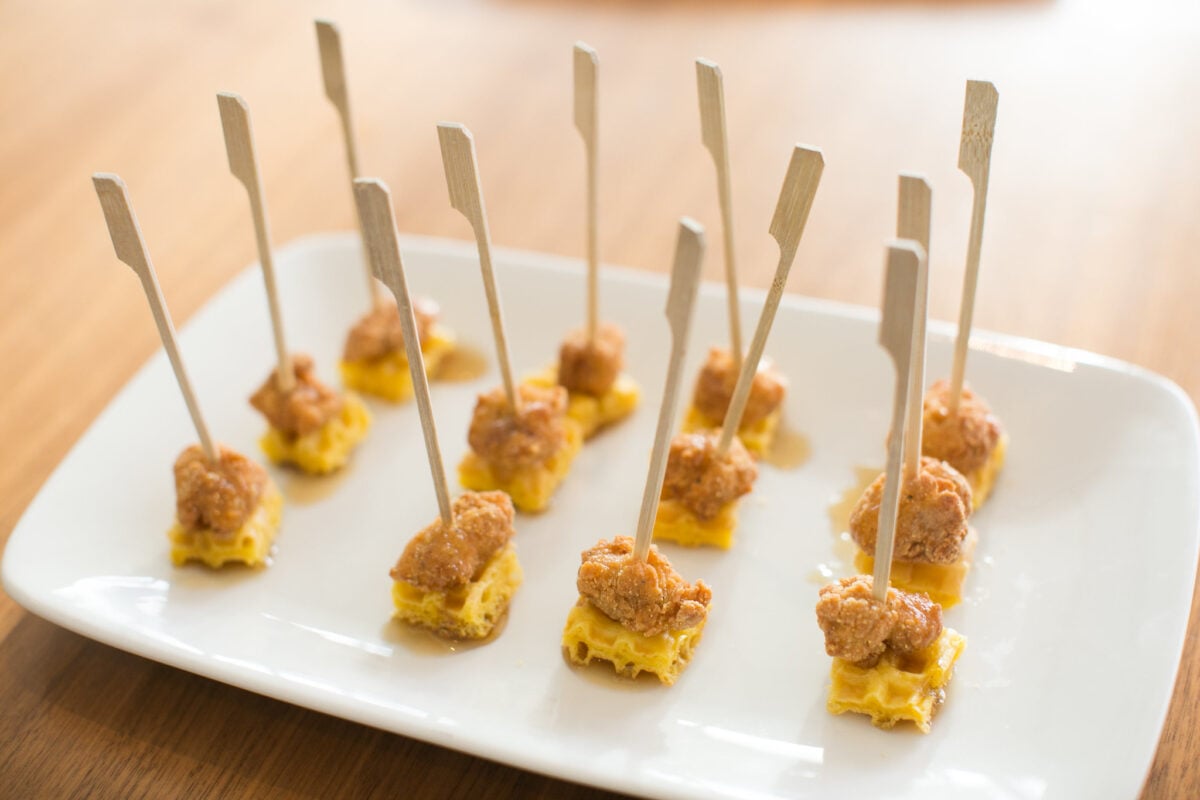
Street food vendors across Ho Chi Minh City and Hanoi sell small, waffle-like cakes on sticks, cooked in a hinged mould over a charcoal flame. The batter is typically made with rice flour, coconut milk, and pandan, giving each waffle a slightly green tint and a gentle sweetness.
Some versions are stuffed with shredded coconut or sesame seeds before closing the mould. They’re a popular snack for kids heading home from school and adults wandering through the market.
The outside is lightly crisp, the inside soft, and they cost almost nothing.
Tteokbokki (South Korea)
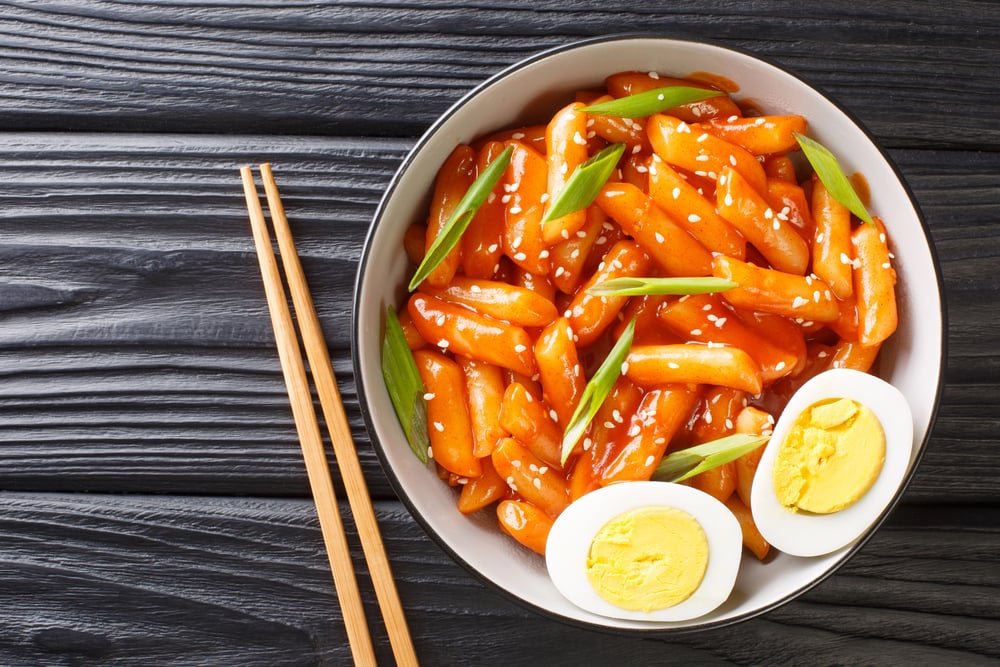
Chewy rice cakes in a fiery red sauce — tteokbokki is one of the most recognisable street foods in South Korea. The cylindrical rice cakes are soft but with some resistance, simmered in a gochujang-based sauce that’s thick, spicy, and slightly sweet.
Fish cakes and boiled eggs often go in alongside them. It’s sold from carts and small pojangmacha everywhere, and the price is low enough that it functions more like a snack than a meal.
The spice level varies from stall to stall, and regulars usually know which cart hits the right balance.
Grilled Corn with Coconut Milk (Indonesia)
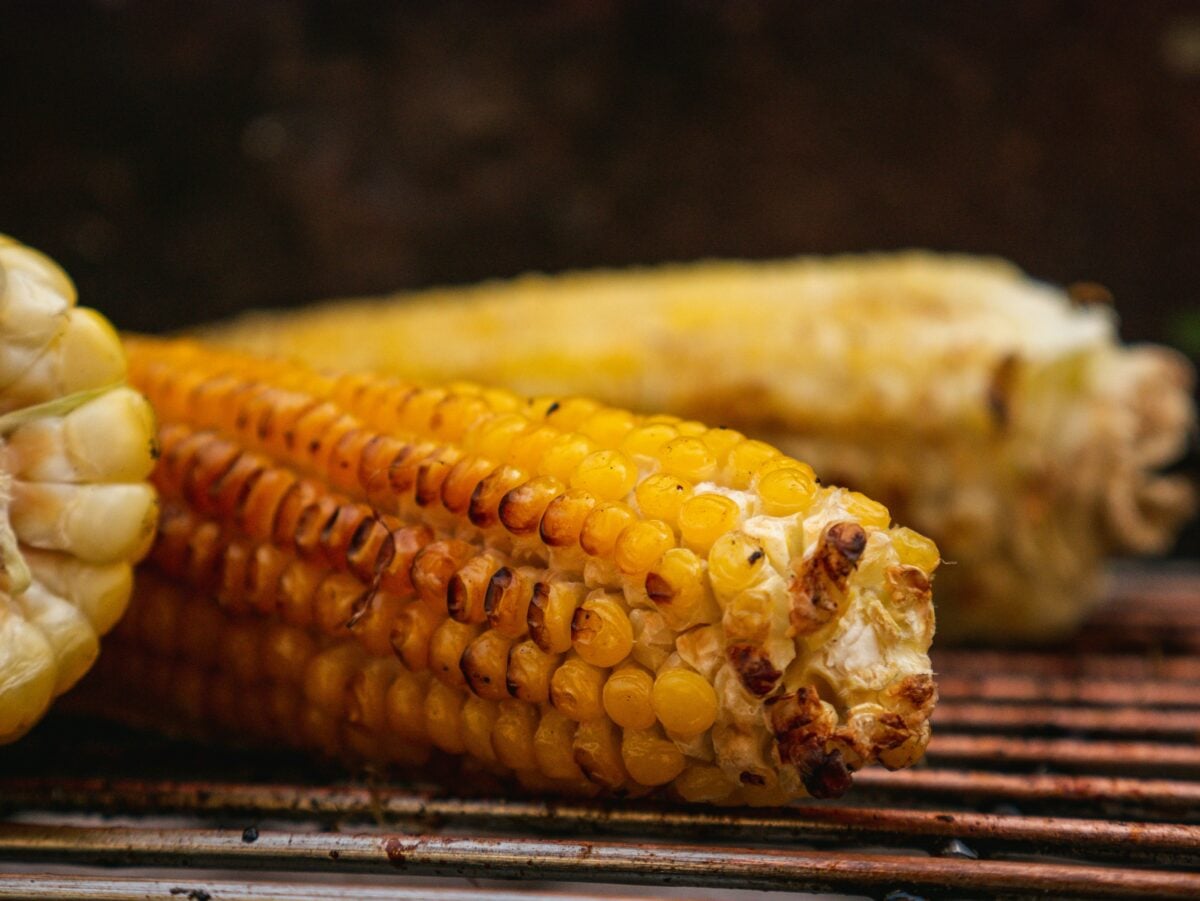
Jagung bakar — grilled corn — might sound straightforward, but the Indonesian version has a preparation method that sets it apart. After grilling over charcoal until the kernels are slightly charred, the corn gets basted with a mixture of sweetened coconut milk and sometimes chilli or margarine, then returned to the heat to caramelise.
The result is smoky, sweet, and a little sticky. Street vendors sell it at night markets and beachside warungs, and the smell of the charcoal and coconut drifting through the evening air is hard to walk past.
Char Kway Teow (Singapore/Malaysia)
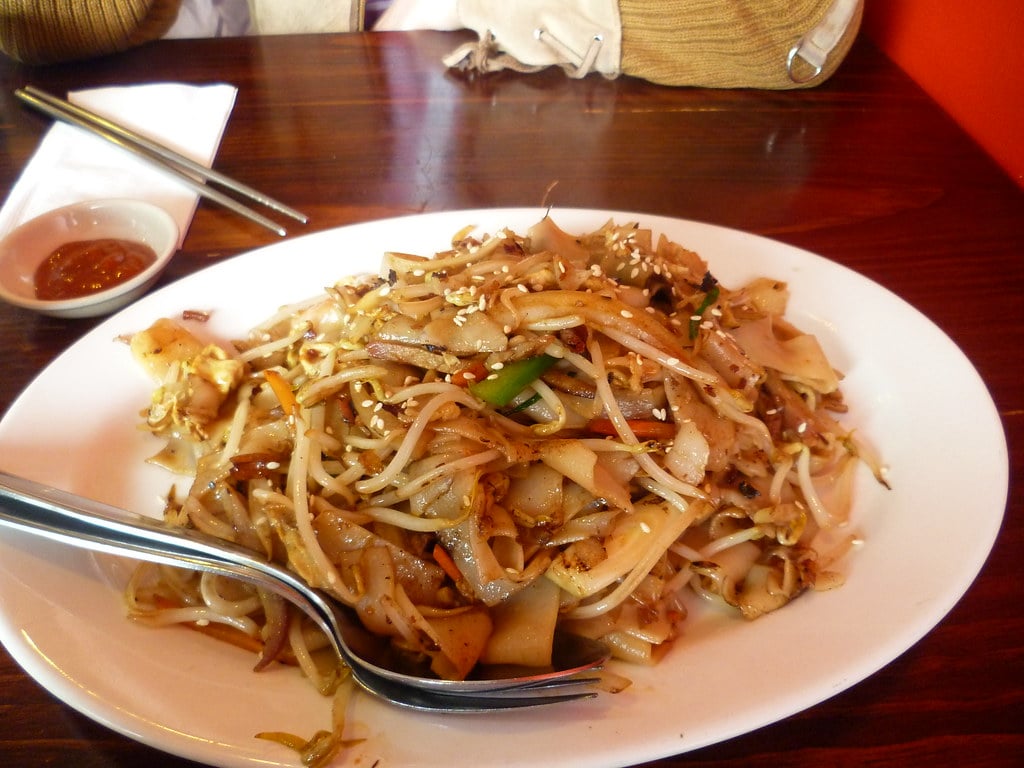
Char kway teow is a dish that depends almost entirely on the heat of the wok and the skill of the person cooking it. Flat rice noodles go into a screaming-hot wok with dark soy sauce, Chinese sausage, bean sprouts, cockles, and egg — everything tossed at high speed over an intense flame to develop what cooks call wok hei, a slightly smoky, caramelised flavour that only happens when the temperature is right.
Some of the most respected hawker stalls in Penang and Singapore have had the same cook running the same wok for decades. The dish takes maybe three minutes to make.
Getting it perfect takes much longer than that.
Bánh Mì (Vietnam)
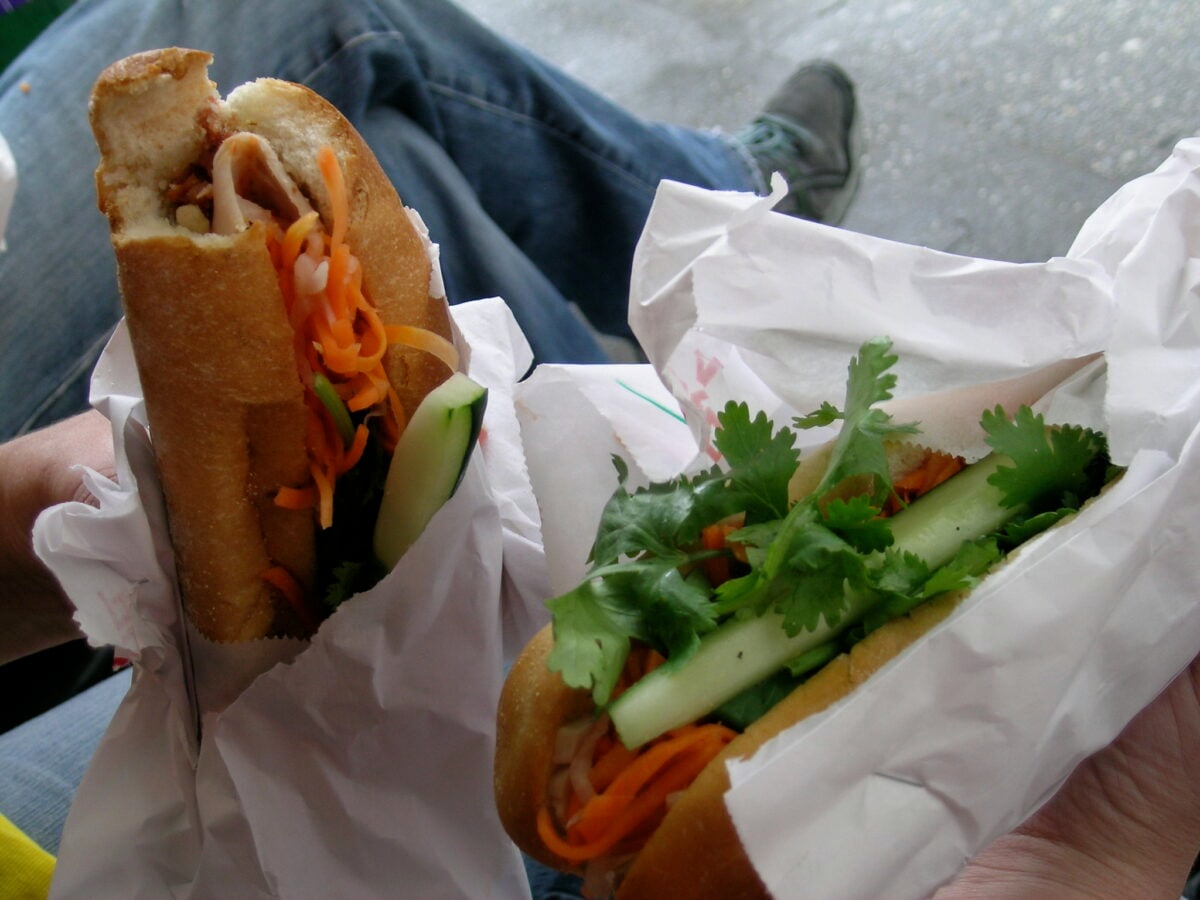
The bánh mì is what happens when French colonialism leaves something good behind. Vietnamese bakers took the baguette and made it lighter, with a thinner, crispier crust and an airier interior than its French counterpart.
Then they filled it with a combination of ingredients that don’t exist together anywhere else: pork or pâté, pickled daikon and carrot, cucumber, coriander, and chilli. Vendors sell them from small carts or storefronts no bigger than a closet.
A good bánh mì should crunch when you bite into it, and every component — the richness of the meat, the acidity of the pickles, the heat of the chilli — should actually balance. Many of them do.
Egg Waffles (Hong Kong)
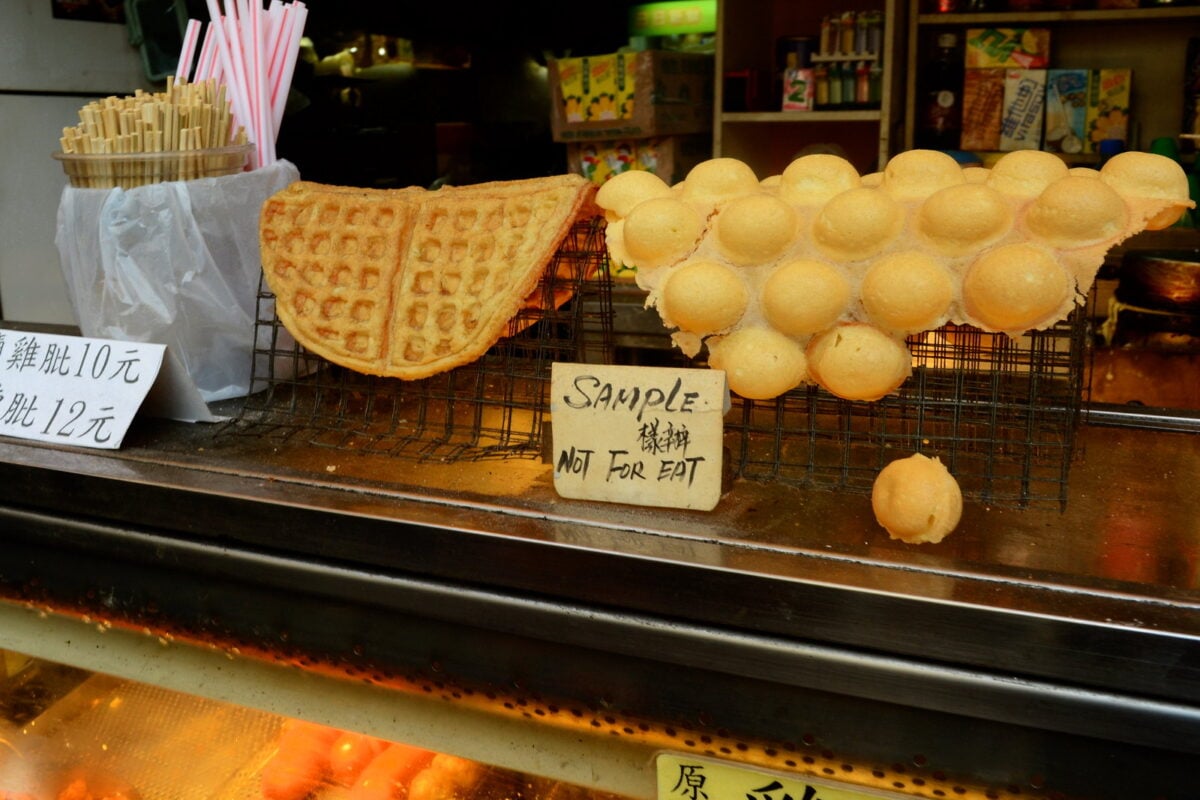
Hong Kong’s gai daan jai — egg waffles — are distinctive in shape: a grid of small, round bubbles that puff up from a sweet, eggy batter cooked in a special mould. Fresh off the iron, they’re warm and slightly crispy on the outside, with a soft, custardy interior in each bubble.
They’ve been sold from small street carts in Hong Kong since the 1950s, and while the concept has been copied and sold in cities all over the world, the original version — plain, freshly made, eaten on the street while it’s still warm — is still the best iteration of it.
Ais Kacang (Malaysia/Singapore)

Ais kacang translates roughly as “ice beans,” which doesn’t do it justice. It’s a shaved ice dessert built in layers: a pile of finely shaved ice over sweetened red beans, corn, grass jelly, and sometimes attap seeds, all drenched in coloured syrups and coconut milk or evaporated milk.
On a humid afternoon — which in Malaysia and Singapore describes most afternoons — it’s one of the most effective things you can eat. The ice is shaved so finely it melts almost instantly on your tongue, and the sweetness of the syrup with the slight bitterness of the jelly creates something that keeps you eating to the bottom of the bowl.
The Stall That Stays With You
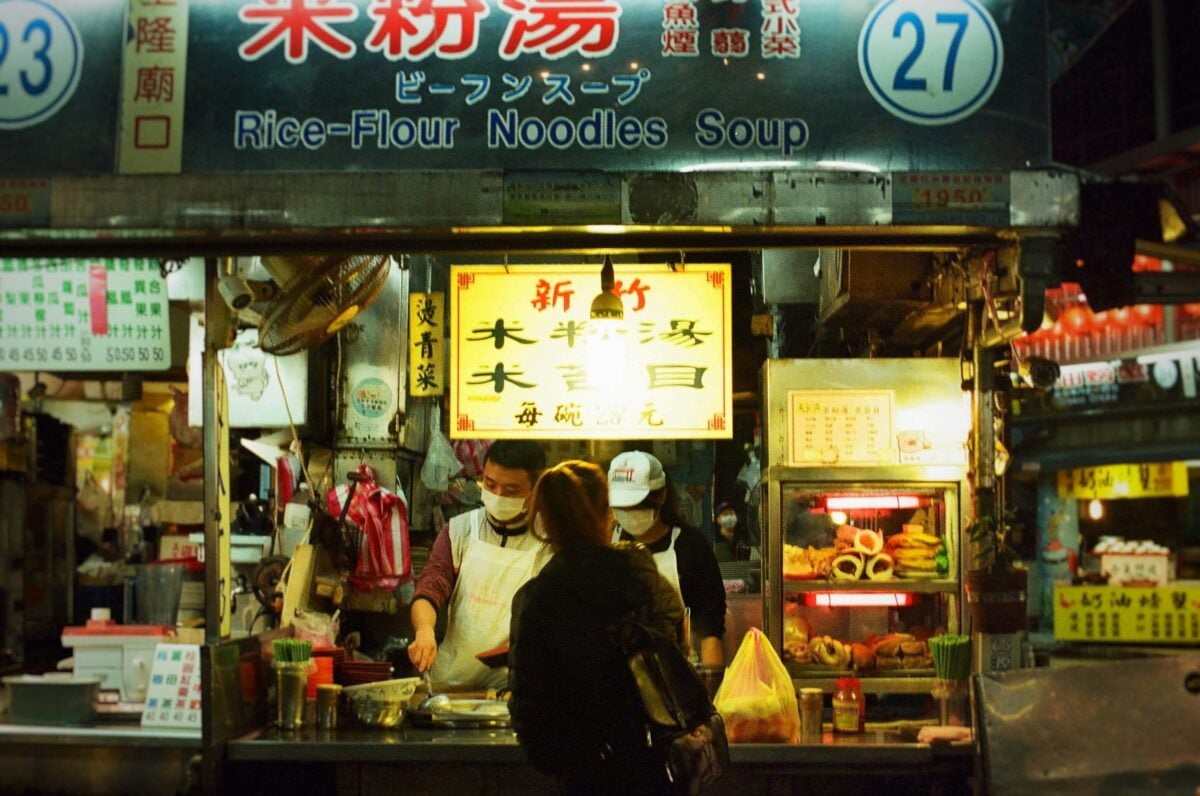
A whiff catches you first, maybe a knot of people by the curb. Food sits waiting, no sign needed, tucked beneath worn plastic where traffic hums past.
Something pulls your eye – steam, color, motion – and suddenly you’re closer than before. Payment changes hands fast, coins or bills passing without fuss.
A paper plate appears, warm in your grip. Back on the sidewalk, flavors hit that words later won’t hold.
Home seems far when trying to describe what vanished in three bites. Here’s what happens when you eat across Asia – meals that stay aren’t often served on plates inside dining rooms.
Instead, they come folded in foil, passed through a gap in a stall, or lifted from a blackened grill by hands that have worked that same spot longer than you’ve wandered anywhere.
More from Go2Tutors!

- The Romanov Crown Jewels and Their Tragic Fate
- 13 Historical Mysteries That Science Still Can’t Solve
- Famous Hoaxes That Fooled the World for Years
- 15 Child Stars with Tragic Adult Lives
- 16 Famous Jewelry Pieces in History
Like Go2Tutors’s content? Follow us on MSN.



