Most Expensive Items Stolen in Heists
A twist of fate follows every bold theft. Planning meets recklessness when someone steps into a secure room, leaves with treasures beyond ordinary dreams.
Yet films paint glory where real life delivers handcuffs, long chases across borders, missing fortunes never seen again. Priceless paintings disappear without trace.
Gold bars vanish mid-shipment. Some robberies become legend simply because nothing was left behind.
The Mona Lisa
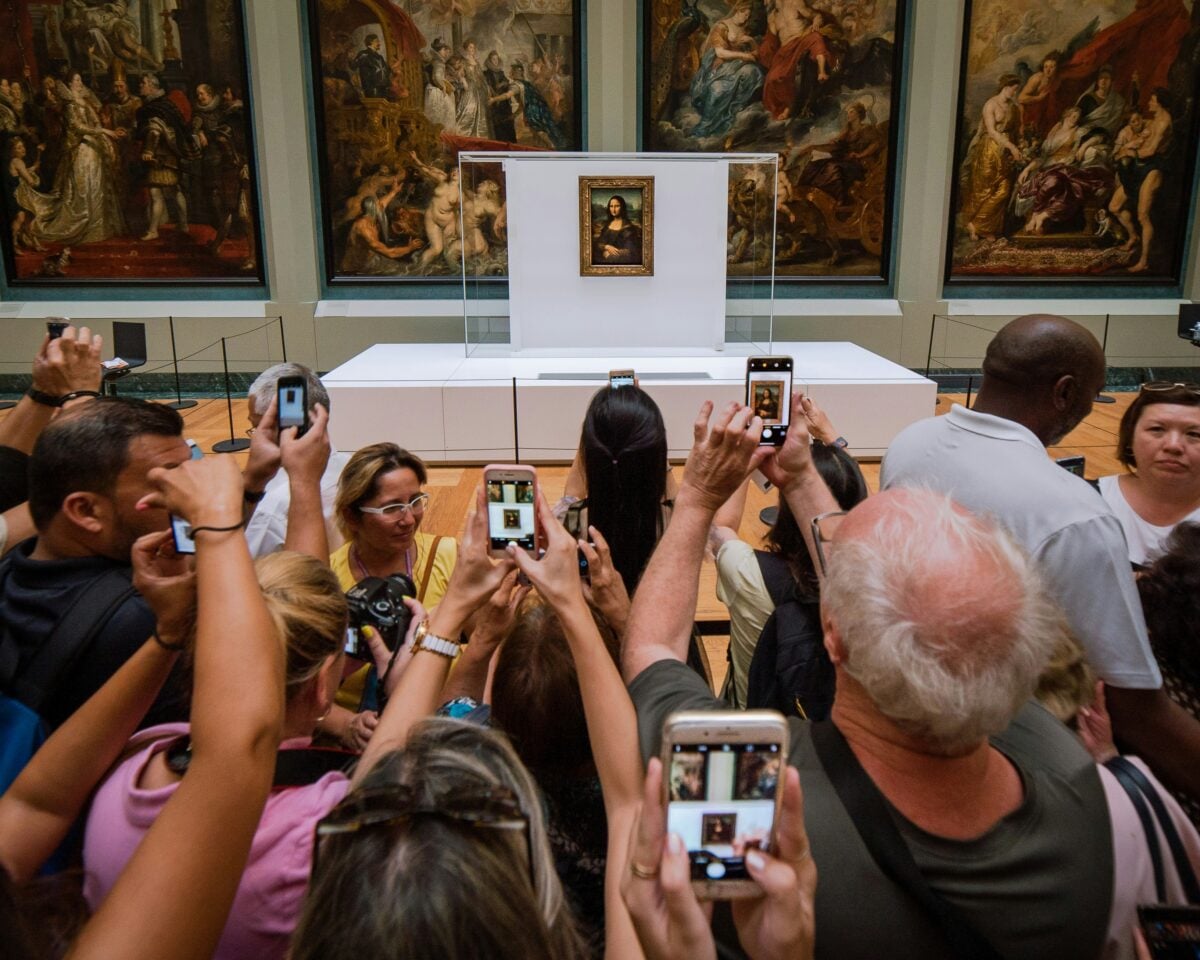
Before you knew it as the most famous painting in the world, the Mona Lisa was just another portrait hanging in the Louvre. That changed on August 21, 1911, when Vincenzo Peruggia, an Italian handyman who had previously worked at the museum, entered on a Monday when it was closed, removed the painting from the wall, wrapped it in his work smock, and walked out.
Peruggia kept the painting hidden in his Paris apartment for over two years before attempting to sell it to an art dealer in Florence. He genuinely believed he was a patriot returning stolen Italian property to its homeland.
The Mona Lisa was recovered in 1913 and returned to the Louvre. In 1962, it received an insurance valuation of $100 million, equivalent to roughly $1 billion today, though its actual worth is considered incalculable.
The theft, ironically, made it the most famous painting on Earth.
The Concert by Johannes Vermeer
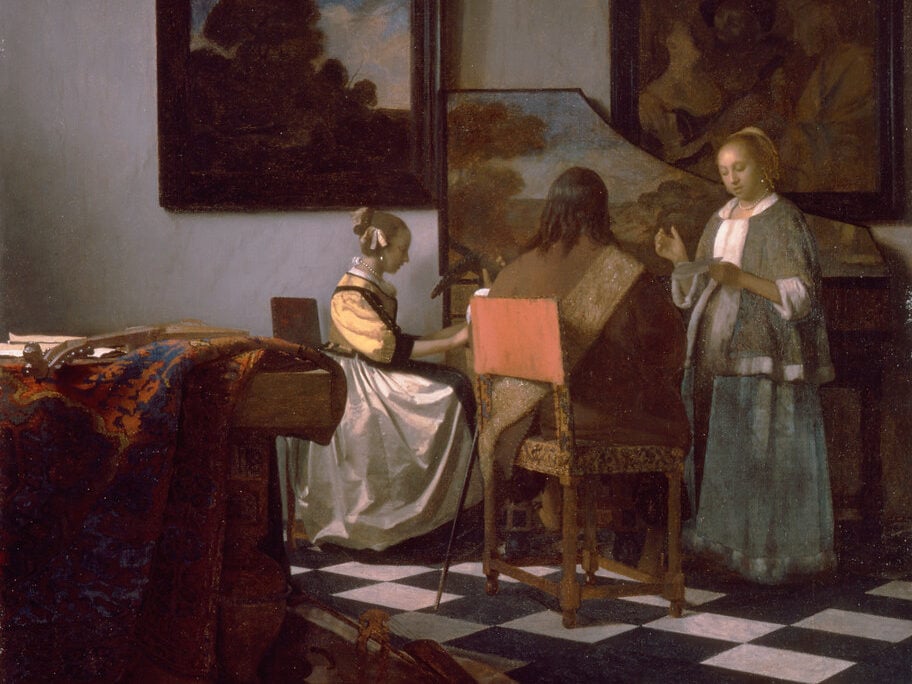
The Isabella Stewart Gardner Museum heist in Boston remains the largest property theft in American history, with 13 artworks valued collectively at $500 million taken on March 18, 1990. Two men dressed as police officers talked their way past security guards, handcuffed them, and spent 81 minutes selecting what to steal.
Among the haul, Vermeer’s “The Concert” stands as the most valuable single piece, estimated at $200 million. The painting depicts three figures making music in a domestic setting, typical of Vermeer’s intimate style.
It is one of only 34 paintings firmly attributed to the Dutch master. Other stolen works included Rembrandt’s only seascape, “Storm of the Sea of Galilee.”
None of the paintings have ever been recovered. Empty frames still hang on the museum walls as a reminder of what was lost.
The Central Bank of Iraq Cash
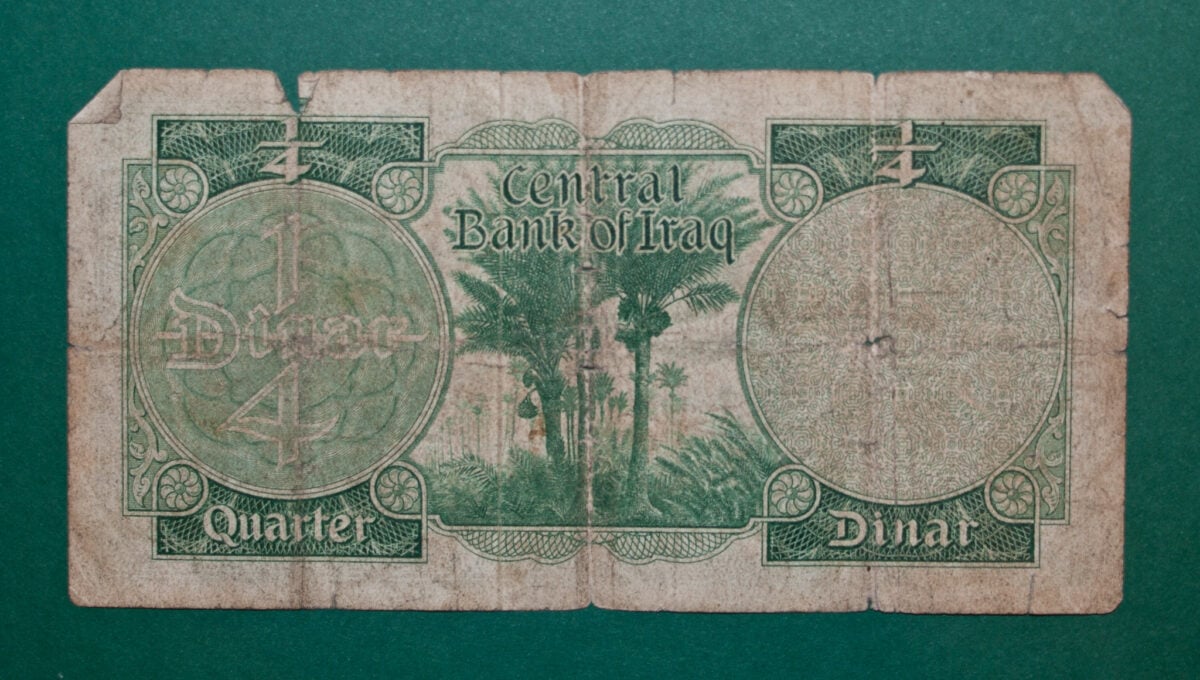
On March 18, 2003, just hours before American bombs began falling on Baghdad, three trucks pulled out of Iraq’s Central Bank carrying nearly $1 billion in cash. Qusay Hussein, son of dictator Saddam Hussein, had arrived at 4 a.m. with a handwritten note from his father authorizing the withdrawal.
Bank employees spent five hours loading metal boxes stuffed with $100 bills onto the trucks. The operation required no guns or violence since Saddam’s word was law. About $650 million was later recovered by American forces, found stashed in the walls of one of Saddam’s palaces.
Roughly $350 million remains unaccounted for. Both Qusay and his brother Uday were killed in a firefight with U.S. forces in July 2003. Saddam was captured in December.
The Dresden Green Vault Jewels
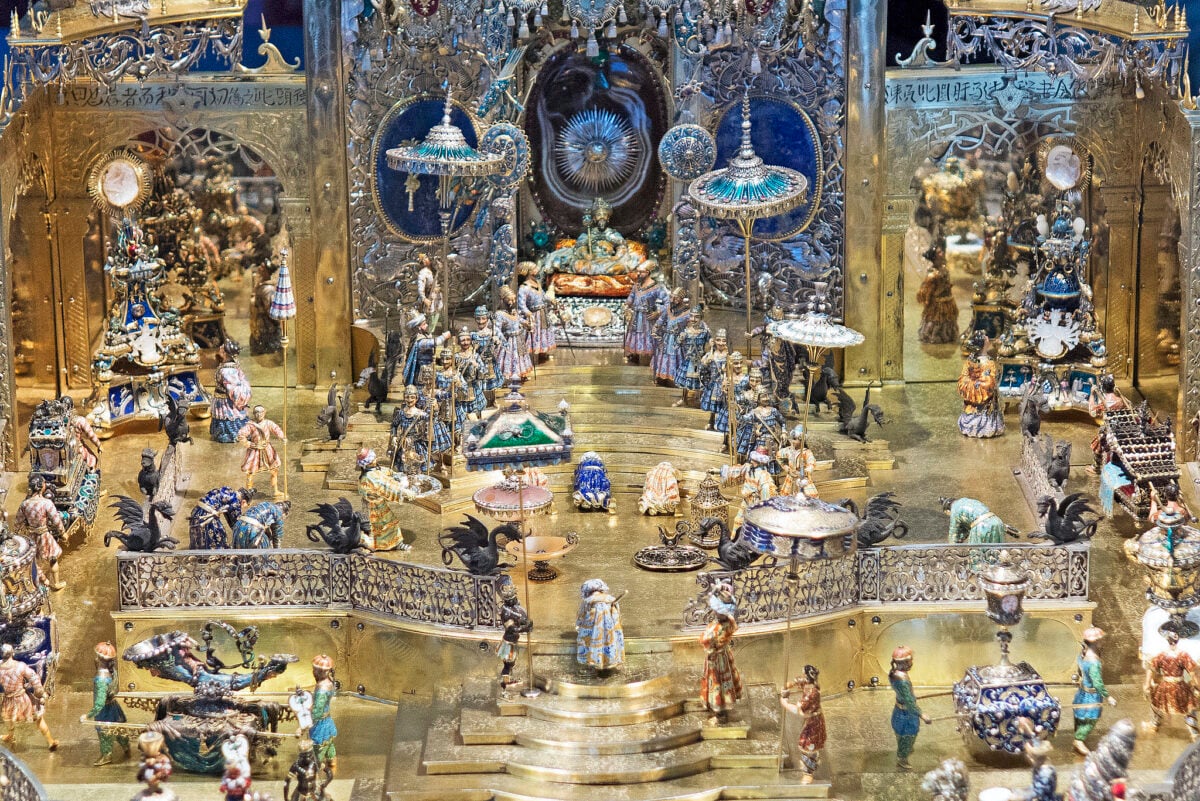
At around 5 a.m. on November 25, 2019, thieves set fire to a power distribution box near Dresden Castle in Germany, plunging the area into darkness. They entered through a pre-cut window, sprinted through baroque halls, and smashed display cases with axes.
Within 13 minutes, they escaped with 21 artifacts containing over 4,300 diamonds. The Green Vault, founded in 1723 by Augustus the Strong, held some of Europe’s most significant royal treasures.
Stolen items included the Dresden White Diamond, diamond-encrusted swords, and elaborate jewelry sets. Initial estimates placed the value at €1 billion, though prosecutors later settled on €113 million.
Five members of a Berlin crime family were convicted in 2022, and roughly 31 pieces were recovered after a plea deal. Several items remain missing, including the Dresden White.
The Antwerp Diamond Heist

The weekend of February 15-16, 2003, saw what investigators dubbed “the heist of the century” at the Antwerp Diamond Center in Belgium. The vault sat two floors underground, protected by a lock with 100 million possible combinations, infrared sensors, seismic detectors, and Doppler radar.
Leonardo Notarbartolo, an Italian thief who had rented an office in the building for three years, led a team that bypassed every measure. They disabled sensors with hair spray and aluminum plates, used custom tools to crack safe deposit boxes, and escaped with loose diamonds, gold, and jewelry worth over $100 million.
Notarbartolo was caught because the team dumped trash from the heist near a highway, and a landowner found evidence linking directly back to him. Most of the diamonds were never recovered.
The French Crown Jewels from the Louvre
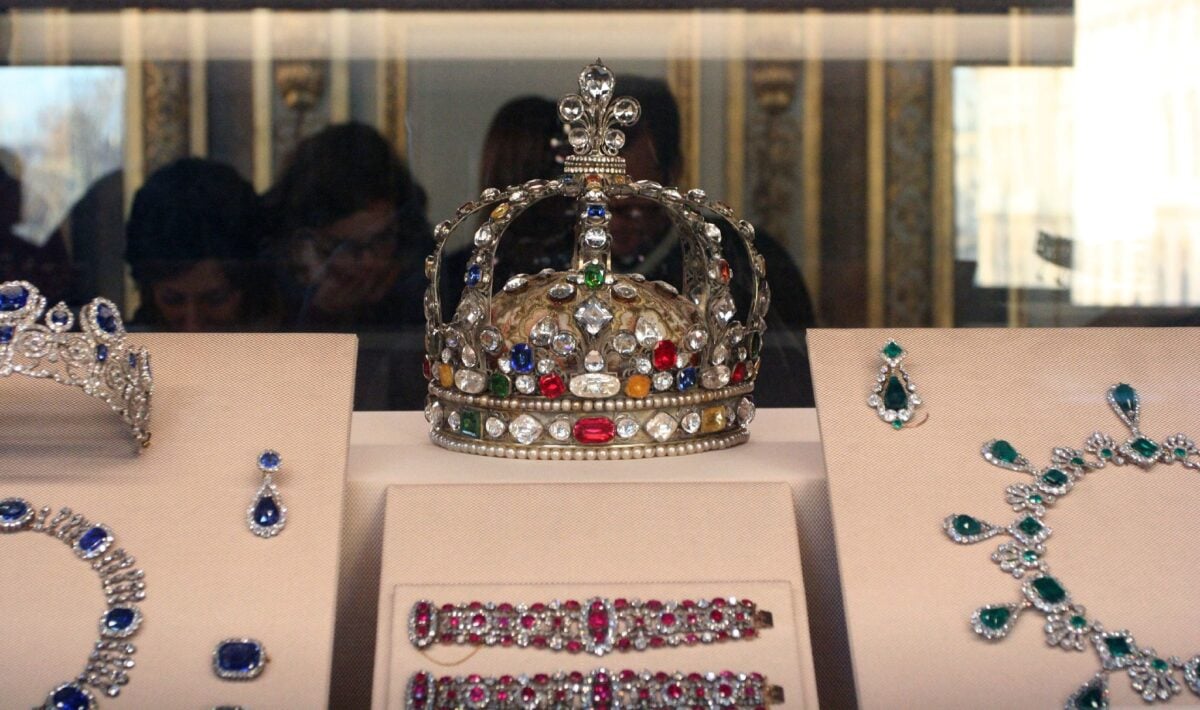
On October 19, 2025, four men dressed as construction workers used a cherry picker to access the Louvre’s Apollo Gallery through a second-floor window. In under eight minutes, they smashed into high-security display cases and fled on motorcycles with eight pieces of the French Crown Jewels worth an estimated €88 million.
The stolen items included sapphire and diamond sets worn by 19th-century queens, emerald jewelry gifted by Napoleon to his second wife, and a reliquary brooch containing historic Mazarin diamonds. The thieves dropped Empress Eugénie’s crown while escaping, damaging it.
Four suspects have been arrested and charged, but the jewels remain missing. The robbery exposed significant security gaps at the world’s most visited museum and sparked a crisis involving staff strikes and parliamentary inquiries.
The Hatton Garden Safe Deposit
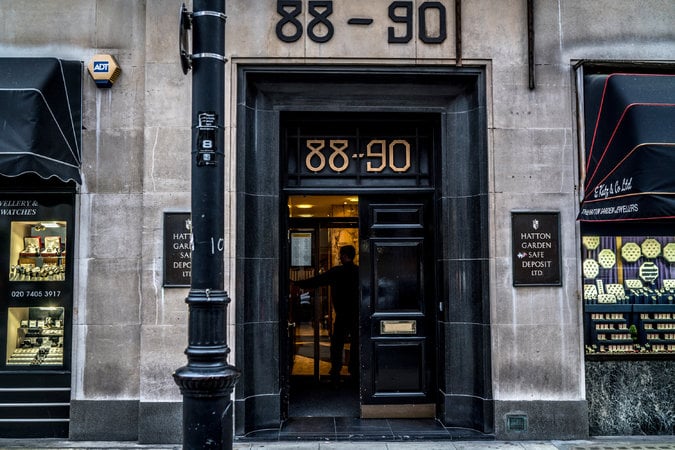
Over the Easter weekend of 2015, a group of elderly British thieves drilled through 50 centimeters of reinforced concrete to access the Hatton Garden Safe Deposit vault in London’s famous jewelry quarter. They forced open 73 boxes and escaped with roughly £14 million in jewels, gold, and cash.
The combined age of the seven main perpetrators was 448 years. The ringleader, Brian Reader, had previously been involved in laundering proceeds from the 1983 Brink’s-Mat gold heist.
Despite the elaborate planning, the group was caught partly because security cameras recorded their movements and partly through old-fashioned surveillance. Only about £4.3 million has been recovered.
The vault, now defunct, was later donated to the Museum of London.
The Schiphol Airport Diamonds

February 25, 2005: two men dressed as KLM airline workers drove a stolen KLM van into the secure cargo area at Amsterdam’s Schiphol Airport. They intercepted an armored truck carrying uncut diamonds bound for Antwerp, forced the drivers out at gunpoint, and drove away with roughly €70 million in gems.
The heist exposed embarrassing vulnerabilities in airport security. The robbers had managed to enter an extra high-security zone without detection.
Some diamonds were found in an escape vehicle shortly after, but about €43 million worth have never surfaced. The mastermind, Errol H.V., was convicted in 2019 and sentenced on appeal to 9.5 years in 2021, but fled before completing his sentence.
He was finally arrested in Ibiza in 2024, nearly 20 years after the crime.
The Amber Room

Sometimes called the “Eighth Wonder of the World,” the Amber Room was an entire chamber made from six tons of amber backed by gold leaf. Frederick I of Prussia commissioned it in the early 18th century, and it later became a gift to Russian Tsar Peter the Great.
Nazi forces dismantled and stole the room from Catherine Palace near St. Petersburg in 1941, transporting it to Königsberg Castle in East Prussia. After Allied bombing in 1944, the Amber Room vanished.
Theories about its fate range from destruction in the fires to burial in an undiscovered bunker. A meticulous reconstruction now sits in Catherine Palace, completed in 2003.
But the original, if it survives, would be worth hundreds of millions. Its disappearance remains one of history’s greatest unsolved art mysteries.
The Davidoff-Morini Stradivarius

In October 1995, someone stole a Stradivarius violin worth $3 million from the New York apartment of concert violinist Erica Morini. She was 91 and dying.
The violin, crafted by Antonio Stradivari in 1727, had been her musical partner for decades.
The theft had no witnesses, no forced entry, and left behind almost no evidence. Morini died days later, reportedly never knowing her beloved instrument had been taken. Investigators have always suspected someone close to her, given how few people knew the violin’s location.
The Davidoff-Morini Stradivarius remains on the FBI’s list of top ten art crimes. Fewer than 650 Stradivarius instruments exist today, making any one of them practically priceless.
Dorothy’s Ruby Slippers
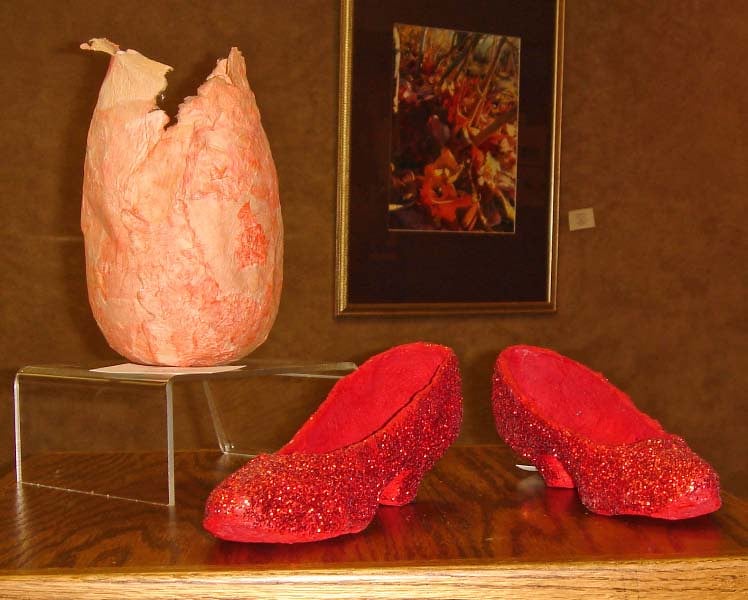
In August 2005, someone smashed a display case at the Judy Garland Museum in Grand Rapids, Minnesota, and stole a pair of ruby slippers worn by Garland in “The Wizard of Oz.” The crime seemed almost quaint compared to billion-dollar bank jobs.
Thirteen years later, the FBI recovered the slippers in a sting operation. The thief turned out to be Terry Jon Martin, a 77-year-old retired burglar with mob connections who had never actually watched the film.
He believed the sequins were real rubies and would be worth a fortune. When a fence told him they were just glass, he abandoned them.
In December 2024, the recovered slippers sold at auction for $32.5 million, setting a record for entertainment memorabilia.
Caravaggio’s Nativity
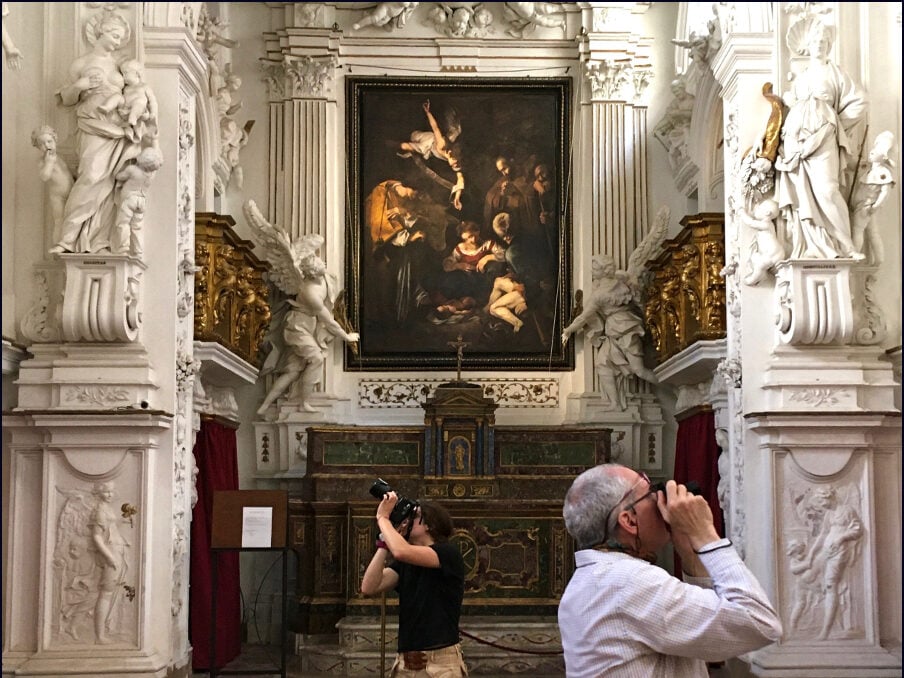
On the night of October 17-18, 1969, thieves cut Caravaggio’s “Nativity with St. Francis and St. Lawrence” from its frame in the Oratory of San Lorenzo in Palermo, Sicily. The masterpiece, dated between 1600 and 1609, depicted the birth of Christ in Caravaggio’s signature dramatic lighting.
The Sicilian Mafia is widely believed responsible, though confessions over the years have been contradictory. One former hitman claimed the painting was destroyed by pigs and rats while hidden in a farmhouse.
Another said it was burned in the 1980s. Some investigators still hold out hope it survives somewhere, with a 2018 informant claiming it was sold to a Swiss dealer.
If authentic and intact, experts estimate it would be worth $20 million or more. The Oratory now displays a high-quality reproduction commissioned in 2015.
The Brink’s-Mat Gold

Six armed men expecting to find £3 million in cash at a warehouse near London’s Heathrow Airport in November 1983 stumbled onto something much bigger: three tons of gold bullion worth £26 million. One of the security guards had tipped them off, not realizing the full scale of what was stored there.
The robbers threatened staff with petrol and lit matches to get vault combinations. They loaded 7,000 gold bars into a van and disappeared.
Most of the gold was melted down and sold, entering the legitimate gold market in ways that have never been fully traced. The heist spawned decades of violence, with multiple people connected to the case meeting violent ends.
Much of the gold is believed to have been laundered into London’s property market.
Stolen Dreams, Lasting Mysteries

Something ties these thefts together beyond the huge sums at play. Valuables tend to vanish without a trace, more than you’d think.
Recutting changes diamonds so they’re unrecognizable before resale. Melted down, gold loses its original form entirely.
Private collectors stash paintings away – gone from sight forever. Then there are items swallowed by myth, replaced only by blank walls and silence.
Something deep inside us still loves a good robbery tale. Running off with treasure feels thrilling, almost instinctive.
Real life does not follow that script though. Most thieves wind up behind bars. Priceless works vanish forever.
When art or history disappears, money cannot measure what we lose. Those figures listed next to stolen goods? They mean little.
The true weight sits elsewhere.
More from Go2Tutors!

- The Romanov Crown Jewels and Their Tragic Fate
- 13 Historical Mysteries That Science Still Can’t Solve
- Famous Hoaxes That Fooled the World for Years
- 15 Child Stars with Tragic Adult Lives
- 16 Famous Jewelry Pieces in History
Like Go2Tutors’s content? Follow us on MSN.