Most Fascinating Film Plot Twists Explained
There’s nothing quite like the feeling of watching a movie unfold, thinking you’ve got it all figured out, only to have the rug pulled out from under you in the final act.
A well-executed plot twist doesn’t just surprise you—it makes you want to immediately rewatch the entire film with fresh eyes.
The best twists are the ones that seem obvious in hindsight, where all the clues were hiding in plain sight the whole time.
From psychological thrillers to science fiction epics, cinema has given us some truly mind-bending revelations that have left audiences stunned.
Here are the most fascinating film plot twists that completely changed how we understood the story.
The Sixth Sense

Malcolm Crowe, the child psychologist played by Bruce Willis, was actually killed by his former patient Vincent Grey in the opening scene and remained dead throughout the entire film.
The revelation comes when Malcolm discovers his wedding ring in his wife’s hand as she sleeps, realizing he hasn’t been wearing it because he died that night.
The entire time he thought he was helping young Cole Sear deal with seeing ghosts, Malcolm himself was one of those spirits with unfinished business.
The Usual Suspects

Roger ‘Verbal’ Kint, portrayed as a meek con man with a limp throughout the film, is revealed to be Keyser Söze, the mysterious criminal mastermind everyone has been hunting.
The customs agent realizes too late that all the names and details from Kint’s elaborate story were pulled from random items around the interrogation room.
As Verbal walks out of the police station, his limp disappears and he drives away, leaving the detective to process that he’d just let the devil himself walk free.
Fight Club

Tyler Durden, the charismatic soap salesman played by Brad Pitt, doesn’t actually exist as a separate person—he’s a dissociative identity created by the unnamed narrator.
The film carefully conceals this by never showing other characters directly interacting with both men simultaneously.
When the narrator finally realizes the truth, it recontextualizes every scene in the movie, including all those moments where he thought Tyler was off doing things without him.
Planet of the Apes

Astronaut George Taylor discovers the ruins of the Statue of Liberty on a beach, revealing that the ‘alien’ planet he crash-landed on is actually Earth in the distant future.
Humanity had destroyed civilization through nuclear war, allowing apes to evolve into the dominant species.
That iconic shot of Charlton Heston pounding the sand in front of Lady Liberty’s torch remains one of cinema’s most powerful endings.
Oldboy

Oh Dae-su discovers he was manipulated into falling in love with and sleeping with Mi-do, who is revealed to be his own daughter.
His captor orchestrated this revenge because Dae-su had gossiped about him having an incestuous relationship in high school, which led to tragedy.
The revelation is gut-wrenching and elevates the film from a revenge thriller into something far more disturbing and morally complex.
Psycho

Norman Bates’ mother, who seems to be living in the house and committing murders, is actually dead—Norman himself has been dressing up as her and killing people while suffering from dissociative identity disorder.
Alfred Hitchcock pulled off something remarkable by making audiences believe they were watching a story about a troubled young man and his overbearing mother, when the truth was far darker.
The reveal in the basement, where we see Mother is just a preserved corpse, shocked 1960 audiences who’d never seen anything quite like it.
The Prestige

The film delivers two major twists about the rival magicians—Angier had been using a cloning machine to create duplicates of himself for his trick, killing a clone at each performance, while Borden had actually been a pair of identical twins sharing one life and identity.
Both men sacrificed everything for their craft, but in completely different ways.
The tragedy is that their obsessive rivalry destroyed them both, and the secrets they kept came at unbearable personal costs.
Se7en

The serial killer orchestrates his own arrest and execution as the final two acts of his seven deadly sins masterpiece—he becomes the victim representing envy, while forcing Detective Mills to become wrath by murdering him in retaliation for killing Mills’ wife.
The killer had Tracy’s severed head delivered in that infamous box, knowing exactly how Mills would react.
What makes this twist so devastating is that the detective becomes the very thing he’d been fighting against, completing the killer’s sick plan perfectly.
Shutter Island

Teddy Daniels isn’t actually a U.S. Marshal investigating a psychiatric facility—he’s Andrew Laeddis, a patient at that very institution who murdered his wife after she drowned their children.
The entire investigation was an elaborate role-play therapy designed by the staff to help him accept reality.
Every person he interviewed was actually a doctor or nurse playing along, hoping this last attempt at treatment might break through his delusions.
Parasite
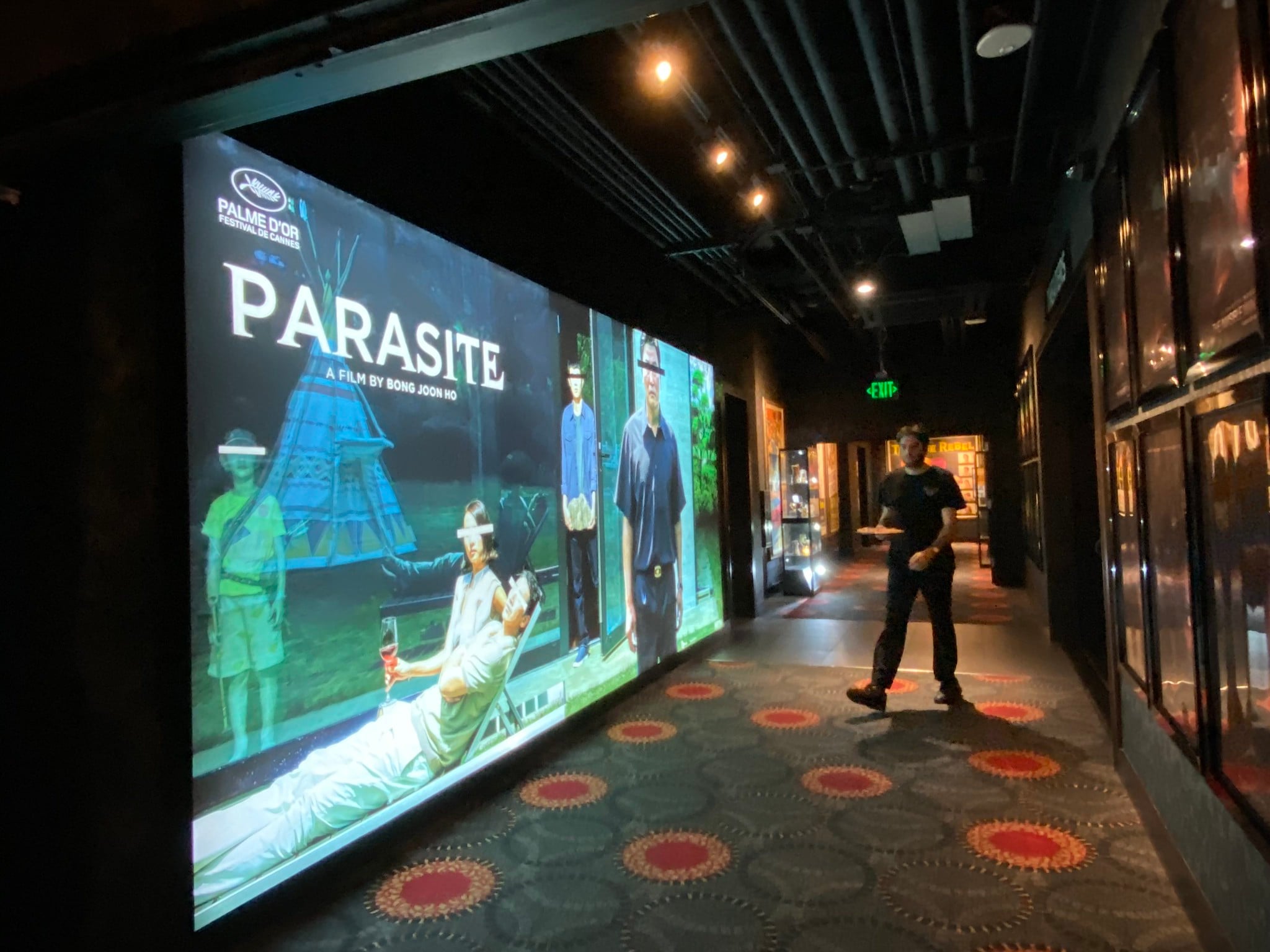
The seemingly perfect Park family home contains a hidden bunker where the former housekeeper’s husband has been secretly living for years.
What starts as a dark comedy about class and deception takes a sharp turn when this discovery leads to violent confrontation.
The basement dweller represents the lowest rung of society that the Parks don’t even know exists beneath their feet, both literally and metaphorically.
Get Out

Rose’s seemingly progressive family isn’t just uncomfortable around Black people—they’ve been kidnapping and lobotomizing Black victims, transplanting white people’s consciousnesses into their bodies through a hypnosis-based surgery called the Coagula procedure.
Chris realizes that Rose has done this before with other boyfriends, and he’s just the latest victim selected for harvest.
Jordan Peele turned the horror of microaggressions into something far more sinister and literal.
The Others

Grace and her children aren’t being haunted by ghosts—they are the ghosts, having died long ago while the living family moving into the house can sense their presence.
The twist flips the entire haunted house narrative on its head.
All those mysterious servants who appeared to help them were also spirits, and Grace slowly comes to terms with the reality that she suffocated her children before taking her own life.
Arrival

Dr. Louise Banks isn’t experiencing flashbacks of her daughter who died from disease—they’re actually flashforwards, visions of a future that hasn’t happened yet.
Learning the alien language grants her a non-linear perception of time, allowing her to experience her entire life simultaneously.
She knows her daughter will die young but chooses to have her anyway, embracing both the joy and the inevitable pain that comes with loving someone.
Gone Girl

Amy didn’t disappear because she was murdered by her husband Nick—she meticulously staged her own disappearance to frame him for her murder as revenge for his infidelity and their failing marriage.
The film transforms from a mystery about a missing woman into a psychological thriller about a brilliant sociopath orchestrating the perfect revenge.
Amy’s diary entries and evidence were all carefully crafted lies, and she had been planning this for months.
Incendies

The twins discover their father and long-lost brother are the same person—their mother was imprisoned and assaulted by a man who turned out to be her own son from a previous relationship.
Denis Villeneuve’s film delivers one of cinema’s most haunting revelations about the cyclical nature of violence and trauma.
The journey to uncover their family history leads to a truth almost too terrible to bear, connecting decades of war and suffering in the most personal way imaginable.
How These Twists Changed Cinema

These fifteen films demonstrate how a properly executed twist can elevate a movie from merely good to genuinely unforgettable.
M. Night Shyamalan once explained that a good twist should give audiences ‘the keys to say, this is how to interpret everything that you watched’.
The best plot twists don’t feel cheap or unearned—they make audiences want to immediately rewatch the film to catch all the clues that were there from the beginning.
They’ve influenced countless filmmakers and set the bar for what surprise storytelling can achieve when done with skill and purpose.
More from Go2Tutors!

- The Romanov Crown Jewels and Their Tragic Fate
- 17 Halloween Costumes Once Considered Taboo
- Famous Hoaxes That Fooled the World for Years
- 15 Child Stars with Tragic Adult Lives
- 16 Famous Jewelry Pieces in History
Like Go2Tutors’s content? Follow us on MSN.