Most Incredible Feats by Modern Athletes
Athletic achievement used to feel distant, almost mythical. You’d hear about records broken decades ago and wonder if anyone could ever push those boundaries again.
But modern athletes haven’t just matched their predecessors — they’ve shattered what seemed possible and kept going. The human body, it turns out, had more to give than anyone imagined.
Usain Bolt’s 9.58 Second 100-Meter Dash
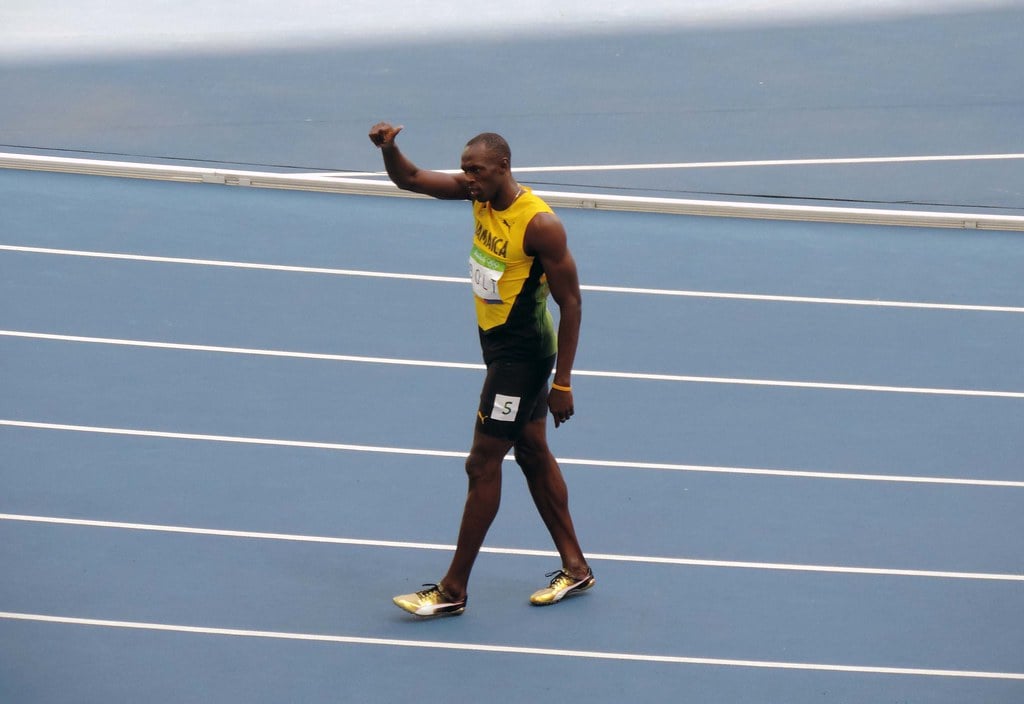
Bolt didn’t just run fast. He redefined what fast means. 9.58 seconds for 100 meters at the 2009 World Championships in Berlin — a record that still stands and may stand for decades more.
The gap between Bolt and everyone else wasn’t marginal. It was a canyon.
Watch the footage and you’ll see him pull away from world-class sprinters like they’re standing still.
Eliud Kipchoge Breaking the Two-Hour Marathon

Running 26.2 miles in under two hours was considered physiologically impossible until Kipchoge did it in Vienna in 2019. The feat required perfect conditions, rotating pacemakers, and specialized shoes, but even with every advantage, it still demanded a human body operating at the absolute edge of what’s possible.
His time: 1:59:40. The barrier wasn’t just broken — it was obliterated by 20 seconds.
Katie Ledecky’s 800-Meter Freestyle Dominance

Swimming is a sport measured in hundredths of seconds, where races are typically decided by a fingertip or a stroke. And then there’s Katie Ledecky in the 800-meter freestyle, who doesn’t just win — she wins by entire pool lengths while setting world records that seem to come from a different sport entirely.
Her world record time of 8:04.79 is more than eight seconds faster than the second-best time in history. In swimming terms, that’s not a margin. That’s a different universe.
Simone Biles Defying Gravity
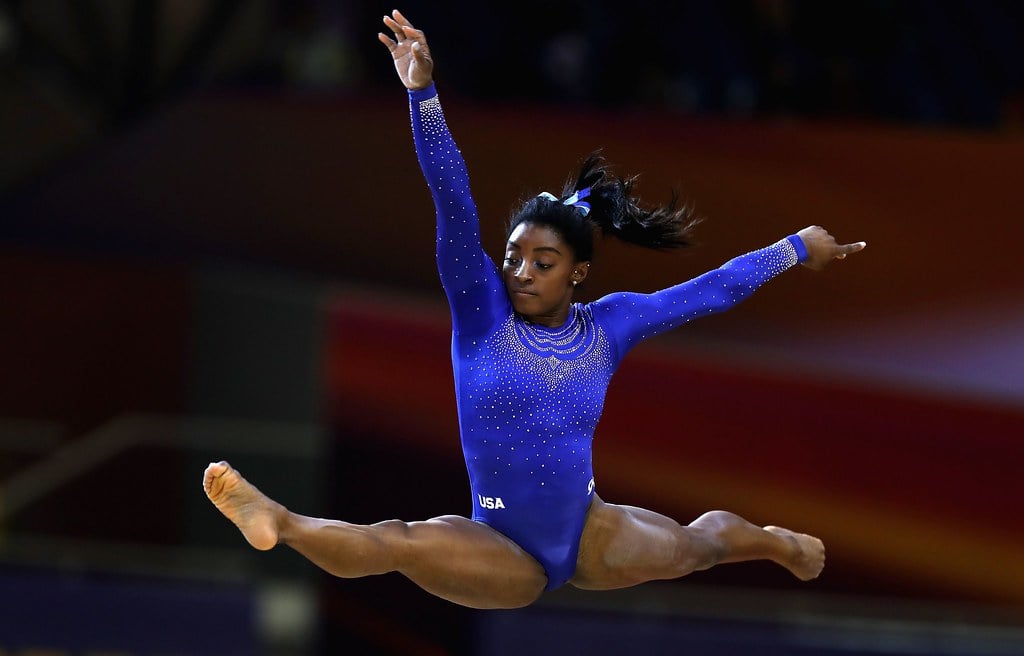
Gymnastics has rules about what moves are too dangerous to attempt (they’re literally banned from competition because they could kill you), but watching Simone Biles perform, you start to wonder if gravity applies to her the same way it applies to everyone else. Her floor routine doesn’t just incorporate flips and twists — it seems to pause mid-air, as if the laws of physics are taking a moment to reconsider their position on the matter.
The Yurchenko double pike vault she performs is so difficult and dangerous that even if other gymnasts could physically execute it (which they can’t), most wouldn’t dare try. But for Biles, it’s just Tuesday.
So she lands it perfectly, because of course she does, and the crowd loses their collective mind while she shrugs and moves on to the next impossible thing. And yet there’s something almost matter-of-fact about how she approaches these death-defying maneuvers — like someone who’s discovered that the rules everyone else follows are more like suggestions, and fairly negotiable ones at that.
Michael Phelps’ 23 Olympic Gold Medals
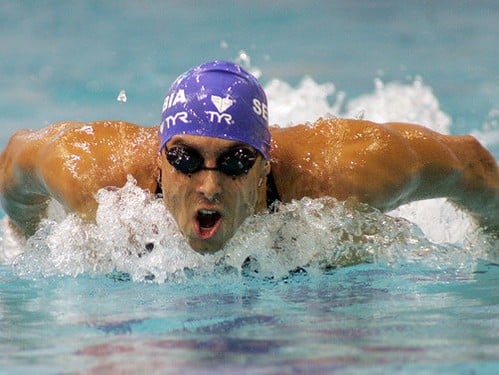
The numbers around Michael Phelps stop making sense after a while. Twenty-three Olympic gold medals.
Eight gold medals in a single Olympics. World records that stood for years until he broke them again.
But the real achievement isn’t the medals — it’s the relentless, mechanical perfection he brought to every race for over a decade. Swimming at that level requires your body to become a machine, and Phelps built himself into the most efficient machine the sport has ever seen.
Serena Williams’ Tennis Domination While Pregnant

Most athletes retire when their bodies can no longer perform at peak level. Serena Williams won the Australian Open in 2017 while eight weeks pregnant, then came back after giving birth and made it to four Grand Slam finals.
She didn’t just compete — she dominated, proving that athletic excellence isn’t confined to traditional timelines. The Australian Open victory stands as one of the most remarkable athletic achievements in history, though Williams didn’t reveal the pregnancy until months later.
LeBron James’ Longevity

Father Time is undefeated in professional sports. Athletes peak, decline, and retire — it’s the natural order. LeBron James looked at this timeline and decided it didn’t apply to him.
At 39, he’s still playing at an All-Star level in a sport that typically chews up and spits out players by their mid-30s. The man has played more NBA minutes than almost anyone in history, yet continues to post numbers that would be impressive for players half his age.
His body seems to have found a way to opt out of the aging process, which would be annoying if it weren’t so remarkable.
Tom Brady’s Seven Super Bowl Wins

Tom Brady collected Super Bowl rings the way most people collect parking tickets — regularly and with an almost casual efficiency that bordered on the absurd. Seven championships across 22 seasons, including one at age 43 when most quarterbacks are long retired and coaching youth football.
The New England Patriots dynasty was impressive enough, but then Brady moved to Tampa Bay and immediately won another Super Bowl, just to prove the magic wasn’t tied to one team or system. It was just him, stubbornly refusing to acknowledge that winning championships was supposed to get harder with age.
Cristiano Ronaldo’s Goal-Scoring Consistency

Scoring goals at the highest level of soccer requires perfect timing, positioning, and a bit of luck. Doing it consistently for two decades across different leagues, teams, and continents approaches the supernatural.
Cristiano Ronaldo has scored over 850 career goals and shows no signs of slowing down at 39. What sets Ronaldo apart isn’t just the quantity — it’s the variety and the stage on which he’s delivered them.
Champions League finals, World Cups, clutch moments when everything is on the line. The man seems to thrive on pressure in ways that make other elite athletes look nervous.
Diana Taurasi’s Basketball Excellence

Diana Taurasi has been the best women’s basketball player in the world for so long that it’s easy to forget how extraordinary that consistency is. Five Olympic gold medals, three WNBA championships, and a scoring record that may never be broken.
Her longevity in a physically demanding sport is remarkable, but what’s more impressive is how she’s maintained her competitive edge well into her 40s. Taurasi doesn’t just play — she still dominates games with a basketball IQ that seems to improve with age.
Novak Djokovic’s Mental Fortitude
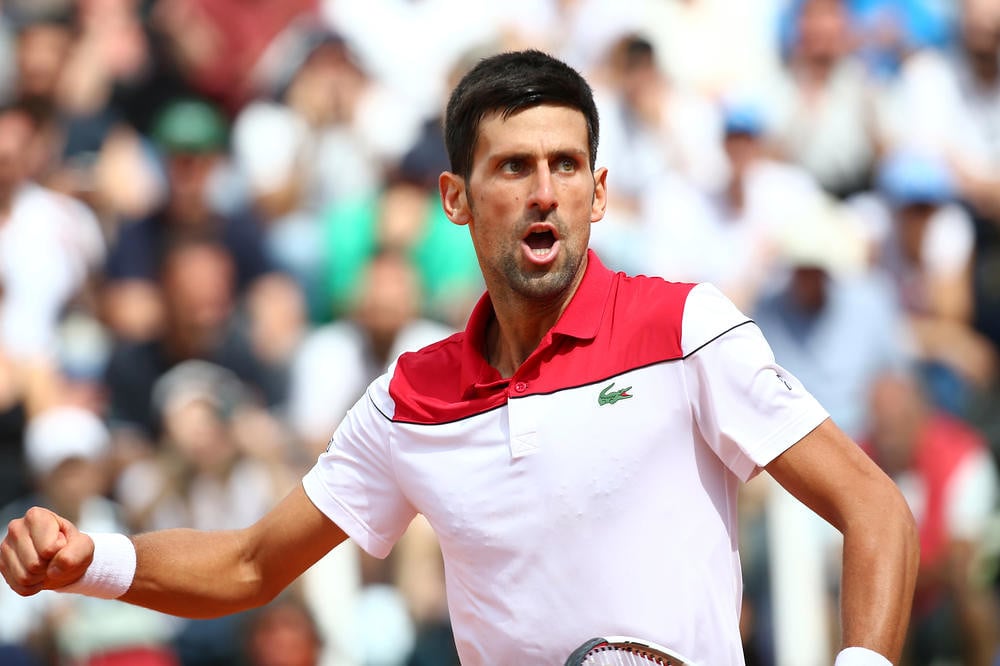
Tennis matches can last five hours, swinging momentum back and forth until one player’s mind breaks before their body does. Novak Djokovic has turned mental resilience into an art form, winning matches from impossible positions with a calmness that borders on the eerie.
His Australian Open dominance — winning the tournament 10 times — showcases not just physical ability but an almost supernatural capacity to perform under pressure when everything is falling apart.
Wayne Gretzky’s Hockey Records
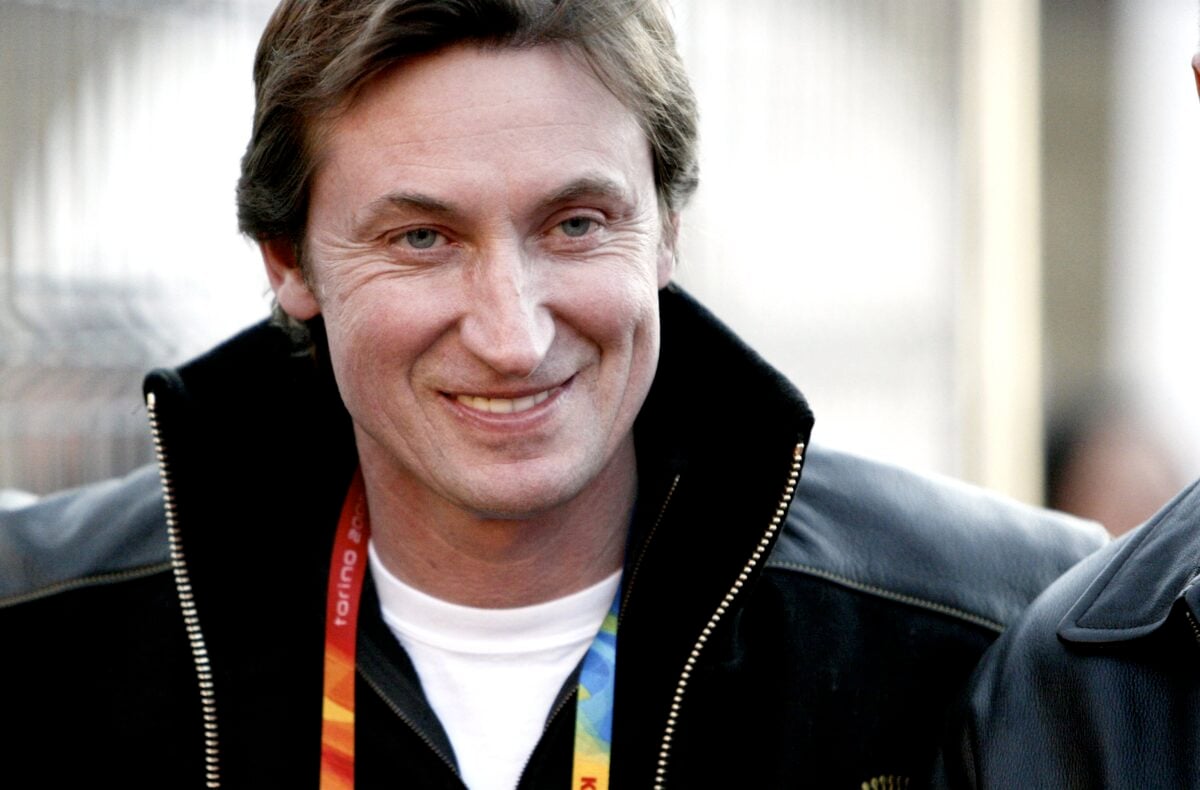
Wayne Gretzky’s records in hockey aren’t just impressive — they’re mathematically absurd. He scored more assists than any other player scored total points. If he had never scored a single goal, he would still be the NHL’s all-time leading scorer based on assists alone.
The numbers are so outlandish they read like typos: 2,857 career points, 894 goals, 1,963 assists. These aren’t records that will be broken someday — they’re monuments to what happens when natural talent meets obsessive dedication.
J. Rice’s NFL Receiving Records
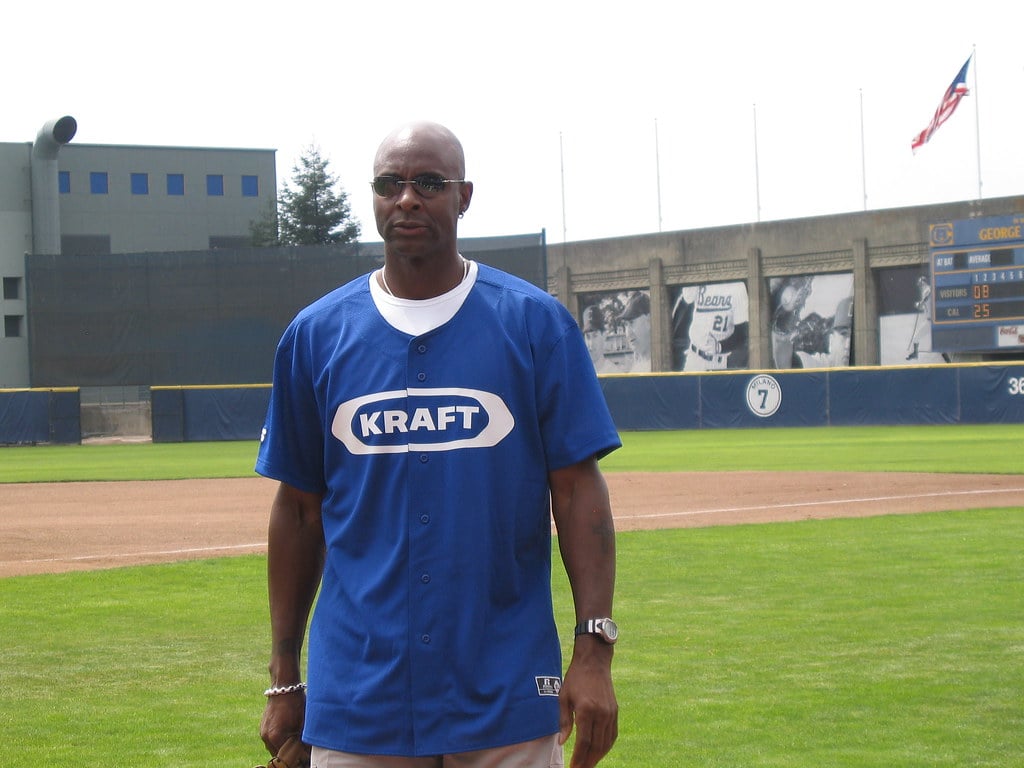
J. Rice caught 1,549 passes for 22,895 yards and 197 touchdowns over 20 NFL seasons. The second-place receiver in career receptions has 400 fewer catches.
Rice’s records aren’t just safe — they’re untouchable, existing in their own statistical stratosphere. What made Rice special wasn’t just his hands or his route-running, though both were perfect.
It was his approach to the game, treating every practice like a championship and every catch like it mattered. That level of consistency over two decades produced numbers that look fictional.
When Human Becomes Superhuman

These achievements share something beyond their individual brilliance — they represent moments when athletic performance transcended what we thought bodies could do. Each record wasn’t just a new number but an expansion of human possibility, proof that the limits we accept are often just limits we haven’t figured out how to break yet.
More from Go2Tutors!

- The Romanov Crown Jewels and Their Tragic Fate
- 13 Historical Mysteries That Science Still Can’t Solve
- Famous Hoaxes That Fooled the World for Years
- 15 Child Stars with Tragic Adult Lives
- 16 Famous Jewelry Pieces in History
Like Go2Tutors’s content? Follow us on MSN.



