Most Valuable U.S. Stamps
One moment they’re stuck on an envelope, next they’re worth a fortune. Printed by the million, bought for pennies, tossed without thought – this was their purpose.
Still, a few American stamps slipped past ordinary fate. Instead of vanishing into mailbags, they became keepsakes.
Not postage anymore, but pieces of time pressed flat. Some now sit behind glass, priced like paintings or ancient letters found in attics.
It’s not flashy design or rare release that sets these stamps apart. Over time, worth built up through chance events, small print batches, how few survived, plus the quiet work of those who saw meaning early on.
A single instant defines each top U.S. stamp – where press limits, country shifts, and someone’s missed detail came together. From coast to coast, stamp collecting grew as the nation built its roads and rails.
With every new post route cutting through wild frontier land, postage stamps stood for unity amid sprawl. Certain issues arrived when postal designers tried bold ideas without clear rules.
Meanwhile, others appeared as factories boomed and cities swelled overnight. A rare few gained attention after mistakes slipped past inspectors – tiny errors frozen in print forever.
Peeking into which American stamps now fetch top dollar reveals more than just price tags. What keeps them expensive isn’t always obvious at first glance.
Some carry rare printing slips that only surfaced years later. Others owe their worth to how few were saved when issued.
A twist in postal rules once made one design vanish quickly. Another gained status because its image was pulled almost immediately after release.
Condition plays a role, yes, but so does timing. When collectors began chasing certain issues, demand quietly built up.
Markets shifted without fanfare. Now these pieces sit far above where they started.
Not every valuable stamp has a dramatic backstory – some simply survived less than expected.
Inverted Jenny
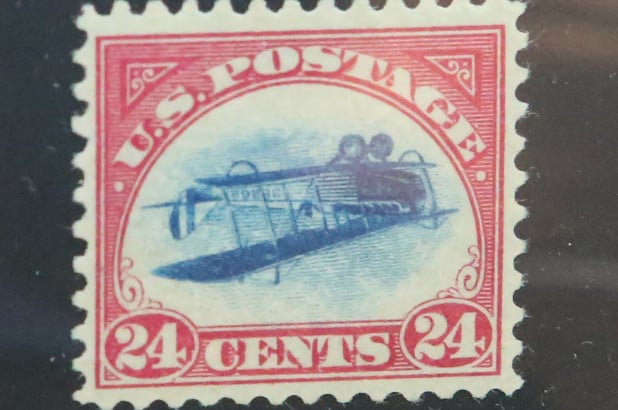
The Inverted Jenny stands as the most recognizable U.S. stamp ever created, not because it was designed to stand out, but because it was never supposed to exist in its final form. Issued in 1918 to commemorate the introduction of U.S. airmail service, the stamp features a biplane printed upside down within its decorative border.
The mistake was the result of a production error during a period when stamps were printed in multiple stages. Only one sheet of 100 inverted stamps reached the public before the issue was corrected.
That limited escape gave the Inverted Jenny a fixed population, which has remained stable for more than a century. Each known example can be traced back to that original sheet, giving the stamp a documented lineage rarely matched in collectibles.
Over time, individual Jennys have changed hands for astonishing sums, particularly those in exceptional condition or with notable ownership histories. Still, its lasting appeal lies in its clarity.
The error is obvious, the story is complete, and the historical context is unmistakable. It represents early aviation, government experimentation, and a rare moment when a mistake became permanent.
1868 George Washington Z Grill
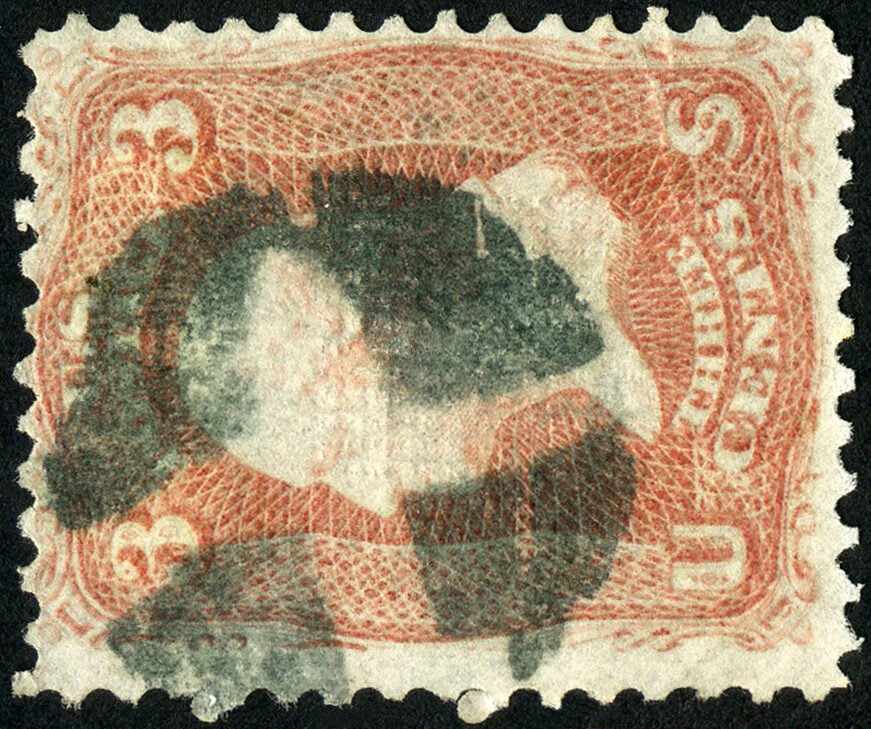
If the Inverted Jenny is dramatic and instantly recognizable, the George Washington Z Grill from 1868 represents the opposite end of the spectrum. Its importance is subtle, technical, and rooted in near-total scarcity.
The stamp looks ordinary to the untrained eye, bearing a familiar portrait of Washington. Its significance lies beneath the surface. The grill was an embossed pattern pressed into the paper to prevent stamps from being reused.
Several grill types were tested, but the Z Grill configuration was employed briefly before being abandoned. Today, only two confirmed examples of the Z Grill stamp are known to exist.
One resides in an institutional collection, effectively removed from the market. The other has appeared in private transactions valued among the highest ever recorded for a U.S. stamp.
Its worth is not based on visual novelty but on certainty. With so few examples, and extensive documentation supporting their authenticity, the Z Grill occupies a position of absolute rarity that is unlikely to ever be challenged.
1847 Franklin and Washington Issues
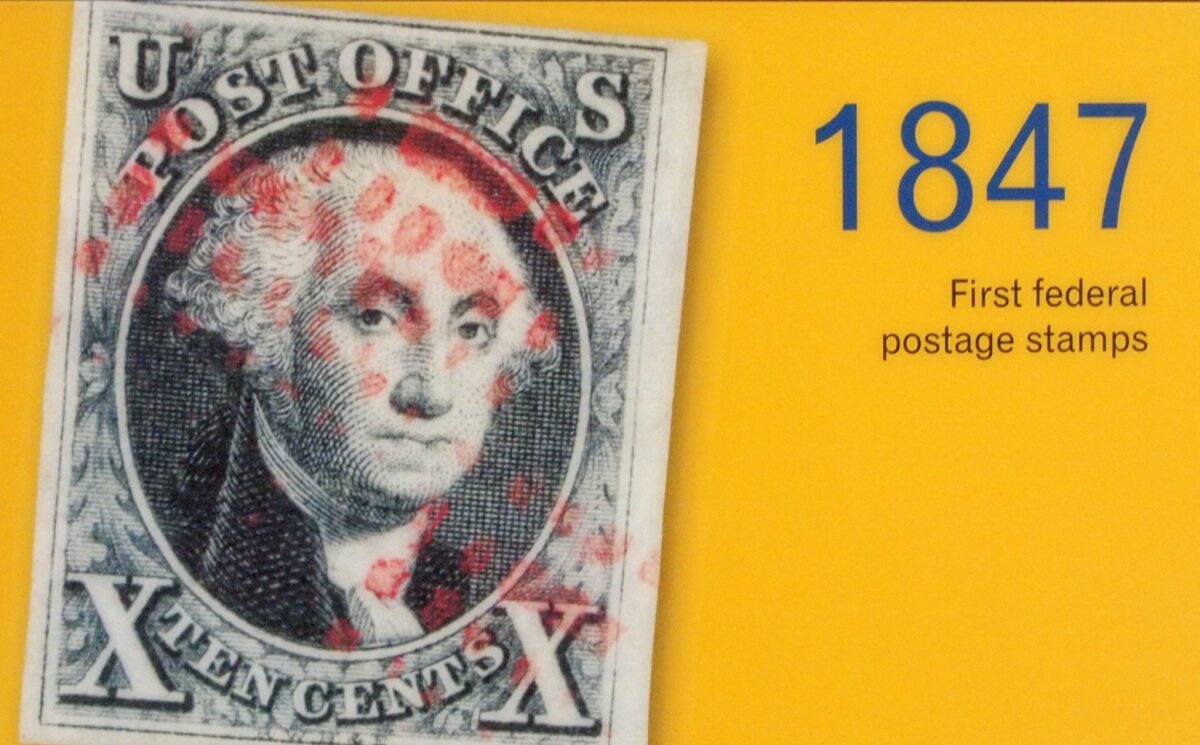
The first official U.S. postage stamps, issued in 1847, occupy a foundational place in American postal history. Featuring Benjamin Franklin and George Washington, these stamps marked the beginning of a standardized national system.
Before their introduction, postage costs varied widely depending on distance and location, often creating confusion and inconsistency. These early stamps were printed in limited quantities compared to later issues, and few survived in pristine condition.
The most valuable examples today are unused copies with original adhesive intact, a rare circumstance given their age and intended purpose. Even slight handling marks can significantly reduce value.
That said, their importance extends beyond condition. These stamps symbolize the moment when communication across hundreds of miles became more reliable and accessible.
They reflect a young nation formalizing how it connected its citizens, businesses, and institutions, giving them enduring historical weight.
1875 Reissues
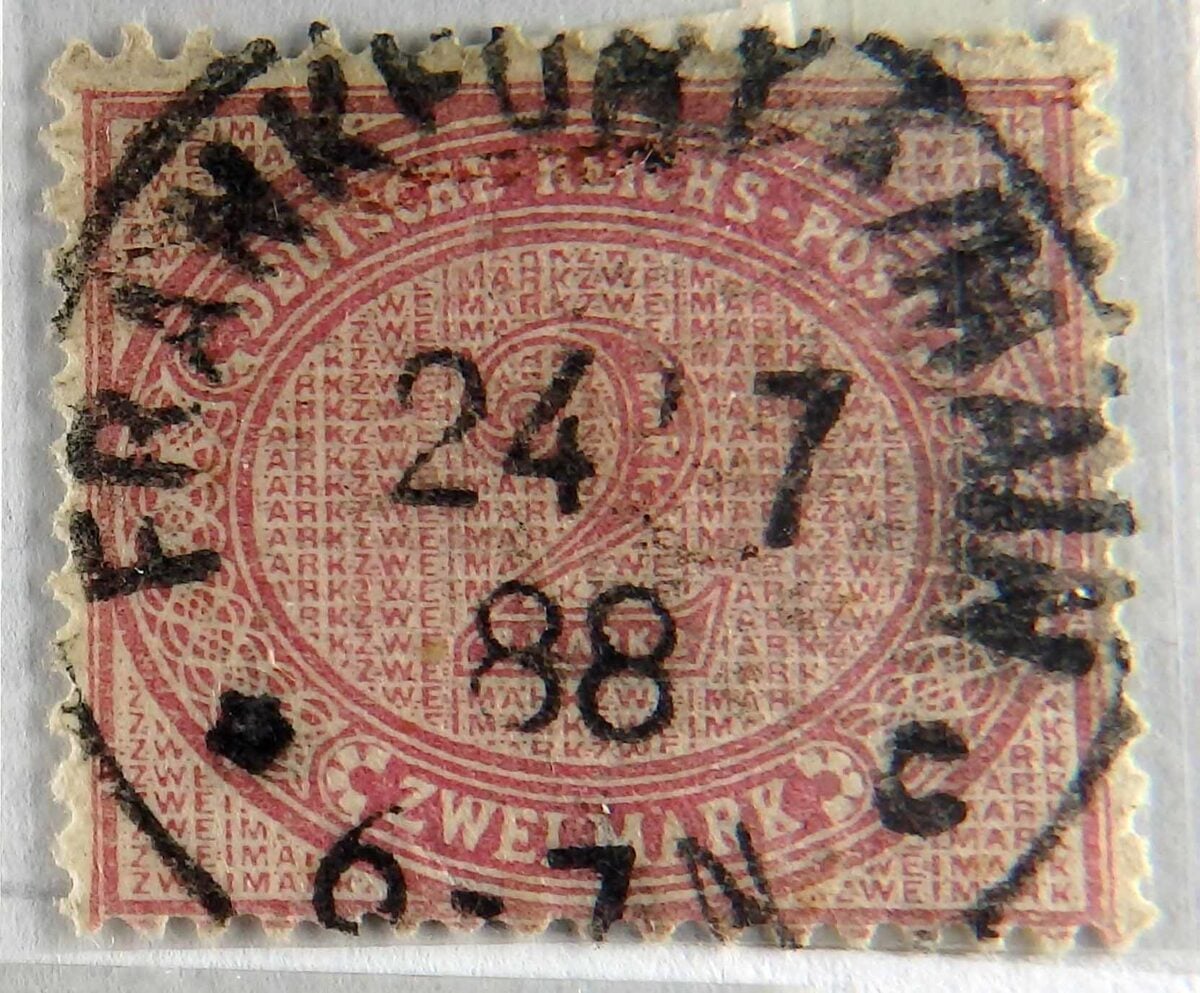
The 1875 reissues represent a curious chapter in U.S. stamp history. Unlike earlier stamps, these were not produced primarily for postal use.
Instead, they were created to satisfy growing interest among collectors, using original printing plates from earlier designs. As a result, they occupy a unique space between historical artefacts and deliberate preservation.
Ironically, because they were not widely used, fewer were distributed than many older stamps. Most were acquired by collectors at the time, and many were stored carefully, which explains why surviving examples often appear in excellent condition today.
Their value relies heavily on documentation and authenticity. Since they were printed long after the designs they replicate, clear records are essential.
When properly verified, these reissues offer a rare glimpse into how early stamp collecting influenced government decisions and acknowledged the cultural value of postal history.
1901 Pan-American Inverts
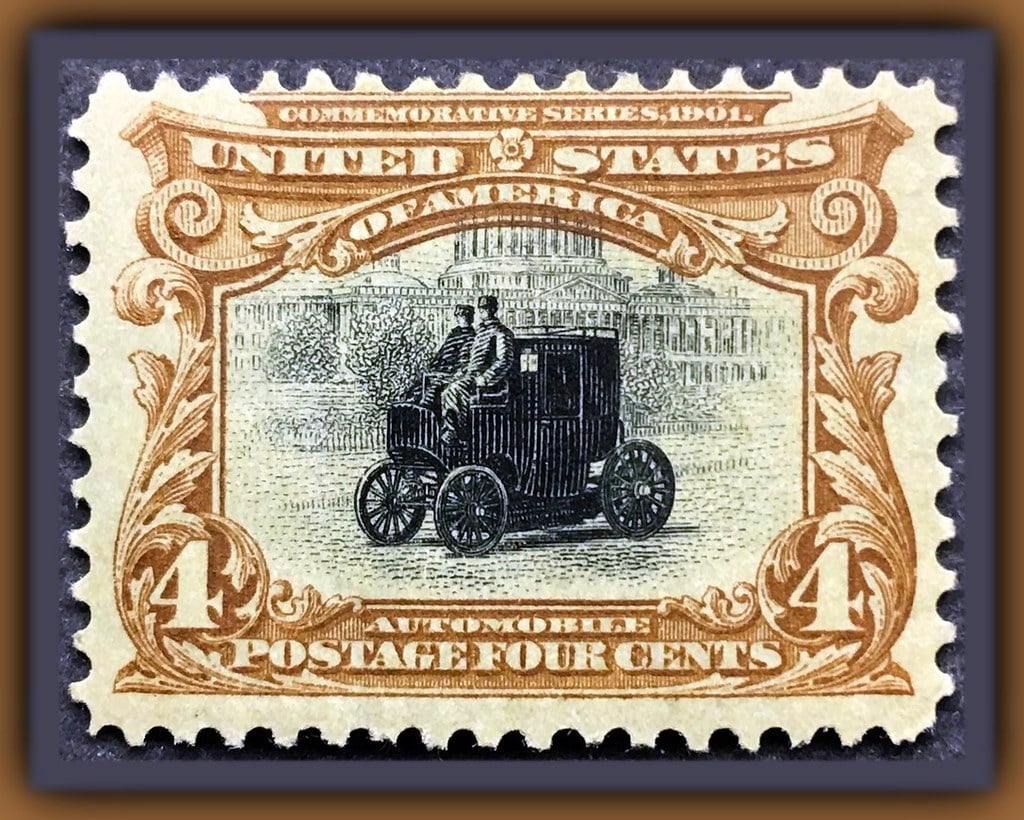
The Pan-American Exposition stamps of 1901 celebrated progress, engineering, and transportation at the turn of the century. Featuring images of trains and ships, they reflected a nation confident in its industrial momentum.
During production, a small number were printed with their central images inverted, creating some of the earliest known U.S. invert errors. These stamps predate the Inverted Jenny and helped establish the idea that printing mistakes could become highly desirable.
While their values do not reach the same heights, they remain important for their historical role and relative scarcity. On the other hand, their appeal is more restrained.
They are appreciated less for spectacle and more for what they represent: a period of optimism preserved through unintended variation. Their continued desirability underscores how early collectors recognized significance long before market values followed.
Condition, Rarity, and Provenance
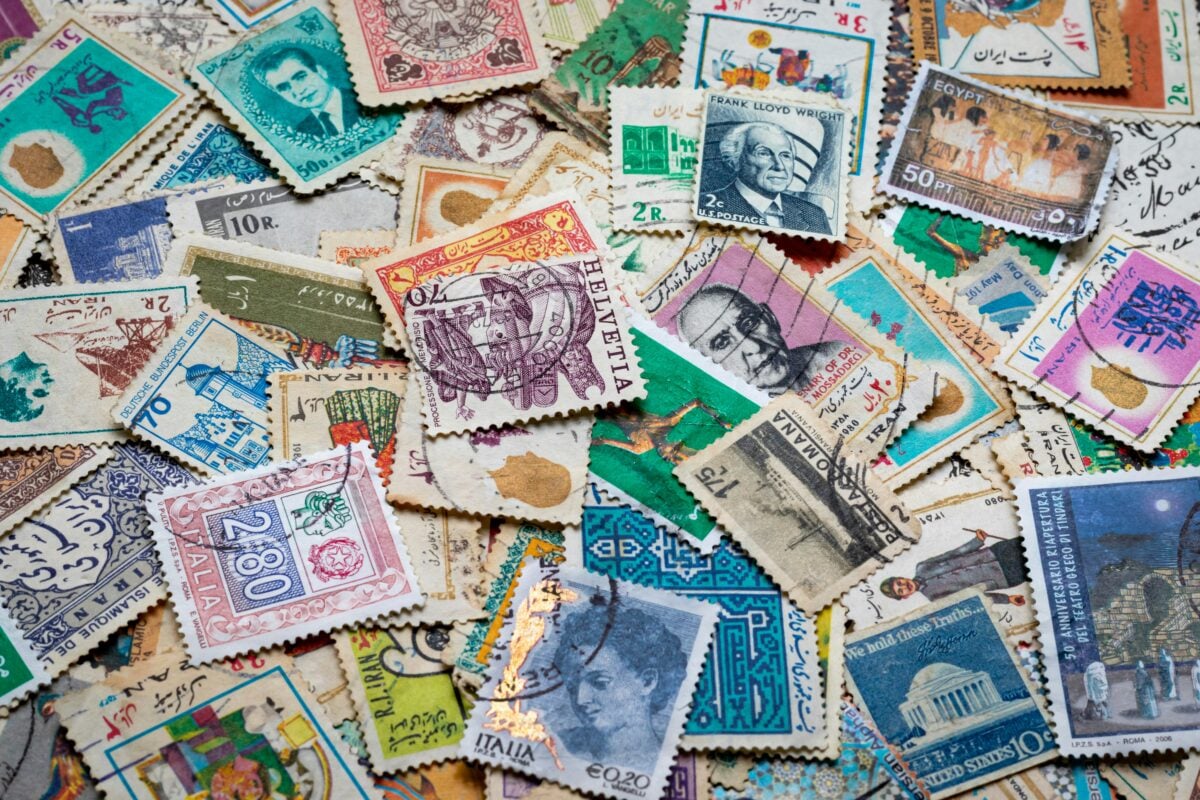
Across all high-value U.S. stamps, condition remains a decisive factor. Centering, paper quality, color clarity, and the absence of repairs are scrutinized closely.
Two stamps printed from the same plate can differ dramatically in value based on these details alone. Provenance plays an equally important role.
A stamp with a well-documented ownership history carries additional credibility and appeal. Records linking a stamp to prominent collections or early discoveries often enhance value by reinforcing authenticity and continuity.
Still, rarity sets the ceiling. No amount of preservation can elevate a common stamp into elite territory.
The most valuable U.S. stamps exist at the intersection of scarcity, documentation, and historical context, with each reinforcing the other.
Why These Stamps Still Matter
Old letters often hold more than memories. Though seen as outdated, chasing rare American stamps stays oddly popular.
Not because they’re trendy but because fingers can touch them – unlike emails or texts. Each one shows how mail moved across states before smartphones existed.
Paper proof of roads built, towns linked, messages sent by train instead of server. Paper means more than ink to today’s collectors.
Not just saved scraps, but pieces of stories that rode trains and trucks across vast distances – spreading word, trade, letters. Each mile covered gives the stamp weight, something screens can’t copy.
The trip it took lives inside its edges. Worth now isn’t just about rarity.
Quiet influence matters too – how small things slipped into daily routines without noise. History sticks around because folks keep reaching for it, turning pieces over in their hands.
Meaning won’t fade while connection does. These American stamps stay relevant simply by being held close.
More from Go2Tutors!

- The Romanov Crown Jewels and Their Tragic Fate
- 13 Historical Mysteries That Science Still Can’t Solve
- Famous Hoaxes That Fooled the World for Years
- 15 Child Stars with Tragic Adult Lives
- 16 Famous Jewelry Pieces in History
Like Go2Tutors’s content? Follow us on MSN.