Mysteries of Science and History That’s Already Solved
The world feels full of unsolvable puzzles. Ancient civilizations that vanished without explanation, natural phenomena that defy understanding, historical events shrouded in conspiracy theories.
Yet many mysteries that once baffled scholars for decades have quietly found their answers. The solutions often turn out to be more fascinating than the original enigma, revealing how human curiosity and scientific persistence can crack even the most enduring riddles.
The Dancing Plague of 1518

The townspeople of Strasbourg began dancing uncontrollably in July 1518. They couldn’t stop.
Within days, hundreds joined the involuntary choreography — and some literally danced themselves to death from exhaustion.
For centuries, historians puzzled over what caused an entire community to lose control of their bodies. Was it mass hysteria? Poisoned grain? Divine punishment? The answer, when it finally emerged, combined psychology with medieval social conditions in ways nobody expected.
Antikythera Mechanism
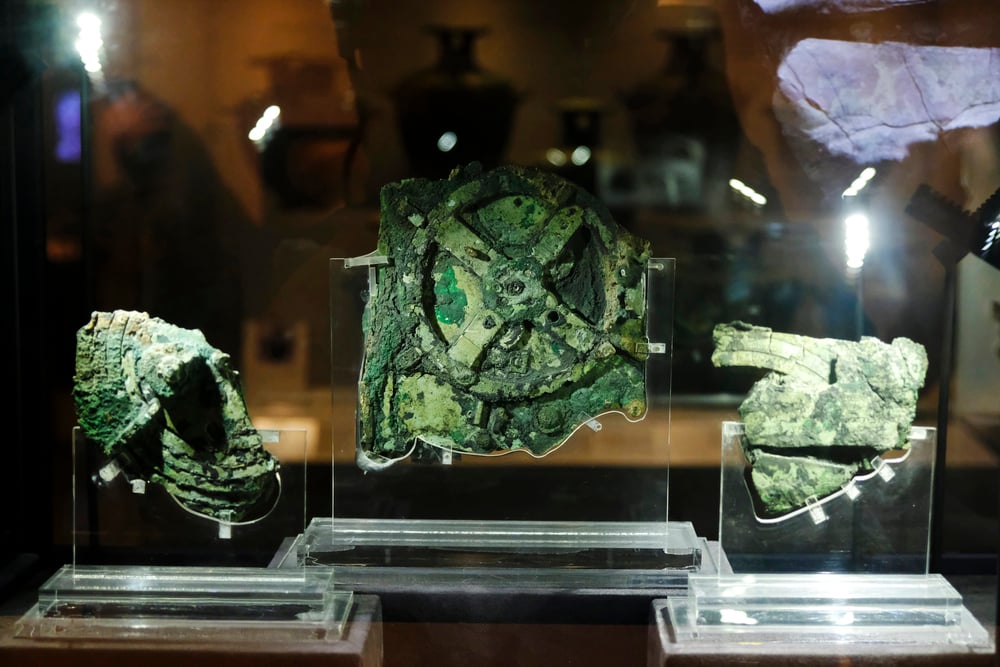
Greek divers found corroded bronze gears on the seafloor in 1901. The device looked impossibly complex for something over 2,000 years old — too advanced for ancient Greece, too intricate to be decorative.
Scientists spent a century arguing about what it was supposed to do.
X-ray technology eventually revealed the truth (and it was humbling for anyone who assumed ancient civilizations were technologically primitive). The Greeks had built a computer.
Not metaphorically — an actual analog computer that calculated planetary positions, predicted eclipses, and tracked the Olympic Games schedule.
The engineering was so sophisticated that nothing comparable would appear again until astronomical clocks emerged in medieval Europe, more than a thousand years later.
Easter Island Statues

Picture this: nearly a thousand stone heads scattered across a remote Pacific island, most facing inland as if watching over something that’s no longer there. For generations, the moai seemed like monuments to a civilization that had mysteriously collapsed — perhaps the result of ecological disaster or internal warfare that left behind only these silent sentinels.
But the real mystery wasn’t why the statues were there (that part was always clear from Polynesian oral traditions). The puzzle was how a Stone Age society moved 900 multi-ton sculptures across the island without wheels, large animals, or sophisticated machinery.
The answer, when researchers finally tested it, was both elegant and obvious: they walked them. Ropes and coordinated rocking motions allowed teams to “walk” the statues upright across the landscape — the same way you might move a refrigerator by tilting and pivoting it.
The oral tradition had been saying this all along (“the statues walked”), but outsiders assumed it was metaphorical.
The Bermuda Triangle
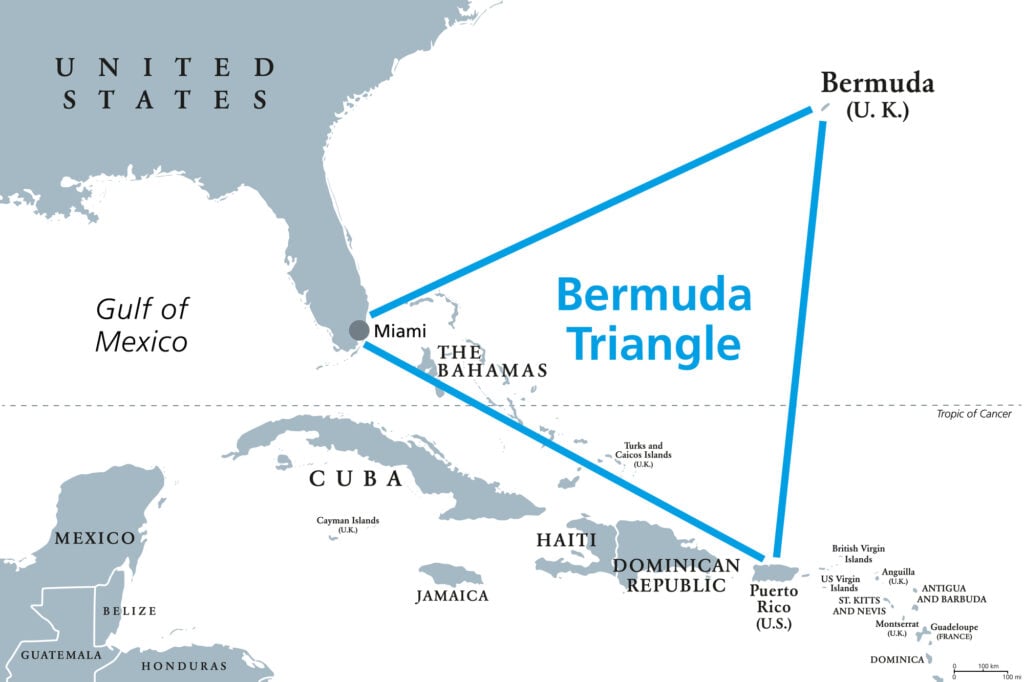
Ships and planes vanish without a trace in a triangular patch of Atlantic Ocean. No wreckage, no distress signals, no survivors to tell the tale.
The Bermuda Triangle became shorthand for inexplicable disappearance — a place where the normal rules of physics apparently didn’t apply. Theories ranged from magnetic anomalies to underwater alien bases.
The truth turned out to be statistical analysis and confirmation bias. When researchers actually examined maritime records, the Bermuda Triangle had no higher rate of incidents than any other heavily trafficked shipping lane.
The “mystery” evaporated under scrutiny, which is less dramatic but ultimately more reassuring for anyone who flies to the Caribbean.
Tunguska Event
Something flattened 2,000 square kilometers of Siberian forest in 1908. Trees fell in a radial pattern, but no crater marked the epicenter.
The explosion was heard 1,000 kilometers away, yet no meteor fragments were ever recovered.
For decades, the Tunguska event fed speculation about everything from antimatter to crashed spacecraft (it didn’t help that the site was so remote that scientific expeditions didn’t reach it for years). The answer emerged gradually as atmospheric physics advanced: an asteroid had indeed hit Earth, but it exploded in mid-air rather than striking the ground.
The airburst released energy equivalent to 1,000 Hiroshima bombs — enough to level a forest without leaving a traditional impact crater. Tunguska was our first documented example of an atmospheric explosion, a phenomenon that’s now understood to be more common than ground impacts for smaller asteroids.
The Mary Celeste
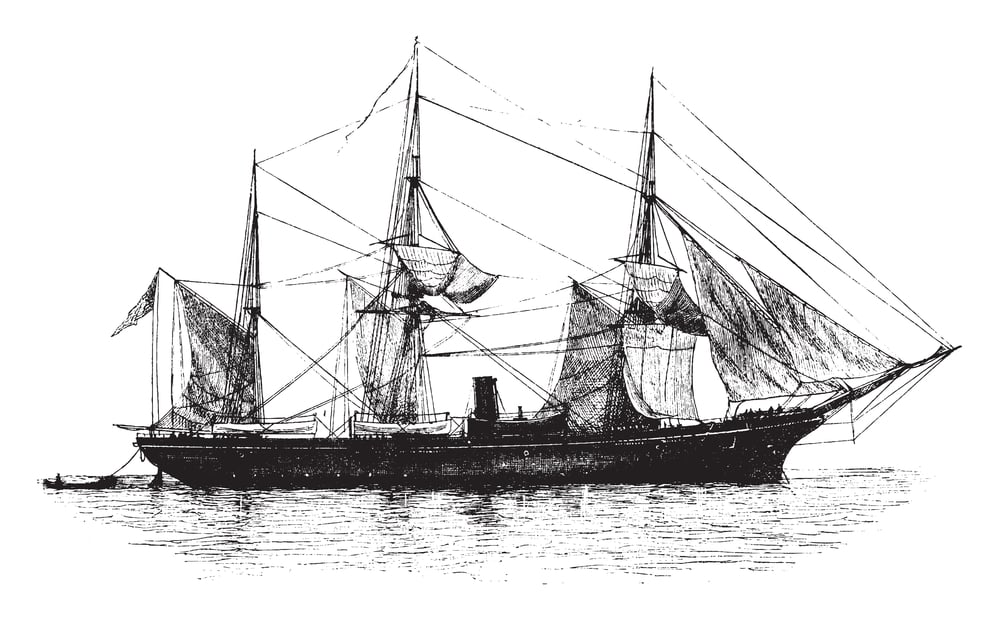
The Mary Celeste became the gold standard for maritime mysteries — so mysterious, in fact, that Arthur Conan Doyle wrote fiction about it (which unfortunately muddied the historical waters even further). But the solution, when maritime experts finally pieced it together, involved the ship’s cargo: industrial alcohol in wooden barrels.
A few barrels had leaked, creating potentially explosive fumes in the hold. The captain likely ordered everyone into the lifeboat temporarily while the ship aired out, planning to re-board once it was safe.
Weather conditions or a severed towline would have separated them from the ship — turning a reasonable safety precaution into an apparently supernatural disappearance.
Roanoke Colony
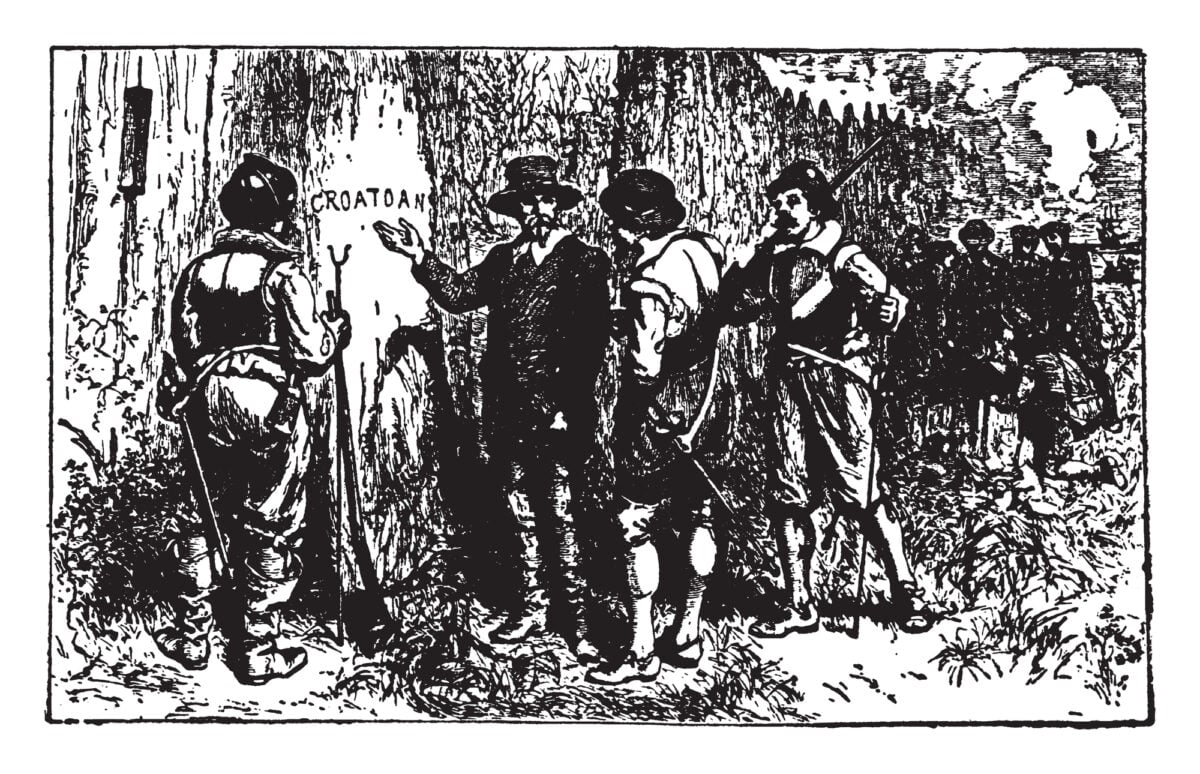
The word “Croatoan” carved into a post was the only clue left by 115 English colonists who vanished from North Carolina sometime between 1587 and 1590.
The Lost Colony became America’s foundational mystery — what happened to an entire settlement during the early years of English colonization? Recent archaeological evidence has provided a much less dramatic but more plausible answer: they integrated with local Native American communities.
DNA analysis of regional tribes shows European markers consistent with Roanoke colonist ancestry, and artifacts have been found at sites matching the description of where the colonists said they might relocate if conditions required it. The “disappearance” was actually successful adaptation to local conditions — exactly what you’d expect from pragmatic people trying to survive in an unfamiliar environment.
The Wow! Signal
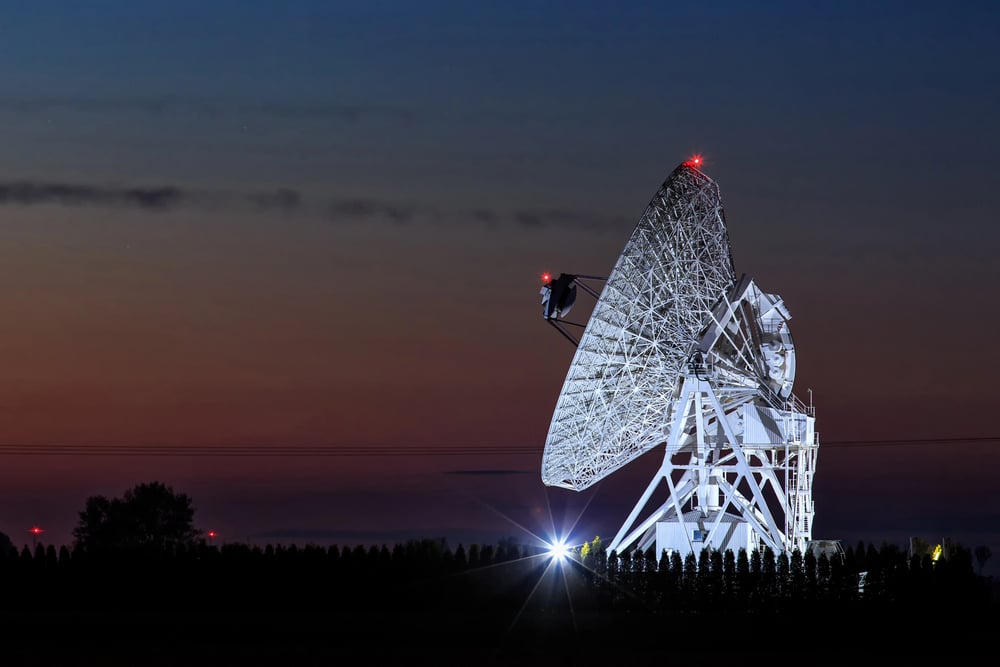
On August 15, 1977, a radio telescope in Ohio detected a signal so unusual that astronomer J. Ehman wrote “Wow!” in the margin of the printout. The signal was precisely the frequency scientists expected from extraterrestrial intelligence, but it never repeated.
For 40 years, SETI researchers considered the Wow! Signal the most compelling evidence for alien communication — a tantalizing one-time contact that couldn’t be confirmed or dismissed. A leading hypothesis, proposed decades later, suggests hydrogen clouds around comets such as Comet 266P/Christensen could have produced the signal, but this explanation remains unconfirmed and debated among astronomers.
The true cause of the Wow! Signal remains unknown. The aliens turned out to be ice and rock, which is somehow both disappointing and elegant.
The Nazca Lines
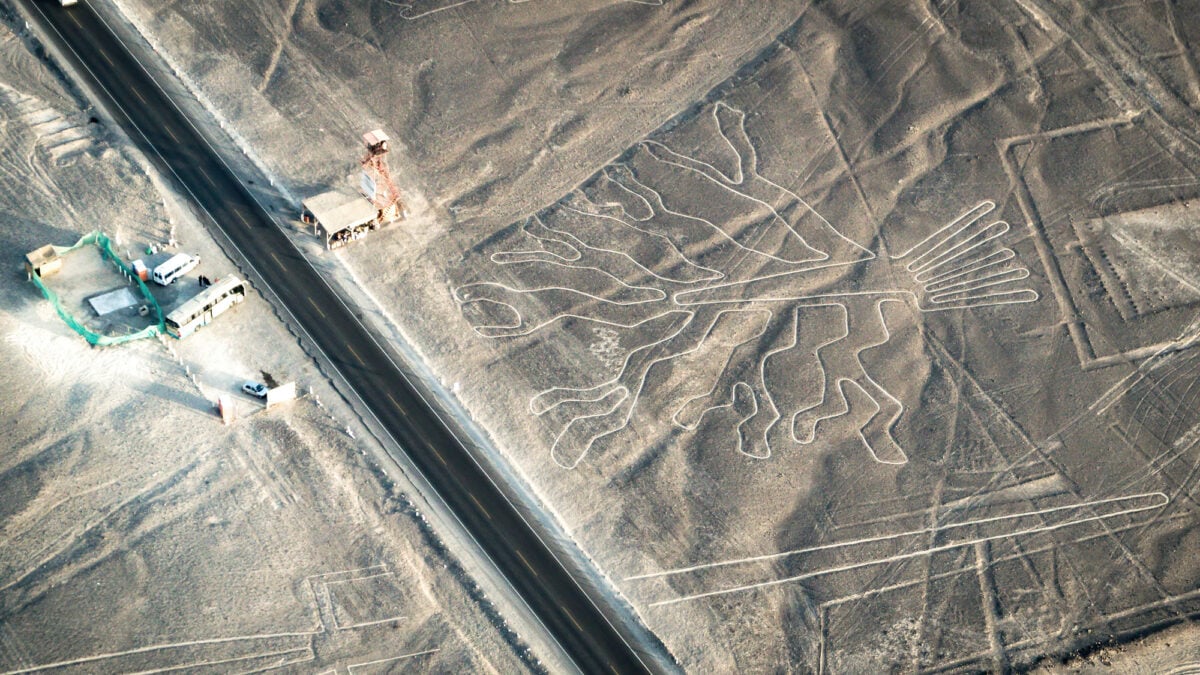
Massive drawings etched into the Peruvian desert, visible only from the air. Animals, geometric shapes, and human figures created by a civilization that had no aircraft.
The lines seemed impossible without aerial perspective — how could ground-based people create accurate images meant to be viewed from above? This led to theories involving ancient astronauts or lost technologies.
The actual method was methodical and ingenious: the Nazca people used a grid system and scale models to transfer small designs into large-scale geoglyphs. They could check their work by climbing nearby hills, then make adjustments as needed.
No extraterrestrial assistance required — just careful planning and mathematical thinking applied to artistic expression.
Spontaneous Human Combustion

Bodies found burned beyond recognition in rooms with minimal fire damage. Furniture untouched, walls unscorched, but human remains reduced to ash in a way that seemed to defy physics.
Cases of spontaneous human combustion puzzled investigators because the destruction seemed localized in ways that violated everything known about how fires spread. The solution involved understanding how human fat burns under specific conditions.
When a body catches fire (usually from an external source like a cig), clothing and skin can act as a wick while body fat provides sustained fuel — creating an effect similar to a candle that burns very hot but doesn’t spread beyond its wax. Add in factors like limited mobility (many victims were elderly or impaired) and reduced oxygen flow in closed rooms, and the “spontaneous” combustion becomes a tragic but scientifically explicable process.
The Bloop

Deep ocean hydrophones detected a sound in 1997 unlike anything in acoustic databases. The Bloop was too loud to be biological, too organic to be geological, and too deep to be man-made.
Marine biologists and oceanographers spent years trying to identify what could produce such a massive, low-frequency sound in the deep Pacific. Theories ranged from unknown species of giant squid to underwater volcanic activity.
The answer came from glaciologists rather than marine biologists: ice. Specifically, large icebergs breaking away from Antarctic ice shelves and scraping along the ocean floor. The sound was indeed massive in scale — but it was frozen water, not sea monsters, creating the mysterious audio signature that had puzzled scientists for over a decade.
The Green Children of Woolpit

Two children with green-tinted skin appeared in an English village sometime in the 12th century, speaking an unknown language and refusing to eat anything but beans.
Medieval chroniclers recorded the story as fact, but historians struggled to explain how two children could appear with no known origin and such unusual characteristics. The most likely explanation involves a combination of malnutrition and arsenic exposure.
Children from a nearby Flemish immigrant community could have developed green-tinged skin from eating plants high in arsenic (a side effect of certain types of soil contamination), and their “foreign” language would have sounded incomprehensible to English villagers. The bean preference makes sense if they were suffering from malnutrition — beans would have been gentler on compromised digestive systems than the medieval English diet of heavy breads and meats.
When the Pieces Fall Together

The pattern repeats itself: mysterious disappearances explained by practical decisions, supernatural phenomena revealed as natural processes, ancient impossibilities solved by underestimating human ingenuity. These solutions don’t diminish the original mysteries — they redirect wonder toward the methodical work of figuring things out.
Sometimes the most satisfying answer is discovering that people in the past were exactly as clever as people today, just working with different tools.
More from Go2Tutors!

- The Romanov Crown Jewels and Their Tragic Fate
- 13 Historical Mysteries That Science Still Can’t Solve
- Famous Hoaxes That Fooled the World for Years
- 15 Child Stars with Tragic Adult Lives
- 16 Famous Jewelry Pieces in History
Like Go2Tutors’s content? Follow us on MSN.