Myths About Famous Explorers Debunked
History textbooks love a good hero story. Brave explorer ventures into the unknown, discovers new lands, and returns home triumphant.
These narratives stick in your memory from elementary school onward. But many popular beliefs about famous explorers contain significant errors, exaggerations, or outright fabrications.
The real stories often prove more interesting than the myths.
Columbus Didn’t Prove the Earth Was Round

People in Columbus’s time already knew the Earth was spherical. Ancient Greek scholars had figured this out over a thousand years earlier.
Educated Europeans in the 1400s understood basic geography and never believed the Earth was flat. Columbus’s actual problem was math.
He miscalculated the Earth’s circumference and thought Asia sat much closer to Europe than it actually does. The Spanish court’s advisors rejected his initial proposal because their calculations were correct and his were wrong.
Columbus got lucky when he stumbled upon the Americas instead of dying in the vast ocean crossing he’d underestimated.
Marco Polo Probably Never Went to China
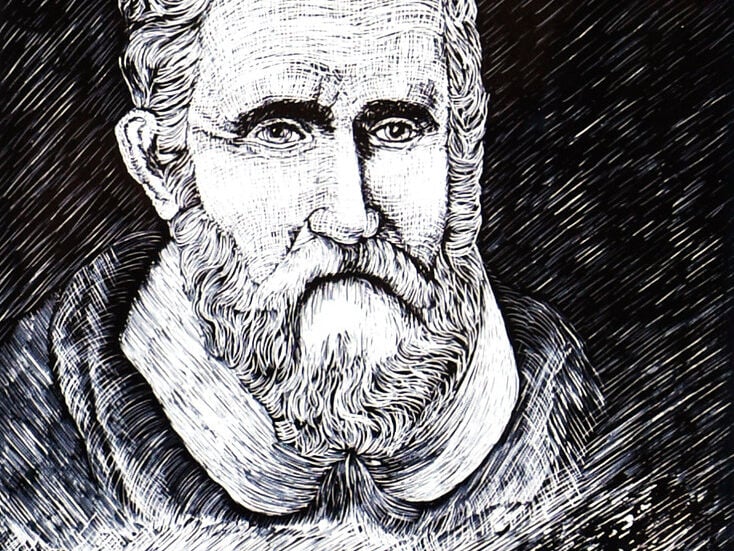
This one upsets people who grew up admiring Marco Polo. But historians now question whether he actually traveled to China at all.
His famous account lacks crucial details that any visitor would notice—no mention of the Great Wall, Chinese tea culture, or bound feet. He never learned Chinese despite supposedly spending 17 years there.
His descriptions match those found in Persian travel accounts available in Venice at the time. Marco Polo likely traveled partway along the Silk Road, heard stories from other merchants, and compiled their accounts into his book.
He may have reached Persia or Central Asia at most. The book still influenced European geography for centuries, even if the author never reached his claimed destination.
Magellan Didn’t Circumnavigate the Globe

Ferdinand Magellan gets credit for the first circumnavigation, but he died in the Philippines before the journey finished. He made it less than halfway around. His crew completed the voyage without him.
Only 18 men from the original expedition of about 270 survived to return to Spain. Juan Sebastián Elcano captained the Victoria during the final leg and deserves recognition as the first person to actually sail around the world.
Magellan also didn’t discover the Strait of Magellan through brilliant navigation. Local people already used that passage and his crew found it by following their routes.
The expedition’s real achievement was proving that sailing around the globe was possible, despite the catastrophic death toll.
Leif Erikson Didn’t Discover America

Vikings reached North America around 1000 CE, about 500 years before Columbus. But Leif Erikson wasn’t the first Viking to spot the continent.
Bjarni Herjólfsson sighted the coast first, though he never went ashore. Erikson heard Bjarni’s stories and decided to investigate.
Even then, Erikson probably wasn’t the first Norse explorer to land there—he just gets the most attention in surviving sagas. More importantly, Indigenous peoples had lived in the Americas for at least 15,000 years before any Europeans arrived.
Framing any European explorer as discovering America erases the millions of people already living there. The Viking voyages matter for understanding European exploration history, but they didn’t discover an empty continent.
Lewis and Clark Had Lots of Help

The Lewis and Clark expedition often gets portrayed as two men bravely mapping the wilderness. In reality, they traveled with a large group that included soldiers, boatmen, and interpreters.
Sacagawea, a Shoshone woman, played a crucial role as translator and guide. Her presence signaled peaceful intentions to tribes they encountered.
Her knowledge of edible plants kept the expedition fed during difficult stretches. Numerous Native American tribes provided directions, food, horses, and geographical information throughout the journey.
Without this assistance, the expedition would have failed. Lewis and Clark deserve credit for organization and leadership, but they weren’t lone heroes conquering the wild.
They succeeded because they accepted help and built relationships with people who knew the land.
Ponce de León Wasn’t Seeking the Fountain of Youth

Juan Ponce de León explored Florida in 1513, but he wasn’t looking for magical waters that granted eternal youth. That story appeared decades after his death, possibly invented by Spanish historians with a flair for drama.
Ponce de León was actually searching for gold and new lands to govern. He’d heard reports of wealthy islands north of Cuba and wanted to claim them. The Fountain of Youth myth probably mixed together several different stories about Spanish explorers and Native American legends.
It makes for better storytelling than “conquistador wanted to expand Spanish territory and find gold,” but it has no basis in Ponce de León’s actual writings or documented intentions.
Vasco da Gama Wasn’t the First European in India
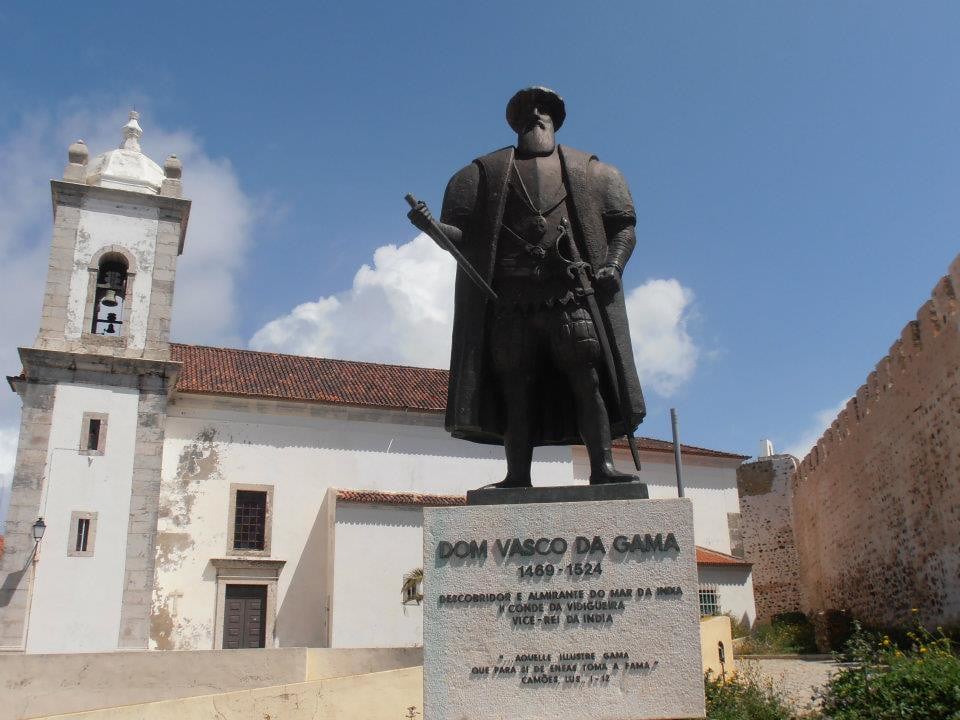
Da Gama’s 1498 voyage to India opened a sea route from Europe and changed global trade forever. But he wasn’t the first European to reach India.
Traders and travelers had been moving between Europe and India for thousands of years via land routes. Romans bought Indian spices and textiles.
Medieval Europeans knew about India through the silk trade.
Da Gama’s achievement was finding a sea route around Africa, which bypassed the Ottoman-controlled land routes. This gave Portugal direct access to Asian markets without dealing with middlemen.
The voyage transformed economics and politics, but it didn’t introduce two continents that had never heard of each other.
Captain Cook Didn’t Discover Hawaii

James Cook reached Hawaii in 1778 and claimed discovery for Britain. The Polynesian people who lived there had quite a different perspective.
They’d inhabited the islands for over a thousand years. Their ancestors had navigated thousands of miles of open ocean using sophisticated knowledge of stars, currents, and bird migrations.
They’d discovered Hawaii long before any Europeans.
Cook’s maps introduced Hawaii to European geographers, which had real consequences for the islands. But framing this as discovery ignores the advanced maritime culture that had already explored and settled the Pacific.
The Polynesians were expert navigators who’d accomplished ocean crossings that would terrify most European sailors of the same era.
Amerigo Vespucci Didn’t Name America After Himself

Two continents bear Amerigo Vespucci’s name, but he didn’t lobby for that honor. A German cartographer named Martin Waldseemüller created a world map in 1507 and labeled the new continent “America” based on Vespucci’s accounts of his voyages.
Vespucci had written popular letters describing the lands as a separate continent, not part of Asia as Columbus believed. Vespucci himself died in 1512, likely unaware that continents would eventually carry his name.
He never claimed the discovery or suggested the naming. The choice came from a mapmaker who admired his writings.
By the time anyone might have objected or suggested alternatives, maps with “America” had spread too widely to change.
Ernest Shackleton’s Trans-Antarctic Expedition Was a Failure
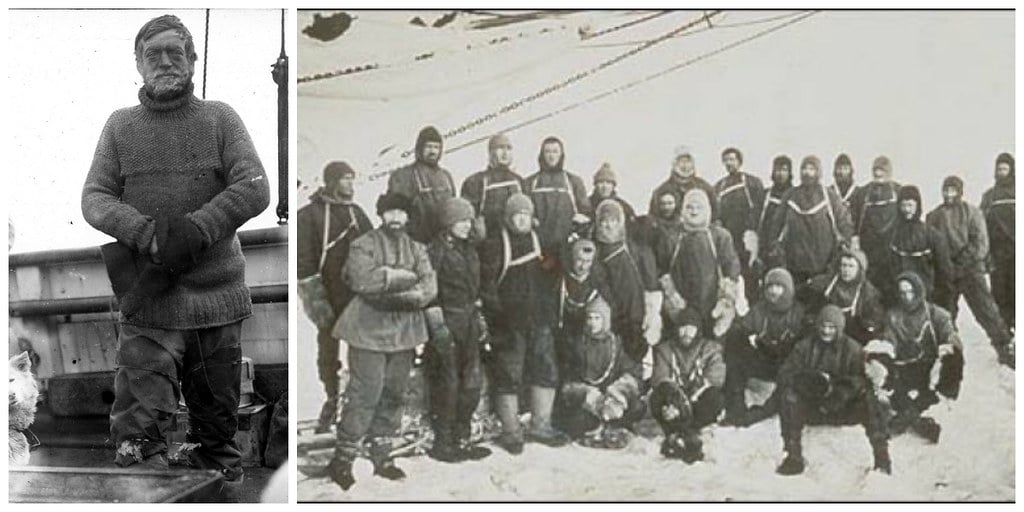
Shackleton’s attempt to cross Antarctica failed spectacularly when his ship Endurance got trapped in ice and sank. The expedition never completed its intended mission.
Shackleton never crossed the continent. Yet his reputation soared because of what happened after the disaster.
He kept all 27 crew members alive for nearly two years under brutal conditions. The journey to South Georgia Island in a small boat through hurricane-force winds ranks among the most impressive feats of seamanship in history.
Modern business books treat Shackleton as a leadership icon specifically because he failed at his original goal but succeeded at the more important task of bringing everyone home alive. The myth isn’t that he succeeded—it’s that failure diminishes his achievement.
Roald Amundsen Didn’t Win the Race to the South Pole Fairly

Amundsen reached the South Pole first in 1911, beating Robert Falcon Scott by over a month. Some accounts frame this as Amundsen playing dirty by keeping his Antarctic plans secret.
But exploration wasn’t a formal competition with rules. Amundsen changed his destination from the North Pole after learning someone else had already reached it.
He didn’t owe Scott advance notice. The real issue was preparation.
Amundsen studied Inuit survival techniques, used dog sleds, and planned meticulously. Scott relied on technology that failed in extreme cold and made poor decisions about supplies.
Amundsen won because he prepared better, not because he cheated. Scott’s expedition ended in tragedy, but that doesn’t make Amundsen’s success illegitimate.
Ibn Battuta Probably Exaggerated His Travels

Ibn Battuta claimed to have traveled over 75,000 miles across the Islamic world and beyond during the 14th century. His account describes visits to almost every Muslim territory of his time.
But scholars now doubt he went everywhere he claimed. Some descriptions contain errors that suggest he borrowed from other travelers’ stories.
Certain timeline details don’t add up. Ibn Battuta definitely traveled extensively—probably farther than most people of his era.
But his account reads partly as a compilation of travel literature rather than pure autobiography. This doesn’t diminish his importance to medieval Islamic geography.
It just means you should read his work as a mix of personal experience and received wisdom, not a precise travel log.
Zheng He’s Treasure Fleets Didn’t Reach America
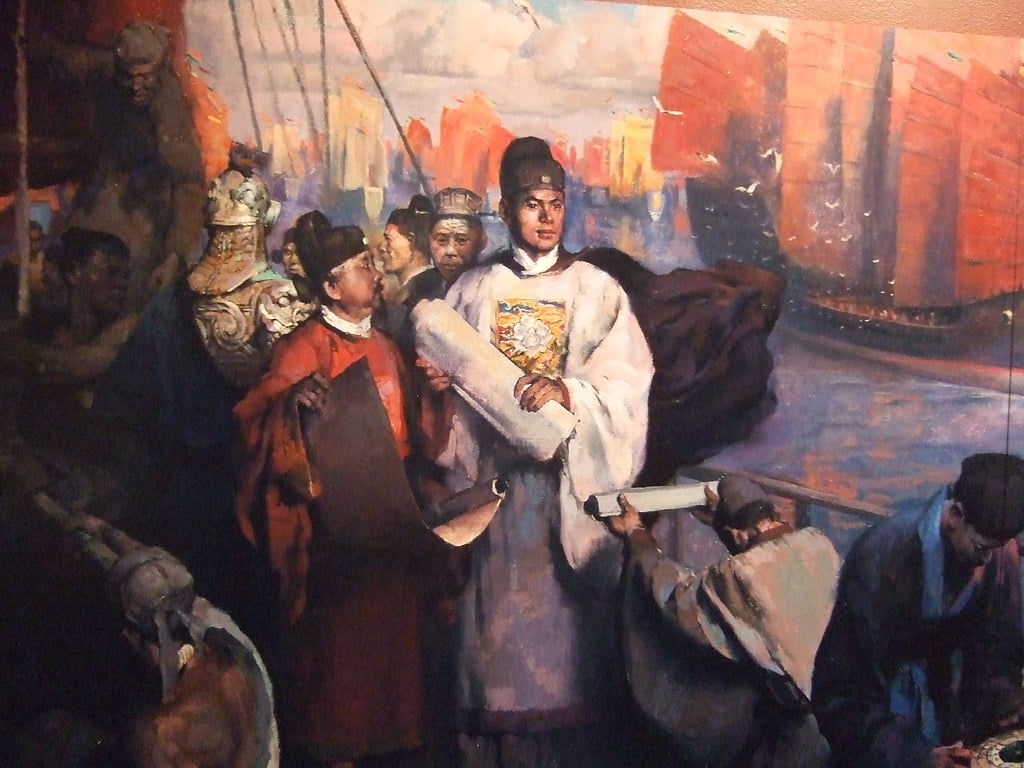
Zheng He commanded massive Chinese fleets during the early 1400s, decades before Columbus. These fleets visited Southeast Asia, India, the Persian Gulf, and East Africa.
Some writers claim Zheng He reached the Americas based on controversial map interpretations. Historians and archaeologists find no credible evidence for this.
The maps cited as proof contain numerous problems and probable forgeries. Zheng He’s actual voyages were impressive enough without adding fictional destinations.
His ships dwarfed European vessels of the same period. The fleets projected Chinese power across the Indian Ocean and established diplomatic relationships throughout Asia and Africa.
Making unsupported claims about American voyages distracts from what the treasure fleets actually accomplished.
Sir Walter Raleigh Never Visited Virginia
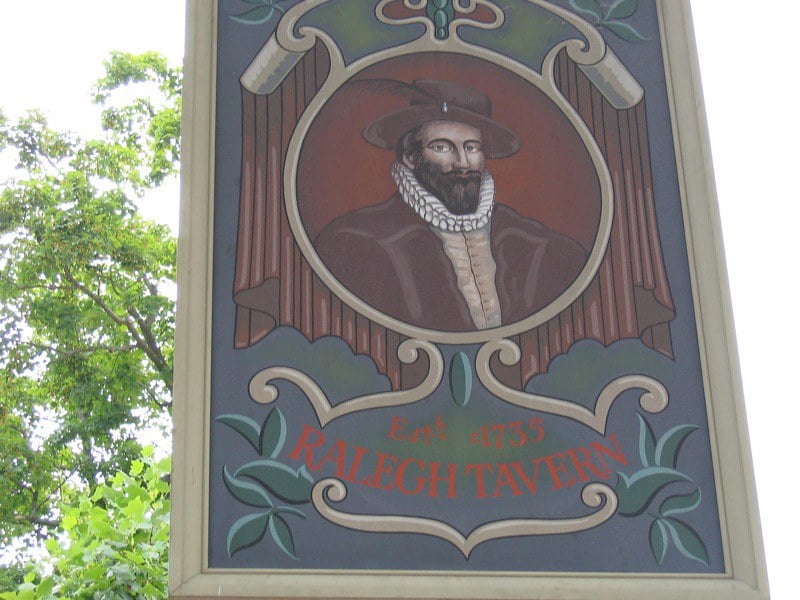
Raleigh set up the Roanoke Colony, pushing for English folks to move into Virginia. Yet instead of going himself, he handed tasks to others – meanwhile staying put in England.
While his team explored new lands, he focused on money matters and court influence. Though deeply involved, he never set foot there, relying on partners to carry out field work.
The name Virginia? It started as a nickname Raleigh gave Queen Elizabeth – the Virgin Queen.
Hoping for her backing, he pushed hard for royal approval on his overseas plans. Though seen as an adventurer, really he only funded trips – never actually sailed himself.
That colony at Roanoke? Vanished without a trace.
Over time, Raleigh’s luck faded; executed later over separate issues. People remember him exploring, but truth is, he just paid for others’ journeys and made them sound grand.
The Truth Behind the Myths

These fixes don’t take away from real progress made during expeditions. Yet they show how simple stories often miss the bigger picture.
History isn’t just about bold moves – it’s teamwork, sharing ideas across cultures, chance moments, and using wisdom from earlier generations. Explorers weren’t flawless heroes beating nature by sheer grit.
Nope – they planned carefully, adjusted when needed, picked up tips from nearby communities, or simply caught a break. Seeing things clearly actually makes achievements more exciting, not boring.
Stories improve once you move beyond false ideas to discover the truth behind events
More from Go2Tutors!

- The Romanov Crown Jewels and Their Tragic Fate
- 13 Historical Mysteries That Science Still Can’t Solve
- Famous Hoaxes That Fooled the World for Years
- 15 Child Stars with Tragic Adult Lives
- 16 Famous Jewelry Pieces in History
Like Go2Tutors’s content? Follow us on MSN.