Natural Patterns That Inspired Artistic Traditions
Artists often turn to the world around them for ideas. Think about a seashell’s swirl, how trees split into branches, or the twist of a hurricane – those forms existed way before we scratched drawings in caves.
Once folks started crafting symbols and pretty things, they borrowed straight from their surroundings. Instead of inventing from scratch, nature handed down real templates – designs so solid they stuck around for ages.
Fibonacci Spirals in Ancient Architecture

The spiral shows up all through nature. While nautilus shells form flawless logarithmic shapes, pinecone scales line up in counter-directional swirls.
Instead of random placement, sunflower seeds fit together by a shared number rule. Because early architects noticed such designs, they used matching ratios when shaping shrines, standing stones, and holy areas.
Greek builders picked sizes that just looked right together. Some experts argue whether the Parthenon’s measurements were meant to match natural ratios – there’s no solid proof either way.
Still, those old craftsmen definitely knew what felt balanced. Their choices might’ve echoed shapes they saw out in the world.
This math link between number pairs forms ratios seen everywhere in nature. Though from distant times and places, artists found alike shapes – since they all studied spirals in snails, leaves, or stars.
Hexagonal Structures from Honeycomb

Bees build honeycomb cells that become hexagonal through physical processes. The wax softens from hive heat and equal pressure from surrounding cells, forming the six-sided shape.
This shape uses minimal material for maximum storage—an efficient result that humans recognized and adopted. Islamic geometric art features extensive hexagonal patterns, creating complex tessellations that cover mosque walls and ceilings.
The six-sided shape fits together without gaps. You can extend the pattern infinitely in any direction.
This made hexagons ideal for decorative work that needed to fill large spaces. Tile makers, metalworkers, and textile designers all used hexagonal grids as foundation structures for more elaborate patterns.
Byzantine mosaics employed hexagonal arrangements to organize figurative scenes. Japanese basket weavers developed intricate hexagonal patterns that provided both strength and beauty.
The pattern crossed cultures because the principle was universal—nature had already proven it worked.
Fractal Branching in Traditional Motifs
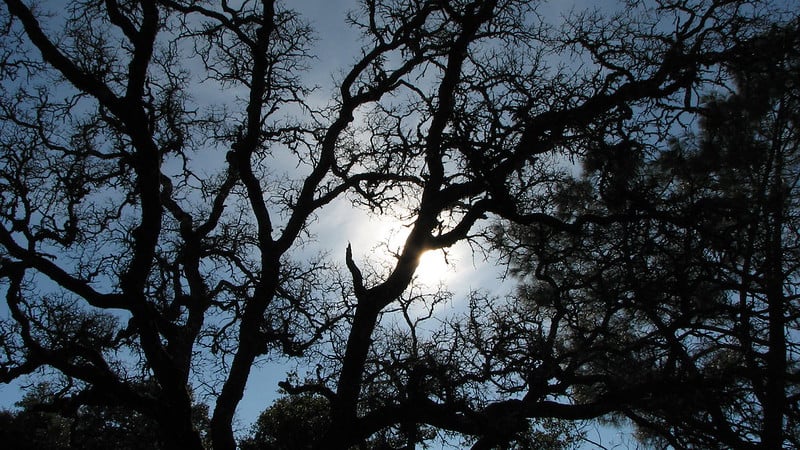
Trees branch in patterns that repeat at different scales. A twig resembles the whole tree’s structure.
Rivers form drainage networks following the same principle. Lungs, blood vessels, and neural networks all branch this way.
Artists captured this recursive quality in decorative work long before mathematicians defined fractals. African textiles incorporate branching patterns that mirror acacia trees.
Each split creates smaller versions of the larger pattern. Indonesian batik designs show similar recursive structures, with patterns that zoom in on themselves.
These weren’t conscious mathematical exercises. Artists observed how growth happens in nature—how one form generates similar forms at smaller scales—and translated that principle into visual language.
Wave Patterns in Japanese Art
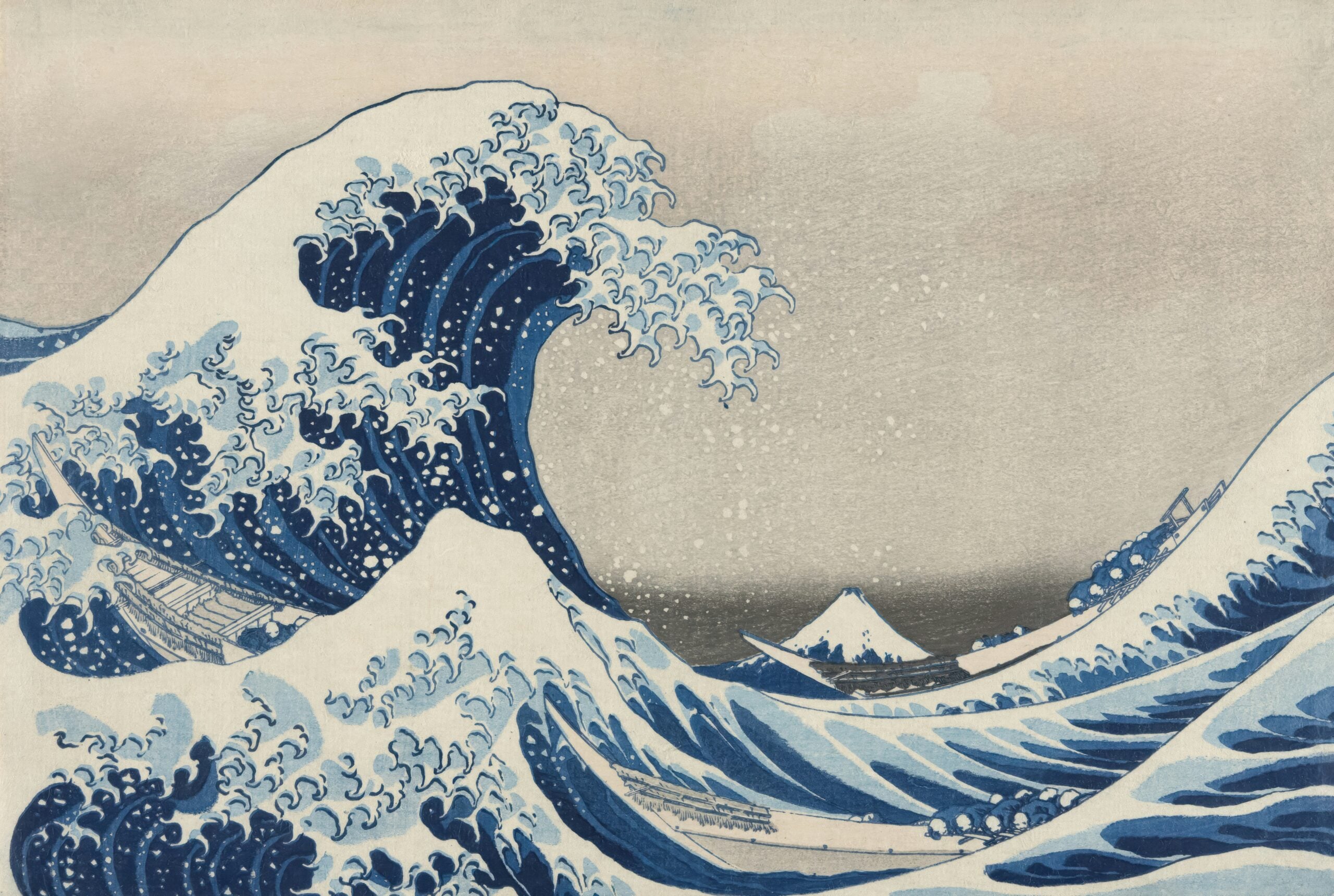
Ocean waves curve and crest in recognizable patterns. Japanese artists studied these movements and developed stylized wave designs centuries before Hokusai’s famous print.
These wave motifs became central to Japanese visual tradition, with each generation of artists refining the conventions. The wave pattern appears on ceramics, textiles, and architectural details throughout Japanese art history.
Each artist interpreted the basic form differently, but all referenced the same natural movement. The pattern worked at any scale—small waves on a teacup or large waves covering an entire screen.
Wave patterns also influenced the development of flowing line work in Japanese calligraphy and ink painting. The rhythmic quality of water movement informed how artists approached composition and gesture.
Natural motion became an aesthetic principle.
Symmetrical Forms from Butterfly Wings

Bilateral symmetry appears throughout nature. Butterflies display it prominently, with left and right wings mirroring each other in pattern and color.
This symmetry became foundational to decorative arts across cultures. Persian carpets, Native American beadwork, and European heraldry all employ mirror symmetry as an organizing principle.
The human eye finds symmetrical patterns satisfying. This isn’t cultural preference—it’s how our visual processing works.
We recognize faces and bodies through symmetry. When artists used symmetrical arrangements in decorative work, they tapped into this deep perceptual tendency.
But perfect symmetry can feel static. Many artistic traditions learned from nature’s imperfect symmetry.
Butterfly wings show variations within their overall mirror structure. Artists adopted this approach, creating symmetrical designs with deliberate variations that added visual interest while maintaining balance.
Circular Forms in Mandala Traditions

Buddhist and Hindu mandala traditions built cosmological systems around circular, radiating patterns. The circular form carries symbolic and spiritual meaning, representing wholeness, the cosmos, and the path to enlightenment.
While concentric circles appear in nature—tree rings, ripples in water, flower formations—mandalas derive from spiritual and philosophical concepts rather than direct observation of these phenomena. Mandalas organize visual information in expanding rings from a central point.
Each ring contains progressively more complex imagery, but the structure remains clear. This allows artists to pack dense symbolic content into a coherent composition.
The pattern guides the viewer’s eye naturally from center to periphery and back. Tibetan sand mandalas take weeks to create and are destroyed after completion.
The circular pattern itself matters more than any individual mandala. Like ripples in water, the pattern is temporary but the principle endures.
Native American medicine wheels use similar radiating structures to organize spiritual concepts.
Geometric Precision in Islamic Art
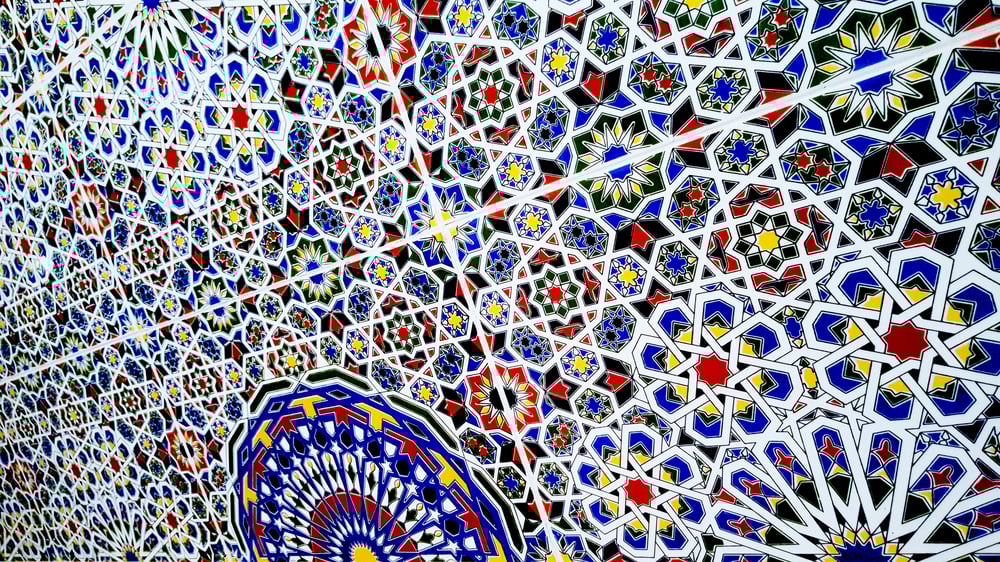
Islamic artists developed elaborate pattern systems based on mathematical principles and design traditions. These patterns require mathematical precision.
Artists used compass and straightedge to construct designs where every angle and proportion followed specific rules. The resulting patterns could extend infinitely without repetition, creating visual fields that suggest boundless space.
These geometric traditions arose from mathematical exploration and aesthetic philosophy rather than direct observation of crystalline structures. The sophistication came from generations of artists and mathematicians refining techniques for creating complex, harmonious patterns.
The Alhambra palace in Spain showcases the full range of Islamic geometric patterns. Wall after wall displays different arrangements based on the same underlying principles.
Each pattern is unique, yet all feel related because they derive from the same natural geometric foundations that govern crystal formation.
Spotted Patterns from Animal Coats

Leopard spots, giraffe patches, and butterfly wing spots form through developmental processes. While theoretical models attempt to explain pattern formation, the exact mechanisms vary by species and aren’t fully understood.
Artists noticed these patterns and incorporated them into decorative work. African art features extensive use of spotted and dappled patterns in masks, textiles, and body decoration.
The irregular spacing of natural spots creates visual texture without becoming monotonous. Perfect grids feel artificial.
Organic spotting feels alive. Textile designers learned to vary spot sizes and spacing to achieve this quality.
Too regular and the pattern dies. Too random and it becomes chaotic.
Aboriginal Australian dot painting developed sophisticated techniques for using varied spot patterns to describe landscape features, ancestral stories, and spiritual concepts. Each dot’s size and placement carries meaning.
The overall pattern reads as unified even though individual elements vary considerably.
Striped Rhythms from Sedimentary Layers

Rock strata show parallel lines where different materials settle over time. Tree bark develops vertical striping.
Zebras and tigers wear stripes that break up their outlines. Linear repetition appears throughout nature, and artists used it to create rhythm and movement in visual compositions.
Striped patterns direct the eye. Horizontal stripes suggest calm and stability.
Vertical stripes imply growth and aspiration. Diagonal stripes create tension and dynamism.
Textile traditions worldwide developed sophisticated stripe vocabularies. Andean weaving uses complex stripe sequences to encode cultural information.
West African kente cloth organizes colorful stripes into meaningful combinations. The power of stripes lies in their simplicity and versatility.
You can vary width, spacing, color, and orientation to create infinite variations. Yet the basic pattern remains instantly recognizable.
Nature proved stripes work for organization and visual effect. Artists needed no further convincing.
Tessellating Scales from Reptile Skin

Snake scales and fish scales fit together without gaps, covering curved surfaces in regular patterns. This tessellation principle fascinated artists who needed to fill two-dimensional surfaces with repeating elements.
Roman mosaics used scale patterns extensively. Byzantine artists developed scale patterns that suggested the texture of armor and feathers.
Scale patterns solve a technical problem. How do you cover an irregular surface with regular units?
Nature’s solution involves slight variations in scale shape and size to accommodate curves. Artists adopted this flexibility.
Ceramic tiles in Moroccan architecture use scale-like overlapping patterns that adjust to fit doorways, arches, and domes. The scale pattern also suggests protection and covering.
Medieval manuscript illuminators used scale patterns as decorative borders and backgrounds. The pattern implies layers, depth, and structure.
It transforms a flat surface into something that suggests dimension and substance.
Radiating Lines from Flower Petals

Flowers arrange their petals in radiating patterns around a central point. Daisies, sunflowers, and lotus blossoms all display this structure.
Artists used radiating lines to suggest energy, growth, and focal emphasis. Art Nouveau designers extensively used flower-based radiating patterns in architecture, furniture, and graphic design.
The radiating pattern naturally draws attention to the center. This makes it useful for directing focus in composition.
Cathedral rose windows use radiating stone and glass patterns to create focal points for meditation. The pattern organizes complex imagery while maintaining a clear visual hierarchy.
Radiating patterns also suggest movement and transformation. Lines spreading from a point imply expansion, growth, or emanation.
Buddhist art uses radiating patterns around sacred figures to suggest spiritual energy. The pattern convention comes directly from observing how flowers open and how light spreads from a source.
Continuous Line Patterns in Greek Design
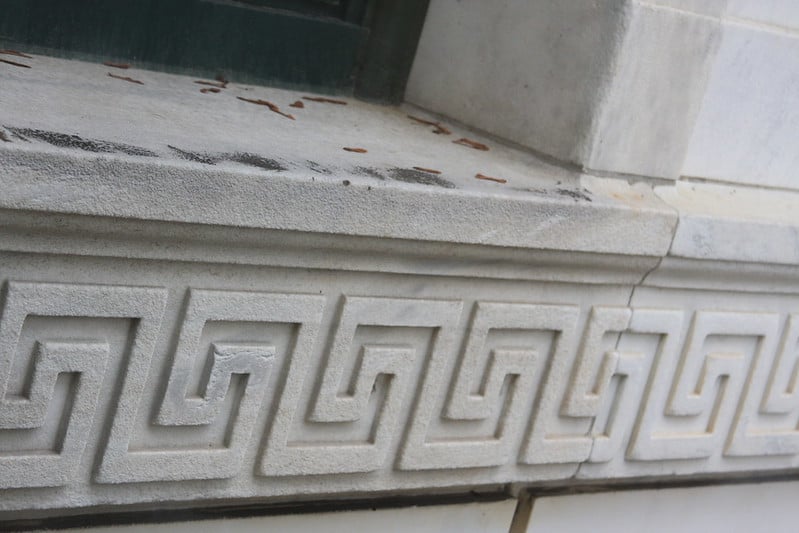
Greek decorative borders featured continuous lines that turn at right angles, creating rhythmic patterns now called meanders or Greek keys. The association with meandering rivers came later—the name is retrospective rather than reflecting the pattern’s actual origin.
These patterns likely developed from geometric design traditions rather than observation of water paths. The meander pattern frames space effectively.
It creates a distinct boundary while maintaining visual interest through repetition and variation. Roman floor mosaics used meander borders extensively.
Chinese decorative arts developed similar continuous-line patterns based on their own design traditions. Meandering lines balance order and freedom.
They follow rules but remain unpredictable. This quality made them popular in decorative arts that needed to suggest natural forms while maintaining controlled composition.
Celtic interlace patterns use similar meandering principles to create complex knots that suggest the interweaving of natural forces.
Cloud Formations in Scroll Painting
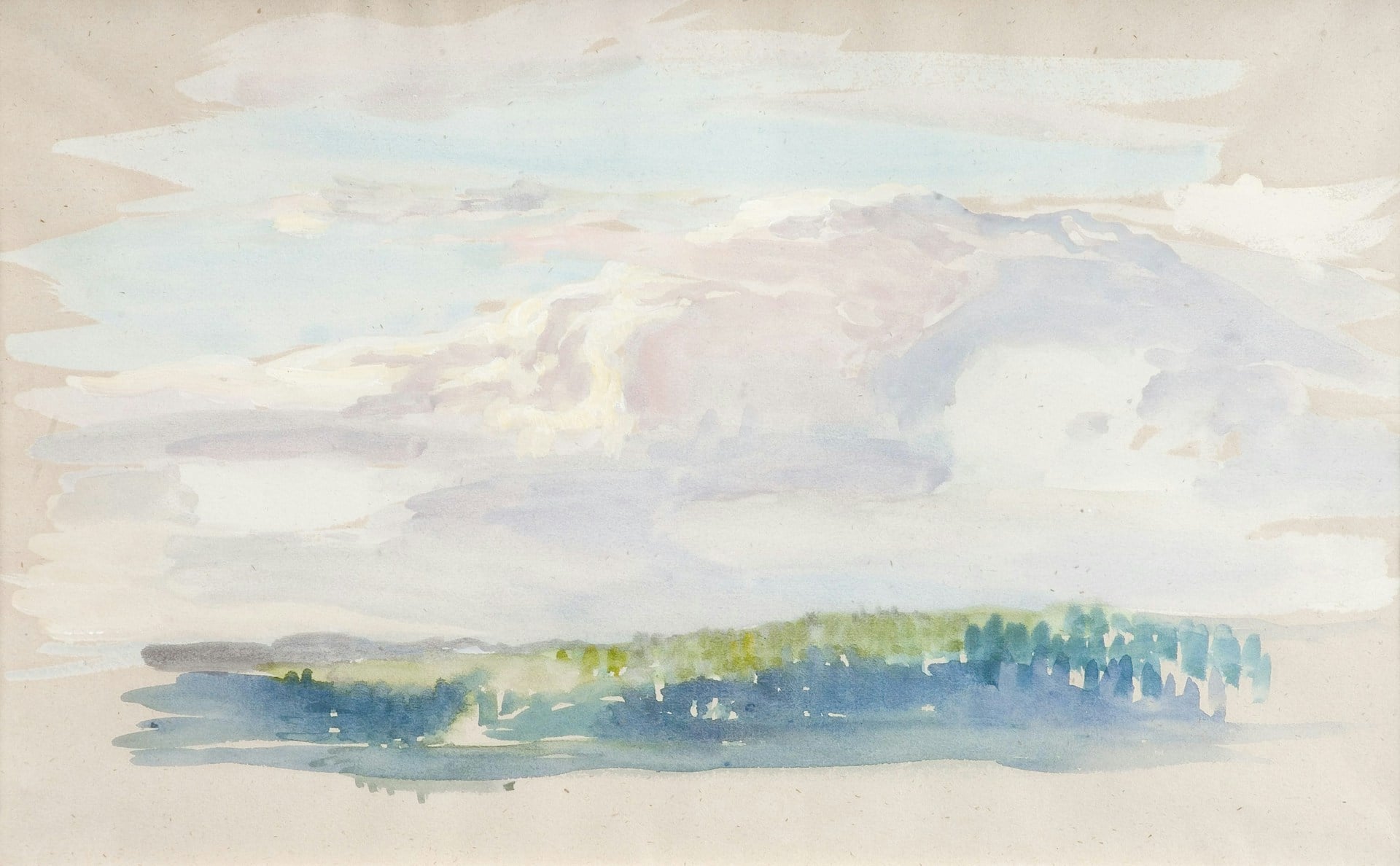
Clouds form in swirling masses that follow fluid dynamics. Chinese and Japanese scroll painters studied cloud formations and developed conventions for depicting them that emphasized their flowing, transforming nature.
These stylized clouds became standard elements in East Asian art, appearing in paintings, textiles, and architectural decoration. Cloud patterns suggest transition and transformation.
They occupy the space between earth and sky, between solid and ethereal. Artists used cloud formations to connect different elements in a composition, creating visual bridges that guide the viewer’s eye through complex scenes.
The conventions for painting clouds evolved through centuries of observation and refinement. Each artist learned established patterns but also studied actual clouds.
This combination of tradition and observation kept the patterns vital. They remained abstract enough to serve compositional needs while feeling rooted in natural phenomena.
Where Observation Meets Tradition

Some patterns from nature sparked ideas in art. When artists saw shell spirals, tree branches, or water ripples, they used those shapes in creations.
Yet a lot of styles built their visual rules by playing with math, passing down symbols across cultures, or improving slowly over time – without copying nature straight up. The link between nature’s shapes and art styles isn’t straightforward.
Now and then, creators directly copied elements from the natural world. At other moments, designs grew out of math-like structures or hidden messages – coincidentally mirroring things found outdoors.
Occasionally, viewers later tie artwork back to nature, spotting links the makers probably never meant. What counts is how nature and people use alike ways to stay organized.
Symmetry, repeating patterns, splitting into branches, or fitting shapes together – they help fix basic issues with shape and room. Artists might’ve found these answers by watching life around them OR just solving creative puzzles on their own.
Still, they landed on rules that build everything from plants to paintings.
More from Go2Tutors!

- The Romanov Crown Jewels and Their Tragic Fate
- 13 Historical Mysteries That Science Still Can’t Solve
- Famous Hoaxes That Fooled the World for Years
- 15 Child Stars with Tragic Adult Lives
- 16 Famous Jewelry Pieces in History
Like Go2Tutors’s content? Follow us on MSN.