Nature Patterns That Reveal Planetary Forces
You stroll by every day – hardly noticing. That twist in a pinecone? It’s everywhere.
Rivers split like veins across land. Honeycombs fit together, one after another.
Those designs seem messy, maybe just for show – like nature’s attempt to dress things up. Yet they’re really marks left by powers huge enough to mold entire worlds.
Researchers often dedicate years to understanding such patterns – they reveal how energy flows in different setups. Spotting identical spirals in both storms and distant galaxies?
That’s no random chance. Frost spreading like lightning strikes hints at hidden connections underneath.
Such designs show up whenever natural rules unfold – from tiny particles to huge stars.
The Spiral That Appears Everywhere

Start with the most obvious one. Spirals show up in shells, sunflower seed arrangements, hurricanes, and galaxies billions of light-years across.
The pattern persists because it solves a specific problem: how to pack the most material into the least space while maintaining stability.
When something rotates and grows at the same time, a spiral emerges naturally. A nautilus shell builds new chambers as it grows, each one slightly larger than the last, creating that perfect logarithmic curve.
The same mathematics governs how storms rotate around a low-pressure center, pulling material inward while spinning outward. Even galaxies follow this pattern as they rotate around their centers, swept by gravitational forces into those magnificent arms.
The spiral works because it distributes stress evenly. There are no weak points, no corners where force concentrates.
Plants discovered this millions of years ago. Water swirling down a drain rediscovers it every time.
Hexagons in Tension
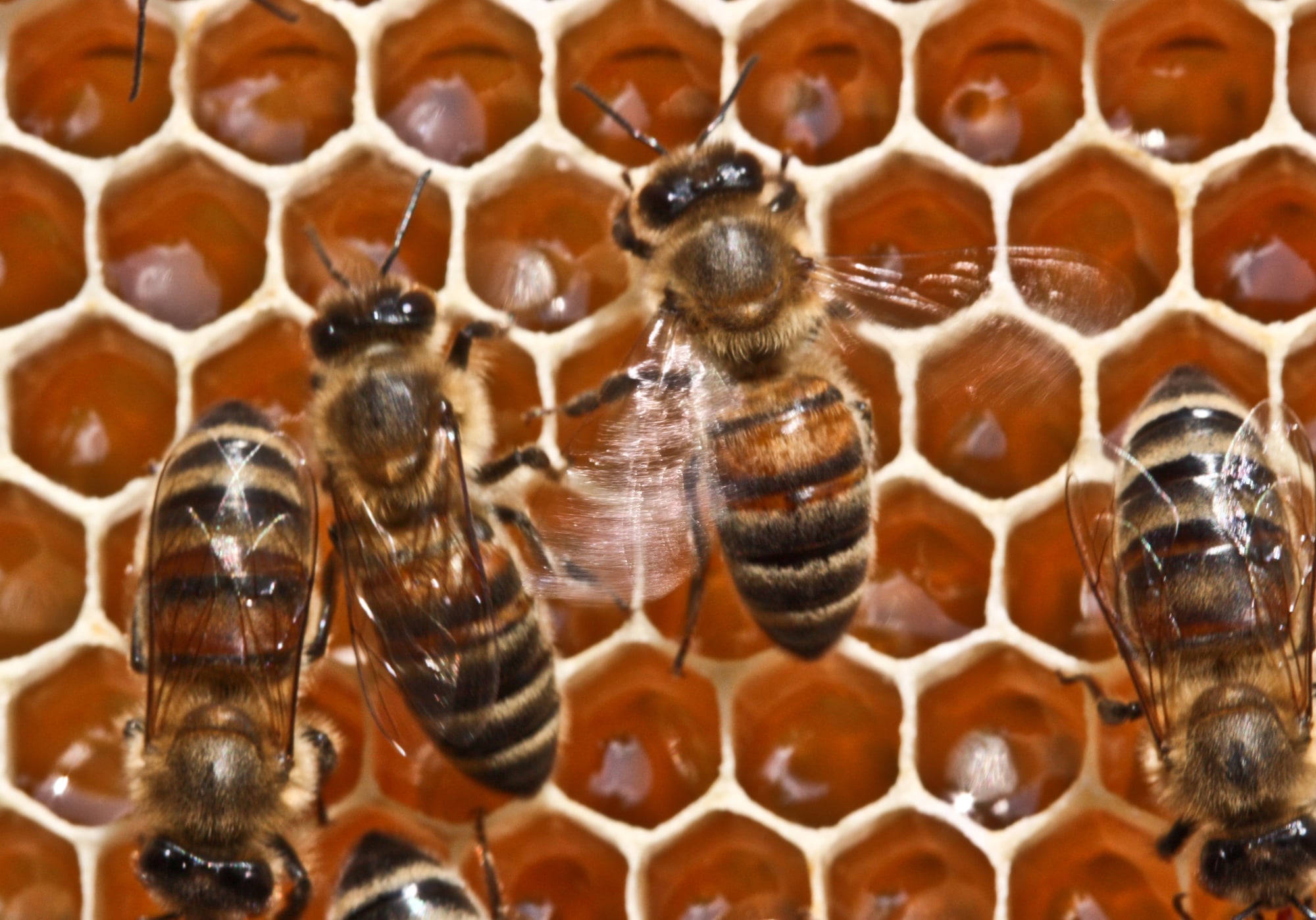
Bees didn’t invent the hexagon. They found it.
When you pack circles together as tightly as possible, the spaces between them form hexagons. It’s pure geometry, and nature defaults to this pattern whenever efficiency matters.
Cooling lava creates hexagonal columns. The Giant’s Causeway in Ireland is just basalt that cracked as it cooled, splitting along the most energy-efficient lines.
Saturn’s north pole has a permanent hexagonal storm system with each side stretching about 9,000 miles long—longer than Earth’s diameter. The entire structure spans roughly 20,000 miles across.
Snowflakes grow in hexagonal patterns because of how water molecules bond at the molecular level.
The hexagon appears when systems minimize surface area while maximizing structural integrity. When soap foam forms, the bubbles create hexagonal walls between them.
Turtle shells, insect eyes, and carbon atoms in graphene all default to this shape for the same reason. It’s the solution to a problem that appears at every scale.
Rivers That Remember Mountains
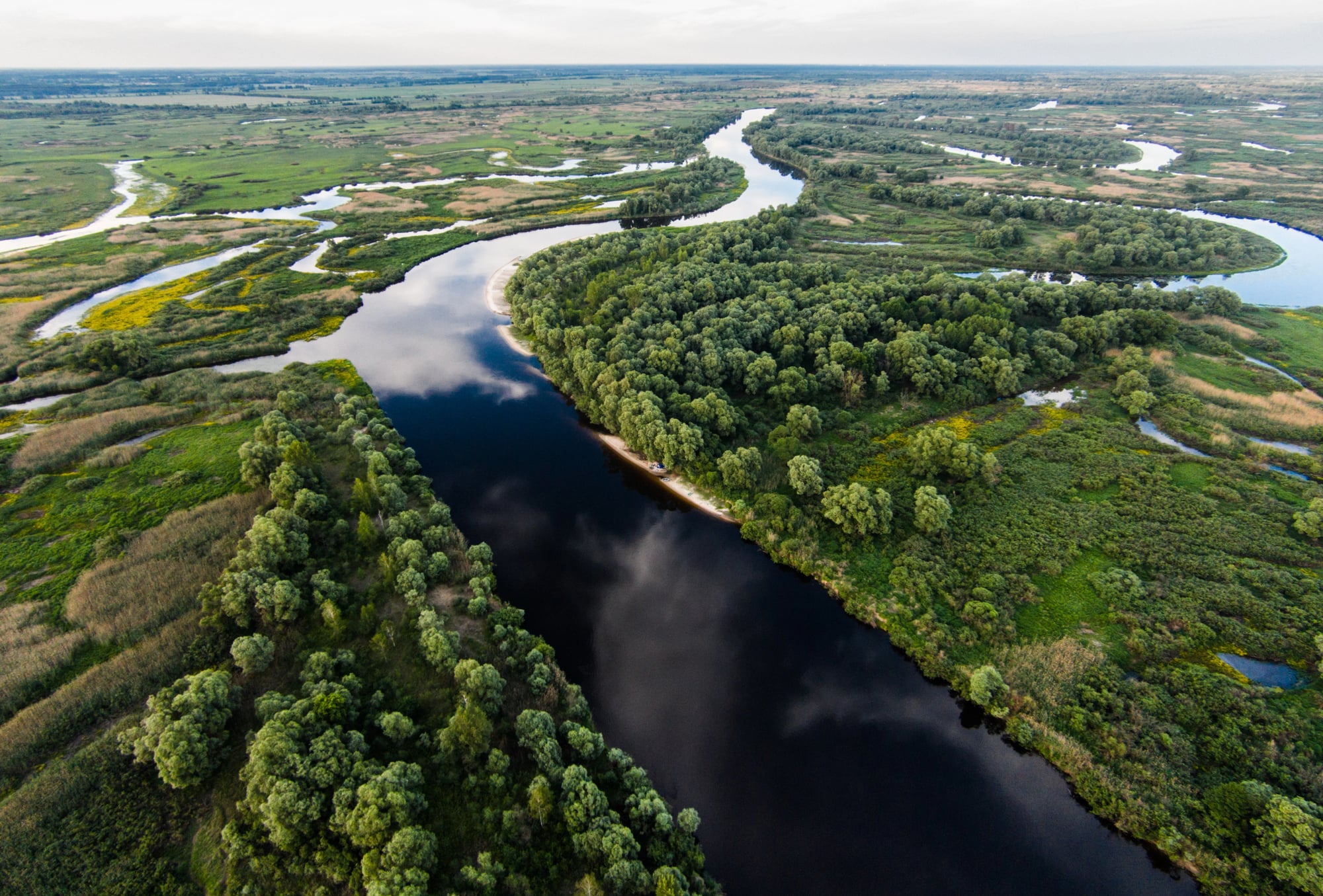
Watch how a river branches. The pattern looks organic and chaotic, but it’s actually following strict rules about how water finds the path of least resistance.
The branching structure you see in a river delta is identical to the branching in your lungs, in tree roots, in lightning.
This pattern emerges whenever a system needs to distribute or collect resources efficiently across an area. Your lungs branch to maximize surface area for gas exchange.
Trees branch to maximize sunlight capture. Rivers branch because water flows downhill and splits around obstacles, carving new channels that follow the same mathematical rules.
The pattern reveals how gravity pulls water toward the ocean, how rock hardness varies, how much rain fell in specific seasons over thousands of years. Each bend and branch is a record of forces acting over time.
The Amazon River delta tells you about the shape of the Andes Mountains and the direction of winds carrying moisture from the ocean.
Cracks That Follow Rules

Look at dried mud or old paint. The cracks don’t spread randomly.
They form polygonal networks that evolve toward a specific geometry. When cracks first form, they meet at T-shaped junctions where later cracks hit earlier ones at right angles.
But if the material cracks repeatedly—drying and rewetting in cycles—these T-junctions gradually shift toward Y-shaped junctions where three cracks meet at roughly 120-degree angles. This happens because cracking is how materials release stress, and Y-junctions are the most mechanically stable arrangement.
Ice breaking up in the Arctic follows the same pattern. So do the surface features on Europa, one of Jupiter’s moons, where a subsurface ocean pushes up against a frozen crust.
The pattern appears whenever brittle materials experience tension. Your coffee mug develops the same crack patterns as tectonic plates.
The spacing between cracks tells you about the thickness of the material and how much stress it’s under. Wide spacing means thick material or low stress.
Tight spacing means thin material or high stress. Desert playas show this clearly.
Where the mud is thicker, the polygons are larger. Where it’s thin, they’re smaller and more numerous.
Waves Frozen in Sand
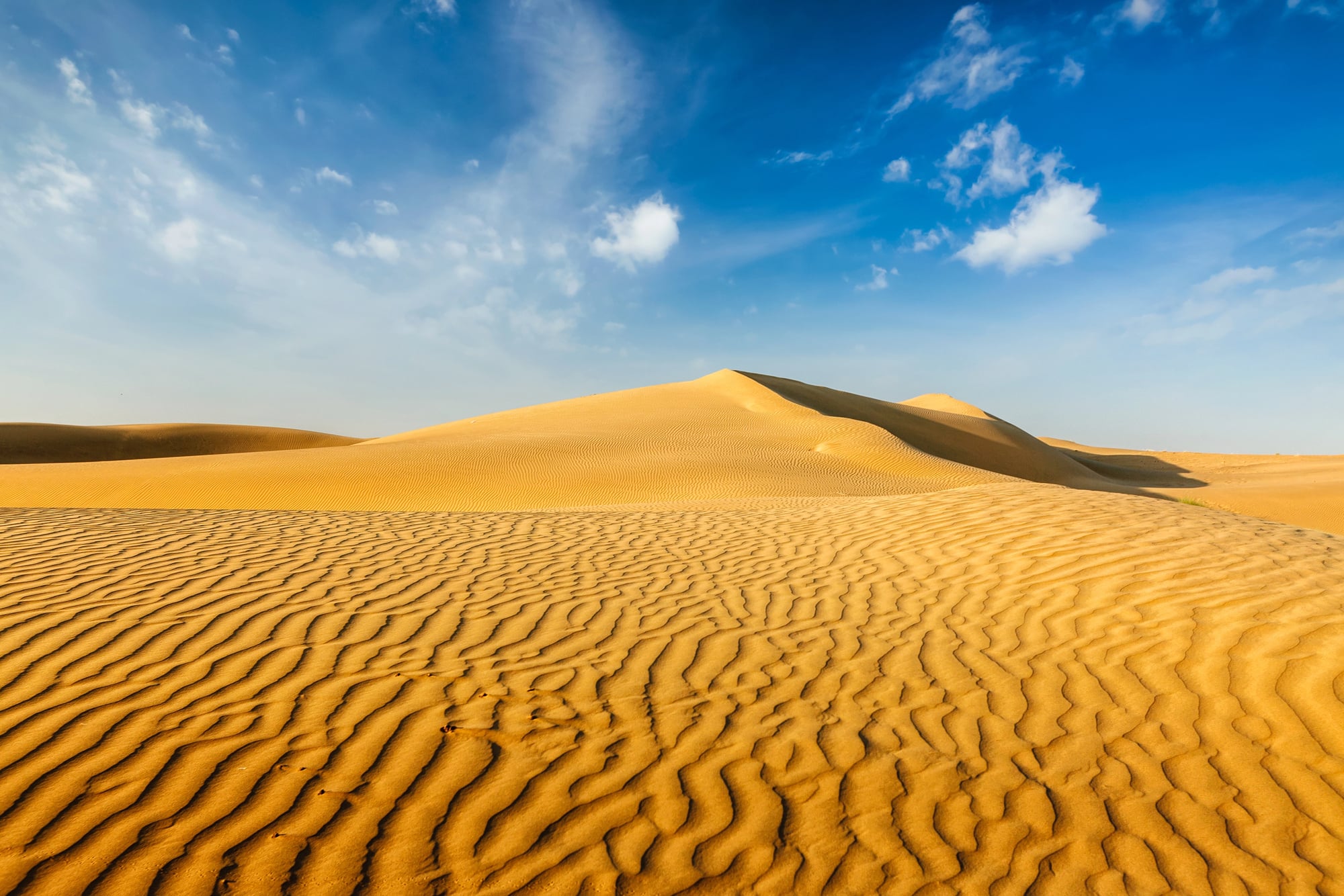
Sand dunes ripple because wind doesn’t push sand grains straight forward. It lifts them up and drops them a short distance away.
Each grain that lands dislodges other grains, and the pattern reinforces itself. The wavelength of the ripples tells you the average size of the grains and the strength of the wind.
The same pattern appears underwater with sediment, on Mars with dust, even on the surface of stars with plasma. Water waves, sound waves, light waves—they all create similar patterns when they move through matter.
The medium changes, but the mathematics stay the same.
You can read the history of wind in sand dunes. Cross-bedding in sandstone shows ancient dune patterns, preserved for millions of years.
Geologists use these frozen waves to reconstruct what the climate was like when the rock formed. The shape of the ripples reveals wind direction, intensity, and consistency.
Fractals in Every Direction
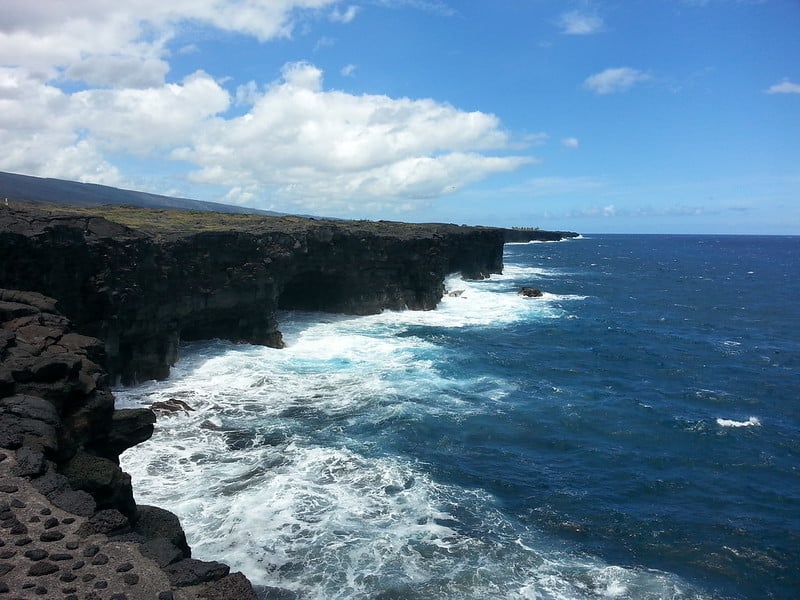
Coastlines don’t have a single length. Measure one with a mile-long ruler and you get one number.
Use a foot-long ruler and the number gets bigger because you’re capturing more detail in the bays and inlets. Use an inch-long ruler and it gets bigger still.
This is fractal geometry—patterns that repeat at every scale.Mountains are fractal.
Clouds are fractal. Tree branching is fractal.
Your circulatory system is fractal.Whenever a system grows by repeating the same rule at different scales, fractals emerge.
A big branch splits into medium branches, which split into small branches, which split into twigs.Same pattern, different sizes.
This happens because growth is limited by the same constraints at every scale. A plant needs to transport nutrients from roots to leaves, and the most efficient network is one that branches fractally.
Your body needs to deliver oxygen to every cell, and fractal branching minimizes the distance any molecule has to travel. The pattern appears when the problem stays consistent across scales.
Stripes and Spots That Organize Themselves

Animals don’t paint their own patterns. The stripes on a zebra and the spots on a cheetah emerge from chemical reactions during development.
Two chemicals diffuse through skin tissue at different rates, activating and inhibiting each other. This creates standing waves of concentration—high here, low there—and these waves determine where pigment cells activate.
The same reaction-diffusion patterns appear in sand dunes, coral reefs, and cloud formations. The stripes on Jupiter.
The patterns in desert vegetation where plants space themselves out to minimize competition for water. Whenever you have activators and inhibitors competing in a confined space, these patterns emerge.
Alan Turing, better known for cracking codes during World War II, predicted these patterns mathematically decades before scientists confirmed them in living organisms. The equations describe how pattern emerges from chaos, how order crystallizes out of randomness when simple rules interact.
You don’t need intelligence or intention. You just need diffusion and feedback.
Vortices That Won’t Let Go

Water draining from a bathtub forms a vortex because of conservation of angular momentum. Air has the slightest rotation, and as it spirals inward toward the drain, it spins faster—the same reason ice skaters spin faster when they pull their arms in.
Tornadoes, hurricanes, dust devils, and the Great Red Spot on Jupiter all maintain themselves through this same principle. Once rotation starts, it reinforces itself.
The spinning motion creates a low-pressure center, which pulls in more air, which speeds up the rotation, which deepens the low pressure. The pattern is self-sustaining.
These vortices reveal how energy cascades through a system. Large vortices break down into smaller ones, which break down into even smaller ones, until the energy dissipates as heat.
This happens in ocean currents, in the turbulence behind airplanes, in the swirls of cream in coffee. The pattern persists because circular motion is stable motion.
Cellular Networks Under Pressure

Cells in plant tissue, grains in metals, and territories of competing organisms all organize into similar patterns. When objects of roughly equal size push against each other, they naturally form networks of polygons—mostly hexagons with some pentagons and heptagons mixed in.
Foam follows this pattern because bubbles minimize surface area while maintaining volume. Basalt columns follow it because cooling rock contracts and cracks.
Animal territories follow it because each organism claims roughly equal space and defends its borders. The pattern emerges from local interactions—each unit responding to its immediate neighbors—without any global coordination.
This reveals how large-scale order emerges from simple local rules. Ants don’t know what the overall colony structure looks like, but by following basic rules about spacing and territory, they create organized networks.
Metal grains don’t plan their arrangement, but thermal contraction and crystallization produce these regular patterns anyway. The system optimizes itself without needing a blueprint.
Symmetry That Breaks on Purpose
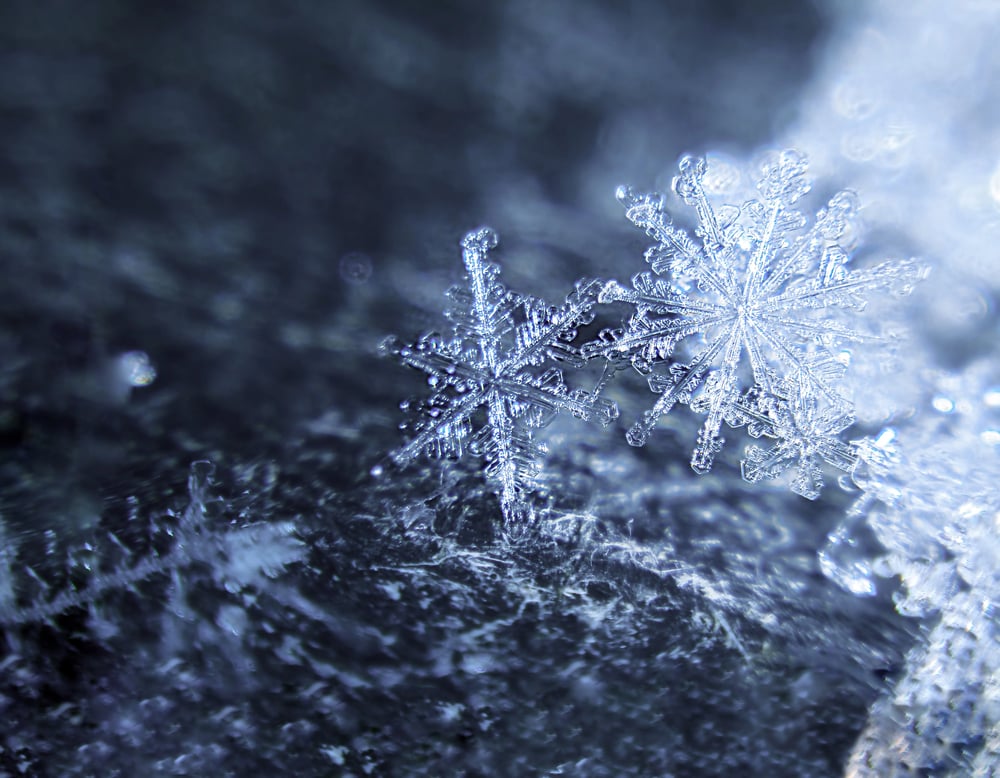
Snowflakes are symmetrical because water molecules bond at 120-degree angles, creating six-fold symmetry. But no two snowflakes are alike because each one experiences a unique path through the atmosphere, encountering different temperatures and humidity levels as it forms.
This interplay between perfect symmetry and random variation shows up everywhere. Crystals grow in perfectly regular lattices until an impurity disrupts the pattern.
Ripples spread in perfect circles until they hit an obstacle. The underlying forces favor symmetry, but reality is messy, so perfect patterns get disrupted.
The disruptions matter. They’re not noise or errors.
They’re information about the environment. The exact shape of a snowflake tells you about the conditions where it formed.
The irregularities in tree rings tell you about droughts and wet years. The variations in crystal structure tell you about impurities in the material.
Perfection would be boring and uninformative. The breaks in symmetry are where the story lives.
Scales That Repeat Forever
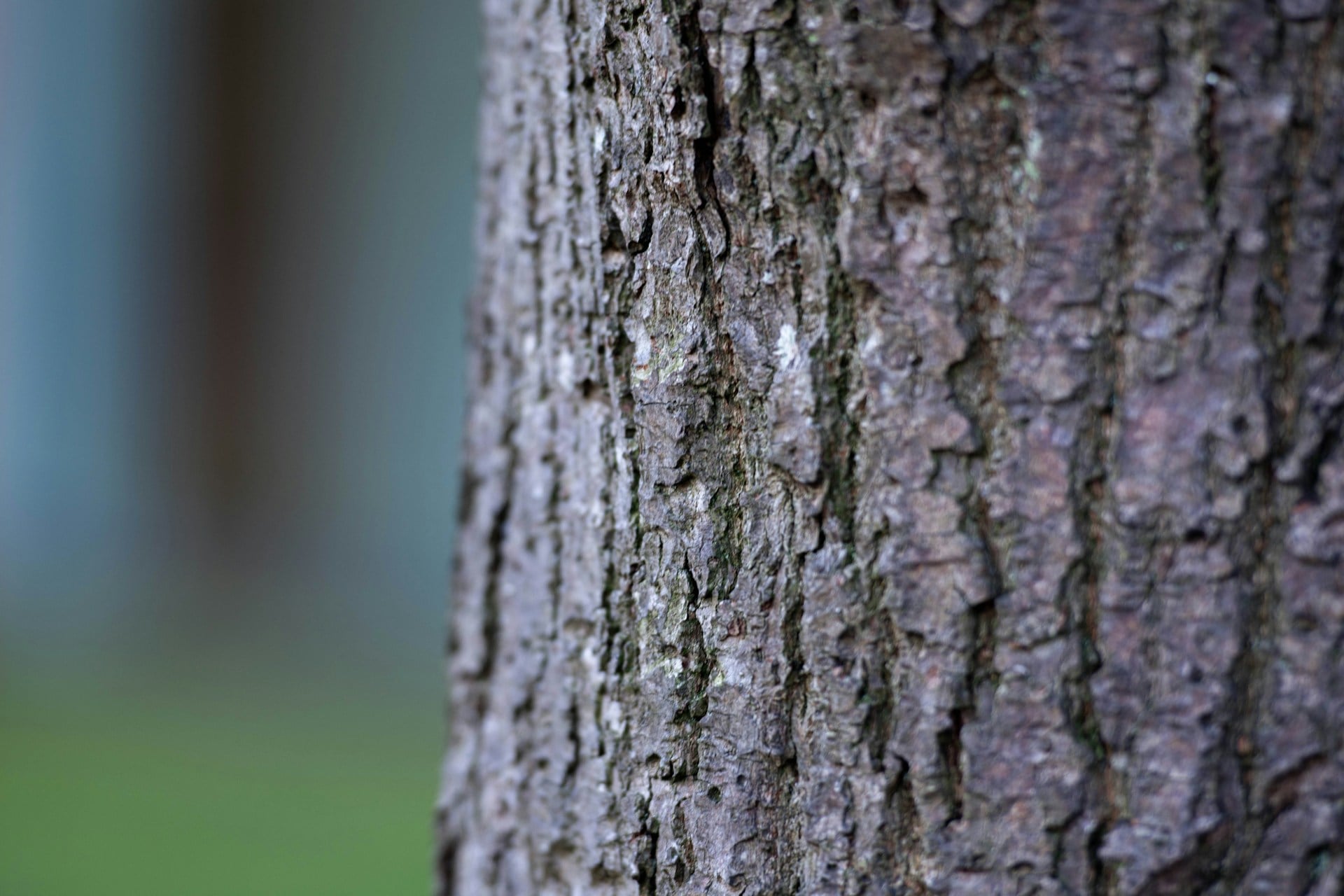
Tree bark looks like mountains, which look like coastlines, which look like cracks in dried mud. This happens because physical processes are scale-invariant.
The forces that create mountains—compression, fracture, erosion—work the same way whether you’re dealing with a continent or a pebble.
Clouds have the same statistical properties whether you’re looking at satellite images covering thousands of miles or time-lapse videos of clouds passing overhead. The turbulence that creates their structure operates identically at different scales.
Pressure differences, condensation, evaporation—these processes don’t care about size.
Scientists use this property to study systems that are too large or too slow to observe directly. You can’t watch a mountain range form over millions of years, but you can watch how smaller structures crack and fold under pressure in a lab.
The patterns scale predictably. What works at one size works at another, which means nature reuses the same solutions repeatedly.
Lightning’s Path of Least Resistance

Lightning doesn’t take a straight path from cloud to ground. It branches because it’s searching for the route with the least electrical resistance.
The branching pattern looks identical to river systems, tree roots, and blood vessels—all systems that are optimizing flow through a network.
The charged channel splits and splits again, testing different paths simultaneously. Whichever branch reaches the ground first completes the circuit, and most of the current flows through that winning path.
But the searching pattern remains visible in the branching structure.
This reveals how optimization happens in nature. Systems don’t calculate the perfect solution in advance.
They try multiple options simultaneously and reinforce what works. Evolution does this.
Your immune system does this. Water flowing downhill does this.
The branching pattern is the signature of parallel exploration, the physical record of a system solving a problem in real time.
Where Forces Leave Their Mark

These shapes aren’t just pretty. They’re clues.
Every mark shows how things push and pull across ages – water pulled by gravity, sand shifted by gusts, tiny particles locking into stones, swirls where energy fades unevenly.
They stick around simply ‘cause they work – they solve the same old puzzles nature keeps facing.
Once you figure out how to read them, your eyes change. Not only is a spiral nice to look at – turns out it shows movement during growth.
Branching patterns? They’re not haphazard; there’s logic behind their shape. It reveals how movement shaped its own path across connections.
Cracks don’t mean harm – instead, they’re proof of pressure letting go. Each design tells a tale of huge unseen pushes, drawn into forms we see every day.
Earth’s used this code for ages beyond count.Once you grasp it, these signs pop up all around.
More from Go2Tutors!

- The Romanov Crown Jewels and Their Tragic Fate
- 13 Historical Mysteries That Science Still Can’t Solve
- Famous Hoaxes That Fooled the World for Years
- 15 Child Stars with Tragic Adult Lives
- 16 Famous Jewelry Pieces in History
Like Go2Tutors’s content? Follow us on MSN.