Neighborhoods With Fascinating Pasts
Every city has its stories, but some neighborhoods carry histories so wild, strange, or unexpected that they deserve a closer look. These places weren’t always what they are today.
They’ve been shaped by gold rushes, scandals, wars, visionaries, and sometimes pure accidents of fate. Let’s take a walk through some neighborhoods where the past still whispers from every corner.
Five Points

Manhattan’s Five Points district once held the title of America’s most dangerous slum. The neighborhood got its name from the five-pointed intersection where several streets met in Lower Manhattan during the 1800s.
Irish immigrants flooded into the area after fleeing the potato famine, living in converted breweries and packed tenement buildings. Gang warfare became so common that police refused to enter certain blocks without backup.
The Bowery Boys, the Dead Rabbits, and other crews fought brutal street battles that sometimes lasted for days. Charles Dickens visited in 1842 and called it the worst place he’d ever seen.
The entire neighborhood was eventually demolished in the late 1800s to make room for Columbus Park, erasing one of New York’s darkest chapters from the map.
The French Quarter

New Orleans’ French Quarter survived two massive fires, countless hurricanes, and several changes of ownership between European powers. The Spanish actually built most of the neighborhood’s famous buildings after fires in 1788 and 1794 destroyed the original French structures.
Those wrought-iron balconies everyone associates with French architecture? They’re actually Spanish. The neighborhood became a haven for free people of color before the Civil War, creating a unique three-tiered society of whites, free blacks, and enslaved people.
Voodoo queen Marie Laveau ran her spiritual business from a small house on St. Ann Street. Pirates like Jean Lafitte used the quarter’s taverns and shops as fronts for their smuggling operations.
The whole area nearly got demolished in the 1930s for a riverside highway project, but preservationists fought back and saved it.
Chinatown (San Francisco)
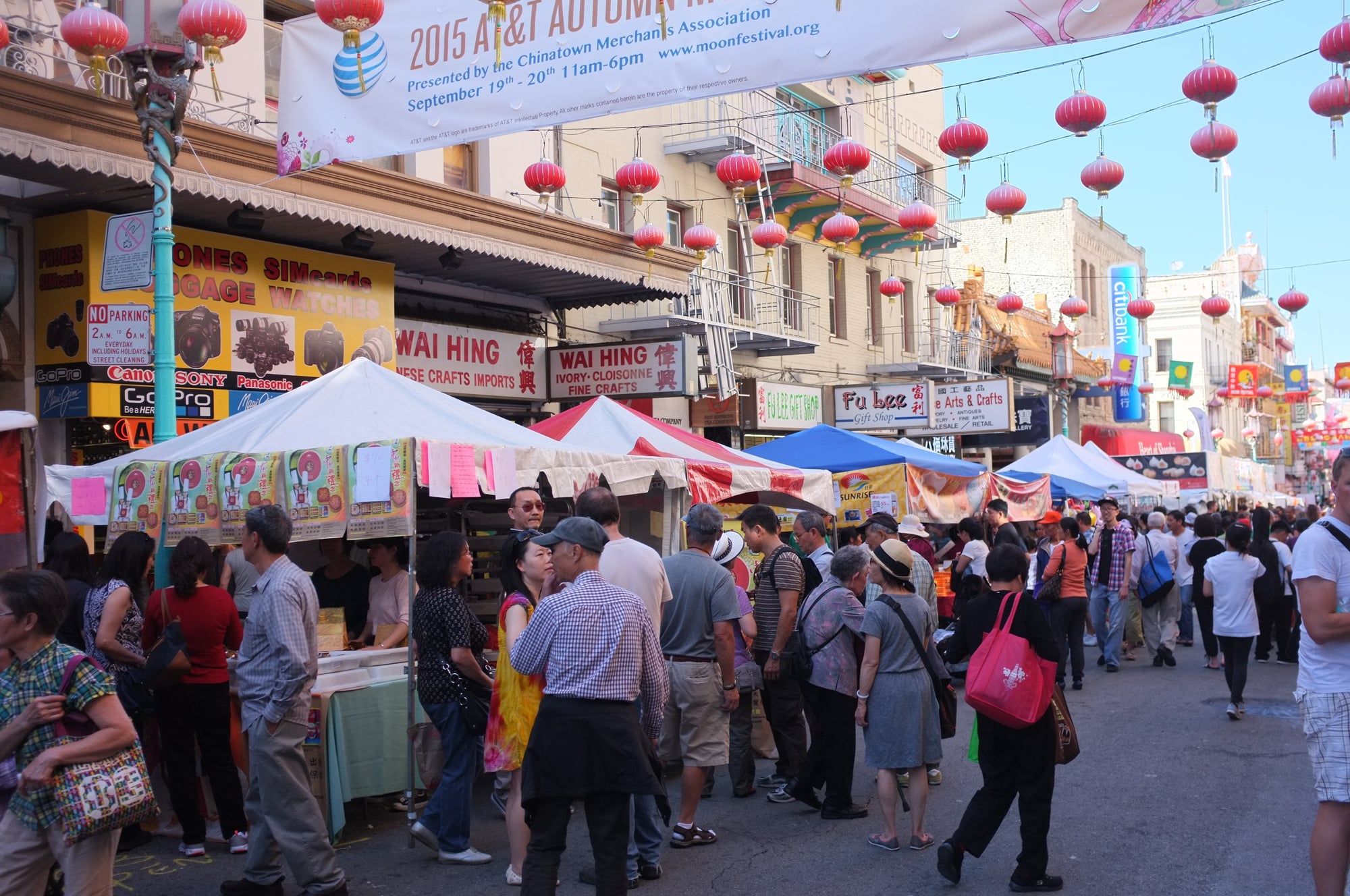
San Francisco’s Chinatown rose from total destruction after the 1906 earthquake and fire. City officials actually wanted to relocate the Chinese community to the outskirts and turn the valuable downtown land into a warehouse district.
Chinese community leaders quickly hired architects to redesign the neighborhood with ornate pagoda roofs and dragon lampposts, making it a tourist attraction the city couldn’t afford to demolish. Before the earthquake, the neighborhood was notorious for its underground tunnels where gambling dens, opium parlors, and brothels operated away from police eyes.
Some tunnels connected basements across multiple city blocks. The Chinese Exclusion Act of 1882 meant most residents couldn’t bring their families to America, creating a bachelor society where men outnumbered women by more than twenty to one.
Paper sons and daughters used false documents to enter the country, memorizing detailed stories about their supposed families in case immigration officials questioned them.
Greenwich Village

Greenwich Village started as an actual village outside New York City where wealthy families escaped yellow fever epidemics. The street layout still reflects its origins, with winding roads that ignore Manhattan’s famous grid system because they were cow paths and property lines from the 1700s.
The neighborhood became America’s bohemian capital in the early 1900s when cheap rents attracted artists, writers, and radicals. Edna St. Vincent Millay lived in the narrowest house in the city at 75 1⁄2 Bedford Street, just over nine feet wide.
Washington Square Park was originally a potter’s field and public execution ground where over 20,000 bodies still rest beneath the grass and playgrounds. The Stonewall Inn riots in 1969 launched the modern LGBTQ rights movement after police raided the bar one too many times.
Bob Dylan, Jimi Hendrix, and countless other musicians got their start playing in the village’s coffee houses and clubs during the 1960s.
Watts

The Watts neighborhood in Los Angeles was once a separate city with its own government and infrastructure. Simon Rodia spent 33 years building the Watts Towers in his backyard using steel, concrete, and thousands of broken bottles, seashells, and ceramic pieces.
He worked alone, mostly at night, without scaffolding or safety equipment, creating towers that reach almost 100 feet high. The neighborhood was home to a thriving African American middle class until the 1965 Watts Riots, which started after police pulled over a young Black man for suspected drunk driving.
Six days of unrest left 34 people dead and over 1,000 buildings damaged or destroyed. The riots shocked America and forced the country to confront the reality of urban poverty and racial discrimination.
Watts produced an incredible amount of musical talent, including members of War, the Watts Prophets, and several influential jazz musicians who grew up in the neighborhood during its heyday.
The Tenderloin

San Francisco’s Tenderloin district got its name from a New York police captain who said the bribes from vice establishments in his precinct were so generous he could afford tenderloin steaks. The neighborhood became San Francisco’s red-light district almost immediately after the city was founded during the Gold Rush.
Theaters, dance halls, and gambling houses operated openly on every block. The Barbary Coast, as people called it, was so dangerous that ships’ crews would avoid the area because they might get drugged and shanghaied onto outbound vessels.
Today the Tenderloin remains one of San Francisco’s grittiest neighborhoods, with more people living on the streets than almost anywhere else in the city. The neighborhood somehow avoided the worst of gentrification that transformed the rest of downtown San Francisco.
Vietnamese and Thai immigrants created Little Saigon in the Tenderloin during the 1970s, opening restaurants and shops that still serve the community today.
South Bronx

The South Bronx went from a working-class Jewish and Italian neighborhood to America’s symbol of urban decay in less than two decades. Robert Moses built the Cross Bronx Expressway straight through the heart of the community during the 1950s, displacing thousands of families and splitting neighborhoods in half.
Landlords started burning their own buildings to collect insurance money, and fires became so common that some blocks looked like war zones. Howard Cosell famously said ‘there it is, ladies and gentlemen, the Bronx is burning’ during a 1977 World Series broadcast when cameras showed a building on fire near Yankee Stadium.
Hip hop culture was born in the rubble when DJ Kool Herc threw a back-to-school party in 1973 and invented breakbeat DJing. Graffiti artists turned burned-out buildings and subway cars into canvases.
Break dancers performed on cardboard in empty lots. The neighborhood that politicians and journalists wrote off as beyond saving created art forms that would change global culture.
Haight-Ashbury

Haight-Ashbury was a quiet middle-class neighborhood in San Francisco until cheap rent and Victorian houses attracted college students and artists in the early 1960s. The Summer of Love in 1967 brought over 100,000 young people to the neighborhood, completely overwhelming the small commercial district.
Free food, free healthcare, and free concerts turned the intersection of Haight and Ashbury into a countercultural experiment. The Grateful Dead, Janis Joplin, and Jefferson Airplane all lived within a few blocks of each other.
The free clinic treated overdoses and bad acid trips while straight society watched in horror. By 1968, the hippie dream had collapsed under the weight of hard drugs, crime, and too many people with nowhere to go.
The Diggers, a street theater group that ran free stores and soup kitchens, held a mock funeral called the ‘Death of Hippie’ to declare the movement over. Many original residents fled to communes in Northern California or just went home.
Harlem

Harlem started as a white, middle-class neighborhood with strict rules against selling property to Black families. A real estate crash in the early 1900s changed everything when landlords suddenly couldn’t fill their buildings and started renting to African Americans.
The Great Migration brought thousands of Black families north from the South, and Harlem became the capital of Black America. The Harlem Renaissance of the 1920s produced Langston Hughes, Zora Neale Hurston, Duke Ellington, and countless other artists who redefined American culture.
The Cotton Club and other nightclubs showcased Black performers to white audiences who crossed the color line for entertainment but wouldn’t live in the neighborhood. The neighborhood suffered terribly during the crack epidemic of the 1980s and 1990s when abandoned buildings and crime drove property values to almost nothing.
Bill Clinton put his office in Harlem after leaving the White House, helping spark a revival that’s transformed the neighborhood once again.
Skid Row (Los Angeles)

Los Angeles’ Skid Row got its name from the skid roads that loggers used to drag timber to sawmills in Seattle, but the term became synonymous with homelessness and poverty. The area around Fifth and San Pedro streets became the city’s unofficial containment zone where authorities concentrated services for unhoused people.
Over 4,000 people sleep on the sidewalks in a 50-block area, making it the largest stable population of unhoused people in the United States. The neighborhood’s single-room occupancy hotels once provided cheap housing for working people, but most fell into disrepair or were converted to other uses.
Artists moved into the warehouse lofts in the 1990s, creating galleries and studios in buildings that cost almost nothing to rent. Police and city officials actively pushed unhoused people toward Skid Row for decades, concentrating poverty in one area to keep it away from downtown’s business district and residential neighborhoods.
Castro District

San Francisco’s Castro District was an Irish and Scandinavian working-class neighborhood until the 1960s when gay men started buying Victorian houses that straight families were abandoning for the suburbs. Harvey Milk opened his camera shop on Castro Street in 1972 and became one of the first openly gay elected officials in America.
The neighborhood became a symbol of gay liberation, with rainbow flags flying from almost every building and gay bars on every corner. The AIDS crisis hit the Castro harder than almost anywhere else in America, killing thousands of residents during the 1980s and early 1990s.
The NAMES Project started in a Castro storefront, creating the AIDS Memorial Quilt that grew to contain over 48,000 panels. Activists turned the neighborhood into the center of AIDS care and research, founding organizations that changed how America dealt with the epidemic.
The Castro today faces a different kind of threat as rising rents and tech money price out the LGBTQ community that built it.
Little Italy (New York)

Manhattan’s Little Italy once stretched for dozens of blocks, but it’s now shrunk to just a few streets as Chinatown expanded northward. Italian immigrants packed into tenement buildings during the late 1800s, creating a neighborhood where dialects from different regions of Italy competed on every block.
The Mafia’s presence was real and undeniable, with social clubs and restaurants serving as meeting places for organized crime families. Mulberry Street became famous for its Italian festivals, especially the Feast of San Gennaro, which still draws huge crowds every September.
The neighborhood produced Frank Sinatra, Robert De Niro, and countless other Italian American celebrities who used their success to escape the crowded streets. Most Italian families left for the suburbs after World War II when they could finally afford better housing and wanted their children to have yards and good schools.
The restaurants and bakeries that remain mostly serve tourists looking for red sauce and cannoli rather than actual Italian Americans who’ve moved elsewhere.
Corktown (Detroit)

Detroit’s Corktown is the city’s oldest neighborhood and was the first place Irish immigrants settled when they arrived in the 1840s. The neighborhood got its name from County Cork in Ireland, where many early residents originated.
Tiger Stadium stood in Corktown for over a century before it was demolished in 2009, hosting baseball games and boxing matches that drew fans from across the city. The neighborhood emptied out as Detroit’s population collapsed during the 1970s and 1980s, leaving beautiful Victorian houses to rot and collapse.
Whole blocks had just one or two occupied homes surrounded by empty lots where houses once stood. Michigan Central Station, a gorgeous Beaux-Arts train depot, sat abandoned and crumbling for 30 years before Ford bought it in 2018 and started renovating it.
Young people started moving back to Corktown in the 2010s, buying houses for a few thousand dollars and fixing them up themselves. The neighborhood’s revival has become a symbol of Detroit’s larger comeback story.
Fremont (Seattle)

Seattle’s Fremont neighborhood declared itself the ‘Center of the Universe’ in the 1960s and has spent decades living up to that weird reputation. The neighborhood commissioned a giant troll sculpture that lives under the Aurora Bridge, clutching a real Volkswagen Beetle in one concrete hand.
A 16-foot-tall statue of Vladimir Lenin, rescued from a scrapyard in Slovakia, stands on a street corner because residents thought it was funny. The Fremont Solstice Parade happens every June with unclothed bicyclists covered in body paint leading the way.
Artists and hippies moved to the neighborhood when rent was cheap, and they’ve managed to hold onto some of that creative spirit even as tech money transformed Seattle. The neighborhood motto is ‘De Libertas Quirkas,’ which roughly translates to ‘freedom to be peculiar.’
Residents take that motto seriously, hosting outdoor movies, art cars, and strange public installations that would never get approved in more traditional neighborhoods.
Mission District
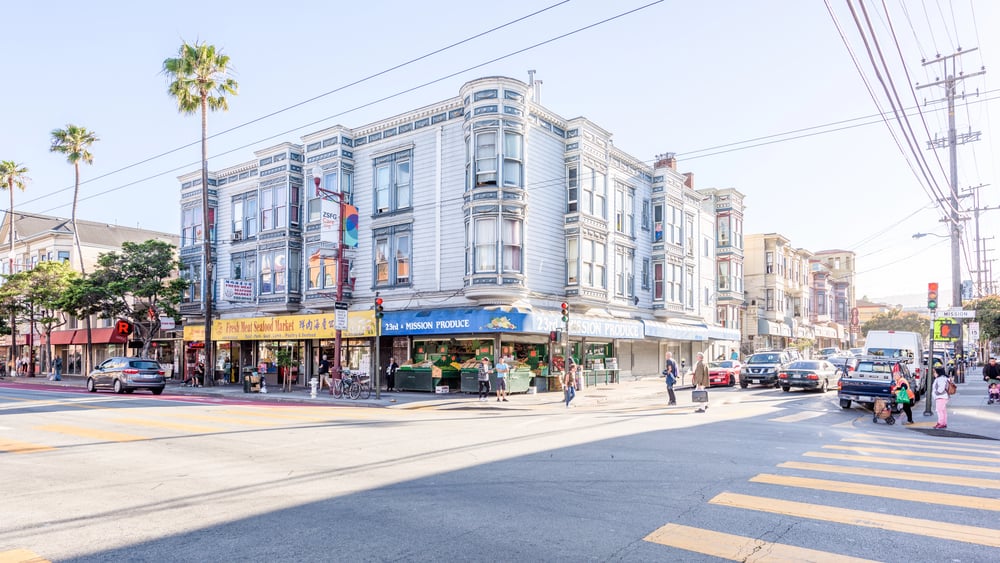
San Francisco’s Mission District is the city’s oldest neighborhood, named for Mission Dolores, which was founded by Spanish missionaries in 1776. The neighborhood was predominantly Irish and German until the 1940s when Latino immigrants, especially from Mexico and Central America, transformed it into the city’s cultural heart for Spanish speakers.
The Mission became famous for its murals, with Balmy Alley and Clarion Alley featuring dozens of paintings that address social justice, immigration, and neighborhood pride. The neighborhood’s Victorian houses survived the 1906 earthquake almost completely intact because they sat on firmer ground than downtown.
Low riders cruise Mission Street on weekends, showing off customized cars with hydraulic systems that make them bounce and hop. The tech boom hit the Mission hard as young workers moved in and longtime residents got pushed out by rising rents.
Street protests against gentrification have become common, with activists blocking tech buses and fighting evictions that threaten to erase the neighborhood’s Latino character.
Alphabet City

Manhattan’s Alphabet City got its name from Avenues A, B, C, and D on the Lower East Side. The neighborhood was so dangerous during the 1970s and 1980s that taxi drivers wouldn’t drop passengers east of Avenue A after dark.
Drug dealers controlled entire blocks, openly selling heroin and crack on street corners. Squatters took over abandoned buildings, creating communities in structures without heat, water, or electricity.
The Tompkins Square Park riots in 1988 started when police tried to enforce a curfew and clear out the homeless people and punks who’d made the park their home. CBGB and other clubs in the area helped launch punk rock, with the Ramones, Blondie, and Talking Heads all playing their first shows within blocks of each other.
Artists and musicians lived in the neighborhood because nowhere else in Manhattan was cheap enough. The whole area gentrified rapidly during the 1990s and 2000s, transforming from urban wasteland to trendy destination almost overnight.
Avenue D, once known as the most dangerous street in America, now has artisanal coffee shops and boutique hotels.
Where the streets remember
These neighborhoods prove that places have memories longer than people. The stories get buried under new construction and fresh paint, but they don’t disappear completely.
Someone always remembers when the streets were different, when other people lived there, when the whole place meant something else. Understanding where we are means knowing what came before, even when that history is uncomfortable or strange.
More from Go2Tutors!

- The Romanov Crown Jewels and Their Tragic Fate
- 13 Historical Mysteries That Science Still Can’t Solve
- Famous Hoaxes That Fooled the World for Years
- 15 Child Stars with Tragic Adult Lives
- 16 Famous Jewelry Pieces in History
Like Go2Tutors’s content? Follow us on MSN.