Numbers Considered Unlucky in Different Cultures
Numbers are supposed to be neutral.
They help us count, measure, and make sense of the world in purely mathematical terms.
But across cultures, certain digits have picked up baggage that has nothing to do with arithmetic and everything to do with history, language, and belief.
Some numbers are so deeply feared that they shape architecture, influence business decisions, and even affect how people celebrate their birthdays.
The reasons behind these superstitions vary wildly.
Sometimes a number sounds too much like an ominous word.
Other times, ancient texts or historical events cast a long shadow.
And occasionally, the origin story is murky at best, yet the fear persists anyway.
Here’s a closer look at how different cultures around the world have turned ordinary numbers into symbols of misfortune.
Thirteen
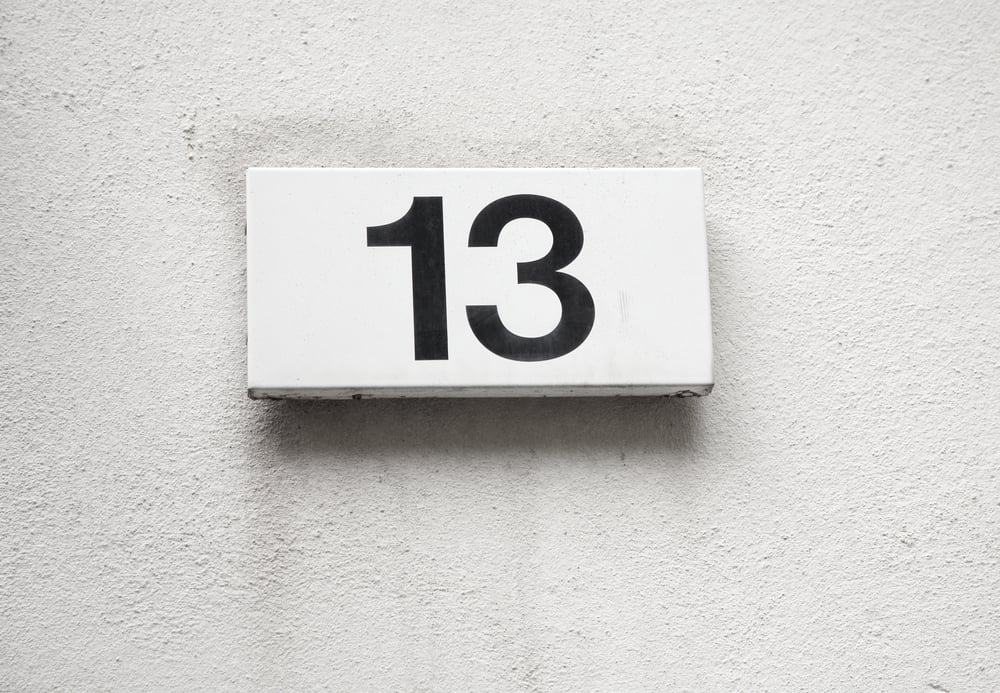
The number 13 needs no introduction in Western countries.
It’s the poster child for numerical superstition, so deeply entrenched that it has its own clinical term: triskaidekaphobia.
More than 80 percent of high-rise buildings in the United States skip the 13th floor entirely, jumping straight from 12 to 14.
Airlines often avoid row 13, and hotels routinely omit room 13 from their floor plans.
The American economy reportedly loses close to a billion dollars every time Friday the 13th rolls around, as people delay travel plans, postpone major purchases, and generally avoid doing anything that feels remotely risky.
The origins are tangled, with several competing theories.
One points to the Last Supper, where 13 people sat at the table and Judas, the betrayer of Jesus, was supposedly the 13th guest.
Another traces the superstition to Friday, October 13, 1307, when King Philip IV of France ordered the arrest and torture of the Knights Templar.
There’s also a more mundane explanation involving medieval monks and lunar calendars.
Years with 13 full moons instead of the usual 12 caused calendar headaches, and the extra moon came to be seen as disruptive and unlucky.
Whatever the reason, the number has stuck as a symbol of bad luck across much of the Western world.
Interestingly, 13 is considered lucky in Italy, flipping the script entirely.
This contrast highlights just how arbitrary these beliefs can be, even when they’re taken seriously.
Four

In China, Japan, Korea, and Vietnam, the number 4 carries a weight that rivals 13 in the West.
The reason is straightforward but chilling: in Mandarin, Japanese, and Korean, the word for ‘four’ sounds nearly identical to the word for ‘death.’
In Mandarin, both are pronounced similarly, and the same holds true in Japanese, where ‘shi’ means both four and death.
This phonetic overlap has given rise to tetraphobia, a widespread fear of the number.
Buildings across East Asia routinely skip the fourth floor.
Hospitals avoid room numbers with a 4, especially in maternity wards, where the stakes feel even higher.
Some apartment complexes label the fourth floor as 3A or simply use the letter F to sidestep the number altogether.
Sports teams avoid the number 4 in player jerseys when possible, and prices ending in 4 are less common in stores.
Even phone numbers and license plates are chosen to avoid the digit, with people willing to pay extra for a ‘safer’ combination.
This isn’t a relic of the past.
The superstition remains alive and well in modern cities like Beijing, Tokyo, and Seoul, where skyscrapers and hospitals are designed with tetraphobia in mind.
The avoidance is so ingrained that many younger people who consider themselves rational still feel uncomfortable with the number, even if they don’t fully believe in its power.
Nine
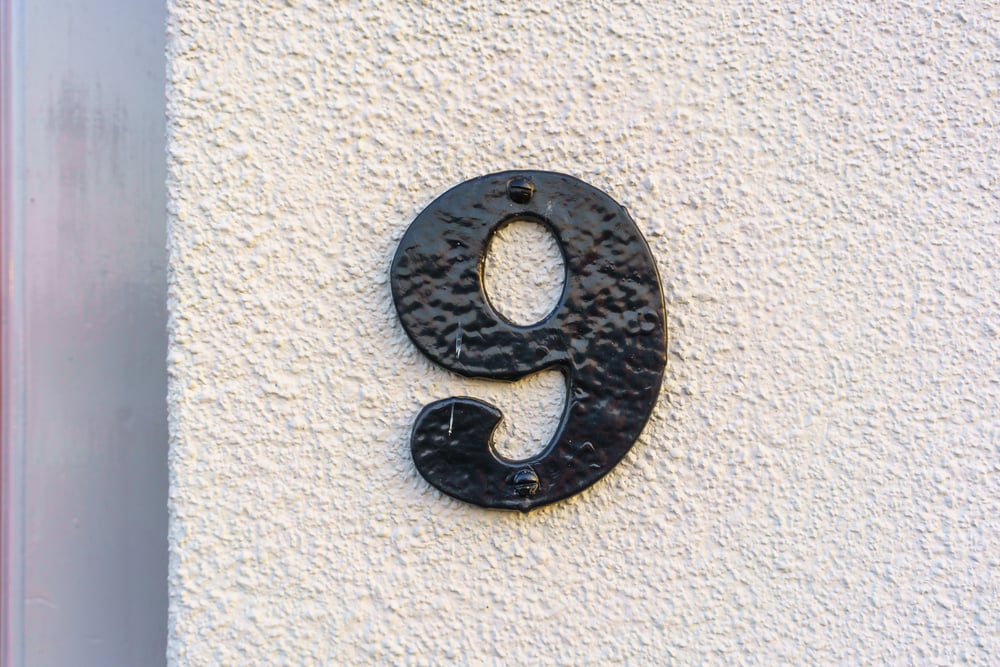
Japan has another unlucky number in its roster: 9.
The problem, once again, is linguistic.
The number can be pronounced as ‘ku,’ which sounds like the Japanese word for suffering, agony, or torture.
This makes 9 nearly as avoided as 4 in certain contexts, particularly in hospitals and hotels.
Some buildings skip the ninth floor, and maternity wards may avoid room 43 altogether because it sounds like ‘stillbirth’ when the numbers are combined.
Gift-giving in Japan requires careful thought around numbers.
You should never give someone four or nine of anything, as it’s interpreted as wishing them death or suffering.
Instead, gifts come in sets of three or five.
The combination of 4 and 9 together—49—is especially dreaded because it sounds like ‘painful death.’
Even people who are 39 years old sometimes refer to themselves as ‘one year to 40’ to avoid saying their actual age.
Interestingly, Japanese Buddhists hold memorial ceremonies 49 days after a person’s death, but this has nothing to do with superstition.
In Buddhist belief, the soul departs for another realm exactly 49 days after death, making the number spiritually significant rather than unlucky in that specific context.
Seventeen

Italy flips the Western script again with the number 17.
While much of Europe and North America fear 13, Italians reserve their anxiety for 17, especially when it falls on a Friday.
The fear has ancient roots.
When written in Roman numerals as XVII, the letters can be rearranged to spell VIXI, a Latin word meaning ‘I have lived’—in other words, ‘My life is over’ or ‘I am dead.’
The phrase was sometimes inscribed on Roman tombstones, cementing its association with death.
Italian buildings often skip the 17th floor.
Alitalia, the Italian airline, omits row 17 on its planes.
Hotels avoid room 17, and even car manufacturers have taken note.
Renault famously sold its R17 model in Italy as the R177 to sidestep the superstition.
Friday the 17th is considered particularly ominous, much like Friday the 13th elsewhere, and some Italians avoid scheduling weddings, business deals, or other important events on that date.
There’s also a connection to Pythagoras, who considered 17 an imperfect number because it falls between 16 and 18, both of which he saw as harmonious.
The Genesis flood narrative adds another layer, as the flood is said to have begun on the 17th day of the second month.
These threads—linguistic, mathematical, and biblical—have woven together to make 17 a number many Italians would rather avoid.
Thirty-Nine

Afghanistan has its own uniquely reviled number: 39.
The superstition is relatively recent but intense.
The number translates to ‘morda-gow,’ which literally means ‘dead cow’ but is widely understood as slang for someone who procures others for immoral purposes.
In a deeply conservative society, being associated with 39—whether on a license plate, phone number, or street address—is considered deeply shameful.
The stigma became so severe in Kabul that when the government began issuing license plates starting with 39 after the Persian New Year in March 2011, many drivers refused to register their vehicles.
Those who already had plates with 39 faced harassment on the roads.
People would honk, flash their lights, and shout insults.
Some drivers resorted to covering the numbers with tape or blue plastic sheets, while others tried to alter the plates by making the 3 look like an 8.
Cars with 39 on the plate became nearly impossible to sell in Kabul, though dealers in surrounding provinces could turn a profit by buying them cheaply in the capital and reselling them elsewhere.
Even people who were 39 years old felt the sting.
One Afghan driver named Waseh, who was 39 at the time, told reporters he referred to himself as ‘one year till 40’ to avoid the stigma.
The government and religious leaders tried to push back, with imams noting that 57 chapters of the Quran contain the number 39, and mathematicians calling it ‘a sickness for Afghans.’
But the superstition persisted.
During a 2010 parliamentary election, two people were reportedly killed after guards for a candidate opened fire on civilians who taunted the candidate for being listed as number 39 on the ballot.
Six Hundred Sixty-Six

The number 666 is instantly recognizable in Christian-majority countries as the ‘Number of the Beast’ from the Book of Revelation.
It’s associated with the devil and the Antichrist, and fear of it even has a name: hexakosioihexekontahexaphobia.
People avoid flight numbers, hotel rooms, phone numbers, and street addresses that include 666.
Some see it as a warning sign or a bad omen, even if they’re not particularly religious.
Curiously, 666 is considered lucky in China.
The pronunciation of 6 in Chinese sounds similar to the word for ‘smooth’ or ‘flowing,’ so three sixes in a row are thought to bring good fortune and smooth sailing.
You’ll see the number displayed on neon signs, in phone numbers, and even on license plates, with people paying extra to secure it.
This stark contrast between Western fear and Eastern embrace shows how much geography and culture can shape the meaning we assign to numbers.
Why It Lingers

These superstitions might seem irrational, especially in a world driven by data and science.
But numbers are everywhere, and when a culture assigns meaning to a digit, that belief becomes part of the social fabric.
It shows up in architecture, commerce, and daily conversation.
It influences decisions that feel inconsequential—like which floor you live on—and ones that carry real weight, like when to schedule a wedding or whether to buy a car.
The staying power of these beliefs also speaks to something deeper.
Even people who don’t consider themselves superstitious often hedge their bets.
After all, what’s the harm in avoiding a number if it makes you or those around you more comfortable?
And in a world full of uncertainty, rituals and taboos offer a sense of control, however small.
Numbers may be just symbols, but the stories we tell about them are deeply human.
More from Go2Tutors!

- The Romanov Crown Jewels and Their Tragic Fate
- 13 Historical Mysteries That Science Still Can’t Solve
- Famous Hoaxes That Fooled the World for Years
- 15 Child Stars with Tragic Adult Lives
- 16 Famous Jewelry Pieces in History
Like Go2Tutors’s content? Follow us on MSN.



