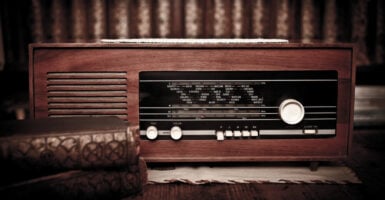
Obsolete Job Skills That Were Essential
Over the past century, the workplace has undergone significant change, leaving a legacy of once-important occupations that have vanished into the past. Technological advancement, automation, and shifting social demands have eliminated the need for skills that once supported entire industries and employed thousands of people.
These jobs were vital components of the economic machinery that kept society functioning properly, not merely means of making a living. Comprehending the reasons behind these roles’ obsolescence provides insight into how rapidly the demands of the contemporary world can change.
These are 13 outdated but crucial job skills.
Switchboard Operating

Switchboard operators manually connected each phone call by plugging cables into the proper jacks on enormous switchboards prior to automated phone systems. Operators handled requests and routed calls throughout entire cities, so the job required fast reflexes, a great memory, and strong communication skills.
Approximately 342,000 telephone switchboard operators were employed by telephone companies in the United States during the 1950s, with additional operators working in private establishments like hotels and offices. In 1878, Emma Nutt became the first woman to operate a switchboard, earning $10 per month for 54-hour work weeks.
Automated dialing systems rendered the profession all but obsolete by the 1960s and 1970s, though a small number of people still work in specialized settings like medical offices.
Elevator Operating

Elevator operators were once fixtures in department stores, office buildings, and hotels, manually controlling the machinery that moved passengers between floors. At its peak, the profession employed more than 90,000 workers in the United States who were responsible not just for operating controls but also for greeting passengers and ensuring smooth rides.
The public initially hesitated to trust automated elevators despite their existence since 1900, but a 1945 elevator operators strike in New York City demonstrated that self-service systems worked just fine. The shift happened rapidly after that—only 12.6 percent of new elevator installations were automated in 1950, but by 1959 that figure had surged past 90 percent.
Elevator operator became one of the only occupations from that era to be completely replaced by automation.
Ice Cutting

Before mechanical refrigeration, ice cutters braved frozen lakes and rivers with hand saws to harvest massive blocks of ice for storage and sale. Workers would identify spots with sufficient ice buildup, cut rectangular sections, and float them through precut channels to collection points for delivery to homes and businesses.
The job was physically demanding and genuinely dangerous—ice cutters and their horses sometimes fell through the ice into freezing water, a serious risk in an era when swimming skills were not widespread. Ice harvesting operations could employ 40 to 50 workers at a single location during peak season.
The invention and widespread adoption of electric refrigerators in the early 20th century made this cold and risky profession unnecessary, though the ice delivery business lingered into the 1930s.
Knocker-Upping

During the Industrial Revolution, alarm clocks were neither cheap nor reliable, creating demand for human alarm clocks known as knocker-uppers. These workers roamed city streets in the early morning darkness, using long bamboo poles to tap on upper-floor windows or short batons to knock on doors until their clients woke up.
Some knocker-uppers, like Mary Smith of East London, used pea shooters to fire dried peas at windows with sniper-like precision. The job paid a few pence per week per client, and workers often stayed awake all night to ensure they didn’t oversleep and miss their own appointments.
The profession persisted in some pockets of industrial England into the 1960s, declining as affordable mechanical alarm clocks became widely available.
Lamplighting

Lamplighters walked city streets at dusk carrying long poles with wicks at the end, manually igniting each gas street lamp as darkness fell. When morning arrived, they made the same rounds again, using a small hook on the pole to extinguish each flame.
The job required physical stamina for walking miles of streets daily and the ability to work in all weather conditions. Gas street lamps became the dominant form of lighting in the 19th century, but the development of automated lighting systems gradually made lamplighters unnecessary.
By the early 1900s, the profession had nearly vanished, though a few cities maintain lamplighters today purely for tourist purposes, like Brest, France, which employed one in 2009 to light kerosene lamps on a shopping street.
Telegraph Operating
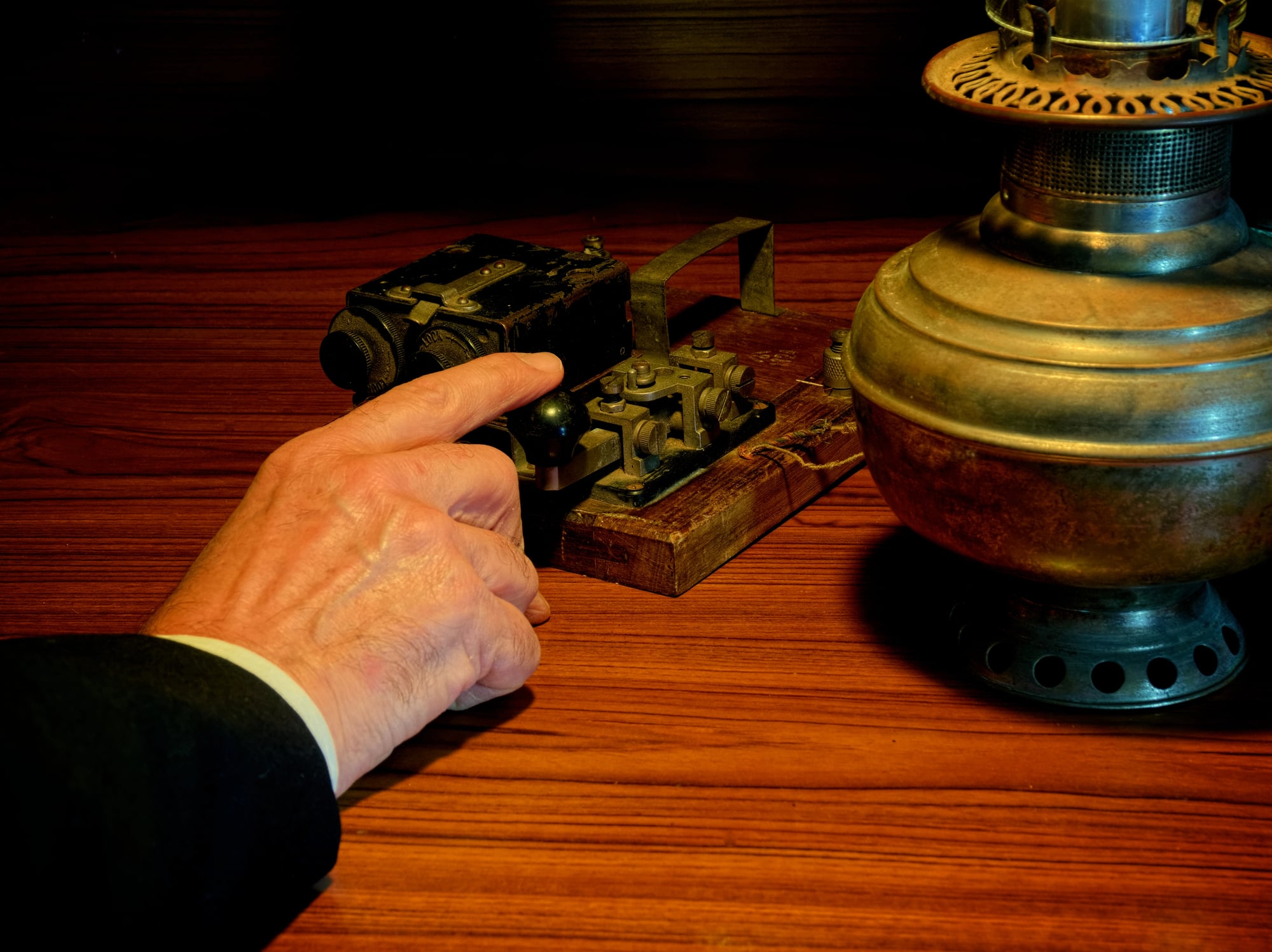
Telegraph operators mastered Morse code to send and receive messages over long distances, serving as the backbone of rapid communication in the 19th and early 20th centuries. The job demanded concentration, speed, and accuracy as operators translated messages between text and the dots and dashes of Morse code.
Telegraphists worked in train stations, post offices, and communication centers, enabling businesses and individuals to communicate far faster than traditional mail allowed. The profession began declining as telephone systems expanded and became more reliable, offering real-time voice communication instead of coded messages.
Later communication technologies eventually replaced the remaining telegraph services entirely, transforming one of the first technological occupations of the modern era into a historical curiosity.
Linotype Operating

Linotype operators ran complex machines that revolutionized newspaper and magazine printing in the late 19th century. The Linotype machine contained molds for every letter in the alphabet, and as operators typed, the machine assembled letters into lines and used hot metal to create printing strips.
Accuracy was critical because any mistake would be reproduced on every copy of the newspaper, making the role both skilled and high-pressure. The machines required operators to understand both typography and the mechanical workings of the equipment.
In the 1960s, phototypesetting technology arrived, requiring different skill sets and quickly making Linotype operators obsolete. The decline of print media in recent decades has pushed all typesetting jobs toward extinction.
Pin Setting

Before automated bowling machines arrived in the 1950s, pin setters manually reset bowling pins after each turn in a job that was physically demanding and sometimes dangerous. These workers, often teenagers and sometimes called pin boys, crouched at the end of lanes dodging stray bowling orbs while quickly clearing fallen pins and rearranging them for the next frame.
One former pin setter recalled handling four lanes per shift at a pay rate of 10 cents per game bowled. The job was tedious and poorly paid, and workers sometimes struggled to maintain focus during long shifts.
Gottfried Schmidt designed an early mechanical pin setter to improve consistency, and by the mid-1900s, automated systems had replaced human pin setters throughout North America.
Milk Delivery

Milkmen made daily or weekly rounds through neighborhoods, delivering fresh milk in glass bottles and collecting empties from doorsteps. This service was essential before widespread home refrigeration, as dairy products spoiled quickly without proper cold storage.
In the early 1950s, more than half of consumer milk sales in the United States came from home delivery services, making it a common and familiar profession. The milkman often became a recognized figure in the community, knowing families by name and adjusting deliveries based on their needs.
The rise of supermarkets and improved refrigeration technology made daily milk delivery unnecessary, as consumers could purchase larger quantities and store them safely at home. The arrival of automobiles also contributed to the decline, as people could easily drive to stores themselves.
Human Computing

Before electronic calculators and computers, organizations employed people as human computers to perform complex mathematical calculations by hand. These workers relied on logarithm tables, slide rules, and careful hand calculations to solve equations, create tables, and analyze data.
The job required patience, attention to detail, and strong mathematical abilities. NASA employed human computers between the 1940s and 1960s, including notable figures like Mary Jackson, Katherine Johnson, and Dorothy Vaughan, whose calculations enabled critical space missions.
These skilled professionals performed the kind of work that would later be done in seconds by electronic computers. The development of electronic computing technology in the mid-20th century gradually eliminated the need for human computers, though their contributions to early space exploration and scientific research remain historically significant.
Factory Reading

Lectors were hired to read aloud to factory workers during long shifts, providing entertainment and information to break up monotonous labor. This practice appeared in Cuban nicotine factories in the 1860s, where workers performing repetitive tasks appreciated having something to engage their minds.
Lectors would audition for positions, and once hired, they read whatever workers wanted to hear—typically a combination of news, literature, and political commentary. The role required comfort speaking in front of groups and the ability to project their voice over factory noise.
Workers valued the mental stimulation during tedious tasks, and lectors could even inspire debate and discussion among the workforce. As radios became affordable and widely available, workers could access entertainment and news without needing someone to read aloud, making the lector profession unnecessary.
Film Projection

Film projectionists operated movie projectors in cinemas, managing film reels and watching for on-screen cues that indicated when to change reels. The job required technical skill and careful attention, as projectionists had to time reel changes perfectly to avoid interruptions in the movie.
They also maintained projection equipment, ensuring films displayed correctly for audiences. Projectionists needed to understand the mechanical aspects of film projection and how to troubleshoot problems quickly.
The transition to digital projectors fundamentally changed the profession, greatly reducing the technical expertise needed and the number of workers required. While some trained technicians still work in modern theaters, the hands-on skills that once defined film projection have largely become unnecessary.
Professional Typing

Typist pools were essential to office operations, as knowledgeable employees used typewriters to transcribe handwritten documents, letters, and reports. In order to record dictation at speaking speed and then transcribe it into standard text, many typists also learned shorthand, a quick note-taking technique.
Accuracy, speed, and familiarity with business correspondence formats were necessary for the job. Accurate record-keeping was crucial in courtrooms, offices, and other professional settings where stenographers worked.
Throughout the middle of the 20th century, the position employed thousands of workers, mostly women. In the 1980s and 1990s, word processing software and personal computers made it possible for people to type their own documents, gradually doing away with the need for specialized typing professionals and rendering typewriter repair mechanics all but obsolete.
Skills Lost and Lessons Learned

These professions’ demise reveals more about how societies adjust to change. Every outdated job used to be a means of subsistence, a skill that was inherited or acquired via experience, and an essential service that communities relied upon.
Not only did technology replace these workers, but it also completely changed the way people lived and worked. Some of these changes happened so quickly that it serves as a reminder that even seemingly stable careers can disappear in a generation.
Understanding this history is becoming more and more important for workers navigating an uncertain future as automation and artificial intelligence continue to transform the modern workplace.
More from Go2Tutors!

- The Romanov Crown Jewels and Their Tragic Fate
- 13 Historical Mysteries That Science Still Can’t Solve
- Famous Hoaxes That Fooled the World for Years
- 15 Child Stars with Tragic Adult Lives
- 16 Famous Jewelry Pieces in History
Like Go2Tutors’s content? Follow us on MSN.