Old Sports Traditions That Evolved Into New Rules
Sports weren’t always governed by the thick rulebooks we see today. For decades, athletes played by unwritten codes, gentleman’s agreements, and practices that everyone just accepted as ‘the way things are done.’
But as competitions grew more intense and the stakes got higher, those informal traditions had to be written down and enforced. Some changes came from safety concerns, others from the need to speed up play or make games more exciting for fans.
The transformation from tradition to regulation tells the story of how sports adapt to survive. Here is a list of old sports traditions that eventually became official rules.
Forward Pass Legalization

Football once looked more like rugby, with players advancing the pigskin only by running or kicking. Throwing it forward was strictly forbidden and considered unsporting.
But the game had become brutally violent by the early 1900s, with mass formations causing serious injuries and deaths. In 1906, desperate to save the sport from being banned entirely, rule makers legalized the forward pass as a way to spread out the action and reduce the pile-ups.
Coaches initially dismissed it as a gimmick that would never catch on. Saint Louis University proved them wrong by building their entire offense around throwing, and within a few years, the forward pass had completely reshaped American football into the aerial game fans recognize today.
Three-Point Arc

Basketball players took every shot with the same value for decades. Whether you launched from 30 feet out or right under the hoop, a made basket counted for two points.
The American Basketball Association introduced a three-point arc in 1967 to add excitement and reward skilled long-range shooters. When the NBA finally adopted the three-point line in 1979, many traditionalists predicted it would be a passing fad.
That first season, teams averaged fewer than three attempts per game. Fast forward to now, and the modern NBA sees teams launching 40 or more three-pointers in a single game.
The line drawn 23 feet and 9 inches from the basket fundamentally changed how players train, how teams build rosters, and how coaches design their offenses.
Shot Clock Introduction

Early basketball games could turn into stalling contests once a team grabbed a lead. Defenders simply held possession, passing the pigskin back and forth while the clock ran down.
Fans grew so frustrated with this boring tactic that attendance plummeted in the early 1950s. Syracuse Nationals owner Danny Biasone calculated that teams combined for about 120 shots in an exciting game, which worked out to roughly one shot every 24 seconds.
The NBA implemented his 24-second shot clock for the 1954 season, and scoring immediately jumped from an average of 79 points per game to 93. The rule transformed basketball from a chess match into the fast-paced sport that keeps fans on their feet.
Designated Hitter

American League pitchers used to bat just like everyone else, even though most of them couldn’t hit worth a damn. Watching pitchers flail helplessly at the plate became such a drag that the league introduced the designated hitter rule in 1973, allowing teams to use a specialist who bats in place of the pitcher.
The National League stubbornly refused to adopt it for nearly 50 years, creating the bizarre situation where the same sport played by slightly different rules depending on which league you watched. Baseball purists argued that having pitchers bat was part of the game’s strategic charm.
The AL countered that fans came to see offense, not automatic outs. Finally, in 2022, both leagues unified under the DH rule, ending one of the longest-running debates in professional sports.
Icing Prohibition

Hockey teams protecting a lead discovered they could just dump the puck all the way down the ice whenever they felt defensive pressure. This time-wasting tactic made games unbearably slow and frustrated everyone watching.
The breaking point came in 1931 when the New York Americans iced the puck over 50 times in a single game, causing fans to throw debris onto the ice in anger. The NHL introduced the icing rule in 1937 to eliminate this delaying tactic.
When a team ices the puck now, play stops and the faceoff comes back to their defensive zone. Even better, the offending team can’t change players, meaning their tired skaters have to stay on the ice and defend against fresh opponents.
Penalty Shootout

Soccer matches that ended in ties used to be decided by coin tosses or drawing lots. Yes, really.
Major tournaments would literally flip a coin to determine which team advanced. This happened at the 1968 European Championships when Italy progressed to the finals after a coin toss against the Soviet Union.
Israeli official Joseph Dagan, frustrated after his national team was eliminated by such a random method, proposed the penalty shootout format in 1969. FIFA officially adopted it in 1970, though it didn’t appear at a World Cup until 1982.
The shootout may feel like a lottery to fans whose teams lose, but it beats deciding the outcome with actual chance.
Tennis Tiebreaker

Tennis matches could theoretically last forever under the original rules. Players had to win a set by two games, which meant scores like 50-48 were possible if neither player could break serve.
American tennis patron Jimmy Van Alen proposed the tiebreaker in the 1950s to prevent these marathon matches from dragging on indefinitely. The format took a while to catch on because traditionalists loved the drama of endless sets.
Wimbledon resisted until 1971, and even then only for the first four sets. The epic 2010 match between John Isner and Nicolas Mahut, which ended 70-68 in the fifth set after 11 hours of play, finally convinced even the traditionalists.
By 2022, all four Grand Slam tournaments had adopted final-set tiebreakers.
Spitball Ban

Pitchers in baseball’s early years would do just about anything to the baseball to gain an advantage. They’d spit on it, scuff it with sandpaper, rub it with tobacco juice, or coat it with slippery substances.
The spitball became particularly popular because it moved unpredictably through the air, making it nearly impossible to hit. But in 1920, Cleveland’s Ray Chapman died after being struck in the head by a pitch, partly because the discolored, doctored baseball was hard to see.
Baseball banned the spitball immediately after Chapman’s death, with a grandfather clause for 17 pitchers who had built their careers around it. The rule also required umpires to replace dirty baseballs with clean ones throughout the game, making pitches easier to track.
Foul Strike Rule
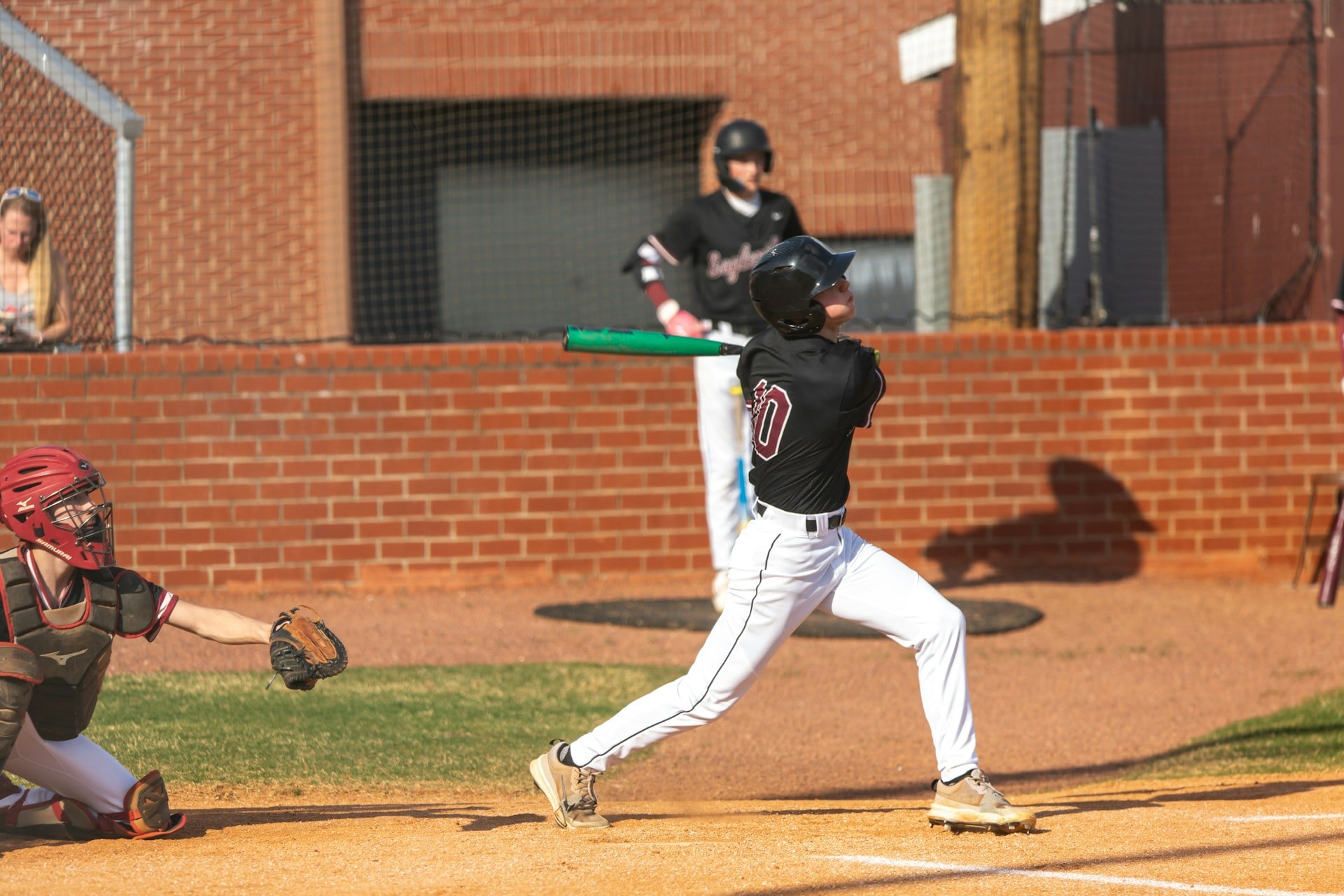
Batters in early baseball could foul off pitches endlessly without penalty. At-bats dragged on forever as hitters just stood there protecting the plate, fouling away pitch after pitch with no consequence.
The 1901 season brought a rule change that counted foul strikes as strikes, at least until the batter had two strikes. This simple adjustment immediately sped up the game and shifted power back toward pitchers.
Batters could no longer camp out at the plate fouling off 20 consecutive pitches while waiting for the perfect one to hit.
Offside Evolution

Soccer’s offside rule has been tweaked more times than just about any rule in sports. When the game was first codified in 1863, any attacking player positioned ahead of their teammate with possession was offside.
That made scoring nearly impossible. The rule was modified in 1866 to allow attackers with three defenders between them and the goal.
In 1925, this changed to two defenders. The most recent major update came in 1990, allowing attackers to be even with the second-to-last defender without being called offside.
Each change opened up the attacking game a bit more, though defenders still complain that forwards get too much leeway.
Two-Point Conversion

College football had featured the two-point conversion option since 1958, but the NFL stuck with boring extra-point kicks for another 36 years. The league finally adopted the two-point conversion in 1994, letting teams try to run or pass the pigskin into the end zone from the two-yard line after a touchdown instead of kicking.
This added a strategic element that makes close games even more dramatic. Coaches now have to weigh risk versus reward in crucial moments, and a failed two-point attempt can haunt them forever.
Illegal Contact Rule

NFL defenders in the 1960s figured out they could mug receivers all the way down the field without penalty. The ‘bump and run’ technique became so dominant that passing offenses ground to a halt.
Defensive backs would make contact with receivers immediately at the snap and maintain that contact for the entire route. The league instituted the illegal contact rule in 1978, preventing defenders from touching receivers more than five yards past the line of scrimmage.
Offenses exploded after this change, and passing numbers have climbed steadily ever since. Critics said it made the game too easy for quarterbacks, but fans loved the high-scoring shootouts.
Pitch Timer

Baseball pitchers and batters developed elaborate rituals between pitches that slowed games to a crawl. Pitchers would step off the rubber multiple times, adjust their caps, get new signs, and generally stall.
Batters would step out of the box, adjust their batting gloves, take practice swings, and do everything except actually hit. Games that once took two hours were stretching past three and a half.
Major League Baseball introduced a pitch clock in 2023 that gives pitchers 15 seconds with the bases empty and 20 seconds with runners on. The change shaved about 30 minutes off the average game time and kept the action moving at a pace that modern fans appreciate.
Hybrid Icing Safety

Hockey’s original icing rule required a defending player to actually touch the puck first for the call to be made. This created dangerous races where players would charge at full speed toward the end boards, often resulting in brutal collisions.
Multiple career-ending injuries forced the NHL to reconsider. The league introduced hybrid icing in 2013, where linesmen can call icing as soon as the defending player reaches the faceoff dots first.
Players no longer need to race all the way to the end boards, which has dramatically reduced the number of high-speed crashes into the boards.
Penalty Area Creation

Early soccer had penalty kicks, but no designated penalty area. Referees had to judge whether fouls occurred close enough to goal to warrant a penalty, leading to endless arguments.
The penalty area as it exists today became official in 1902, creating a clearly marked 18-yard box where defenders need to be extra careful. Fouls inside the box result in penalties, while fouls just outside lead to free kicks.
This simple visual boundary ended countless disputes and gave everyone a clear understanding of where the stakes were highest.
Mound Height Reduction

The 1968 baseball season became known as the ‘Year of the Pitcher’ because hitting had become virtually impossible. Bob Gibson posted an absurd 1.12 ERA, and the league saw seven no-hitters.
Offense had dried up so completely that MLB executives worried fans would abandon the sport. The league lowered the pitching mound from 15 inches to 10 inches for the 1969 season and also shrunk the strike zone.
These adjustments immediately brought batting averages back up and restored competitive balance between pitchers and hitters.
Hash Mark Repositioning

The NFL moved its hash marks in 1972 to open up offensive play. Before this change, hash marks were much closer to the sidelines, which gave defenses an advantage because offenses had less field to work with on one side.
Moving the hash marks to 70 feet and 9 inches from each sideline centered the action and gave offenses more room to operate. The number of 1,000-yard rushers doubled that year because running backs suddenly had more space to find daylight.
Goalkeeper Movement Restrictions

Goalkeepers in soccer used to roam freely outside their penalty areas, creating confusion about when they could use their hands. The six-yard goal area was added to give keepers a protected zone, and rules were clarified about when they could handle with their hands versus when they had to use their feet like any other player.
Modern rules also prohibit keepers from picking up deliberate back-passes from teammates, forcing them to use their feet in those situations. These changes prevent time-wasting and keep the game flowing.
Overtime Format Changes

Professional sports experimented with various overtime formats for decades. The NFL used sudden death for years, where the first team to score won immediately.
This often meant that the coin toss determined the outcome more than actual play. Hockey tried different overtime lengths and eventually added shootouts to ensure every game had a winner.
Basketball tweaked its overtime periods multiple times. Each sport eventually settled on formats that balanced fairness with the need to crown a winner in a reasonable timeframe, though debates about the best overtime system continue.
The Living Rulebook
Sports keep evolving because the athletes keep finding new ways to push boundaries. What started as informal practices become loopholes, loopholes become problems, and problems become new rules.
The games we watch today look dramatically different from how they were played 50 or 100 years ago, and they’ll keep changing as long as competition drives innovation. Rules aren’t obstacles to the game; they’re the framework that keeps it fair, safe, and entertaining for everyone involved.
More from Go2Tutors!

- The Romanov Crown Jewels and Their Tragic Fate
- 13 Historical Mysteries That Science Still Can’t Solve
- Famous Hoaxes That Fooled the World for Years
- 15 Child Stars with Tragic Adult Lives
- 16 Famous Jewelry Pieces in History
Like Go2Tutors’s content? Follow us on MSN.