Once Popular Apps That Disappeared
There’s a particular kind of digital grief that hits when you open your phone one day and realise something you used every single day is just gone. No fanfare, no proper goodbye — just a notification saying the service is shutting down, and suddenly a chunk of your daily routine disappears with it.
Some apps faded slowly, losing users to competitors over months or years. Others were shut down almost overnight, leaving communities stranded and archives wiped.
A few were bought up and quietly buried by the companies that acquired them. Whatever the method, the result was the same: something that millions of people built habits around simply stopped existing.
Here are some of the biggest apps that once ruled your screen and then vanished.
Vine
Vine launched in 2013 and gave the world six-second looping videos before anyone had worked out what to do with that format. In those six seconds, creators found ways to be genuinely funny, strange, and creative in ways that longer formats didn’t demand.
The constraint was the point. At its peak, Vine had more than 200 million users and was producing some of the most original short-form content on the internet.
Then Twitter, which had acquired Vine before it even launched, pulled the plug in 2016. The reasons were a mix of creator discontent, monetisation failures, and competition from Instagram and Snapchat.
The app was gone within months of the announcement. The loss felt hard.
Vine alumni went on to dominate YouTube and eventually TikTok — a platform that borrowed freely from everything Vine had established. The irony that Twitter shut down Vine while the format it pioneered became the biggest trend in social media is not lost on anyone who was there.
MSN Messenger
Before smartphones, before WhatsApp, there was MSN Messenger. You got home from school, heard the dial-up screech, and logged on to see who was around.
The tiny green icon in the system tray was the centre of social life for an entire generation of teenagers in the late 1990s and early 2000s. Custom display names written in elaborate fonts, nudges that made the screen shake, profile songs set to whatever you were listening to that week — MSN had a whole culture built around it.
Microsoft eventually merged it into Skype in 2013, which felt like trading something warm and familiar for something cold and corporate. Most people stopped using both.
Friendster
Friendster was the original social network for most people — or at least it was for those who were online before MySpace and Facebook arrived. It launched in 2002 and briefly had more than 100 million registered users, mostly in Southeast Asia where it remained popular long after it had died in the West.
The problem was the technology. Friendster’s servers couldn’t handle the load, pages took forever to load, and users started leaving in frustration.
By the time the technical issues were addressed, MySpace had taken the audience. Friendster tried to reinvent itself as a gaming platform in its final years and shut down entirely in 2015, deleting all user data with it.
MySpace
For a few years in the mid-2000s, MySpace was the internet. It was where music lived before Spotify, where you ranked your five closest friends publicly for everyone to see, and where you learned basic HTML by breaking your profile page trying to change the background colour.
News Corp bought it for $580 million in 2005. Facebook arrived, offered a cleaner design and a less chaotic experience, and MySpace collapsed almost entirely by 2011.
A catastrophic server migration wiped 12 years of uploaded music — an estimated 50 million songs — in 2019. An entire era of independent music history was gone with it.
Google Reader
Google Reader was an RSS aggregator that let you follow websites and blogs in a single feed, updated in real time. For journalists, researchers, writers, and anyone who wanted to track information across the internet without visiting dozens of sites individually, it was essential.
Google shut it down in 2013, citing declining usage. The reaction was immediate and loud — petitions, open letters, and a level of public anger that surprised even the people who’d built it.
The shutdown didn’t just end an app. It effectively killed the RSS ecosystem, since Google Reader had become so dominant that the format had trouble surviving without it. Some people are still annoyed about this.
Google+

Google’s attempt at social networking launched in 2011 with a waitlist that made it feel exclusive, a clean interface that felt genuinely different from Facebook, and Circles — a way of organising contacts that actually made sense. Tech journalists declared it a Facebook killer within weeks of launch.
It wasn’t. The wider public signed up, looked around, and couldn’t find anyone they wanted to talk to. Google made the mistake of forcing YouTube commenters onto the platform, which made everyone like it less.
It limped along for years before Google shut it down in 2019 after a data breach. The people who loved it — a small but genuinely devoted community — had nowhere to go.
Yik Yak

Yik Yak launched in 2013 as an anonymous, location-based social app. You could post anything and anyone within a five-mile radius could see it.
On university campuses, it was enormous — a kind of real-time, unfiltered conversation about wherever you happened to be. The anonymity was also its downfall. Bullying, threats, and harassment became serious enough that the app was banned in several schools and colleges.
The founders responded by removing anonymity in 2016 — the single feature that made the app what it was — and the user base evaporated almost overnight. The company shut down in 2017. It was briefly revived in 2021, but the moment had passed.
Path

Path wanted to be the anti-Facebook. Where Facebook encouraged you to accumulate as many connections as possible, Path limited your network to 50 people — later raised to 150 — based on the idea that meaningful social connections only work at a small scale.
The design was beautiful, the concept was thoughtful, and tech circles loved it. The general public never fully arrived.
Path raised tens of millions in funding, reached around 20 million users, and then plateaued. It was sold to a South Korean tech company in 2015, and the app shut down completely in 2018.
The people who used it genuinely mourned it. There hasn’t been anything quite like it since.
Meerkat

Meerkat was a live-streaming app that launched at South by Southwest in 2015 and became an overnight sensation. Within days, celebrities and journalists were broadcasting live from their phones to audiences that could comment in real time.
It felt like the next big thing was arriving fast-forward. Then Twitter cut off Meerkat’s access to its social graph, effectively making it impossible to find people you already knew.
Twitter had acquired Periscope — a direct competitor — just before Meerkat’s breakout moment. Without network effects, Meerkat had no way to grow.
It pivoted to a team video product called Houseparty, which briefly had its own moment during the early pandemic, before Epic Games acquired it and shut it down in 2021.
Ping
Apple launched Ping in 2010 as a music-based social network built directly into iTunes. You could follow artists, see what friends were listening to, and share recommendations.
It had a built-in audience of hundreds of millions of iTunes users from day one. It lasted two years.
Apple had failed to secure a deal with Facebook for social integration, which left Ping isolated from where people actually spent their time online. The discovery features were weak, the spam was relentless, and engagement never materialised.
Apple quietly removed it in 2012 and never mentioned it again. Most people forgot it existed within months.
BlackBerry Messenger

BBM was the original messaging app with status, quite literally. In the late 2000s, having a BlackBerry — and by extension a BBM PIN — was a marker of being connected in a particular way.
The encrypted messaging, the delivery and read receipts, and the groups made it feel more serious than text messaging. When BlackBerry’s hardware declined and iPhone and Android took over, BBM lost its exclusivity.
It expanded to other platforms in 2013 in an attempt to compete with WhatsApp, but by then WhatsApp had already won. BBM shut down its consumer service in 2019.
The corporate version followed. The PIN system, once a status symbol, is now just a memory.
Orkut

While Facebook was conquering North America and Europe, Google’s Orkut dominated Brazil and India. In Brazil particularly, it was the social network — the place where people organised events, joined communities, and maintained friendships online through most of the 2000s.
Google shut it down in 2014, redirecting users to Google+. In Brazil, this was treated as a genuine national event, with media coverage and public mourning that surprised international observers.
Facebook had been making inroads for years, but Orkut’s shutdown still felt abrupt to the communities that had built their social lives on it. The creator, Orkut Büyükkökten, later launched a new social network called Hello, but it never came close to recapturing what Orkut had been.
Ello

Ello launched in 2014 with a very specific promise: no ads, no data selling, and no algorithmic interference. It positioned itself explicitly against Facebook’s business model, and its minimalist black-and-white design made that rejection feel visual and intentional.
The timing was right — people were starting to feel uneasy about what Facebook was doing with their information. The invite-only rollout generated enormous press coverage and a waiting list of over a million people within weeks.
Then the invites went out and most people looked around and thought: This is very quiet. Without the social graph already in place, there was nothing to do.
Ello pivoted to become a platform for creative professionals, which is a niche existence compared to what the launch suggested. It still technically exists.
You probably haven’t thought about it since 2014.
Periscope
Twitter acquired Periscope in 2015 for a reported $100 million, just before the app had even launched publicly. The timing was a direct response to Meerkat’s viral moment, and Periscope quickly became the dominant live-streaming platform, used by journalists during breaking news events, activists during protests, and regular people who just wanted to broadcast their day.
Twitter integrated it directly into the platform, which gave it reach but also made the standalone app feel redundant over time. As Twitter built live video natively and competing platforms added live features, Periscope’s purpose narrowed.
Twitter shut it down in 2021, citing unsustainable maintenance costs and declining usage. The archive of streams was deleted. Six years of live moments, gone.
Turntable.fm
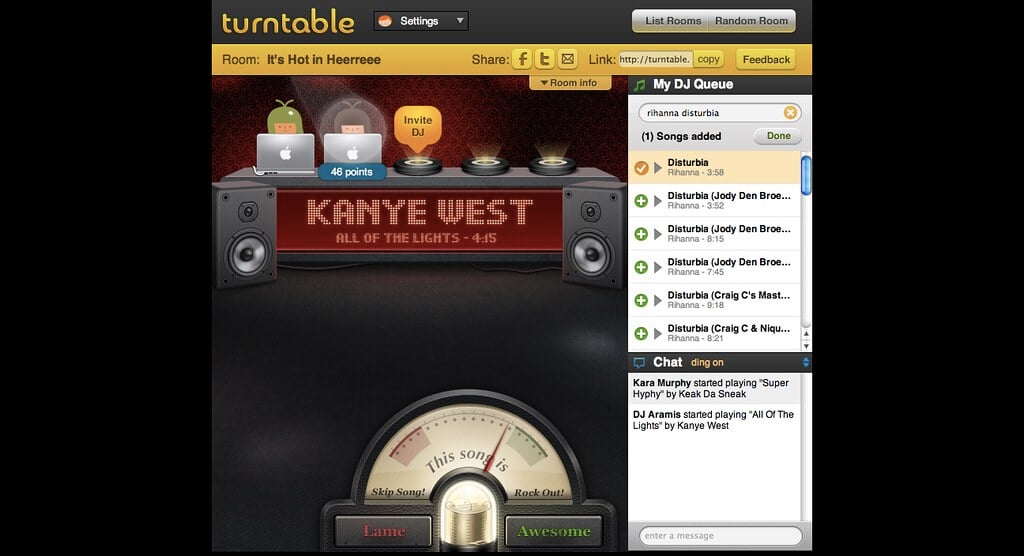
A spinning stage of sound popped up online once. Little drawn figures wandered into pretend spaces, each one stepping forward to pick a tune when their turn came.
Songs lined up one after another, picked by whoever stood ready at that moment. Others sitting in the space gave nods or frowns as notes filled the air.
A smile lit up on screen if voices rose in favor. When silence fell too heavy, the character slumped slightly, eyes low.
One moment it felt obscure. Then, suddenly in 2011, it flooded through crowds who loved beats and code alike – genre-specific zones hummed, DJ-following tribes grew tight, nights melted into long stretches of shared sound.
Yet label rights slipped out of reach; by 2013, silence took over. After that, group listening spaces vanished, only reappearing slowly when newer platforms arrived much later – though their pulse never matched Turntable’s rhythm.
The Apps That Didn’t Make It

It’s not poor design that trips up most apps. A stronger idea lived inside Path than Facebook for plenty of moments.
Real needs showed up when Google Reader stepped in. Six seconds on Vine often beats six minutes elsewhere in creativity.
Good thoughts showed up regularly. Yet timing tripped things up, sometimes it was the money plan, now and then the boss company wanted different results, occasionally a louder idea landed and swept the rest away.
What weighs heavier is facing the truth about data. If those platforms vanish, so do countless posts, links between people, and stories shared over time.
Images fade away, chats disappear, groups dissolve – nearly everything gets wiped clean. People assume the web lasts forever, yet the human part crumbles more easily than expected.
One day they’re there, next day gone – apps vanish after a quick announcement plus thirty days’ warning. Many already did just that.
More from Go2Tutors!

- The Romanov Crown Jewels and Their Tragic Fate
- 13 Historical Mysteries That Science Still Can’t Solve
- Famous Hoaxes That Fooled the World for Years
- 15 Child Stars with Tragic Adult Lives
- 16 Famous Jewelry Pieces in History
Like Go2Tutors’s content? Follow us on MSN.



