Photos Of 15 Cereal Box Toys Every 80s Kid Wanted
There was a brief, magical window every morning when the cereal box on the kitchen table was more exciting than anything on Saturday cartoons. Not because of the cereal — nobody was losing sleep over Corn Pops — but because of what was buried inside it.
A prize. A toy.
A tiny plastic thing that technically cost nothing but felt like winning something. If you grew up in the 1980s, you know exactly what it felt like to spot that telltale crinkle of a plastic wrapper at the bottom of the bowl, or to shamelessly jam your arm into a fresh box while your parents weren’t looking.
The prizes from that era were something else entirely. Here are 15 of the most wanted cereal box toys from the decade, the ones kids actually begged their parents to buy the cereal for.
1. Wacky WallWalkers

Few things in 1983 made less logical sense than a rubbery octopus that slowly crawled down a wall. And yet, the Wacky WallWalker became one of the biggest toy crazes of the decade — and when Kellogg’s started dropping them into boxes of Froot Loops, Rice Krispies, and Corn Pops, kids lost their minds.
You’d peel the sticky little creature off its plastic backing, chuck it at a wall, and watch it slowly tumble downward using nothing but static adhesion and gravity dressed up as magic. The glow-in-the-dark version that appeared around 1986 made an already beloved toy even better.
The downside? After a few days they attracted every strand of hair and lint in the house and became useless. But for those first few hours, they were perfect.
2. Kellogg’s Starbots
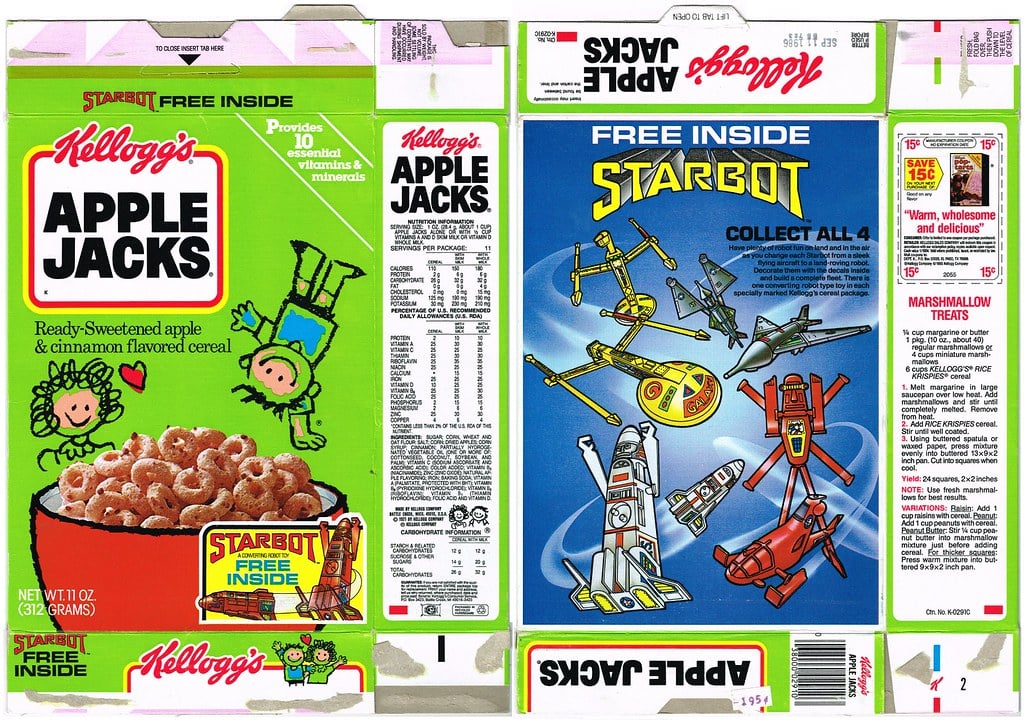
These were basically the cheapest Transformers you could ever get — and kids adored them for it. Starbots were small plastic figurines, packaged flat on a plastic rack like tiny model kits, that you could assemble into spaceships and then fold back into standing robots.
They showed up in Froot Loops, Honey Smacks, and Apple Jacks boxes throughout the mid-80s. There were four different designs, each available in multiple colors, and each one looked like it belonged in some off-brand corner of the Transformers universe.
They came with a tiny sticker sheet, which absolutely completed the experience. Lots of kids played with their Starbots like they were full-fledged action figures.
They earned it.
3. Garfield Bike Reflectors
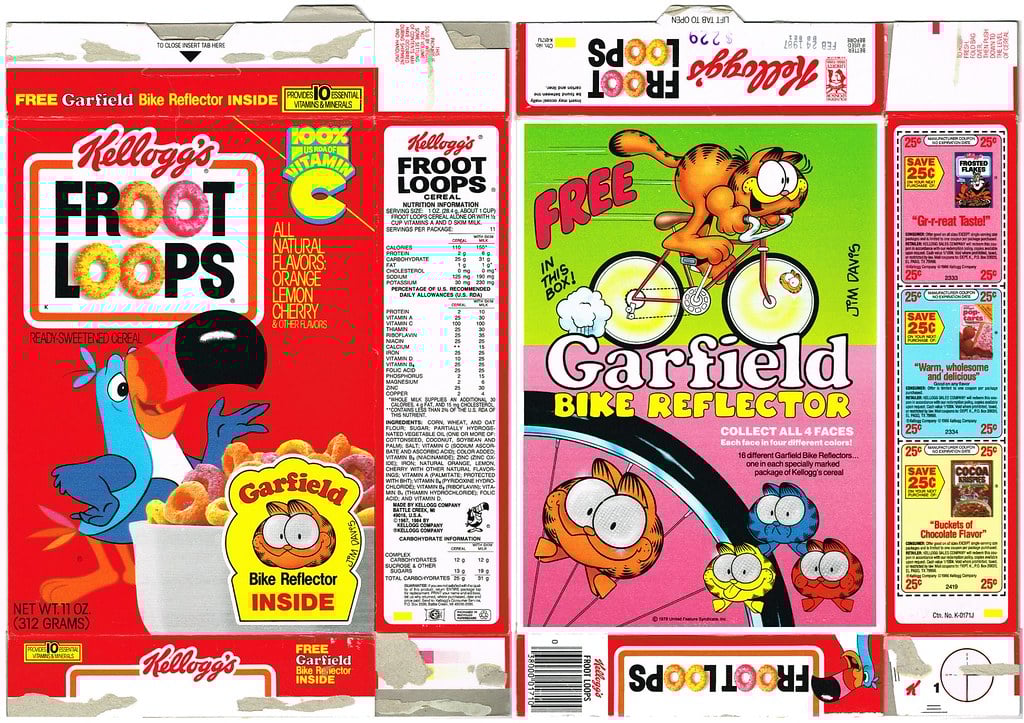
Garfield was everywhere in the 1980s. On lunchboxes, on suction-cup car window toys, on every surface imaginable — and eventually, inside Kellogg’s cereal boxes as a series of collectible bike reflectors.
The reflectors featured the orange cat’s face with reflective paneling covering his eyes, making them genuinely functional while also looking cool on your handlebars or spokes. There were 16 designs in total across the run, with Garfield wearing different expressions in different colors including blue, orange, yellow, and purple.
Kids who collected them seriously ended up buying a lot of cereal. That was entirely the point, and it worked brilliantly.
4. Fruity Pebbles Flying Discs
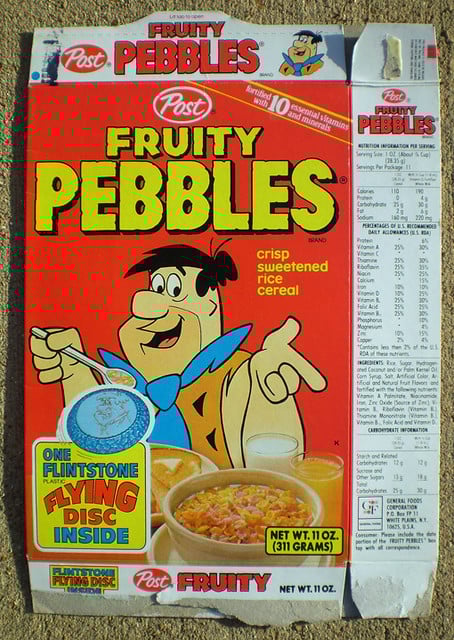
Post ran a promotion for Fruity Pebbles in the early 80s that offered miniature flying discs featuring characters from The Flintstones. You could pull out a purple disc printed with Fred, an orange one with Barney Rubble, or a white one featuring Dino the dinosaur.
The commercial for these things was famously over the top, with an energy completely out of proportion to the actual toy. But honestly? Kids loved them.
They were the right size for tossing around a backyard or a kitchen, and collecting all three gave the whole thing a proper mission. Dino was the one everybody wanted most.
5. Honeycomb Mini License Plates

Post Honeycomb ran one of the longest-lasting and most devious cereal prize campaigns of the era with their miniature bicycle license plates. These were tiny plastic replicas of real state plates, scaled perfectly for attaching to the back of a bike seat.
The catch was the obvious one: there were plates for all 50 states, and you could only get one per box. Kids spent years trying to complete their collection, which of course meant years of eating Honeycomb.
Some plates had state slogans, some had state mottos, and all of them had that satisfying plastic snap when you clipped them onto your bike. Collectors still track these down on eBay and Etsy today.
6. Honeycomb Digital Watch

Somewhere around the middle of the decade, when Swatch watches were the single most important fashion accessory a kid could own, Honeycomb dropped a digital watch into their cereal boxes. It told actual time. It displayed the date. It came in neon pink, blue, red, and orange, with graphic designs printed on the face that looked genuinely similar to the Swatches kids were begging their parents to buy.
These were arguably the most legitimately useful cereal prizes of the entire 80s. The watch worked, it looked good, and having one felt like wearing a real piece of the decade’s biggest trend.
Later versions even came in black and dark purple for kids who wanted something a little edgier.
7. Cap’n Crunch Surfers

Because Cap’n Crunch is a naval man, it made perfect sense that his cereal occasionally came loaded with tiny plastic water toys. The Surfers were miniature figures on surfboards sized just right for bathtubs and pools.
Three characters were available: the Cap’n himself, his pirate nemesis Jean LaFoote, and Smedley the elephant. They floated.
That was the whole deal, and it was enough. A toy that actually worked in water, came free in a cereal box, and featured characters kids already knew from the commercials — it checked every box.
LaFoote was the villain of the piece, which naturally made him the one most kids wanted.
8. Apple Jacks Ghost Detector
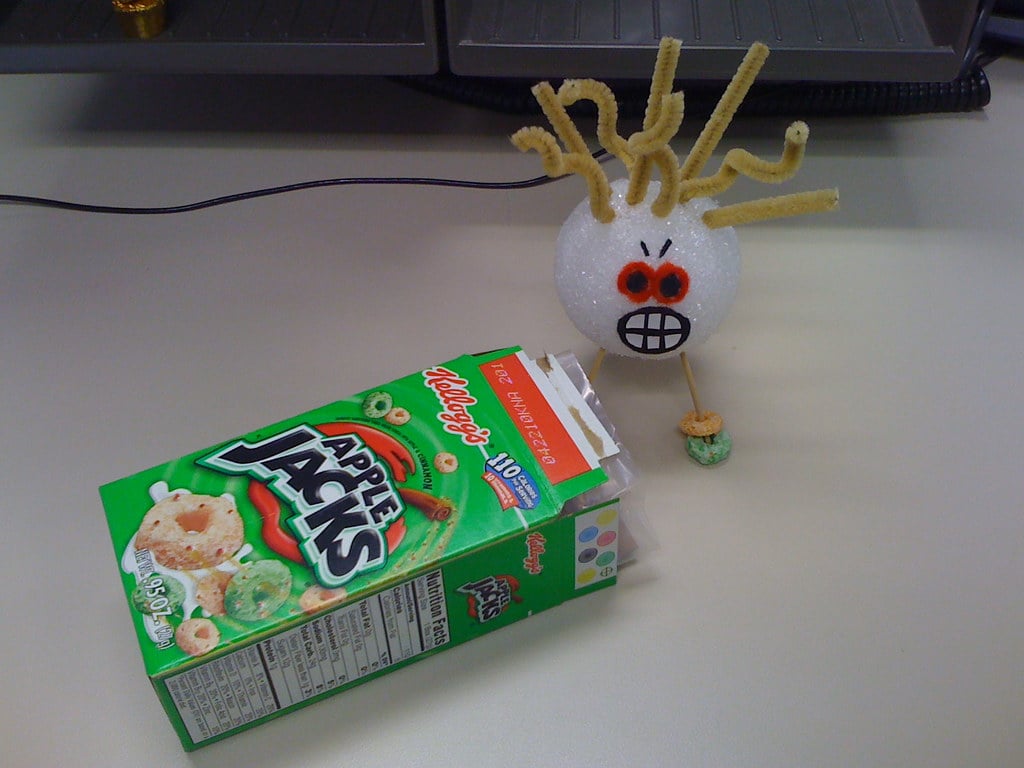
This 1989 prize had the most entertaining disclaimer in cereal box history. The packaging included a note clarifying: “The Ghost Detector is a toy created for play and amusement.
There are no real ghosts.” According to the box, if the detector moved around on your palm, your room was ghost-free.
Every kid understood immediately that movement actually meant the opposite. The Ghost Detector was a small plastic wand that apparently worked on the same principle as a mood ring — body heat and minor atmospheric changes.
It didn’t matter. The idea of a ghost-detecting device hidden in your breakfast cereal was exactly the kind of thing an eight-year-old in the late 80s could not resist.
9. Monster Disguise Stickers

In 1987, boxes of Count Chocula and Franken Berry offered one of three sets of Monster Disguise Stickers. The stickers were designed to be worn on your face.
You could give yourself scary arched eyebrows, a bolt through the neck, facial scars, or a third eye planted in the center of your forehead. The tagline on the back of the box was straightforward: “Peel ’em off.
Stick ’em on. Scare your friends.”
They were exactly as cheap and wonderful as they sound. Kids wore them to school, to dinner, and anywhere else a grown-up might find it mildly alarming.
The three sets meant you needed three boxes to get the full monster collection, which was another masterclass in cereal company psychology.
10. Leon Neon Glow Tubes

Leon Neon was a retail toy line of bendable, glow-in-the-dark tubes that kids could twist into bracelets, letters, and shapes. Kellogg’s licensed a cereal version that scaled things down to bracelet size — essentially glow-in-the-dark jelly bracelets before jelly bracelets were cool.
The commercial promoting them in cereal boxes starred a young Fred Savage, from before anyone knew who he was. The in-box version wasn’t as thick or poseable as the retail toy, but by cereal prize standards it was exceptional.
Kids who got one immediately started lobbying for the full-size store version, which was exactly the plan.
11. Trix Color-Changing Spoons
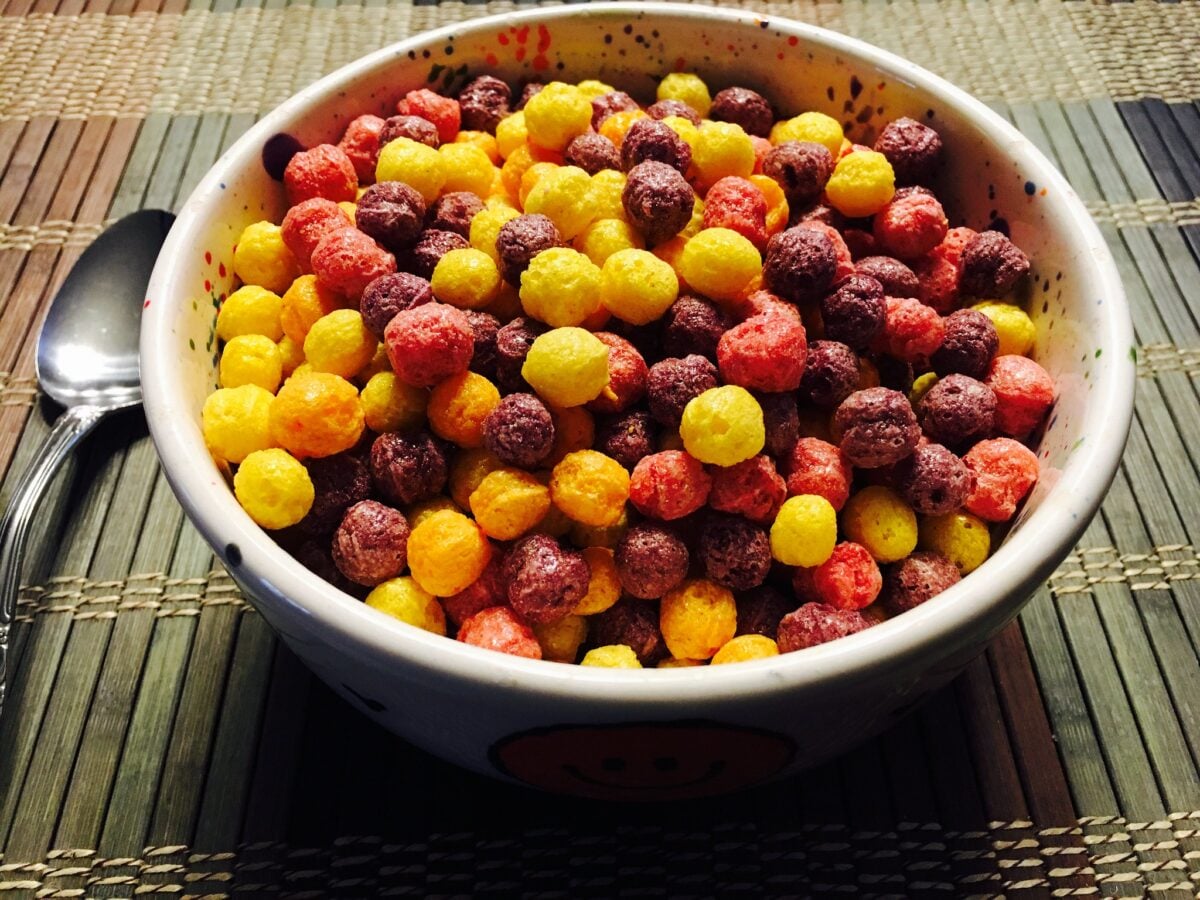
This one arrived slightly at the edge of the decade but deserves its spot on any 80s list. Trix offered color-changing spoons that reacted to cold temperatures — the moment you dunked one into cold milk, the plastic shifted color right before your eyes.
The change was dramatic and reliably reproducible every single time, which made it genuinely impressive to an eight-year-old. Kids kept these spoons for years.
Long after the bowl of Trix was finished and forgotten, the spoon still worked just as well. Families ended up with three or four of them rattling around in kitchen drawers for the better part of the decade.
12. Cap’n Crunch Dinosaur Spoons

In the late eighties, Cap’n Crunch turned a regular spoon into something far more playful. Instead of just metal, the scoop became a chunky plastic dinosaur face. Attached to the stick part was a paper cutout of its body – snipped right from the front of the box.
One version showed a T-Rex glaring forward. Another featured a stegosaurus with plates down its back.
A third offered a long-necked brontosaurus mid-stomp. Each morning meant picking which prehistoric buddy would help eat breakfast.
Putting it together took some doing, unlike those usual freebies inside cereal boxes. A kid needed scissors plus glue to build what came in the package, turning breakfast into something kind of hands-on.
More chewing happened with plastic utensils than cornflakes, though tooth doctors might have approved anyway.
13. Mini Nerds Candy Boxes

Breakfast got interesting when Ralston put Nerds candy into cereal form. Each box held two distinct tastes, split apart, just like the original treat.
One flavor here, another there – kept separate but sharing space. Hidden beneath? A small container of genuine Nerds sweets.
Not a replica. Not an imitation.
Actual candy, sized for one, resting quietly under the morning meal. The surprise made it stick in memory longer than most.
Found where you’d least expect: between spoonfuls. Hard to track down, the Cherry Cola Nerds drew crazy attention from flavor-savvy kids.
Snagging a box? Like landing a prized collectible. So thrilling you’d hesitate – then pop it open right away.
14. Chip n Dale Rescue Rangers stampers
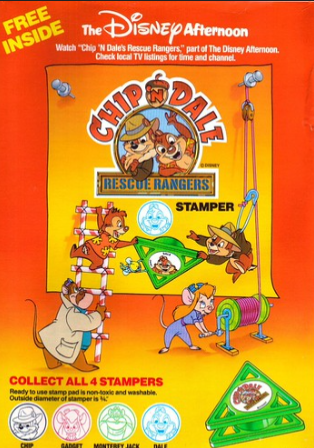
Back when Saturday mornings meant cartoons, Kellogg’s slipped neat little surprises into boxes. Instead of cheap trinkets, these stampers felt sturdy, like something you might actually keep.
Each one packed a firm plastic body plus an ink base that didn’t quit halfway through. Right there on shelves, they matched up with what was lighting up screens – Rescue Rangers running wild in living rooms.
While most cereal giveaways faded fast, these held their shape and purpose. Kids grabbed them not just for fun but because they worked without fuss.
Even now, remembering how clean the prints came out says enough. Folks held onto these longer than typical giveaways because they worked just fine for real tasks.
Take something like mail for family, maybe a classroom notebook, grocery sacks, even skin – any surface turned into a spot to leave a mark after you got that Monterey Jack tool nearby. The pack included four unique patterns, so suddenly there were four reasons to grab every box of breakfast flakes on the shelf.
15. Glow-in-the-Dark Monster Figures

Few things tied back to the cereal’s vibe like those tiny glowing toys did – Count Chocula, Franken Berry, yet Boo Berry all came with giveaways before, though none fit quite right. Charged up beneath a light, the little monster shapes would shine later when lights went off.
Kids catching their first glimpse of that glow mid-morning meal realized breakfast just turned into something else entirely. It wasn’t fancy work, nothing like what you’d see on shelves today – just basic shapes made of solid plastic.
Yet the shine they gave off stayed bright for ages once charged. Most children who owned one would lie awake, cheek flat on the bed, sliding the toy beneath a beam until the room went black and the glow took over.
The Ones That Got Away

Peering backward across these items, one thing stands out without much effort. Top cereal giveaways from the eighties didn’t win because they cost more or worked in mysterious ways.
Instead, they linked up with what children actually found exciting – creatures, machines that moved, two-wheeled speed, sneaking around, objects that lit up when lights went off – and handed over tiny pieces of actual fun. Maybe it’s true modern children receive flashier toys, wrapped neater.
Still, the old way had weight – the moment you reached into a crinkled cardboard container without any clue inside. A digital slip won’t mimic that reach, that surprise.
Each tiny figure pulled free seemed like luck shaped solid. That small victory changed how it mattered.
More from Go2Tutors!

- The Romanov Crown Jewels and Their Tragic Fate
- 13 Historical Mysteries That Science Still Can’t Solve
- Famous Hoaxes That Fooled the World for Years
- 15 Child Stars with Tragic Adult Lives
- 16 Famous Jewelry Pieces in History
Like Go2Tutors’s content? Follow us on MSN.