Photos of Colossal Sinkholes That Look Like Portals to Another World
Standing at the edge of a massive sinkhole feels like discovering a secret the earth has been keeping. These geological wonders appear suddenly, swallowing buildings, roads, and entire sections of landscape in what seems like moments.
Some form gradually over centuries, while others open overnight, leaving behind perfectly circular voids that drop hundreds of feet into darkness. The most spectacular examples don’t just impress with their size—they mesmerize with their otherworldly beauty, looking less like natural formations and more like gateways carved by forces beyond our understanding.
Great Blue Sinkhole, Belize
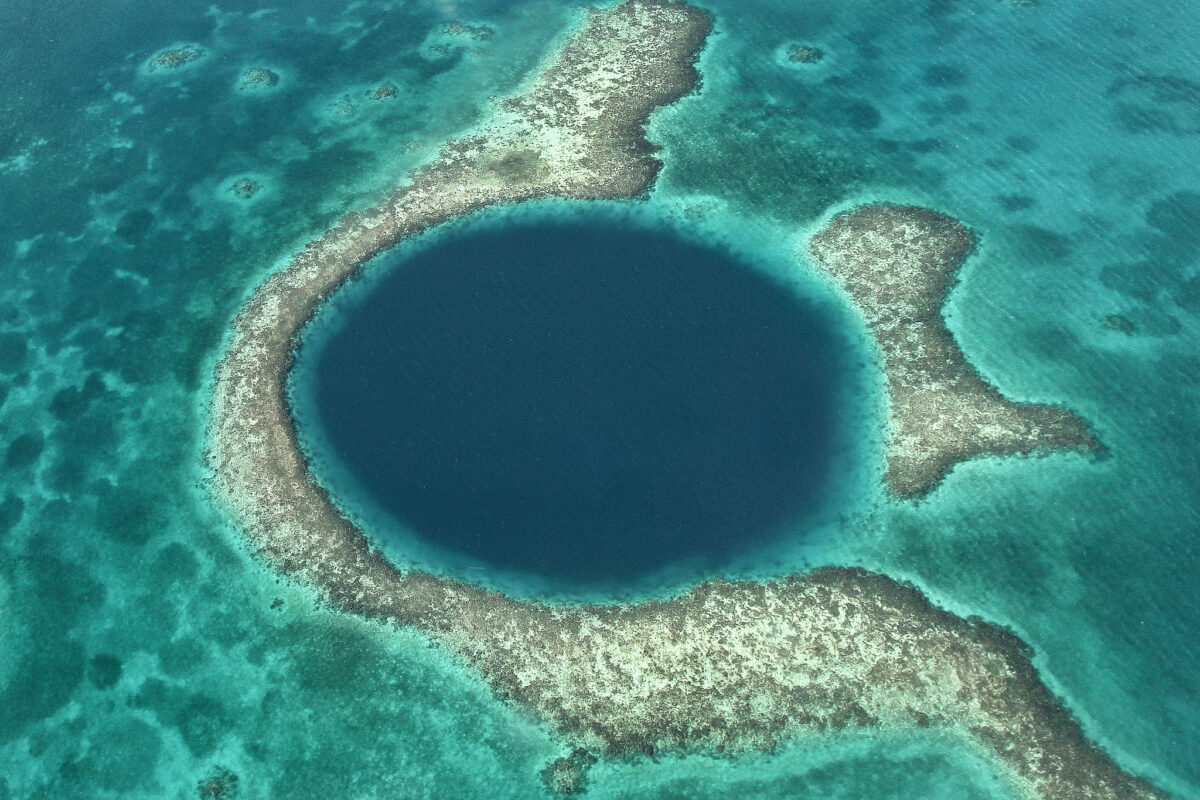
The Great Blue Sinkhole doesn’t apologize for its drama. A perfect circle of deep blue water surrounded by shallow turquoise reef.
Over four hundred feet deep, one thousand feet across. Jacques Cousteau called it one of the top diving sites in the world, then dropped cameras into its depths to prove it.
From above, it looks like someone punched a neat round opening through the ocean floor. The contrast hits you immediately—bright Caribbean blues suddenly giving way to an abyss so dark it seems solid.
Dean’s Blue Sinkhole, Bahamas
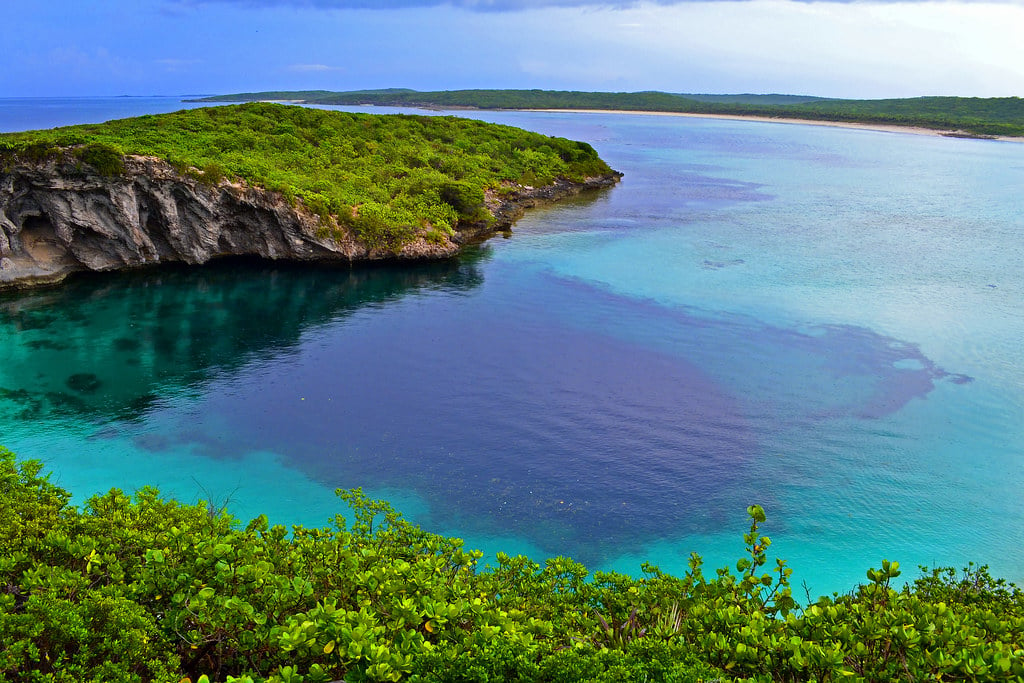
Dean’s Blue Sinkhole holds the title for deepest known saltwater sinkhole on Earth, and it earned that distinction by plunging 663 feet straight down (which, for perspective, could swallow a 50-story building and still have room left over). The thing about Dean’s Blue Sinkhole isn’t just its record-breaking depth—it’s the way the water shifts from crystal-clear shallows to an almost supernatural indigo that seems to absorb light rather than reflect it, creating the visual equivalent of staring into space itself.
So here’s what happens when you approach it by boat (and this is the part that makes even seasoned divers pause for a moment): the seafloor simply vanishes. One moment you’re floating over white sand in twenty feet of water, the next you’re suspended above what looks like a liquid void.
And yet—here’s the strange beauty of it—the transition is so geometrically perfect, so precisely circular, that it feels intentional rather than accidental. Nature doesn’t usually work in such clean lines, but Dean’s Blue Sinkhole seems to have missed that memo entirely.
Xiaozhai Tiankeng, China
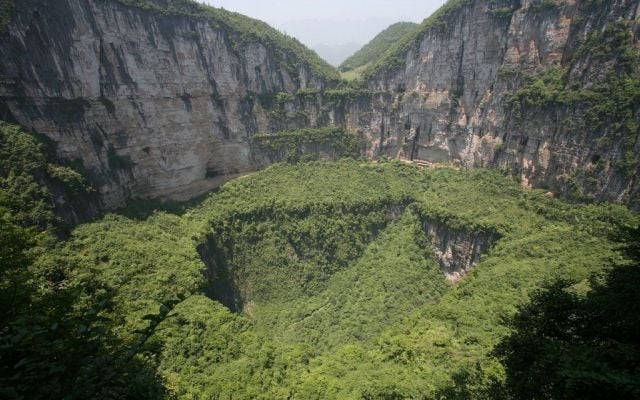
There’s something almost ceremonial about the way mist rises from Xiaozhai Tiankeng at dawn, as if the earth itself is breathing through this massive opening in its surface. The sinkhole doesn’t reveal itself all at once—you approach through dense forest, following paths that seem to lead nowhere special, until suddenly the ground simply stops and you’re looking across a chasm so vast it generates its own weather patterns.
What makes Xiaozhai Tiankeng feel like a portal isn’t just its size (though at 2,100 feet long and 1,760 feet deep, it’s certainly impressive). It’s the way life has claimed every surface inside it, creating a hidden ecosystem that exists in permanent twilight.
Ancient trees grow sideways from the walls, their roots finding purchase in limestone that’s been carved smooth by centuries of water. Birds that nest nowhere else have made this their home, and their calls echo strangely in the enclosed space, arriving at your ears seconds after you see them take flight.
Sótano de las Golondrinas, Mexico
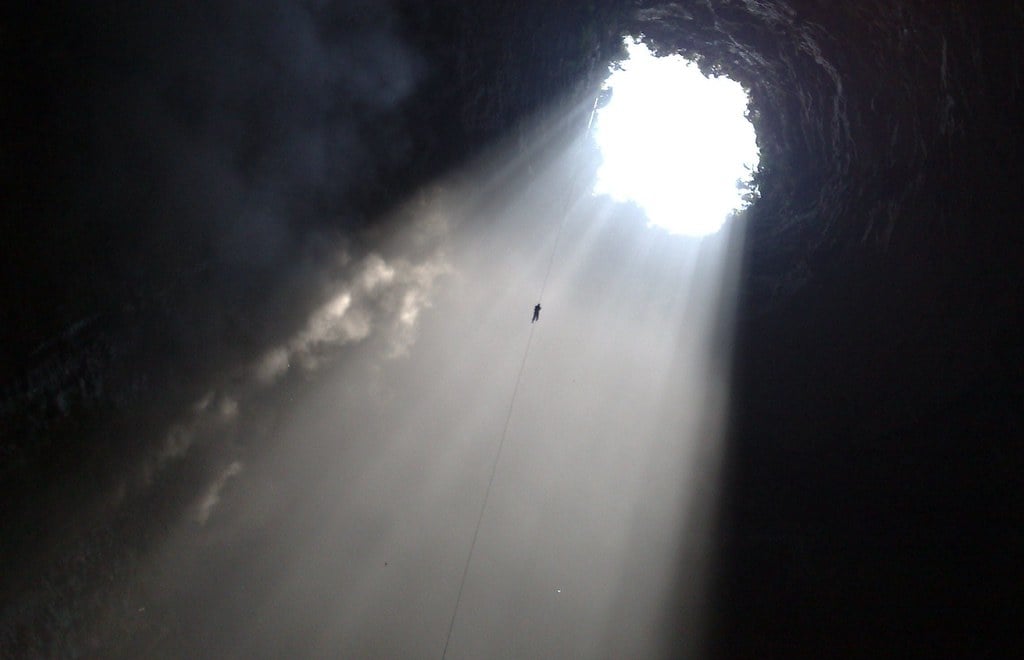
Sótano de las Golondrinas gets its name from the thousands of birds that call it home, but the real spectacle happens twice daily when they pour out like smoke at sunrise and return like a living tornado at sunset. The sinkhole itself descends 1,200 feet—deep enough that base jumpers use it for freefall practice, though they have to time their jumps carefully to avoid the avian traffic.
Standing at the rim during the evening return is oddly hypnotic. The birds don’t just fly into the opening—they spiral down in a coordinated descent that looks choreographed.
Each species has its own level, its own timing, its own approach pattern. The sound builds gradually as thousands of wings create a rushing noise that fills the entire cavity.
Cenote Angelita, Mexico
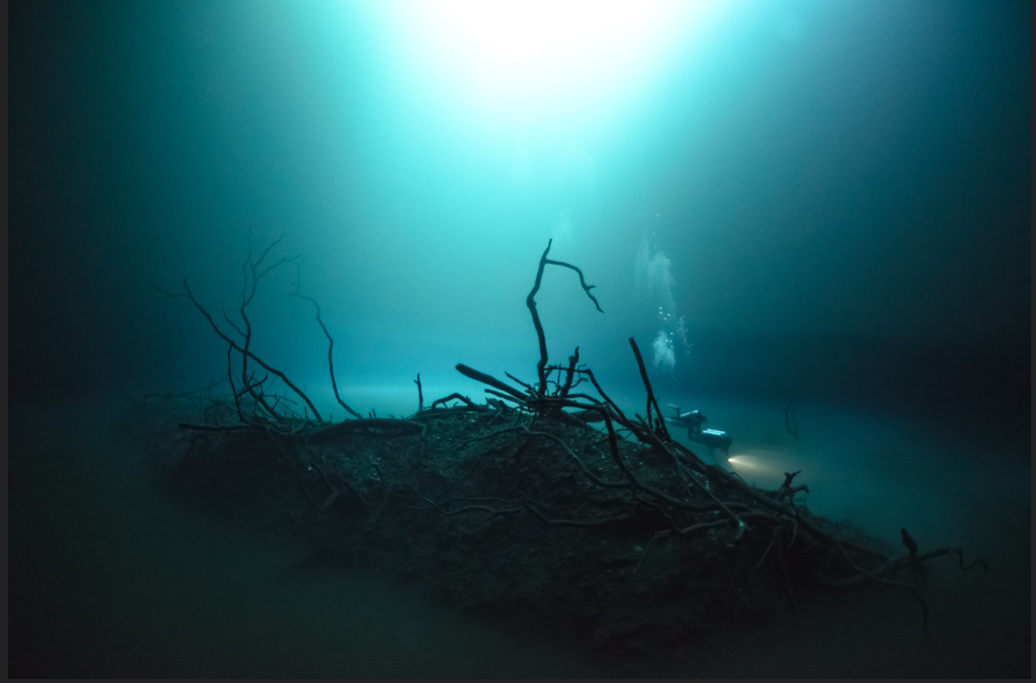
The thing about Cenote Angelita is that it shouldn’t exist, at least not the way it does, with a river of hydrogen sulfide running along the bottom like some kind of underwater tributary to nowhere—but there it is anyway, defying the basic rules of how water is supposed to behave and creating one of the most surreal diving experiences on the planet. When divers descend past the 100-foot mark, they encounter what looks like a solid surface (complete with dead trees poking through like a drowned forest), except this “surface” is actually a dense layer of hydrogen sulfide that acts like liquid mercury, creating the illusion that you’re swimming above an entirely different world.
And here’s where it gets genuinely strange: the hydrogen sulfide layer is so distinct from the freshwater above it that you can actually see the boundary, watch it ripple and move like a slow-motion wave. Divers describe the sensation of breaking through this barrier as entering another dimension—below the hydrogen sulfide layer, visibility drops to zero and the water takes on an otherworldly quality that makes even experienced cave divers feel like they’ve crossed into some kind of aquatic underworld.
The dead trees that protrude through this barrier (perfectly preserved by the sulfide) look like monuments to some forgotten civilization, their branches reaching up toward a surface they’ll never quite reach.
Harwood Sinkhole, New Zealand
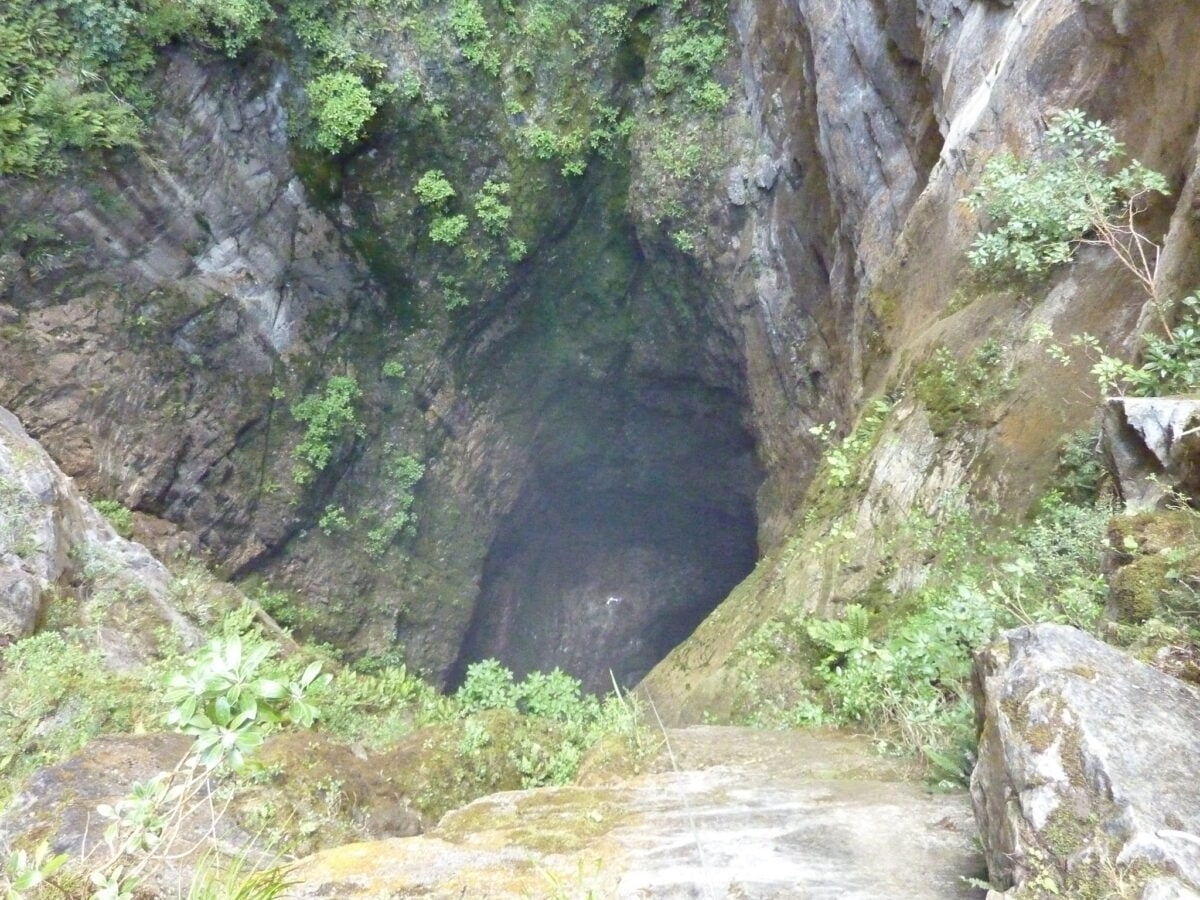
Harwood Sinkhole operates on a different scale of intimidation than most sinkholes—not because it’s the deepest (though at 1,200+ feet, it’s certainly respectable), but because of the way it announces itself: a perfectly circular opening in the marble landscape that drops straight down without warning, without gradual slopes or forgiving ledges, just a clean geometric cut that looks like it was made with industrial equipment rather than geological processes. The marble formations around the rim have been polished smooth by centuries of weather, creating an almost surgical precision to the opening that feels distinctly unnatural.
Cavers who’ve explored the depths describe a series of chambers and passages that seem to follow their own internal logic, connecting in ways that don’t match the surface geography. The acoustics inside are particularly strange—sounds carry in unexpected directions, arriving from above when they should come from below, creating an disorienting echo chamber effect that makes navigation challenging even with modern equipment.
Bimmah Sinkhole, Oman
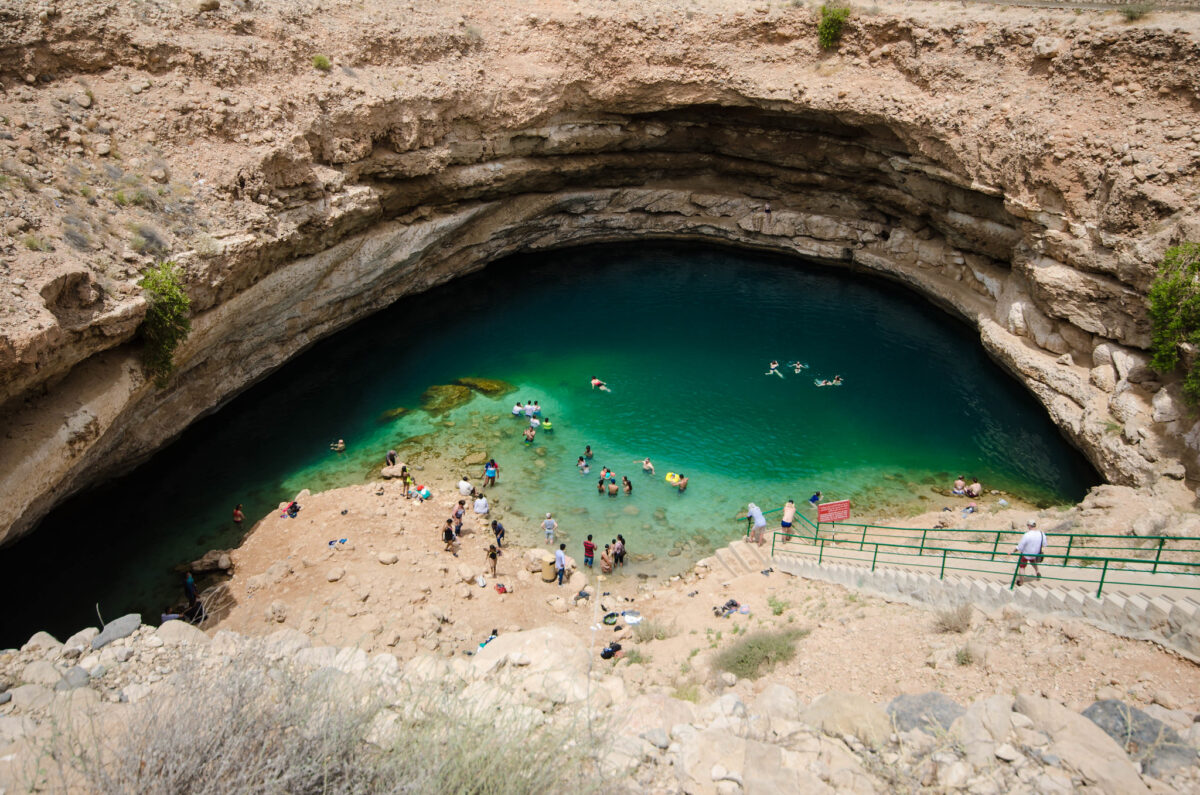
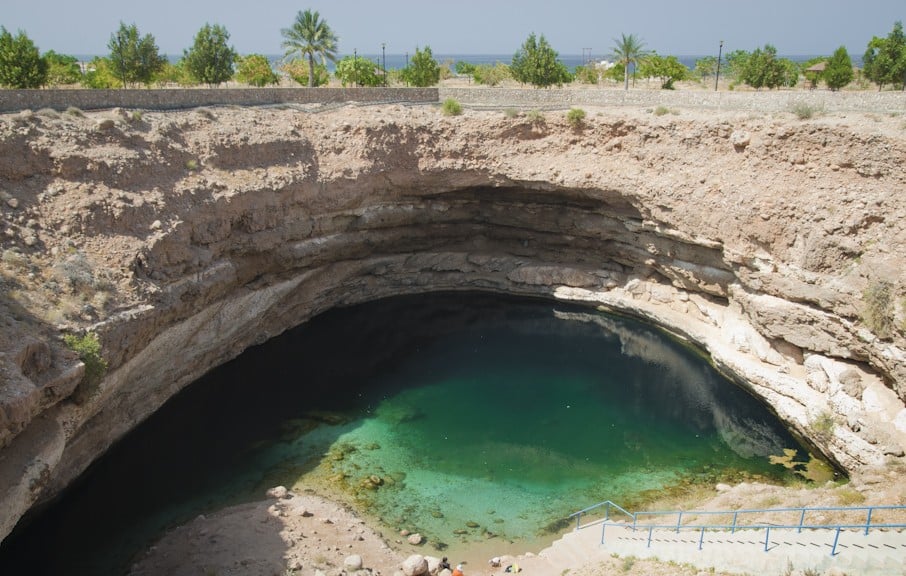
Bimmah Sinkhole proves that sometimes the most striking geological features are the ones that appear where they have no business existing. This perfectly circular pool of turquoise water sits in the middle of Oman’s desert landscape like someone dropped a piece of tropical paradise in the wrong climate zone.
The local legend credits a meteorite impact for its creation, which honestly makes more sense than the actual geological explanation when you’re standing there looking at it. The water maintains a constant temperature year-round and stays impossibly clear despite being surrounded by limestone and desert sand.
Fish somehow live in this isolated ecosystem, though how they got there remains a minor mystery that nobody seems particularly motivated to solve.
Qattara Depression, Egypt
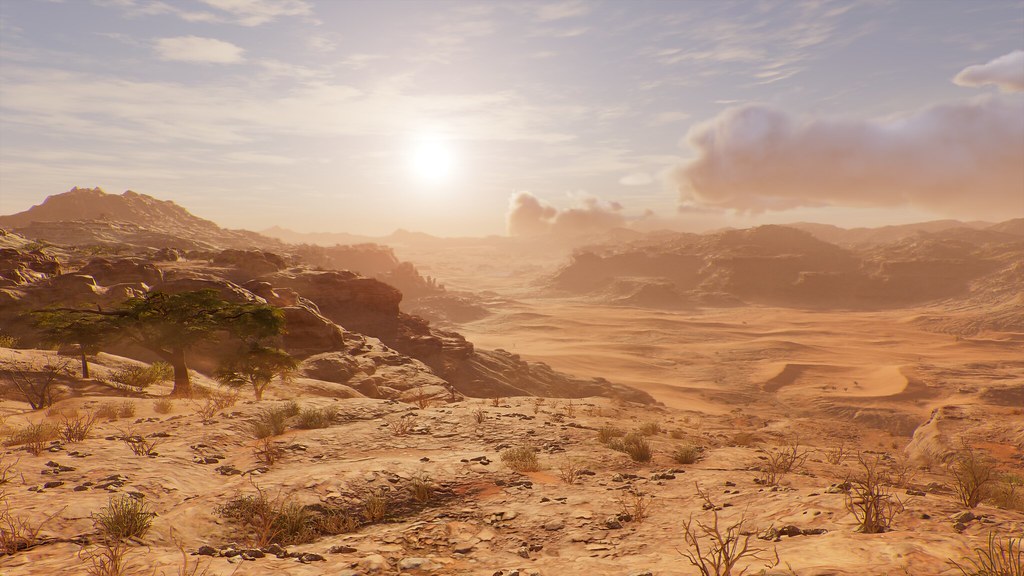
The Qattara Depression isn’t technically a sinkhole in the traditional sense, but it operates like one on a scale that makes every other formation on this list look modest by comparison—436 feet below sea level at its deepest point, covering an area roughly the size of New Jersey, and filled with salt flats that shimmer in the desert heat like a mirage that refuses to disappear when you get closer. What makes Qattara feel genuinely otherworldly isn’t just its size (though that’s certainly part of it), but the way it creates its own microclimate in the middle of the Sahara, complete with occasional lakes that appear and vanish according to seasonal patterns that seem to follow rules different from the surrounding desert.
But here’s the part that makes Qattara particularly unsettling: the edges. Most large geological features transition gradually—mountains slope upward, valleys slope downward, coastlines shift from land to water with some kind of logical progression.
Qattara just stops. You’re walking across relatively flat desert terrain, and then suddenly the ground drops away into this vast empty space that extends beyond the horizon.
The visual effect is similar to what you might experience if someone removed a massive section of the world and forgot to fill it back in. And the silence down there—it’s not the normal quiet of empty desert, but something deeper, as if sound itself gets absorbed by all that open space.
Red Lake, Croatia
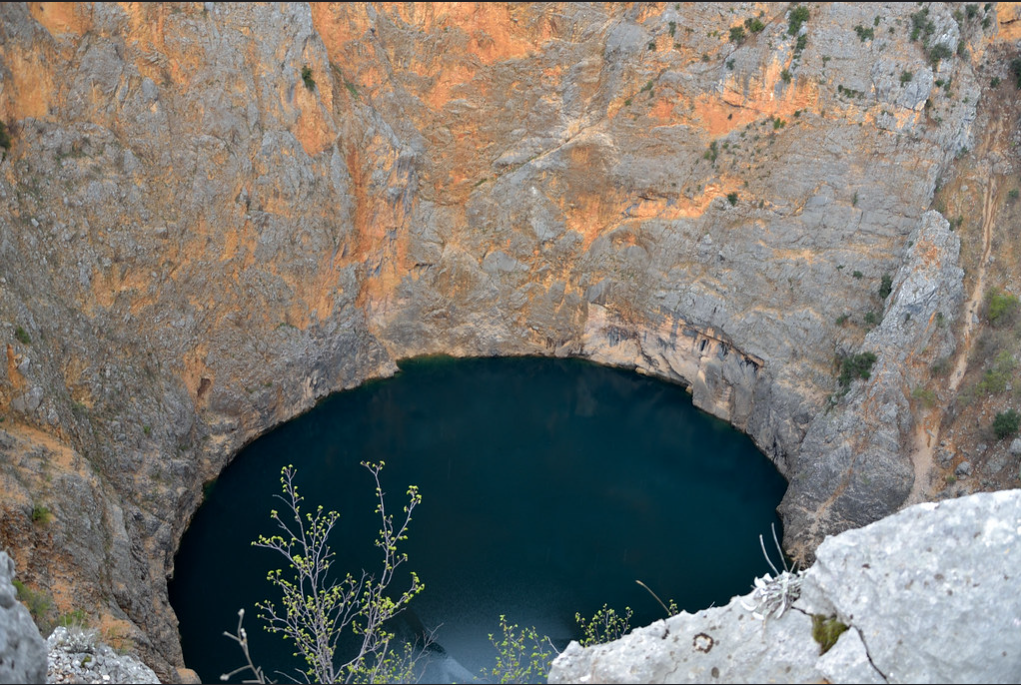
Red Lake earned its name honestly—the water really is that color, a deep rust-red that shifts to burgundy depending on the light, created by iron oxide deposits that have been leaching into this sinkhole lake for centuries. The color alone would be enough to make it memorable, but Red Lake takes the concept several steps further by being almost perfectly circular and dropping to depths that haven’t been fully mapped despite multiple attempts with increasingly sophisticated equipment.
What makes Red Lake feel like a portal isn’t just the unusual color (though that certainly contributes to the effect). It’s the way the lake sits in complete isolation, surrounded by dense forest that seems to press right up to the edges, creating a natural amphitheater that focuses attention on the water itself.
The lake level fluctuates dramatically with the seasons, sometimes revealing limestone formations around the edges that look carved rather than naturally formed, sometimes rising high enough to flood the surrounding trees and create a drowned forest effect that adds to the overall surreal atmosphere.
El Zacatón, Mexico
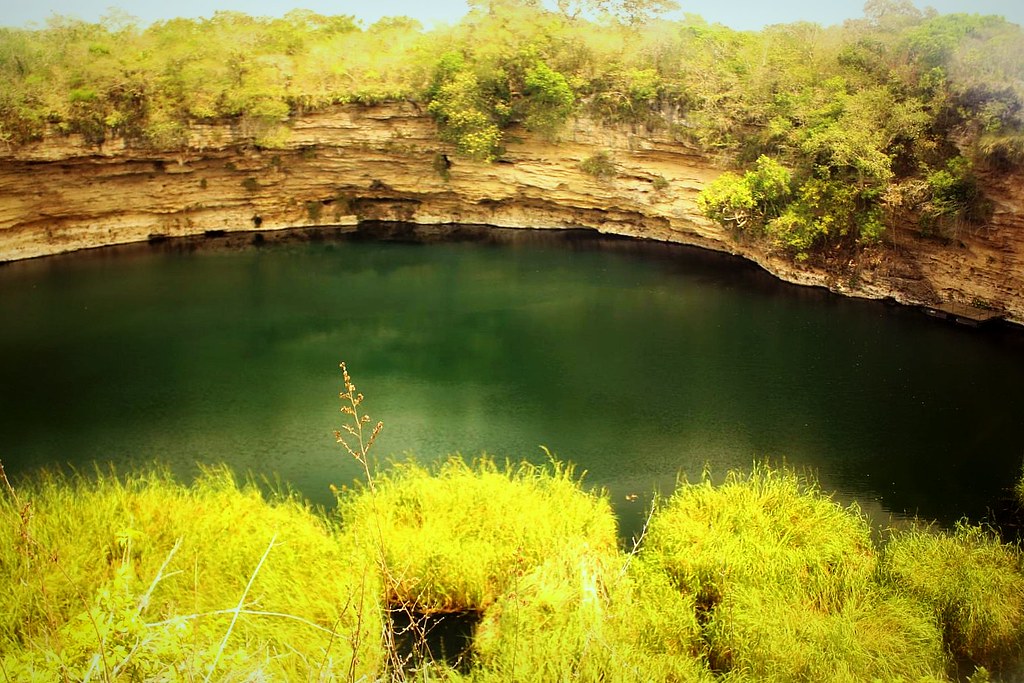
El Zacatón holds the distinction of being the deepest known water-filled sinkhole in the world, though “known” is doing some heavy lifting here since nobody has actually reached the bottom despite attempts with robotic submarines that were specifically designed for the task. The confirmed depth is over 1,100 feet, but sonar readings suggest it goes much deeper, potentially connecting to underground cave systems that could extend for miles beneath the Mexican desert.
The surface gives no hint of what lies beneath—just a roughly circular pool of water that looks unremarkable until you start paying attention to the details. The water is unusually warm, heated by geothermal activity deep underground, and it has a slight sulfur content that creates a distinctive smell and supports bacterial communities that exist nowhere else.
NASA has used El Zacatón as a testing ground for underwater exploration robots, treating it as an analog for conditions they might encounter on other planets.
Montpelier Sinkhole, Jamaica
Montpelier Sinkhole operates according to its own schedule, which is what makes it particularly fascinating to observe over time—this isn’t a static geological feature but an active, evolving system that changes character depending on rainfall, underground water levels, and seasonal patterns that create dramatically different conditions throughout the year. During dry periods, it’s a relatively conventional limestone cave system with impressive rock formations and the usual complement of bats and underground wildlife.
But when the rains come (and in Jamaica, when they come, they really come), Montpelier transforms into something entirely different: a swirling, churning whirlpool that can drain enormous amounts of water in remarkably short periods. The transition happens faster than seems physically possible.
Local residents describe watching flood waters that have been sitting stagnant for days suddenly develop a circular current pattern, then begin draining with increasing speed until the entire volume disappears underground, leaving behind only damp limestone and the sound of water rushing through hidden passages far below. And here’s the part that makes it feel genuinely supernatural: the process reverses just as quickly when conditions change, with water returning from unknown sources to refill the depression as if the underground system is somehow breathing.
Morning Glory Pool, Yellowstone
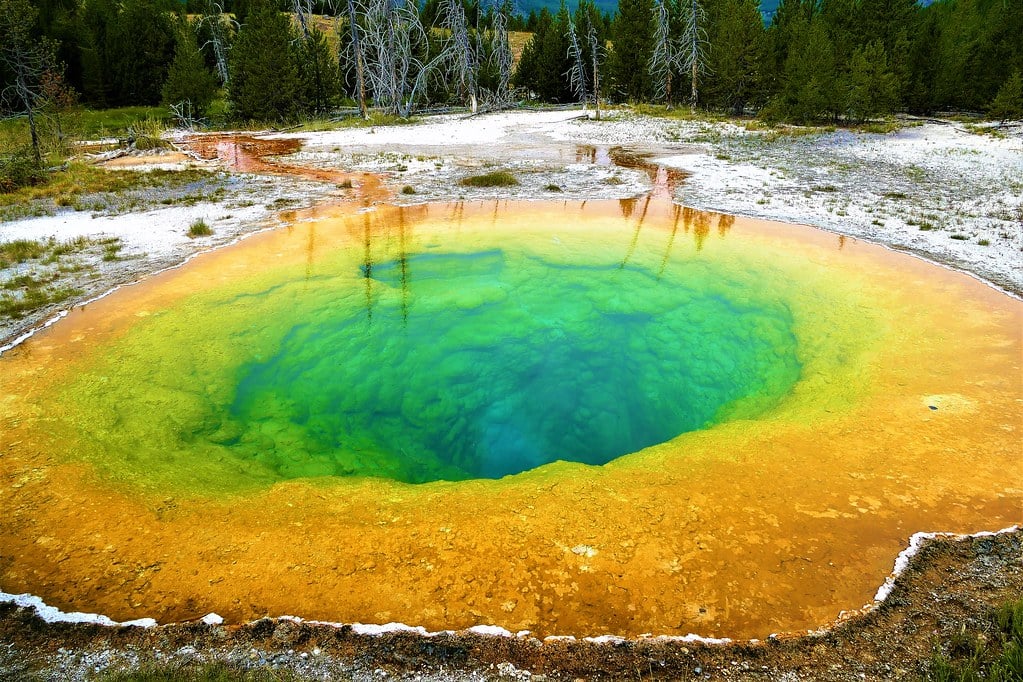
Morning Glory Pool isn’t technically a sinkhole, but it behaves like one in terms of creating that same portal-to-another-world visual effect, and the comparison becomes even more apt when you consider that this hot spring connects to underground thermal systems that extend for miles beneath Yellowstone in patterns that geologists still haven’t fully mapped. The pool gets its name from the morning glory flower, which it resembled more closely decades ago when the water was a uniform deep blue—but human interference (primarily tourists throwing coins and debris into the pool) has partially blocked the underwater vents, causing temperature changes that have shifted the bacterial communities and created the current rainbow effect of blue center surrounded by rings of green, yellow, and orange.
What makes Morning Glory Pool feel like a window into another world is the way it seems to glow from within, as if lit by some internal source rather than simply reflecting surface light. The effect is most pronounced early in the morning when the surrounding area is still in shadow but the pool appears almost luminescent, creating the visual impression that you’re looking down into something much deeper and more complex than a simple hot spring.
The bacterial mats that create the color variations are actually living communities that shift and change throughout the day in response to temperature fluctuations, making the pool appear to pulse and breathe like a living organism.
Mel’s Sinkhole, Washington
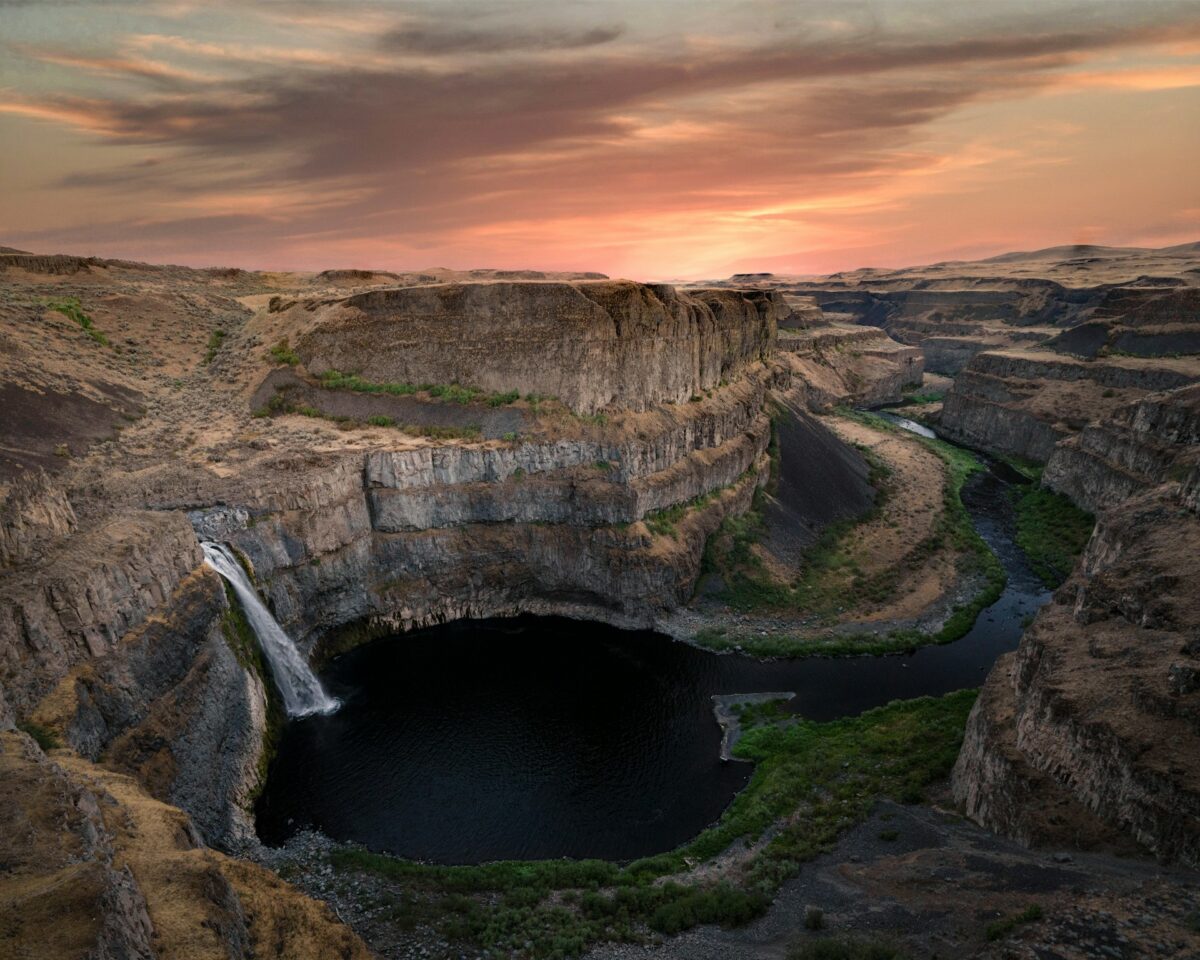
The legitimacy of Mel’s Sinkhole remains hotly debated, but the story has taken on a life of its own that makes it worth including for the sheer audacity of its claims—supposedly discovered by a man named Mel Waters on his property near Ellensburg, Washington, this sinkhole allegedly has no measurable bottom despite attempts to sound it with weighted fishing lines that ran out at 80,000+ feet without hitting anything solid. Waters claimed he and neighbors had been using it as a convenient disposal site for years, throwing in everything from old appliances to deceased livestock, none of which ever produced sounds of impact no matter how long they listened.
The story gets progressively stranger from there, involving government intervention, mysterious research activities, and claims about the sinkhole’s unusual properties that venture well into science fiction territory. Whether any of it actually happened is beside the point—Mel’s Sinkhole has become a modern folklore touchstone precisely because it captures something essential about how these massive geological openings affect human imagination.
There’s something about staring into a deep sinkhole that makes perfectly rational people start wondering about connections to unknown depths, about spaces that might follow different physical laws than the surface world we think we understand.
Windows Into Hidden Worlds
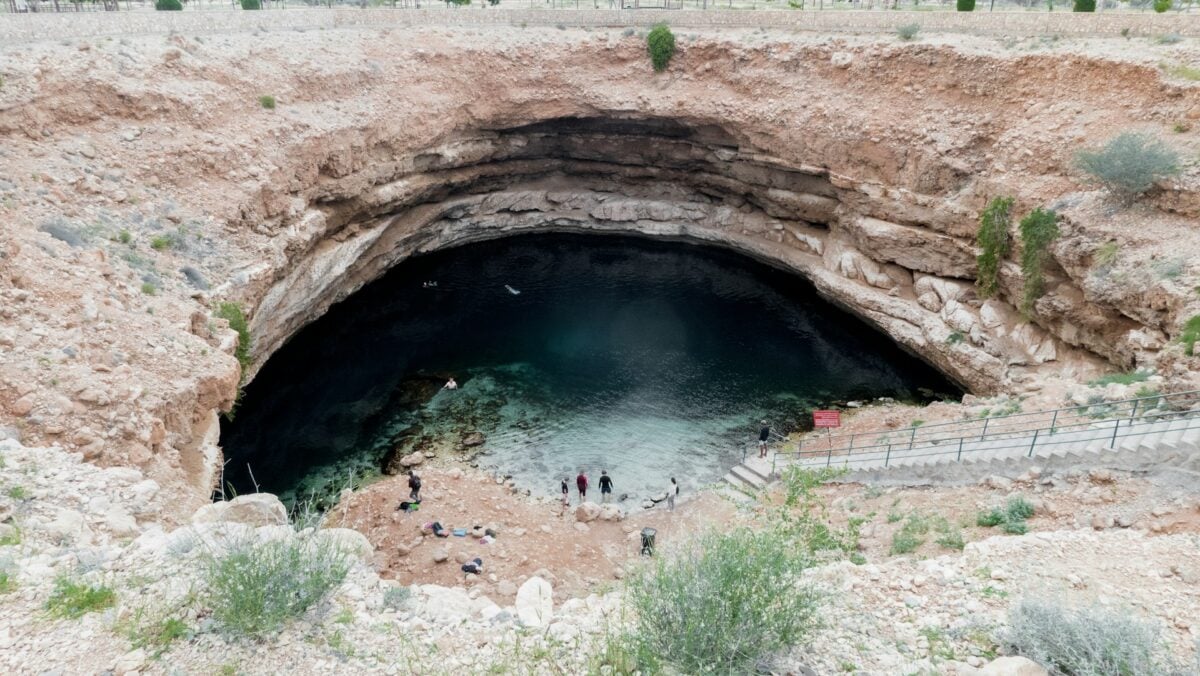
These geological formations remind us that the planet we think we know still holds secrets in plain sight. Each sinkhole represents a moment when the earth’s hidden architecture becomes visible, revealing underground systems that exist parallel to our surface world but operate according to different rules.
Whether formed by water dissolving limestone over millennia or created by sudden ground collapse, they share the ability to stop us in our tracks and make us reconsider what we think we understand about the solid ground beneath our feet. Standing at the edge of any major sinkhole produces a similar effect—a combination of vertigo, curiosity, and something approaching reverence for forces that can carve perfect circles hundreds of feet deep without asking permission or providing advance notice.
They’re reminders that the earth remains fundamentally wild, capable of surprises that dwarf our engineering projects and humble our assumptions about stability and permanence.
More from Go2Tutors!

- The Romanov Crown Jewels and Their Tragic Fate
- 13 Historical Mysteries That Science Still Can’t Solve
- Famous Hoaxes That Fooled the World for Years
- 15 Child Stars with Tragic Adult Lives
- 16 Famous Jewelry Pieces in History
Like Go2Tutors’s content? Follow us on MSN.