Photos Of Popular Watches From The 1900s
The 1900s marked a transformative century for wristwatches, taking them from delicate ladies’ accessories to essential tools worn by soldiers, pilots, and everyday people around the world. Each decade brought new innovations, from the first waterproof cases to the quartz revolution that changed everything.
These watches didn’t just tell time — they reflected the spirit of their era, whether that meant surviving the trenches of World War I or capturing the sleek optimism of the Space Age. Looking back through old photographs, these timepieces tell stories that go far beyond their mechanical specifications.
They were there for first dates and final missions, boardroom deals and backyard barbecues. The scratches on their cases and the patina on their dials carry decades of human experience.
Hamilton Railway Special
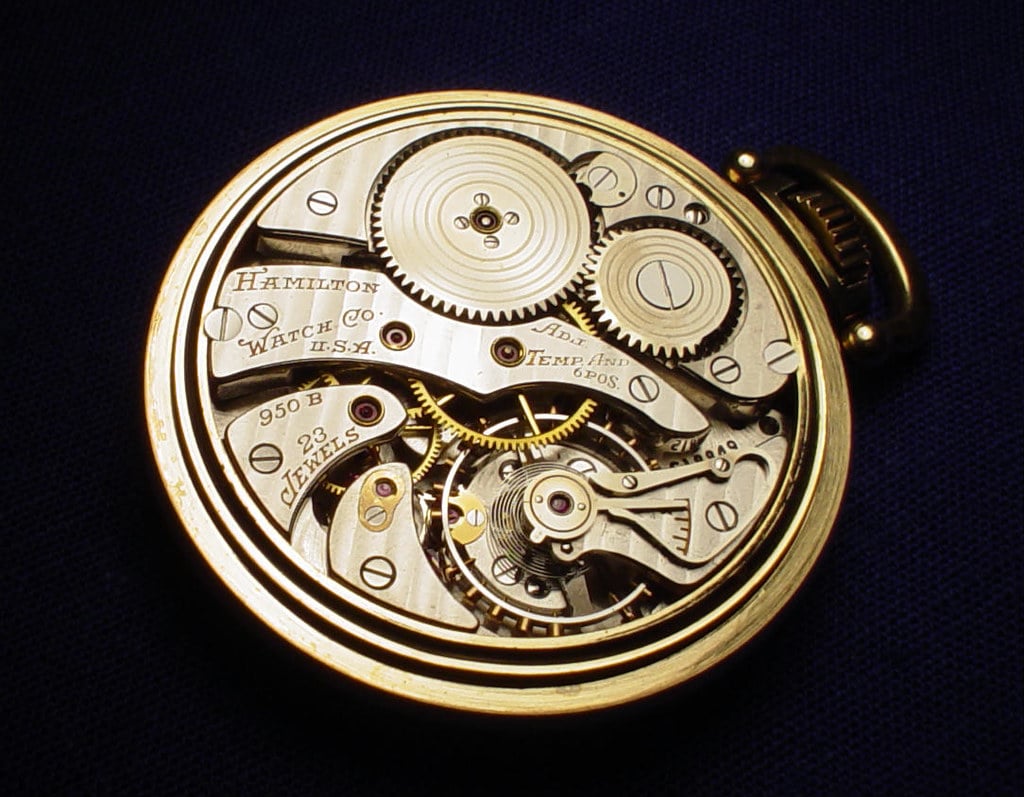
Railroad workers needed accuracy that could prevent deadly collisions. Hamilton delivered with the Railway Special, a pocket watch so precise that train conductors trusted their lives to it.
The white enamel dial was clean enough to read in poor light, while the bold Arabic numerals left no room for misinterpretation. These weren’t jewelry.
They were tools that happened to be beautiful.
Cartier Santos
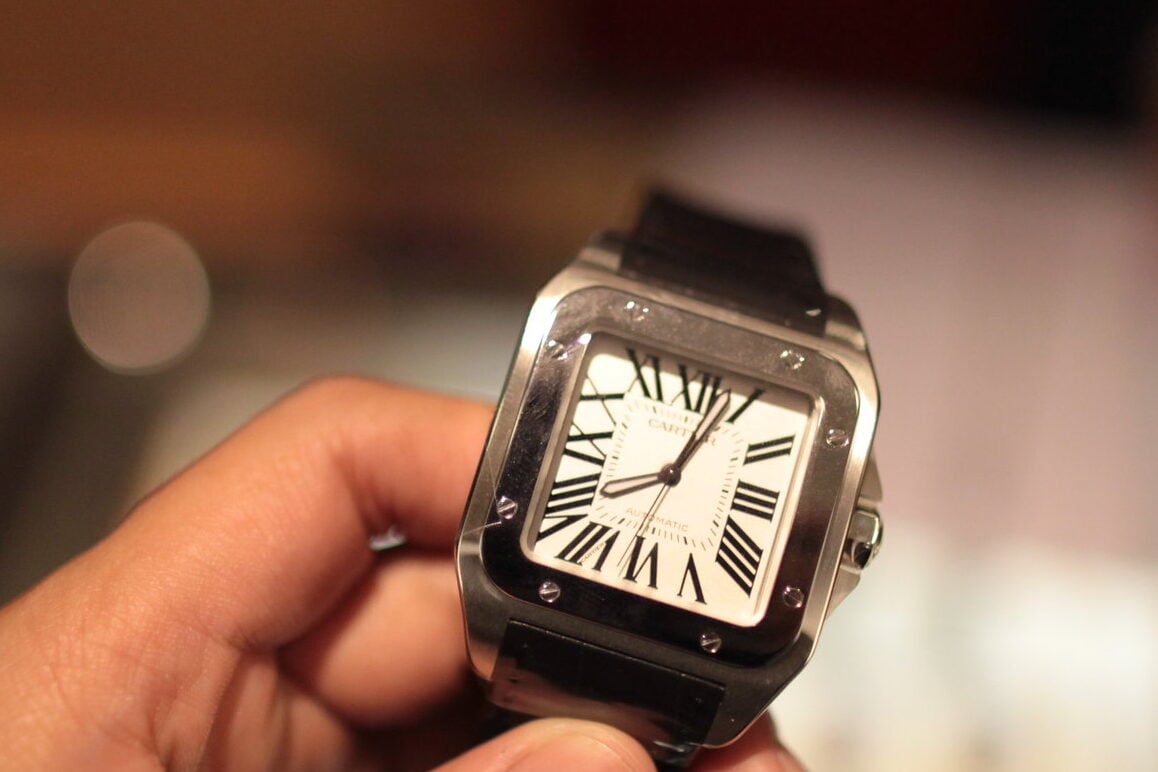
When Alberto Santos-Dumont complained to his friend Louis Cartier about fumbling with a pocket watch while piloting his aircraft (because apparently even early aviation pioneers had their priorities), Cartier responded by creating something entirely new — a watch designed specifically for the wrist that didn’t apologize for being there. The Santos, introduced in 1904, featured a square case that was both practical and elegant, with exposed screws that would become Cartier’s signature for the next century and beyond.
And while most men still considered wristwatches to be feminine accessories, Santos-Dumont wore his proudly, proving that function and style didn’t have to be mutually exclusive — though it would take a world war to convince everyone else that strapping a timepiece to your wrist made perfect sense. But this wasn’t just about convenience.
Something deeper was happening here. The Santos represented a shift in how people thought about time itself, moving it from the formal ritual of pulling out a pocket watch to something more immediate, more present.
Time was becoming less ceremonial and more integrated into daily life. So when you see those early photographs of Santos-Dumont wearing his square Cartier, you’re looking at the moment when timekeeping became modern.
Which, when you think about it, was probably inevitable.
Omega Speedmaster Professional
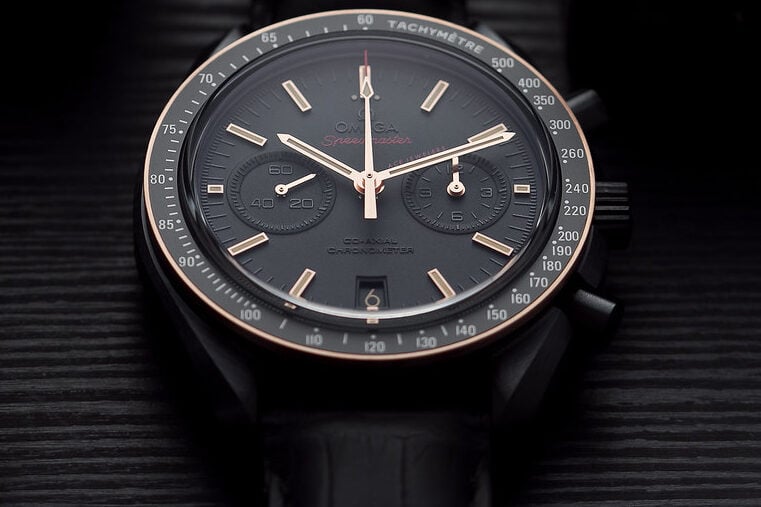
There’s something almost stubborn about the way the Speedmaster has refused to change. While other watches chased trends or tried to reinvent themselves, the Speedmaster just kept doing what it always did — measuring time with mechanical precision that didn’t need batteries or updates or any concession to convenience.
When NASA needed a watch that could survive the vacuum of space, they didn’t choose the most advanced timepiece available. They chose the one that worked.
The black dial, white markers, and three subdials weren’t design statements — they were the visual language of function distilled to its essence. Like a well-worn tool handle, every element existed because it needed to be there.
And yet there’s beauty in that refusal to compromise, the way a craftsman’s workshop becomes beautiful not through decoration but through the honest arrangement of necessary things.
Rolex Submariner
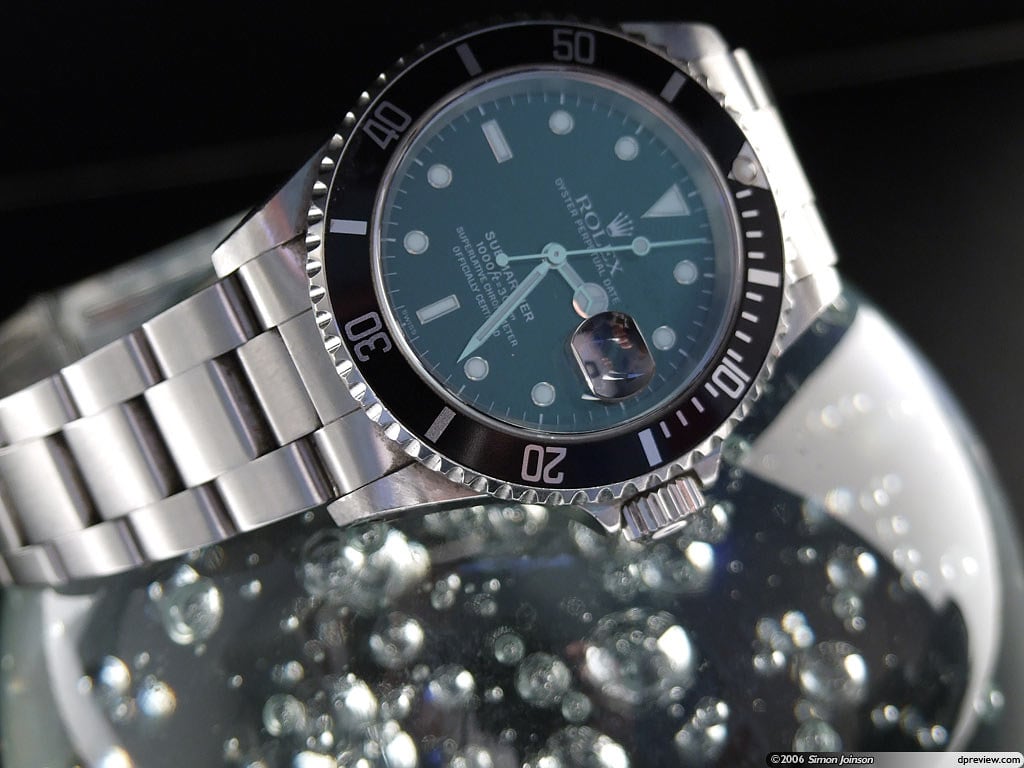
The Submariner doesn’t care about your opinion. It was built to go underwater and tell time accurately, and everything else is just conversation.
The rotating bezel, the luminous markers, the Mercedes hands — each feature exists because divers needed it to work properly at 200 feet below the surface. This is function wearing the mask of luxury, which makes it more honest than most expensive things.
The Submariner costs what it costs because it does what it promises to do. No apologies, no explanations needed.
Fair enough. When something works this well for this long, arguing about price becomes academic.
Patek Philippe Calatrava
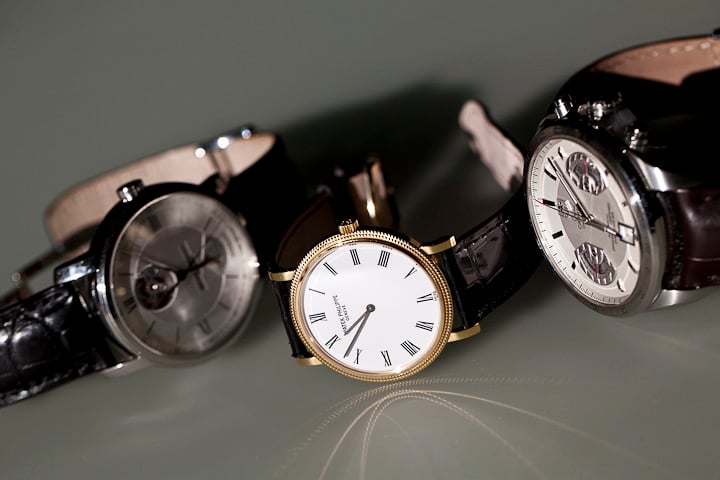
Like watching someone write with a fountain pen, the Calatrava moves through time with a kind of deliberate grace that makes everything else seem hurried. The clean white dial and slender hands don’t announce themselves — they simply exist in that perfect balance between presence and restraint that only comes from knowing exactly what belongs and what doesn’t.
This is watchmaking as meditation, where every proportion has been considered and reconsidered until nothing remains that doesn’t serve the whole. The lugs curve just so; the hour markers breathe with exactly the right amount of space between them; the hands move with the kind of purposeful quiet that makes you notice time passing rather than simply enduring it.
And while other watches might shout about their complications or their materials, the Calatrava speaks in the whisper that makes you lean in closer. There’s something almost defiant about such simplicity in a world that mistakes complexity for sophistication.
But then again, it takes considerable confidence to believe that doing one thing perfectly is enough.
Seiko 6139 Chronograph
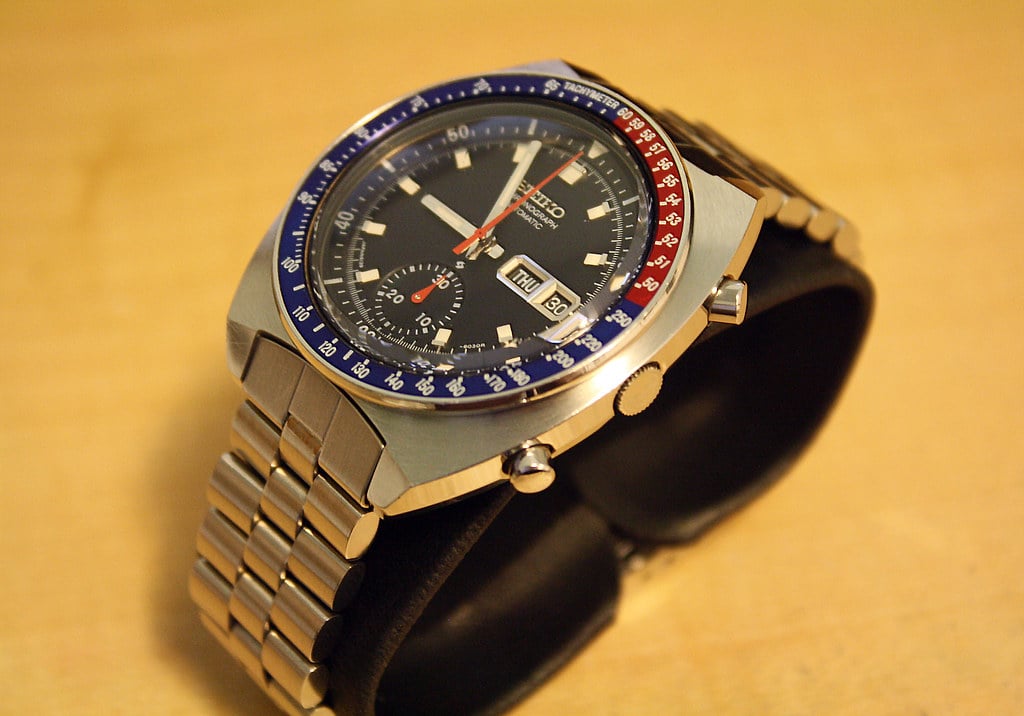
The 6139 arrived in 1969 like that friend who shows up to the fancy dinner party wearing jeans and somehow makes everyone else look overdressed. While Swiss manufacturers were crafting expensive mechanical chronographs for the wealthy, Seiko created an automatic chronograph that regular people could actually afford.
The design was unapologetically bold — bright colors, racing stripes, day-date complications that actually worked reliably. This wasn’t trying to be anything other than what it was: a well-made tool watch that didn’t take itself too seriously.
Which, as it turns out, was exactly what the world needed. Seiko proved that good engineering doesn’t require a Swiss passport.
Sometimes the best answer comes from someone who wasn’t invited to the conversation in the first place.
Jaeger-LeCoultre Reverso
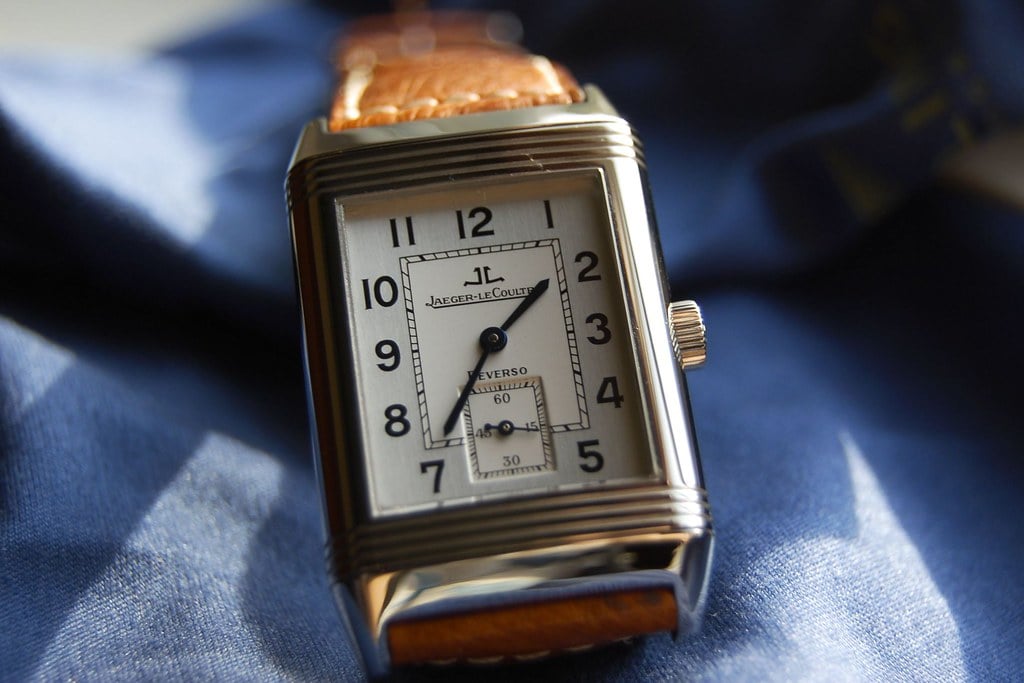
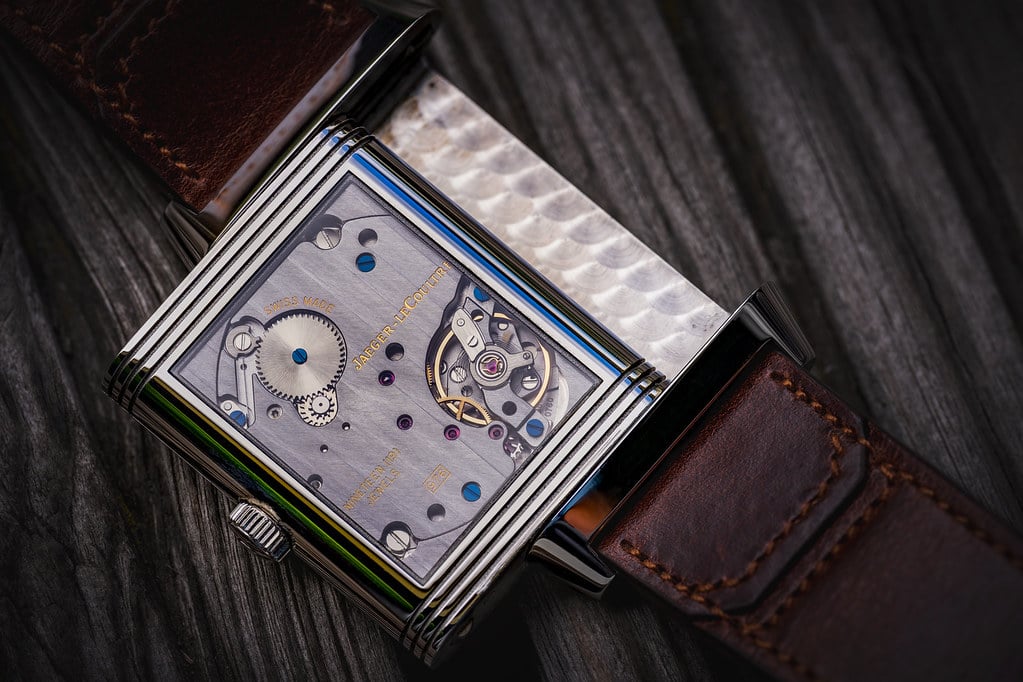
The polo fields of British India in 1931 demanded a watch that could survive a mallet strike, so Jaeger-LeCoultre created something that could literally turn its back on trouble. The reversible case wasn’t just clever engineering — it was problem-solving that happened to be beautiful, with clean Art Deco lines that made functionality feel like art.
But there’s something deeper at work here, something about the way the watch transforms itself from dress piece to sports tool with a simple flip of the case. It suggests a kind of adaptability that feels modern even now — the idea that one object can serve multiple purposes without compromise, that elegance and durability don’t have to be separate conversations.
The guilloche dial catches light differently depending on the angle, while the case back offers a canvas for personal engraving, making each Reverso as individual as its owner. And when you flip it back, revealing that perfect rectangular face again, there’s a small satisfaction in the mechanical precision of the action — the way the case slides and clicks into place with the certainty that comes from Swiss engineering at its most thoughtful.
Tudor Black Bay
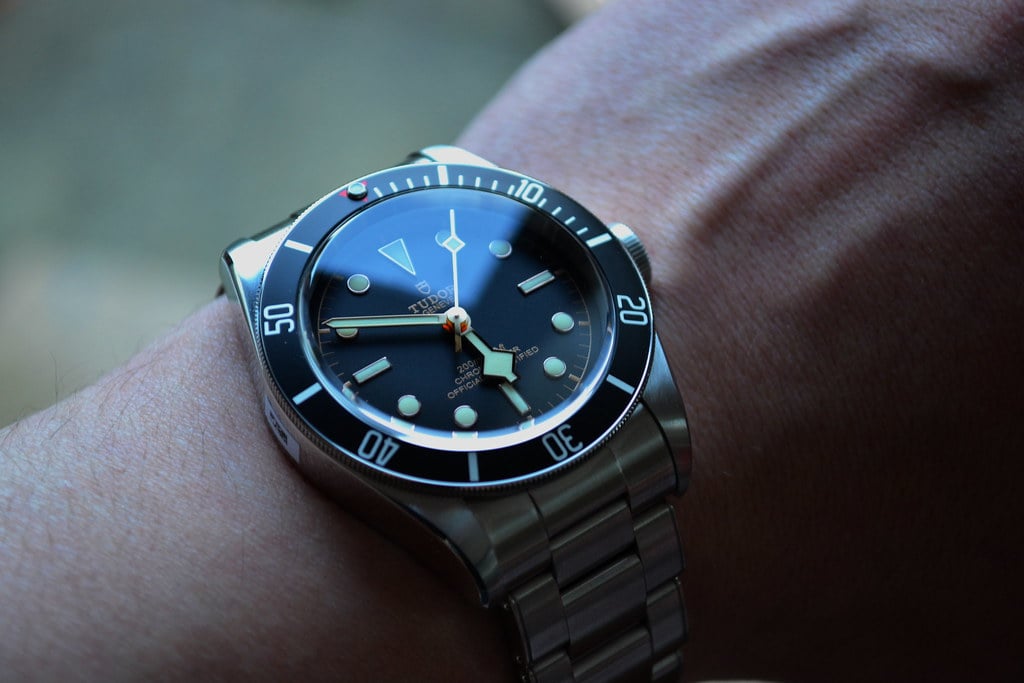
Tudor spent decades living in Rolex’s shadow before deciding that shadows might actually be interesting places to work. The Black Bay draws inspiration from Tudor’s diving watches of the 1950s, but it doesn’t feel like nostalgia — it feels like someone finally figuring out what they were trying to say all along.
The snowflake hands and gilt accents aren’t throwbacks; they’re refinements. This is a dive watch that acknowledges its heritage without being imprisoned by it.
The case proportions feel just right, the movement is robust, and the price makes sense. Tudor proved that being the younger sibling doesn’t mean settling for hand-me-downs.
Sometimes it means getting to start fresh while everyone else is stuck defending old decisions.
Timex Weekender
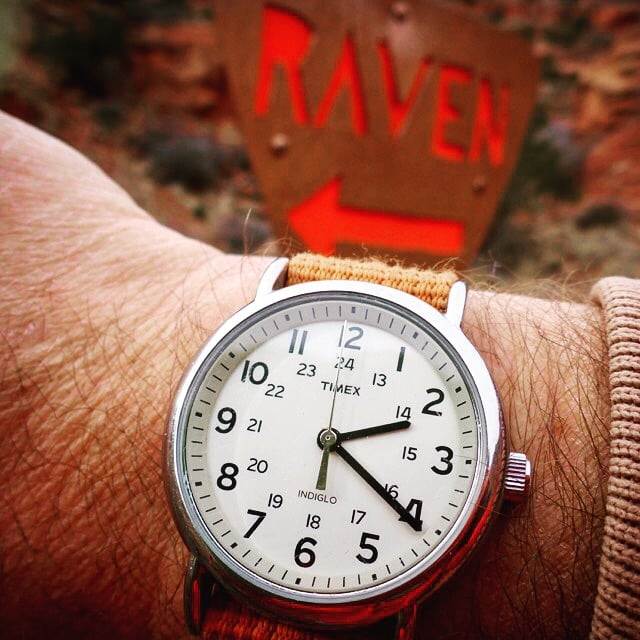
There’s something beautifully democratic about the Weekender’s refusal to take itself seriously. While other watches make grand statements about heritage and precision, the Weekender just tells time reliably and looks good doing it.
The interchangeable NATO straps mean you can change the entire character of the watch in about thirty seconds, which is either practical or playful depending on your mood. This is the watch equivalent of a well-made white t-shirt — simple, versatile, and honest about what it is.
The ticking might be audible in quiet rooms, but that just reminds you that something mechanical is happening inside that simple case, counting off seconds with the same dedication as watches costing fifty times more. And while watch collectors might dismiss the quartz movement as pedestrian, the Weekender does something that many expensive timepieces don’t: it makes wearing a watch feel effortless rather than precious.
The beauty here isn’t in the complications or the materials — it’s in the recognition that good design doesn’t require justification beyond working well and looking right.
Casio G-Shock DW-5000
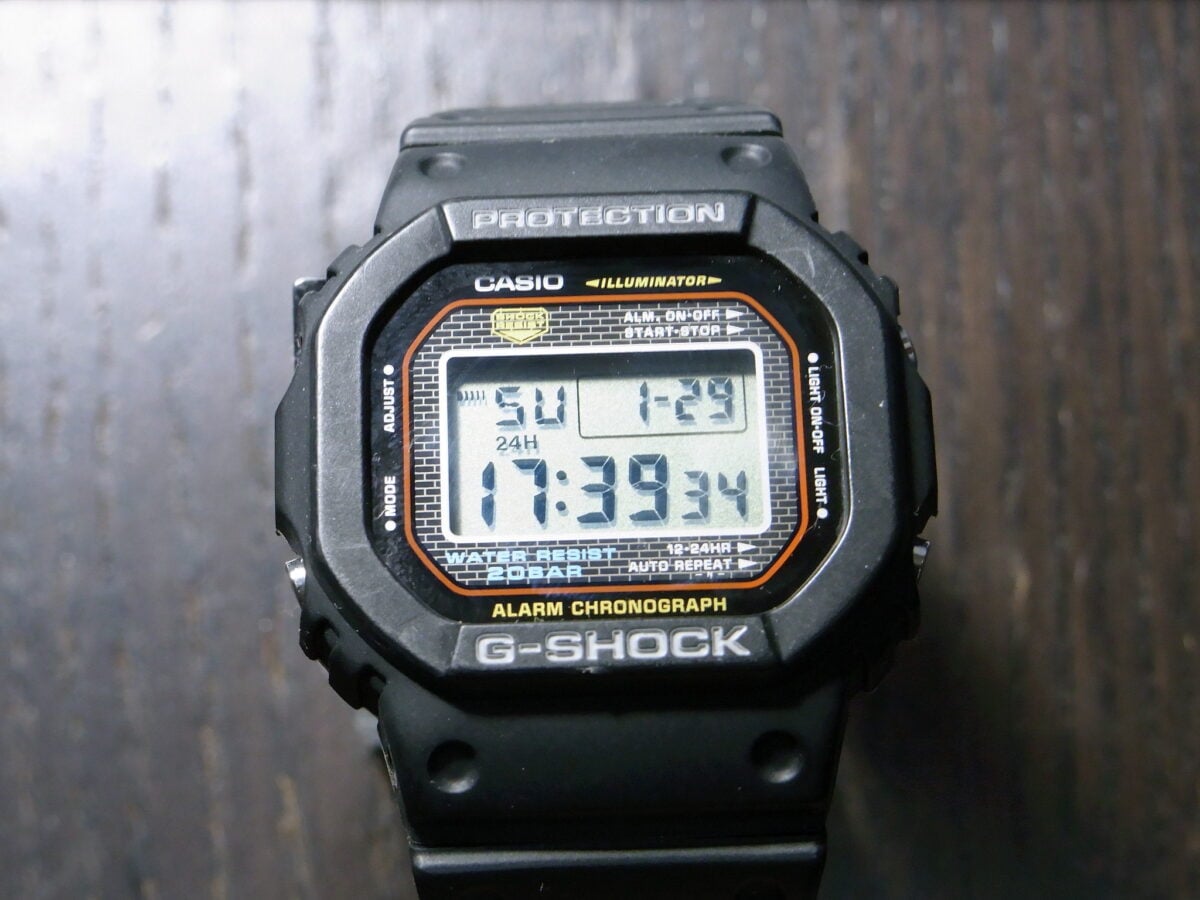
When Casio engineer Kikuo Ibe wanted to create a watch that could survive being dropped, he probably didn’t expect to revolutionize what a watch could look like. The original G-Shock was aggressively unfamiliar — thick, angular, and unapologetically plastic in a world where serious watches were thin, round, and made of metal.
The design wasn’t trying to please anyone. It was trying to survive everything.
And in that pursuit of pure functionality, something unexpectedly honest emerged. Construction workers and soldiers adopted it first, then skateboarders and hip-hop artists.
The G-Shock became cool by refusing to care about being cool, which might be the most authentic path to cultural relevance there is.
Heuer Monaco
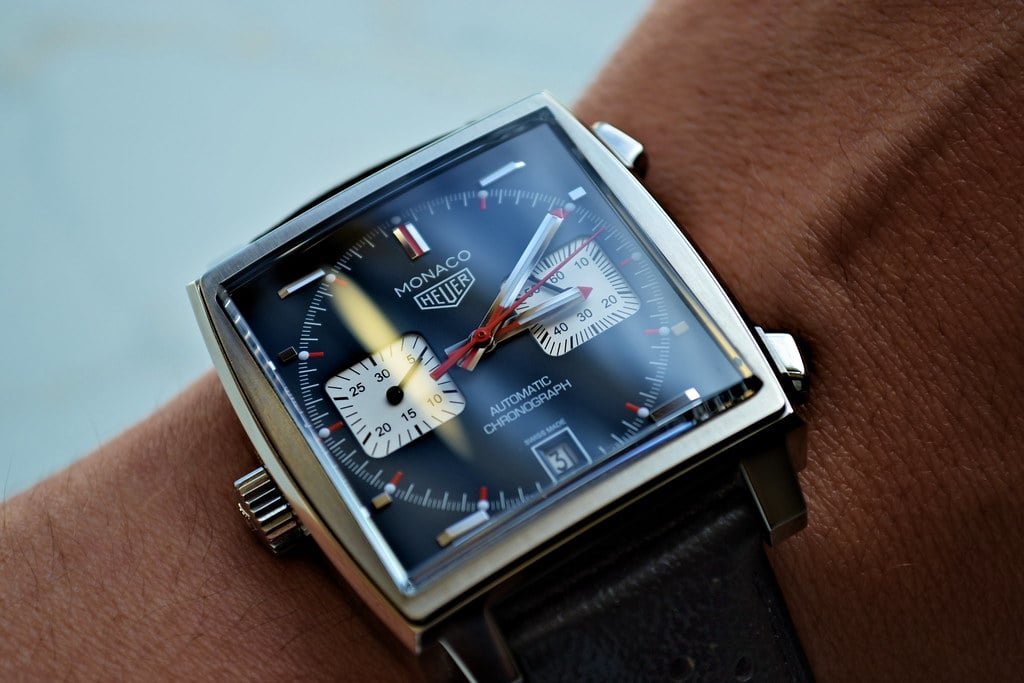
The Monaco landed in 1969 wearing its square case like armor, completely indifferent to the fact that watch cases were supposed to be round. While other chronographs played it safe with traditional layouts, the Monaco put its crown on the left side and made the pushers feel like industrial controls rather than jewelry details.
This was Steve McQueen’s choice for “Le Mans,” and that casting wasn’t accidental. The Monaco has that same combination of precision and rebellion — technically sophisticated but visually confrontational.
It doesn’t try to charm anyone into liking it. Heuer understood that sometimes the most memorable design choice is the one that makes people look twice and wonder what they just saw.
Citizen Eco-Drive
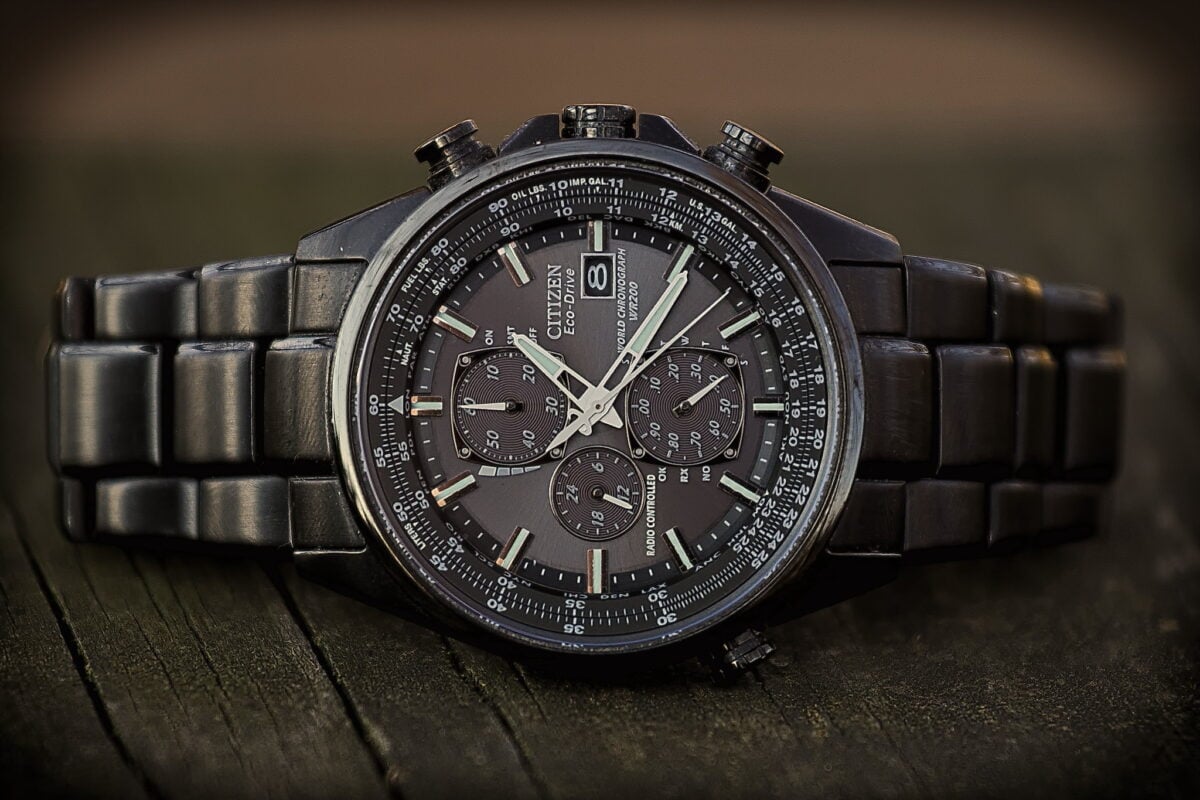
Solar power in a wristwatch seemed like science fiction until Citizen made it work reliably. The Eco-Drive doesn’t need battery changes or daily winding — it just converts light into energy and keeps running, which feels like the kind of practical magic that technology should provide more often.
But here’s what makes it genuinely impressive: the solar cells are integrated so seamlessly into the dial design that you might not even notice they’re there. This is advanced technology that doesn’t need to announce itself, which shows a kind of confidence that many tech products lack.
The Eco-Drive proves that innovation works best when it solves real problems without creating new ones. Sometimes the most sophisticated solution is the one that lets you forget it exists.
Vacheron Constantin Patrimony
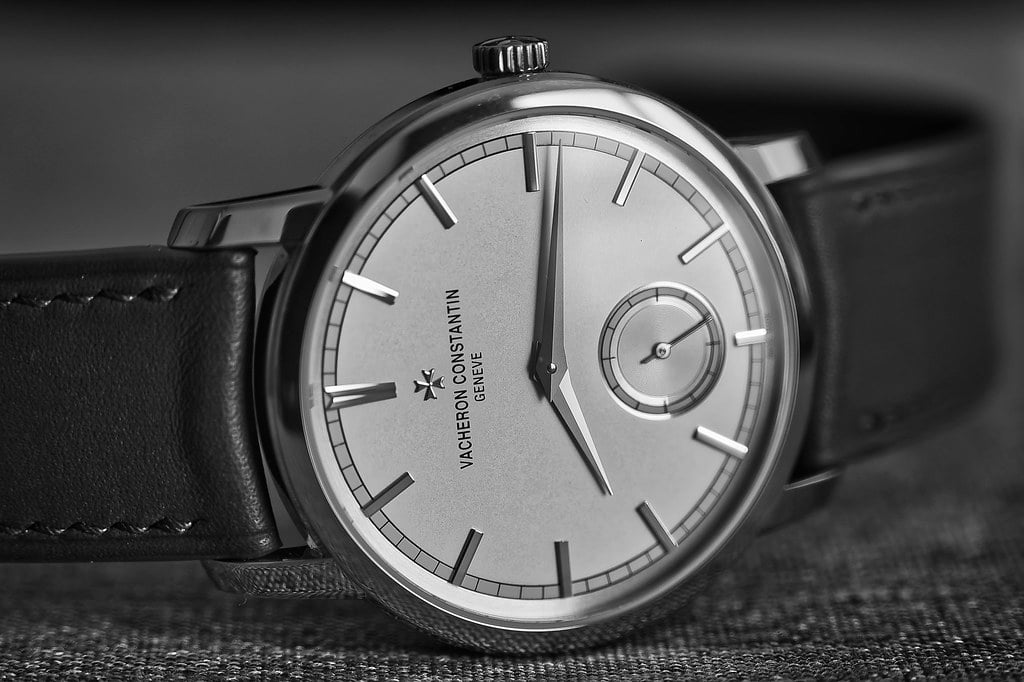
Like reading poetry in a language you learned as a child, the Patrimony carries meaning that arrives before conscious thought. The ultra-thin case and clean dial speak in the visual grammar of classical proportions — not because they’re copying something old, but because they’ve found their way back to principles that transcend fashion.
This is haute horlogerie stripped of everything that doesn’t serve the essential purpose of marking time with quiet elegance. The dauphine hands move across the dial with mechanical poetry, while the date function integrates so seamlessly that it feels inevitable rather than added.
And when you turn the watch over, the transparent caseback reveals movement finishing that exists for its own sake, not for applause — the kind of attention to unseen details that separates craft from mere manufacturing. But there’s also something almost philosophical about such restraint, the way the Patrimony suggests that true luxury might be the freedom to own less rather than more.
Looking Back Through Time’s Lens
Photographs have a way of capturing more than their subjects intended to reveal. In those old images of people checking their watches — whether it’s a pilot consulting his navigation timer or a businessman glancing at his dress watch during a meeting — we see not just timepieces but the rhythm of entire eras.
The watches became witnesses to the century that shaped the modern world, from the mechanized warfare that made accurate timekeeping essential to the space race that demanded precision beyond anything previously imagined. These weren’t just accessories.
They were companions that measured out lifetimes one tick at a time, accumulating scratches and stories with equal patience. And perhaps that’s what makes these vintage photographs so compelling — they show us time itself, captured in that brief moment when someone needed to know exactly where they stood in the endless flow of seconds and minutes and hours.
More from Go2Tutors!

- The Romanov Crown Jewels and Their Tragic Fate
- 13 Historical Mysteries That Science Still Can’t Solve
- Famous Hoaxes That Fooled the World for Years
- 15 Child Stars with Tragic Adult Lives
- 16 Famous Jewelry Pieces in History
Like Go2Tutors’s content? Follow us on MSN.