Rarest Cars Ever Manufactured
Most cars are mass-produced. Thousands roll off assembly lines each year, destined for dealership lots and everyday commutes. But some automobiles take a different path.
Manufacturers build them in tiny numbers, sometimes deliberately, sometimes because circumstances forced their hand. These rare machines become legends.
You probably won’t see these cars at a local car show. Many exist in private collections, locked away from public view.
A few sit in museums behind velvet ropes. Collectors pay millions for the privilege of ownership.
The rarity itself becomes part of the value, transforming metal and glass into objects of obsession.
Rolls-Royce 15 HP: Only One Left

Charles Rolls and Henry Royce shook hands on December 23, 1904, agreeing to build cars together. Their partnership produced six Rolls-Royce 15 HP automobiles in 1905.
Today, only one survives. The car registered as SD 661 sits as the world’s second-oldest Rolls-Royce, valued at an estimated $35 million.
A family in Kilmarnock, Scotland, owned this particular car for over 60 years. In 1974, they gifted it to the Royal Scottish Automobile Club.
The vehicle has spent most of its time since then on display in Scottish museums, occasionally loaned to other institutions. Its survival represents pure luck.
The other five Rolls-Royce 15 HP cars vanished into history, likely scrapped or destroyed decades ago. The 3000cc 3-cylinder engine under the hood seems primitive by modern standards.
But in 1905, this represented cutting-edge automotive engineering. The car marks the beginning of a luxury automobile legacy that continues today.
Without this vehicle, historians would have far less insight into how Rolls and Royce initially collaborated.
Bugatti Type 41 Royale: Built for Kings
Ettore Bugatti designed the Type 41 Royale in 1931 for an exclusive clientele. He planned to build 25 examples and sell them exclusively to royalty.
The car measured 21 feet long, weighed 7,000 pounds, and featured a massive 12.7-liter straight-eight engine. Even standing near one feels humbling.
The hood ornament alone reaches eye level. Then the Great Depression hit. Bugatti managed to build seven Type 41 Royales but sold only three.
Ettore reportedly wrecked the seventh car himself, leaving six survivors. One sold at auction in 1987 for $9.7 million.
Today’s estimated value exceeds that figure by a wide margin. If a Royale came to market now, it would likely become the most expensive car ever sold.
The Royale dwarfs modern luxury sedans. A Rolls-Royce Phantom looks modest by comparison.
The sheer audacity of building a car this large and luxurious during an economic catastrophe speaks to Bugatti’s vision and stubbornness. He believed in creating the ultimate automobile regardless of market conditions.
Ferrari 250 GTO: Racing Legend

Enzo Ferrari personally approved each buyer of the 250 GTO. Between 1962 and 1964, his factory produced 36 examples.
The car dominated GT racing during the early 1960s, winning approximately 300 races worldwide. It secured three consecutive GT World Championships from 1962 to 1964.
The 250 GTO combined classic styling with brutal performance. A V12 engine pushed the car to 170 miles per hour.
Front A-arm suspension and rear live-axle with Watt’s linkage provided stability. Borrani wire wheels completed the package.
The aerodynamic body design reflected countless hours of wind tunnel testing. In 2018, a 1962 Ferrari 250 GTO sold for $48.4 million, setting a record.
Other examples have fetched similar prices in private sales. The 250 GTO represents the pinnacle of 1960s sports car design.
Its combination of beauty, performance, and racing pedigree makes it the most desirable Ferrari ever built. Collectors spend decades trying to acquire one.
Bugatti Type 57 SC Atlantic: Four Became Three

Jean Bugatti, Ettore’s son, designed the Type 57 SC Atlantic in the 1930s. The low-slung coupe built on the 57S chassis prioritized lightweight construction.
Only four examples left the factory. Today, one remains missing.
Collectors consider it the ultimate Bugatti and the first true supercar. The Atlantic’s design defied convention.
A distinctive spine ran down the center of the body, held together with external rivets because welding the special magnesium alloy would have been too difficult. The dramatically curved body panels and teardrop shape created one of the most recognizable silhouettes in automotive history.
The missing Atlantic last appeared publicly in the late 1930s. It belonged to a Bugatti test driver who disappeared during World War II.
Rumors place the car in various locations, but concrete evidence has never surfaced. If discovered, experts estimate its value at over $100 million.
The three known Atlantics rarely change hands. Current owners guard them jealously.
Aston Martin DB4 GT Zagato: Five Survived

Aston Martin collaborated with Italian coachbuilder Zagato to create the DB4 GT Zagato. The partnership started in 1960 and produced 19 cars initially, though only five original racing models survived to the present day.
One sold at a 2017 Monterey auction for $22.5 million, setting a record for the most expensive British car ever auctioned. Zagato replaced all steel components with aluminum, reducing weight by 100 pounds.
The modifications made the car smaller and more aerodynamic. A 3.7-liter twin-spark straight-six engine produced 314 horsepower.
The DB4 GT Zagato could reach 60 mph in 6.1 seconds and topped out at 154 mph. The surviving examples represent significant moments in racing history.
Each car competed in period races, accumulating damage and repairs over decades of hard use. Restoring these vehicles to their original specification required extensive detective work and fabrication of obsolete parts.
The DB4 GT Zagato demonstrates what happens when a British sports car manufacturer teams up with an Italian design house focused on racing.
McLaren F1 LM: Le Mans Anniversary
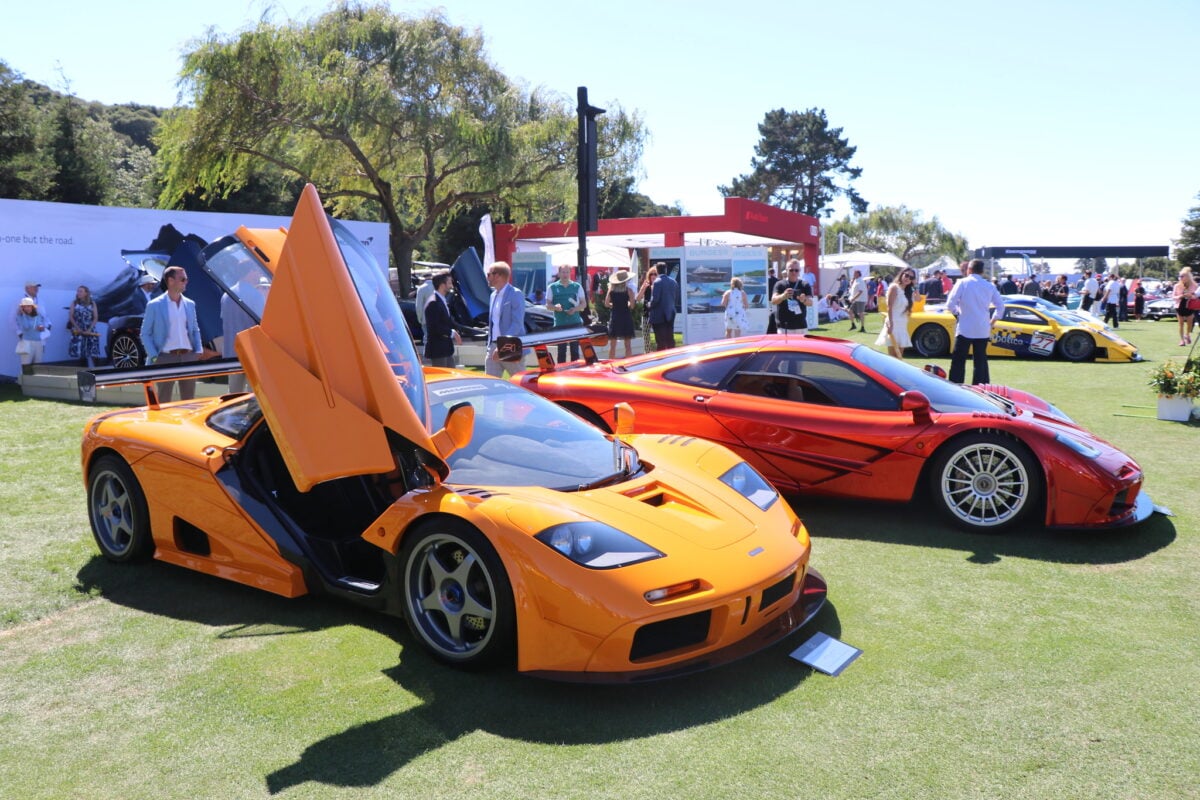
McLaren produced six F1 LM cars in 1995 to honor their Le Mans racing success. Five McLaren F1 GTR race cars finished the 1995 24 Hours of Le Mans in first, third, fourth, fifth, and thirteenth places overall.
McLaren sold five of the F1 LM tribute cars and kept the papaya orange prototype for continued chassis development. The 6.1-liter BMW S70/2 V12 engine delivered exceptional performance.
Unique features included modified dampers, additional aerodynamic vents, and a distinctive three-seat cockpit with the driver positioned centrally. The F1 LM pioneered performance engineering concepts that influenced supercar design for decades.
In 2019, one F1 LM sold at auction for $19.8 million. The combination of rarity, racing pedigree, and technological innovation drives demand.
McLaren built these cars before the company became a mainstream supercar manufacturer. The F1 LM represents McLaren at its most focused and uncompromising.
Porsche 916: The Prototype That Never Was
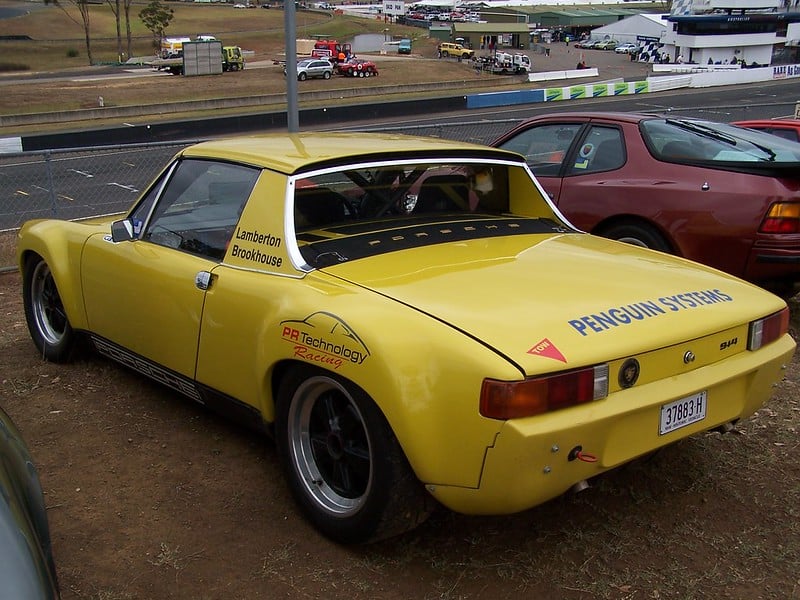
Porsche built 11 examples of the 916 in 1972, all prototypes. The company planned a limited production run but cancelled the project before reaching customers.
Only one 916 made it to the United States. The rest remained in Europe or disappeared into private collections.
The 916 featured a 2.4-liter engine producing 190 horsepower. Top speed reached 145 mph.
The design borrowed elements from several Porsche models, creating something that looked distinctive despite using familiar components. For its era, the styling held up well and the performance satisfied.
Why cancel production? Porsche never officially explained. Some historians suggest the 1970s oil crisis made selling an expensive sports car difficult.
Others point to internal politics at Porsche or concerns about cannibalizing 911 sales. Whatever the reason, the 916 became one of the rarest Porsches ever created.
Collectors who track down examples join an extremely exclusive club.
Oldsmobile F-88: American Dream Machine

General Motors produced four Oldsmobile F-88 concept cars in 1954. Only one survived.
The F-88 previewed styling elements that would appear in production Corvettes and influenced American car design throughout the 1950s. That single remaining example represents a crucial moment in automotive history.
The fiberglass body housed a 250-horsepower V8 Oldsmobile Rocket engine. The convertible’s gorgeous lines and proportions captured the optimism and ambition of 1950s America.
Chrome details, dramatic curves, and forward-thinking design made the F-88 unforgettable to anyone who saw it. One F-88 resides at the Gateway Colorado Automobile Museum.
Another sold at Barrett-Jackson for $3.5 million, setting a record for the auction house at the time. The F-88 shows what happens when designers are given freedom to explore ideas without worrying about production costs or practicality.
It’s a concept car purity frozen in metal.
Koenigsegg CCXR Trevita: Diamond Weave Carbon
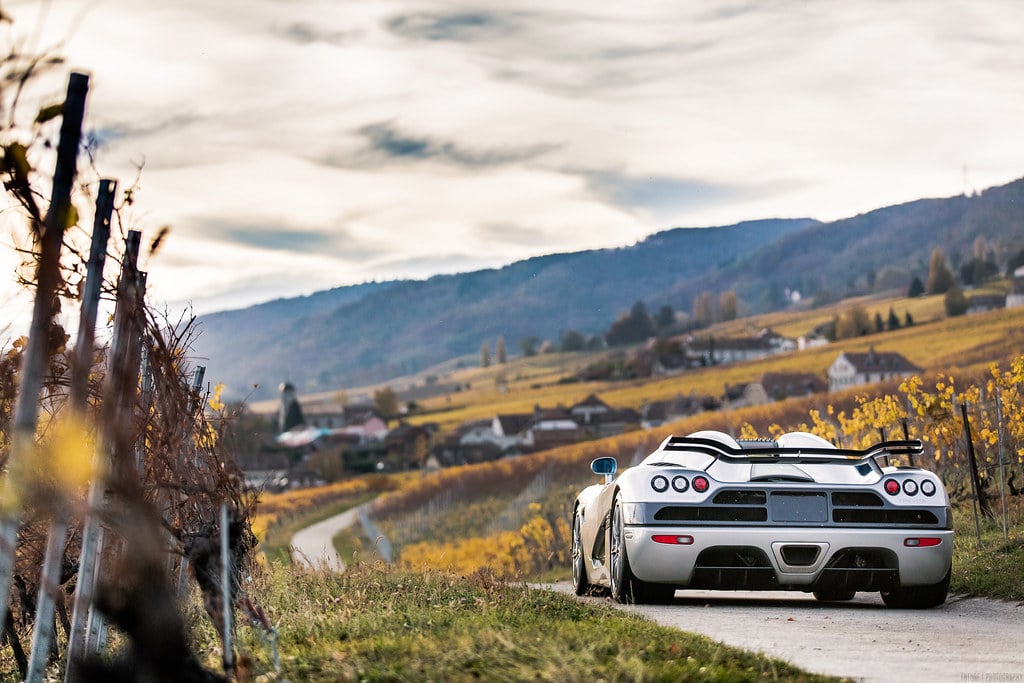
Koenigsegg planned to build three CCXR Trevita supercars. The name translates to “three whites” in Swedish.
The company developed a proprietary method for manufacturing carbon fiber that resulted in a silvery-white finish instead of traditional black. The fibers were designed to shine like diamonds when light hit them.
The complexity of the process limited production to just two units. One belongs to boxer Floyd Mayweather.
The 4.8-liter twin-supercharged V8 engine runs on ethanol fuel and produces 1,004 horsepower. When Forbes compiled a list of the ten most beautiful cars in history in 2009, they included the CCXR before the even more limited Trevita was unveiled.
The Trevita can reach 60 mph in 2.9 seconds and exceeds the top speed of the Bugatti Veyron. Beyond the performance numbers, the visual impact of the diamond weave carbon fiber body sets it apart from every other supercar.
Standing next to a Trevita feels like being near a piece of jewelry scaled up to car size.
W Motors Lykan HyperSport: Seven for Furious 7

Lebanese engineers working with French and Italian specialists created the Lykan HyperSport in 2012. W Motors, based in the United Arab Emirates, built only seven examples.
The car gained fame appearing in Furious 7, where it smashed through Abu Dhabi skyscrapers. The headlights contained 420 diamonds totaling 15 carats, though buyers could specify rubies or colored diamonds instead.
The entire body was handcrafted from carbon fiber. Dihedral doors opened upward in dramatic fashion.
A twin-turbocharged flat-six engine produced 740 horsepower and 708 pound-feet of torque. At $3.4 million per car, the Lykan HyperSport ranked as the third most expensive production car when launched.
One example joined the Abu Dhabi police fleet in 2015. The Lykan represented the first supercar designed and manufactured entirely in the Middle East.
Whether all seven found buyers remains uncertain, but the car achieved its goal of putting W Motors on the automotive map.
Porsche 917: Racing Heritage

Between 1969 and 1971, Porsche built 37 examples of the 917. The original variant saw 25 units produced, while 12 units of the 917K followed.
This sports car dominated endurance racing, winning Le Mans in 1970 and securing Porsche’s reputation as a racing powerhouse. The Type 912 Flat-12 engine came in 4.5, 4.9, or 5.0-liter displacements.
Acceleration from zero to 62 mph took just 2.3 seconds. The 1971 version used a frame built from highly flammable magnesium because winning races mattered more than safety in that era.
The car appeared in the 1971 Steve McQueen film Le Mans, cementing its place in popular culture. Racing fans consider the 917 one of the most beautiful race cars ever designed.
The long-tail variants created for Le Mans stretched even further, prioritizing top speed over handling. These days, seeing a 917 run at vintage racing events draws massive crowds.
The sound of that flat-12 engine reverberating off track walls remains unforgettable.
Jaguar C-Type: British Racing Excellence

Jaguar built the C-Type between 1951 and 1953, creating one of the most successful sports racing cars of the era. The XK120-C variant stands as the rarest, with only 53 examples manufactured and 43 sold to private buyers.
The remaining units stayed with the factory for racing and development. The C-Type set benchmarks for performance and design both on and off the track.
Its sleek bodywork and sweeping engine bay defined British automotive excellence during the early 1950s. Disc brakes, uncommon at the time, gave the C-Type an advantage over competitors relying on drum brakes.
Today, the C-Type ranks as the rarest Jaguar in existence. Values exceed those of the more famous E-Type because so few C-Types survived. Many were crashed during races or scrapped when newer models arrived.
Finding an original C-Type in good condition requires patience, connections, and significant financial resources. The car represents Jaguar’s golden age of racing when the company regularly defeated rivals at Le Mans.
Alfa Romeo 33 Stradale: Beautiful Speed

Just 18 examples of the Alfa Romeo 33 Stradale exist. The car earned fame primarily for its stunning appearance, though performance impressed as well.
In period testing, it recorded the fastest standing kilometer time at 24 seconds. Beauty and speed combined to create an icon.
A 2.0-liter V8 engine produced 227 horsepower and 152 pound-feet of torque. Those numbers sound modest until you consider the curb weight: just 1,543 pounds.
The power-to-weight ratio made the 33 Stradale ferociously quick despite relatively small engine displacement. Current values reach approximately $15 million for clean examples.
The 33 Stradale’s design influenced automotive styling for decades. Its low, wide stance and flowing lines represented Italian coachbuilding at its finest.
Alfa Romeo built the car without concern for practicality or comfort. Pure driving engagement took priority over everything else.
Owners report that piloting a 33 Stradale remains an intense, all-consuming experience that demands complete attention.
Shelby Daytona Cobra Coupe: American Giant Killer

Ford wanted to defeat Ferrari in GT racing. Carroll Shelby built the Daytona Cobra in 1964 to make that happen.
The car succeeded, becoming the first American race car to win an international title at the 1965 FIA International Championship for GT Manufacturers. Only six Daytona Cobras were built.
Each featured a closed coupe body designed for high-speed stability. The aerodynamic shape allowed the car to reach speeds Ferrari hadn’t anticipated. American V8 power combined with British-inspired chassis design created a formidable racing weapon.
The Daytona Cobra represented America’s determination to compete with European manufacturers on their own terms. Rather than accepting Ferrari’s dominance, Ford invested in building a challenger.
The strategy worked. Ferrari’s stranglehold on GT racing ended.
The few surviving Daytona Cobras command astronomical prices because they represent a defining moment in American motorsports history.
Pagani Zonda Revolución: Track Monster

Pagani revealed the Zonda Revolución at the 2013 Geneva Motor Show. This track-only variant of the Zonda R saw production limited to just five units.
Each cost $2.6 million. The exclusivity matched the performance.
An upgraded Mercedes-Benz M120 V12 engine produced 791 horsepower and 730 Nm of torque. Zero to 60 mph took 2.7 seconds.
Top speed reached 233 mph. Enhanced Brembo brakes, a Bosch traction control system, and an upgraded vertical stabilizer supporting the rear wing helped control all that power.
Pagani builds cars for people who already own everything. The Zonda Revolución appealed to collectors seeking the ultimate expression of Pagani’s engineering philosophy.
Track-only designation meant no road use, no emissions compliance, and no compromises for comfort. Everything focused on lap times and driving sensation.
The five owners joined an elite group of enthusiasts who appreciate automotive extremism.
The Desire for Exclusivity

Rare cars command extraordinary prices because scarcity creates demand. When only a handful of examples exist, competition among wealthy collectors intensifies.
Regular market forces stop applying. Rational pricing disappears.
Buyers pay whatever it takes to acquire what they want. Some manufacturers deliberately limit production to enhance desirability.
They could build more cars but choose not to. The artificial scarcity becomes part of the brand’s mystique.
Other rare cars resulted from circumstances beyond anyone’s control. Projects got cancelled.
Companies went bankrupt. Wars destroyed factories and records.
The rarest cars share common traits beyond low production numbers. Most pushed boundaries when new.
They represented ambitious attempts to build something exceptional. Whether successful or not, they made statements.
Their creators refused to settle for conventional approaches. That spirit resonates with collectors who appreciate automotive art and engineering pushed to extremes.
Why Some Disappeared Forever

Many potentially legendary cars never survived to become collectible. Racing destroyed countless examples.
Crashes, fires, and mechanical failures eliminated vehicles that might otherwise be worth millions today. Wartime scrap drives claimed by others.
Owners discarded cars they considered outdated or broken. Record-keeping in the early automotive era was spotty at best.
Manufacturers didn’t always document which cars went where. Serial numbers sometimes went unrecorded.
When cars changed hands multiple times, provenance became murky. Some vehicles simply vanished without explanation.
The survivors often endured through luck rather than deliberate preservation. Someone stored a car in a barn and forgot about it.
A family kept a vehicle because Grandpa loved it. Decades later, enthusiasts rediscovered these forgotten machines and recognized their significance.
But for every car preserved by accident, dozens were lost.
The Hunt Never Stops

Still, old garages might hold what people overlook. Hunters keep looking anyway, drawn by whispers of dusty classics tucked away.
Now and then, a sale meant for furniture turns up something with four wheels and history. Only when specialists show up does someone learn their relatives left behind more than just memories.
A car hunt unlike any other circles around a Bugatti gone silent years ago. One lucky person might strike fortune if they stumble on its trail.
Not every rare machine stays found forever. Take Ferraris once forgotten, only to show up after ages behind closed doors.
Some Porsches pop up where nobody would think to look. A fresh clue shows up where old races were run.
Systems on the web log classic machines, moving details from one country to another. Groups focused on historic motorsports keep logs of who raced what and when.
People who care about cars connect to spot rarities, save them, or shield them from harm. Finding just one car fits a missing part into a much bigger story.
Not every car is just for getting around. Some sit where metal meets masterpiece.
Sure, they have engines, wheels, tires – built like any machine. Yet they do more than move; they mean something.
Few purchase them for errands or commutes. Instead, collectors reach for them to hold rarity, touch automotive roots, connect with decades gone by.
Cost follows meaning here. It isn’t only about wheels and steel.
What you’re really getting is rarity, history, along with the quiet pride of holding onto a thing most people will never touch.
More from Go2Tutors!

- The Romanov Crown Jewels and Their Tragic Fate
- 13 Historical Mysteries That Science Still Can’t Solve
- Famous Hoaxes That Fooled the World for Years
- 15 Child Stars with Tragic Adult Lives
- 16 Famous Jewelry Pieces in History
Like Go2Tutors’s content? Follow us on MSN.



