Real-Life History Behind Pirate Legends
Pop culture sold us a version of pirates that’s more theater than truth. The wooden legs, the parrots squawking on shoulders, the buried treasure with X marking the spot – most of what you think you know comes from books and movies, not from actual historical records.
But here’s the thing: the real history is often stranger and more interesting than the legends. Between the 1680s and 1720s, during what historians call the Golden Age of Piracy, thousands of ships fell prey to sea robbers in the Atlantic and beyond.
These weren’t the swashbuckling romantics Hollywood made them out to be. They were criminals, sure, but they also created surprisingly democratic societies at sea and left behind stories that would inspire centuries of fiction. Let’s separate the treasure from the trash.
Walking the Plank Barely Happened

You’ve seen the scene a hundred times. Blindfolded prisoner, narrow wooden plank extending over churning waters, pirates jeering as their victim takes that final step. Problem is, there’s almost no evidence this ever happened during the Golden Age of Piracy.
Most pirates who wanted someone dead just threw them overboard. Why bother with the plank? The few documented cases of walking the plank come from the 1820s and later – well after the so-called golden age ended around 1730.
In 1822, the captain of a British ship called the Redpole was reportedly forced to walk the plank by pirates from a vessel named Emanuel. A few years later in 1829, Dutch ship Vhan Fredericka’s crew was forced to walk planks with cannonballs tied to their feet.
The whole walking the plank thing entered the popular imagination through fiction. Daniel Defoe mentioned it in his 1724 book about ancient Mediterranean pirates.
Then Robert Louis Stevenson cemented the image in Treasure Island when Billy Bones tells “dreadful stories” about it to young Jim Hawkins. Howard Pyle’s 1887 painting for Harper’s Weekly turned the concept into a visual legend.
From there, every pirate story had to include it, even though historical pirates preferred faster methods like keelhauling – dragging someone under the ship through barnacle-encrusted hulls – or simple marooning on deserted islands.
Pirates Rarely Buried Their Loot

The image of a weathered treasure map with X marking the spot? Complete fiction. There are exactly zero documented cases of historical pirate treasure maps. Not one.
Pirates spent their money fast. The average pirate career lasted two to three years before ending in death, capture, or retirement.
Why would they bury wealth they might never retrieve? Most blew through their plunder on rum, women, and gambling the moment they hit port. Living for tomorrow wasn’t really their style when today might be their last day breathing.
Captain William Kidd stands as the only verified case of a pirate burying treasure, and even calling him a pirate is debatable. He was a privateer with legal backing who became a political scapegoat. In 1699, knowing authorities were hunting him, Kidd buried treasure on Gardiners Island off New York, hoping to use it as a bargaining chip.
The authorities dug it up and used it as evidence against him before hanging him at Execution Dock in London. His sensational trial sparked public fascination with buried treasure that would fuel centuries of myth.
Francis Drake temporarily hid silver and gold in Panama after a 1573 raid, but he left guards and retrieved it six hours later. That’s not really “buried treasure” in the legendary sense.
The concept of treasure maps came entirely from fiction writers like Washington Irving, Edgar Allan Poe, and especially Robert Louis Stevenson, who admitted to basically plagiarizing Irving’s earlier treasure story.
Blackbeard Was a Master of Psychological Warfare
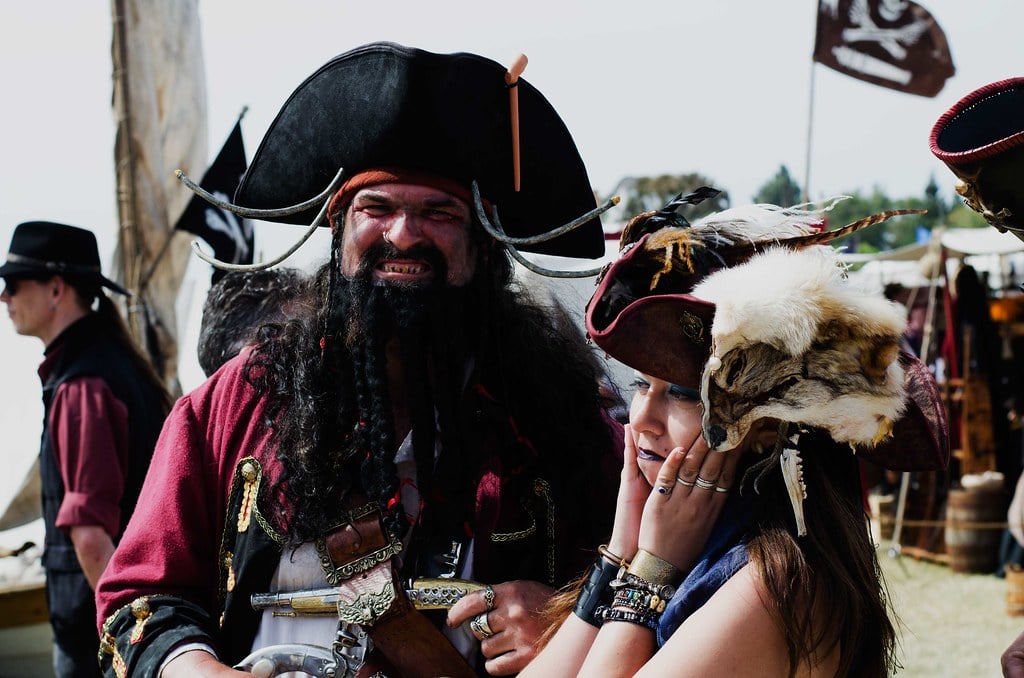
Edward Teach, better known as Blackbeard, understood something fundamental: reputation could be as powerful as actual violence. Sure, he was dangerous, but his legend grew partly through calculated theatrics.
His trademark beard covered most of his face, sometimes braided into separate tails. Before battle, he would weave slow-burning fuses into his hair and light them, surrounding his head with smoke and making him look demonic in the dim light of dawn or dusk.
He’d sling multiple pistols and daggers across his chest, creating the image of a walking arsenal. The psychological impact on merchant ships was often enough to make them surrender without a fight.
In November 1717, Blackbeard captured a French slave ship, renamed it Queen Anne’s Revenge, and outfitted it with 40 cannons. He used this firepower to blockade Charleston, South Carolina, refusing to leave until residents met his demands for a large chest of medicine.
When a man refused to hand over his ring, Blackbeard took both the jewelry and the finger. These stories spread faster than any ship could sail.
His death in 1720 matched his life’s drama. The British Navy finally cornered him in North Carolina. Legend says he received 20 stab wounds and five gunshot wounds before finally dying.
His body was decapitated and his head hung from the bowsprit of the attacking ship as a warning. Even in death, Blackbeard served as propaganda.
Women Pirates Broke All the Rules

Anne Bonny and Mary Read stand out not because female pirates were common – they weren’t – but because they succeeded in an overwhelmingly male world and left documented records. Anne Bonny was the illegitimate daughter of a lawyer and his servant.
After her mother died, she managed her father’s household until she ran off to become a pirate. When one man complained that her presence on the ship was unlucky, she stabbed him.
She eventually joined the crew of her lover, “Calico Jack” Rackham. Mary Read had disguised herself as a man for years, even serving in the military.
She ended up on a ship that Calico Jack’s crew captured, and instead of being taken prisoner, she joined them. The two women became close friends and fought side by side.
In 1720, when Jamaican forces captured their ship, the men on the crew reportedly hid below deck while Bonny and Read stayed above, fighting to the end. Both women were sentenced to hang, but both “pleaded their bellies” – they were pregnant, which earned them stays of execution.
Mary Read died of fever in prison. Anne Bonny’s fate remains unknown, which somehow feels appropriate for someone who spent her life defying expectations.
The Jolly Roger Had Many Faces
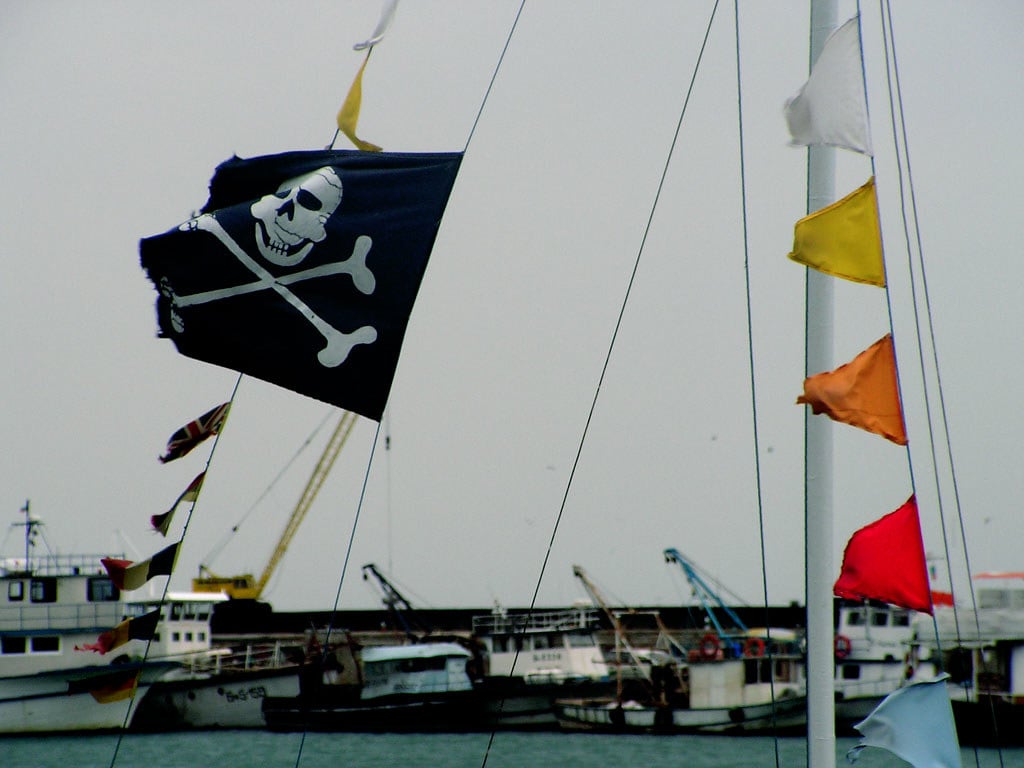
The skull and crossbones on a black flag are instantly recognizable as the Jolly Roger, but historical pirates used dozens of different designs. Some flags showed hourglasses, representing time running out for their victims.
Others displayed skeletons holding spears or swords. Blackbeard’s flag featured a skeleton holding a spear pointed at a heart. Calico Jack’s variation – which became one of the most famous – showed a skull with two crossed swords beneath it instead of crossed bones.
The name “Jolly Roger” itself has murky origins. Some historians think it derives from “joli rouge” (pretty red), referring to the blood-red flags some pirates flew to signal no mercy.
Others suggest it came from “Old Roger,” a term for the devil. Pirates often carried flags from multiple nations and would raise whichever flag helped them get close to a target ship.
They’d pretend to be friendly, sailing under Spanish or British colors, then raise their true pirate flag once they were close enough to attack. The black flag itself typically meant the pirate would give quarter – accept surrender.
A red flag meant blood and certain death to anyone who resisted. The whole point was psychological warfare.
A merchant ship that saw a pirate flag would often surrender immediately rather than risk a fight, which suited pirates fine. Combat meant casualties, and casualties meant fewer crew members to share the plunder.
Pirate Society Was Weirdly Democratic

Here’s something that would surprise most people: pirate crews operated more democratically than nearly any other institution in the 17th and 18th centuries. Captains were elected by the crew and could be voted out if they proved incompetent or unfair.
This stood in stark contrast to naval and merchant vessels where captains ruled with absolute authority and harsh discipline. On a pirate ship, the captain had total authority during battle and when chasing prizes, but otherwise the crew made decisions collectively.
The pirate code – or articles – wasn’t a loose set of guidelines. These were binding contracts that every crew member signed before joining. The codes covered everything from how plunder would be divided to what compensation someone would receive if they lost a limb in battle.
Bartholomew Roberts’ crew had one of the most detailed codes, with rules about gambling, bringing women aboard, and even lights-out times. The quartermaster held almost as much power as the captain, settling disputes between crew members and distributing food and supplies fairly.
This position existed specifically to check the captain’s authority. Some historians see these pirate democracies as proto-revolutionary societies, creating egalitarian systems decades before the American and French revolutions.
Of course, this democracy had limits. It extended only to crew members, not to prisoners or slaves. And “democratic” doesn’t mean “nice.” Punishment for breaking the code was severe.
Eye Patches Weren’t Just for Missing Eyes
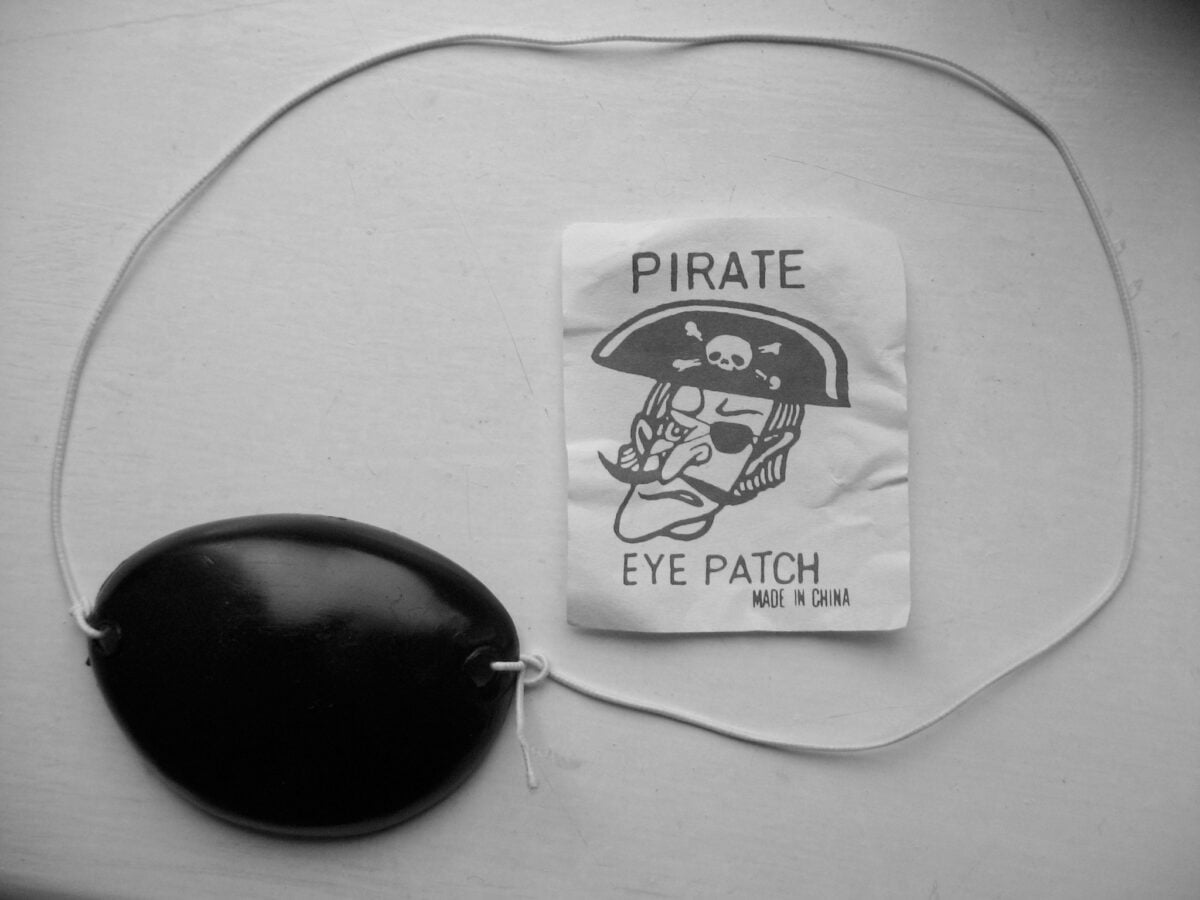
The pirate eye patch is iconic, but here’s the twist: many pirates wore them for practical reasons that had nothing to do with missing an eye. Moving between the bright sunlight on deck and the dark, cramped spaces below deck meant your eyes needed time to adjust.
During battle or when navigating quickly through the ship, waiting for your vision to adapt could be deadly. Some pirates kept one eye covered at all times, keeping that eye adjusted to darkness.
When they went below deck, they could switch the patch to the other eye and immediately see in the dim light. Now, plenty of pirates did lose eyes in battle or accidents. Shipboard life was dangerous, and medical care was primitive at best.
Splinters from cannonball impacts could fly through the air like shrapnel. Hand-to-hand combat with swords, pistols, and daggers meant injuries were common.
Eye injuries that would be treatable today meant permanent vision loss then. The same principle applied to peg legs and hook hands.
Did some pirates have prosthetics? Absolutely. Ships had plenty of ways to cost you a limb. But wooden legs and hook hands became exaggerated in fiction, particularly through characters like Long John Silver in Treasure Island and Captain Hook in Peter Pan.
Real pirates with serious injuries often just retired from seafaring life if they survived at all.
Most Pirate Treasure Was Boring Stuff

Forget chests overflowing with gold doubloons and jewels. The typical pirate haul consisted of cloth, timber, spirits, and sometimes enslaved people.
Spanish galleons filled with South American gold and silver were the ultimate prize, but they were also heavily protected by warships and sailed in convoys. Pirates generally avoided them because the risk far outweighed the potential reward.
The exception came in 1715 when a hurricane wrecked a Spanish treasure fleet off the Florida coast, and pirates descended on the wreckage like vultures. Most piracy involved attacking merchant vessels carrying trade goods between colonies and Europe.
These ships carried cargo that was valuable but bulky and hard to convert to cash. Pirates faced a challenge that regular criminals on land didn’t: where do you sell stolen goods when every legitimate port has closed its doors to you?
For a few years, Nassau in the Bahamas became a haven where pirates could trade their plunder. Merchants there weren’t too particular about asking where goods came from.
But colonial governments eventually cracked down on these safe harbors, making piracy increasingly difficult as a sustainable career. When pirates captured money or easily portable valuables, they divided it immediately according to their articles.
The captain might get two shares, the quartermaster one and a half shares, and the regular crew one share each. Specialized crew like carpenters and surgeons often got bonuses.
The point was to split everything up quickly, because trusting your fellow pirates to hold onto communal wealth was asking for betrayal.
Pirates Dressed Like Regular Sailors

That flamboyant pirate costume with the tricorn hat, silk sash, and fancy coat? More Hollywood than history. Most pirates wore the same practical clothing as any other sailor of the era: loose canvas pants, simple shirts, and whatever protection from sun and rain they could manage.
Maybe they’d score better clothes when they captured a wealthy merchant vessel, but daily wear was about function, not fashion. The elaborate pirate costume we all recognize came from illustrator Howard Pyle in the late 1800s and early 1900s.
When publishers asked him to create pirate illustrations for children’s books, he based the costumes on Spanish bandits rather than actual nautical clothing. His dramatic, romanticized images defined how future generations would picture pirates.
Real pirates did sometimes wear finer clothes when they could get them. Bartholomew Roberts had a reputation for loving fine clothing and jewelry.
But on a daily basis, fancy dress would have been impractical on a working ship. Salt water, sun, and physical labor destroyed fabric quickly.
The skull-and-crossbone-decorated hat beloved by cartoonists? That traces back to Gilbert and Sullivan’s comic opera Pirates of Penzance, which portrayed pirates as unthreatening figures of fun rather than the murderers and thieves they actually were.
Bartholomew Roberts Was Piracy’s Biggest Success Story

If you measure success by ships captured, Bartholomew Roberts – also called Black Bart – stands at the top. During his career, he captured or looted somewhere around 400 vessels.
Roberts didn’t start as a pirate. He was a mate on a slave ship when pirates captured his vessel in 1719. The pirate captain, Howell Davis, recognized Roberts’ navigational skills and forced him to join the crew.
When Davis was killed in an ambush six weeks later, the crew elected Roberts as their new captain. He went on to dominate the Caribbean and West African coast for the next three years.
His tactics showed real brilliance. In one instance, he pretended to be part of a Brazilian fleet to get close enough to pillage its richest ship.
He’d sometimes sail into harbors flying false colors, attack multiple ships at anchor, then sail away before defenders could organize. Roberts’ crew operated under one of the most detailed pirate codes on record.
It included rules that band members got compensation for lost limbs, that gambling was forbidden, that musicians got Sundays off, and that women and boys weren’t allowed aboard. Breaking these rules meant punishment ranging from marooning to death.
His crew was intensely loyal until they weren’t. Roberts would occasionally murder crew members who challenged him, which kept the rest in line through fear.
His luck ran out in 1722 when a Royal Navy ship caught up with him off the coast of Africa. A grapeshot blast to the throat killed him almost instantly.
His crew threw his body overboard, still dressed in his finest clothes and jewelry, because he’d requested not to be captured alive.
“Pirate Speak” Is Completely Made Up

No pirate in history ever said “Arrrr, matey” or talked about “shivering me timbers.” That whole dialect is fiction.
Pirates came from everywhere. Some were English (from London, Bristol, the West Country), some Scottish, some French, some Spanish, some were formerly enslaved people from Africa or the Caribbean.
They all spoke in their normal regional accents and languages. There was no unified “pirate accent.”
The stereotypical pirate voice – that exaggerated West Country burr – comes entirely from actor Robert Newton, who played Long John Silver in Disney’s 1950 film adaptation of Treasure Island. Newton was from Dorset and played up his regional accent for dramatic effect.
The performance was so memorable that it defined “pirate voice” for generations. “Yo-ho-ho and a bottle of rum” comes from Treasure Island.
The “black spot” – a marked piece of paper used to pronounce judgment – also comes from Stevenson’s novel. “Walk the plank” was popularized by the same book, though as we’ve established, the practice was extremely rare in reality.
Real pirates used nautical terminology because they were sailors, but they didn’t have a separate theatrical language. They cursed, certainly.
They used maritime slang. But they sounded like sailors of their era, not like parody characters.
Keelhauling Was Actually Terrifying

If you want to know about real pirate punishment, skip the plank and look at keelhauling. This was genuinely brutal.
The practice came from Dutch maritime tradition and was adopted by some pirates and naval forces. The victim would be tied with ropes, hands and feet bound, then thrown overboard.
The crew would drag them underneath the ship from one side to the other. The ship’s keel – the central structural beam running from bow to stern – was usually encrusted with sharp barnacles.
You had two ways to die from keelhauling: drowning or from the lacerations covering your body. If you somehow survived, the injuries often led to fatal infections. Even a “light” keelhauling meant excruciating pain and lasting trauma.
Pirates used marooning more frequently than keelhauling. They’d leave someone on a small, barren island with minimal supplies – sometimes a pistol with a single bullet for when the suffering became unbearable.
The psychological torture of slowly dying alone was its own form of cruelty. Regular punishments included lashing (whipping), being thrown overboard, or simple execution by pistol or hanging.
The pirate code spelled out exactly what offenses warranted which punishments. Stealing from fellow crew members, for instance, often meant marooning.
Cowardice in battle might mean lashing. Desertion could mean death.
Captain Kidd Might Not Have Been a Pirate at All

William Kidd’s story is complicated because he started as a legitimate privateer with government backing and ended as the most famous “pirate” of his era. Privateering was legal piracy.
Governments issued letters of marque – basically licenses to attack enemy ships during wartime. Privateers got to keep most of what they captured.
Kidd got backing from some of England’s most powerful men to attack French ships and pirates in the Indian Ocean. Things went sideways when Kidd captured the Quedagh Merchant, a ship loaded with valuable cargo but sailing under a French pass.
The problem was, the ship’s owners had powerful connections in England. Political winds shifted, and suddenly Kidd’s backers abandoned him.
He went from government-sanctioned privateer to wanted criminal. When Kidd realized he was being hunted, he sailed toward New York hoping to negotiate.
That’s when he buried treasure on Gardiners Island – about £10,000 worth of gold and jewels. He thought he could use it as a bargaining chip. Instead, the Earl of Bellomont, who’d been one of his original backers, arrested him in Boston.
Kidd’s trial was rushed and politically motivated. The treasure was used as evidence against him.
He was convicted of piracy and murder, and hanged at Execution Dock in 1720. His body was left hanging in a gibbet cage for three years as a warning to other sailors.
His legend grew far beyond his actual crimes, fueling centuries of treasure-hunting expeditions looking for wealth he probably never buried.
The Golden Age Ended Through Multiple Pressures

Piracy didn’t fade away because pirates got bored or found religion. Colonial powers systematically destroyed the conditions that allowed piracy to flourish.
The end of major European wars meant fewer privateering licenses were issued. When peace broke out, privateers who’d been legal raiders suddenly found themselves unemployed with ships, weapons, and no legitimate income.
Many turned to piracy. But by the 1720s, governments started cracking down hard instead of looking the other way.
The Royal Navy dramatically increased patrols in the Caribbean and along American coasts. They hunted pirates aggressively and hanged the ones they caught in public executions that drew large crowds.
These executions sent clear messages. Colonial governors closed safe harbors like Nassau, eliminating places where pirates could trade stolen goods and repair ships.
Better convoy systems protected merchant vessels. Ships began traveling in groups with naval escorts, making attacks much riskier.
The easy pickings disappeared. Technology improved too with naval vessels becoming faster and more heavily armed.
Public opinion shifted as well. Early on, some colonists viewed pirates as romantic rebels or even freedom fighters.
But as pirate attacks disrupted trade and killed more innocent people, that sympathy evaporated. Communities that once quietly traded with pirates now actively helped hunt them down.
By 1730, the golden age was essentially over. A few pirates continued operating into the 1720s and beyond, but the era of large pirate fleets terrorizing the Atlantic was done.
Where the Legends Got It Right

For all the myths and exaggerations, pirate fiction did capture a few truths about the real thing. Pirates did keep pets on ships.
Parrots and monkeys were common because pirates traded in the Caribbean and along tropical coasts where these animals were plentiful. Cats were valued for killing rats that could destroy food supplies and spread disease.
Dogs showed up too. Having a parrot on your shoulder wasn’t a pirate cliche in real life, but pirates definitely had exotic animals aboard.
The ships themselves were real, though not usually the massive vessels Hollywood loves. Pirates preferred smaller, faster ships like sloops and schooners that could escape into shallow waters where larger naval vessels couldn’t follow.
They needed maneuverability more than firepower. Pirates did have nicknames and colorful characters.
Blackbeard, Calico Jack, Black Bart – these weren’t inventions. Pirates built their reputations partly through these memorable identities.
Life attracted people who didn’t fit into conventional society, whether because of personality, background, or circumstances. And yes, pirate life was democratic in ways that shocked contemporary observers.
They really did vote for their captains and split plunder according to written agreements. These were revolutionary ideas at a time when most of society operated on strict hierarchies and inherited privilege.
The reality was grittier, shorter, and more brutal than the legends suggest, but it was also stranger and more interesting than simple treasure-hunting adventures.
The Line Between Truth and Tale
Modern pirate fiction owes more to 19th-century writers than to actual buccaneers. Robert Louis Stevenson’s Treasure Island, published in 1883, did more to shape pirate mythology than any single real pirate ever did.
The book gave us treasure maps, buried gold, peg-legged villains, and “fifteen men on a dead man’s chest.” J.M. Barrie’s Peter Pan added the ticking crocodile and Captain Hook with his, well, hook. Hollywood took these literary inventions and amplified them through film after film.
Douglas Fairbanks, Errol Flynn, and later Johnny Depp all played versions of pirates that pulled more from previous movies than from historical accounts. The real history got buried under layers of fiction, each iteration moving further from documented facts.
By the time Pirates of the Caribbean became a blockbuster franchise, the movies were referencing other pirate movies more than actual piracy. The cycle became self-perpetuating.
But here’s the strange thing: the myths revealed what people wanted pirates to be. They represent freedom from authority, adventure, and rebellion against rigid social structures.
The democratic pirate crews operating outside normal society, dividing their gains equally, electing their leaders – these aspects resonated because they represented alternatives to the hierarchical world most people inhabited. The legends we created say as much about us as they do about the historical pirates we claim to remember.
More from Go2Tutors!

- 16 Historical Figures Who Were Nothing Like You Think
- 12 Things Sold in the 80s That Are Now Illegal
- 15 VHS Tapes That Could Be Worth Thousands
- 17 Historical “What Ifs” That Would Have Changed Everything
- 18 TV Shows That Vanished Without a Finale
Like Go2Tutors’s content? Follow us on MSN.



