Restaurants Built in Incredible Locations
Most restaurants compete on food quality, service, or ambiance.
Some take a different approach entirely and let their location do the talking.
These aren’t just places with nice views or interesting architecture.
They’re establishments built in spots that seem to defy logic, where the setting itself becomes part of the meal.
Underwater dining rooms where fish swim past your table.
Cliffsides that drop hundreds of feet to crashing waves below.
Caves carved by centuries of wind and water.
The food at these places might be excellent or merely adequate, but that’s almost beside the point.
People don’t travel thousands of miles and pay premium prices just for the menu.
They come for the experience of eating in a place that shouldn’t reasonably exist as a restaurant at all.
Let’s explore some of the most remarkably situated dining establishments around the world.
Ithaa Undersea Restaurant
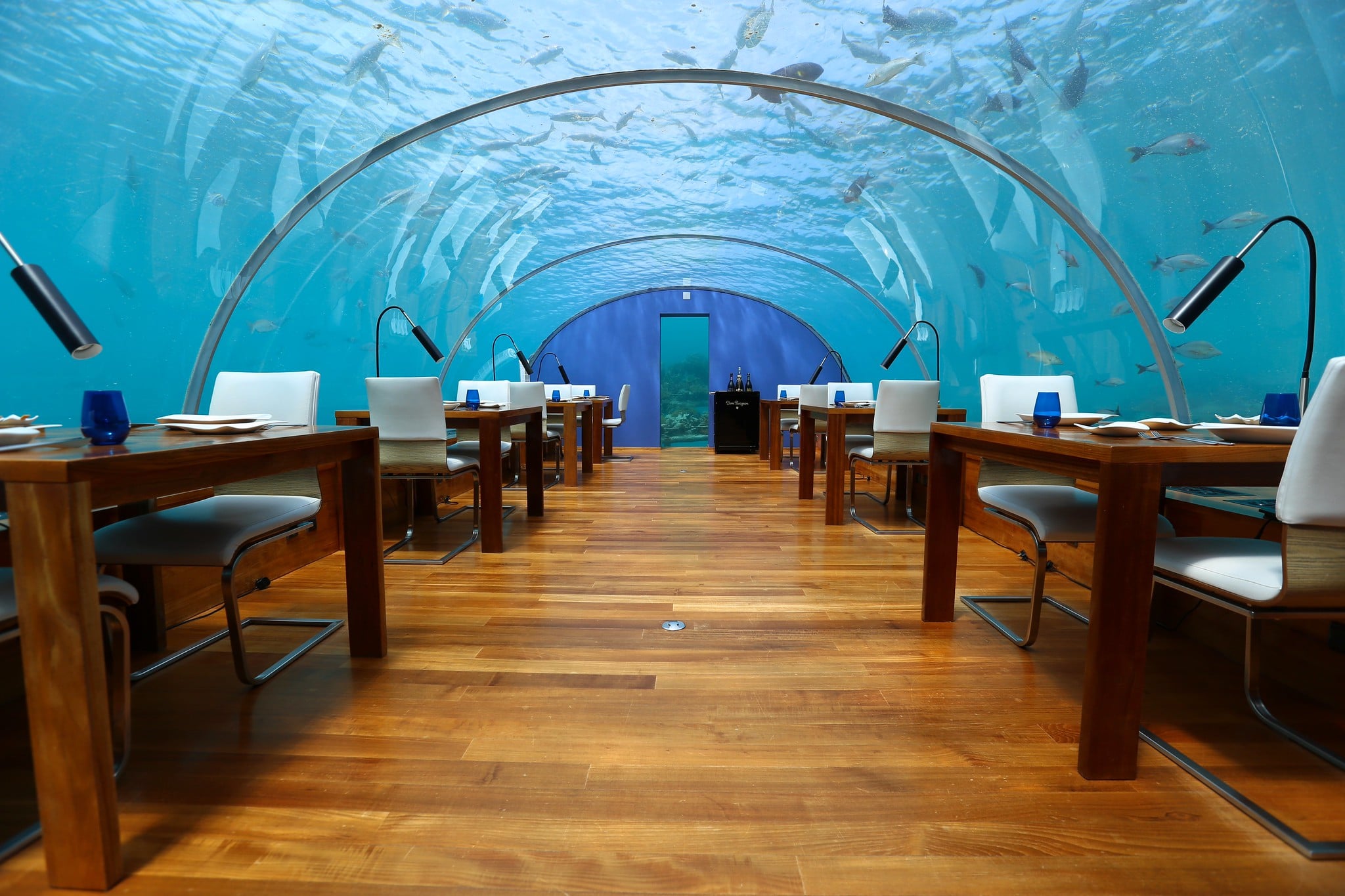
Five meters below the surface of the Indian Ocean, encased in clear acrylic, sits what might be the world’s most unusual dining room.
Ithaa, which means ‘mother of pearl’ in the Maldivian language of Dhivehi, opened in 2005 at the Conrad Maldives Rangali Island resort.
The restaurant seats just 14 people at a time, and getting a reservation requires both planning and deep pockets.
The structure was designed by M.J. Murphy Ltd of New Zealand, with construction handled by MJ Murphy Ltd and the acrylic specialists at Reynolds Polymer Technology in the United States.
The completed structure was shipped to the Maldives in November 2004, where it was carefully lowered into position about 16 feet below sea level and attached to concrete piles for stability.
Dining at Ithaa means being surrounded by the ocean on all sides, with coral reefs and marine life visible in every direction.
Stingrays glide overhead.
Schools of tropical fish dart past the curved walls.
The acrylic is five inches thick, strong enough to withstand the water pressure while remaining remarkably clear.
The 175-ton structure was originally expected to last about 20 years before the ocean environment degraded the materials, though it continues operating well beyond that initial projection.
The menu focuses on contemporary European cuisine with Maldivian influences, but most diners admit they remember the setting far more vividly than what they ate.
Grotta Palazzese
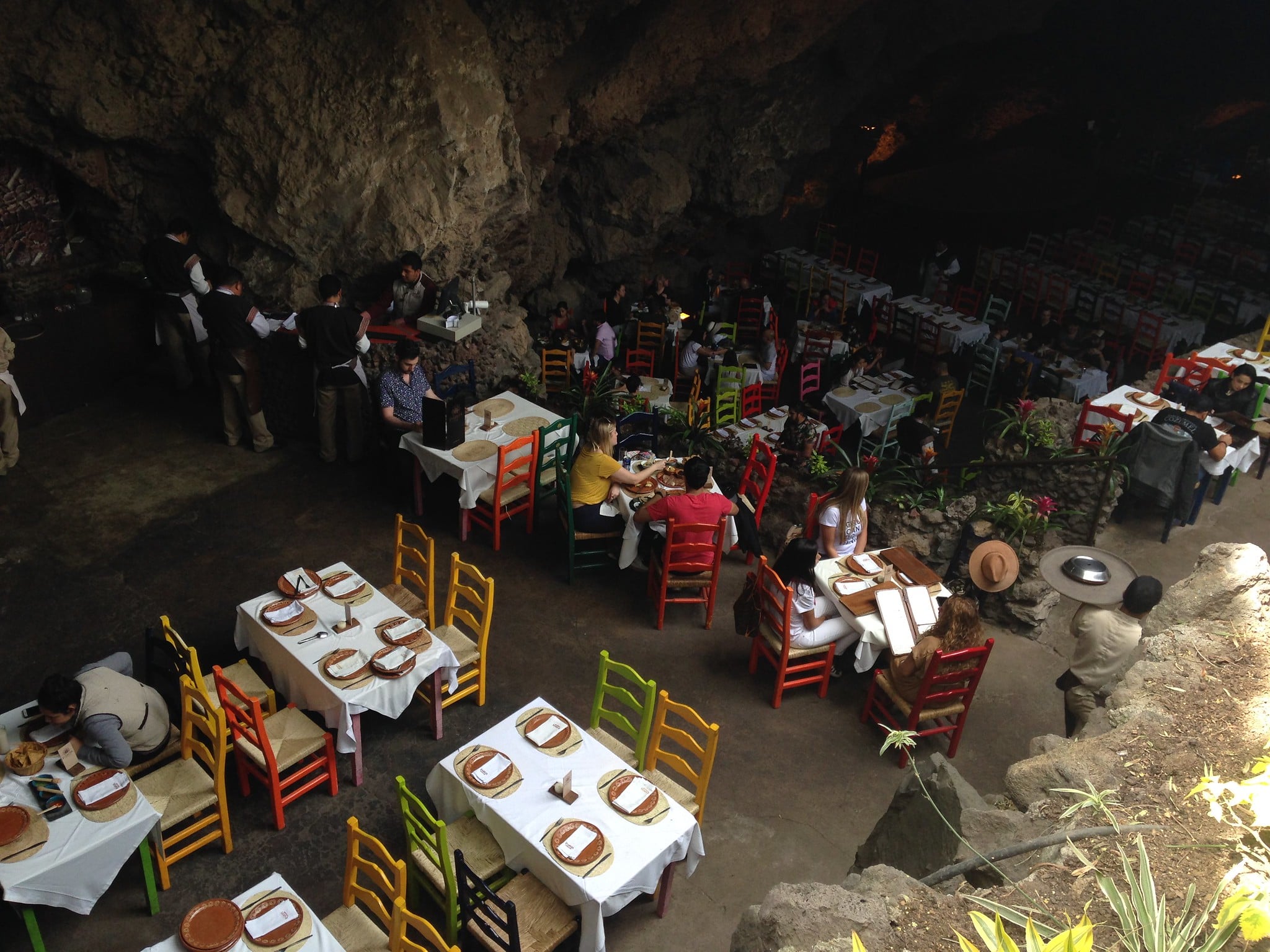
The Italian town of Polignano a Mare, perched on limestone cliffs above the Adriatic Sea, has been inhabited since prehistoric times.
The cave has been used for banquets and events since the 1700s, though the modern restaurant in its current form dates from the 1960s, making it one of the most historic dining locations still in operation.
The cave itself opens directly onto the sea, with tables arranged on multiple levels of natural stone terracing.
From roughly May through October, when weather permits operation, diners sit beneath the curved limestone ceiling while waves crash just meters away.
The acoustics create a constant background symphony of water meeting rock.
At sunset, the light filtering into the cave turns everything golden, then purple, then deep blue as night falls.
Winter storms make the location too dangerous for dining, which is why the restaurant closes seasonally.
Even in calm weather, there’s always a hint of wildness to the experience, a reminder that nature created this space and merely tolerates its temporary conversion into a dining room.
The menu features fresh seafood and traditional Puglian cuisine, but the cave’s dramatic setting has made the restaurant internationally famous.
Fangweng Restaurant
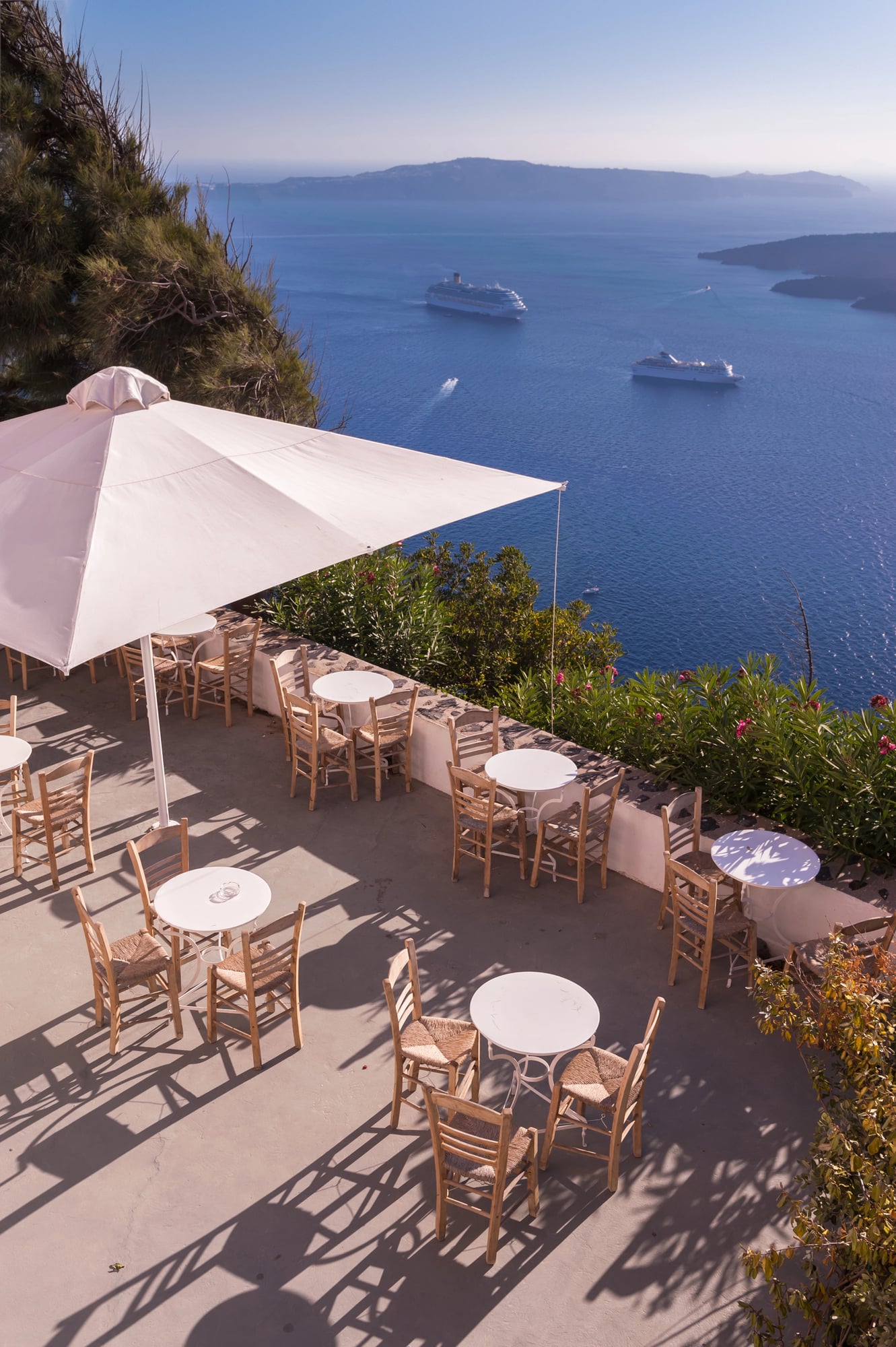
Hanging off the side of a cliff about 98 feet above the Yangtze River in China’s Hubei Province, Fangweng Restaurant takes the concept of clifftop dining to an extreme.
The name translates roughly to ‘house on a cliff,’ which undersells the situation considerably.
Located near Yichang City within the Happy Valley Scenic Area of Xiling Gorge, the restaurant is built partially into the rock face itself, with decorative wooden facades extending outward over empty space.
The restaurant opened in the late 1990s, taking advantage of the area’s natural beauty and the steady stream of tourists visiting the nearby Three Gorges Dam.
The building technique combines traditional Chinese architecture with modern engineering, using steel beams anchored firmly into the cliff to support the structure.
The wooden elements visitors see are largely decorative facades that conceal the serious engineering underneath.
The views are spectacular, stretching across the gorge and down to the river traffic passing far beneath.
The menu features local Hubei cuisine, including river fish and regional specialties.
Still, the real attraction is the sheer improbability of the location.
Eating here requires a certain comfort with heights and a willingness to trust that the engineers knew what they were doing.
El Farallón

Perched on rocks at the southern tip of Mexico’s Baja California Peninsula, El Farallón at the Waldorf Astoria Los Cabos Pedregal takes advantage of one of the most dramatic coastlines in North America.
The restaurant’s name means ‘the cliff’ or ‘rocky outcrop,’ which perfectly describes its setting.
Situated about 30 to 40 feet above sea level near Cabo San Lucas, it sits on natural rock formations shaped by thousands of years of Pacific Ocean wave action.
At high tide, water surges around the rocks where diners sit, and on stormy days, sea spray adds an extra element to the dining experience.
What makes El Farallón particularly distinctive is its open-air amphitheater design.
The restaurant has no walls, just a series of terraced levels carved into the rocks, with tables positioned to maximize ocean views.
The kitchen is visible to diners, and the focus is entirely on fresh seafood, much of it displayed on ice before being prepared.
The setting is so dramatic that the restaurant has become a popular spot for proposals and special occasions, despite the fact that guests occasionally get splashed by particularly aggressive waves.
Walking down the stone steps to reach your table feels like descending into another world, one where the boundary between land and sea becomes pleasantly blurred.
Labassin Waterfall Restaurant
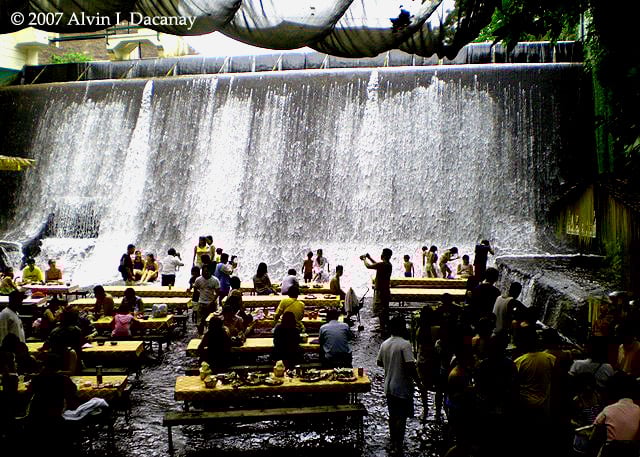
Most restaurants try to keep water away from the dining area.
Villa Escudero Plantations and Resort in San Pablo City, Laguna Province, takes the opposite approach.
Labassin Waterfall Restaurant positions its tables at the base of what appears to be a waterfall but is actually an overflow spillway for the Labassin Dam, built in the early 1900s.
Water flows over diners’ feet while they eat.
The setup is deliberately simple: bamboo tables and benches arranged in the shallow stream, with the waterfall creating a curtain of water and a constant rushing sound that makes conversation challenging.
The restaurant serves a buffet of local dishes on banana leaves, and guests wade through ankle-deep water to reach their seats.
The experience is less about fine dining and more about novelty and connection to the natural environment.
Children particularly love it, though adults often find themselves surprised by how pleasant it is to eat with cool water flowing past.
The spillway creates enough of a current that loose items need to be carefully secured.
What could easily be a gimmick somehow works, perhaps because the setting is so unpretentious.
There’s no attempt to create luxury or sophistication.
It’s just a meal in a stream at the base of a spillway, simple and strange and oddly memorable.
Dinner in the Sky

Some restaurants are built in incredible natural locations.
Others create their incredible location from scratch, 164 feet in the air.
Dinner in the Sky was founded in Brussels, Belgium in 2006 by David Ghysels and Stefan Kerkhofs, and has since operated as a traveling pop-up experience in cities around the world.
The concept is straightforward and slightly terrifying: a platform with a table for 22 people, plus three staff members including a chef, waiter, and host, gets lifted by a crane to a height of about 50 meters, where diners eat a multi-course meal while suspended in midair.
The platform is equipped with everything needed for a full dining experience, including a chef’s station in the center where meals are prepared in real-time.
Diners are strapped into their seats with safety harnesses, which is reassuring in theory but doesn’t entirely eliminate the surreal feeling of eating suspended above the ground.
The experience has been offered everywhere from Las Vegas to Paris to Dubai, with each location providing different aerial views.
Safety regulations are strict, and the equipment undergoes regular inspections, but that doesn’t stop the experience from being fundamentally strange.
Eating while airborne goes against something deep in human psychology.
We’re not meant to dine at heights where a fall would be fatal, which is precisely what makes it memorable.
The Enduring Appeal

These restaurants succeed not despite their challenging locations but because of them.
In an age where almost everything is documented and instantly accessible online, truly novel experiences have become rare and valuable.
Eating dinner underwater or hanging off a cliff transforms the mundane into something remarkable.
What’s interesting is how the location changes the entire dynamic of the meal.
At a typical restaurant, the food is supposed to be the star.
At these places, the hierarchy flips.
The location dominates everything, and the food becomes secondary.
Some critics argue this is a waste, that restaurants should focus on culinary excellence rather than gimmicks.
But there’s something to be said for creating experiences that people remember decades later, even if they can’t recall what they ordered.
These restaurants understand that eating is about more than nutrition or taste.
Sometimes it’s about the story you get to tell afterward, about the time you had dinner inside a sea cliff or at the bottom of a waterfall spillway.
That story becomes part of your personal collection of moments when the world revealed itself as stranger and more interesting than everyday life suggests.
More from Go2Tutors!

- The Romanov Crown Jewels and Their Tragic Fate
- 17 Halloween Costumes Once Considered Taboo
- Famous Hoaxes That Fooled the World for Years
- 15 Child Stars with Tragic Adult Lives
- 16 Famous Jewelry Pieces in History
Like Go2Tutors’s content? Follow us on MSN.



