Restaurants With Crazy-Long Waiting Lists
Some people wait in line for concert tickets.
Others camp out for the newest smartphone.
But there’s a particular breed of diner willing to put their name on a list today for a meal they won’t eat until their kids are in high school.
These aren’t just restaurants with good food — they’re dining experiences so exclusive that getting through the door becomes a badge of honor in itself.
The waiting lists at these establishments have become legendary, stretching from a few months to over a decade.
It’s a fascinating collision of culinary excellence, scarcity, and human psychology, where the harder something is to get, the more people want it.
Here’s a closer look at some of the world’s most maddeningly exclusive dining rooms and what makes them worth the wait.
Damon Baehrel
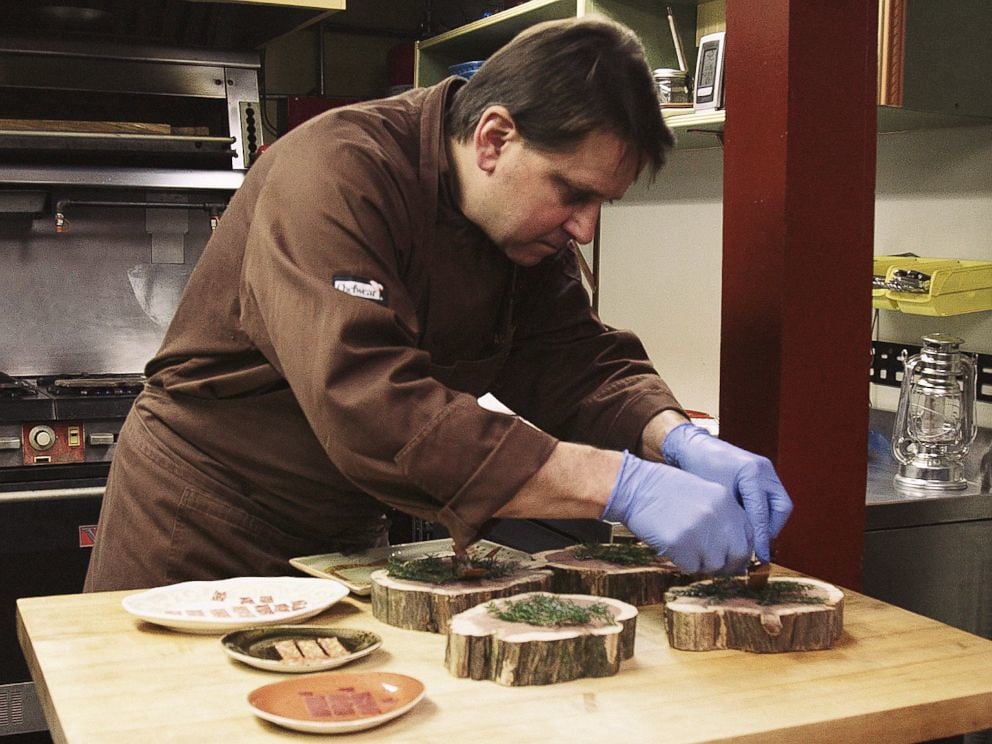
Tucked away in Earlton, New York — over 100 miles north of Manhattan — sits a restaurant that might require more patience than any other on Earth.
Damon Baehrel operates out of the chef’s own basement, seating just 16 to 20 guests at a time.
The wait list reportedly stretches a full decade into the future.
Chef Damon Baehrel works entirely alone, handling everything from foraging and cooking to serving and cleaning.
Every ingredient except salt and seafood comes from his 12-acre property, including wild edibles most people would walk right past in the woods.
He makes his own flours from pine and acorn, creates oils from foraged nuts, and cures meats using pine needle juice instead of traditional methods.
The meals last between four and five hours and feature upwards of 20 courses, with prices hovering around 400 dollars per person.
The restaurant gained national attention after media coverage in the mid-2010s, and reservation requests exploded.
What was once a five-year backlog doubled almost overnight.
Reservations can only be made via email through an account maintained by a friend of Baehrel’s, and the chef has confirmed bookings stretching well into the next decade.
The New Yorker published an investigation questioning aspects of the operation, but diners who’ve made the pilgrimage generally describe it as an unforgettable experience.
Club 33
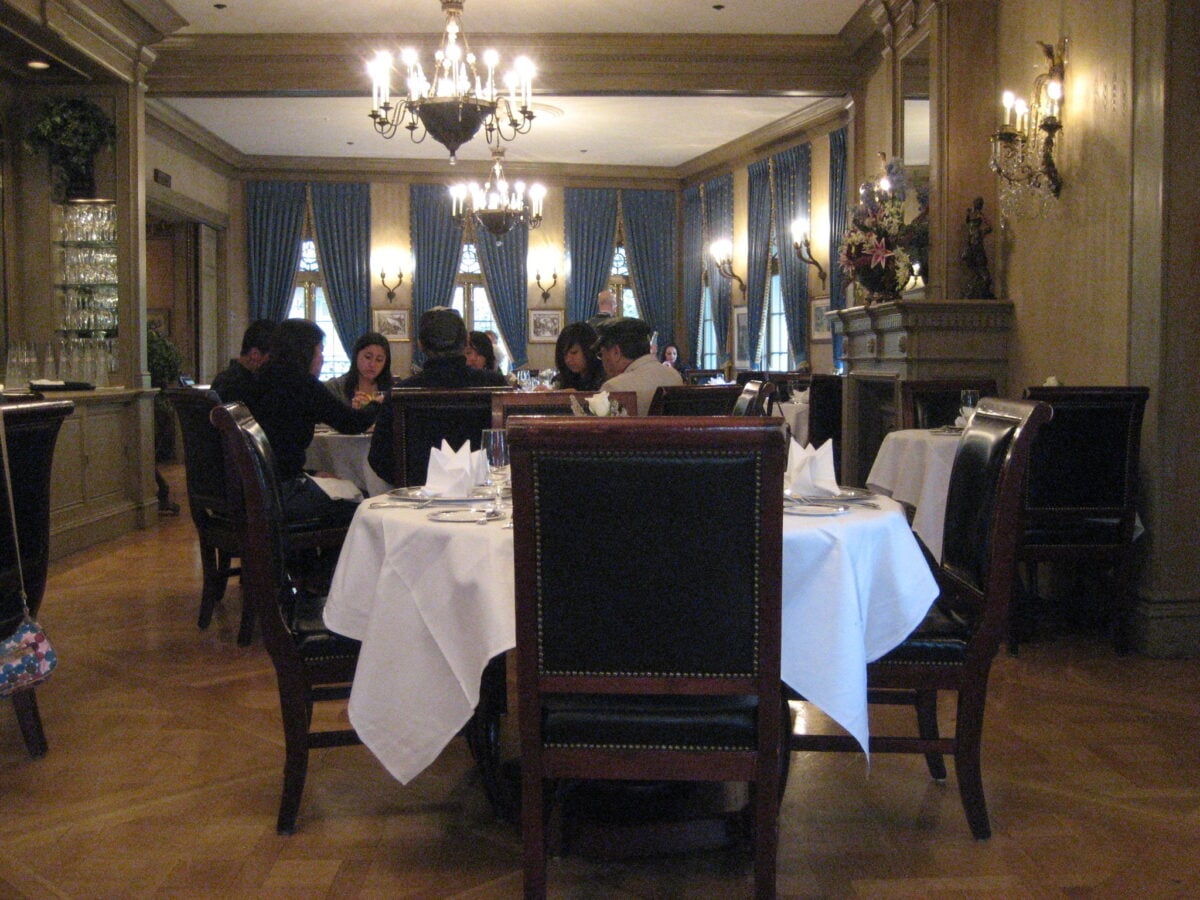
At Disneyland in Anaheim, California, there’s a restaurant most park visitors will never see.
Club 33 sits above the Pirates of the Caribbean ride in New Orleans Square, accessible only through an unmarked door at 33 Royal Street.
It was originally conceived by Walt Disney himself as a VIP lounge for corporate sponsors, modeled after similar spaces he’d seen at the 1964 New York World’s Fair.
The waiting list for membership has fluctuated wildly over the years, with some reports claiming it stretched to 14 years in 2011.
Current estimates suggest a wait of five to ten years for Disneyland’s location, though Disney has never officially disclosed the numbers.
Getting off the list requires more than just patience — you’ll need a recommendation from a current member, and even then, acceptance isn’t guaranteed.
Once you’re in, membership comes with a steep price tag: a 25,000 dollar initiation fee and 10,000 dollars annually for Disneyland, or 33,000 dollars to join and 15,000 dollars per year for Walt Disney World’s version.
Members get year-round park access, the ability to book tables at the exclusive restaurant Le Grand Salon, and entry to members-only lounges.
It’s one of the only places in Disneyland where alcohol is served, making it doubly attractive to adults looking for a sophisticated break from churros and Dole Whips.
Noma

For two decades, Noma in Copenhagen defined what a modern restaurant could be.
Chef René Redzepi’s approach to Nordic cuisine — foraging for wild ingredients, fermenting everything in sight, and treating seasonality like gospel — earned the restaurant three Michelin stars and the top spot on the World’s 50 Best Restaurants list five different times.
At its peak, securing a reservation required joining a waiting list that could stretch up to a year.
When Redzepi announced in early 2023 that Noma would close its doors to regular service at the end of 2024, the frenzy intensified.
The restaurant had been receiving around 20,000 reservation requests, and the final seasons saw demand spike even higher.
In 2025, Noma shifted to operating as a test kitchen and innovation lab, with only occasional pop-up dining events.
The meals at Noma weren’t cheap — around 500 dollars per person before wine pairings — but they delivered the kind of creativity that made food critics run out of adjectives.
Dishes might include reindeer moss, fermented wild plants, or seafood treated with techniques that seemed equal parts cooking and chemistry.
Even so, the closing announcement sparked debates about sustainability in fine dining, with Redzepi openly questioning whether such labor-intensive restaurants could survive long-term.
El Celler de Can Roca

In the Spanish city of Girona, three brothers run one of the world’s most celebrated restaurants.
El Celler de Can Roca has held three Michelin stars for years and regularly appears near the top of international rankings.
Joan handles the kitchen, Josep manages the wine program, and Jordi oversees pastries — a family operation that’s become a global destination.
Getting a table requires strategy and speed.
Reservations open at midnight on the first day of each month for dates 11 months in the future, and tables disappear almost instantly.
Diners describe logging in right at midnight only to watch availability vanish in real time.
Those who miss out can join a waiting list for their desired dates, though openings from cancellations are rare.
The brothers offer a tasting menu called the Festival, which runs about 335 dollars per person for 12 courses plus desserts, with optional wine pairings.
The experience typically lasts three and a half hours.
Some travelers plan entire trips to Spain around a Celler reservation, booking their table nearly a year ahead and building the rest of their itinerary around that single meal.
The French Laundry

Thomas Keller’s Napa Valley landmark has been a bucket-list restaurant since opening in 1994.
The French Laundry holds three Michelin stars and serves refined French-American cuisine in a charming stone building in Yountville, California.
Keller’s attention to detail is obsessive — from the way napkins are folded to the precision of cooking times measured in seconds rather than minutes.
Reservations can take up to a year to secure, with the booking system releasing tables exactly two months in advance.
The process has become competitive enough that some diners set alarms and recruit friends to help them click through the online system the moment it opens.
A meal runs around 350 dollars per person before wine, service charges, and tax, and the experience stretches across multiple courses spanning several hours.
The restaurant’s reputation has only grown over the decades, partly due to Keller’s other ventures and his influence on American fine dining.
Even locals in the Napa Valley struggle to get tables, and tourists visiting wine country often find The French Laundry fully booked for their entire stay.
Osteria Francescana

Massimo Bottura’s restaurant in Modena, Italy, takes traditional Italian ingredients and reimagines them through an avant-garde lens.
His dish ‘Five Ages of Parmigiano Reggiano’ explores a single ingredient five different ways, capturing the playful yet serious approach that earned Osteria Francescana three Michelin stars and multiple appearances atop global restaurant lists.
The waiting list typically runs about six months, and reservations fill quickly when they open.
A meal costs roughly 400 dollars per person without drinks, making it a significant investment for travelers.
Still, diners travel from around the world to experience Bottura’s vision, often building Italian itineraries around the reservation date.
The restaurant’s location in Modena — a small city known more for balsamic vinegar and sports cars than tourism — means most guests are there specifically for the meal.
It’s become a pilgrimage site for food enthusiasts who want to experience Bottura’s particular blend of tradition and innovation.
Why the Wait Continues
These extended waiting lists raise an obvious question: why don’t these restaurants simply expand?
The answer usually involves the fragility of what makes them special.
Damon Baehrel’s operation depends entirely on one person’s labor.
Noma’s foraging-based approach required constant innovation that couldn’t scale.
The French Laundry’s level of precision depends on a specific kitchen size and team structure.
Scarcity also feeds desire.
When something takes years to access, the anticipation builds its own mythology.
People invest emotionally in the wait, making the eventual meal feel more significant.
It’s the same psychology that drives luxury goods and limited releases — exclusivity creates value beyond the product itself.
For some diners, these waits represent misplaced priorities or unnecessary elitism.
For others, they’re a chance to experience something genuinely rare in a world where most things can be delivered to your door in two days.
The restaurants themselves occupy an unusual space between art installation, scientific experiment, and meal, making direct comparisons to typical dining experiences somewhat beside the point.
What Makes Them Worth It

The question of whether any meal justifies a years-long wait depends entirely on what you’re seeking.
These aren’t just restaurants serving good food — plenty of places do that without the circus.
What they offer instead is a complete experience, carefully controlled and often unreplicable elsewhere.
At Damon Baehrel, you’re eating ingredients most chefs have never heard of, prepared by someone who spent decades learning to use them.
At Club 33, you’re accessing a piece of Disney history in a space most visitors don’t know exists.
Noma pioneered an entire approach to cuisine that influenced countless other restaurants.
The French Laundry represents American fine dining at its most refined.
Whether that’s worth the wait is subjective, but the people filling these waiting lists have already decided.
They’re willing to plan vacations years in advance, set midnight alarms for when booking systems open, or pay membership fees that rival a decent used car.
That kind of dedication suggests these restaurants are offering something beyond just dinner.
More from Go2Tutors!

- The Romanov Crown Jewels and Their Tragic Fate
- 13 Historical Mysteries That Science Still Can’t Solve
- Famous Hoaxes That Fooled the World for Years
- 15 Child Stars with Tragic Adult Lives
- 16 Famous Jewelry Pieces in History
Like Go2Tutors’s content? Follow us on MSN.



