Runners Who Raced Against Animals
Running against the clock is one thing. Running against a creature with four legs, sharp claws, or the ability to leap twenty feet in a single bound?
That’s a whole different challenge. Throughout history, some adventurous people have decided that the best way to test their speed wasn’t against other humans, but against the animal kingdom itself.
Let’s look at some of the most interesting stories of people who tied up their shoes and went head-to-head with nature’s fastest creatures.
The Man vs. Horse Marathon in Wales
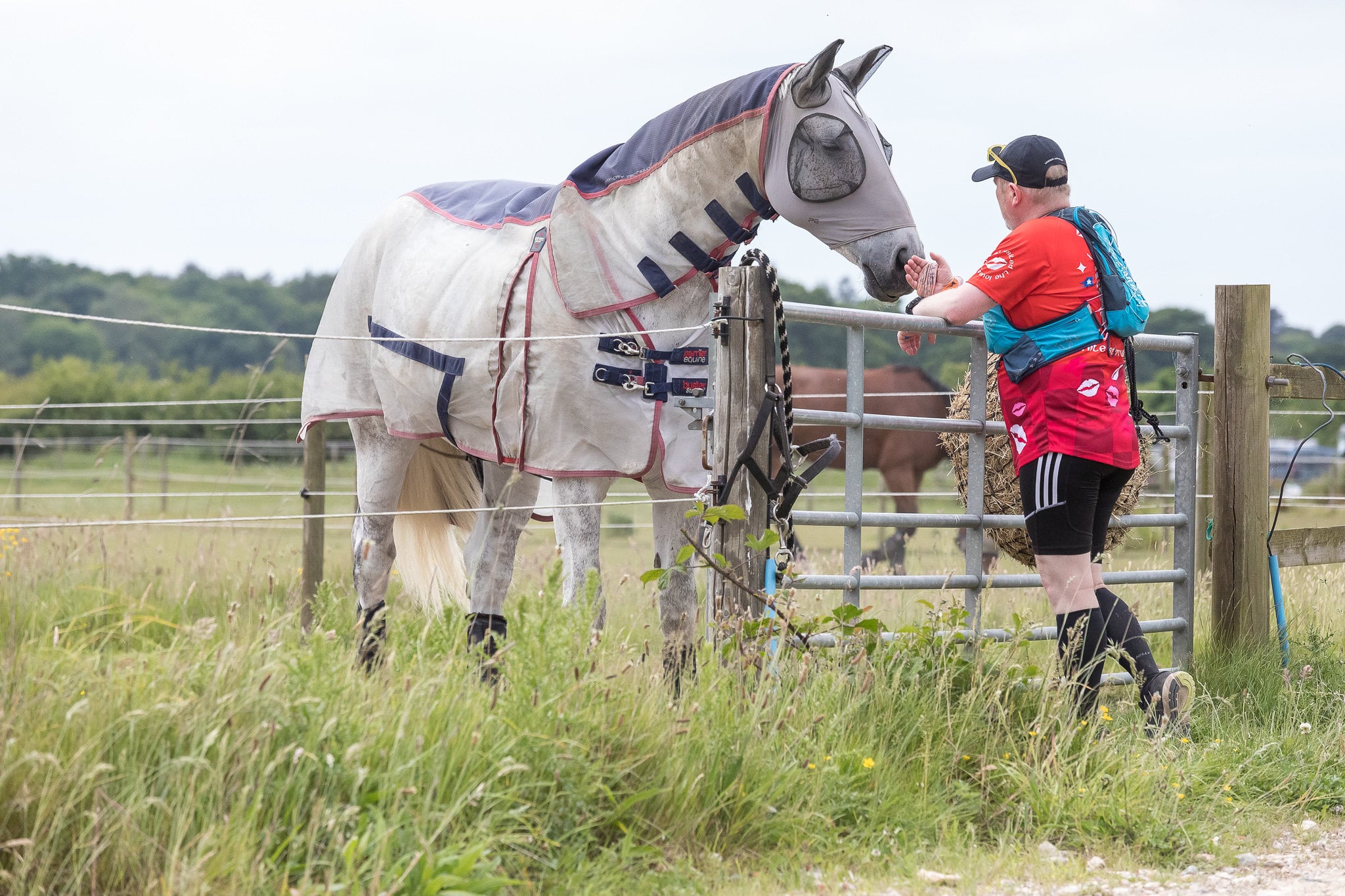
Every June since nineteen eighty, runners in the small Welsh town of Llanwrtyd Wells line up alongside actual horses for a twenty two mile race through rough terrain. The idea started as a pub debate about whether humans could beat horses over long distances.
For the first twenty five years, the horses won every single time. Then in two thousand four, Huw Lobb became the first human to claim victory, finishing two minutes ahead of the fastest horse.
The prize money had been building up for years, so he walked away with twenty five thousand pounds. Only one other human has won since then, proving that while we can occasionally triumph, horses still have the edge most of the time.
Jesse Owens and the Racehorse
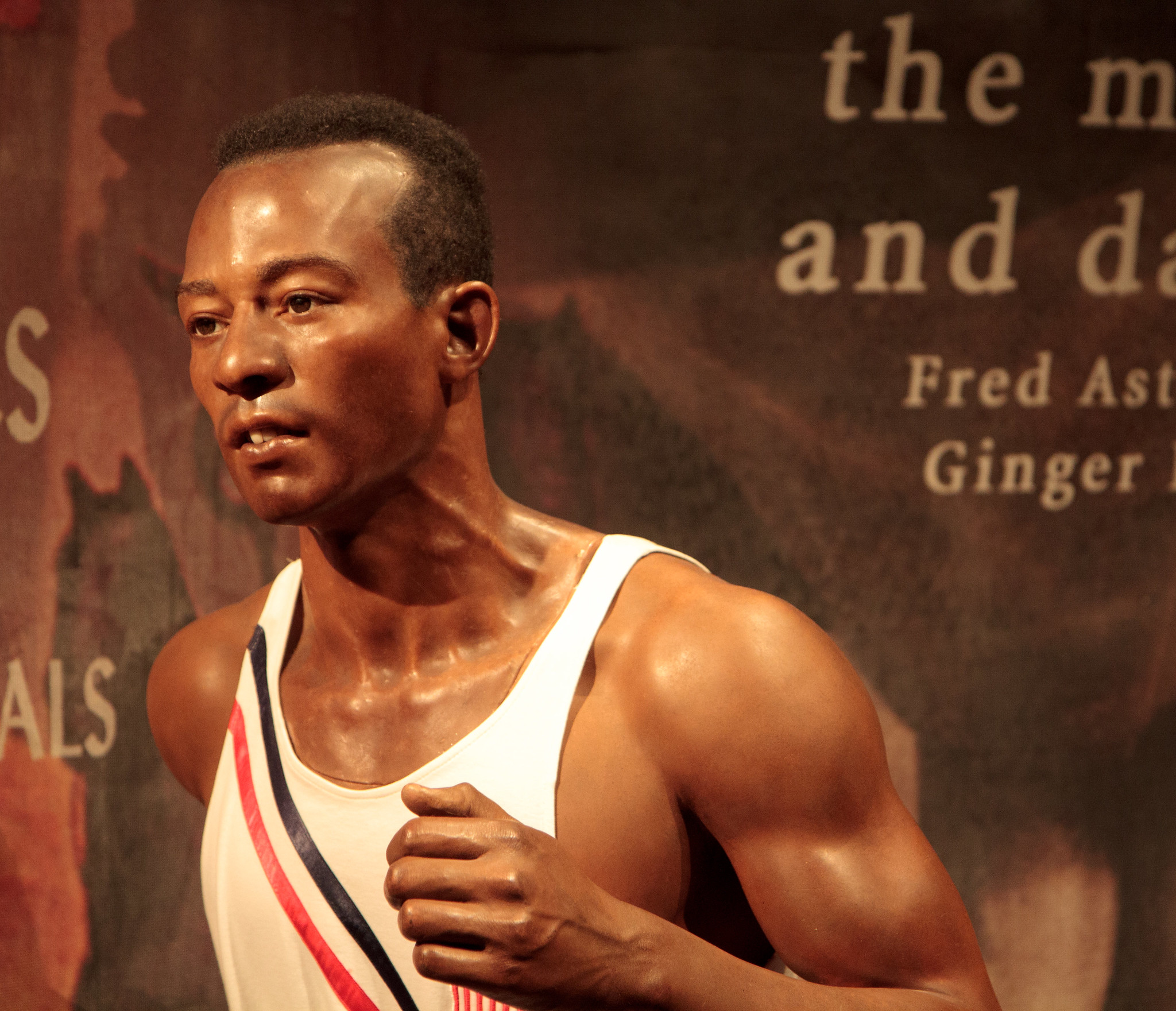
After his legendary performance at the nineteen thirty six Olympics, Jesse Owens needed money. The world’s fastest man took on some unusual challenges to make ends meet, including racing against horses in exhibition matches.
These weren’t legitimate competitions but rather entertainment shows where Owens would get a head start and sprint one hundred yards while the horse covered a longer distance. He won most of these races through clever staging, but it was a sad commentary on how even Olympic champions struggled financially back then.
Owens later said these races were degrading, but he had bills to pay and a family to support.
The annual ostrich races in Arizona
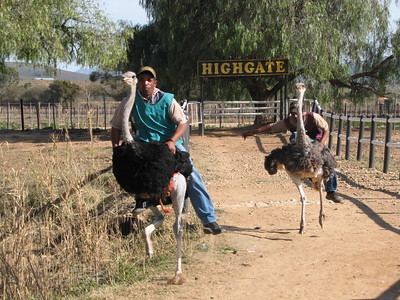
Ostriches can run up to forty five miles per hour, making them the fastest birds on land. At the Ostrich Festival in Chandler, Arizona, jockeys actually ride these massive birds in races that look absolutely wild.
But some brave souls have also raced against ostriches on foot in special exhibition events. The humans never win these matchups, not even close.
An ostrich can maintain its top speed much longer than any person, and watching someone try to keep pace with one is both entertaining and slightly ridiculous. These birds also have a nasty kick, so staying a safe distance behind isn’t just about losing gracefully.
Alaskan musher races his own sled dogs
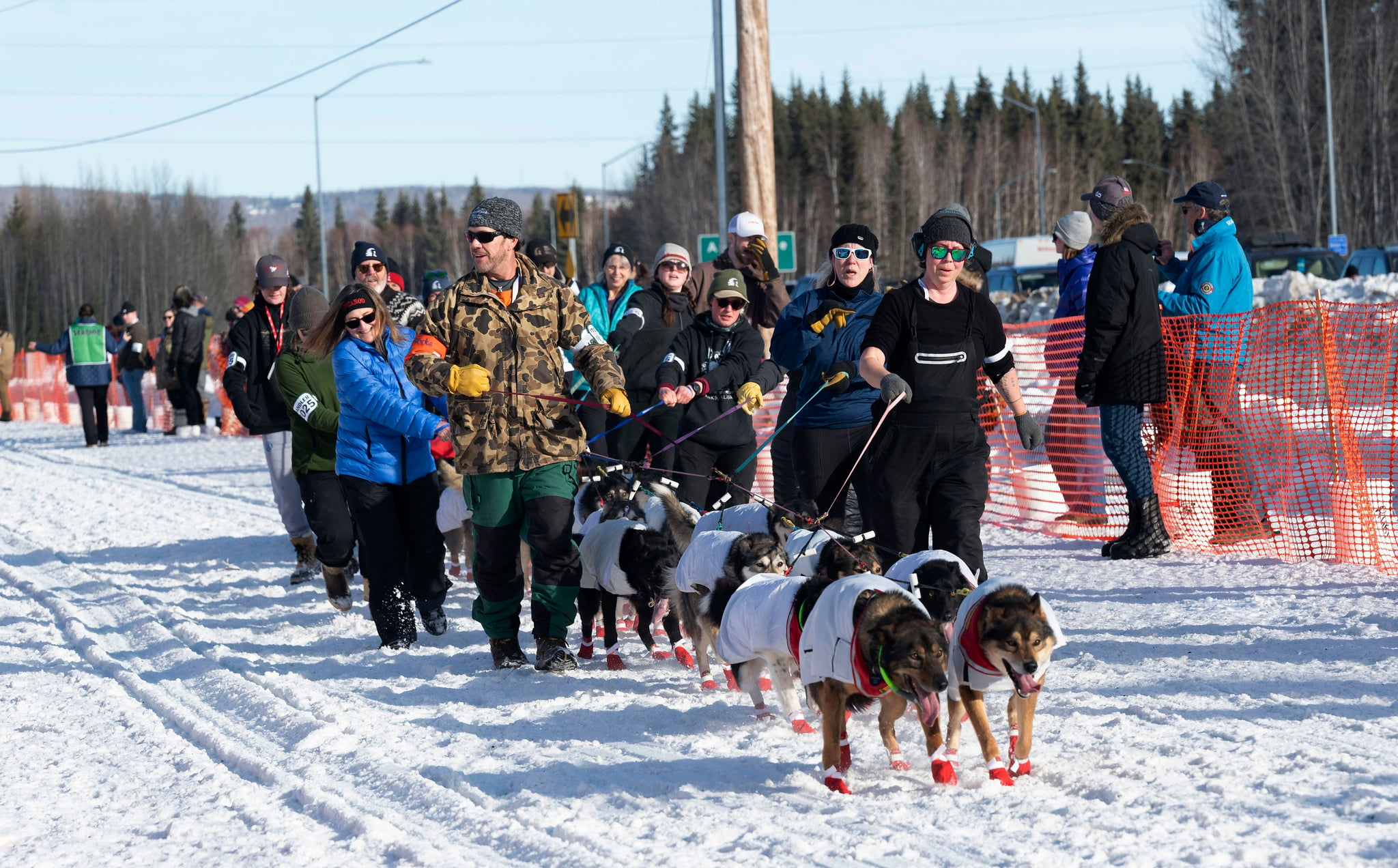
When musher Dallas Seavey wanted to prove a point about physical fitness, he challenged his own sled dog team to a race. In a five mile run through snowy terrain, Seavey actually kept pace with his dogs for a surprising amount of time.
He didn’t win, but he didn’t embarrass himself either. The dogs finished about ten minutes ahead of him, which sounds like a lot until you consider that these animals are bred specifically for endurance running in harsh conditions.
Seavey’s performance showed that humans are actually pretty decent long distance runners when we’re in peak condition, even if we can’t quite match our four legged friends.
The great camel race in Australia
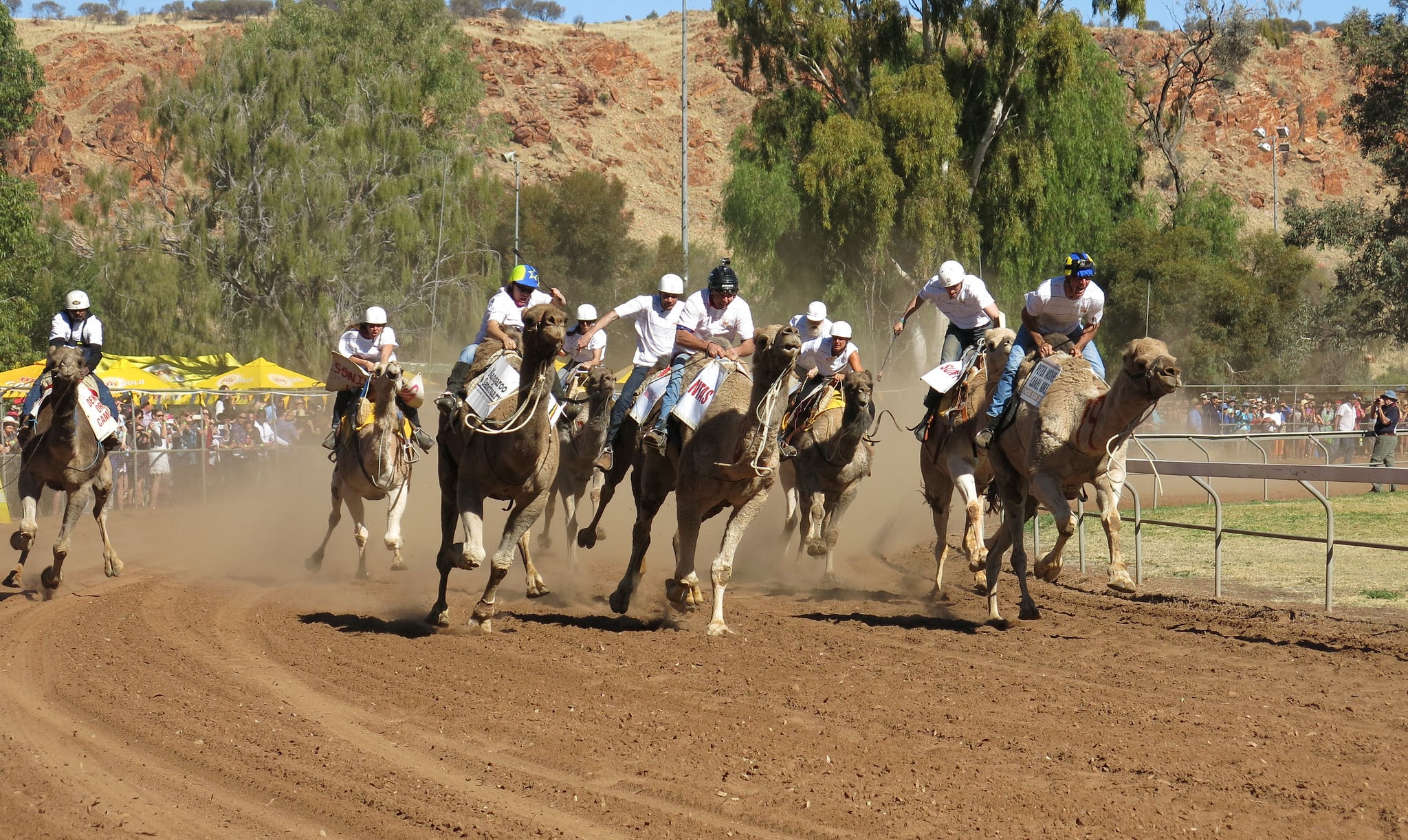
Australia has wild camels, lots of them, and they’re surprisingly fast over short distances. In the outback town of Alice Springs, the annual camel races attract both riders and a few foolish runners who think they can outpace a camel on foot.
Camels can hit speeds of forty miles per hour in short bursts, so any human trying to beat one in a sprint is going to have a bad time. The races are mostly for fun and tourism, but they highlight just how quick these desert animals can move when motivated.
Humans have better luck in longer races where the camel’s temperament becomes a factor, as these animals are notoriously stubborn and might just stop mid race to chew on something.
Ultra runner beats sled dogs in Norway
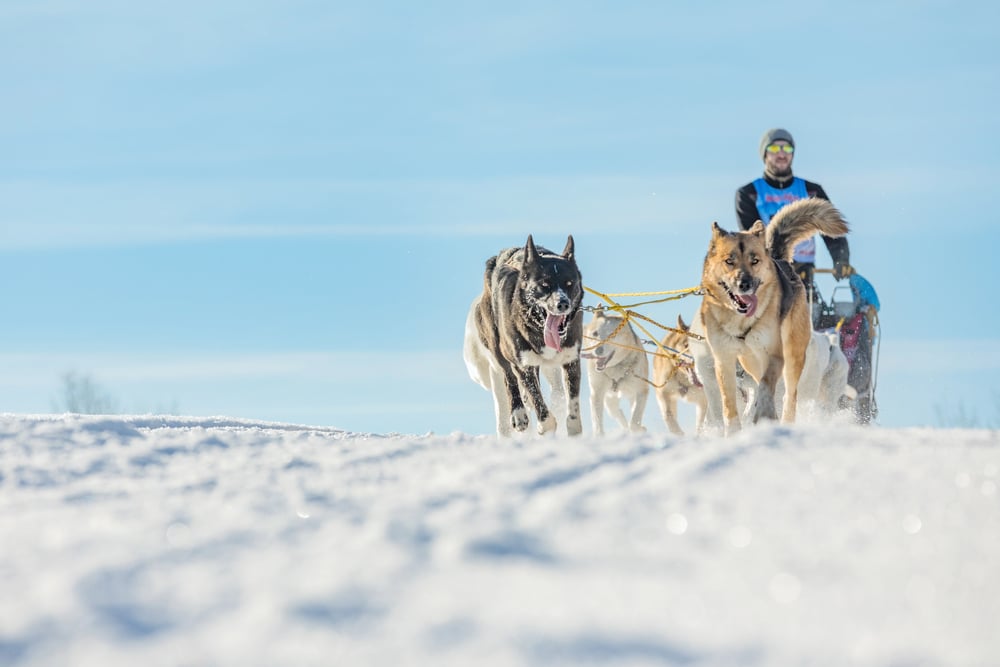
British ultra marathon runner Jasmin Paris shocked the mushing world when she outran a team of sled dogs over a two hundred sixty eight mile course in Norway. The catch was that the dogs had mandatory rest periods built into the race rules, while Paris just kept moving forward.
She barely slept and pushed through extreme conditions, finishing the course before the fastest dog team. This wasn’t a head to head sprint but rather a test of strategy and endurance.
The race organizers hadn’t really expected a human to win, and Paris proved that sometimes our biggest advantage isn’t speed but the ability to make decisions and push past what our bodies are telling us.
Sprinting against a cheetah in South Africa
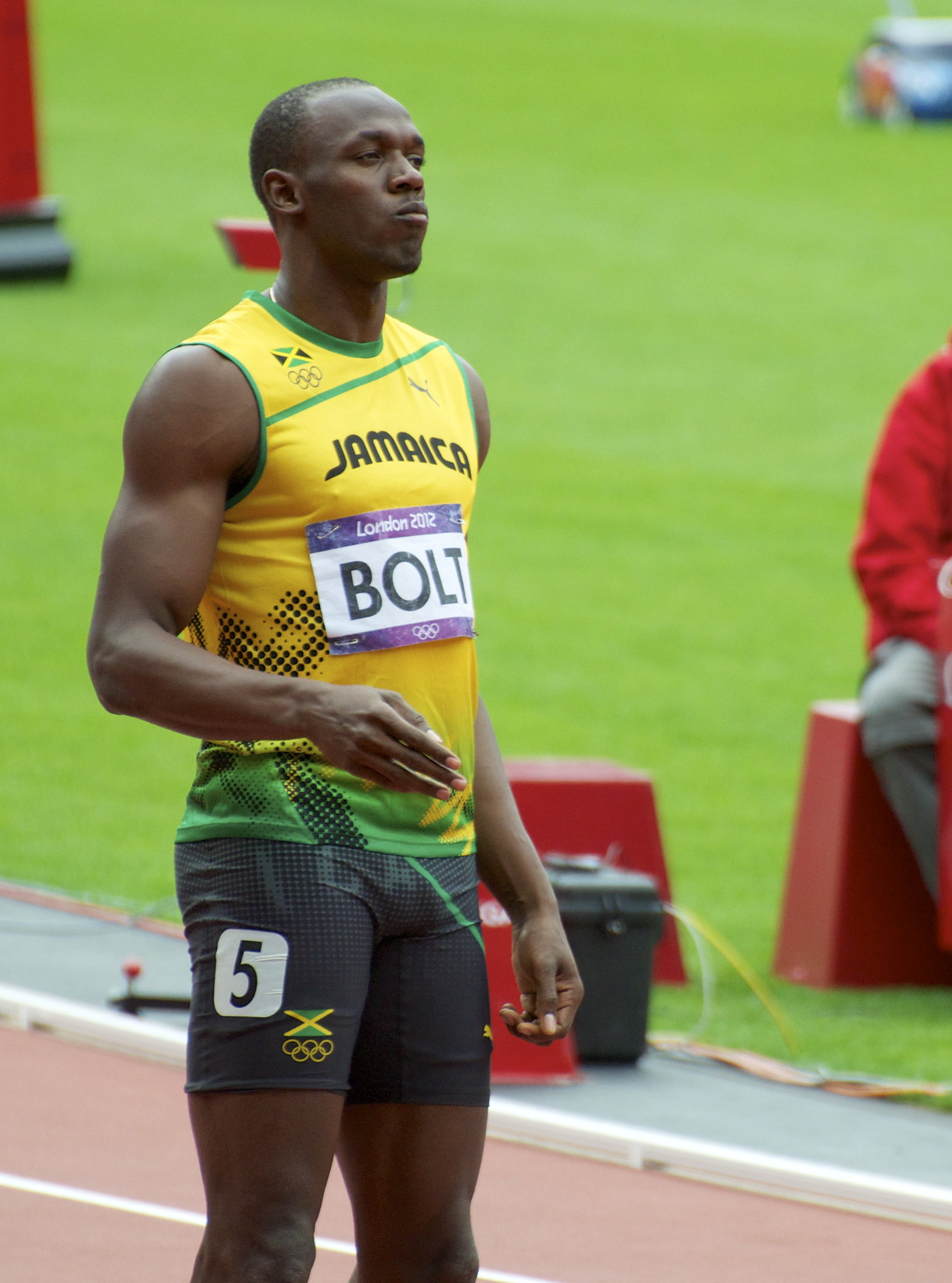
A conservation center in South Africa once allowed Olympic sprinter Usain Bolt to race against a cheetah, sort of. The setup was carefully controlled, with the cheetah running in a separate lane and given a shorter distance to cover.
Even with a massive head start, Bolt lost badly. Cheetahs can reach seventy miles per hour in just three seconds, making them the undisputed speed champions of the animal world.
The whole event was really about raising awareness for cheetah conservation rather than a serious competition. No human alive can beat a cheetah in a straight race, and honestly, it’s not even close enough to be interesting from a competitive standpoint.
The man who raced greyhounds

In two thousand twelve, Irish rugby player Simon Zebo raced against a greyhound at a dog track in Cork. The race was four hundred meters, and the dog finished so far ahead that it was almost comical.
Greyhounds can reach speeds of forty five miles per hour and maintain that pace longer than you’d think. Zebo gave it his all but crossed the finish line while the dog was probably already thinking about dinner.
These races happen occasionally as fundraisers or publicity stunts, and the outcome is always the same. Greyhounds are purpose built running machines with a stride length that no human can match.
Running with the wildebeest in Kenya
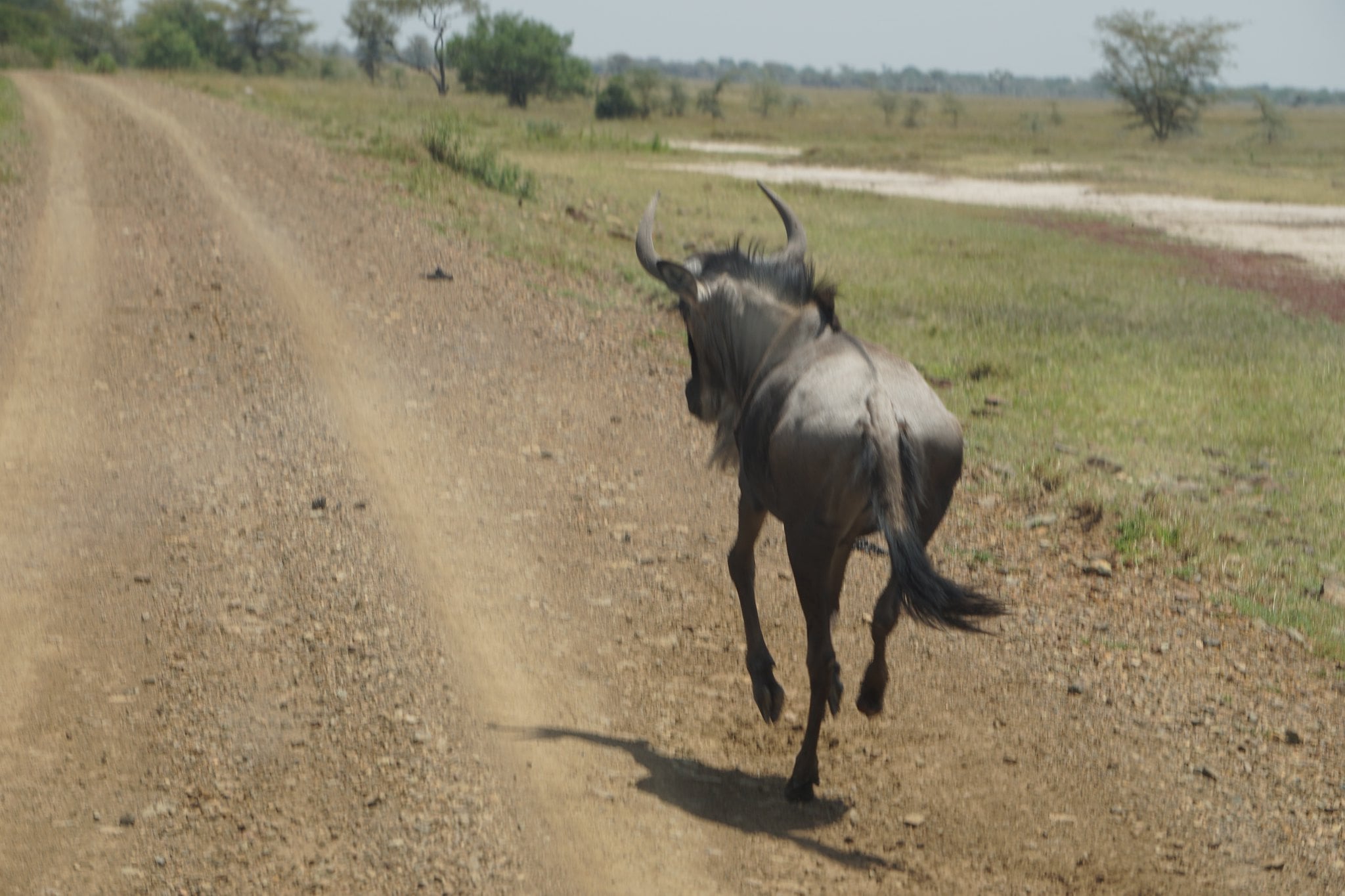
Conservation runner Katharine Lowrie once ran alongside migrating wildebeest herds in Kenya to raise awareness for wildlife protection. This wasn’t technically a race, but it showed just how difficult it is for humans to keep pace with these animals during their annual migration.
Wildebeest can run at fifty miles per hour when spooked and can maintain a steady jogging pace of about fifteen miles per hour for hours on end. Lowrie had to use a support vehicle and take breaks, while the wildebeest just kept moving.
The experience highlighted how perfectly adapted these animals are for covering vast distances across African plains.
The zippy kangaroo challenge
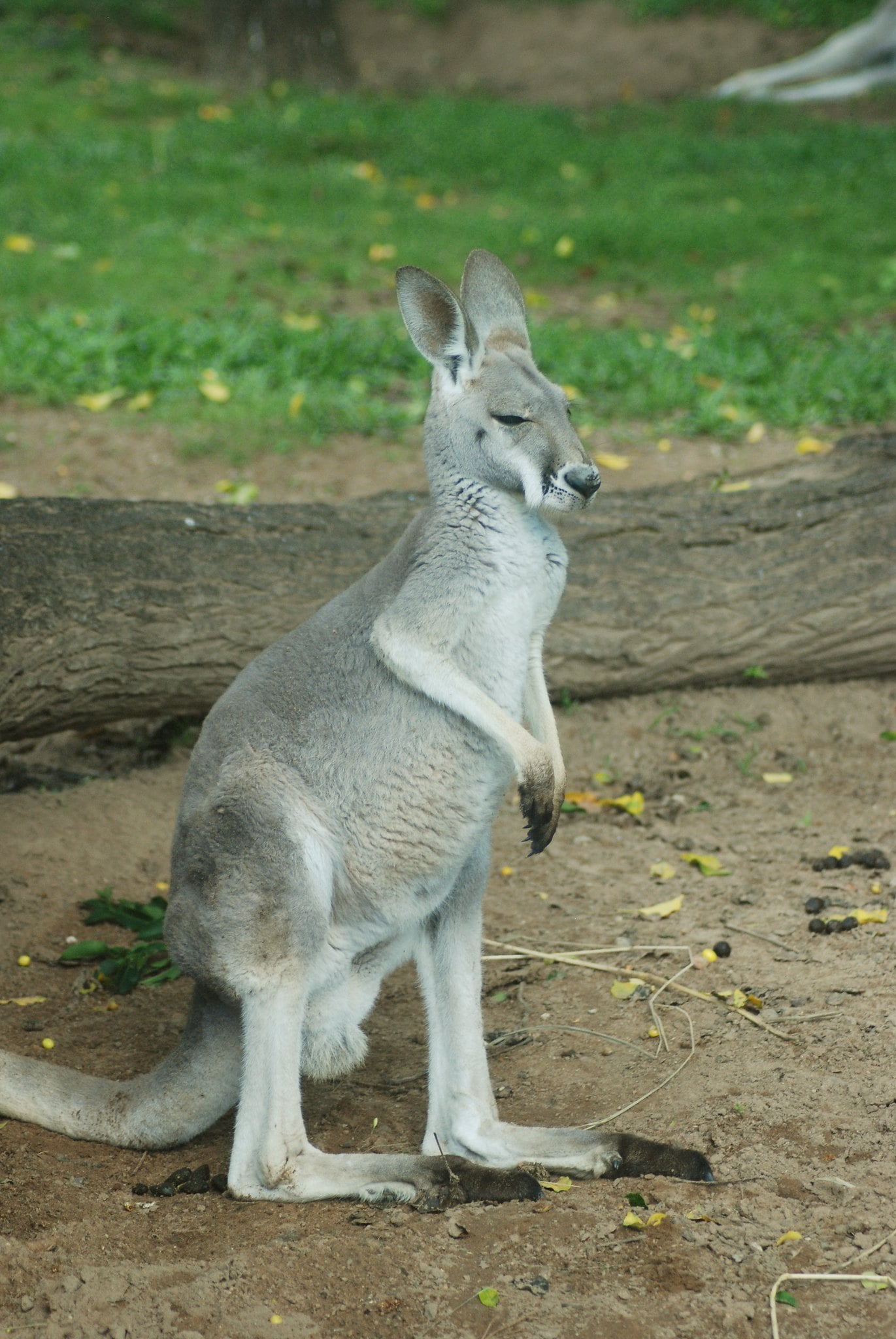
Kangaroos can hop at speeds up to thirty five miles per hour and cover twenty five feet in a single leap. A few adventurous runners in Australia have attempted to race kangaroos over short distances, usually in controlled settings or as part of wildlife demonstrations.
The results are predictable and lopsided. A kangaroo’s method of movement is incredibly efficient, allowing them to maintain high speeds without tiring as quickly as a human sprinter would.
Plus, they can change direction mid hop with startling precision. Any human racing a kangaroo is essentially competing against an animal that moves in a completely different way, making the whole comparison almost unfair from the start.
The elk outrun experiment in Montana
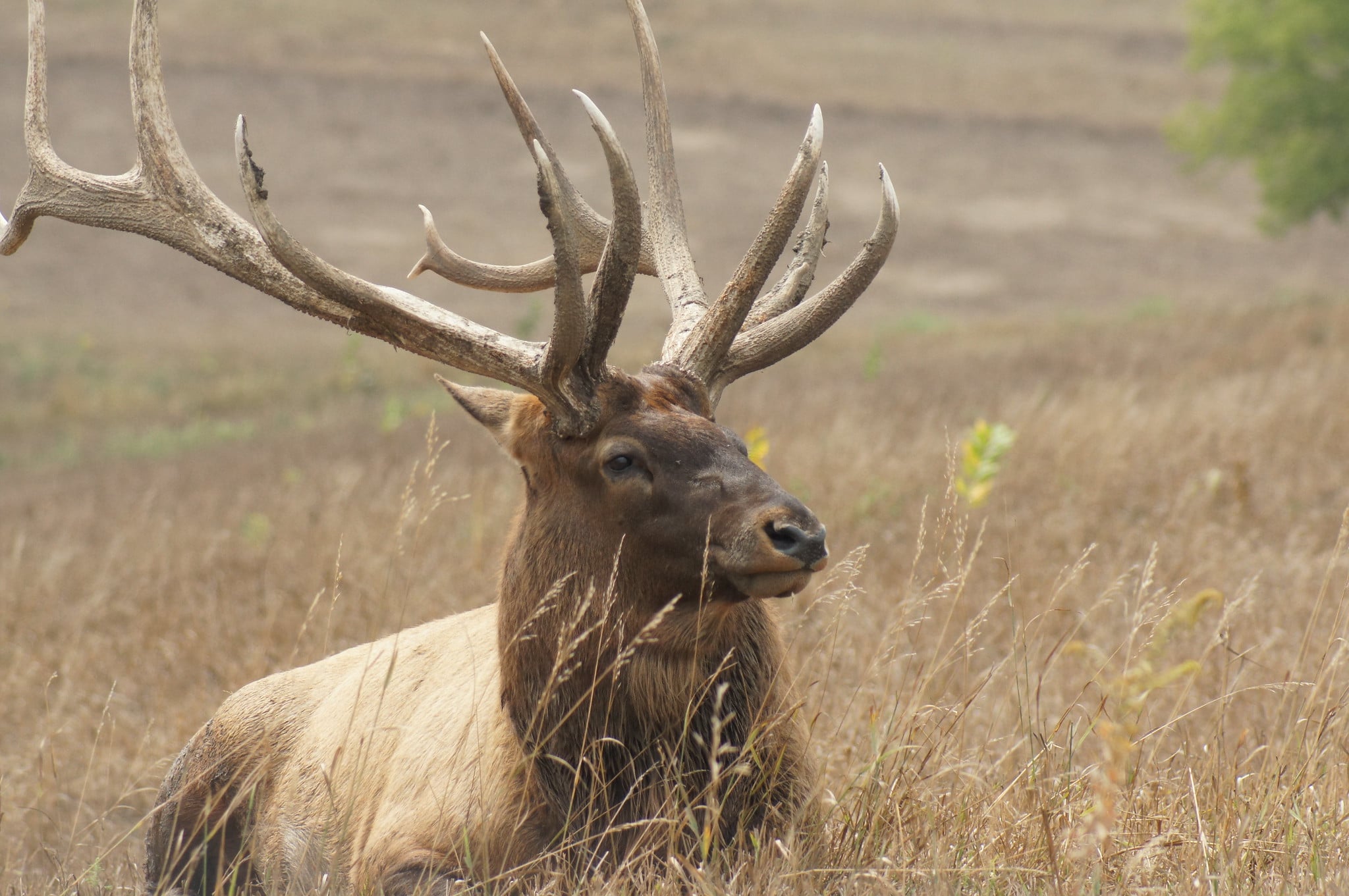
Wildlife researchers in Montana once tested whether fit humans could outrun elk over various distances. Elk can sprint at forty five miles per hour and trot comfortably at twenty five miles per hour, speeds that make them incredibly difficult for predators to catch.
The humans in the study couldn’t come close in sprints, but over extremely long distances measured in miles and miles, the gap narrowed somewhat. Elk still won, but the humans lasted longer than expected.
This experiment wasn’t about competition but rather understanding predator prey dynamics and how persistence hunting might have worked in ancient times.
Racing against rabbits in England
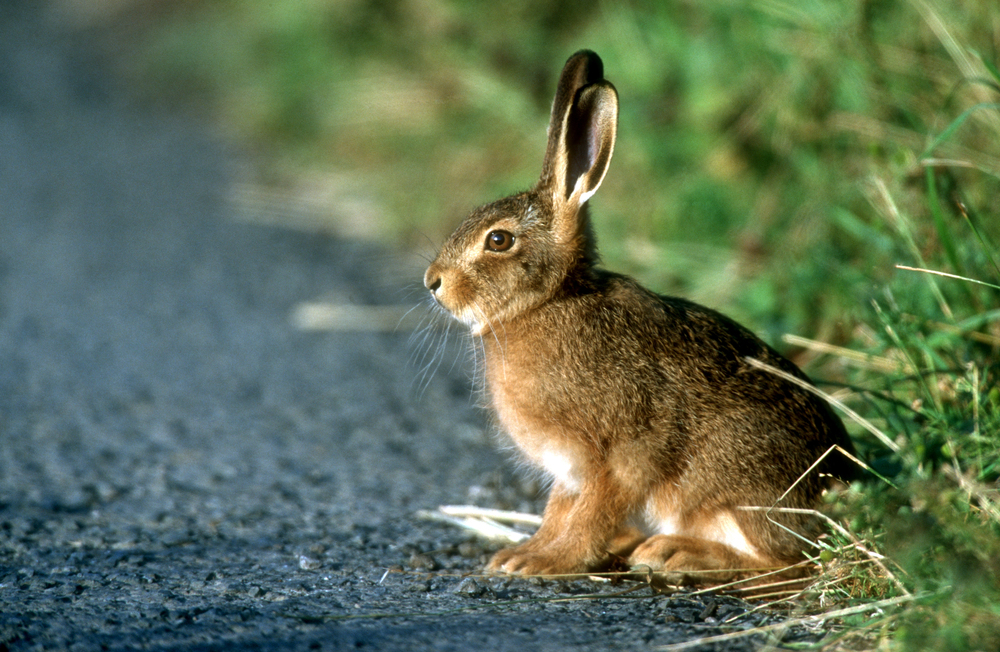
An eccentric race organizer in England once set up a series of races between local track athletes and rabbits released on an oval course. The rabbits were faster in short bursts, hitting speeds around thirty five miles per hour, but they also got confused and sometimes ran in the wrong direction entirely.
This made for chaotic entertainment rather than a legitimate athletic competition. Some runners actually managed to finish first, not because they were faster but because their rabbit opponent got distracted or decided to stop and nibble grass.
The whole event highlighted how different human intelligence and animal instinct can be when it comes to competition.
The antelope impossible race
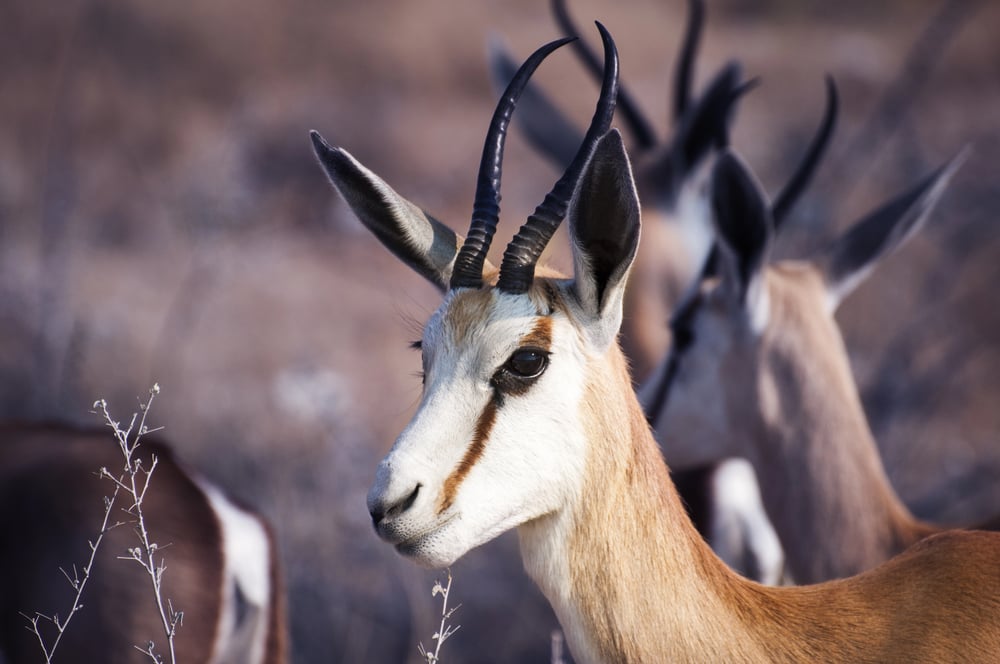
Pronghorn antelope are the fastest land animals in North America, capable of running at fifty five miles per hour for extended periods. Some endurance runners in Wyoming have tried to keep an antelope in sight during long desert runs, which is about as close to racing them as anyone can get.
The antelope disappear over the horizon within minutes, leaving the humans far behind. What makes pronghorns particularly impressive is their stamina combined with speed.
They evolved to outrun predators that no longer exist, making them almost comically overpowered for their current environment. No human is going to beat one in any meaningful race.
The surprising sloth sprint
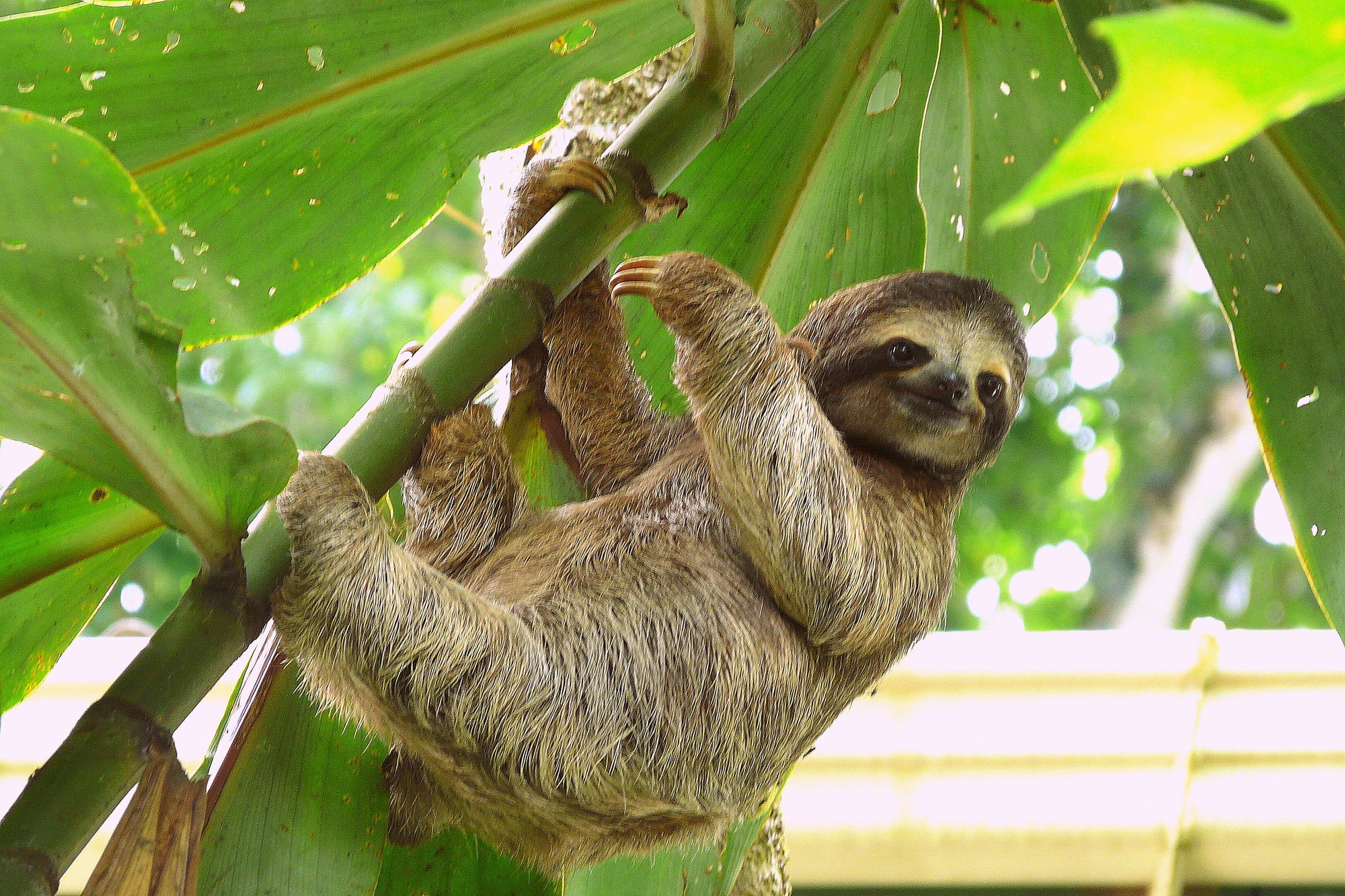
Someone once organized a joke race between a runner and a three toed sloth in Costa Rica. This is one of the few animals humans can definitely beat in a footrace.
Sloths move at about zero point fifteen miles per hour on the ground, making them one of the slowest mammals on Earth. The runner crossed the one hundred meter finish line and had time to eat lunch before the sloth completed about ten feet.
This race was entirely for laughs and to raise money for sloth conservation. It did prove that humans aren’t always the slow ones in the animal kingdom, though finding creatures we can actually outrun is harder than most people think.
Marathon runner versus sled team in Alaska
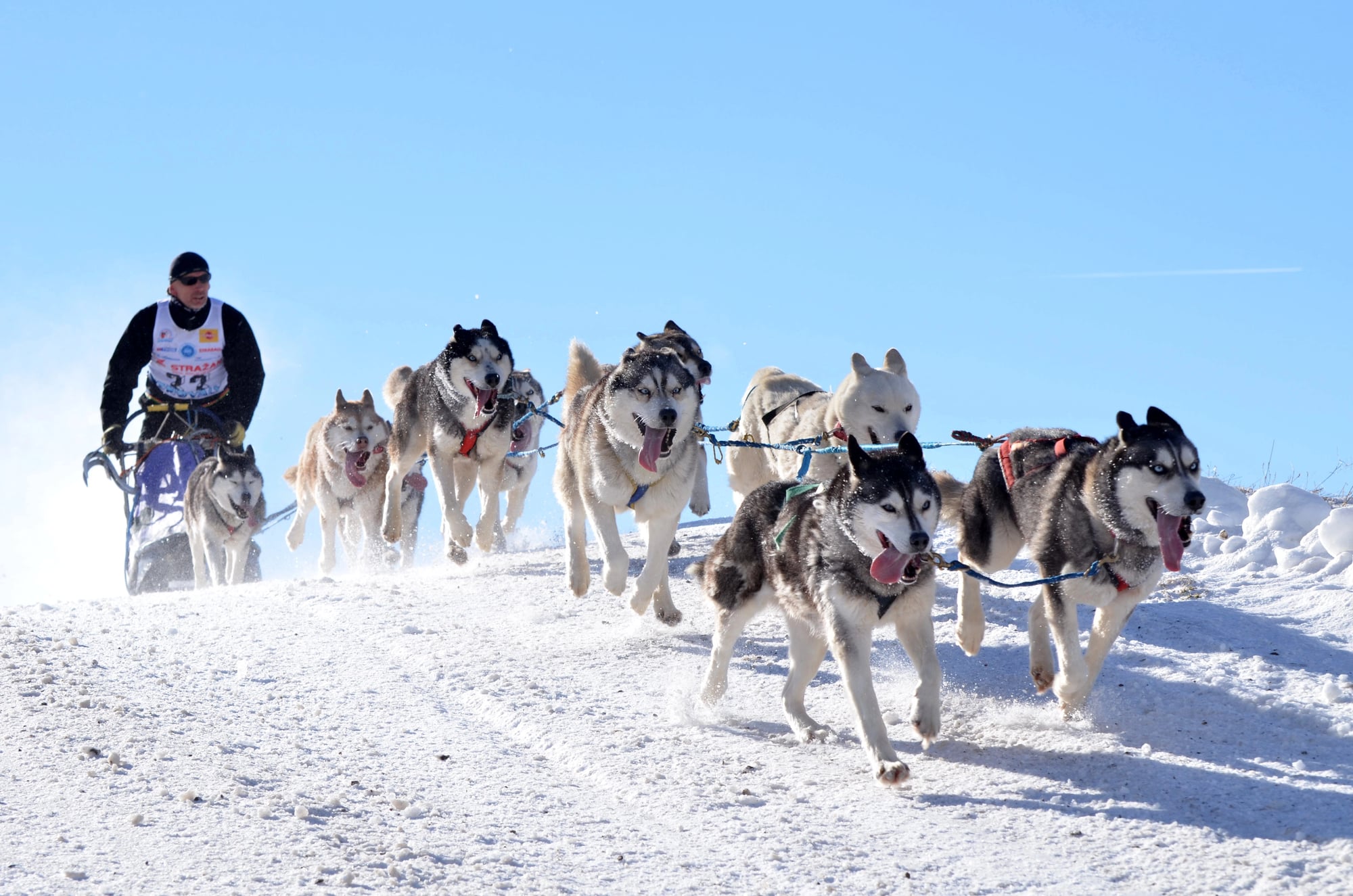
Dean Karnazes, famous for tackling crazy long runs, went up against a dog sled team over one hundred fifty miles of wild Alaska terrain. Instead of resting like the dogs did, he kept moving though his crew helped along the way.
A handler guided the animals; Karnazes had no such aid. He ended hours after the pack reached the finish line, no shock there since those dogs are built for snow sprints.
Still, people were stunned he tried it at all. Not everyone could cover that ground on foot.
That event highlighted what elite canines can do and how far a person might go with relentless training.
Racing flamingos in the Caribbean
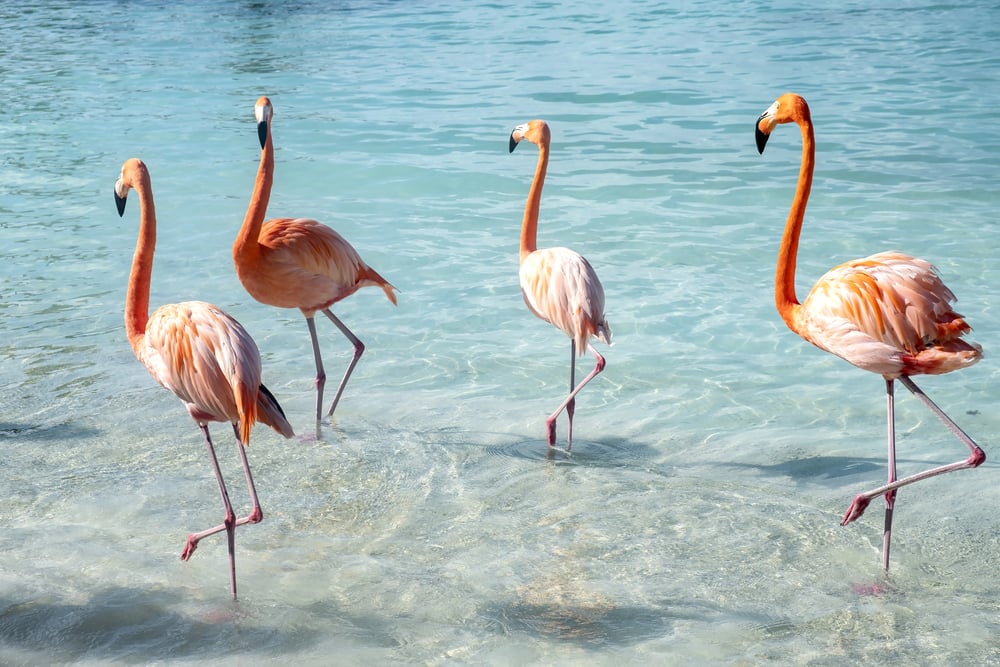
In a rare wildlife moment, people sprinting across the Caribbean found themselves side by side with flamingos on a watery track. When pushed, these birds aren’t slow some reach up to thirty miles per hour just before lifting into air.
But through wetlands, their movement gets tricky. Folks managed to match them briefly until the birds soared upward and vanished.
The entire thing aimed to spotlight saving flamingo homes instead of testing who’s faster. Still, it led to fun snapshots folks drenched while chasing vivid pink birds across wetlands.
The racing zebra project in Africa
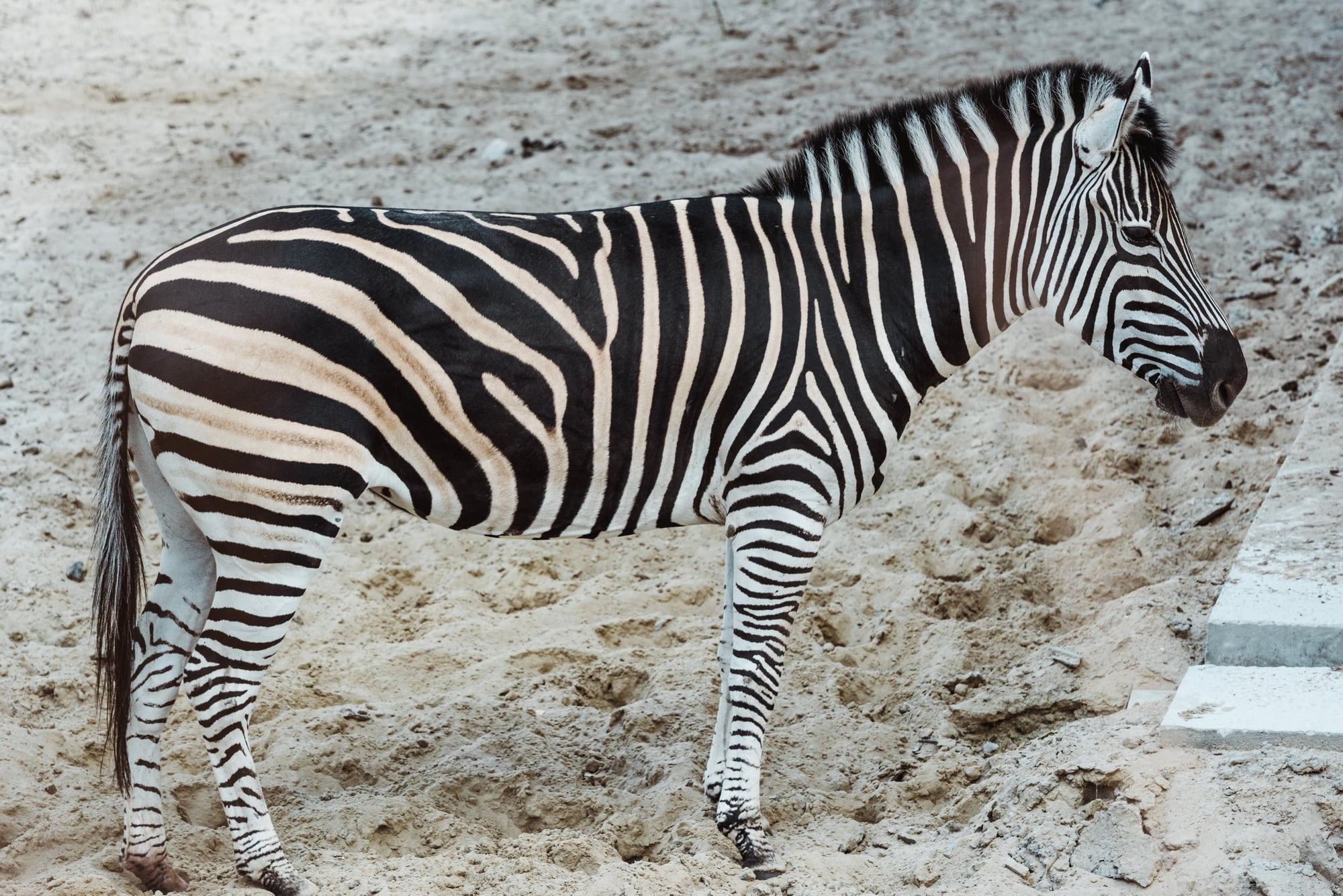
Zebra sprint up to forty miles per hour built that way after ages dodging lions on savannas. Folks staying at bush camps sometimes test speed against them, just for fun.
These races? They last maybe ten seconds till the zebra vanishes ahead. Unlike people, these animals pivot fast mid run while staying alert to any follower nearby.
They’re made to survive, so they can blast off fast whenever needed. Anyone chasing them’s up against ages of natural change.
The decision about how fast it goes

Humans usually get beaten by speedy animals in short bursts yet there’s more to it. Instead, what sets us apart is sticking with it, thinking through challenges, or pushing forward even when exhaustion hits hard.
Sure, we’d lose a quick dash; however, across vast stretches, people can go longer than beasts that outrun us easily on brief tracks. Such contests show each animal adapted uniquely, proving raw speed doesn’t guarantee making it far.
More from Go2Tutors!

- The Romanov Crown Jewels and Their Tragic Fate
- 13 Historical Mysteries That Science Still Can’t Solve
- Famous Hoaxes That Fooled the World for Years
- 15 Child Stars with Tragic Adult Lives
- 16 Famous Jewelry Pieces in History
Like Go2Tutors’s content? Follow us on MSN.