School Phrases Students Hear Around the World
Schools differ enormously depending on where you grow up — the uniforms, the subjects, the hours, the rules, the expectations. But spend time talking to people who grew up in different countries and one thing becomes clear surprisingly quickly: the things teachers say are nearly identical everywhere.
Across languages, cultures, and decades, classrooms seem to run on the same small set of phrases, delivered in the same tone, producing the same resigned expressions on students who have heard them all before.
“Eyes on Your Own Paper”
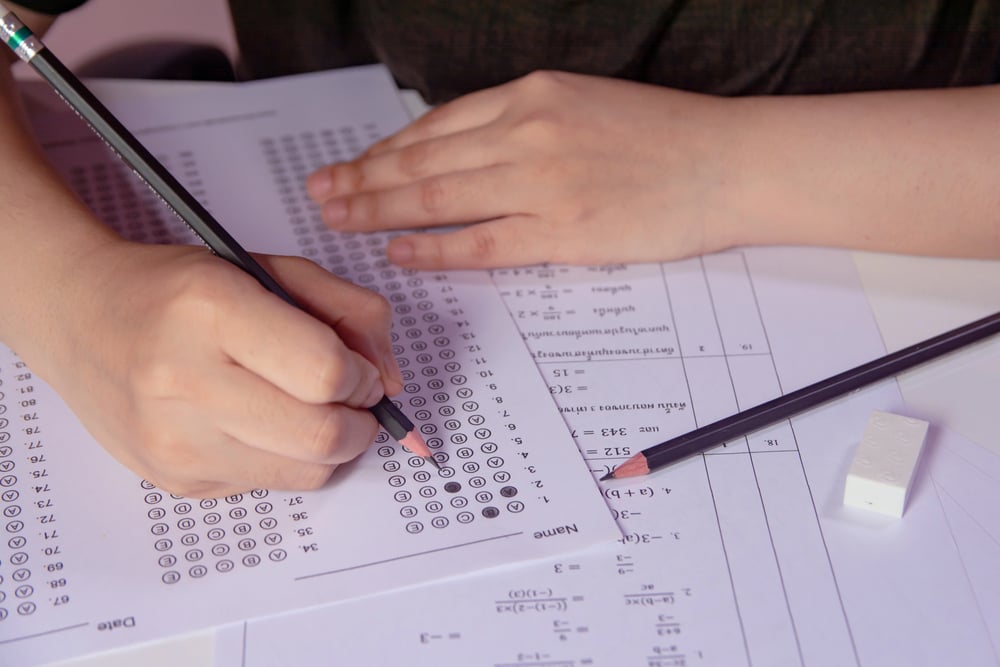
This one appears in some form in virtually every country that holds written exams. The instruction is simple enough, but what it really communicates is a whole set of values about individual effort and academic integrity that schools consider non-negotiable.
Students have heard it so many times that it barely registers as a sentence anymore — it’s more of a reflex, a sound the room makes when a teacher notices too many glances drifting sideways.
“You Won’t Always Have a Calculator With You”

A classic of the mathematics classroom, delivered most often just after a student asks why they need to learn long division by hand. The argument has aged somewhat given that most people carry a powerful calculator in their pocket at all times, but the phrase has survived anyway.
What the teacher usually means underneath it is something more defensible — that understanding how a calculation works matters more than being able to produce an answer. The phrasing just hasn’t caught up with that idea yet.
“This Will Be on the Test”
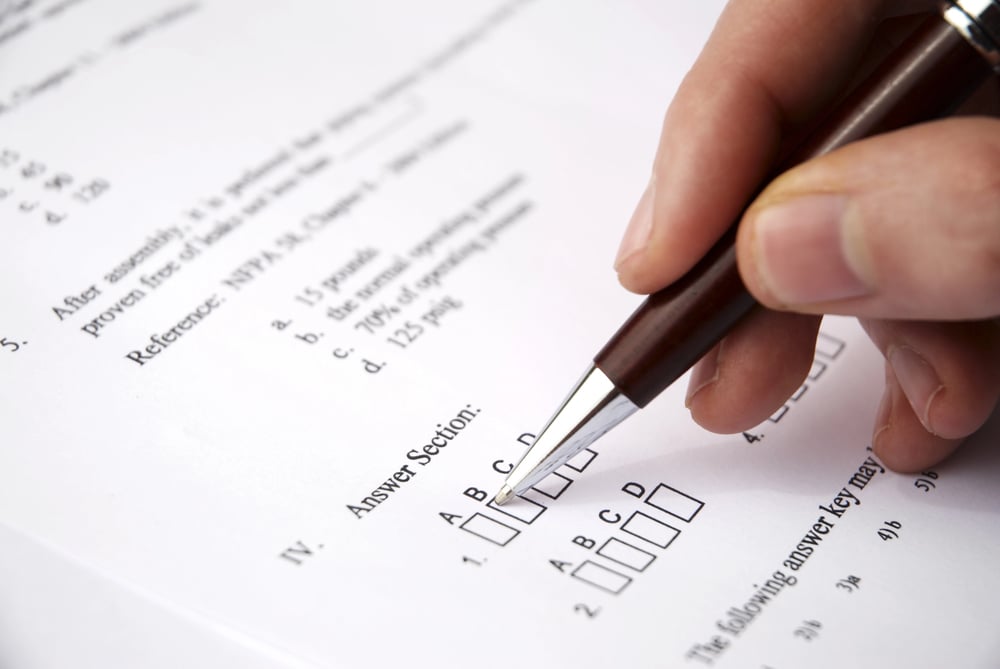
Four words that immediately change the energy in a room. Whatever was being half-listened to a moment ago suddenly gets written down. The phrase reveals something honest about how school works — students respond to assessment far more reliably than to abstract promises of usefulness.
Teachers know this, and they use it accordingly. In some classrooms it’s delivered almost as a threat. In others, it’s a genuine act of helpfulness, a signal that this particular thing genuinely matters.
“Settle Down, Please”

Said at the start of class, after a break, after an exciting announcement, and occasionally for no obvious reason at all. Every teacher develops their own version of this phrase — some say it once firmly, others repeat it in a gradually flattening tone until the room complies.
A few teachers don’t say it at all and simply wait in silence, which tends to work faster than saying anything. Whatever form it takes, it’s the universal signal that the social part of the day is pausing and something else is about to begin.
“Show Your Work”

Mathematics teachers around the world share a deep commitment to this instruction. Getting the right answer isn’t enough — you have to demonstrate the path you took to get there.
The reasoning is genuinely sound: showing your work proves you understood the process rather than guessing, and it lets the teacher identify exactly where thinking went wrong when it does. Students who arrive at correct answers by unconventional routes often find this instruction frustrating.
The underlying lesson — that process matters, not just outcome — applies well beyond mathematics.
“See Me After Class”

This phrase carries a weight disproportionate to its four words. Depending on context and tone, it signals anything from a private compliment to a serious conversation about behavior.
Students become very good at reading which version is coming based on subtle cues — the expression on the teacher’s face, whether the instruction was delivered quietly or in front of the whole room, whether it followed something going well or badly. Hearing it produces a distinct feeling that most adults can still recall years after leaving school.
“There Are No Stupid Questions”

A well-intentioned phrase that students tend to receive with quiet skepticism, partly because classroom dynamics make asking certain questions feel genuinely risky regardless of what the teacher says. The phrase exists to encourage participation, and in classrooms where the culture genuinely supports it, it works.
In classrooms where it doesn’t, the phrase sits awkwardly in the air while nobody raises their hand. Teachers who actually build an environment where questions feel safe rarely need to say it out loud.
“Pay Attention at the Back”

The geography of the classroom has always meant that the back rows attract students who would rather be somewhere else. Teachers in every country seem to develop a particular awareness of what’s happening in those seats, and a particular tone reserved for addressing it.
The phrase rarely produces lasting attention — it produces a brief adjustment, a moment of compliance, and then a gradual drift back to whatever was happening before. Both sides know this, and yet the phrase persists because it’s the available tool and doing nothing feels worse.
“In Complete Sentences, Please”

Language and English teachers deploy this one constantly. A student offers a fragment — a word, a phrase, a mumbled partial thought — and gets redirected to say the whole thing properly.
The instruction is about more than grammar. It’s training students to fully form and express an idea rather than gesture toward it.
Adults who learned to do this well tend to communicate more clearly in writing and in conversation. The habit of finishing the sentence, of saying the whole thing out loud, turns out to matter quite a lot.
“The Bell Doesn’t Dismiss You — I Do”
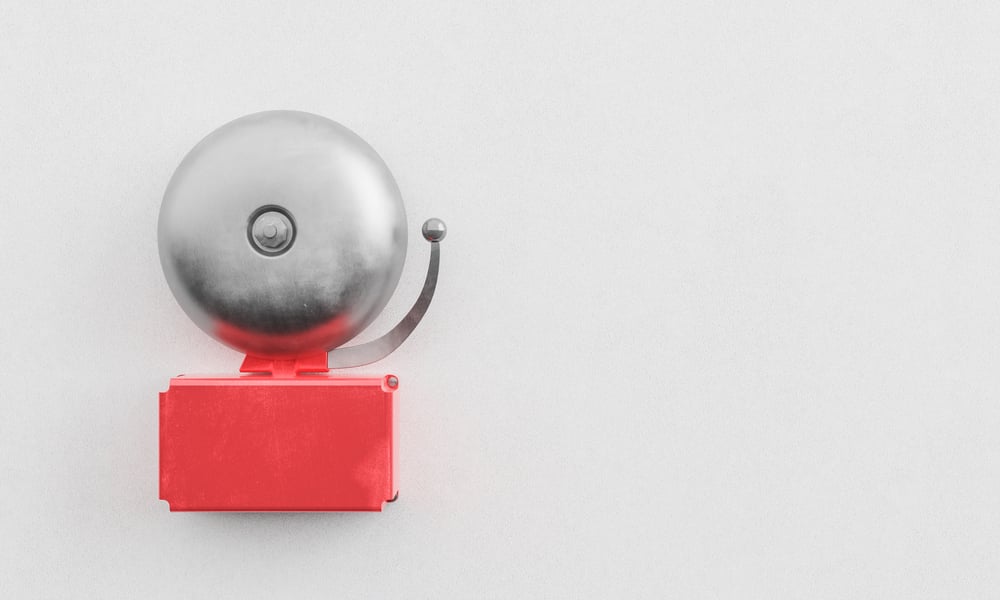
A phrase that tends to appear in the classrooms of teachers who feel strongly about authority and order, and who have noticed that students begin packing their bags several minutes before the end of the lesson. The instruction is technically correct — in most schools, students are supposed to wait for formal dismissal.
Whether it’s worth the mild power struggle it tends to produce is a question different teachers answer differently. Students remember this one vividly, often with a mix of mild irritation and reluctant respect.
“You Have So Much Potential”

This phrase gets delivered in two very different contexts. The first is genuine encouragement — a teacher who sees something in a student and wants them to know it.
The second is a kind of diplomatic disappointment, a way of saying that the work handed in falls significantly short of what the student is capable of producing. Students almost always know which version they’re getting.
The phrase has become so associated with the second usage that even when it’s meant sincerely, it can land with a slightly deflating effect.
“Take Out a Sheet of Paper”

These six words produce a specific, collective anxiety in students everywhere, because they almost always precede either a quiz or a test that someone wasn’t expecting. Teachers sometimes use the phrase deliberately for this effect — it focuses attention immediately.
The phrase also appears in less stressful contexts, of course, but the association is strong enough that hearing it tends to produce a brief moment of dread regardless of what follows.
“This Goes on Your Permanent Record”

The permanent record is one of education’s most enduring myths. Students grow up believing that somewhere, a detailed account of every detention, failed test, and classroom incident is being carefully maintained and will follow them for the rest of their lives.
In reality, most school records are fairly limited in scope and rarely referenced beyond the school years. But the phrase does the job it’s designed to do — it makes consequences feel real and lasting at an age when the abstract idea of future consequences doesn’t otherwise carry much weight.
“If You’re Talking, You’re Not Learning”

A blunt statement of classroom logic that teachers reach for when quieter approaches haven’t worked. It’s hard to argue with on its face.
But students tend to experience it as less obvious than the teacher intends, partly because some of the most useful moments in a classroom happen precisely when students are talking — discussing ideas, explaining things to each other, working through confusion out loud. The phrase is aimed at off-task chatter, but it lands as a blanket statement about noise, and it often creates a silence that’s more about compliance than concentration.
“Because I Said So”

Every student eventually pushes for a reason — why this rule, why this deadline, why this method and not another. And eventually, in most classrooms, the explanation runs out and lands here. It’s not an answer that satisfies anyone, and most teachers know it.
But it appears because teaching thirty students at once doesn’t always allow for extended philosophical justification, and because some rules exist more for the functioning of the group than for any deeply principled reason. Students remember this phrase.
Many of them go on to say it themselves, years later, and understand it differently than they did the first time.
The Phrases That Outlast the Classroom

The thing that’s remarkable about these phrases is not only their ability to travel far and wide – it’s their ability to endure over time. Most adults can still hear these phrases, and experience a sensation of any kind, even decades after they have left school.
A slight shudder, a sudden recollection, something that makes the body react before the mind has realized it. Content is what schools primarily use to teach, but they equally educate through repetition, through the rhythms of the day, through the same words spoken in the same way year after year.
These words will permanently affect you in a way that no exam score can even come close to – the subtle trace of a place where you spent several years of your life, reflected in a few sentences that you will most likely never forget completely.
More from Go2Tutors!

- The Romanov Crown Jewels and Their Tragic Fate
- 13 Historical Mysteries That Science Still Can’t Solve
- Famous Hoaxes That Fooled the World for Years
- 15 Child Stars with Tragic Adult Lives
- 16 Famous Jewelry Pieces in History
Like Go2Tutors’s content? Follow us on MSN.