Skyscrapers Designed to Move With Wind
Tall buildings face a challenge that shorter structures never encounter: strong winds at high altitudes that can push, pull, and shake the entire structure. Engineers discovered long ago that fighting against wind forces creates more problems than it solves.
Instead, modern skyscrapers incorporate clever designs that allow them to sway, bend, and move with the wind rather than resisting it completely. Here’s how the world’s tallest buildings stay standing while dancing with forces powerful enough to knock them down.
Taipei 101’s giant pendulum

This Taiwanese tower stands 1,667 feet tall and contains one of the world’s largest tuned mass dampers. The device weighs 728 tons and hangs from the 92nd to the 87th floor like an enormous pendulum.
When wind pushes the building one direction, the massive weight swings the opposite way to counterbalance the movement. Visitors can actually see this giant golden sphere, which has become a tourist attraction in its own right.
The damper reduces the building’s sway by roughly 40%, making upper floors much more comfortable during typhoons.
Burj Khalifa’s Y-shaped footprint
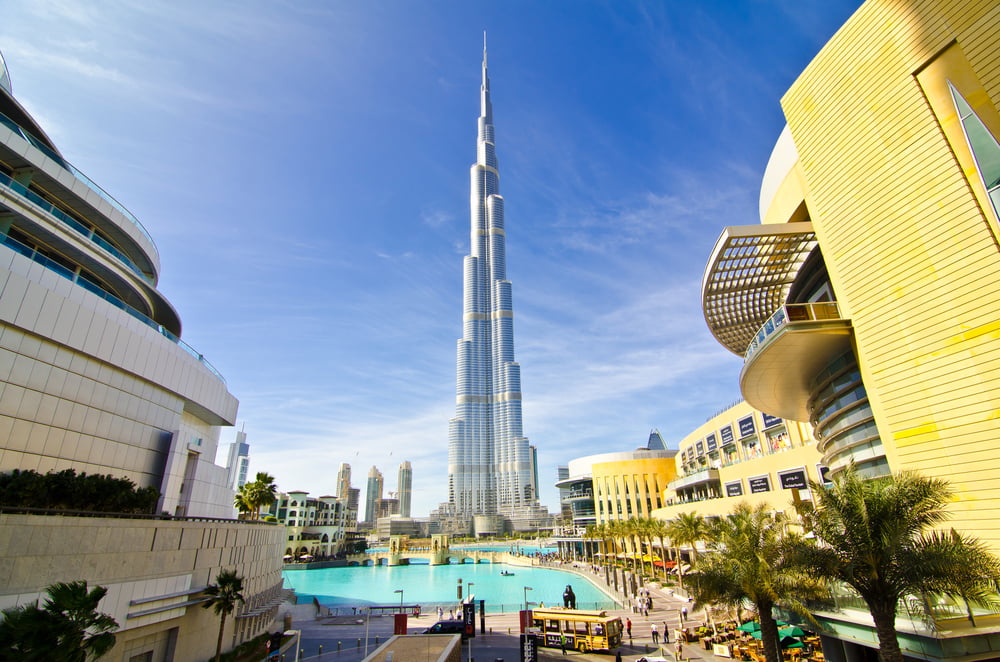
The world’s tallest building at 2,717 feet uses its unique three-winged design to confuse wind patterns. Each wing extends from a central core in a Y-shape, which prevents wind from hitting one continuous flat surface.
This shape causes air to flow around the structure in multiple directions simultaneously, reducing overall pressure. The building also features setbacks at different levels that further disrupt wind flow.
Engineers spent thousands of hours in wind tunnels perfecting this design before construction began.
Willis Tower’s bundled tube system

Chicago’s famous skyscraper groups nine square tubes together in a bundle, with different tubes reaching different heights. This bundled design lets wind flow between and around the tubes rather than hitting one massive rectangular surface.
The tubes support each other structurally while also distributing wind forces across multiple points. At street level, the building measures 225 feet by 225 feet, but the tubes drop off as the building rises.
This innovative approach influenced skyscraper design worldwide when the building opened in 1973.
Shanghai Tower’s twisted shape

The second-tallest building in the world rotates 120 degrees as it rises to its 2,073-foot height. This twist reduces wind loads by about 24% compared to a straight rectangular tower of the same height.
Wind hits different parts of the building at different angles as it flows upward, preventing the formation of strong vortexes. The twisting design also creates unique interior spaces and gives the building its distinctive appearance.
Engineers used advanced computer modeling to calculate exactly how much twist would provide optimal wind resistance.
432 Park Avenue’s window gaps
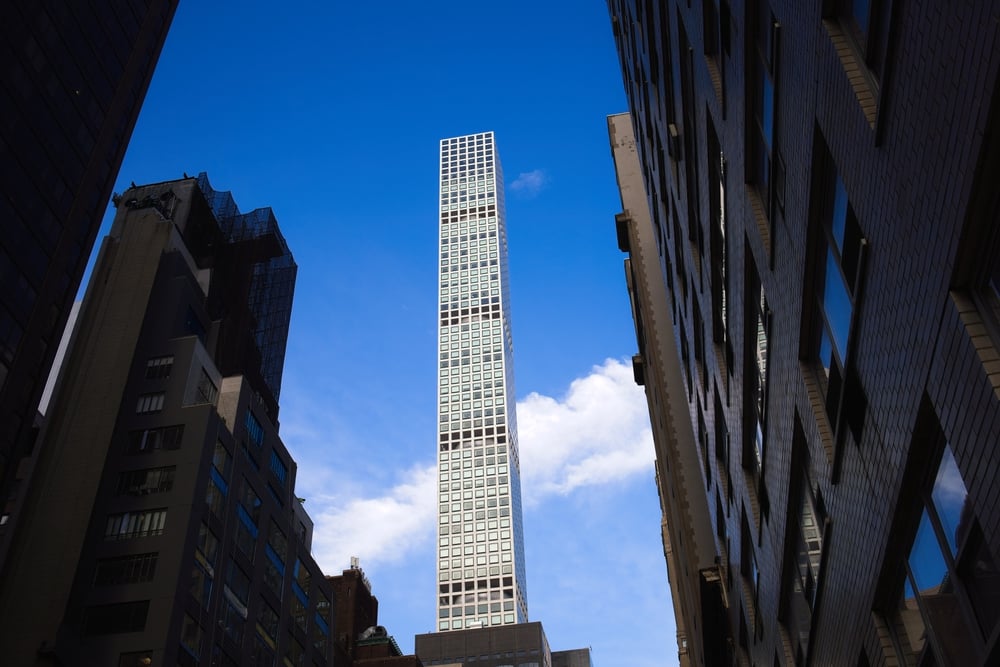
This super-thin Manhattan tower includes open squares cut through the building at regular intervals. These gaps let wind blow straight through the structure instead of pushing against solid walls.
The building sways up to three feet at the top during strong storms, which residents have complained about. The gaps reduce wind pressure but don’t eliminate movement entirely.
Some apartments have special features like water in toilets that show the building’s gentle motion.
One World Trade Center’s concrete core

New York’s tallest building surrounds its central concrete core with a steel frame that can flex during wind events. The concrete core stays rigid while the outer structure moves slightly, creating a system that’s both strong and flexible.
The building’s square base transforms into an octagon as it rises, then returns to a square at the top. These shape changes disrupt wind patterns and prevent resonant frequencies from building up.
The design allows the tower to withstand winds over 100 miles per hour.
Salesforce Tower’s damping system

San Francisco’s tallest building uses a system of fluid-filled dampers throughout its structure. These dampers work like shock absorbers in a car, converting kinetic energy from wind movement into heat.
The building can sway several feet at the top during strong winds off the Pacific Ocean. Workers on upper floors rarely notice the movement because the damping system smooths out the motion.
The tower’s tapered shape also helps wind flow around it more easily than a straight-sided building.
Petronas Towers’ sky bridge connection

The famous twin towers in Kuala Lumpur feature a sky bridge on the 41st and 42nd floors that isn’t rigidly attached to both towers. The bridge sits on sliding supports that allow the two buildings to move independently during wind events.
Each tower can sway in different directions at different times without stressing the connection. This flexible joint prevents the bridge from becoming a structural liability during storms.
The towers also use a circular footprint that reduces wind resistance compared to rectangular designs.
The Shard’s glass pyramid shape
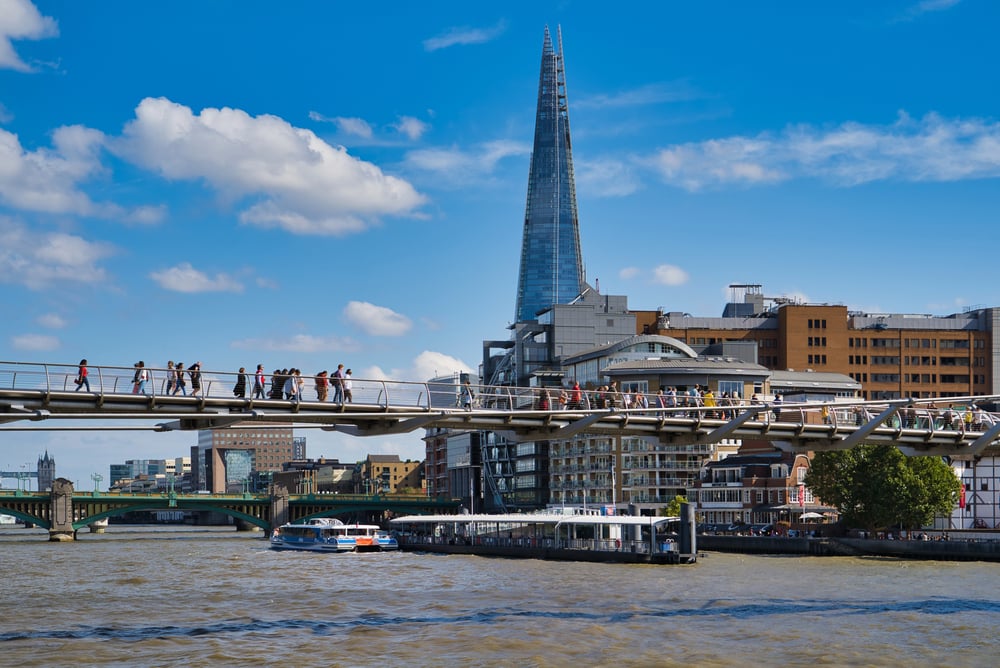
London’s tallest building tapers dramatically from base to tip, creating a shape that naturally sheds wind. The all-glass exterior reflects and deflects air currents rather than catching them like solid concrete walls would.
The building’s eight slanted glass planes don’t provide vertical surfaces for wind to push against directly. Computer simulations showed this pyramidal design reduced wind loads by significant percentages.
The structure still moves perceptibly during strong storms, but the motion stays within comfortable limits.
Citigroup Center’s chevron bracing
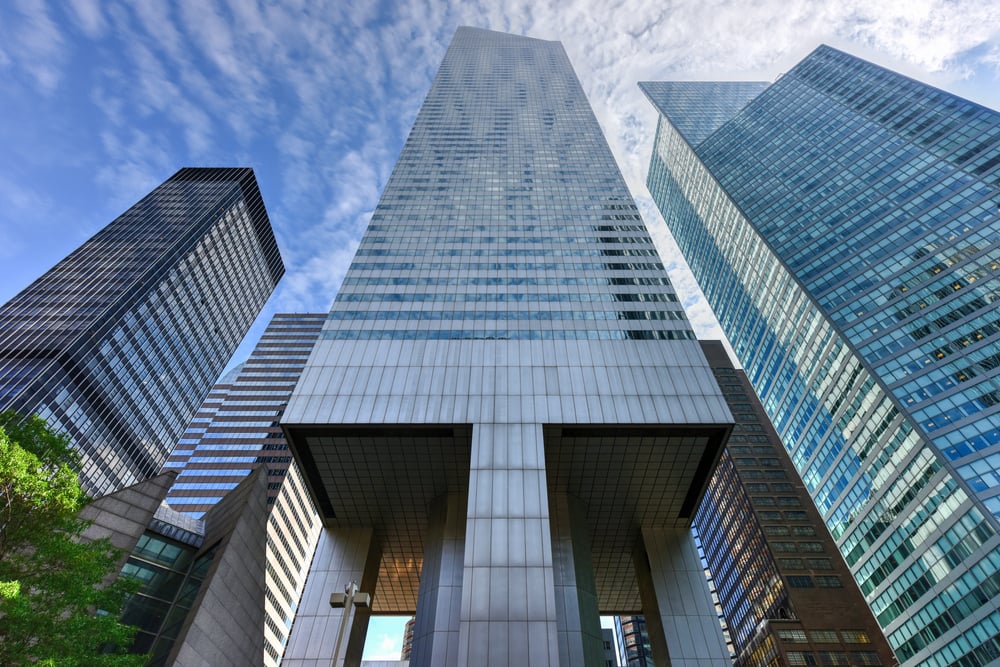
This New York building famously sits on four massive stilts rather than resting on its corners or center. The engineer added chevron-shaped braces after construction when someone pointed out a potential weakness in the original design.
These V-shaped braces distribute wind and gravity loads across the structure more evenly. The building also contains a tuned mass damper on the 63rd floor to reduce swaying.
This retrofit represented one of the most significant structural fixes ever made to an occupied skyscraper.
Bank of China Tower’s diagonal bracing

This Hong Kong landmark features a distinctive exoskeleton of diagonal braces visible on its exterior. The X-shaped bracing transfers wind loads down to the foundation along multiple paths instead of through a single central core.
This approach uses less material than traditional designs while providing equal or better wind resistance. Strong typhoons regularly test the building’s systems, and it has performed exactly as engineers predicted.
The geometric pattern created by the braces has become an architectural icon.
John Hancock Center’s external X-bracing
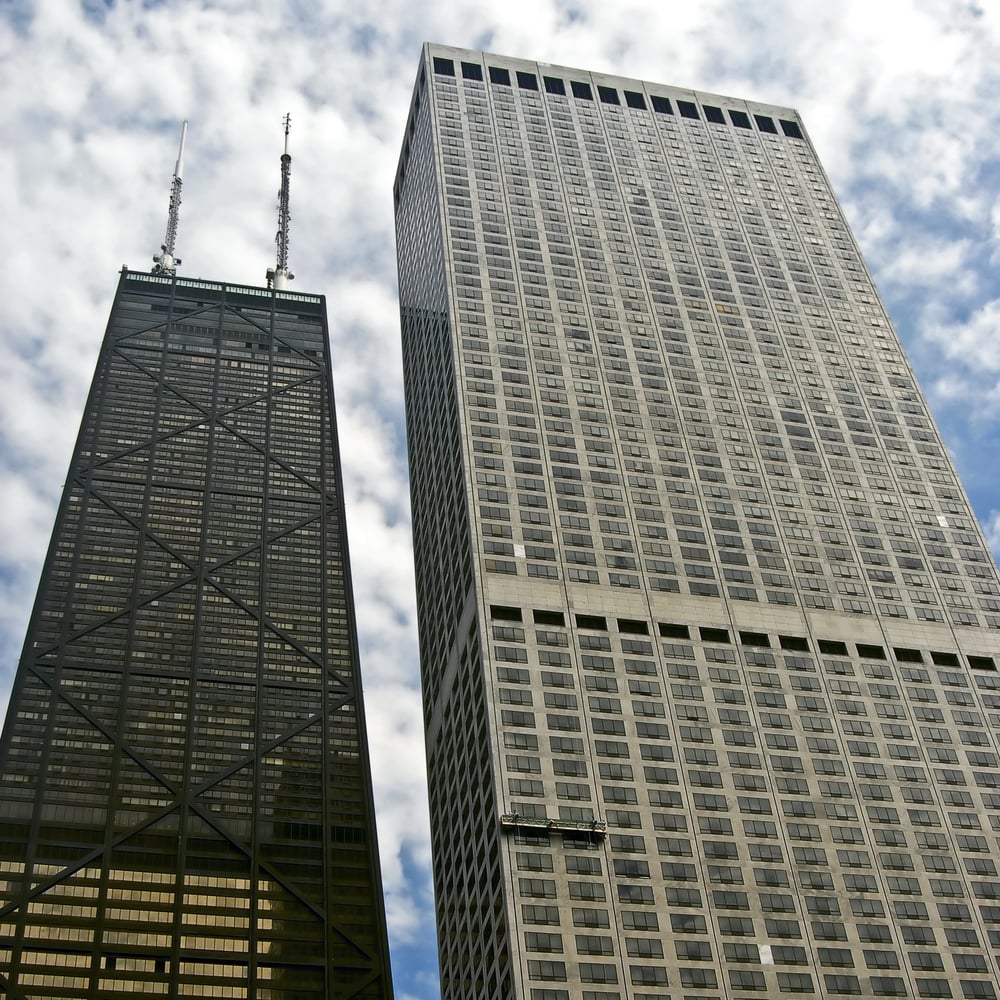
Chicago’s second-tallest building displays enormous X-shaped braces on all four sides. These external structural elements do double duty as both decoration and vital wind-resistance components.
The cross-bracing becomes denser near the bottom where loads are greatest. This system allowed engineers to eliminate many interior columns, creating more open floor plans.
The building tapers from a wide base to a narrower top, which also helps reduce wind resistance at higher elevations.
Marina Bay Sands’ triple tower design
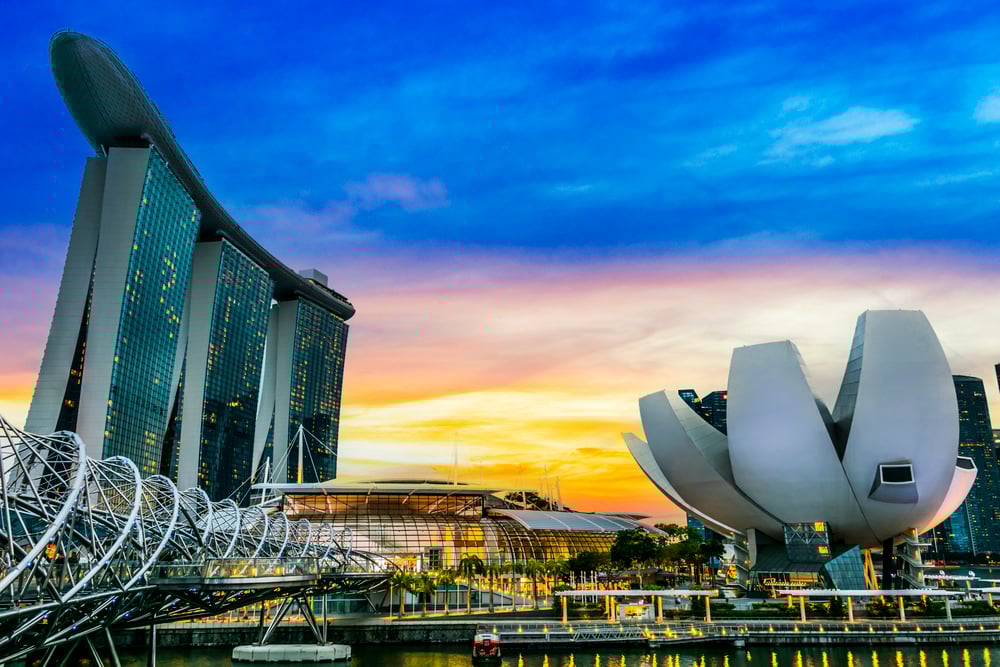
This Singapore resort features three separate 55-story towers topped by a massive horizontal structure connecting them. Each tower can move independently, with flexible joints where they meet the sky park on top.
The gaps between towers let wind flow through rather than pushing against a solid wall. Engineers designed the connections to handle different movements from each tower during storms.
The unique design creates one of the world’s most distinctive skylines while solving serious engineering challenges.
Lotte World Tower’s curved exterior
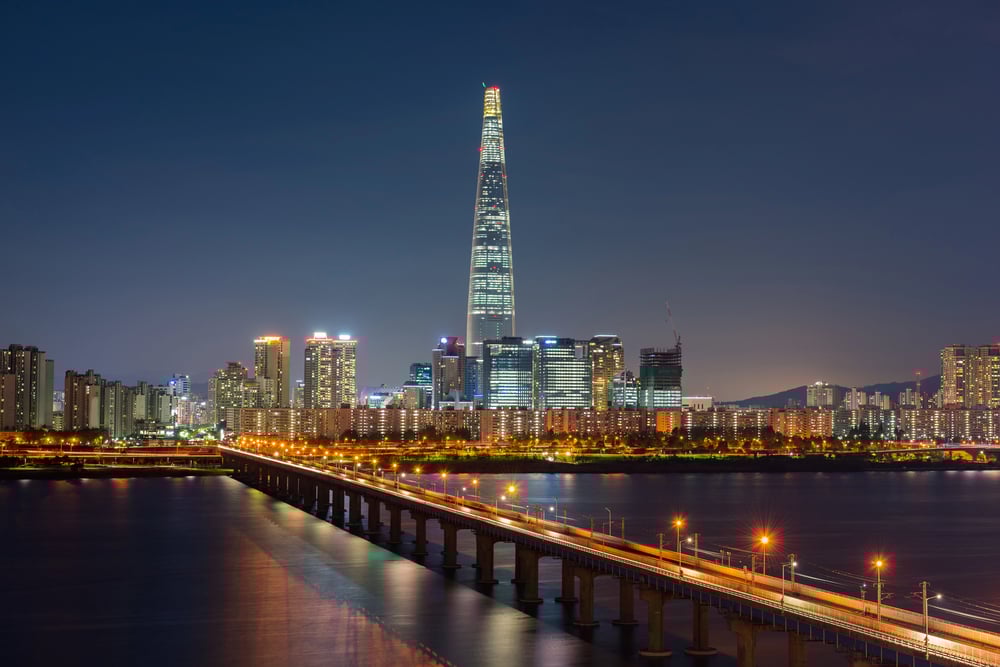
Seoul’s tallest building uses a gradually curving exterior that guides wind smoothly past the structure. The building’s shape resembles a gentle cone that tapers as it rises to 1,819 feet.
Horizontal bands wrap around the tower at regular intervals, creating small disruptions in wind flow. These bands prevent the formation of organized vortex patterns that could cause dangerous oscillations.
Wind tunnel testing helped designers optimize the curve’s exact shape.
Diagrid design of 30 St Mary Axe

Twisting up London’s skyline, the Gherkin leans on a slanting web of supports spiraling outside. Because of this crisscross frame, it resists downward forces and gusts more efficiently while needing fewer raw materials than standard upright frameworks.
Its rounded form avoids straight walls, so breezes slip past instead of pressing hard. Nestled within the angled structure, triangle-shaped panes tilt outward to let fresh air flow in.
With its smooth, wind-cheating outline, pressure from storms drops nearly half versus boxy high-rises.
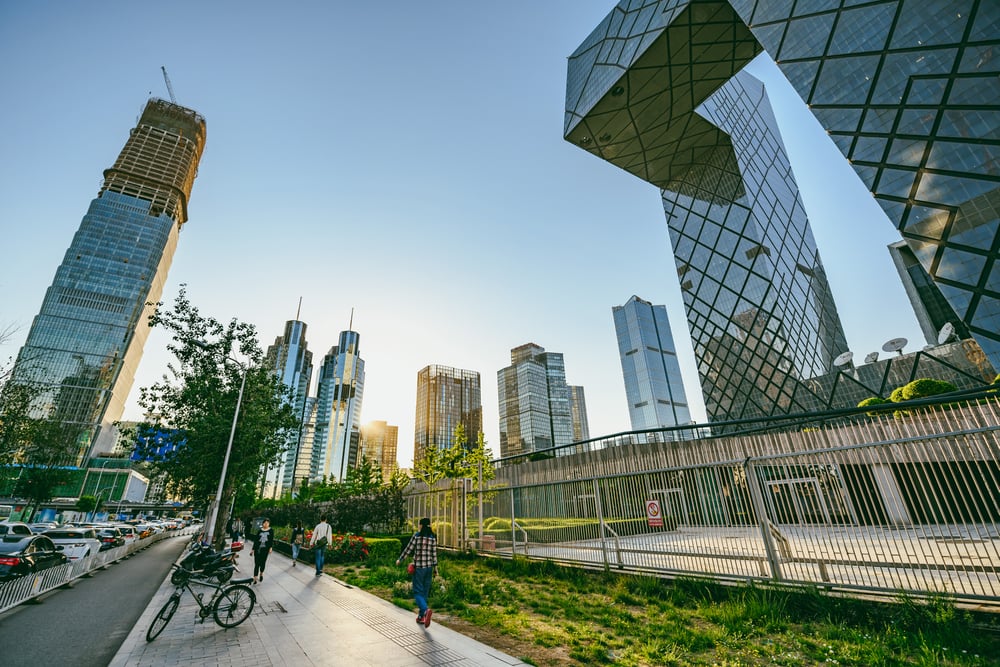
CCTV Headquarters Loop Design
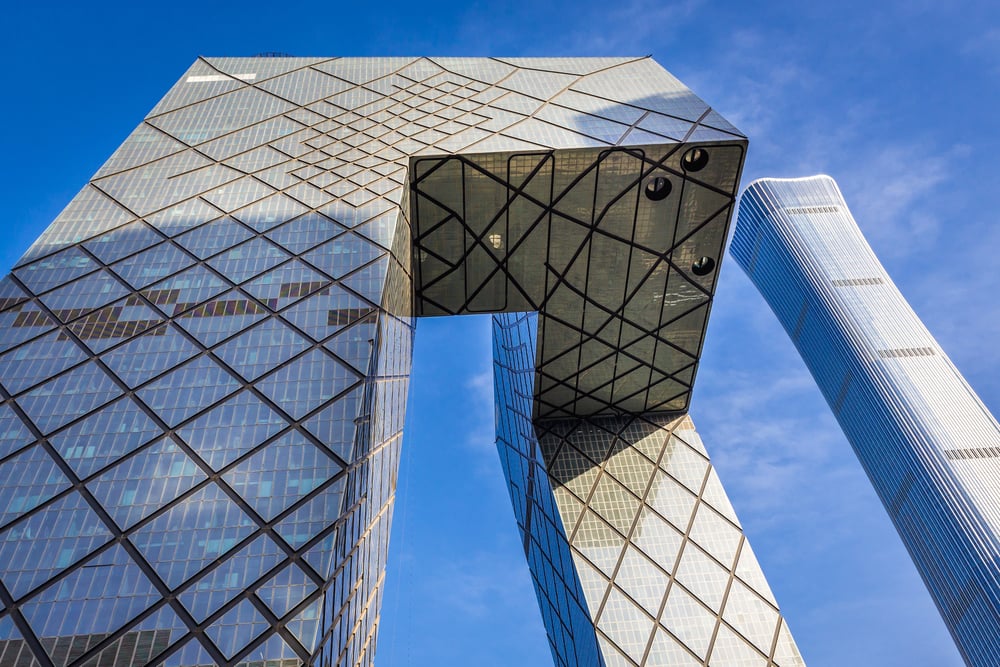
Looping instead of rising, Beijing’s odd-shaped building breaks the mold of ordinary skyscrapers. Two tall structures tilt toward each other, joined high above and deep below, making a giant arch in stone and steel.
Wind moves around it unlike anything seen in standard tower shapes. Computer simulations helped builders test how far parts could stretch without support when storms hit hard.
Every piece demanded new thinking because nothing fit typical construction rules.
Engineering meets nature’s forces
Tall buildings shape cities, yet they show how people work with nature instead of fighting it. Lessons came hard – through trial, error, even collapse – that going stiff rarely works as well as giving way slightly.
Each high-rise now expects motion, built so gusts do not break but pass through. Ideas once saved for giants now help homes and shops stand stronger too.
Future towers won’t resist every storm – they’ll move like trees, quiet on the inside while shifting unseen outside.
More from Go2Tutors!

- The Romanov Crown Jewels and Their Tragic Fate
- 13 Historical Mysteries That Science Still Can’t Solve
- Famous Hoaxes That Fooled the World for Years
- 15 Child Stars with Tragic Adult Lives
- 16 Famous Jewelry Pieces in History
Like Go2Tutors’s content? Follow us on MSN.