Space Telescope Discoveries That Changed Astronomy
Looking up at the night sky has always filled people with wonder, but for most of history, humans could only see what their eyes allowed. That all changed when scientists started launching telescopes beyond Earth’s atmosphere.
These instruments have given us views of the universe that would have seemed impossible just a few decades ago, revealing things that completely transformed our understanding of space.
Let’s explore some of the most important findings that these orbiting observatories have delivered over the years.
Hubble’s Deep Field revealed thousands of galaxies
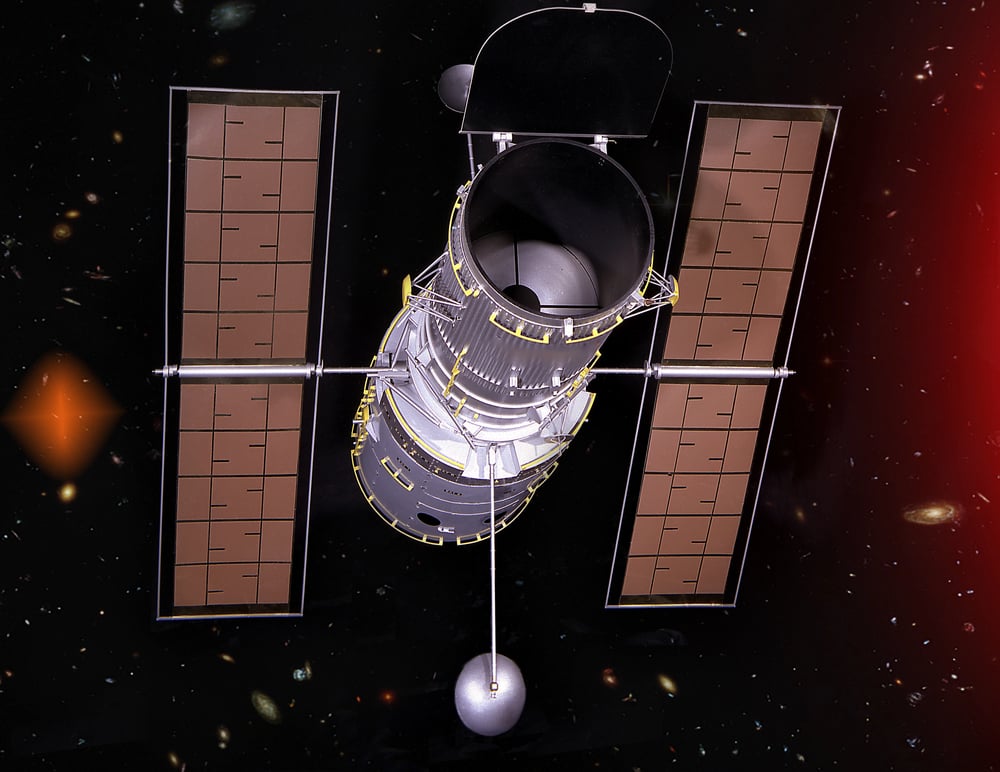
When Hubble pointed its lens at what seemed like an empty patch of sky in 1995, astronomers expected to see maybe a handful of distant stars. Instead, that tiny area, no bigger than a grain of sand held at arm’s length, contained about 3,000 galaxies.
Each one of those galaxies held billions of stars, and this was just one small corner of space. The discovery made people realize that the universe was far more crowded and vast than anyone had imagined.
Water vapor detected on distant planets
Space telescopes found the signature of water in the atmospheres of planets orbiting other stars, something ground-based observatories struggled to do clearly. This discovery happened multiple times with different worlds, proving that water isn’t unique to Earth.
Finding H2O on these far-off planets changed the conversation about where life might exist. Scientists now had actual evidence that the ingredients for life as we know it could be spread throughout the galaxy.
The universe’s expansion is speeding up

Observations from space telescopes in the late 1990s showed something nobody expected. The universe wasn’t just expanding, it was doing so faster and faster as time went on.
This went against what physicists thought would happen, since gravity should slow everything down. The finding led to the idea of dark energy, a mysterious force pushing everything apart, and it earned the discoverers a Nobel Prize.
Supermassive black orbs sit in most galaxies
Telescopes orbiting Earth revealed that nearly every large galaxy has a giant black orb at its center, including our own Milky Way. These aren’t the small black orbs formed from collapsed stars but monsters millions or billions of times heavier than our sun.
Before these observations, scientists debated whether such objects even existed. Now we know they play a major role in how galaxies form and change over time.
Stars and planets form inside dusty clouds
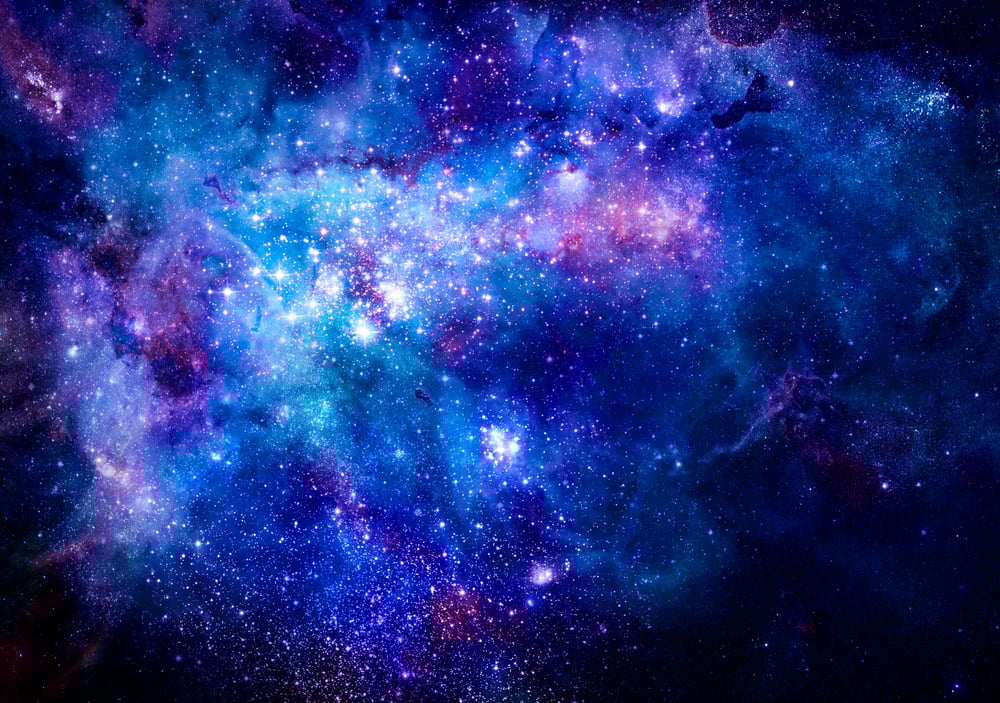
Space-based infrared telescopes could peer through the thick dust clouds where stars are born, something visible light can’t do. These observations showed the actual process of stars forming from collapsing gas and planets taking shape in the disks around young stars.
Ground telescopes had seen these clouds before but couldn’t look inside them. Watching this process unfold gave astronomers a much better idea of how our own solar system came to be.
Gamma-ray bursts come from distant galaxies
For years, satellites detected brief but incredibly powerful bursts of gamma rays from random directions in space. Space telescopes finally pinpointed where these blasts came from—galaxies billions of light-years away.
Each burst released more energy in a few seconds than our sun will produce in its entire lifetime. Scientists now think these explosions happen when massive stars collapse or when neutron stars collide.
The cosmic microwave background has tiny variations

A telescope called COBE and later ones measured the faint glow left over from the Big Bang with incredible precision. This radiation fills all of space, but it’s not perfectly smooth.
The tiny hot and cold spots in this ancient light became the seeds for all the galaxies and structures we see today. Without these measurements, our understanding of how the universe evolved from a hot, dense state to what we see now would still be mostly guesswork.
Exoplanets exist in huge numbers

Before the 1990s, we knew of exactly zero planets outside our solar system. Space telescopes changed that by finding thousands of them.
Some are gas giants bigger than Jupiter, others are rocky worlds smaller than Earth, and many orbit their stars in ways that seem strange compared to our own planetary system. These discoveries proved that planets are common throughout the galaxy and come in varieties that nobody predicted.
Pluto has a complex surface and atmosphere

When a space telescope finally got close enough to Pluto in 2015, it revealed a world far more interesting than the fuzzy dot we’d seen before. The dwarf planet had mountains made of ice, a thin atmosphere, and a giant heart-shaped plain on its surface.
Nobody expected such a small, cold world at the edge of the solar system to be geologically active. The images completely changed how scientists think about these distant frozen worlds.
Dark matter shapes how galaxies cluster

By observing how galaxies group together and how light bends around massive objects, space telescopes helped confirm that most of the universe’s mass is invisible. This dark matter doesn’t give off light but its gravity affects everything around it.
Without it, galaxies would fly apart and the large-scale structure of the universe wouldn’t exist. The evidence from space observations made dark matter impossible to ignore, even though we still don’t know what it actually is.
Jupiter’s moons have hidden oceans
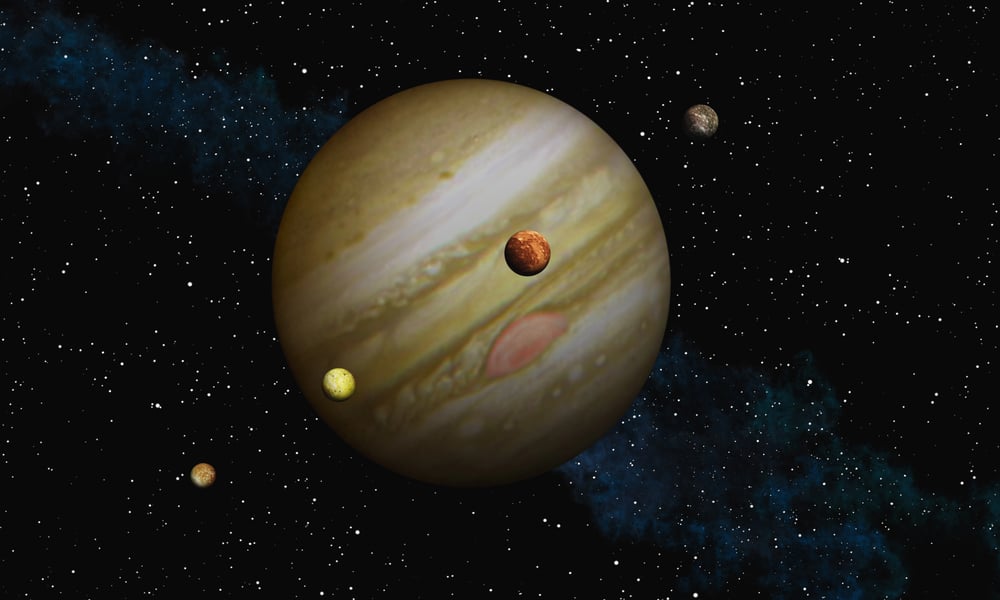
Close-up observations of Jupiter’s moons, especially Europa, revealed surfaces that suggested liquid water beneath their icy crusts. Space telescopes and probes spotted features like cracks, geysers, and areas where the ice seemed to have shifted.
These moons are far from the sun and should be frozen solid, but tidal forces from Jupiter’s gravity keep their interiors warm enough for liquid water. This made them prime targets in the search for life beyond Earth.
The oldest galaxies formed surprisingly fast
Telescopes looking at the most distant galaxies saw light that left those galaxies over 13 billion years ago, when the universe was still young. What shocked astronomers was how organized and mature some of these early galaxies appeared.
They expected to see messy, primitive structures, but instead found galaxies that had already formed lots of stars. This pushed scientists to rethink their theories about how quickly things came together after the Big Bang.
Asteroids and comets contain organic compounds

Space missions and telescopes analyzing light from asteroids and comets found complex organic molecules on these ancient rocks. These are the chemical building blocks that life needs, and they’ve been around since the solar system formed.
The discovery suggested that these space rocks might have delivered important ingredients to early Earth through impacts. It added another piece to the puzzle of how life got started on our planet.
Saturn’s rings are younger than dinosaurs

Detailed observations from space revealed that Saturn’s famous rings are probably only a few hundred million years old, not billions like the planet itself. Scientists figured this out by studying how much the rings weighed and how clean the ice particles were.
This means that when dinosaurs walked on Earth, Saturn might have looked very different. The finding raised new questions about what created the rings in the first place.
Neutron stars collide and make gold
Space telescopes detected the light and gravitational waves from two neutron stars smashing into each other in 2017. The collision created heavy elements like gold and platinum, solving the long-standing mystery of where these metals come from.
Before this observation, scientists could only guess at how the universe made elements heavier than iron. Actually watching it happen confirmed theories and showed that every gold ring on Earth came from violent events in space.
Volcanic activity continues on Io

Jupiter’s moon Io turned out to be the most volcanically active body in the solar system, something space telescopes revealed through repeated observations. The little moon has hundreds of active volcanoes constantly reshaping its surface.
This happens because Jupiter and the other large moons squeeze and stretch Io with their gravity, heating its insides. Before these observations, scientists thought volcanic activity was rare in the solar system, limited mostly to Earth.
The Pillars of Creation reveal stars forming

High up in the Eagle Nebula, giant towers of gas and smoke stood like silent factories for newborn suns. Famous through Hubble’s lens, these structures earned a nickname that stuck.
Bright light from infant stars nearby eats away at the edges, bit by bit. Time does not stop, even out there, where moments stretch long and slow.
A second look, sharper than before, caught motion in what once seemed frozen. Change moves fast when watched closely across space years.
Brown dwarfs fill the gap between planets and stars

Out there, space telescopes spotted strange things that slipped through classification cracks. Not large enough to burn like normal stars, yet larger than any planet – brown dwarfs sit in an odd middle ground.
Heat left over from their formation makes them emit a dim light, sometimes barely visible at all. These objects appear in many forms, differing by size and how warm they get.
Their discovery helped complete part of astronomy’s bigger picture. What seemed like a sharp divide between stars and planets turned out to be blurry after all.
Our place in an endless cosmos

Not only did those findings pack science books full of facts. Our whole view of Earth’s role out there shifted deeply, revealing a universe wilder and richer than anyone once thought possible.
Orbiting instruments peeled back layers, exposing emptiness so huge it shrinks you – and moments so close they feel like home, such as worlds soaked in water or ancient galaxies stitching themselves together. Each solution dropped by these scopes sparked tangled riddles, dragging understanding deeper into uncharted dark.
More from Go2Tutors!

- The Romanov Crown Jewels and Their Tragic Fate
- 13 Historical Mysteries That Science Still Can’t Solve
- Famous Hoaxes That Fooled the World for Years
- 15 Child Stars with Tragic Adult Lives
- 16 Famous Jewelry Pieces in History
Like Go2Tutors’s content? Follow us on MSN.