Strange Winter Holidays From Different Cultures
Winter brings more than just cold weather and snow. Around the world, people celebrate holidays that might seem downright odd to outsiders.
Some involve throwing furniture out windows, others feature goats made of straw that people try to burn down, and a few include characters that punish naughty children in ways that would give modern parents nightmares. These traditions stretch back centuries, rooted in folklore, pagan rituals, and cultural beliefs that survived long after their original meanings faded.
Each of these celebrations tells a story about the people who keep them alive. The traditions might look bizarre from the outside, but they connect communities and keep history breathing through modern times.
Krampus in Austria and Germany

Santa Claus brings gifts to good children, but in Alpine regions, Krampus handles the naughty ones. This horned, furry demon appears during early December with chains, bells, and a bundle of birch sticks for swatting badly behaved kids.
The creature has roots in pre-Christian pagan traditions and somehow survived centuries of religious transformation. During Krampusnacht on December 5th, young men dress in elaborate costumes with carved wooden masks and roam the streets making noise and playfully terrorizing onlookers.
The tradition grew so popular that Krampus parades now attract thousands of tourists who come to witness the controlled chaos of demons running through mountain villages.
Gävle Goat in Sweden

The Swedish city of Gävle has erected a massive straw goat in the town square every year since 1966, and people immediately start planning how to burn it down. The Gävle Goat stands over 40 feet tall and weighs several tons, constructed from straw bound to a wooden frame.
Despite security measures including cameras, guards, and flame-retardant chemicals, vandals have successfully torched the goat more than 35 times over the decades. Burning it down has become an unofficial sport with international participants, though authorities definitely do not condone the arson.
The goat represents an old Scandinavian Yule tradition, but the modern version turned into an accidental symbol of Swedish resilience and humor about their own customs.
Catalonia’s Caga Tió

Catalan families adopt a small log with a painted face in early December, then spend weeks feeding it scraps of food and covering it with a blanket to keep it warm. On Christmas Eve or Christmas Day, children beat the log with sticks while singing songs that essentially tell it to poop out presents.
The name literally translates to ‘pooping log,’ and kids genuinely believe their care and feeding makes the log produce gifts like candy, nuts, and small toys that parents secretly place underneath. The tradition combines pre-Christian beliefs about magical logs with a distinctly scatological sense of humor that Catalan culture embraces without embarrassment.
After the log finishes producing gifts, it poops out something unpleasant like garlic or onions to signal the fun has ended.
Japan’s KFC Christmas
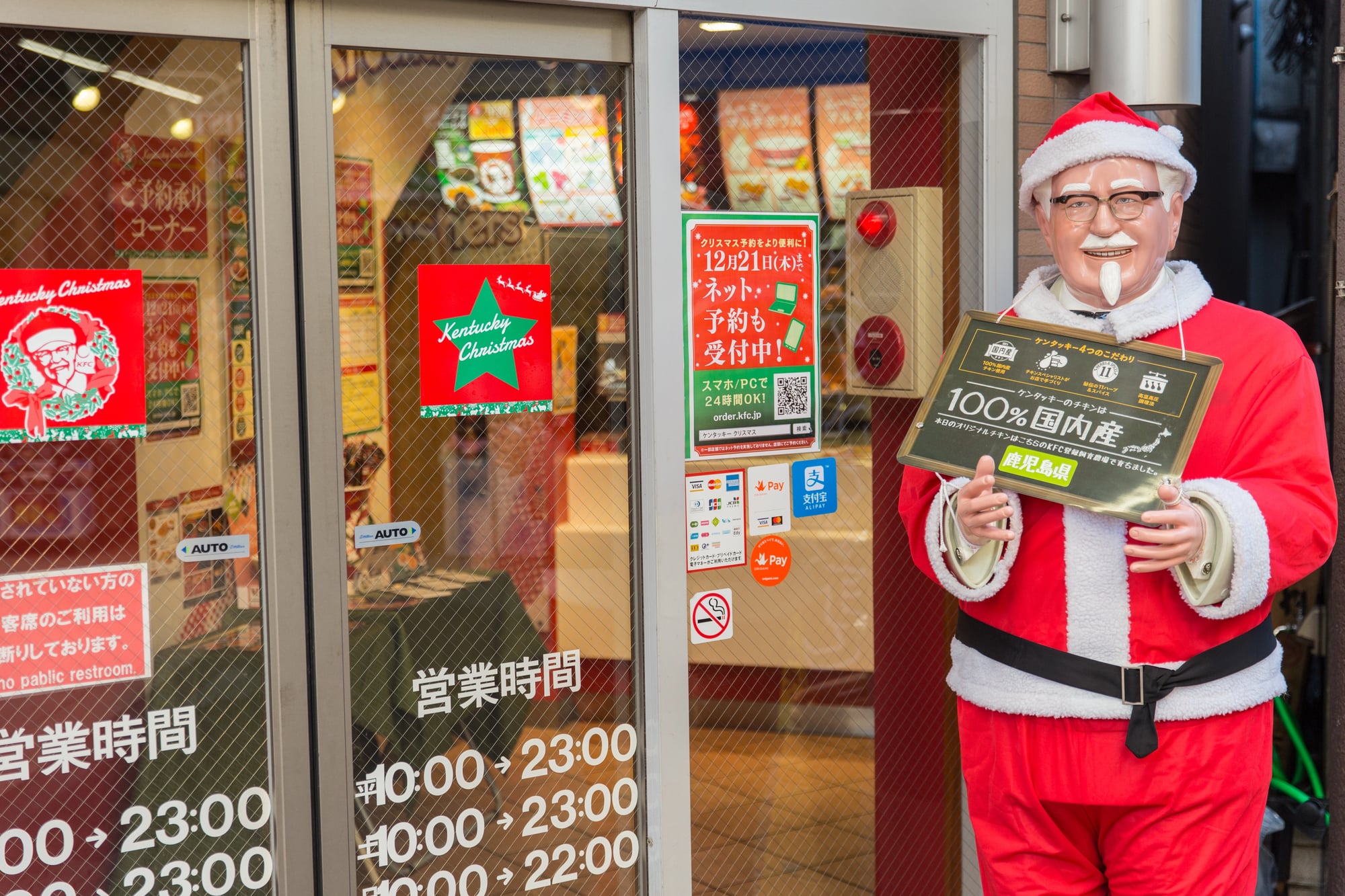
Colonel Sanders somehow became the face of Christmas in Japan, where families pre-order fried chicken months in advance to ensure they get their holiday meal. This tradition started in 1974 when KFC launched a wildly successful marketing campaign called ‘Kurisumasu ni wa Kentakkii,’ or ‘Kentucky for Christmas.’
The campaign convinced the Japanese public that Americans eat fried chicken on Christmas, which most Americans definitely do not do. Now KFC Japan makes around one-third of its annual sales during the Christmas season, with people waiting in lines for hours or ordering special Christmas buckets that cost around 40 dollars.
The meal typically includes chicken, cake, and wine, and restaurants often require reservations weeks ahead.
Festivus for Everyone

While technically an American creation, Festivus represents a counter-cultural holiday that spread globally after appearing on the sitcom Seinfeld in 1997. The holiday features an unadorned aluminum pole instead of a tree, an ‘Airing of Grievances’ where people tell family members how they disappointed them that year, and ‘Feats of Strength’ where someone must pin the head of the household in wrestling.
Creator Dan O’Keefe’s father actually invented Festivus in 1966 as a rejection of commercial holiday pressures, though the real version was less comedic than the TV portrayal. The celebration falls on December 23rd and appeals to people tired of traditional holiday stress.
Festivus poles now sell commercially, and cities from Wisconsin to Florida have erected public poles, proving that even anti-establishment holidays eventually become establishments themselves.
Iceland’s Yule Lads

Thirteen mischievous trolls visit Icelandic children during the 13 nights before Christmas, each with a specific personality and method of causing trouble. Stekkjastaur harasses sheep, Giljagaur hides in gullies to steal milk, and Þvörusleikir licks wooden spoons clean while families sleep.
Children place shoes in windows, and each night a different Yule Lad leaves small gifts for good kids or rotten potatoes for bad ones. The tradition dates back centuries when parents used these characters to frighten children into good behavior during dark winter months.
The Yule Lads originally traveled with their mother Grýla, a child-eating ogre, and her lazy husband, plus their cat that supposedly ate children who didn’t receive new clothes for Christmas. Modern versions softened considerably, turning the trolls into more prankster figures than genuine threats.
Venezuela’s Roller Skating Mass

Residents of Caracas wake up early on Christmas morning to roller skate to church services, and the city closes streets to car traffic to accommodate the tradition. Nobody knows exactly how this practice started, but theories suggest it began as a creative way to replace ice skating in a tropical country that never sees snow.
Entire families strap on skates and roll through neighborhoods in the pre-dawn hours, with bells ringing from churches and the smell of hallacas cooking in homes. Some people tie strings to their toes before sleeping, with the other end hanging out the window so skating friends can tug them awake while passing by.
The tradition combines religious devotion with a uniquely Venezuelan approach to celebrating that feels both reverent and playful.
Wales’ Mari Lwyd

A horse skull on a pole draped with white sheets visits Welsh homes during the Christmas season, operated by a person hidden underneath who makes the jaw snap at people. The Mari Lwyd tradition involves a battle of insults sung in verse between the skull and homeowners, with the group carrying the skull trying to gain entry through wit and rhyme.
If the skull’s group wins the singing contest, they enter the home for food and drinks, though hosts typically let them in eventually regardless. The practice dates back to pre-Christian times and represents one of the few remaining examples of wassailing traditions that once spread across Britain.
The sight of a decorated horse skull bobbing through dark winter streets while people sing at it certainly ranks among the more unsettling holiday visuals, even when everyone involved treats it as good fun.
Guatemala’s Burning of the Devil

Guatemalans gather at 6 pm on December 7th to burn effigies of the devil in bonfires throughout the country, clearing their homes of evil spirits before the Feast of the Immaculate Conception. People sweep their houses thoroughly, pile up old belongings and trash, and often build or buy devil figures to place on top of the pyres.
The tradition combines Catholic beliefs with indigenous practices, creating a ritual cleansing that marks the official start of the Christmas season. In recent years, environmental concerns about the massive amount of smoke and burning plastic led some communities to organize central bonfires instead of individual fires.
The practice creates an eerie atmosphere as flames light up neighborhoods and the smell of burning materials hangs in the air, all in the name of starting the holiday season fresh and devil-free.
Norway’s Hidden Brooms

Norwegian families hide their brooms on Christmas Eve based on an old belief that witches and evil spirits come out that night looking for transportation. The superstition holds that witches steal brooms to ride through the sky causing mischief, so tucking them away in closets or cabinets prevents supernatural theft.
Some households still follow the tradition even though few people genuinely believe in the danger anymore. Men sometimes fire rifles into the air on Christmas Eve to scare away spirits, though this practice has declined for obvious safety reasons.
The broom-hiding custom feels harmless and easy enough to maintain, so many Norwegian families continue it as a nod to their ancestors while acknowledging the silliness.
Ukraine’s Spider Web Decorations
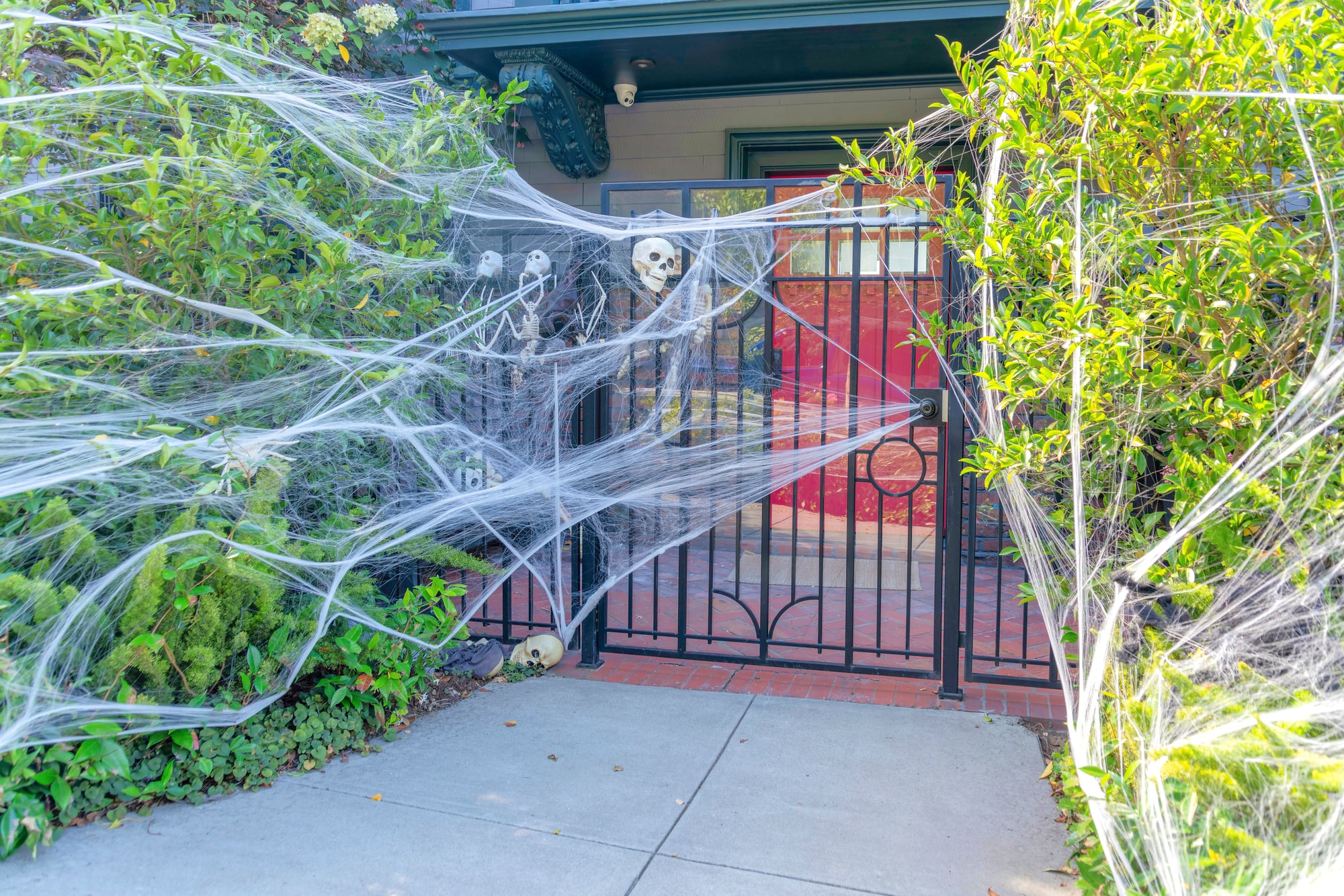
Ukrainian Christmas trees feature spider webs as decorations based on a folk tale about a poor widow whose children found a pine tree but had nothing to decorate it with. According to the story, spiders in the house took pity on the family and spun intricate webs all over the tree overnight.
When morning came, the webs transformed into silver and gold, and the family never suffered poverty again. This legend led to the tradition of decorating trees with artificial spider webs and small spider ornaments called pavuchky.
The custom spread to some parts of Poland and Germany, and many people believe that finding a spider or spider web on Christmas morning brings good luck for the coming year. Some families even hide a spider ornament in the tree for children to find, similar to the pickle ornament tradition in other cultures.
South Africa’s Christmas Beetles

December in South Africa means summer, and massive swarms of emerald-green beetles emerge just in time for Christmas, earning them the name Christmas beetles. These insects appear so reliably during the holiday season that they became associated with the celebration itself.
Children collect the beetles and keep them briefly as pets, though the bugs only live for a few weeks during their adult phase. The beetles swarm around lights at night and often carpet the ground by morning, creating a crunching sound when people walk.
While Americans might find insects at Christmas disturbing, South African families consider the beetles as much a part of the season as decorations and carols. The tradition reminds everyone that Christmas celebrations look completely different depending on which hemisphere does the celebrating.
Estonia’s Sauna Sessions

Estonian families consider Christmas incomplete without multiple sauna sessions, and many people visit saunas on Christmas Eve as a form of spiritual and physical cleansing. The tradition connects to pagan beliefs about the sauna being a sacred space inhabited by spirits, and people treated the sauna with respect and silence during holiday sessions.
Families often leave food offerings in the sauna for ancestral spirits and believed that the sauna elf would cause harm if people behaved inappropriately. Modern Estonians still take their Christmas sauna sessions seriously, using the heat and steam as a way to relax, gather with family, and mark the significance of the holiday.
The practice spread throughout Baltic and Nordic countries, though Estonia maintains particularly strong connections between saunas and winter celebrations.
Philippines’ Giant Lantern Festival

The city of San Fernando comes alive each December with giant, flashy lanterns – some wider than 20 feet, packed with countless bulbs. Once just a small custom using candles, the Giant Lantern Festival grew wilder over time because towns pushed hard to outdo one another.
Today’s displays mix dazzling light routines, music beats, plus coding work that needs weeks or even months. It all goes down on the Saturday right before Christmas Eve, pulling huge groups eager to see what each barangay brings.
More than faith alone, this event shows how joy, craftiness, and local spirit can turn a quiet symbol into something loud, bright, and full of heart.
Czech Republic’s Shoe Throwing

Some Czech ladies toss a shoe behind them on Christmas Eve – hoping it’ll show if love’s coming next year. Toss it, see which way the tip faces when it stops near the doorway.
Points in? Wedding bells might ring soon. Aimed out? Probably flying solo again.
Kinda like fortune-telling games across Europe during festive days. But chucking footwear?
That feels uniquely Czech. Young girls might toss the ribbon more than once, hoping for a better outcome – yet folks usually say the initial try matters most.
This habit’s just one of several holiday superstitions tied to Christmas Eve in Czech families, like slicing apples open to spot stars inside or dripping hot wax into cold water to guess what the blobs mean.
Bolivia’s Festival of Skulls

Bolivians carry human skulls to La Paz’s Cementerio General each November 8th for the ñatitas festival – there, they pile on flowers, hand out coca leaves and booze, then request help from the dead. Even though it happens right before winter hits the southern part of Earth instead of deep in it, this ritual ties into broader cold-season customs about dying that run through Andean life.
Folks stash these bones at home all year round, whether they’re related to them or not, seeing the remains as guardians watching over daily living. People believe the skulls can make good things happen or block bad luck – but only if fed now and again with gifts.
The Catholic Church made several attempts to end the custom, yet it continued by mixing native traditions with Christian symbols. Seeing folks walk through roads and graveyards holding ornate skulls might seem odd to strangers; still, those involved handle them with real care and respect.
Finland’s Molten Tin Fortunes
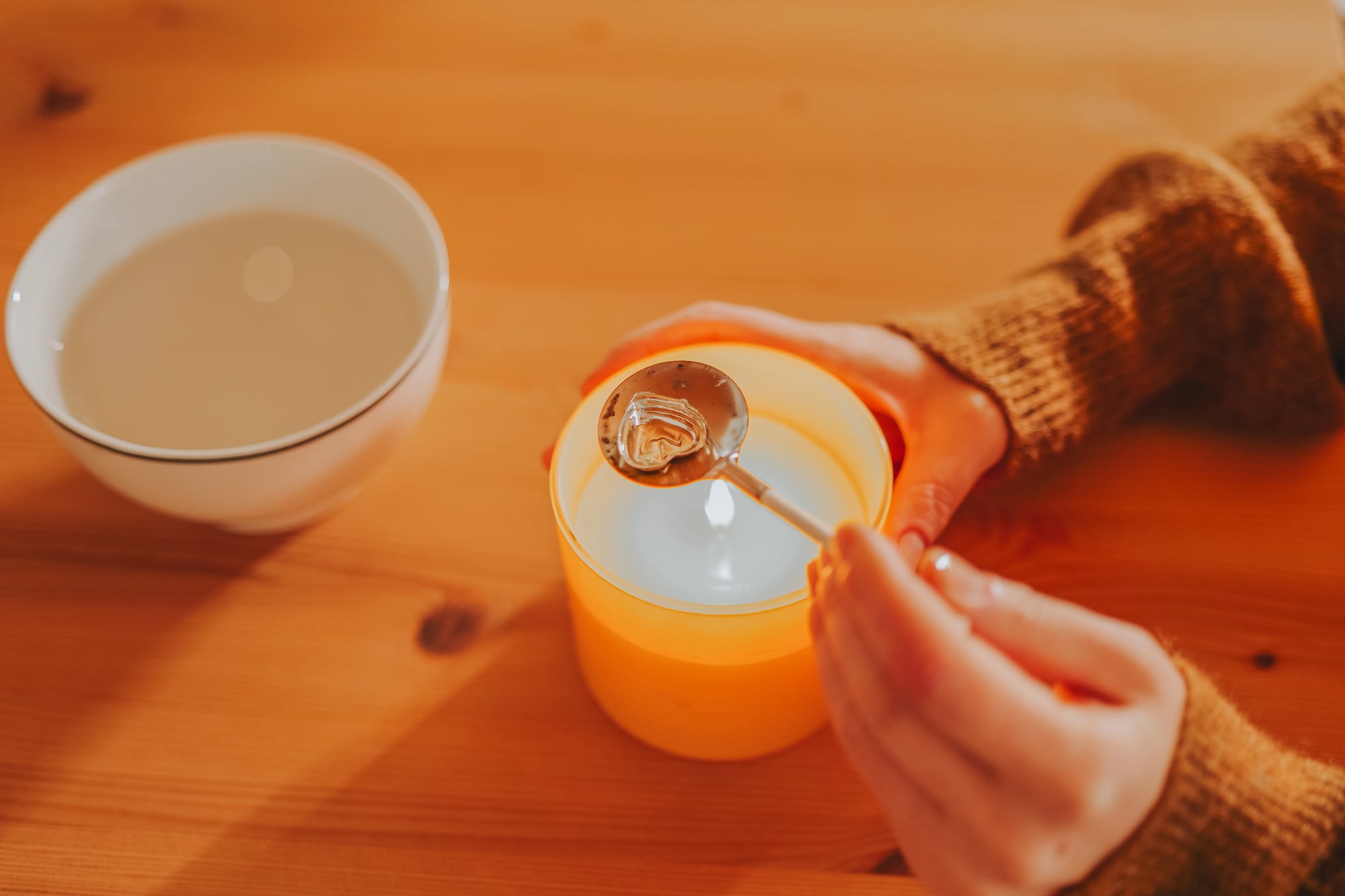
Finnish households heat tiny bits of tin in a spoon-like tool above the kitchen burner when December 31st comes around. After that, they drop the molten metal into icy water so it hardens fast into odd forms.
These cooled blobs get studied by watching their silhouette on a surface nearby – each outline believed to hint at future events. If you spot something like a boat, expect movement or trips; a blob shaped like a heart?
That’s love ahead. Spotting anything resembling a pig points toward money or good luck.
It began in Finland but slowly moved westward, reaching places like Germany and beyond. Nowadays, shops there stock little tin chunks made just for this custom.
The ritual mixes predicting the future with the thrill of handling hot metal, yet today’s safety worries leave certain moms unsure about melting tin near kids. Even with the risks, plenty of homes in Finland keep it going as a key moment during their year-end festivities.
Keeping Strange Traditions Alive

These strange winter habits last simply ’cause they link folks to old days, and also hand down quirky stories worth telling. They’ve shifted slowly through ages – bent by today’s world yet still holding onto their odd core.
Stuff seeming weird from afar often feels warm, familiar even, to those raised with it; that gap shows how “normal” shifts depending on your view. Celebrations will twist further as younger crowds mix in fresh ideas, but the peculiar spark setting each culture apart?
That’ll likely stay – as long as such acts keep hearts tied.
More from Go2Tutors!

- The Romanov Crown Jewels and Their Tragic Fate
- 13 Historical Mysteries That Science Still Can’t Solve
- Famous Hoaxes That Fooled the World for Years
- 15 Child Stars with Tragic Adult Lives
- 16 Famous Jewelry Pieces in History
Like Go2Tutors’s content? Follow us on MSN.