Strongest Animal Bites Recorded in Nature
When you think about dangerous animals, the image that probably comes to mind involves teeth. Sharp ones.
Lots of them. And the jaw strength to use them.
Nature has spent millions of years perfecting these biological weapons, and some animals have taken bite force to levels that seem almost impossible. Scientists measure bite force in pounds per square inch (PSI), and the numbers get surprisingly high.
A human bite tops out around 200 PSI on a good day. That’s enough to eat a steak. But in the animal kingdom, that barely registers.
Saltwater Crocodile: The Undisputed Champion

The saltwater crocodile holds the record for the strongest bite ever measured in a living animal. At 3,700 PSI, this prehistoric-looking reptile can crush a buffalo skull in one snap.
That’s about the same pressure as having a small car sitting on your thumb. These massive reptiles live in Australia, Southeast Asia, and parts of India.
They grow up to 23 feet long and weigh over 2,000 pounds. When they bite down, every muscle in their body works together to create that crushing force.
The interesting thing about crocodile jaws? They’re incredibly weak when opening. You could hold a crocodile’s mouth shut with your hands (though that’s not recommended).
All their power goes into the closing motion.
Great White Shark: The Ocean’s Bite Master
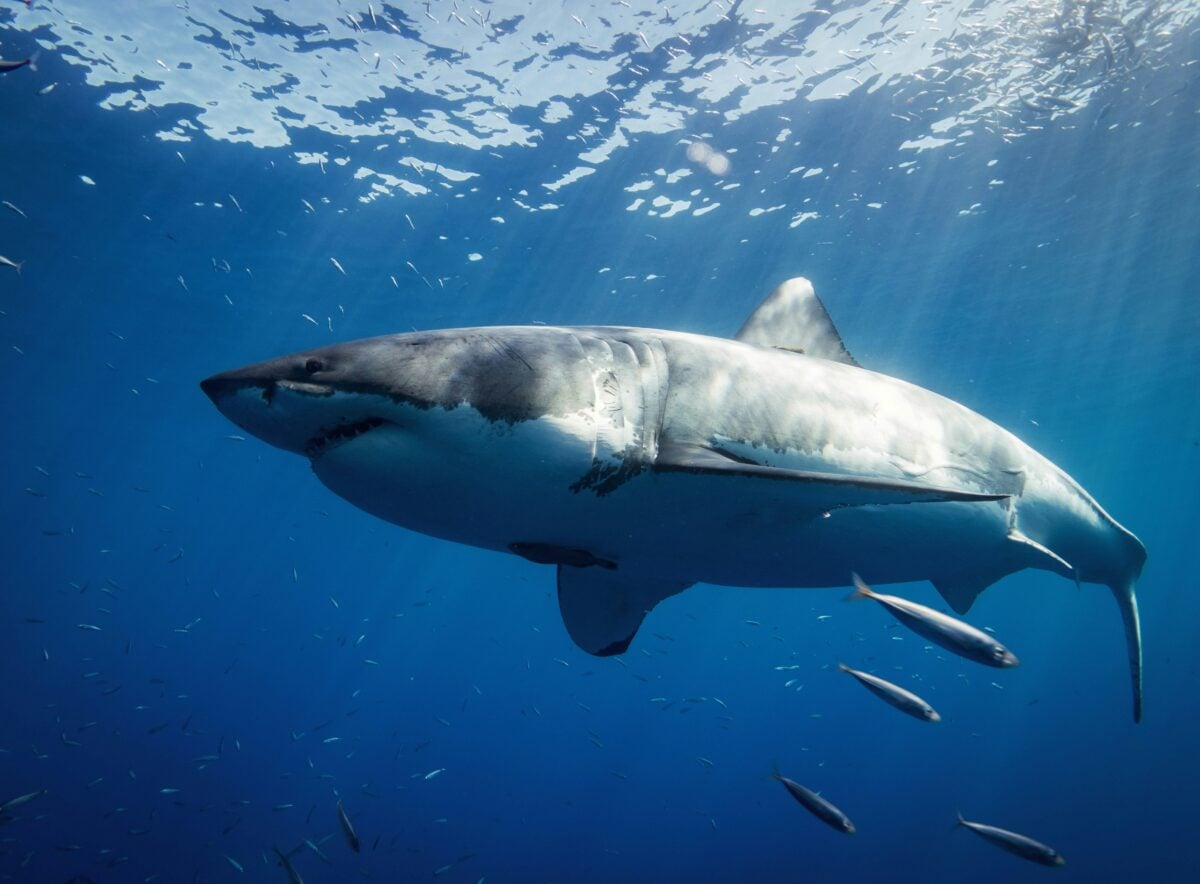
Great whites generate about 4,000 PSI of bite force. That’s actually higher than the saltwater crocodile, but the measurement methods differ slightly between aquatic and terrestrial animals.
Either way, you don’t want to be on the receiving end. These sharks have rows of serrated teeth that work like steak knives.
The bite force combined with those razor-sharp teeth can slice through prey in seconds. They feed on seals, sea lions, and the occasional unfortunate sea turtle. Great whites grow up to 20 feet long and weigh around 5,000 pounds.
Their heads are basically swimming hydraulic presses with teeth.
Hippopotamus: Africa’s Most Dangerous
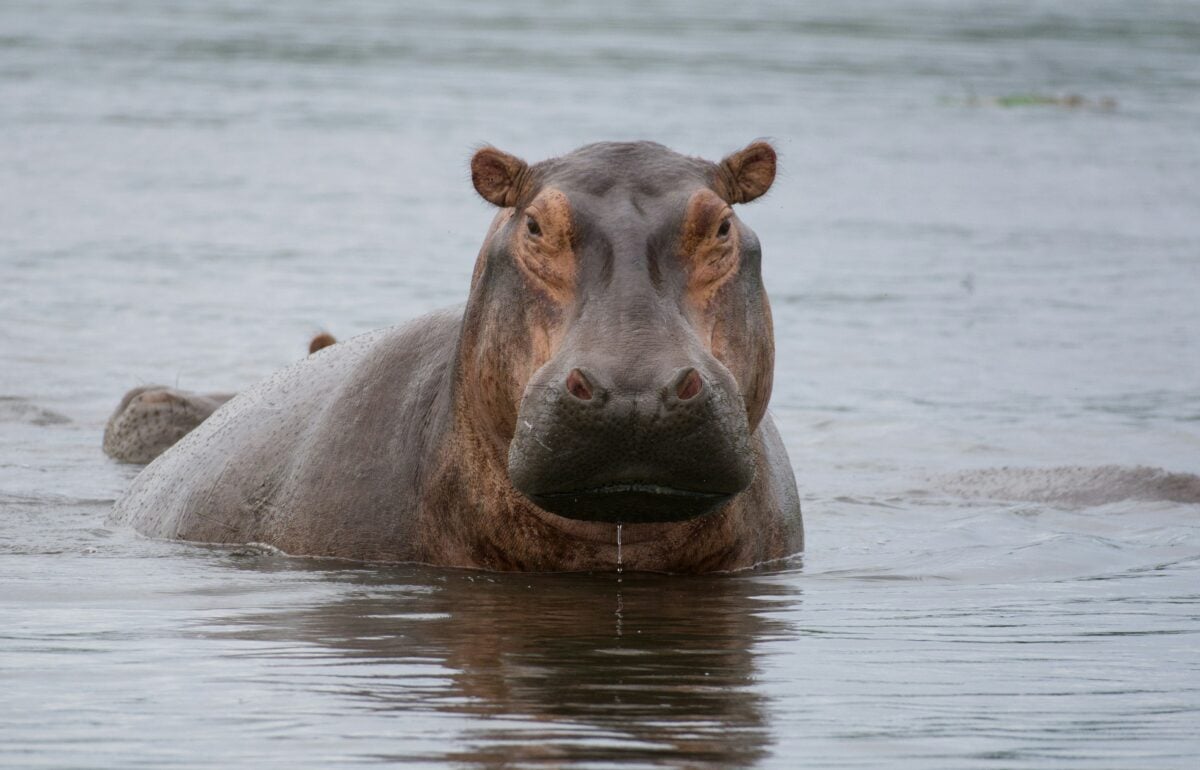
People underestimate hippos. They look slow and lazy, lounging in rivers all day.
But these animals kill more people in Africa than any other large animal. Their bite force reaches 1,800 PSI, and their canine teeth grow up to 20 inches long.
Hippos are territorial and aggressive. They don’t hunt humans, but they will attack boats, people, and anything else that gets too close.
Male hippos fight each other for dominance, and those battles involve serious damage. Their thick skin protects them from each other’s bites, but it won’t save a crocodile or a human.
A hippo can open its mouth nearly 180 degrees. When it closes that mouth on something, bones break.
Simple as that.
Jaguar: The Skull Crusher

Among big cats, jaguars have the most powerful bite relative to their size. They generate about 1,500 PSI, which doesn’t sound like much compared to crocodiles.
But jaguars only weigh around 200 pounds. That’s exceptional power for their body weight.
Jaguars hunt differently than other big cats. Lions and tigers go for the throat.
Jaguars bite directly through the skull. Their teeth are designed to pierce bone, and they target the brain.
They’re the only big cat that regularly kills prey this way. This hunting method works perfectly in the jungle where jaguars live.
They can take down caimans (smaller cousins of crocodiles), capybaras, and even smaller crocodilians by biting through their heavily armored skulls.
Gorilla: The Gentle Giant’s Hidden Power
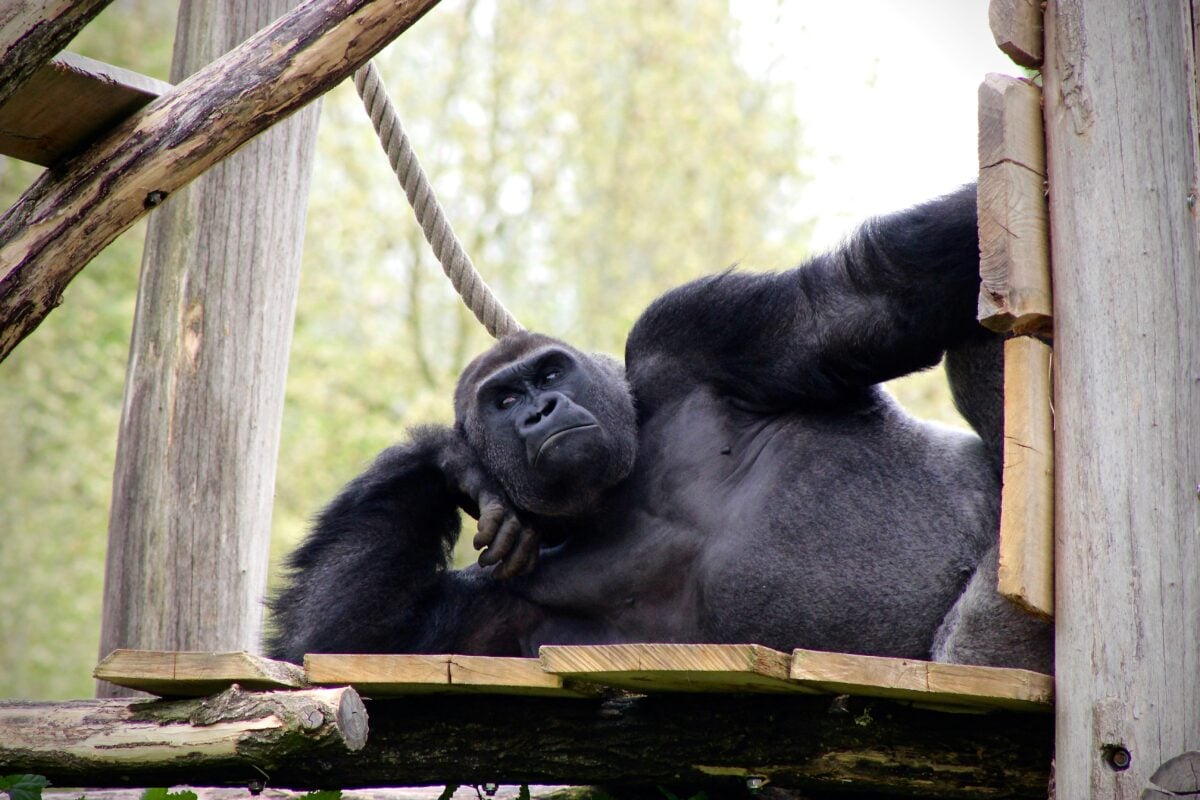
Gorillas rarely bite anything. They’re mostly vegetarian and spend their days eating plants. But when a gorilla does bite, it generates about 1,300 PSI of force.
Their jaw muscles are massive, designed to chew through tough vegetation all day long. Male gorillas have enormous canine teeth that can grow several inches long.
These teeth are mainly for display and fighting other males, not for hunting. When two silverbacks fight over territory or mates, they bare those teeth as a warning.
The bite force isn’t the scariest thing about a gorilla. Their arm strength dwarfs their bite.
A gorilla could literally tear your arms off. Fortunately, they almost never attack humans unless severely provoked.
American Alligator: The Backyard Biter

American alligators have a bite force around 2,125 PSI. They’re smaller than saltwater crocodiles but still pack serious power.
You’ll find them in the southeastern United States, particularly in Florida and Louisiana, where they’ve gotten a bit too comfortable around humans. These reptiles can grow up to 15 feet long.
They eat fish, birds, small mammals, and the occasional domestic pet that wanders too close to the water. Golf course ponds in Florida often have resident alligators, leading to some interesting encounters.
Alligators have about 80 teeth in their mouths at any given time. When they lose one, another grows in to replace it.
They can go through 3,000 teeth in a lifetime. Each one of those teeth is designed to grab and hold, not to chew.
They swallow their food whole or rip it into chunks by spinning their entire body.
Spotted Hyena: Nature’s Bone Crusher

Spotted hyenas generate about 1,100 PSI of bite force. That’s enough to crack open bones and eat the marrow inside.
While other predators leave bones behind, hyenas consume the entire carcass. Hyenas have specialized teeth and incredibly strong jaw muscles.
Their digestive systems can handle bone fragments that would damage other animals. This adaptation lets them survive on carcasses that other predators have abandoned.
People often think hyenas are scavengers, but they’re actually skilled hunters. They work in packs to take down prey much larger than themselves, including wildebeest and zebras.
Grizzly Bear: The Mountain’s Heavyweight

Grizzly bears bite with about 1,160 PSI of force. These massive animals can weigh up to 800 pounds, and their skull is reinforced with thick bone.
They need that bite strength to crack open pine cones, dig for roots, and occasionally take down elk or moose. Grizzlies are omnivores, meaning they eat plants and animals.
Most of their diet consists of berries, roots, and insects. But when they do catch prey, they have the tools to finish the job quickly.
Their claws are just as dangerous as their bite. A grizzly can decapitate a moose with one swipe.
The bite force is almost secondary to their other physical advantages.
Polar Bear: The Arctic Predator

Polar bears have a bite force similar to grizzlies, around 1,200 PSI. But they’re pure carnivores, unlike their grizzly cousins.
They hunt seals, which requires patience and power. These bears can weigh over 1,500 pounds.
They’re the largest land carnivores on Earth. When a polar bear catches a seal, it needs enough bite force to puncture through blubber and thick skin.
Climate change has forced polar bears to spend more time on land, where food is scarce. This has led to increased encounters with humans and has made the bears even more desperate and dangerous.
Bull Shark: The Freshwater Menace
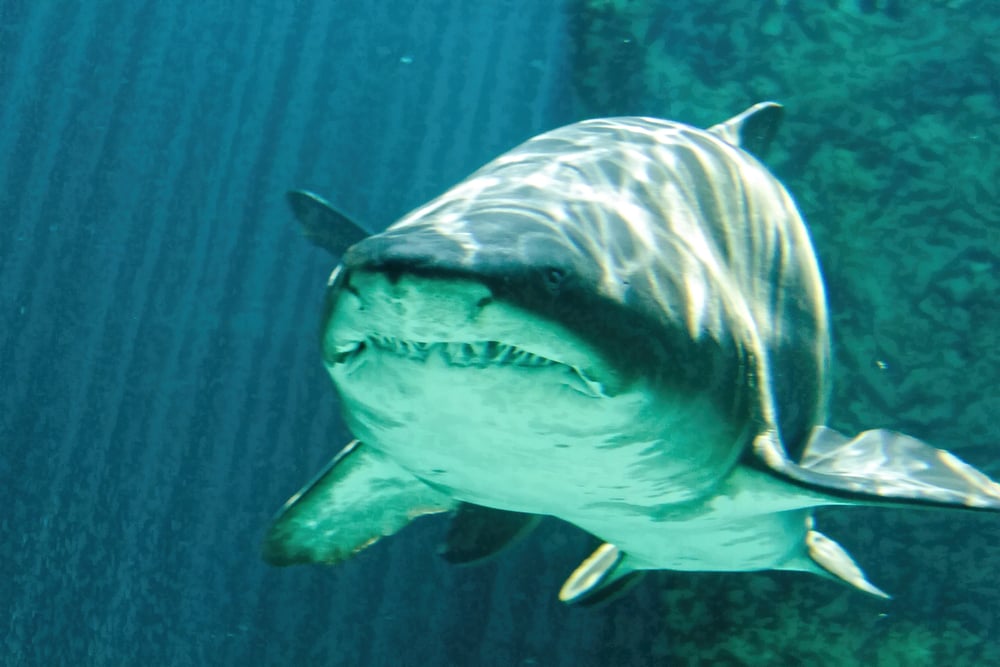
Bull sharks have a bite force around 1,300 PSI. What makes them particularly dangerous is their ability to swim in both saltwater and freshwater.
They’ve been found hundreds of miles up rivers, far from the ocean. Bull sharks are aggressive and territorial.
They’re responsible for many shark attacks on humans, partly because they swim in shallow waters where people are more likely to be. Their stocky build and powerful jaws make them formidable predators.
These sharks eat fish, other sharks, rays, and basically anything they can fit in their mouths. They’re not picky eaters.
Bengal Tiger: The Silent Stalker

Bengal tigers generate about 1,050 PSI of bite force. That’s enough to crush the neck of a water buffalo.
Tigers are ambush predators, and they rely on a powerful bite to quickly dispatch prey. These massive cats can weigh up to 500 pounds.
They hunt alone, unlike lions, so they need to be efficient killers. One bite to the throat or spine usually does the job.
Tigers have the longest canine teeth of any big cat, reaching up to three inches. Combined with their bite force, those teeth can puncture deep into flesh and bone.
Lion: The Pride’s Power

Lions have a bite force around 650 PSI. That’s lower than tigers, but lions don’t hunt alone.
They work in groups, using teamwork to take down prey. A lion’s bite is strong enough to crush a zebra’s neck, but they usually rely on suffocation.
They bite down on the throat or nose and hold until the prey can’t breathe anymore. Male lions have those impressive manes, but it’s the females who do most of the hunting.
Males step in for the kill once the pride has worn down the prey.
Kodiak Bear: The Island Giant
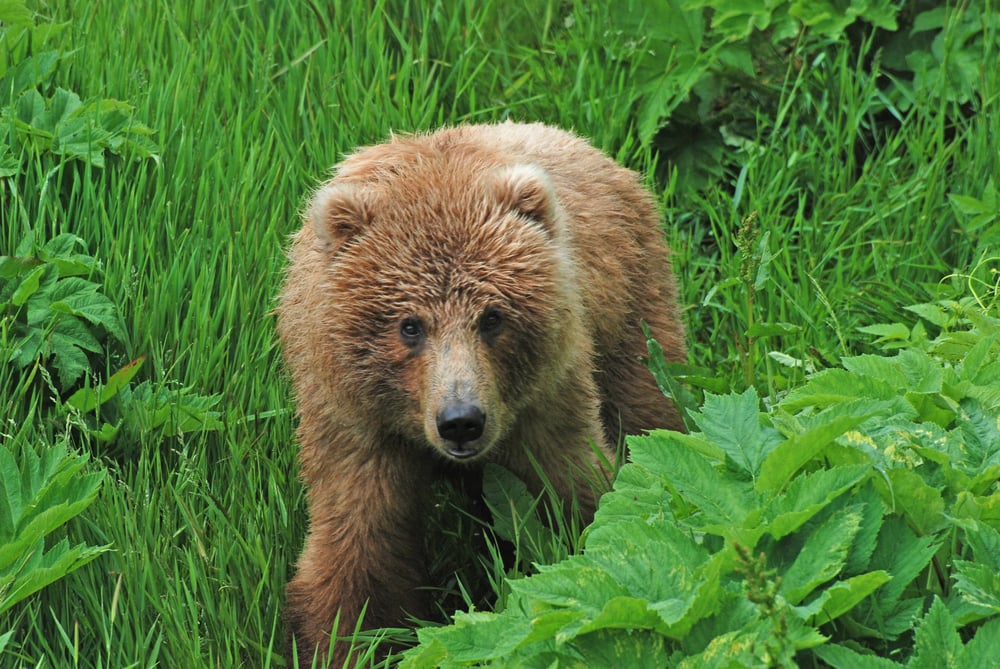
Off the Alaskan shoreline, Kodiak bears roam island forests. One type of brown bear, they tip scales past 1,500 pounds.
About 1,100 PSI powers their jaws when biting. Bears here survive on salmon, plus anything edible they stumble upon across their island.
When the salmon surge upstream, scores of Kodiak bears crowd riverbanks hunting meals. These fishing areas crackle with tension – each bear sizing up the others, pushing limits again and again.
Bite strength rises with body mass, so a Kodiak often wins that contest. When you look at sheer bulk, few bears match its scale – those heavy frames come packed with powerful jaws.
Size like that doesn’t appear often in the animal world.
Where Math Meets the Natural World
When you study the data, trends begin to show up. It is not just bulk that counts – how an animal hunts plays a role too. From underwater hides, crocodiles strike fast, relying on crushing force right at the start.
Stalking through cover, big cats leap with precision, jaws working like scalpels. Scavenging across terrain, bears take chances whenever food appears.
A single lifetime adjusts creatures to their world, yet meals shape them just as much. From deep time, the saltwater crocodile inherited a snap strong enough to crush big animals fast.
Jungle shadows favor the jaguar’s piercing chomp – silent efficiency stops fleeing before it begins. Out there, strength isn’t measured by IQ scores.
Drop someone into murky water where a saltwater crocodile waits, then watch confidence fade. Or place them deep in green jungle shadows stalked by a jaguar – suddenly hands feel empty.
Our teeth? Barely leave marks compared to what prowls wild. While cleverness built cities, claws and fangs shaped themselves over ages.
Evolution works slow, but never rushes past perfection.
More from Go2Tutors!

- The Romanov Crown Jewels and Their Tragic Fate
- 13 Historical Mysteries That Science Still Can’t Solve
- Famous Hoaxes That Fooled the World for Years
- 15 Child Stars with Tragic Adult Lives
- 16 Famous Jewelry Pieces in History
Like Go2Tutors’s content? Follow us on MSN.



