Surprising Real-Life Inspirations for Cartoons
Most people assume cartoon characters spring purely from the imagination of artists and writers.
The truth is far more interesting.
Animators have long looked to real people for inspiration, borrowing mannerisms, physical features, and personalities to bring their creations to life.
From Hollywood starlets to small-town characters, the connections between animation and reality run deeper than you might expect.
Here are some surprising real-life inspirations for cartoons.
Popeye the Sailor Man

The spinach-loving sailor was based on Frank “Rocky” Fiegel, a tough resident of Chester, Illinois.
Fiegel was a pipe-blowing, one-eyed local who got into plenty of fights but had a soft spot for children.
Creator E.C. Segar grew up in the same town and knew Fiegel personally.
The resemblance was so strong that when Fiegel died, his tombstone was marked with an engraving of Popeye himself.
Ariel from The Little Mermaid
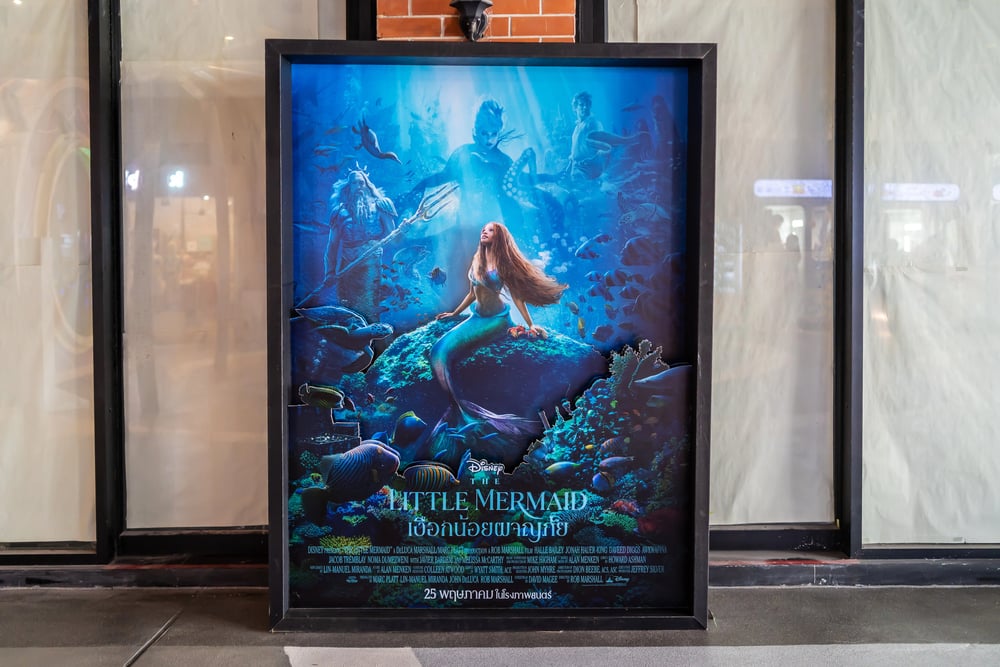
Disney animators drew from actress Alyssa Milano, who was starring on the sitcom “Who’s the Boss?” at the time, to create Ariel’s appearance.
Glen Keane used photos of Milano from the show for Ariel’s face and hair.
Writer and producer Sherri Stoner also provided live-action reference points for the character’s movements and mannerisms.
Milano was even asked to host “The Making of The Little Mermaid” TV special as a thank you for inspiring the beloved princess.
Aladdin

Agrabah was originally designed to look like Michael J. Fox, with a more boyish appearance.
During production, Disney decided the character needed a more mature, leading-man quality and redesigned him based on Tom Cruise.
The change came late in production, which is why some scenes still show hints of the younger design.
Aladdin’s confident smile and expressive eyebrows bear a striking resemblance to Cruise in his prime.
Ursula from The Little Mermaid

The sea witch’s larger-than-life persona came from legendary drag performer Divine, who starred in cult films like “Pink Flamingos” and “Hairspray.”
Divine’s eye makeup, body type, and commanding presence were all given to Ursula.
Howard Ashman, one of the film’s songwriters and producers, was old friends with Divine and suggested the inspiration.
Sadly, Divine passed away a year before the movie was released and never got to see the iconic villain.
Edna Mode from The Incredibles

The pint-sized superhero costume designer was based on Hollywood legend Edith Head, who earned 35 Academy Award nominations and won eight Oscars during her career.
Head worked on Hitchcock classics like “Vertigo,” “Rear Window,” and “The Birds,” among more than 430 other films.
Like Edna, Head wasn’t known for her modesty and once famously said she hated the trait entirely.
Betty Boop

The animated flapper with the distinctive voice was created as a parody of 1920s actress and singer Helen Kane.
Kane not only looked like Betty Boop, she also sounded like her, with a signature “boop-oop-a-doop” catchphrase.
Kane wasn’t thrilled about the impression and even sued the cartoon creator along with Paramount Pictures in 1932.
Despite the lawsuit, Betty Boop became far more famous than her real-life inspiration.
Mr. Burns from The Simpsons

The villainous Springfield power plant owner was a combination of several people.
Creator Matt Groening based Burns’ demeanor and some of his appearance on David Bailey, his high school math teacher from Portland, Oregon.
Groening added elements of oil tycoon John D. Rockefeller to give Burns his corporate greed.
Animator David Silverman completed the character by modeling his body after a praying mantis and his face after Fox founder Barry Diller.
Jessica Rabbit

Animator Richard Williams explained that Jessica was meant to embody the ultimate fantasy, drawing from multiple Golden Age Hollywood actresses.
He tried to make her like Rita Hayworth, took her hair from Veronica Lake, and director Robert Zemeckis kept suggesting the look Lauren Bacall had.
The original book’s author Gary K. Wolf based Jessica primarily on the cartoon character Red from Tex Avery’s “Red Hot Riding Hood.”
The result was a character that became more iconic than a simple parody.
Shaggy Rogers

The lanky, perpetually hungry member of Mystery Inc. was derived from Maynard G. Krebs, a character played by Bob Denver in the 1959-63 sitcom “The Many Loves of Dobie Gillis.”
Maynard’s beatnik-style goatee, general appearance, and use of the word “like” all found their way into Shaggy’s character.
The creators simply updated the base personality from a beatnik to a hippie to make him more relevant for the late 1960s audience.
Mr. Magoo

The nearly blind old man who constantly gets int
o dangerous situations was a mixture of two people.
Animation director John Hubley based the character partially on his uncle Harry Woodruff and partially on American comedian W.C. Fields.
Looking at photographs of Fields, the similarity becomes hard to deny, from the facial features to the grumpy demeanor.
The combination created a character that remained popular for decades.
Cruella de Vil

The puppy-stealing villain was heavily inspired by actress Tallulah Bankhead.
Bankhead was extremely thin, had notorious arched brows, and smoked around 120 cigarettes per day—all traits Cruella possessed.
According to a biography of Bankhead, she suffered from manic narcissism throughout her life and was even expelled from convents twice, once for throwing ink at the Mother Superior.
Like Cruella, Bankhead had a deep raspy voice and would recklessly drive around in her loud car.
Tinker Bell

Disney animator Marc Davis named actress and radio host Margaret Kerry as his inspiration for the famous pixie.
Kerry worked as a reference model for the character’s movements and expressions.
There’s a persistent myth that Tinker Bell was modeled after Marilyn Monroe, probably due to the blonde hair, but Kerry published her autobiography in 2006 called “Tinker Bell Talks: Tales of a Pixie Dusted Life” confirming her role as the true inspiration.
Belle from Beauty and the Beast

Sherri Stoner, a writer and producer for Disney who worked on shows like “Animaniacs” and “Tiny Toon Adventures,” served as a reference model for Belle.
Some of Belle’s little idiosyncrasies were directly inspired by things Stoner did, like brushing her hair from her face.
Stoner became something of a legend in animation circles for also providing inspiration for Ariel, making her the muse for two of Disney’s most beloved princesses.
Eric Cartman from South Park
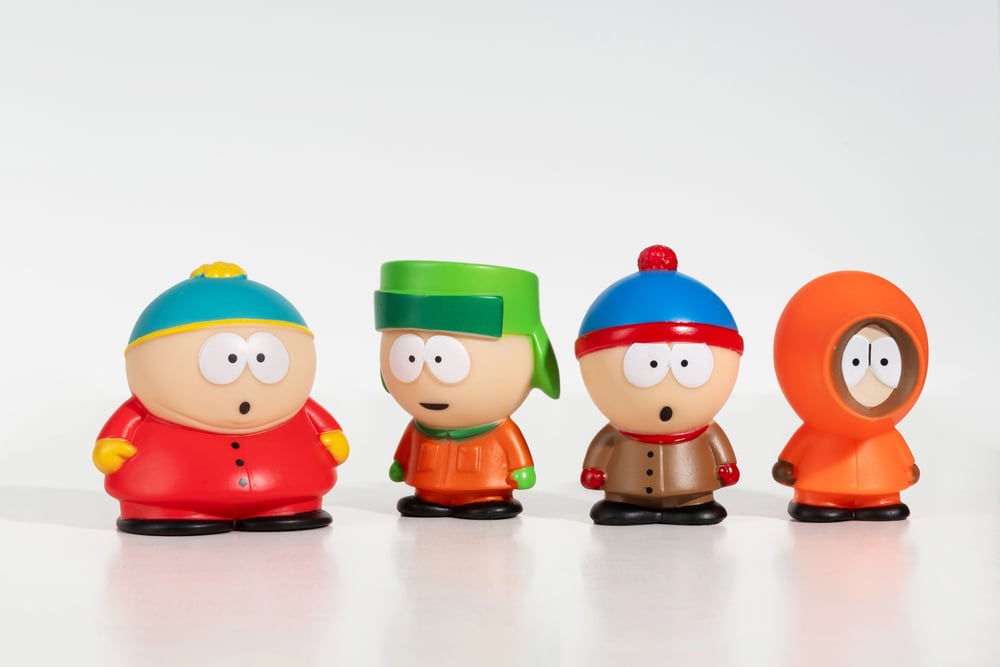
The hilarious but abrasive child character was inspired by Archie Bunker, the patriarch from the sitcom “All in the Family.”
Creators Trey Parker and Matt Stone are longtime fans of the show and discussed how Bunker’s adult personality was perfect for a child character.
In an interview, Stone explained that kids aren’t nice, innocent creatures but rather “complete little raging bastards,” making Bunker’s temperament an ideal fit for Cartman.
Princess Tiana

The groundbreaking Disney princess from “The Princess and the Frog” was directly based on her voice actress, Anika Noni Rose.
Like Rose, Princess Tiana has dimples, and animators even made Tiana left-handed because Rose is left-handed.
This marked a departure from the usual practice where voice actors and character designs are developed separately.
Rose essentially became a real-life princess through her direct influence on the character’s appearance and mannerisms.
The Creative Bridge Between Reality and Animation

These real-life inspirations reveal something fundamental about animation’s evolution.
Drawing from actual people gives cartoon characters a grounding in reality that pure imagination sometimes can’t achieve.
Whether it’s a small-town tough guy inspiring a spinach-eating sailor or Hollywood legends lending their features to Disney villains, these connections remind us that art and life constantly feed into each other.
The next time you watch your favorite cartoon, remember that somewhere behind those animated features might be a real person who walked, talked, and brought something special to the screen.
More from Go2Tutors!

- The Romanov Crown Jewels and Their Tragic Fate
- 17 Halloween Costumes Once Considered Taboo
- Famous Hoaxes That Fooled the World for Years
- 15 Child Stars with Tragic Adult Lives
- 16 Famous Jewelry Pieces in History
Like Go2Tutors’s content? Follow us on MSN.