The Most Ambitious Buildings Ever Attempted
Throughout history, humans have pushed the limits of what seems possible when it comes to construction. Some projects aimed so high that they collapsed under their own weight, while others took so long to build that entire generations passed before completion.
These structures weren’t just buildings—they were statements of power, faith, and human determination to reach beyond the ordinary. Let’s take a look at some of the most daring architectural projects people have ever tried to pull off.
The Tower of Babel

Ancient texts describe a tower so tall it was meant to reach the heavens themselves. According to the biblical account, people in Mesopotamia decided to build a structure that would make their name famous and keep their community together.
The project supposedly failed when God confused their languages, making communication impossible. While the story is religious in nature, many historians believe it was inspired by real ziggurats in ancient Babylon, particularly the Etemenanki temple dedicated to Marduk.
These stepped towers were massive for their time, and the ambition to build something that could literally touch the sky captured imaginations for thousands of years.
The Palace of the Soviets
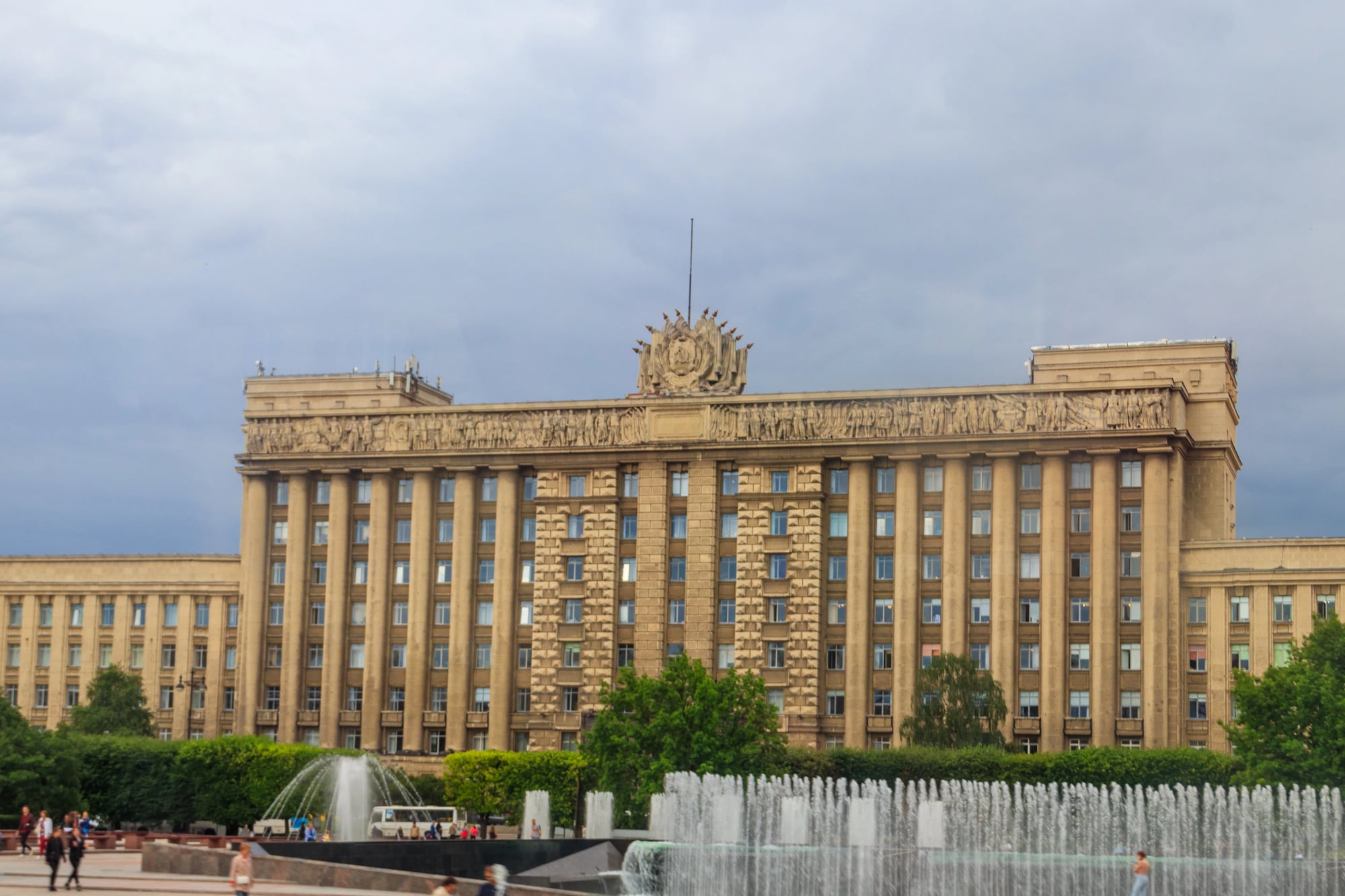
Stalin wanted to build the tallest structure in the world right in the heart of Moscow. The plan called for a building that would rise over 1,300 feet high and be topped with a statue of Lenin that alone would measure 260 feet.
Construction began in 1937 after the Cathedral of Christ the Savior was demolished to make room for it. Workers managed to complete the foundation before World War II interrupted everything.
The project never resumed after the war, and the foundation eventually became the world’s largest outdoor swimming pool before the cathedral was rebuilt in the 1990s.
The Illinois Sky City
Frank Lloyd Wright designed what would have been the tallest building ever conceived in 1956. The Illinois, as he called it, was planned to reach one mile into the sky with 528 floors and space for 100,000 people.
Wright was 89 years old when he presented this vision, and he insisted it was entirely feasible with the right atomic-powered elevators and triangular structural design. Critics dismissed it as an old man’s fantasy, but Wright defended his concept until his death.
The building would have been four times taller than anything standing today, making current skyscrapers look like toys in comparison.
The Ryugyong Hotel
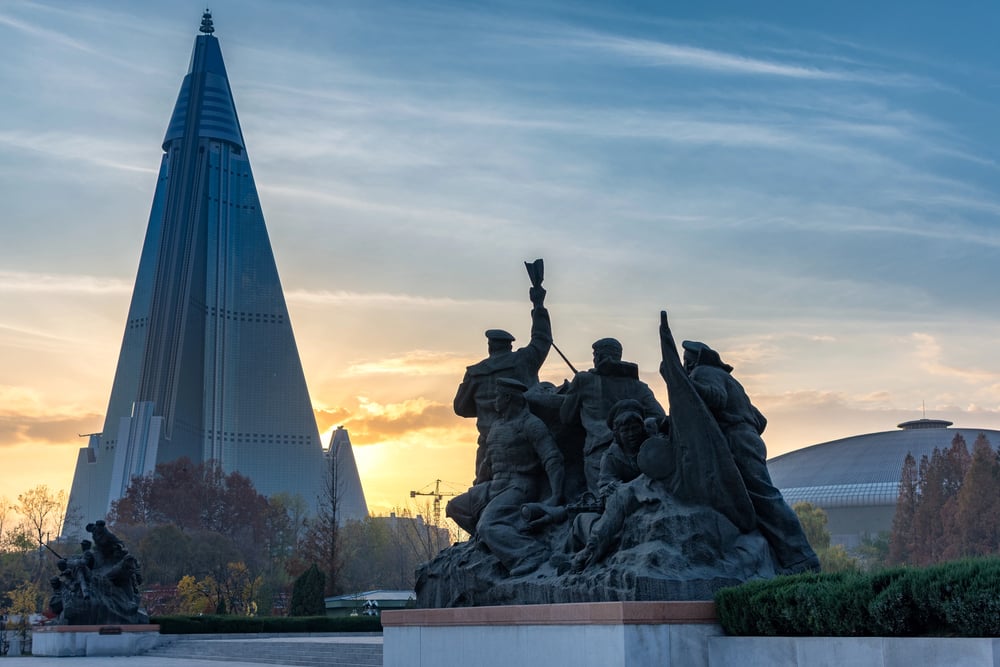
North Korea started building what was supposed to be the world’s tallest hotel in 1987. The pyramid-shaped structure in Pyongyang was designed to have 105 floors and 3,000 rooms, dominating the city’s skyline at over 1,000 feet tall.
Construction stopped in 1992 when funding ran out and structural problems became apparent. For decades, it stood as an empty concrete shell that the government tried to hide from satellite images and tourist photographs.
Work resumed in 2008 with help from an Egyptian company, but the building still sits unfinished and unopened more than 35 years after construction began.
The Shimizu Mega-City Pyramid

Japanese construction company Shimizu proposed building a pyramid so large it could house 750,000 people. The structure would stand 1.2 miles high and cover an area of 5.5 square miles at its base.
Plans included 55 smaller pyramids stacked and interconnected within the main structure, all connected by high-speed elevators and transportation systems. The company insists the technology to build it could exist by 2110, though the cost would be astronomical.
This isn’t just a building—it’s a proposal for an entire city stacked vertically.
The Sagrada Familia

Antoni Gaudí started work on this Barcelona basilica in 1882, and it still isn’t finished. The church’s design is so complex and detailed that each facade tells a different biblical story through elaborate stone carvings and sculptures.
Gaudí knew he wouldn’t live to see it completed, famously saying his client (God) wasn’t in a hurry. He spent 40 years on the project before being hit by a tram in 1926.
Current estimates suggest it might finally be finished around 2026, making it a 144-year construction project that has outlasted multiple generations of builders.
Nakheel Tower

Dubai developers announced plans in 2008 for a tower that would be at least one kilometer tall. The exact height was kept secret, but officials promised it would surpass the Burj Khalifa by a significant margin.
The design included a series of stacked modules that would create separate communities within the tower itself. The 2008 financial crisis killed the project before construction even began.
The empty plot of land in Dubai still sits waiting for a project that will probably never happen.
X-Seed 4000
Japanese architects designed a theoretical building in 1980 that would reach 2.5 miles into the sky. The massive structure was designed to house between 500,000 and 1,000,000 people within its 800 floors.
Engineers proposed using special materials and structural designs to handle wind forces and seismic activity at that height. The project was never meant to be built with 1980s technology—it was a thought experiment about future possibilities.
Even today, the materials and construction techniques required don’t fully exist, and the cost would likely exceed several trillion dollars.
Ultima Tower

This two-mile-tall building was proposed by American architect Eugene Tsui in 1991. The design called for a structure that would house 1 million people and function as a self-contained city.
Tsui based the design on natural forms and claimed it could withstand earthquakes, hurricanes, and even nuclear blasts. The building would generate its own power through wind turbines and solar panels built into its skin.
Critics pointed out that elevators alone would be a nearly impossible engineering challenge at that height, not to mention the structural requirements.
The Volkshalle
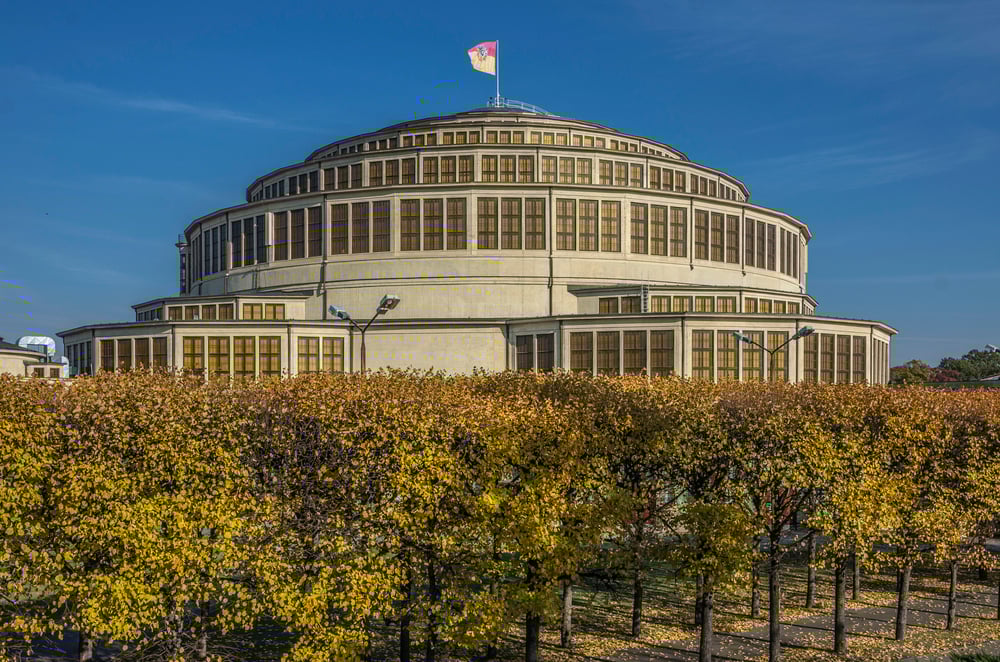
Hitler and his architect Albert Speer designed a domed hall for Berlin that would dwarf every other building in the city. The Great Hall, as it was also known, would have stood 950 feet tall with a dome 16 times larger than St. Peter’s Basilica in Rome.
Plans called for it to accommodate 180,000 people standing in the main hall. Engineers worried that breath and body heat from that many people would create an indoor weather system with rain clouds forming inside the dome.
World War II ended before construction could begin in earnest, though some preparatory work had started.
The Millennium Tower

This project proposed building a 170-story tower in Tokyo that would house 60,000 people. Designed in 1989 during Japan’s economic bubble, the cone-shaped building would reach 2,756 feet into the sky.
Engineers planned to use carbon fiber and special damping systems to handle earthquakes and wind. The estimated cost of $18 billion seemed possible during the booming economy.
When Japan’s economic bubble burst in the early 1990s, the project died along with many other ambitious proposals.
The Aeropolis 2001

This floating city concept was designed to hover 3,000 feet above Tokyo. Japanese engineers proposed using lightweight materials and a series of platforms suspended by cables and supported by powerful updrafts.
The structure would house 100,000 people and include everything from homes to offices to parks. Designers claimed it would solve Tokyo’s land shortage problems by moving vertically in a radical new way.
The physics of keeping such a massive structure airborne remain well beyond current capabilities, and probably always will be.
Bionic Tower
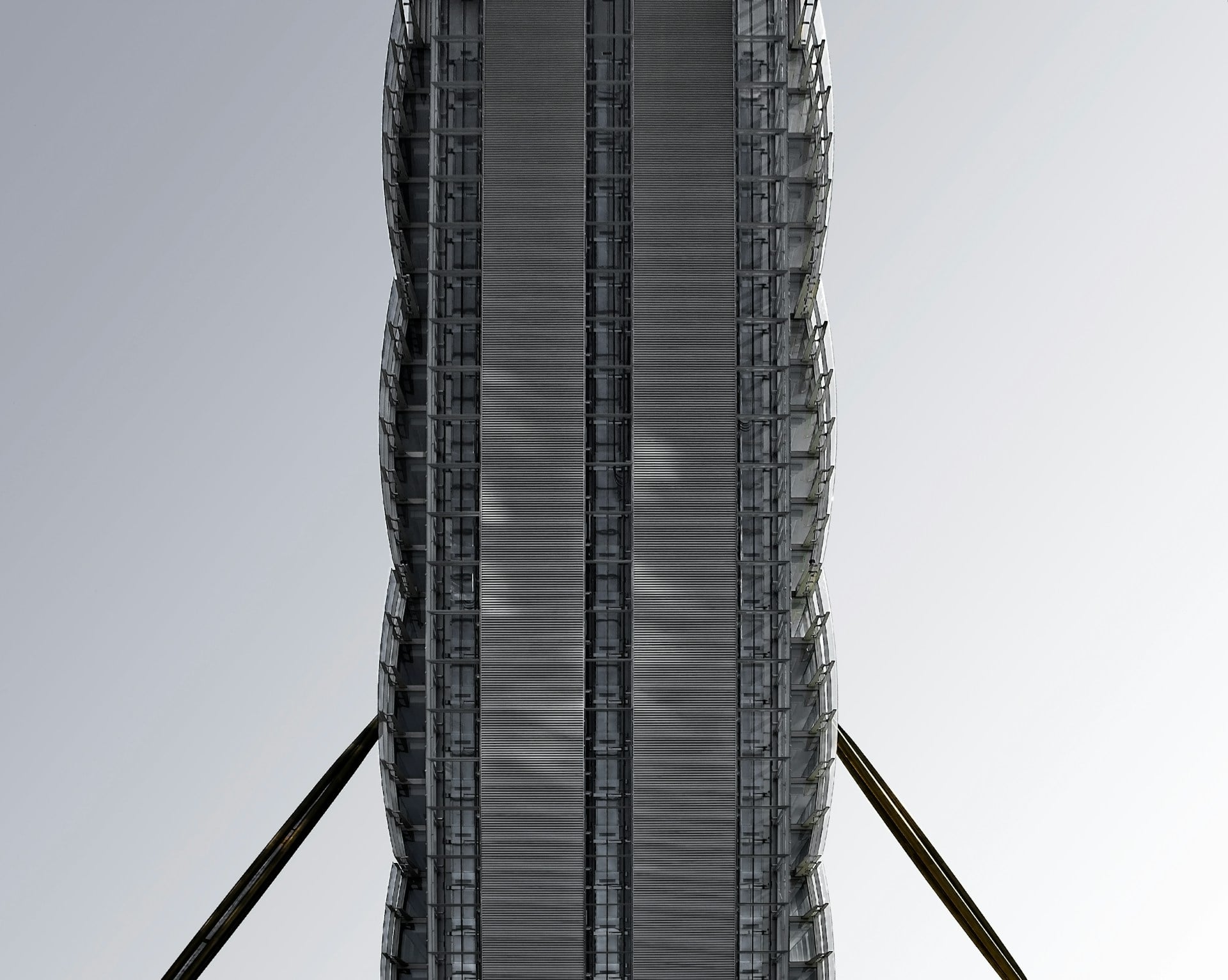
Spanish architects proposed a 3,600-foot tower in 1999 that would be built vertically from the top down. The design called for 300 floors housing 100,000 people with its own internal transportation, power generation, and water systems.
Engineers suggested using a central core with modules attached like branches on a tree. The tower would essentially function as a vertical city with different neighborhoods stacked on top of each other.
Hong Kong was considered as a potential location, but the project never advanced beyond computer renderings and engineering studies.
Sky City One
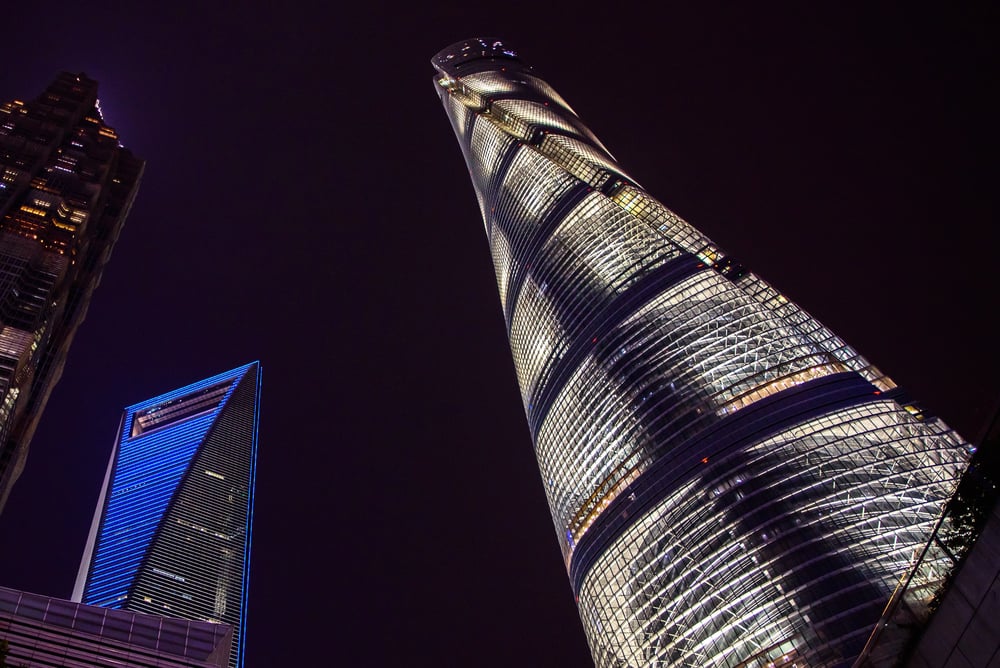
China announced plans in 2012 to build the world’s tallest building in just 90 days. Sky City One would reach 2,749 feet with 220 floors and be constructed using prefabricated modules stacked at incredible speed.
The company behind it, Broad Sustainable Building, claimed their modular construction method made it possible. Construction began with significant media attention, then stopped after just a few weeks due to permitting issues.
The project officially died in 2013, though the company continues to promote its fast-building methods for smaller structures.
Crystal Island

This massive complex proposed for Moscow would have been the largest building by floor space ever constructed. The design called for a giant tent-like structure covering 27 million square feet, about three times the size of the Pentagon.
Inside would be apartments for 30,000 residents, office space, shops, schools, and entertainment venues all under one roof. British architect Norman Foster designed it to be entirely self-sufficient with its own power generation and climate control.
The 2008 financial crisis killed the project before ground was broken, and the land remains empty.
Jeddah Tower

Saudi Arabia started building what would be the world’s first one-kilometer-tall building in 2013. The tower was originally planned to be a full mile high but was scaled back for engineering and cost reasons.
Construction progressed slowly and then stopped completely in 2018 due to financial problems and arrests of key investors in the Saudi corruption crackdown. The building currently stands about one-third complete at around 60 floors.
Whether it will ever be finished remains uncertain, as the project has been stalled for years with no clear restart date.
The Tokyo Sky Mile Tower

This proposal calls for a tower 5,577 feet tall in Tokyo Bay that would house up to 55,000 people. Japanese engineers say it could be built by 2045 using advanced materials like carbon nanotubes and graphene.
The design includes multiple sky lobbies and a sophisticated transportation system to move people up and down efficiently. Wind forces at that height would require revolutionary damping systems that don’t currently exist.
The estimated cost runs into hundreds of billions of dollars, making it more of a future possibility than a current project.
Where Ambition Meets Reality

These projects show what happens when imagination runs ahead of technology and budgets. Some collapsed from their own weight, others fell victim to wars and economic crashes, and a few still waited for the right moment to rise.
The buildings that did get finished often took lifetimes to complete, outlasting their original designers and becoming something different than first imagined. What they all share is a refusal to accept limits, even when those limits were made of steel, stone, and gravity itself.
More from Go2Tutors!

- The Romanov Crown Jewels and Their Tragic Fate
- 17 Halloween Costumes Once Considered Taboo
- Famous Hoaxes That Fooled the World for Years
- 15 Child Stars with Tragic Adult Lives
- 16 Famous Jewelry Pieces in History
Like Go2Tutors’s content? Follow us on MSN.