The Most Expensive Mistakes in Modern History
We’ve all had those moments where we realize we messed up. Maybe you sent an email to the wrong person or forgot an important meeting.
But some mistakes are so monumentally expensive that they make your worst day look like a minor inconvenience. These aren’t just simple errors—they’re billion-dollar blunders that reshaped industries, bankrupted companies, and sometimes changed the course of history.
From engineers who mixed up measurement systems to executives who passed on the deal of a lifetime, these mistakes prove that even the smartest people can make incredibly costly decisions. Here is a list of 14 of the most expensive mistakes in modern history that will make you feel a whole lot better about your own slip-ups.
The Mars Climate Orbiter

NASA lost a $125 million spacecraft on September 23, 1999, because two teams of engineers couldn’t agree on whether to use pounds or newtons. Lockheed Martin calculated thruster force in pound-seconds while NASA used Newton-seconds, and nobody caught the discrepancy until it was too late.
The orbiter missed its intended orbit around Mars and burned up in the planet’s atmosphere, turning ten months of space travel into an extremely expensive lesson about the importance of double-checking your units.
Chernobyl

The 1986 nuclear disaster in Ukraine stands as the most expensive accident in human history, with costs estimated at hundreds of billions of dollars over the decades. The World Bank pegged damages at around $235 billion by 1995, though the true long-term costs for healthcare, relocation, and cleanup remain incalculable.
A combination of design flaws and human error during a safety test caused reactor number four to explode, releasing massive amounts of radiation across Europe. Belarus, Russia, and Ukraine bore the brunt of these costs, which continue accumulating even today.
Like Go2Tutors’s content? Follow us on MSN.
AOL and Time Warner
In 2000, AOL merged with Time Warner in what was supposed to be a $182 billion media empire that would dominate both traditional content and the internet. Instead, it became one of the worst business decisions ever made.
The dot-com bubble burst shortly after the merger, cultural clashes between the two companies prevented any real cooperation, and AOL’s dial-up internet business was already becoming obsolete as broadband took over. By 2002, the combined company reported a $99 billion loss, which remains the largest annual corporate loss ever recorded at the time.
The Spanish Submarine

Someone at a Spanish naval engineering firm put a decimal point in the wrong spot, and suddenly the country had a submarine that was 75 to 100 tons heavier than planned. The weight error on the S-81 Isaac Peral was discovered in 2013, revealing that the submarine could submerge just fine but would never be able to surface again.
Fixing the problem required extending the hull by about 6.8 meters at a cost of roughly €14 million, and even after all that work, the submarine ended up too large to fit into the port where it was being constructed.
French Trains Too Wide for Stations

France’s national railway company SNCF ordered 2,000 shiny new Régiolis and Regio2N trains worth $20 billion in 2014, only to discover they were too wide for many of the country’s older train platforms. The problem happened because engineers measured platforms built within the last 30 years but forgot about the 1,300 stations constructed more than 50 years ago, which were narrower.
Widening all those platforms cost between €50 and €60 million (about $68 million) and took two years to complete, turning what should have been a straightforward upgrade into a logistical nightmare.
Like Go2Tutors’s content? Follow us on MSN.
Blockbuster Says No to Netflix

In 2000, Netflix approached Blockbuster with a partnership proposal where Netflix would handle the digital side while Blockbuster managed physical stores. The deal would have cost Blockbuster roughly $50 million, and the meeting took place in Dallas with Netflix CEO Reed Hastings personally pitching the idea.
Blockbuster executives laughed them out of the room, confident that their brick-and-mortar empire was untouchable. Fast forward a couple of decades, and Netflix is worth hundreds of billions while Blockbuster has exactly one remaining store in Bend, Oregon.
Ronald Wayne’s Apple Shares

Ronald Wayne was one of Apple’s three co-founders in 1976, holding a 10% stake in the company alongside Steve Jobs and Steve Wozniak. Less than two weeks later, Wayne got cold feet and sold his shares back to the other founders for $800.
His 10% stake would be worth around $100 billion today, depending on Apple’s current valuation, making this arguably the most expensive case of buyer’s remorse in history. Wayne later said he made the decision because he didn’t have the stomach for the risk, but it’s hard to imagine that reasoning provides much comfort.
The Beatles Rejection

Decca Records turned down a young band called the Beatles on January 1, 1962, with their executive reportedly telling manager Brian Epstein that ‘guitar groups are on their way out.’ The Beatles went on to sign with EMI and Parlophone under producer George Martin later that year, becoming the most successful band in history.
They generated around $50 million in merchandising sales in 1964 alone, not to mention record sales that would continue for decades. Decca eventually signed the Rolling Stones, which softened the blow somewhat, but the rejection remains one of the music industry’s most notorious misjudgments.
Like Go2Tutors’s content? Follow us on MSN.
Lake Peigneur Disaster

A Texaco oil rig drilled through the bottom of Lake Peigneur in Louisiana on November 20, 1980, accidentally punching into a salt mine beneath the lake. The resulting sinkhole swallowed the entire lake, which went from being six feet deep to 200 feet deep in a matter of hours.
Eleven barges, a drilling platform, and 65 acres of surrounding land disappeared into the vortex. Miraculously, no lives were lost in the disaster.
Texaco paid $44.8 million in damages for the mistake, which also permanently altered the lake’s ecosystem.
Mizuho Securities Stock Typo

A trader at Japanese firm Mizuho Securities had a really bad day in December 2005 when he typed the wrong numbers into his computer. He meant to sell one share of J-Com stock for 610,000 yen (about $5,000), but instead he offered 610,000 shares for one yen each.
Investors jumped on the incredible deal before anyone could fix the error, and the Tokyo Stock Exchange’s computer systems prevented cancellation, making the situation even worse. The company’s total loss reached ¥40.5 billion, approximately $340 million after compensation claims.
Justice League Mustache Removal
When Warner Bros. needed director Joss Whedon to reshoot scenes for Justice League in 2017, they hit a snag—Superman actor Henry Cavill had grown a mustache for his role in Mission: Impossible – Fallout, and Paramount wouldn’t let him shave it. The solution cost Warner Bros.
about $25 million to digitally remove the mustache frame by frame in post-production. The result looked so unnatural that it became a running joke among fans. The total film budget ballooned to about $300 million, partly due to the digital fix, proving that sometimes the most expensive solution isn’t necessarily the best one.
Like Go2Tutors’s content? Follow us on MSN.
King Tutankhamun’s Beard

Museum workers at the Egyptian Museum in Cairo accidentally knocked the beard off King Tut’s famous funeral mask in August 2014 during a cleaning. Rather than calling in restoration experts, they grabbed some epoxy glue and stuck it back on. The wrong adhesive damaged the 3,300-year-old artifact, and while the museum never released an official cost estimate, experts believe the damage to this priceless piece of history could be valued at over $2 million. Proper restoration in 2015 took nine weeks, with conservators using beeswax—like the ancient Egyptians originally did—to repair it correctly. Eight museum employees were eventually put on trial for the botched repair job.
New Coke

Coca-Cola decided in 1985 that their century-old formula needed an update to compete with Pepsi’s sweeter taste. They spent over $30 million on research and marketing for ‘New Coke,’ only to face an immediate consumer backlash so intense that the company had to bring back the original formula as ‘Classic Coke’ on July 11, 1985, just 79 days later.
The debacle actually boosted Pepsi’s sales while damaging Coke’s brand reputation. Some marketing experts later speculated it might have been a clever publicity stunt, but internal memos show executives were genuinely panicked, making it simply a case of a company that didn’t understand what its customers actually wanted.
The Titanic
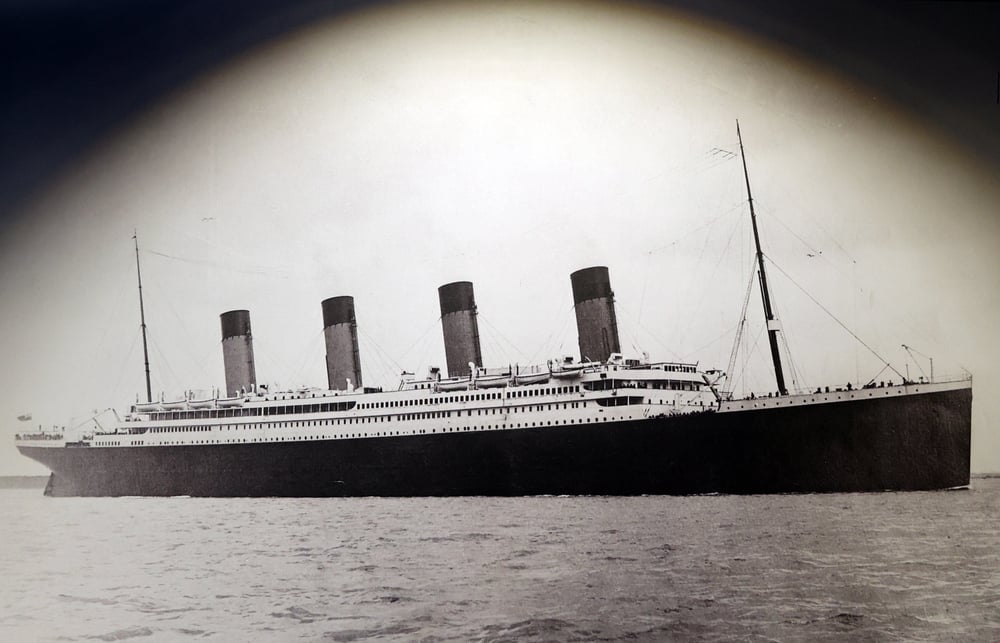
The sinking of the Titanic on April 14, 1912, cost about £1.5 million to build, roughly $7.5 million at the time, which translates to approximately $220 million today when adjusted for inflation. Built by Harland & Wolff in Belfast, this figure only accounts for the ship itself and doesn’t include the immeasurable cost of the 1,500 lives lost when the ‘unsinkable’ vessel hit an iceberg on its maiden voyage.
The disaster happened because the ship was traveling too fast through an ice field, didn’t have enough lifeboats, and ignored multiple iceberg warnings from other ships. It remains one of the most famous maritime disasters in history, spawning countless books, films, and lessons about overconfidence.
Like Go2Tutors’s content? Follow us on MSN.
When Mistakes Become History

These disasters and miscalculations prove that small oversights can lead to astronomical losses. Whether it’s the wrong line of code, a misplaced decimal, or unchecked arrogance, each shows that the most expensive lessons in history usually share the same root cause: human error.
The Chernobyl disaster continues to cost billions decades later, while the AOL-Time Warner merger destroyed hundreds of billions in shareholder value almost overnight. What makes these mistakes particularly fascinating is that many were entirely preventable with just a bit more caution or humility.
More from Go2Tutors!

- 16 Historical Figures Who Were Nothing Like You Think
- 12 Things Sold in the 80s That Are Now Illegal
- 15 VHS Tapes That Could Be Worth Thousands
- 17 Historical “What Ifs” That Would Have Changed Everything
- 18 TV Shows That Vanished Without a Finale
Like Go2Tutors’s content? Follow us on MSN.



