The Strangest Military Operations in History That Actually Happened
War brings out humanity’s most desperate creativity. When facing impossible odds or pursuing critical objectives, military leaders have devised operations so bizarre they sound like fiction.
Yet these missions actually happened, often with surprising success. Some involved deception so elaborate it bordered on performance art, while others relied on animals, weather, or pure audacity.
The strangest part? Many of these seemingly absurd plans worked exactly as intended.
Operation Mincemeat
The British dropped a corpse off the Spanish coast in 1943. The body carried fake invasion plans suggesting the Allies would attack Greece instead of Sicily.
German intelligence took the bait completely. They moved entire divisions away from Sicily based on documents found in a dead man’s briefcase.
The real invasion faced lighter resistance because of it.
The Great Emu War
Australia declared war on emus in 1932. The birds were destroying crops across Western Australia, so the military deployed machine guns against them.
The emus won. Soldiers fired thousands of rounds but killed relatively few birds.
The emus scattered when attacked, then regrouped elsewhere. Military commanders eventually admitted defeat and withdrew their forces.
Operation Acoustic Kitty

The CIA spent five years in the 1960s training cats to spy on Soviet officials, surgically implanting microphones and transmitters into the animals (a process that involved opening up their bodies and placing recording equipment inside, then teaching them to approach specific targets). The first field test ended when the cat wandered into traffic and was killed by a taxi within minutes of being deployed.
So much for feline espionage. And yet the agency had genuinely believed this would work — cats could approach targets without suspicion, they reasoned, making them perfect surveillance tools.
But cats, as anyone who has owned one knows, don’t follow orders. They follow their own instincts, which in urban environments often lead them directly into dangerous situations they’re not equipped to handle.
Ghost Army Operations

Deception is an art form, and the 23rd Headquarters Special Troops elevated it to something approaching theater. During World War II, this unit of artists, designers, and sound engineers created elaborate illusions to fool German reconnaissance — inflatable tanks that looked real from the air, fake radio chatter that suggested massive troop movements, and sound trucks playing recordings of armor columns to create the impression of major military buildups where none existed.
The soldiers in this unit weren’t traditional fighters. Many had backgrounds in advertising, radio, and visual arts.
Their job was to become military magicians, creating shows convincing enough to redirect enemy attention and resources. They succeeded brilliantly, staging over twenty deception campaigns that confused German intelligence throughout the European theater.
Operation Bernhard

Nazi Germany counterfeited British pounds on an industrial scale. They set up a printing operation in concentration camps, forcing skilled prisoners to forge currency precise enough to fool British banks.
The plan aimed to destroy Britain’s economy by flooding it with fake money. The operation produced notes so accurate that even British experts struggled to identify them as forgeries.
Prisoners working on the project faced an impossible choice — cooperate and potentially help the Nazi war effort, or refuse and face execution.
Bat Bomb Project
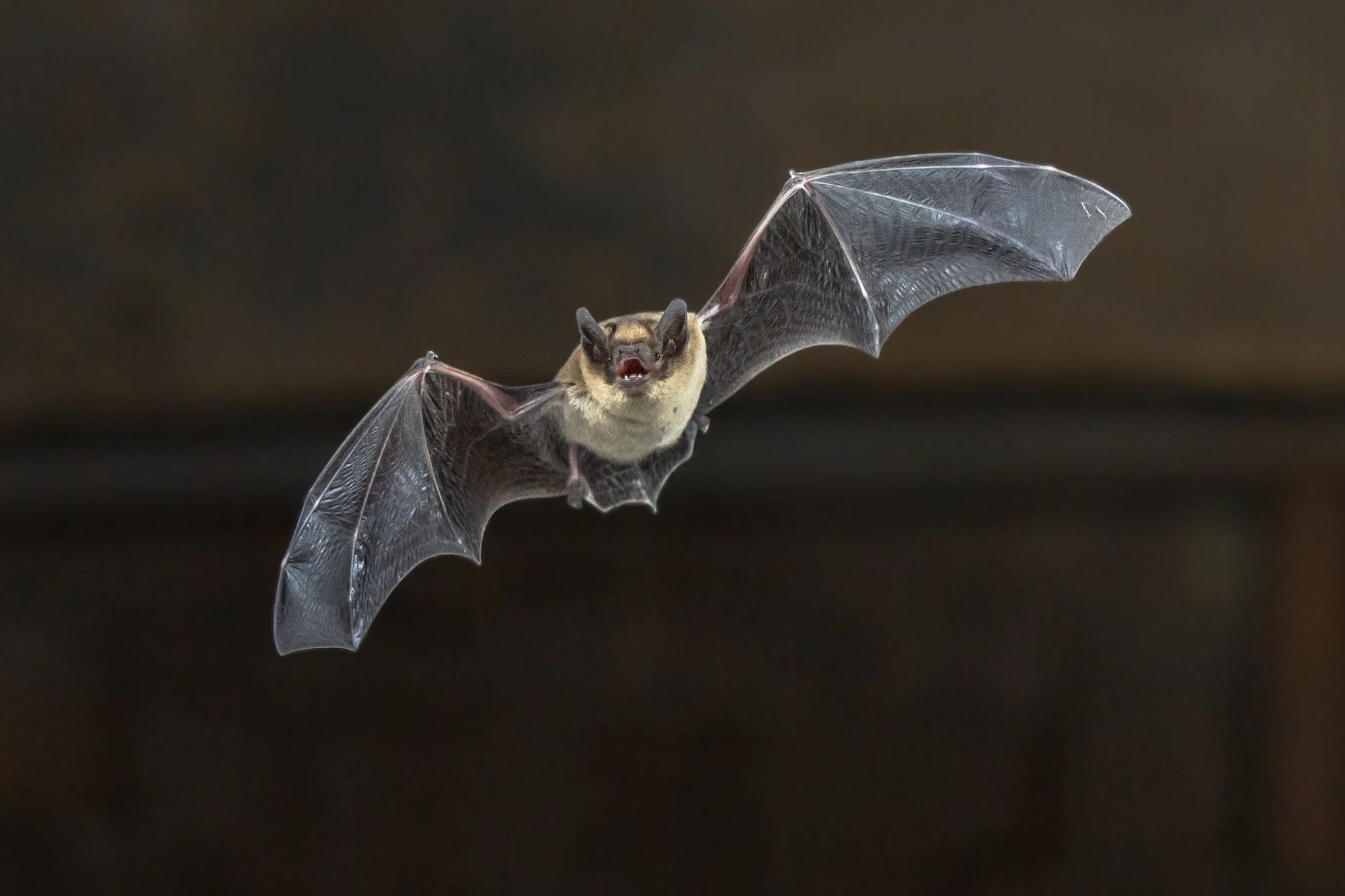
The United States developed bombs filled with hibernating bats. Each bat carried a small incendiary device.
The plan involved dropping these containers over Japanese cities, where the bats would scatter and start fires throughout urban areas. Testing proved the concept worked too well.
During one trial, the bats escaped and burned down parts of the testing facility. The atomic bomb program made the project unnecessary before full deployment.
Operation Fortitude

Churchill’s Britain staged the greatest magic trick of the war: convincing Hitler that D-Day would happen somewhere else entirely. This wasn’t just misdirection — it was a months-long performance involving fake armies, dummy equipment, and an entire fictional military structure designed to fool German intelligence about Allied invasion plans.
The operation created a phantom army group supposedly preparing to invade Calais instead of Normandy. Radio operators transmitted false communications suggesting massive troop buildups in southeastern England.
Inflatable tanks and plywood aircraft filled fields where German reconnaissance flights could photograph them. Even General Patton played a role, commanding this fictional force while the real invasion preparations happened elsewhere. The deception worked so completely that German forces remained positioned to defend against the fake invasion even after the real landings began at Normandy beaches.
Camel Corps Experiment

The U.S. Army imported camels to the American Southwest in the 1850s. The animals could carry heavier loads than horses and needed less water in desert conditions.
The experiment worked exactly as planned from a logistical standpoint. The problem wasn’t the camels — it was everyone else.
Horses panicked around the unfamiliar animals. Soldiers struggled to handle them. Local communities complained about the smell and noise.
Operation Vegetarian

Britain planned to drop anthrax-infected cattle feed over German farmland during World War II. The poisoned grain would kill livestock and potentially spread disease to the human population.
Five million cattle cakes were manufactured before the war ended. The operation represented biological warfare taken to an agricultural extreme.
Destroying Germany’s food supply would have created famine conditions across occupied Europe, affecting civilians as much as military forces.
Pigeon-Guided Missiles

B.F. Skinner trained pigeons to guide missiles toward targets during World War II, developing a system where birds would peck at images of enemy ships or installations, with their pecking patterns controlling the missile’s flight path through a series of mechanical connections that translated their movements into course corrections. The pigeons learned to identify specific target types and could maintain focus even under the stress of flight conditions that would disorient most animals.
But military officials couldn’t bring themselves to trust national security to trained birds. And the pigeons performed remarkably well in testing — they recognized targets accurately, maintained concentration during simulated missile flights, and responded predictably to the conditioning protocols Skinner had developed.
Even so, the image of critical military strikes depending on bird behavior struck commanders as fundamentally absurd, regardless of how well the system functioned in controlled environments.
Project Habakkuk
Geoffrey Pyke proposed building aircraft carriers from ice mixed with wood pulp. The material, called Pykrete, was stronger than regular ice and melted slowly.
Britain seriously considered constructing massive floating airfields from this frozen composite. Tests showed the concept had genuine merit.
Pykrete could stop bullets and resist damage better than steel of equivalent thickness. The challenge was scale — building a carrier-sized structure required enormous refrigeration systems.
Operation Jedburgh

Allied forces parachuted three-man teams behind enemy lines before D-Day. These teams included one American, one British soldier, and one French resistance member.
Their mission involved coordinating with local fighters and disrupting German communications. The teams operated with minimal support in occupied territory.
Many had no radio contact for weeks. They relied entirely on local knowledge and improvised tactics to accomplish their objectives.
War Magicians

During both World Wars, professional magicians joined military deception units, bringing skills in misdirection and illusion to battlefield applications that required enemies to see something other than reality. These performers understood how human perception could be manipulated — they knew which details mattered for creating convincing illusions and which could be ignored.
Jasper Maskelyne, a British stage magician, worked with military engineers in North Africa to hide the Suez Canal using lights and mirrors, making German bombers target fake installations while the real infrastructure remained concealed. The techniques were essentially stage magic scaled up to military proportions: controlling what the audience notices while hiding what actually matters.
The magicians brought a different perspective to military problems. Where soldiers thought in terms of firepower and logistics, these performers thought about sightlines, timing, and the psychology of observation.
Operation Chariot

The British sailed an obsolete destroyer packed with explosives directly into a German-controlled dock in France. The ship, disguised as a German vessel, rammed the dock gates and exploded hours later, destroying critical port facilities.
The operation succeeded despite enormous risks. British commandos had to navigate heavily defended waters, maintain their disguise under close inspection, and complete their mission knowing the ship would explode whether they escaped or not.
When Absurdity Becomes Strategy

These operations share something beyond their apparent strangeness: they worked because they were strange. Conventional military thinking creates predictable patterns that enemies learn to counter.
The most successful unconventional operations succeeded precisely because they fell outside normal strategic expectations. Whether involving animals, deception, or seemingly impossible logistics, these missions achieved their objectives by doing what no reasonable military planner would consider.
Sometimes the most logical approach to an impossible problem is to abandon logic entirely.
More from Go2Tutors!

- The Romanov Crown Jewels and Their Tragic Fate
- 13 Historical Mysteries That Science Still Can’t Solve
- Famous Hoaxes That Fooled the World for Years
- 15 Child Stars with Tragic Adult Lives
- 16 Famous Jewelry Pieces in History
Like Go2Tutors’s content? Follow us on MSN.