The Strangest Movie Marketing Campaigns Ever
Most movies advertise with trailers, posters, and maybe a celebrity appearance on a talk show. Then there are the campaigns that throw the playbook out the window and dive headfirst into the bizarre.
Some marketing teams convinced people their actors were actually missing, others accidentally triggered bomb scares, and a few staged supernatural events in public that left witnesses genuinely terrified. These aren’t just creative—they’re downright strange.
Whether they succeeded brilliantly or backfired spectacularly, these campaigns prove that sometimes the craziest ideas generate the most attention. Here is a list of 14 of the strangest movie marketing campaigns that actually happened.
The Blair Witch Project’s Missing Persons Hoax
The 1999 horror film pulled off one of the most elaborate marketing deceptions in cinema history by convincing audiences the movie was real. The official Blair Witch website launched in June 1999 with fake interviews and news reports that built elaborate backstory, while Artisan Entertainment briefly listed the actors as “missing, presumed dead” on IMDb before correcting it prior to Cannes.
Fans circulated missing person posters based on the website lore, and the found footage format made many early moviegoers genuinely believe they were watching a documentary. The film grossed $248 million on a production budget of around $35,000 to $60,000, with marketing pushing total costs to roughly $200,000.
Mission: Impossible III Bomb Scare

Paramount’s 2006 promotion for Mission: Impossible III accidentally triggered a citywide panic in Los Angeles. The marketing team placed digital audio players promoting the movie soundtrack on newspaper vending machines across the city, but people mistook the electronic devices with wires for explosives.
One device outside the Veterans Affairs Medical Center caused a 90-minute evacuation, and bomb squads were called to investigate suspicious boxes throughout the city. Paramount and the vendor paid a $75,000 settlement to resolve the matter, though the film still grossed $398.5 million worldwide despite the botched promotion.
Like Go2Tutors’s content? Follow us on MSN.
Carrie’s Fake Telekinesis Stunt

To promote the 2013 remake of Carrie, viral marketing agency Thinkmodo staged an elaborate prank in a Manhattan West Village café. Using actors, stunt performers, and special effects, they created the “Telekinetic Coffee Shop Surprise” where a woman appeared to levitate a man against a wall while books, tables, and chairs moved spontaneously.
Unsuspecting customers witnessed what seemed like genuine supernatural powers, and their shocked reactions were captured on hidden cameras. The video went viral with millions of views, perfectly capturing the film’s themes while creating buzz through a memorable real-world experience that blurred the line between movie magic and reality.
Aqua Teen Hunger Force Movie Panic

Turner Broadcasting’s 2007 promotion for Aqua Teen Hunger Force Colon Movie Film for Theaters accidentally caused a terrorism scare in Boston. Marketing teams placed electronic signs featuring pixelated “Mooninite” characters around the city, but since the Adult Swim show was largely a cult phenomenon, most people didn’t recognize the retro video game-style aliens.
Boston officials who discovered the electronic devices believed they could be part of a terrorist plot, triggering a citywide panic and Homeland Security response in January 2007. Turner Broadcasting and its marketing firm paid $2 million in compensation to resolve the incident, though the controversy may have boosted the film’s profile.
Deadpool’s Meta Marketing Madness

Ryan Reynolds and Fox’s marketing team turned Deadpool promotion into performance art by staying in character across every medium. The 2016 campaign included Valentine’s Day posters designed to trick people into thinking it was a romantic comedy, billboards using emojis to spell the title, and Reynolds taking over Stephen Colbert’s monologue duties in full costume.
For Deadpool 2 in 2018, they took over DVD covers of other popular movies at Walmart, while Once Upon a Deadpool offered a PG-13 re-release with holiday framing. The unconventional, irreverent approach perfectly matched the character and helped Deadpool gross $782.6 million worldwide.
Like Go2Tutors’s content? Follow us on MSN.
Chronicle’s Flying People
The 2012 found-footage superhero film Chronicle used three human-shaped remote-controlled planes flown over New York City’s skyline to create the illusion of people flying through the air. The January 2012 stunt by 20th Century Fox and agency Thinkmodo featured realistic-looking figures that genuinely appeared to be humans with superpowers from a distance.
Witnesses captured footage on their phones, and the videos spread online, generating buzz for the low-budget film about ordinary people acquiring telekinetic abilities. The viral stunt helped Chronicle gross $127 million on a $12 million budget.
Office Space’s Guy in a Box
To promote the 1999 workplace comedy, a third-party PR group had a man live inside a Plexiglas cube suspended above Times Square for five days in February 1999. The stunt was meant to represent cubicle culture, but it backfired when star Ron Livingston visited to do press and discovered everyone just wanted to talk to the guy in the box instead of the movie.
Office Space initially grossed only $12.2 million at the box office with poor tracking numbers. Despite the botched promotion, the movie eventually became a cult classic on DVD through word-of-mouth.
Smile’s Unsettling Actors

For the 2022 horror film Smile, the marketing team capitalized on the franchise’s signature creepy grinning by hiring actors to appear at Major League Baseball games. These performers stood motionless with disturbingly wide smiles during televised games, perfectly embodying the film’s Smile Entity monsters that possess people.
The psychological horror of seeing constantly smiling people during normal sporting events made audiences feel like the movie’s monsters had crossed into reality. The unsettling public appearances generated significant social media buzz and helped establish Smile as one of 2022’s biggest horror hits, earning $217 million on a $17 million budget.
Like Go2Tutors’s content? Follow us on MSN.
The Simpsons Movie Kwik-E-Mart Takeover
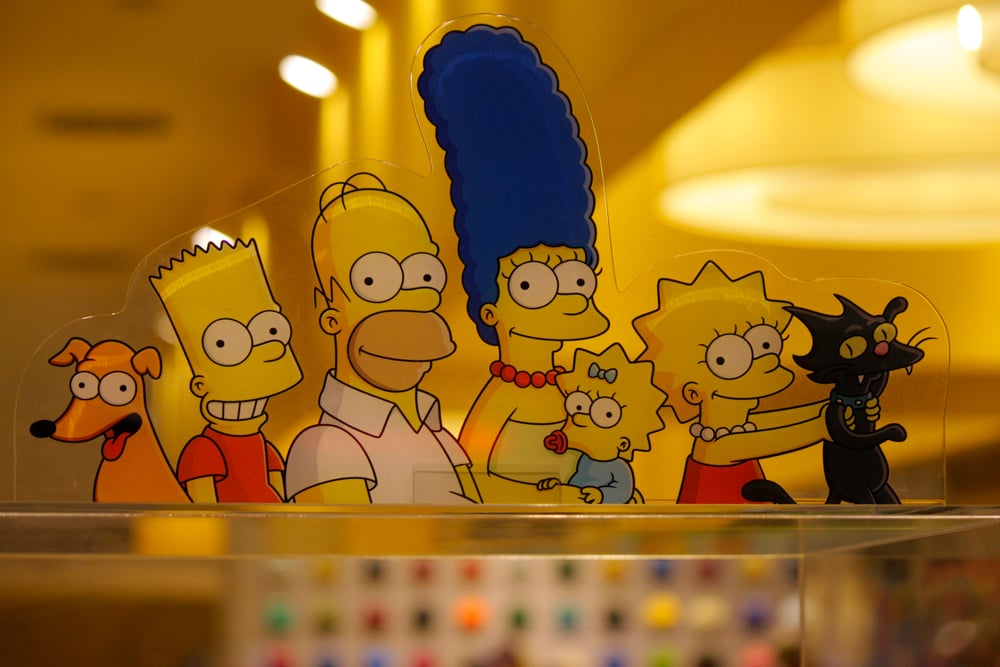
20th Century Fox partnered with 7-Eleven to transform 12 stores into fully functional Kwik-E-Marts from Springfield in July 2007. The promotion included complete exterior redesigns with Kwik-E-Mart signs and cartoon coloring, life-size Simpsons character decals inside and outside stores, and limited exclusive merchandise like Buzz Cola and KrustyO’s cereal.
Stores sold Squishees instead of Slurpees and offered other Springfield-themed products. The immersive experience allowed fans to literally shop in their favorite animated convenience store, and the campaign helped The Simpsons Movie’s opening weekend exceed projections with over $74 million in revenue.
It’s Creepy Red Balloons
The 2017 adaptation of Stephen King’s It used a brilliantly simple guerrilla marketing tactic coordinated by Warner Bros. in Sydney, Australia and select U.S. cities. Red balloons were tied to storm drains near promotional posters, recreating the iconic image of Pennywise luring children.
The juxtaposition of an innocent-looking balloon with sinister undertones tapped into the film’s unsettling atmosphere. Fans and passersby shared photos on social media, making the campaign go viral.
The minimalist approach demonstrated deep understanding of the source material while generating widespread anticipation through a visual that immediately communicated the film’s horror.
Ex Machina’s Tinder Bot
At the 2015 South by Southwest festival in Austin, love-seeking Tinder users found themselves the victims of a clever AI-themed marketing stunt. The campaign for Ex Machina created a fake Tinder profile named “Ava” (the AI character played by Alicia Vikander) who engaged users in conversation.
After chatting for a while, the profile would direct users to the Instagram account @meetava, revealing itself as a promotion for the artificial intelligence thriller. The ahead-of-its-time stunt caught users off guard and generated significant buzz, perfectly demonstrating the movie’s themes about AI deception in an interactive way.
Like Go2Tutors’s content? Follow us on MSN.
Cloverfield’s Mystery Campaign

The 2008 monster movie revolutionized viral marketing by releasing almost no information before its debut. The first teaser trailer, attached to Transformers on July 3, 2007, showed handheld footage of a New York party interrupted by a massive quake, but provided no title, no plot details, and no cast information—just a release date.
The title Cloverfield wasn’t revealed until January 2008, while production was deliberately kept quiet from online publications. The viral alternate reality game included fake websites for Slusho! and Tagruato that built the film’s elaborate backstory, and the “What is Cloverfield?” mystery became more iconic than many actual films.
Barbie’s Dreamhouse on Airbnb

The 2023 Barbie movie’s marketing campaign was a masterclass in brand integration, with the centerpiece being a complete recreation of Barbie’s Dreamhouse in Malibu available for free stays on Airbnb. The listing was hosted by “Ken” (played by Ryan Gosling) as part of Airbnb’s “Barbiecore” campaign coinciding with the July 2023 release.
The campaign also included “World of Barbie” pop-up experiences in major cities worldwide featuring immersive installations, interactive activities, and highly Instagrammable moments. The comprehensive approach understood the Barbie brand completely and created countless opportunities for fans to engage with and share the movie’s aesthetic, contributing to its status as one of 2023’s highest-grossing films.
Psycho’s No Late Entry Policy

Alfred Hitchcock’s 1960 thriller Psycho employed an unusual marketing tactic by demanding that theaters prevent anyone from entering once the film started. Movie trailers gave away minimal story details, and actors were barred from doing publicity interviews because Hitchcock was fiercely protective of his twist ending.
His secrecy policy had two major effects—it piqued curiosity among intrigued audiences and created a sense of event around seeing the film at the proper time. The master of suspense turned withholding information into promotion itself, generating buzz through mystery rather than revealing too much.
Like Go2Tutors’s content? Follow us on MSN.
When Marketing Goes Wonderfully Wrong
These campaigns prove that the strangest ideas often generate the most conversation, whether they succeed brilliantly or fail spectacularly. Some convinced audiences that fiction was reality, others accidentally triggered emergency responses, and a few created surreal public experiences that blurred entertainment and everyday life.
The Blair Witch Project made millions through elaborate online mythology, while Mission: Impossible III learned that electronic devices on public property can cause panic. Deadpool proved that breaking every marketing rule could work perfectly, and Barbie showed that comprehensive brand integration could dominate pop culture.
The common thread is simple—memorable campaigns take risks, and the strangest concepts often stick in our minds long after we’ve forgotten the trailers and posters.
More from Go2Tutors!

- 16 Historical Figures Who Were Nothing Like You Think
- 12 Things Sold in the 80s That Are Now Illegal
- 15 VHS Tapes That Could Be Worth Thousands
- 17 Historical “What Ifs” That Would Have Changed Everything
- 18 TV Shows That Vanished Without a Finale
Like Go2Tutors’s content? Follow us on MSN



